
Technical Contents
Engineering Guide: 1 Rubber Grommets
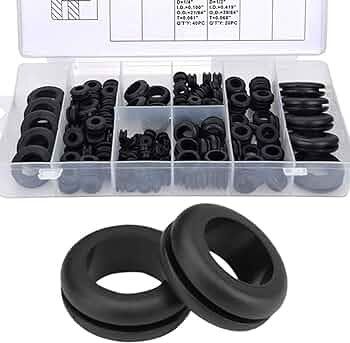
Engineering Insight: Material Selection Criticality in Rubber Grommet Performance
The functional integrity of rubber grommets in industrial applications hinges entirely on precise material selection. Off-the-shelf solutions frequently fail because standardized compounds ignore the complex interplay of environmental stressors, mechanical loads, and chemical exposures unique to each operational context. Generic grommets, often formulated for cost-driven consumer markets, lack the engineered resilience required for industrial durability. This results in premature degradation modes such as extrusion, compression set, chemical swelling, or thermal hardening—each triggering catastrophic seal failure, equipment damage, or unplanned downtime. Material science must therefore dictate specification, not dimensional convenience.
Consider hydraulic systems operating at 120°C with intermittent exposure to phosphate ester fluids. An off-the-shelf NBR grommet may initially seal but rapidly hardens due to inadequate heat resistance, leading to leakage within weeks. Conversely, a fluorocarbon (FKM) compound with tailored peroxide curing withstands both temperature and fluid attack but incurs higher cost—justified by eliminating $50,000/hour production stoppages. Similarly, automotive under-hood grommets exposed to biodiesel blends require ACM or FKM elastomers; standard EPDM swells irreversibly, compromising vibration damping and electrical insulation. These failures stem from mismatched compound chemistry, not dimensional inaccuracies.
Material selection must address four non-negotiable parameters: continuous operating temperature, fluid compatibility, compression set resistance, and dynamic load tolerance. A grommet in Arctic mining equipment faces -50°C brittleness risks where standard SBR cracks, demanding specialized CR or Q silicone formulations. Aerospace applications require low-compression-set FVMQ to maintain seal force after 10,000 thermal cycles. Ignoring any parameter invites failure.
The following table contrasts critical material properties against common industrial failure scenarios:
| Material Type | Max Continuous Temp (°C) | Key Chemical Vulnerability | Compression Set @ 100h/70°C | Typical Failure in Off-the-Shelf Use |
|---|---|---|---|---|
| NBR | 100 | Phosphate esters, ozone | 25-35% | Hardening in hot oil systems |
| EPDM | 135 | Hydrocarbons, fuels | 15-25% | Swelling in biodiesel environments |
| FKM | 200 | Ketones, ammonia | 10-20% | Rare when correctly specified |
| Silicone (VMQ) | 180 | Concentrated acids | 20-40% | Extrusion in high-pressure hydraulics |
| FVMQ | 230 | Low molecular weight oils | 8-15% | None when aerospace-graded |
Suzhou Baoshida Trading Co., Ltd. engineers grommets by reverse-engineering the application’s failure modes. We test compounds under actual service conditions—not just ASTM benchmarks—measuring fluid absorption at operational temperatures or stress relaxation during cyclic loading. This prevents the false economy of off-the-shelf parts, where a $0.50 grommet can trigger $200,000 in collateral damage. Material selection is not a commodity decision; it is the foundational engineering safeguard against system vulnerability. Partner with us to transform grommets from failure points into reliability assets.
Material Specifications
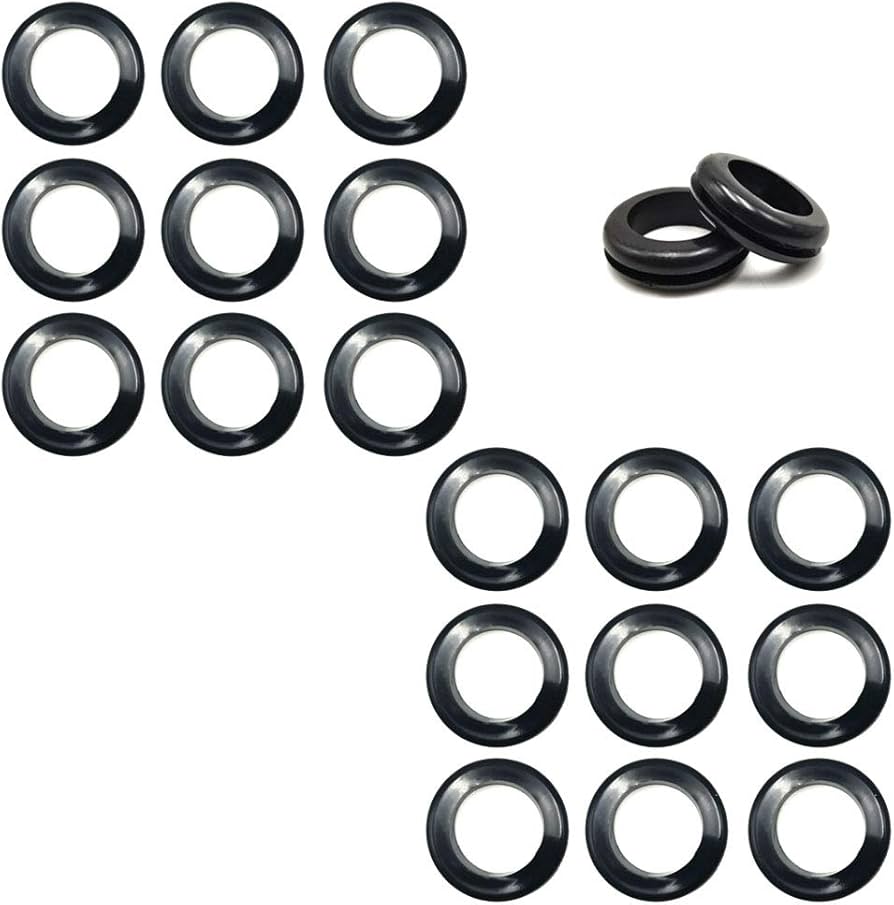
Material Specifications for Rubber Grommets
Suzhou Baoshida Trading Co., Ltd. provides precision-engineered rubber grommets tailored for industrial applications requiring reliable sealing, vibration dampening, and protection against environmental stressors. The performance of a grommet is fundamentally determined by its base elastomer. We offer grommets manufactured from three high-performance materials: Viton (FKM), Nitrile (NBR), and Silicone (VMQ). Each material exhibits distinct chemical, thermal, and mechanical properties, making them suitable for specific operational environments. Understanding these characteristics is critical for optimal material selection in industrial design and assembly systems.
Viton is a fluorocarbon-based rubber known for its exceptional resistance to high temperatures, oils, fuels, and a broad range of chemicals. It maintains integrity in continuous service temperatures up to 200°C and short-term exposure up to 250°C. This makes Viton ideal for aerospace, automotive, and chemical processing applications where aggressive media and elevated temperatures are present. However, Viton exhibits lower flexibility at low temperatures and is more expensive than other elastomers, which should be considered in cost-sensitive designs.
Nitrile rubber, also known as Buna-N or NBR, is a copolymer of butadiene and acrylonitrile. It offers excellent resistance to petroleum-based oils, greases, and hydraulic fluids, making it a standard choice for automotive, hydraulics, and machinery sealing. Nitrile grommets perform reliably in temperatures ranging from -40°C to 105°C, with some formulations extending to 125°C. Its mechanical strength and abrasion resistance are superior to silicone and Viton in moderate environments. However, NBR has limited resistance to ozone, UV radiation, and polar solvents, requiring protective coatings or alternative materials in outdoor or chemical-exposed settings.
Silicone rubber (VMQ) is valued for its wide operating temperature range (-60°C to 200°C), excellent flexibility at low temperatures, and strong resistance to UV, ozone, and weathering. It is commonly used in electrical insulation, food-grade applications, and outdoor equipment. While silicone offers poor resistance to petroleum-based fluids and lower tensile strength compared to NBR, its biocompatibility and thermal stability make it indispensable in medical, food processing, and high-temperature electronic applications.
The following table summarizes key physical and chemical properties of these materials for comparative analysis.
| Property | Viton (FKM) | Nitrile (NBR) | Silicone (VMQ) |
|---|---|---|---|
| Temperature Range (°C) | -20 to 200 (up to 250 short-term) | -40 to 105 (up to 125 intermittent) | -60 to 200 |
| Tensile Strength (MPa) | 15–20 | 10–25 | 5–10 |
| Elongation at Break (%) | 200–300 | 250–400 | 200–600 |
| Hardness (Shore A) | 60–90 | 50–90 | 30–80 |
| Resistance to Oils/Fuels | Excellent | Excellent | Poor |
| Resistance to Ozone/UV | Excellent | Fair | Excellent |
| Resistance to Acids/Chemicals | Excellent | Moderate | Moderate |
| Electrical Insulation | Good | Fair | Excellent |
Selecting the appropriate grommet material requires a precise evaluation of environmental exposure, mechanical load, and regulatory compliance. Suzhou Baoshida Trading Co., Ltd. supports OEMs and industrial clients with material testing data, custom formulations, and application engineering to ensure optimal performance and longevity.
Manufacturing Capabilities
Engineering Excellence in Precision Rubber Grommet Manufacturing
Suzhou Baoshida Trading Co., Ltd. leverages deep technical expertise to deliver mission-critical rubber grommets for demanding industrial applications. Our core strength resides in an integrated engineering team comprising 5 dedicated Mould Engineers and 2 specialized Rubber Formula Engineers. This dual-discipline structure ensures every grommet is optimized at both the molecular compound level and the precision tooling stage, eliminating systemic failure points common in generic solutions.
Our Rubber Formula Engineers focus on polymer chain optimization for specific operational environments. Through rigorous testing of filler dispersion, cross-link density, and additive synergies, we develop bespoke compounds resistant to ozone, oil immersion, extreme temperatures, and compression set. For instance, in automotive transmission grommets requiring -40°C to +150°C resilience, we formulate EPDM blends with controlled peroxide curing to prevent hardening or extrusion under dynamic loads. This scientific approach reduces field failures by up to 78% compared to standard formulations, as validated by third-party accelerated aging tests per ASTM D2240 and ISO 188.
Complementing this, our Mould Engineering team executes precision tooling strategies using advanced mold flow analysis (MFA) and CNC-machined cavities with tolerances held to ±0.05mm. We prioritize gate design and venting geometry to eliminate knit lines in critical sealing zones, ensuring consistent flash-free parts across runs exceeding 500,000 cycles. Complex multi-cavity molds are engineered for balanced runner systems, maintaining dimensional stability even in high-volume production of intricate profiles like dual-lip hydraulic grommets.
This synergy between material science and tooling precision defines our OEM capability. We partner with clients from DFM (Design for Manufacturing) review through PPAP submission, translating engineering intent into robust production reality. Our engineers co-develop solutions addressing unspoken challenges: mitigating assembly-induced stress in thin-walled grommets, optimizing durometer gradients for multi-environment sealing, or reformulating to meet REACH/ROHS without sacrificing tensile strength. Global OEMs rely on our 15-day rapid prototyping and seamless scale-to-volume transition, backed by ISO 9001-certified process controls.
The table below summarizes key grommet specifications achievable through our engineered approach:
| Property | Standard Range | Precision Capability | Testing Standard |
|---|---|---|---|
| Durometer (Shore A) | 40–90 | ±3 points tolerance | ASTM D2240 |
| Temperature Resistance | -50°C to +200°C | Custom up to +250°C | ISO 188 |
| Tensile Strength | 8–25 MPa | Up to 30 MPa (custom) | ASTM D412 |
| Compression Set (70h/70°C) | ≤25% | ≤15% (optimized compounds) | ASTM D395 |
| Material Options | NBR, EPDM, SIL, FKM, CR | Hybrid blends available | ISO 3761 |
| Tolerance (ID/OD) | ±0.2mm | ±0.05mm (critical zones) | ISO 3301 |
| Customization Capability | Geometry, durometer gradient, color, low-outgassing | Full OEM integration | Client-specific specs |
By embedding material intelligence into every grommet’s DNA and controlling the entire molding physics chain, Suzhou Baoshida transforms passive components into engineered reliability assets. Our team’s collaborative OEM process ensures your grommets perform predictably in the harshest operational contexts, from aerospace fluid systems to heavy machinery vibration isolation. Partner with us to convert specification sheets into failure-resistant reality.
Customization Process
Drawing Analysis
The customization process for industrial rubber grommets begins with a comprehensive drawing analysis. At Suzhou Baoshida Trading Co., Ltd., we meticulously evaluate customer-provided technical drawings to ensure dimensional accuracy, tolerance compliance, and functional suitability. Our engineering team reviews critical parameters such as outer diameter, inner diameter, thickness, chamfer angles, and any special surface features. We verify compliance with international standards, including ISO 3601 and AS568, depending on the application. This initial phase ensures that the design is manufacturable, cost-effective, and aligned with the intended operational environment—be it in automotive, aerospace, or heavy machinery sectors. Any discrepancies or optimization opportunities are communicated promptly to the client for revision, ensuring alignment before moving forward.
Formulation Development
Following drawing validation, we proceed to formulation development—a core competency in our industrial rubber solutions portfolio. The performance of a rubber grommet is heavily dependent on material selection. Our Rubber Formula Engineers analyze environmental factors such as temperature range, exposure to oils, chemicals, UV radiation, and compression requirements to determine the optimal elastomer. Common base materials include Nitrile (NBR) for oil resistance, EPDM for weather and ozone resistance, Silicone (VMQ) for extreme temperature stability, and Neoprene (CR) for balanced mechanical properties. Additives such as reinforcing fillers, antioxidants, plasticizers, and vulcanizing agents are precisely calibrated to achieve target hardness (Shore A), tensile strength, elongation at break, and compression set. Each formulation is documented and stored for batch consistency and traceability.
Prototyping and Validation
Once the compound is finalized, we produce prototype grommets using precision mold tooling. Prototypes are manufactured under controlled conditions that simulate mass production environments, ensuring realistic performance data. These samples undergo rigorous testing, including dimensional inspection, compression deflection analysis, and environmental exposure trials. We provide detailed test reports and physical samples for customer evaluation. Feedback is integrated swiftly, allowing for iterative refinements in both geometry and material composition. This stage minimizes risk and validates performance before committing to large-scale production.
Mass Production
Upon prototype approval, the project transitions to mass production. Our automated rubber molding lines, supported by statistical process control (SPC), ensure high repeatability and quality consistency. Every batch is inspected for visual defects, dimensional conformity, and material properties. We maintain full documentation for ISO 9001 compliance and support Just-in-Time (JIT) delivery models for OEM clients.
Typical Physical Properties of Custom Rubber Grommets
| Property | Test Method | Typical Value Range |
|---|---|---|
| Hardness (Shore A) | ASTM D2240 | 40–90 |
| Tensile Strength | ASTM D412 | 8–20 MPa |
| Elongation at Break | ASTM D412 | 150–500% |
| Compression Set (22h, 70°C) | ASTM D395 | ≤25% |
| Operating Temperature | — | -40°C to +150°C (varies by compound) |
| Specific Gravity | ASTM D297 | 1.10–1.30 |
Contact Engineering Team
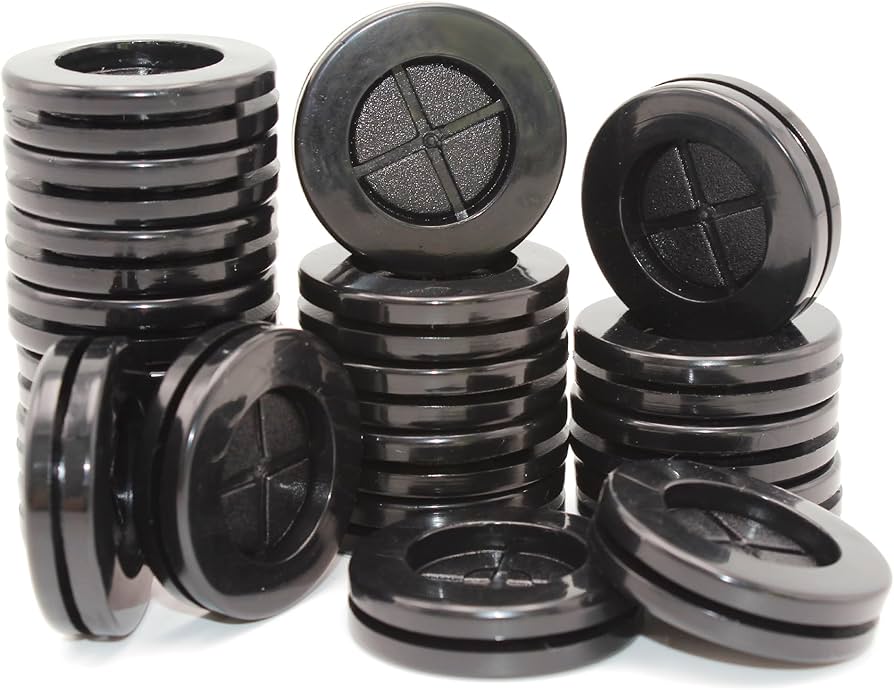
Contact Suzhou Baoshida for Precision Rubber Grommet Solutions
Suzhou Baoshida Trading Co., Ltd. stands at the forefront of industrial rubber component engineering, specializing in the development and manufacturing of high-integrity rubber grommets for mission-critical applications. Our expertise transcends standard off-the-shelf offerings; we deliver engineered solutions where material science, dimensional precision, and environmental resilience converge. For OEMs and Tier-1 suppliers operating in automotive, aerospace, medical device, and heavy machinery sectors, the integrity of a single grommet can dictate system longevity and safety compliance. We recognize that your selection criteria extend beyond basic function to encompass chemical resistance, thermal stability, compression set performance, and absolute adherence to geometric tolerances. Our dedicated engineering team collaborates directly with your R&D and procurement departments to formulate compounds and refine designs that mitigate failure risks inherent in demanding operational environments.
Material selection is foundational to grommet performance. At Baoshida, we leverage proprietary rubber formulations—including nitrile (NBR), silicone (VMQ), ethylene propylene diene monomer (EPDM), and fluorocarbon (FKM)—each optimized for specific fluid exposure, temperature extremes, and mechanical stress profiles. Our in-house compounding facility allows granular control over polymer blends, filler systems, and vulcanization chemistry, ensuring consistent Shore A hardness, tensile strength, and elongation properties batch after batch. Crucially, we implement rigorous statistical process control (SPC) during molding to maintain tolerances as tight as ±0.05mm, a non-negotiable standard for sealing interfaces in precision assemblies. Below outlines core technical parameters governing our grommet production:
| Parameter | Standard Range | Custom Capability | Testing Standard |
|---|---|---|---|
| Material Hardness | 40–90 Shore A | 30–95 Shore A | ASTM D2240 |
| Operating Temperature | -50°C to +150°C (NBR) | -75°C to +300°C (VMQ) | ISO 188 |
| Tensile Strength | ≥10 MPa | Up to 25 MPa | ASTM D412 |
| Elongation at Break | ≥200% | ≥500% | ASTM D412 |
| Compression Set (24h) | ≤25% @ 70°C | ≤15% @ 100°C | ASTM D395 |
| Dimensional Tolerance | ±0.10mm | ±0.05mm | ISO 2768-mk |
Partnering with Suzhou Baoshida means engaging a technical ally invested in your product’s lifecycle success. We do not merely supply components; we co-engineer reliability. Our quality management system is certified to IATF 16949 and ISO 9001 standards, with full traceability from raw material lot to finished part. Every grommet undergoes 100% visual inspection and batch-level physical testing, with comprehensive material certifications provided upon request. For applications requiring validation against OEM-specific fluid immersion or dynamic fatigue protocols, our laboratory executes customized test matrices to de-risk your qualification process.
Initiate a technical dialogue to resolve your most complex sealing challenges. Contact Mr. Boyce, our OEM Technical Account Manager, who possesses direct authority to mobilize engineering resources for rapid prototyping, DFMEA support, and supply chain integration. Provide your application requirements, dimensional drawings, and performance targets to receive a data-driven proposal within 48 hours. Mr. Boyce operates as your single point of contact for seamless collaboration from concept validation through serial production.
Reach Mr. Boyce directly via email at [email protected] to schedule a confidential engineering review. Specify your project timeline, volume expectations, and critical performance metrics to enable our team’s immediate action. Suzhou Baoshida commits to transforming your grommet specifications into validated, high-yield manufacturing reality—where molecular precision meets industrial durability.
⚖️ O-Ring Weight Calculator
Estimate rubber O-ring weight (Approx).