
Technical Contents
Engineering Guide: 3 8 Rubber Fuel Line
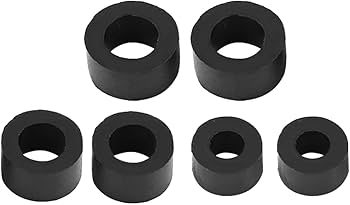
Engineering Insight: The Critical Role of Material Selection in 3/8″ Rubber Fuel Lines
In industrial and automotive applications, the 3/8″ rubber fuel line is a deceptively simple component that plays a pivotal role in system reliability and safety. Despite its ubiquity, improper material selection remains the leading cause of premature failure in fuel delivery systems. Off-the-shelf rubber hoses are often marketed as universal solutions, yet they frequently fall short when exposed to real-world operating conditions. The root cause lies in the chemical and thermal incompatibility between standard elastomers and modern fuel formulations.
Fuel composition has evolved significantly over the past two decades. The widespread adoption of ethanol-blended gasoline (E10, E15, and increasingly E85), biodiesel, and ultra-low sulfur diesel has introduced aggressive oxygenates and polar solvents that degrade conventional rubber compounds. Nitrile butadiene rubber (NBR), a common material in generic fuel lines, exhibits poor resistance to ethanol and aromatic hydrocarbons. Prolonged exposure leads to swelling, softening, and eventual cracking—conditions that compromise structural integrity and increase the risk of fuel leakage.
At Suzhou Baoshida Trading Co., Ltd., we emphasize engineered elastomer solutions tailored to specific fuel types and operational environments. Our recommended material for high-performance 3/8″ fuel lines is fluorocarbon rubber (FKM), also known as Viton®. FKM offers superior resistance to a broad spectrum of fuels, including ethanol blends, biodiesel, and aromatic-rich hydrocarbons. Its thermal stability extends up to 200°C, making it ideal for underhood applications where heat soak from engine components accelerates material degradation.
Another critical factor is permeation resistance. Standard rubber hoses exhibit high fuel vapor transmission rates, contributing to evaporative emissions and fuel loss. FKM and specialty multilayer constructions with fluoropolymer inner liners reduce permeation by over 90% compared to NBR, meeting stringent environmental regulations such as EPA and Euro 6 standards.
Off-the-shelf hoses often lack traceability, consistent curing profiles, and reinforcement layer optimization. In contrast, engineered solutions incorporate braided polyester or aramid fibers to enhance burst pressure resistance and minimize expansion under load. These design elements are not cosmetic—they directly influence service life and safety margins.
The table below outlines key performance characteristics of common elastomers used in 3/8″ rubber fuel lines:
| Property | NBR (Standard) | EPDM | FKM (Viton®) | Baoshida Engineered FKM Composite |
|---|---|---|---|---|
| Temperature Range (°C) | -30 to +100 | -50 to +150 | -20 to +200 | -30 to +220 |
| Ethanol Resistance | Poor | Moderate | Excellent | Excellent |
| Aromatic Hydrocarbon Resistance | Fair | Poor | Excellent | Excellent |
| Fuel Permeation Rate (g·mm/m²·day) | 18–25 | 20–30 | 2–4 | 1–3 |
| Typical Burst Pressure (psi) | 1,200 | 1,000 | 2,500 | 3,000 |
Selecting the appropriate 3/8″ fuel line is not a commodity decision—it is an engineering imperative. At Suzhou Baoshida, we provide application-specific formulations backed by rigorous testing to ensure long-term performance in demanding environments.
Material Specifications
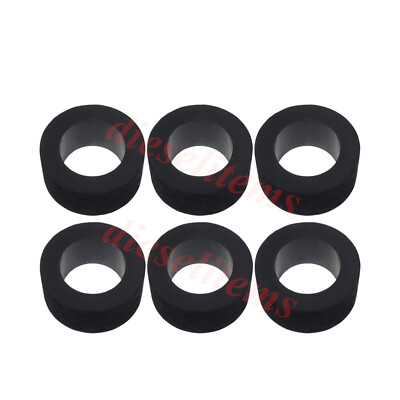
Material Specifications for SAE J20 3/8 Inch Rubber Fuel Lines
Suzhou Baoshida Trading Co., Ltd. provides precision-engineered rubber fuel lines compliant with SAE J20 standards for 3/8 inch nominal inner diameter applications. Material selection is critical for fuel system integrity, directly impacting resistance to hydrocarbon degradation, thermal stability, and mechanical durability under dynamic pressure conditions. Our formulations undergo rigorous batch validation per ISO 37 and ASTM D2000 standards to ensure dimensional consistency and performance reliability in automotive and industrial fuel delivery systems.
Viton (FKM) fluoroelastomer compounds are engineered for extreme environments, offering unparalleled resistance to modern biofuels, ethanol blends up to E85, and aromatic hydrocarbons. With a continuous service temperature range of -20°C to +200°C and intermittent peaks at 230°C, Viton maintains sealing integrity under high-pressure pulsation (tested to 150 psi static, 250 psi dynamic). Its low permeation rate minimizes evaporative emissions, meeting EPA Tier 3 requirements. Hardness is optimized at 70±5 Shore A for optimal hose coupling retention.
Nitrile rubber (NBR) remains the industry-standard solution for cost-sensitive applications requiring robust fuel resistance. Our hydrogenated NBR (HNBR) variants extend operational limits to -40°C while resisting gasoline, diesel, and lubricants up to 125°C continuous exposure. Standard formulations achieve 65±5 Shore A hardness with tensile strength ≥15 MPa, balancing flexibility for routing and resistance to abrasion in engine bay installations. Permeation rates are controlled to <15 g/m²/day for E10 fuels per SAE J30.
Silicone rubber (VMQ) is specified exclusively for non-fuel wetted sections due to inherent hydrocarbon swelling limitations. Its primary value lies in extreme low-temperature flexibility down to -60°C and thermal stability to 180°C, making it suitable for coolant bypass or air intake segments adjacent to fuel lines. We reinforce VMQ with high-purity silica to achieve 55±5 Shore A hardness and burst pressures >300 psi, though fuel compatibility restricts use to oxygenated blends below E10.
The comparative analysis below details critical performance parameters for OEM material selection:
| Property | Viton (FKM) | Nitrile (HNBR) | Silicone (VMQ) |
|---|---|---|---|
| Temperature Range (°C) | -20 to +200 | -40 to +125 | -60 to +180 |
| E85 Fuel Resistance | Excellent | Good | Poor |
| Aromatic Fuel Swell (%) | ≤15 | ≤25 | ≥80 |
| Pressure Rating (psi) | 150 static/250 dyn | 125 static/200 dyn | 100 static/175 dyn |
| Hardness (Shore A) | 70±5 | 65±5 | 55±5 |
| Permeation Rate (E10) | <5 g/m²/day | <15 g/m²/day | Not Recommended |
| Primary Applications | Direct fuel injection, turbocharger lines | Fuel return lines, carburetor systems | Non-fuel segments only |
Suzhou Baoshida implements stringent QC protocols including FTIR spectroscopy for polymer verification and 1,000-hour immersion testing in aggressive fuel simulants. All compounds are free from heavy metal accelerators to comply with ELV and REACH directives. Material recommendations must align with specific fuel chemistry and thermal profiles; our engineering team provides OEM-specific validation data upon request to ensure seamless integration into production workflows.
Manufacturing Capabilities
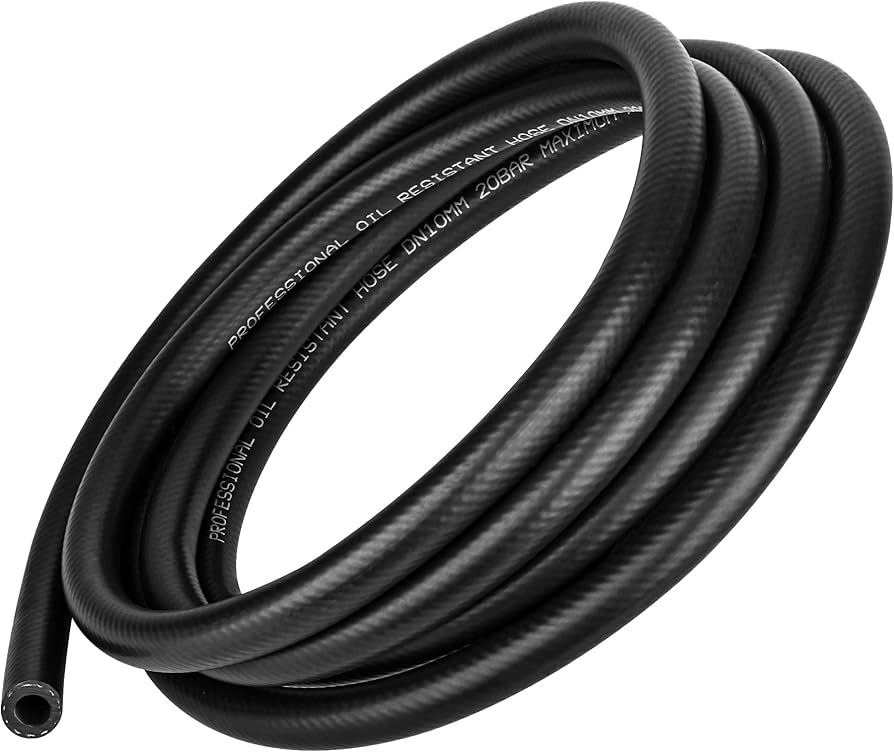
Engineering Excellence in Rubber Fuel Line Development
At Suzhou Baoshida Trading Co., Ltd., our Engineering Capability forms the backbone of our industrial rubber solutions, particularly in the development and production of high-performance 3/8″ rubber fuel lines. With a dedicated team of five specialized mould engineers and two advanced rubber formula engineers, we maintain rigorous control over every stage of product design, material formulation, and manufacturing precision. This integrated engineering approach ensures that our fuel lines meet the exacting demands of automotive, marine, and industrial OEMs.
Our mould engineers bring over 70 combined years of experience in precision rubber component tooling. They utilize advanced CAD/CAM systems and finite element analysis (FEA) to optimize flow dynamics, wall thickness uniformity, and compression set resistance in every 3/8″ fuel line design. This enables us to produce complex geometries with tight tolerances (±0.15 mm) while ensuring long-term durability under high pulsation and thermal cycling conditions. Rapid prototyping and in-house tooling fabrication allow for fast design validation and accelerated time-to-market—critical advantages for OEM partners managing tight development schedules.
Complementing our tooling expertise, our two senior rubber formula engineers specialize in elastomer chemistry for fuel and fluid resistance. They formulate custom NBR (nitrile butadiene rubber) and FKM (fluoroelastomer) compounds tailored to withstand gasoline, diesel, ethanol blends (up to E85), and biodiesel exposure. Each formulation is tested for volume swell, tensile strength retention, and low-temperature flexibility down to -40°C. Our in-house lab conducts ASTM D471 immersion testing and ISO 1817 compliance verification, ensuring material performance aligns with OEM specifications and international standards.
We operate as a full-service OEM partner, offering end-to-end development from concept to mass production. Our engineering team collaborates directly with client R&D departments to co-develop application-specific fuel lines that meet unique pressure, temperature, and regulatory requirements. This includes custom color coding, surface texturing, and integration with quick-connect fittings. Our ISO 9001-certified production facility supports low-volume pilot runs and high-volume manufacturing with full traceability and batch documentation.
Through this synergistic combination of material science and precision engineering, Suzhou Baoshida delivers 3/8″ rubber fuel lines that exceed performance expectations in real-world operating environments.
| Specification | Performance Value |
|---|---|
| Inner Diameter | 9.5 mm (3/8″) ±0.15 mm |
| Material Types | NBR, HNBR, FKM, Custom Blends |
| Temperature Range | -40°C to +150°C (intermittent to +175°C) |
| Fuel Resistance | Gasoline, Diesel, E10–E85, Biodiesel (B20–B100) |
| Pressure Rating | 300 psi continuous, 600 psi burst |
| Standards Compliance | SAE J30, ISO 7241, ASTM D2000 |
| Production Capacity | 500,000 meters/month |
Customization Process
Customization Process for SAE J20 R1/R2 3/8″ Rubber Fuel Lines
At Suzhou Baoshida Trading Co., Ltd., our customization process for SAE J20 3/8″ rubber fuel lines integrates rigorous engineering protocols to ensure compliance with automotive OEM specifications. This systematic approach guarantees material integrity, dimensional accuracy, and long-term performance under dynamic fuel system conditions. We initiate with comprehensive Drawing Analysis, where client-provided technical schematics undergo dimensional validation against SAE J20 R1/R2 standards. Critical parameters including inner diameter tolerance (±0.3 mm), wall thickness consistency, and braid reinforcement geometry are cross-referenced with fluid dynamics requirements. Concurrently, we assess operational variables such as fuel composition (gasoline, ethanol blends up to E85), pressure cycles, and environmental exposure to define compound resilience thresholds.
Formulation development leverages our proprietary rubber compounding expertise, selecting base polymers like FKM (fluoroelastomer) for high-temperature resistance or EPDM for cost-effective ethanol compatibility. Additive packages are precision-calibrated to achieve target properties: low permeability (<15 g·mm/m²·day for gasoline), ozone resistance (ASTM D1149), and flex fatigue endurance. Key performance metrics are quantified below:
| Specification Parameter | SAE J20 R1 Requirement | SAE J20 R2 Requirement | Baoshida Validation Method |
|---|---|---|---|
| Max Working Pressure | 150 psi @ 100°C | 300 psi @ 100°C | Hydrostatic burst testing |
| Temperature Range | -40°C to +125°C | -40°C to +125°C | Thermal cycling (ISO 188) |
| Fuel Permeation (C5-C6) | ≤ 25 g·mm/m²·day | ≤ 15 g·mm/m²·day | Gravimetric analysis |
| Braid Coverage Density | ≥ 85% | ≥ 90% | Microscopic cross-section |
Prototyping follows ISO/TS 16949 protocols, producing 3-5 meter test segments for laboratory validation. Each prototype undergoes SAE J30 R1/R2 mandated testing: 100,000 pressure pulses at 2x operating pressure, 1,000-hour fuel immersion, and dynamic flex testing per SAE J2044. Dimensional stability is verified via CMM scanning, with deviations triggering immediate formulation recalibration. Client approval requires ≤0.5% volumetric swell in test fuels and zero cracks after 500,000 flex cycles.
Mass production transitions occur only after PPAP Level 3 sign-off, utilizing automated extrusion lines with real-time laser gauging for diameter control. Our Suzhou facility implements AQL 1.0 inspection protocols, including 100% visual checks, batch-wise tensile testing (ASTM D412), and traceability via laser-etched lot codes. Continuous monitoring of cure characteristics (MDR testing) and fluid resistance ensures batch-to-batch consistency. For volume orders exceeding 50,000 meters, we deploy dedicated production cells with OEM co-audit access, maintaining ≤0.1% defect rates through Six Sigma-controlled processes. This end-to-end framework minimizes time-to-market while guaranteeing fuel line reliability in critical automotive applications.
Contact Engineering Team
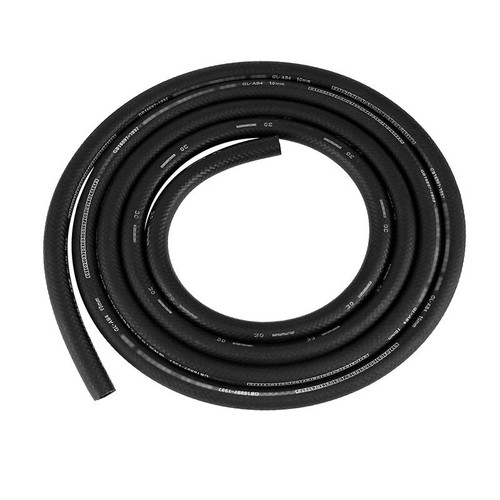
For industrial manufacturers and OEMs requiring high-performance rubber fuel lines, Suzhou Baoshida Trading Co., Ltd. delivers precision-engineered solutions designed for reliability, durability, and compliance with international standards. Our 3 8 rubber fuel line products are formulated to meet the rigorous demands of automotive, marine, and heavy-duty machinery applications where fuel resistance, pressure tolerance, and thermal stability are critical. As a trusted supplier in the industrial rubber solutions sector, we specialize in custom compounding, strict quality control, and scalable production to support global supply chains.
The 3 8 rubber fuel line—commonly referenced as 3/8 inch inner diameter (9.5 mm)—is a standard size in fuel delivery systems, and our product line is optimized for both gasoline and diesel environments. Constructed with multi-layer reinforcement, including a nitrile rubber (NBR) inner tube for superior fuel resistance, a textile braid or steel wire reinforcement layer for burst strength, and a chloroprene (CR) or EPDM outer cover for ozone and abrasion resistance, our fuel lines ensure operational integrity under dynamic conditions. Each product batch undergoes pressure testing, permeation analysis, and temperature cycling to validate performance across a range of industrial environments.
We understand that OEM integration requires more than just off-the-shelf components. Suzhou Baoshida offers technical collaboration to adjust hardness (Shore A), elongation at break, and low-temperature flexibility based on your system requirements. Whether you require FDA-compliant materials for specialty applications or UL-certified compounds for industrial equipment, our R&D team works closely with clients to tailor formulations without compromising production timelines.
Below are the standard technical specifications for our 3 8 rubber fuel line:
| Parameter | Specification |
|---|---|
| Inner Diameter | 9.5 mm (3/8 inch) |
| Outer Diameter | 14.0 ± 0.5 mm |
| Material (Inner Tube) | Nitrile Butadiene Rubber (NBR) |
| Reinforcement Layer | High-Tensile Polyester Braid or Steel Wire |
| Cover Material | Chloroprene (CR) or EPDM |
| Temperature Range | -40°C to +125°C (intermittent up to +150°C) |
| Working Pressure | 350 psi (24 bar) |
| Burst Pressure | ≥ 1000 psi (69 bar) |
| Fuel Resistance | Excellent (gasoline, diesel, biofuels) |
| Standards Compliance | SAE J30, ISO 7241, DIN 73378 |
All products are manufactured in ISO 9001-certified facilities with full traceability and batch documentation. We support volume orders with JIT delivery models and provide technical data sheets, material certifications, and sample kits upon request.
For technical consultation, custom formulation support, or to initiate a supply agreement, contact Mr. Boyce, OEM Account Manager at Suzhou Baoshida Trading Co., Ltd. Direct inquiries to [email protected]. Our engineering team is available for joint development projects and rapid prototyping to ensure seamless integration into your manufacturing workflow. Partner with Suzhou Baoshida for industrial rubber solutions engineered with precision and backed by global quality standards.
⚖️ O-Ring Weight Calculator
Estimate rubber O-ring weight (Approx).