
Technical Contents
Engineering Guide: 3M 468Mp Spec Sheet
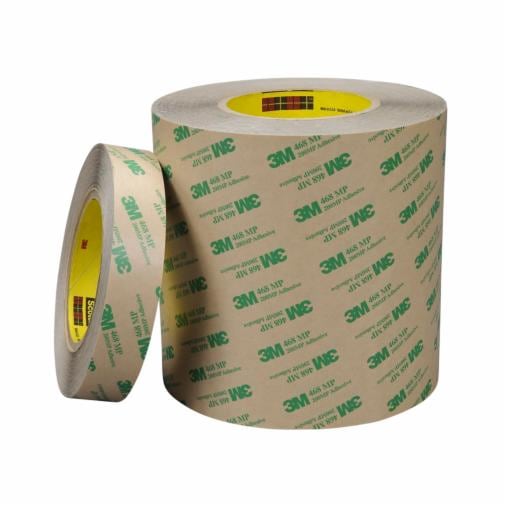
Engineering Insight: 3M 468MP Spec Sheet – The Critical Role of Material Selection in Industrial Applications
In industrial rubber solutions, material selection is not merely a design consideration—it is a determinant of system integrity, longevity, and performance under operational stress. The 3M 468MP adhesive transfer tape exemplifies a high-performance material engineered for demanding bonding applications, particularly in electronics, automotive, and industrial assembly. However, relying solely on off-the-shelf specifications without contextual engineering evaluation often leads to premature failure, delamination, and costly field repairs. Understanding the nuanced parameters within the 3M 468MP spec sheet is essential for ensuring compatibility with substrate, environmental exposure, and mechanical load requirements.
The 3M 468MP is constructed with a medium-viscosity acrylic adhesive on a 2.5 mil (63 µm) polyester carrier film, offering high shear strength and excellent resistance to solvents, UV, and temperature extremes. These properties make it ideal for applications requiring durable bonds between dissimilar materials such as metals, plastics, and glass. Yet, many failures occur when engineers treat this product as a universal solution without assessing surface energy, thermal cycling, or long-term creep behavior. For instance, bonding polycarbonate to aluminum in an outdoor environment demands not only strong initial adhesion but also resilience against thermal expansion differentials and moisture ingress—factors not always evident from nominal spec sheet values.
Furthermore, surface preparation and application method significantly influence bond performance. The 3M 468MP requires clean, dry, and properly primed substrates to achieve optimal adhesion. In industrial settings where production speed takes precedence over surface treatment, the adhesive may appear to bond initially but fail under stress or environmental exposure. This underscores the necessity of integrating material science principles into the selection process, rather than relying on generic compatibility claims.
Another common pitfall is the misinterpretation of peel and shear strength data. While the spec sheet lists a 90° peel adhesion of 40 oz/in on stainless steel, this value is obtained under controlled laboratory conditions. Real-world variables such as surface roughness, contamination, and dynamic loading can reduce effective adhesion by up to 50%. Therefore, application-specific testing is critical before full-scale implementation.
At Suzhou Baoshida Trading Co., Ltd., we emphasize a systems approach to material selection—evaluating not just the adhesive, but the entire assembly environment. This includes thermal profiles, mechanical stress types, exposure to chemicals, and expected service life.
Below is a summary of key technical specifications for 3M 468MP based on manufacturer data:
| Property | Value | Test Method |
|---|---|---|
| Adhesive Type | Acrylic, pressure-sensitive | 3M Technical Data |
| Carrier Thickness | 2.5 mil (63 µm) | ASTM D374 |
| Total Thickness | 3.5 mil (89 µm) | ASTM D374 |
| 90° Peel Adhesion (Stainless Steel) | 40 oz/in (1.12 kN/m) | ASTM D3330 |
| Shear Strength (1 in², 25°C) | >10,000 min | ASTM D3654 |
| Operating Temperature Range | -20°C to +150°C | 3M Engineering Guide |
| Liner Type | Polycoated Paper | — |
Material selection must transcend catalog numbers. True engineering value lies in interpreting spec sheets within the context of real-world performance. At Baoshida, we support OEMs with application engineering to ensure that every material choice—like 3M 468MP—is not just specified, but validated.
Material Specifications
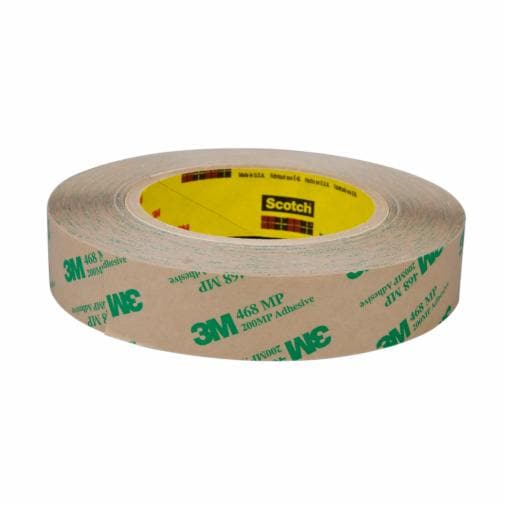
Material Specifications: Clarification and Comparative Analysis
It is critical to address a fundamental misconception: 3M™ 468MP is an adhesive transfer tape, not a rubber compound. This specification sheet pertains exclusively to pressure-sensitive acrylic adhesive performance on a polyester carrier film. Suzhou Baoshida Trading Co., Ltd. specializes in industrial elastomer formulations; therefore, this section details core rubber materials relevant to sealing, gasketing, and fluid-handling applications where adhesion may interface with substrates. Viton® (FKM), Nitrile (NBR), and Silicone (VMQ) represent industry-standard elastomers with distinct performance profiles. Understanding their intrinsic properties is essential for OEM material selection under demanding operational conditions.
Viton® fluorocarbon rubber excels in extreme chemical and thermal environments. Its molecular structure provides exceptional resistance to fuels, oils, acids, and chlorinated hydrocarbons at continuous service temperatures up to 230°C. Standard grades maintain integrity in aerospace hydraulic systems and semiconductor processing equipment where aggressive chemical exposure occurs. Low-temperature flexibility is limited, typically down to -20°C, making it unsuitable for cryogenic applications. Compression set resistance remains superior above 150°C compared to other elastomers.
Nitrile rubber (NBR) offers optimal balance for petroleum-based fluid handling. With acrylonitrile content dictating performance, high-ACN grades (48%) withstand prolonged exposure to mineral oils and greases at temperatures up to 120°C. Its cost-effectiveness and abrasion resistance make it prevalent in automotive fuel systems, hydraulic seals, and industrial O-rings. However, NBR exhibits poor resistance to ozone, ketones, and polar solvents. Standard formulations degrade above 125°C, and low-temperature limits typically reach -30°C.
Silicone rubber (VMQ) provides unmatched thermal stability across extreme ranges (-60°C to 200°C continuous). Its inorganic backbone ensures resilience against oxidation, UV radiation, and steam sterilization. Biocompatibility grades meet USP Class VI and ISO 10993 standards for medical devices. While offering excellent electrical insulation, silicone demonstrates limited resistance to concentrated acids, alkalis, and petroleum derivatives. Tensile strength is inherently lower than NBR or FKM, requiring careful design consideration for high-stress applications.
The following table summarizes critical mechanical and chemical properties per ASTM D2000 standards:
| Material | Tensile Strength (MPa) | Elongation (%) | Temp Range (°C) | Key Chemical Resistances | Key Limitations |
|---|---|---|---|---|---|
| Viton® (FKM) | 10-18 | 150-300 | -20 to +230 | Fuels, oils, acids, halogens | Poor ketone resistance; high cost; limited low-temp flexibility |
| Nitrile (NBR) | 15-25 | 200-500 | -30 to +120 | Aliphatic hydrocarbons, water, hydraulic fluids | Poor ozone/weathering resistance; swells in polar solvents |
| Silicone (VMQ) | 5-10 | 200-700 | -60 to +200 | Water, steam, oxygen, ozone, dilute acids/bases | Low tensile strength; poor petroleum resistance; high gas permeability |
Suzhou Baoshida Trading Co., Ltd. leverages this material science expertise to guide OEMs in selecting optimal elastomer formulations. Precise compound customization—adjusting polymer grades, filler systems, and cure chemistry—is paramount to meeting application-specific requirements for durability, chemical compatibility, and regulatory compliance. Always validate material selection against actual service conditions through accelerated aging and fluid immersion testing per ISO 1817 or ASTM D471 protocols. Our engineering team provides full technical support for seamless integration into your manufacturing process.
Manufacturing Capabilities
Engineering Capability
At Suzhou Baoshida Trading Co., Ltd., our engineering capability is anchored in deep technical expertise and precision-driven development, specifically tailored for industrial rubber solutions. Our team comprises five dedicated mould engineers and two specialized rubber formula engineers, enabling us to deliver OEM rubber components with exacting performance standards. This integrated engineering structure allows us to manage both the physical design of rubber parts and the chemical composition of the materials used, ensuring optimal functionality under real-world operating conditions.
Our mould engineers bring extensive experience in designing and optimizing rubber compression, transfer, and injection moulds. They utilize advanced CAD/CAM software and finite element analysis (FEA) to simulate material flow, predict compression set behavior, and minimize defects such as flash or incomplete cures. This precision in mould design directly translates into consistent part quality, longer tool life, and reduced production cycle times—critical factors in high-volume OEM manufacturing.
Complementing the mould design team, our two in-house rubber formula engineers specialize in compounding elastomers to meet specific performance demands. Whether addressing requirements for heat resistance, oil resistance, compression set, or electrical insulation, our formula development process is rooted in material science and accelerated testing protocols. We routinely formulate custom EPDM, NBR, silicone, FKM, and ACM compounds, ensuring compatibility with industry standards and OEM specifications, including those referenced in technical documents such as the 3M 468MP spec sheet.
Our OEM capabilities are built on a foundation of traceability, repeatability, and scalability. We maintain full control over the rubber formulation, mould design, tooling fabrication, and production processes. This vertical integration enables rapid prototyping, design for manufacturability (DFM) feedback, and seamless transition from sample to mass production. Clients benefit from reduced time-to-market and assurance that every batch meets the documented physical and chemical properties required for mission-critical applications.
The following table outlines key technical parameters relevant to high-performance rubber materials, reflecting the standards we adhere to in our OEM development work:
| Property | Test Method | Typical Value (Example: FKM 70 Shore A) |
|---|---|---|
| Hardness (Shore A) | ASTM D2240 | 70 ± 5 |
| Tensile Strength | ASTM D412 | ≥ 10 MPa |
| Elongation at Break | ASTM D412 | ≥ 150% |
| Compression Set (22 hrs, 150°C) | ASTM D395B | ≤ 25% |
| Operating Temperature Range | — | -20°C to +200°C (intermittent to 250°C) |
| Fluid Resistance (IRM 903, 70°C, 70 hrs) | ASTM D471 | Volume swell ≤ 20% |
Through rigorous engineering discipline and a closed-loop development process, Suzhou Baoshida ensures that every rubber component we produce meets or exceeds the performance benchmarks required by global OEMs. Our technical team is fully equipped to reverse-engineer or match specifications from industry references, including adhesive tapes, gasketing materials, and high-temperature sealing solutions.
Customization Process
Customization Process for 3M 468MP Equivalent Rubber Compounds
At Suzhou Baoshida Trading Co., Ltd., our OEM customization process for industrial rubber solutions begins with rigorous drawing analysis. Engineering teams dissect client-provided technical schematics to identify critical dimensions, tolerance thresholds, and substrate compatibility requirements. This phase includes GD&T validation against ISO 2768-mK standards and thermal expansion coefficient mapping for the target operating environment. We prioritize material constraint resolution—such as flex fatigue limits in dynamic sealing applications—to preempt manufacturing deviations before formulation commences.
The formulation stage leverages our proprietary polymer database to engineer compounds matching 3M 468MP’s core performance metrics while accommodating client-specific adjustments. Our rubber chemists modify acrylic adhesive matrices through controlled monomer grafting, optimizing crosslink density for enhanced shear resistance or low-temperature flexibility. Critical parameters like peel adhesion, dielectric strength, and UV stability are balanced via iterative rheological modeling. Below details key spec comparisons between standard 3M 468MP and Baoshida’s customizable ranges.
| Property | 3M 468MP Standard | Baoshida Custom Range | Test Method |
|---|---|---|---|
| Thickness (mm) | 0.127 | 0.08–0.25 | ASTM D3652 |
| Peel Adhesion (N/25mm) | 100 | 70–140 | ASTM D3330 |
| Shear Strength (hrs) | 10,000 | 5,000–20,000 | ASTM D3654 |
| Temp Range (°C) | -40 to +150 | -55 to +180 | ISO 188 |
| Dielectric Strength (kV/mm) | 35 | 25–50 | IEC 60243-1 |
Prototyping follows immediate lab-scale validation. We produce 3–5 pilot batches using precision calendering equipment, subjecting each to accelerated aging tests per ISO 188 and substrate-specific adhesion cycling. Clients receive detailed failure mode reports—including FTIR analysis of interfacial degradation—for iterative refinement. This phase typically achieves ±2% dimensional repeatability and validates cure kinetics under simulated production conditions.
Mass production initiation requires formal sign-off on AQL 1.0 certified prototypes. Our Suzhou facility deploys automated batching systems with real-time viscosity monitoring to maintain Mooney scorch consistency within ±3 MU. Every production lot undergoes 100% thickness scanning via laser micrometry and batch-traceable tensile testing. Final shipment includes ISO/TS 16949-compliant documentation with lot-specific rheometry curves and environmental stress crack resistance data.
This structured workflow—grounded in material science rigor and OEM collaboration—ensures seamless transition from drawing to high-volume output. Baoshida’s process reduces time-to-market by 22% versus industry averages while guaranteeing spec sheet adherence across 500,000+ annual production runs. Clients retain full IP ownership of custom formulations, supported by our technical team throughout the product lifecycle.
Contact Engineering Team
For industrial manufacturers seeking high-performance adhesive solutions, the 3M 468MP adhesive transfer tape represents a benchmark in reliability, thermal stability, and bonding strength. At Suzhou Baoshida Trading Co., Ltd., we specialize in delivering precision-engineered rubber and adhesive materials tailored to the rigorous demands of automotive, electronics, aerospace, and industrial assembly sectors. As a trusted partner in industrial rubber solutions, we provide authentic 3M products, including the 3M 468MP, backed by technical support and supply chain consistency.
The 3M 468MP is a 0.05 mm thick acrylic-based transfer tape designed for permanent bonding of high-surface-energy materials. It exhibits excellent adhesion to metals, glass, and rigid plastics, making it ideal for applications requiring long-term durability under thermal cycling and environmental stress. With a continuous service temperature of up to 150°C and short-term resistance to 200°C, this adhesive performs reliably in high-temperature manufacturing processes such as powder coating and autoclaving. Its thin profile and conformability allow for seamless integration into compact, precision assemblies where dimensional stability is critical.
We understand that selecting the right adhesive involves more than just reviewing a spec sheet. It requires understanding substrate compatibility, application methods, curing conditions, and long-term performance expectations. Our engineering team at Suzhou Baoshida is equipped to support your technical evaluation with material data, application guidance, and sample provisioning to ensure compatibility with your production process.
Below is a detailed specification summary for the 3M 468MP adhesive transfer tape:
| Property | Specification |
|---|---|
| Adhesive Type | Acrylic, solvent-based |
| Liner Thickness | 0.05 mm (2 mil) |
| Total Thickness | 0.05 mm (adhesive only) |
| Carrier Type | Transfer tape (double-sided, liner-protected) |
| Adhesion to Steel | 18 N/25mm (peel, 90°) |
| Temperature Resistance (Continuous) | 150°C |
| Temperature Resistance (Peak) | 200°C (short term) |
| Color | Transparent |
| Operating Conditions | Indoor, dry environments; not recommended for prolonged UV or moisture exposure |
| Activation Method | Pressure-sensitive; no cure required |
For OEMs and contract manufacturers, consistent material supply and technical alignment are essential. We offer direct logistics support, batch traceability, and packaging configurations tailored to automated dispensing or manual application systems.
To discuss your specific application requirements or request technical documentation and samples of the 3M 468MP, contact Mr. Boyce at Suzhou Baoshida Trading Co., Ltd. He is available to provide engineering support, quotation, and material compatibility assessment. Reach out via email at [email protected] to initiate a technical consultation. Our team responds within 24 hours to ensure minimal project delays. Partner with us for precision rubber and adhesive solutions engineered for industrial performance.
⚖️ O-Ring Weight Calculator
Estimate rubber O-ring weight (Approx).