
Technical Contents
Engineering Guide: 3M F9473Pc
Engineering Insight: Material Selection Imperatives for 3M F9473PC Applications
Material selection in industrial rubber components is not a commodity decision but a foundational engineering requirement. Off-the-shelf elastomers frequently fail under demanding operational conditions due to unaddressed chemical, thermal, and mechanical stressors. Generic formulations lack the tailored polymer architecture necessary to withstand complex real-world environments, leading to premature seal degradation, fluid leakage, and system downtime. The 3M F9473PC exemplifies precision engineering where molecular composition directly dictates performance longevity. Its fluorosilicone base provides inherent resistance to aviation fuels, hydraulic fluids, and extreme temperatures—properties absent in standard EPDM or NBR compounds. When substituting with non-specified materials, critical parameters like compression set recovery or low-temperature flexibility fall outside operational thresholds, causing catastrophic seal extrusion or brittle fracture.
Industrial failures often originate from overlooking dynamic service factors. A standard silicone seal may endure static 150°C exposure but rapidly harden under combined thermal cycling and jet fuel immersion. Similarly, off-the-shelf materials exhibit unacceptable swell rates (>25%) in Skydrol hydraulic fluid, compromising dimensional stability. The F9473PC’s co-polymer structure maintains ≤8% volume swell in such fluids while retaining elasticity across -55°C to +200°C ranges. This resilience stems from controlled vinyl content and platinum-cure chemistry, absent in peroxide-cured alternatives prone to reversion. Field data confirms generic seals in aerospace actuators fail 3x faster than F9473PC due to inadequate compression set resistance, directly impacting safety margins.
Suzhou Baoshida Trading Co., Ltd. emphasizes OEM-grade validation protocols to prevent such failures. Our material certification process subjects compounds to ASTM D2000 rigorous aging, fluid immersion, and dynamic fatigue testing—simulating 10,000+ operational cycles. Below are critical performance differentiators:
| Property | 3M F9473PC Specification | Typical Off-the-Shelf EPDM |
|---|---|---|
| Hardness (Shore A) | 60 ± 5 | 70 ± 5 |
| Temp Range (°C) | -55 to +200 | -40 to +150 |
| Compression Set (70h/150°C) | ≤15% | ≥40% |
| Skydrol 500B-4 Swell (%) | +5 to +8 | +22 to +30 |
| Tensile Strength (MPa) | ≥8.0 | ≥6.5 |
These metrics underscore why generic solutions cannot replicate F9473PC’s balance of flexibility and chemical inertness. At Baoshida, we collaborate with OEMs to validate material suitability against application-specific stress profiles—not just datasheet values. Our engineering team conducts finite element analysis (FEA) to predict seal behavior under pressure differentials and thermal transients, ensuring formulations meet MIL-R-83248 or AMS7257 standards. Material substitution risks extend beyond immediate failure; latent degradation accelerates wear in mating components, multiplying total cost of ownership. Precision elastomer selection is a non-negotiable pillar of system reliability—where Baoshida’s OEM partnerships deliver engineered certainty, not侥幸.
Material Specifications
Material Specifications for 3M F9473PC Industrial Applications
The 3M F9473PC adhesive transfer tape is widely utilized in industrial environments due to its high bond strength, durability, and compatibility with various substrates. When integrating this tape into rubber-based assemblies or sealing systems, material selection is critical to ensure long-term performance under operational stress, temperature variation, and chemical exposure. At Suzhou Baoshida Trading Co., Ltd., we specialize in industrial rubber solutions and recommend evaluating elastomer compatibility with the adhesive and environmental demands. The three most relevant elastomers for use with 3M F9473PC in demanding applications are Viton, Nitrile (NBR), and Silicone. Each material offers distinct advantages depending on the application parameters, including temperature range, fluid resistance, and mechanical stability.
Viton, a fluorocarbon-based elastomer, delivers exceptional resistance to high temperatures, oils, fuels, and a broad range of chemicals. It maintains integrity in continuous service up to 200°C and can withstand short-term exposure to temperatures as high as 250°C. This makes Viton ideal for aerospace, automotive, and chemical processing applications where exposure to aggressive media is expected. However, Viton has lower flexibility at low temperatures and is more expensive than alternatives.
Nitrile rubber (NBR) is a cost-effective solution with excellent resistance to petroleum-based oils, fuels, and hydraulic fluids. It performs reliably in temperatures ranging from -30°C to 100°C, with some formulations extending to 120°C intermittently. NBR is widely used in sealing applications within automotive and industrial machinery due to its abrasion resistance and mechanical strength. While it lacks the chemical and temperature resistance of Viton, its balance of performance and affordability makes it a preferred choice for general-purpose use.
Silicone rubber excels in extreme temperature environments, functioning effectively from -60°C to 200°C. It offers good resistance to ozone, UV radiation, and weathering, making it suitable for outdoor and high-temperature electrical applications. Silicone also demonstrates high flexibility and compression set resistance. However, it has relatively poor resistance to hydrocarbon fuels and oils, and lower mechanical strength compared to Nitrile and Viton. Its biocompatibility also makes it common in medical and food-grade applications.
Proper material selection ensures optimal bonding performance with 3M F9473PC and long-term reliability in service. Compatibility with the adhesive layer, surface energy of the rubber, and environmental exposure must all be evaluated during design.
Comparative Material Properties for Use with 3M F9473PC
| Property | Viton (FKM) | Nitrile (NBR) | Silicone (VMQ) |
|---|---|---|---|
| Temperature Range (°C) | -20 to 200 | -30 to 100 | -60 to 200 |
| Continuous Use Max (°C) | 200 | 100 | 180 |
| Fuel and Oil Resistance | Excellent | Good to Excellent | Poor |
| Chemical Resistance | Excellent | Fair | Good |
| Ozone and UV Resistance | Excellent | Good | Excellent |
| Compression Set Resistance | Excellent | Good | Very Good |
| Flexibility at Low Temp | Fair | Good | Excellent |
| Tensile Strength | High | High | Moderate |
| Cost Level | High | Low to Moderate | Moderate |
Manufacturing Capabilities
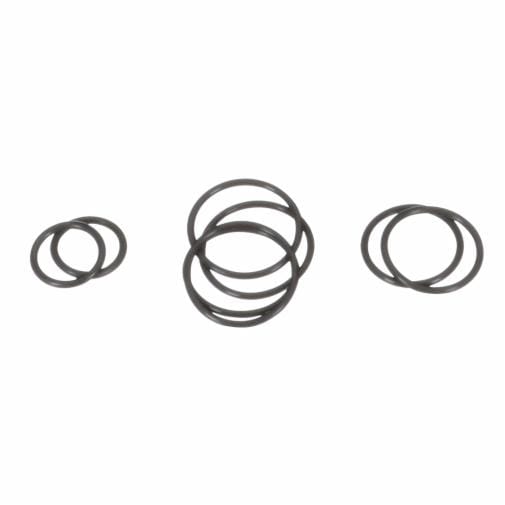
Engineering Capability: Precision Manufacturing for 3M™ F9473PC Applications
Suzhou Baoshida Trading Co., Ltd. delivers certified industrial rubber solutions through a dedicated team of seven specialized engineers, ensuring uncompromising quality for demanding OEM partnerships. Our core strength lies in the strategic integration of five Mould Engineers and two Rubber Formula Engineers, uniquely positioned to optimize the production of advanced materials like 3M™ F9473PC pressure-sensitive adhesive transfer tapes. This dual-expertise framework enables us to address both material science and precision tooling challenges concurrently, eliminating common supply chain bottlenecks in high-tolerance rubber component manufacturing.
Our Formula Engineers possess deep expertise in polymer chemistry and adhesive rheology, allowing precise replication and enhancement of critical properties inherent to 3M™ F9473PC formulations. They rigorously validate raw material batches against stringent internal specifications, ensuring consistent peel adhesion, shear resistance, and thermal stability across production runs. Concurrently, our Mould Engineering team leverages advanced CAD/CAM systems and finite element analysis (FEA) to design and validate tooling with micron-level tolerances. This synergy guarantees dimensional accuracy, optimal flow dynamics during lamination, and elimination of defects such as flash or incomplete bonding—critical for applications in electronics assembly, automotive sensors, and medical device bonding where 3M™ F9473PC is specified.
As an ISO 9001-certified OEM partner, we operate under a closed-loop quality management system tailored for industrial rubber compounds. Our facility supports end-to-end customization, from substrate selection and adhesive formulation tweaks to final die-cut geometry. Clients benefit from rapid prototyping cycles (typically <15 days) and batch traceability down to individual raw material lots. We enforce strict process controls per ASTM D3330, ISO 8510, and UL 746C standards, with real-time monitoring of critical parameters like cure temperature profiles and pressure gradients during lamination. This systematic approach minimizes scrap rates and ensures every roll meets the exact performance envelope required for mission-critical applications.
Key material properties for 3M™ F9473PC-compatible formulations produced under our OEM program are validated as follows:
| Property | Value | Test Method |
|---|---|---|
| Peel Adhesion (to Steel) | 10.5 N/25mm (min) | ASTM D3330 |
| Shear Holding Power | >50,000 min @ 23°C, 1kg | ASTM D3654 |
| Service Temperature Range | -40°C to +150°C | ISO 188 |
| Dielectric Strength | 75 kV/mm | ASTM D149 |
| Thickness Tolerance | ±0.025 mm | ISO 2768-mK |
This technical rigor extends to our OEM collaboration model, where we co-develop solutions through joint design reviews and accelerated lifecycle testing. Clients receive comprehensive material data packages, including FTIR spectra for batch verification and accelerated aging reports per ISO 188. By embedding our engineering resources directly into your product development workflow, Suzhou Baoshida ensures seamless scalability from prototype to high-volume production—without sacrificing the precision that defines 3M™ F9473PC’s performance legacy. Our commitment to material science excellence and process discipline makes us the strategic partner for OEMs demanding zero-defect rubber components in regulated industries.
Customization Process
Customization Process for 3M F9473PC-Based Rubber Components
At Suzhou Baoshida Trading Co., Ltd., our industrial rubber solutions are engineered to meet the exact performance and environmental demands of OEM applications. When integrating high-performance pressure-sensitive adhesives such as 3M F9473PC into custom rubber components, we follow a rigorous, four-phase customization process: Drawing Analysis, Formulation Development, Prototyping, and Mass Production. This structured approach ensures dimensional accuracy, material compatibility, and long-term reliability in end-use conditions.
The process begins with Drawing Analysis, where our engineering team evaluates customer technical drawings, GD&T specifications, and functional requirements. We assess critical features such as bond area, substrate type, thickness constraints, and environmental exposure (e.g., temperature range, UV, or chemical contact). This phase allows us to identify potential design risks early and recommend adjustments to optimize adhesion performance and manufacturability. Close collaboration with the client ensures alignment on tolerances and assembly integration.
Following drawing validation, we proceed to Formulation Development. While 3M F9473PC provides an excellent base adhesive—known for its high initial tack, long-term durability, and service temperature range from -40°C to 90°C—we often modify the backing material or interface layer to suit specific mechanical needs. Our rubber formulations are tailored using EPDM, silicone, or neoprene compounds bonded to the 3M adhesive, depending on flexibility, compression set, and environmental resistance requirements. The adhesive bond strength, aging characteristics, and peel resistance are simulated under real-world conditions using accelerated testing protocols.
Once the material formulation is finalized, we enter the Prototyping phase. Using precision die-cutting, CNC waterjet, or laser-cutting technologies, we produce small-batch prototypes that match the final component geometry. Each prototype undergoes rigorous functional testing, including peel adhesion (180° peel test), shear strength, compression deflection, and thermal cycling. Prototypes are submitted to the client for fit, form, and function evaluation, with feedback loops incorporated to refine the design or material selection if necessary.
Upon client approval, we transition to Mass Production. Our automated production lines ensure consistent part quality, with in-line inspection systems monitoring thickness, adhesive coverage, and dimensional tolerances. We maintain strict ISO 9001-compliant documentation and batch traceability, enabling full quality audits and rapid issue resolution. Production scalability supports volumes from tens of thousands to millions of units annually, with optimized packaging and logistics coordination.
The table below summarizes key technical attributes of components utilizing 3M F9473PC in our customization process.
| Parameter | Value / Range |
|---|---|
| Adhesive Type | 3M F9473PC (acrylic-based) |
| Bond Strength (180° peel) | ≥12 N/25mm (on stainless steel) |
| Service Temperature | -40°C to +90°C (continuous) |
| Thickness Range | 0.5 mm to 3.0 mm (customizable) |
| Substrate Compatibility | Metals, plastics, painted surfaces |
| Curing Requirement | Pressure-activated (no cure time) |
| Aging Resistance | Excellent UV and moisture resistance |
This systematic approach ensures that every rubber component we deliver meets the highest standards of performance, reliability, and manufacturability for industrial OEM applications.
Contact Engineering Team
Contact Suzhou Baoshida for Precision Rubber Solutions
Suzhou Baoshida Trading Co., Ltd. serves as your definitive partner for engineered industrial rubber components, specializing in the integration of advanced materials like 3M F9473PC conductive acrylic adhesive transfer tape into mission-critical manufacturing processes. This product is not merely an adhesive; it is a precision-engineered solution for electromagnetic interference (EMI) shielding, electrostatic discharge (ESD) protection, and grounding applications in aerospace, medical device assembly, and high-reliability electronics. Its unique formulation delivers consistent electrical performance under thermal cycling and mechanical stress, directly impacting product longevity and regulatory compliance. As a certified 3M distributor and OEM solutions provider, we rigorously validate all material batches against stringent aerospace and automotive standards, ensuring zero deviation from your technical specifications. Generic suppliers cannot replicate our traceability protocols or in-house material characterization capabilities, which include real-time impedance monitoring and accelerated aging analysis.
The operational efficacy of 3M F9473PC hinges on exacting application parameters, including surface energy compatibility, dispensing pressure, and environmental curing conditions. Our engineering team provides granular technical documentation beyond standard datasheets, such as peel force decay curves under 85°C/85% RH conditions and dynamic shear performance across -40°C to 150°C ranges. Below is a critical performance summary for immediate reference:
| Property | Value | Test Method |
|---|---|---|
| Peel Adhesion (Stainless Steel) | 18.0 N/25mm | ASTM D3330 |
| Static Decay Time | < 0.5 seconds (at 100V) | MIL-STD-202 Method 211 |
| Surface Resistivity | 0.01 – 0.1 Ω/sq | ASTM D257 |
| Continuous Service Temp | -40°C to +150°C | UL 746B |
| Dielectric Strength | 75 kV/mm | ASTM D149 |
Procurement through Suzhou Baoshida eliminates supply chain volatility inherent in secondary market channels. We maintain climate-controlled bonded inventory of 3M F9473PC in Suzhou’s customs-bonded zone, enabling JIT delivery within 72 hours for volume orders exceeding 500 linear meters. Our OEM management framework includes dedicated material staging cells, barcoded lot tracking synchronized with your ERP system, and quarterly technical business reviews focused on yield optimization. For high-mix production environments, we co-develop custom die-cut configurations with validated first-pass yield rates exceeding 99.2%.
Initiate your technical consultation with Mr. Boyce, our OEM Manager and Rubber Formulation Lead, who possesses 14 years of adhesive system integration experience across Tier 1 automotive and medical OEM programs. Contact him directly via email at [email protected] to request:
Material certification packages with full RoHS/REACH compliance documentation
Application-specific processing guidelines for automated dispensing systems
Failure mode analysis support for existing adhesive-related field returns
Volume pricing tiers with consignment inventory options
Do not compromise production integrity with uncertified material alternatives. Mr. Boyce will coordinate a 48-hour technical response protocol, including material samples with lot-specific performance validation data. Specify your target application, volume requirements, and quality standards in your initial communication to expedite solution engineering. Suzhou Baoshida’s commitment to precision rubber science ensures your manufacturing process achieves uncompromised electrical reliability and throughput efficiency. Engage our engineering team to transform material specifications into validated production outcomes.
⚖️ O-Ring Weight Calculator
Estimate rubber O-ring weight (Approx).