
Technical Contents
Engineering Guide: 45 Degree Rubber Elbow
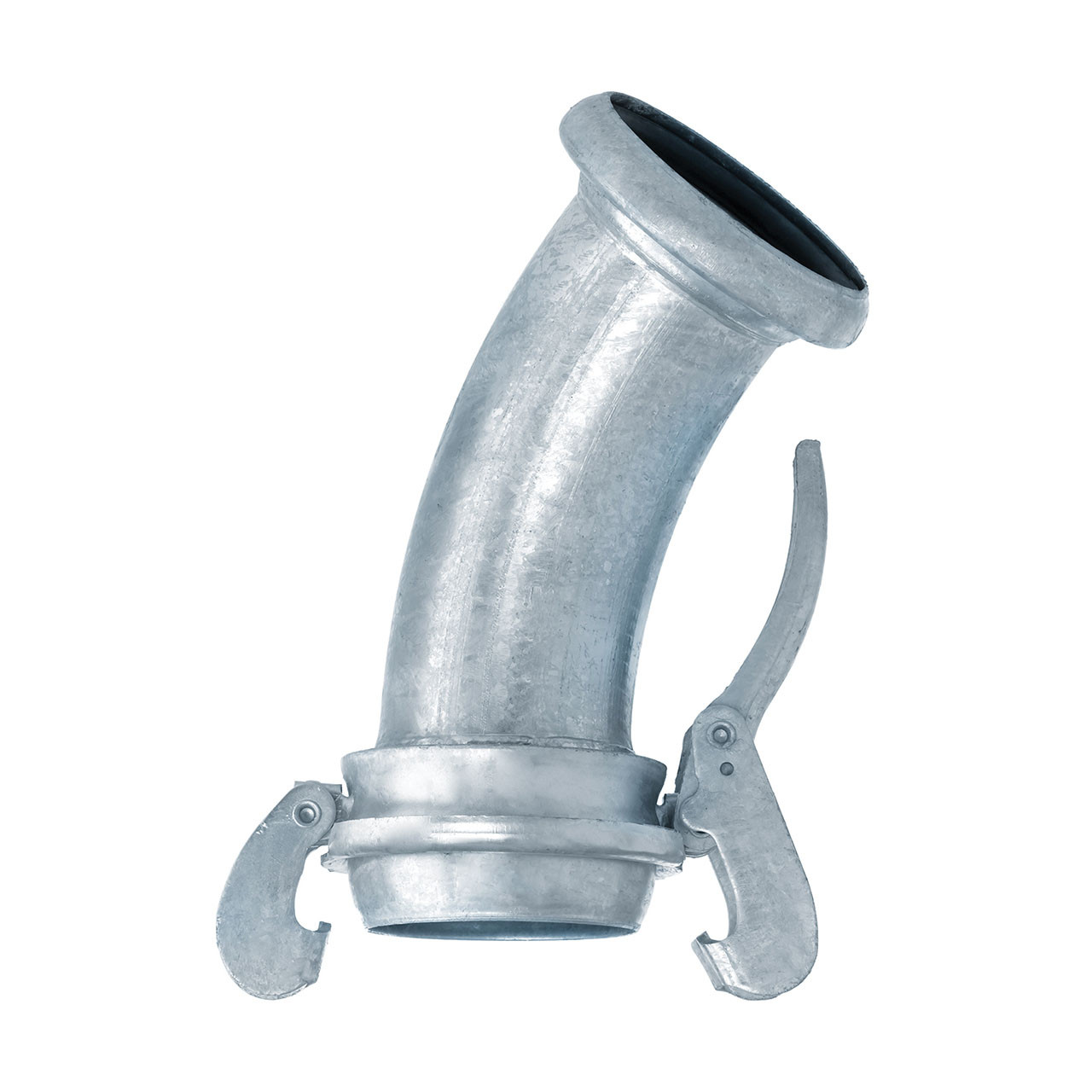
Engineering Insight: 45 Degree Rubber Elbow – The Critical Role of Material Selection
In industrial fluid transfer systems, the 45 degree rubber elbow serves as a vital component for directional flow management, particularly in applications involving vibration absorption, thermal expansion compensation, and misalignment correction. While standard off-the-shelf rubber elbows may appear cost-effective and readily available, their performance often degrades rapidly under real-world operating conditions. This premature failure is primarily attributable to improper material selection—an issue that underscores the necessity for engineered, application-specific solutions.
Rubber elbows are exposed to a complex interplay of mechanical stress, chemical exposure, temperature fluctuations, and pressure cycles. Generic products typically utilize standard elastomers such as natural rubber (NR) or general-purpose EPDM, which may suffice in benign environments. However, these materials lack the resilience required in aggressive industrial settings. For instance, exposure to ozone, oils, acids, or elevated temperatures can cause swelling, cracking, or hardening—leading to leaks, system downtime, and safety hazards.
Material selection must begin with a comprehensive assessment of the operating environment. Nitrile rubber (NBR) is preferred for oil and fuel resistance, while fluorocarbon rubber (FKM) offers superior performance in high-temperature and chemically aggressive applications. For aqueous media and steam lines, EPDM remains a strong candidate due to its excellent heat and weather resistance. Meanwhile, chloroprene (CR) provides balanced resistance to ozone, flame, and moderate oils, making it suitable for general industrial use where environmental exposure is variable.
Another often-overlooked factor is the reinforcement layer. The 45 degree bend geometry inherently induces uneven stress distribution, particularly at the extrados (outer radius). Off-the-shelf elbows frequently use uniform textile or low-grade steel cord reinforcement, which fails to account for localized stress concentrations. In contrast, engineered solutions employ variable-ply design and high-tensile braided or spiral reinforcements to enhance fatigue resistance and pressure retention.
Long-term reliability also depends on adhesion between rubber layers and reinforcement. Poor bonding—common in mass-produced elbows—leads to delamination under cyclic loading. At Suzhou Baoshida Trading Co., Ltd., we utilize advanced compounding and vulcanization techniques to ensure interlayer integrity, extending service life even in high-vibration pump lines or pneumatic conveying systems.
The following table outlines common elastomer options and their performance characteristics for 45 degree rubber elbows:
| Material | Temperature Range (°C) | Key Resistance Properties | Typical Applications |
|---|---|---|---|
| EPDM | -40 to +150 | Steam, water, ozone, alkalis | HVAC, cooling systems, water treatment |
| NBR | -30 to +100 | Oils, fuels, hydraulic fluids | Compressor lines, oil transfer |
| FKM | -20 to +200 | Acids, solvents, high heat | Chemical processing, semiconductor |
| CR | -40 to +120 | Ozone, flame, moderate oils | Industrial air lines, marine systems |
| NR | -50 to +70 | Abrasion, high elasticity | Low-pressure ventilation, general use |
Selecting the appropriate elastomer is not a one-size-fits-all decision. It demands technical insight, application data, and material science expertise. At Suzhou Baoshida, we prioritize engineered compatibility over commoditized availability—ensuring durability, safety, and total cost of ownership reduction for our industrial partners.
Material Specifications
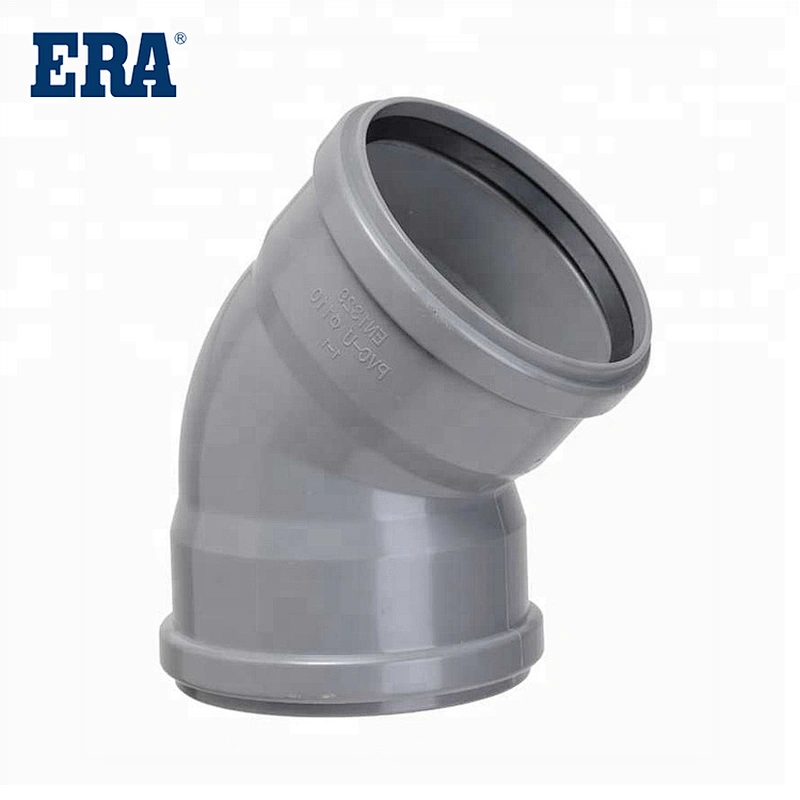
Material Specifications for 45 Degree Rubber Elbows
Material selection for 45 degree rubber elbows is critical to ensure operational integrity under specific chemical, thermal, and mechanical stresses. At Suzhou Baoshida Trading Co., Ltd., we engineer solutions using Viton (FKM), Nitrile (NBR), and Silicone (VMQ) compounds, each optimized for distinct industrial environments. These elastomers undergo rigorous compounding with precision additives to achieve target hardness (60–80 Shore A), tensile strength (≥10 MPa), and elongation at break (≥250%), ensuring reliable angular deflection without structural fatigue. Molecular composition directly dictates performance boundaries, particularly in sealing efficiency and resistance to media degradation.
Viton, a perfluoroelastomer, delivers exceptional resistance to aggressive chemicals including aromatic hydrocarbons, chlorinated solvents, and strong acids. Its thermal stability spans -20°C to +230°C, making it indispensable for high-temperature chemical processing, aerospace fuel systems, and semiconductor manufacturing. Viton elbows maintain seal integrity under continuous exposure to jet fuels and hydraulic fluids, though material cost is elevated due to fluorine content. Nitrile rubber, formulated with acrylonitrile-butadiene copolymers, provides optimal balance for petroleum-based applications. With a temperature range of -40°C to +120°C, it excels in automotive fuel lines, hydraulic machinery, and oil refinery pipelines where resistance to aliphatic hydrocarbons, lubricants, and water is paramount. NBR offers cost efficiency without compromising on abrasion resistance or compression set performance. Silicone elastomers leverage siloxane backbones to achieve extreme flexibility across -60°C to +200°C. They resist ozone, UV radiation, and microbial growth while meeting FDA 21 CFR 177.2600 standards for food, pharmaceutical, and biotech transfer systems. Silicone elbows prevent media contamination in sterile environments but exhibit lower tensile strength versus FKM or NBR.
Material compatibility must align with fluid dynamics and system pressure profiles. Below is a comparative technical specification table for standardized 45 degree elbow configurations (DN15–DN300, PN10–PN40):
| Material | Temperature Range | Key Chemical Resistances | Pressure Rating (Static) | Primary Industrial Applications |
|---|---|---|---|---|
| Viton (FKM) | -20°C to +230°C | Fuels, oils, acids, halogens | 15 bar at 150°C | Chemical processing, aerospace, oil & gas |
| Nitrile (NBR) | -40°C to +120°C | Aliphatic hydrocarbons, water, hydraulic fluids | 10 bar at 100°C | Automotive, manufacturing machinery, marine |
| Silicone (VMQ) | -60°C to +200°C | Ozone, steam, alcohols, food-grade media | 8 bar at 150°C | Pharma, food & beverage, medical devices |
All compounds adhere to ASTM D2000 classification M2BA 710 A14 B14 EF11 EO14 FE17 and undergo 72-hour media immersion testing per ISO 1817. Hardness tolerances are maintained within ±5 Shore A units through controlled sulfur curing. Suzhou Baoshida Trading Co., Ltd. provides OEM formulation customization, including conductive carbon black loading for static dissipation or peroxide curing for enhanced purity. Final material validation requires client-specific fluid compatibility analysis to mitigate swelling or embrittlement risks in dynamic flow conditions. Our engineering team collaborates with end-users to match elastomer properties with operational parameters, ensuring lifecycle durability in critical infrastructure.
Manufacturing Capabilities
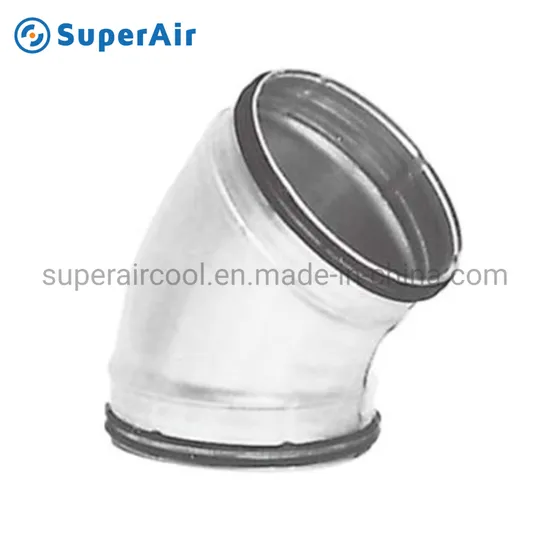
Engineering Excellence in 45 Degree Rubber Elbow Manufacturing
At Suzhou Baoshida Trading Co., Ltd., our engineering capability forms the backbone of our industrial rubber solutions, particularly in the precision manufacturing of 45 degree rubber elbows. With a dedicated team of five specialized mould engineers and two advanced formula engineers, we maintain full vertical control over the product development lifecycle—from concept and compound formulation to mould design and final production. This integrated engineering approach ensures that every component meets the exact mechanical, thermal, and chemical demands of diverse industrial applications.
Our mould engineers utilize state-of-the-art CAD/CAM systems and finite element analysis (FEA) to design and validate elastomeric moulds with micron-level dimensional accuracy. Each 45 degree rubber elbow is engineered to provide optimal flow dynamics, minimal pressure drop, and long-term sealing integrity under fluctuating operational conditions. The team specializes in multi-cavity and family mould configurations, enabling scalable production while maintaining strict consistency across batches. Rapid prototyping and in-house tooling fabrication further reduce time-to-market, providing OEM partners with agile development cycles.
Complementing our mould expertise, our two senior rubber formula engineers bring deep knowledge in polymer chemistry and material performance optimization. They formulate custom elastomer compounds tailored to specific customer requirements, including resistance to oil, ozone, extreme temperatures, and abrasive media. By adjusting polymer base (such as EPDM, NBR, CR, or silicone), filler systems, vulcanization profiles, and additive packages, we achieve precise balances of flexibility, durability, and chemical resilience. These formulations are rigorously tested under simulated service conditions to validate long-term performance.
As an OEM-enabling manufacturer, Suzhou Baoshida supports co-engineering initiatives with clients, offering technical collaboration on design for manufacturability (DFM), material selection, and lifecycle testing. We accommodate custom branding, dimensional specifications, and performance certifications, ensuring seamless integration into client systems. Our ISO-compliant production environment adheres to international quality standards, with full traceability from raw material to finished goods.
The following table outlines typical technical specifications for our standard 45 degree rubber elbow series, with customization available upon request:
| Parameter | Standard Specification |
|---|---|
| Angle | 45 degrees |
| Materials | EPDM, NBR, CR, Silicone, Neoprene |
| Hardness (Shore A) | 50–80 ±5 |
| Temperature Range | -40°C to +150°C (varies by compound) |
| Pressure Rating | Up to 25 bar (burst pressure > 60 bar) |
| Flange Standards | DIN, ANSI, JIS, ISO (customizable) |
| Reinforcement | Textile or steel braid (optional) |
| Surface Finish | Smooth, semi-gloss (custom finishes available) |
| Certifications | ROHS, FDA (on request), ISO 9001 compliant |
Through advanced engineering integration and OEM-focused flexibility, Suzhou Baoshida delivers high-performance 45 degree rubber elbows that meet the evolving demands of industries including automotive, HVAC, marine, and industrial fluid handling.
Customization Process
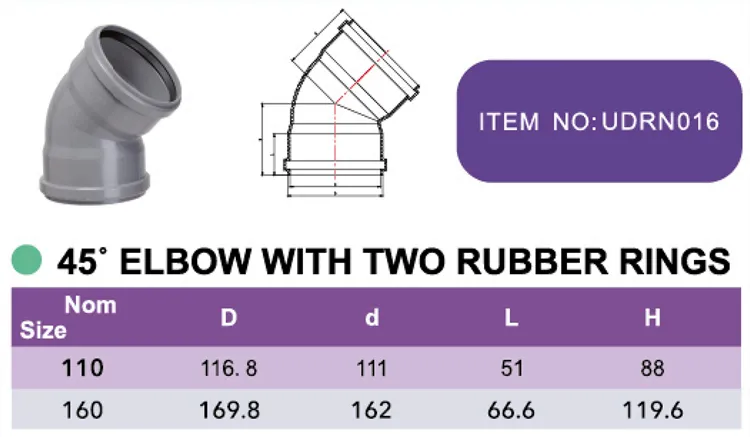
Customization Process for 45° Rubber Elbow Manufacturing
At Suzhou Baoshida Trading Co., Ltd., our customization process for 45° rubber elbows integrates rigorous engineering protocols with advanced material science to deliver precision-engineered components for demanding industrial applications. This structured workflow ensures optimal performance, longevity, and compliance with client-specific operational requirements.
Drawing Analysis
The process initiates with comprehensive dimensional and functional analysis of client-provided technical drawings. Our engineering team scrutinizes critical parameters including inner/outer diameters, wall thickness, bend radius, flange specifications, and surface finish tolerances per ISO 2768-mK. Concurrently, we evaluate the intended operating environment—focusing on fluid media (e.g., hydraulic oil, acids, steam), temperature range, pressure cycles, and dynamic stress factors. This phase identifies potential design vulnerabilities and defines material compatibility boundaries, forming the foundation for subsequent formulation development.
Formulation
Leveraging Suzhou Baoshida’s proprietary compound database and ASTM D2000 classification standards, our rubber chemists develop a tailored elastomer formulation. Key considerations include polymer selection (NBR, EPDM, CR, or FKM), filler reinforcement (e.g., silica vs. carbon black), cure system optimization, and additive integration for ozone/chemical resistance. Each compound undergoes predictive modeling for compression set (ASTM D395), tensile strength (ASTM D412), and fluid immersion resistance (ASTM D471). Formulation validation requires ≥95% alignment with client-specified hardness (Shore A), elongation, and thermal stability metrics.
Prototyping
Pre-production prototypes are manufactured using precision-machined molds under controlled vulcanization conditions (time, temperature, pressure). Each prototype undergoes non-destructive testing (NDT) via ultrasonic thickness gauging and visual inspection for voids or surface defects. Functional validation includes:
Hydrostatic pressure testing at 1.5x operational pressure (per SAE J517)
Flex fatigue testing to 100,000 cycles at maximum deflection
Fluid compatibility assessment via volume swell measurement
Client approval of dimensional reports and test certificates is mandatory before progression to mass production.
Mass Production
Full-scale manufacturing employs statistical process control (SPC) with real-time monitoring of cure characteristics (MDR testing per ASTM D5289) and dimensional consistency. Every batch undergoes 100% visual inspection and抽样 testing for critical properties. Traceability is maintained via laser-etched batch codes linked to raw material certificates (ISO 9001:2015). Final shipment includes a comprehensive quality dossier with material test reports (MTRs), dimensional validation data, and compliance documentation for ISO 1307 or client-specific standards.
Material Specification Comparison
| Material | Temperature Range (°C) | Key Fluid Resistance | Hardness Range (Shore A) | ASTM D2000 Reference Line |
|---|---|---|---|---|
| NBR | -30 to +120 | Oils, Fuels, Water | 50–90 | BK2 714 B14 EF11 EF21 |
| EPDM | -50 to +150 | Steam, Alkalis, Brake Fluid | 40–95 | EA4 735 A14 EF11 EF21 |
| CR | -40 to +110 | Ozone, Weathering | 50–80 | BG3 713 B14 EF11 EF21 |
This systematic approach guarantees that every 45° rubber elbow meets the exacting demands of industrial fluid transfer systems while minimizing field failure risks. Suzhou Baoshida’s commitment to scientific validation at each phase ensures OEM partners receive components engineered for operational integrity and extended service life.
Contact Engineering Team
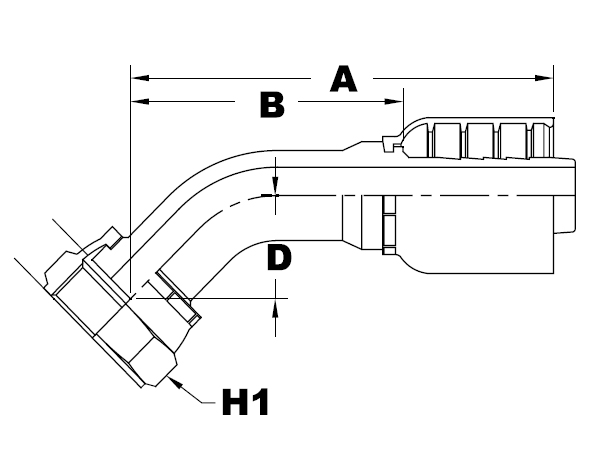
For industrial manufacturers and engineering firms seeking high-performance rubber components, Suzhou Baoshida Trading Co., Ltd. stands as a trusted partner in the development and supply of precision-engineered rubber solutions. Our 45-degree rubber elbow is specifically designed for demanding applications in fluid transfer systems, HVAC, industrial machinery, and chemical processing environments. Built to withstand thermal fluctuations, mechanical stress, and corrosive media, this component ensures reliable performance and extended service life in critical operations.
At Suzhou Baoshida, we combine advanced material science with rigorous quality control to deliver rubber elbows that meet international industrial standards. Our 45-degree variant is engineered for optimal flow dynamics, minimizing turbulence and pressure drop while maintaining structural integrity under continuous operational loads. Each product is manufactured using high-purity synthetic rubber compounds, including EPDM, NBR, and silicone, tailored to customer-specified hardness, temperature resistance, and chemical compatibility requirements.
We understand that industrial procurement demands not only technical excellence but also supply chain reliability and responsive support. That is why we offer OEM and ODM services with scalable production capacity, ensuring on-time delivery without compromise to quality. Whether you require a single prototype or a bulk order for integration into large-scale systems, our team is equipped to meet your specifications with precision and consistency.
To facilitate seamless integration into your systems, we provide comprehensive technical documentation, including dimensional schematics, material certifications, and performance test reports. Our engineering team is also available for direct consultation to assist in material selection, design validation, and application-specific customization.
Below are the standard technical specifications for our 45-degree rubber elbow. Custom configurations are available upon request.
| Parameter | Specification |
|---|---|
| Angle | 45 degrees |
| Material Options | EPDM, NBR, Silicone, CR (Neoprene) |
| Hardness (Shore A) | 50–80 ±5 |
| Temperature Range | -40°C to +150°C (depending on compound) |
| Internal Diameter Range | 25 mm to 300 mm |
| Flange Standards | ANSI, DIN, JIS (customizable) |
| Pressure Rating | Up to 16 bar (varies by size and material) |
| Reinforcement | Embedded textile or wire braid (optional) |
| Surface Finish | Smooth bore, electro-polished options |
| Certifications | ISO 9001, RoHS compliant |
For technical inquiries, quotation requests, or product sampling, we invite you to contact Mr. Boyce, OEM Manager at Suzhou Baoshida Trading Co., Ltd. Direct communication ensures prompt attention to your project requirements and accelerates the path from specification to delivery.
Reach out via email at [email protected] to initiate a technical dialogue. Mr. Boyce brings over a decade of experience in industrial rubber applications and is positioned to guide your team through material selection, design optimization, and volume production planning. At Suzhou Baoshida, we don’t just supply components—we deliver engineered solutions backed by technical expertise and industrial accountability.
⚖️ O-Ring Weight Calculator
Estimate rubber O-ring weight (Approx).