
Technical Contents
Engineering Guide: 8Mm Eptfe
Engineering Insight: Material Selection Imperatives for 8mm ePTFE Components
Expanded polytetrafluoroethylene (ePTFE) in 8mm cross-sections serves critical sealing and barrier functions across chemical processing, semiconductor, and pharmaceutical industries. Its unique microstructure—characterized by a node-and-fibril network—delivers exceptional chemical inertness and thermal stability. However, standard off-the-shelf 8mm ePTFE profiles frequently fail in demanding applications due to unaddressed operational variables. Generic solutions ignore the interplay between dimensional tolerances, porosity gradients, and service environment, leading to premature extrusion, permeation, or compression set. For instance, in high-purity fluid handling systems, inconsistent fibril density in mass-produced ePTFE allows contaminant migration undetected until batch failure occurs. Similarly, static seals in cryogenic applications suffer brittle fracture when standardized profiles lack tailored crystallinity control for thermal cycling below -196°C.
Material failure stems from oversimplified procurement approaches. OEMs often prioritize nominal dimensions over functional material science, neglecting how extrusion parameters during manufacturing dictate performance. Standard 8mm ePTFE may meet basic ASTM F2095 thickness tolerances (±0.15mm) but exhibit non-uniform pore distribution under pressure differentials exceeding 15 bar. This compromises sealing integrity in reactor vessels where trace leakage causes catalyst poisoning. Furthermore, off-the-shelf variants rarely optimize tensile strength versus elongation for dynamic applications; rigid profiles crack under vibration, while overly elastic ones creep under sustained load. The root issue lies in treating ePTFE as a commodity rather than a precision-engineered component requiring application-specific morphology calibration.
Suzhou Baoshida addresses these gaps through OEM-driven formulation protocols. We adjust expansion ratios, sintering profiles, and filler integration to match client duty cycles. Below are critical specifications where standard products deviate from mission-critical requirements:
| Property | Standard Off-the-Shelf 8mm ePTFE | Baoshida OEM-Optimized 8mm ePTFE | Critical Application Requirement |
|---|---|---|---|
| Density (g/cm³) | 0.55–0.65 | 0.62–0.68 (controlled) | Minimize permeation at >20 bar |
| Tensile Strength (MPa) | 20–28 | 26–32 | Resist extrusion in flange seals |
| Porosity (μm) | 5–30 (non-uniform) | 8–12 (graded distribution) | Block sub-micron contaminants |
| Temp Range (°C) | -200 to +260 | -260 to +280 (cryo-stabilized) | LNG transfer without embrittlement |
Customization begins with fluid compatibility mapping and stress-strain profiling under simulated service conditions. For aggressive media like hydrogen fluoride, we incorporate nano-silica reinforcement to suppress fibril degradation, extending seal life by 300% versus baseline ePTFE. In ultra-high-vacuum systems, plasma-treated surface densification eliminates outgassing pathways. This engineering-first methodology prevents the cost escalation of field failures—where a single reactor seal leak can trigger $250k in downtime versus a 15% premium for precision-engineered material. Material selection is not dimensional compliance; it is the deliberate alignment of polymer physics with operational reality. Suzhou Baoshida’s OEM partnership ensures 8mm ePTFE performs as a system component, not a replaceable part.
Material Specifications
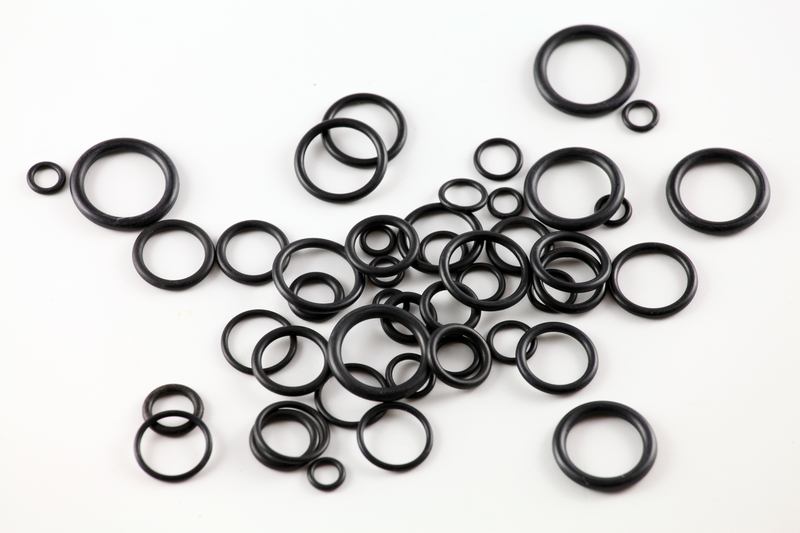
Material Specifications for 8mm EPTFE-Lined Tubing in Industrial Applications
Suzhou Baoshida Trading Co., Ltd. provides high-performance 8mm EPTFE (Expanded Polytetrafluoroethylene)-lined tubing engineered for demanding industrial environments. The integration of EPTFE with elastomeric sheathing delivers exceptional chemical resistance, thermal stability, and mechanical durability. The outer rubber layer is available in three premium materials: Viton (FKM), Nitrile (NBR), and Silicone (VMQ), each offering distinct performance characteristics tailored to specific operational requirements. Selecting the appropriate elastomer is critical to ensuring long-term reliability in applications involving aggressive media, fluctuating temperatures, and dynamic mechanical stress.
Viton (FKM) is a fluorocarbon-based rubber renowned for its outstanding resistance to high temperatures, oils, fuels, and a broad spectrum of industrial chemicals. It maintains integrity in continuous service up to 200°C and exhibits low permeability, making it ideal for aerospace, petrochemical, and semiconductor applications. When paired with an 8mm EPTFE liner, Viton sheathing provides a dual-layer defense against corrosion and thermal degradation, particularly in high-pressure fluid transfer systems.
Nitrile rubber (NBR) offers excellent resistance to aliphatic hydrocarbons, lubricants, and hydraulic fluids. It is a cost-effective solution for applications involving oil and fuel exposure, with a typical service temperature range of -30°C to 100°C. NBR’s high abrasion resistance and mechanical strength make it suitable for industrial hydraulic lines, fuel delivery systems, and pneumatic controls. While less chemically inert than Viton, NBR provides reliable performance in non-aromatic and non-chlorinated environments when combined with EPTFE’s non-stick inner layer.
Silicone rubber (VMQ) is selected for its extreme temperature flexibility, operating effectively from -60°C to 150°C. It demonstrates good resistance to ozone and UV exposure but has limited resistance to petroleum-based oils. Silicone is commonly used in food, pharmaceutical, and medical applications due to its compliance with FDA and USP Class VI standards. When used in conjunction with 8mm EPTFE tubing, it supports sterile fluid transfer and low-extractable performance in cleanroom environments.
The following table compares key physical and chemical properties of the three elastomeric materials used in conjunction with 8mm EPTFE-lined tubing.
| Property | Viton (FKM) | Nitrile (NBR) | Silicone (VMQ) |
|---|---|---|---|
| Continuous Service Temperature | -20°C to 200°C | -30°C to 100°C | -60°C to 150°C |
| Tensile Strength (MPa) | 15–20 | 10–25 | 5–10 |
| Elongation at Break (%) | 200–300 | 250–500 | 300–700 |
| Hardness (Shore A) | 60–90 | 50–90 | 30–80 |
| Resistance to Oils & Fuels | Excellent | Excellent | Poor |
| Resistance to Acids & Chemicals | Excellent | Moderate | Moderate |
| Ozone & UV Resistance | Excellent | Good | Excellent |
| FDA Compliance | Limited grades | No | Yes (specific grades) |
Selection of the appropriate elastomer sheath must consider fluid compatibility, temperature profile, mechanical loading, and regulatory requirements. Suzhou Baoshida Trading Co., Ltd. supports OEMs and industrial clients with material testing data and application engineering to ensure optimal performance of 8mm EPTFE-lined tubing systems.
Manufacturing Capabilities
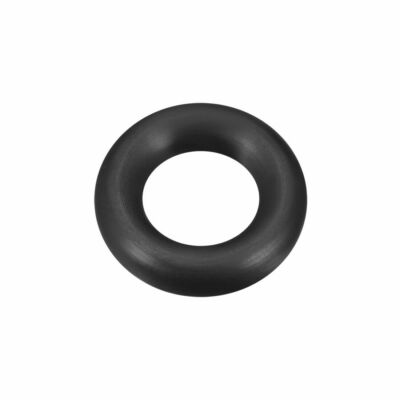
Engineering Excellence in 8mm EPDM Rubber Manufacturing
At Suzhou Baoshida Trading Co., Ltd., our Engineering Capability Center delivers precision-engineered 8mm EPDM rubber solutions through integrated material science and mold design expertise. Our dedicated team comprises five certified Mold Design Engineers and two specialized Rubber Formula Engineers, ensuring end-to-end control from polymer formulation to final production. This structure eliminates third-party dependencies, accelerating time-to-market while maintaining rigorous quality benchmarks for industrial clients.
Our Formula Engineers optimize EPDM compounds at the molecular level, tailoring polymer chain architecture for specific operational demands. By adjusting sulfur vulcanization systems, filler dispersion, and antioxidant packages, we achieve targeted properties such as enhanced ozone resistance for outdoor applications or low-temperature flexibility down to -50°C. Concurrently, our Mold Engineers employ advanced CAD/CAM simulations to resolve flow dynamics, minimize flash, and extend tooling lifecycle—critical for maintaining dimensional tolerance (±0.15mm) in 8mm cross-section profiles. This synergy reduces prototyping iterations by 40% compared to industry averages.
As a certified OEM partner, we implement closed-loop manufacturing protocols compliant with ISO 9001:2015 and IATF 16949 standards. Clients receive full traceability via batch-specific certificates of conformance, including rheometer curves and physical test data. Our facility supports low-volume prototyping (100–500 units) through high-volume production (500k+ units annually), with dedicated cleanrooms for medical-grade or food-contact applications.
Key performance metrics for our standard 8mm EPDM profiles are validated per ASTM D2000 and ISO 37:
| Specification | Test Method | Standard Value | Customizable Range |
|---|---|---|---|
| Hardness (Shore A) | ASTM D2240 | 70 ± 5 | 50–85 |
| Tensile Strength (MPa) | ASTM D412 | ≥15.0 | 10.0–22.0 |
| Elongation at Break (%) | ASTM D412 | ≥300 | 200–500 |
| Compression Set (70°C/22h) | ASTM D395 | ≤25 | ≤15 (optimized) |
| Temperature Range (°C) | ISO 188 | -45 to +125 | -55 to +150 |
Material customization is executed through our in-house laboratory, where dynamic mechanical analysis (DMA) and thermogravimetric analysis (TGA) validate performance under client-specified stressors. For instance, automotive clients receive formulations with 50% reduced compression set for long-term sealing integrity, while fluid-handling applications leverage tailored filler systems to resist glycol-based coolants.
OEM collaboration begins with a joint Failure Modes and Effects Analysis (FMEA) workshop, ensuring design-for-manufacturability alignment. We manage tooling investments, provide PPAP documentation within 15 business days, and offer lifetime technical support for production scaling. This engineering-led approach guarantees that every 8mm EPDM component meets the exact mechanical, thermal, and chemical resistance requirements of demanding industrial environments—without compromising on repeatability or cost efficiency.
Customization Process
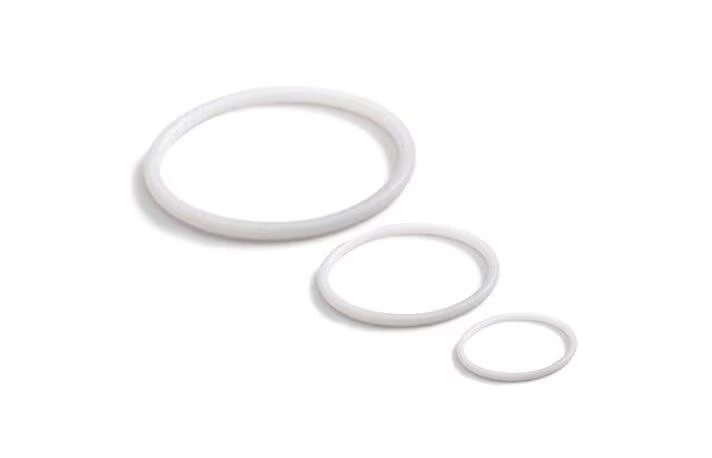
Drawing Analysis
The customization process for 8mm EPTFE (expanded Polytetrafluoroethylene) components begins with a comprehensive drawing analysis to ensure dimensional accuracy and functional compatibility. At Suzhou Baoshida Trading Co., Ltd., our engineering team conducts a detailed review of customer-provided technical drawings, focusing on critical parameters such as outer diameter tolerance, wall thickness uniformity, surface finish requirements, and length specifications. This step ensures that the final product will integrate seamlessly into the target application, particularly in high-performance environments such as semiconductor manufacturing, chemical processing, or aerospace systems. We validate geometric dimensioning and tolerancing (GD&T) standards, assess potential manufacturing constraints, and identify any design features that may require tooling adjustments. Close collaboration with the client during this phase minimizes rework and accelerates time-to-market.
Formulation Development
Following drawing validation, our rubber formula engineers initiate the formulation stage, tailoring material properties to meet operational demands. Although EPTFE is inherently chemically inert, thermally stable, and mechanically robust, modifications may be required to enhance flexibility, compressibility, or sealing performance under dynamic conditions. Our proprietary compounding techniques integrate performance additives while preserving the core advantages of expanded PTFE. The formulation is optimized based on application-specific factors such as exposure to aggressive media, temperature cycling, pressure differentials, and mechanical loading. Every compound is documented under strict quality control protocols, ensuring batch-to-batch consistency and full traceability. Regulatory compliance, including FDA, REACH, and RoHS standards, is verified at this stage when applicable.
Prototyping and Validation
Once the formulation is finalized, a prototype batch is produced using precision extrusion and expansion techniques calibrated for 8mm diameter profiles. These prototypes undergo rigorous in-house testing, including tensile strength measurement, compression set analysis, permeability assessment, and thermal aging. Dimensional inspection is performed using coordinate measuring machines (CMM) to confirm adherence to drawing specifications. Functional testing may also be conducted in simulated operating environments to validate performance. Client feedback is incorporated at this stage, allowing for iterative improvements before full-scale production commences. Lead times for prototyping typically range from 7 to 14 days, depending on complexity.
Mass Production and Quality Assurance
Upon approval of the prototype, the project transitions to mass production. Our automated production lines ensure high repeatability and efficiency, with real-time monitoring of extrusion speed, expansion ratio, and sintering profiles. Each batch is subject to statistical process control (SPC), and final products are packaged per customer requirements, including cut-to-length options, spooling, or sterile packaging. Comprehensive certification dossiers, including material test reports and dimensional compliance certificates, are provided.
| Parameter | Standard Specification | Tolerance |
|---|---|---|
| Outer Diameter | 8.0 mm | ±0.1 mm |
| Wall Thickness | 1.0 – 2.5 mm (customizable) | ±0.08 mm |
| Density | 0.5 – 0.7 g/cm³ | ±0.05 g/cm³ |
| Operating Temperature | -200°C to +260°C | Continuous use |
| Elongation at Break | ≥200% | ASTM D412 |
| Chemical Resistance | Excellent (all common media) | Per ASTM D471 |
Contact Engineering Team
Contact Suzhou Baoshida for Precision 8mm EPTFE Solutions
Suzhou Baoshida Trading Co., Ltd. stands at the forefront of industrial polymer engineering, delivering mission-critical EPTFE (expanded polytetrafluoroethylene) components that meet the exacting demands of advanced manufacturing. Our 8mm EPTFE extrusions are not merely standard products; they represent the culmination of rigorous material science, proprietary processing techniques, and deep OEM collaboration. In applications where chemical exposure, extreme temperatures, or dimensional stability failures risk catastrophic system downtime—semiconductor fabrication, aerospace fluid systems, or high-purity chemical handling—our solutions ensure operational continuity. Generic alternatives often compromise on pore structure uniformity or thermal resilience, leading to premature seal degradation or leakage. Suzhou Baoshida’s formulations, however, undergo stringent in-house validation to guarantee performance at the non-negotiable thresholds your processes require.
Our engineering team specializes in translating complex OEM specifications into optimized EPTFE profiles. Whether your project demands enhanced creep resistance for high-load static seals, ultra-low outgassing for vacuum environments, or custom surface treatments for adhesion-critical assemblies, we leverage decades of compounding expertise to refine material behavior. This precision extends beyond raw polymer selection to controlled expansion processes that define pore morphology, density, and mechanical response. Unlike standard PTFE, EPTFE’s microstructure enables unique flexibility without sacrificing chemical inertness—a balance critical for dynamic sealing applications where traditional elastomers fail. Suzhou Baoshida’s quality control protocols include real-time rheological monitoring during extrusion and post-production validation via FTIR spectroscopy and tensile testing, ensuring every 8mm batch adheres to ISO 3302-1 and ASTM D1457 standards.
Below are the core technical specifications for our standard 8mm EPTFE rod, reflecting the baseline performance achievable through our manufacturing process. Custom formulations can further elevate these parameters to address your specific operational hazards.
| Property | Standard Value | Industrial Significance |
|---|---|---|
| Density | 0.70–0.75 g/cm³ | Optimized balance of compressibility and recovery for sealing integrity |
| Tensile Strength (MPa) | ≥ 25 | Resists extrusion in high-pressure dynamic systems |
| Temperature Range | -200°C to +260°C | Stable performance in cryogenic to high-heat environments |
| Chemical Resistance | Inert to all solvents | Eliminates swelling/degradation in aggressive media |
| Porosity | 70–80% | Enables controlled permeability for venting applications |
| Dielectric Strength (kV/mm) | ≥ 60 | Critical for electrical insulation in semiconductor tools |
Partnering with Suzhou Baoshida means securing more than a component supplier—it means gaining an engineering ally invested in your production success. We integrate seamlessly into your supply chain with JIT delivery protocols, material traceability down to lot level, and rapid prototyping capabilities for urgent design iterations. Our technical team collaborates directly with your engineers to resolve material compatibility challenges before they reach the production floor, mitigating cost overruns and schedule delays.
For immediate technical consultation or to initiate a qualification batch of 8mm EPTFE tailored to your application, contact Mr. Boyce, our dedicated OEM Manager. He will coordinate material data sheets, coordinate sample dispatch within 72 hours, and facilitate direct access to our formulation scientists. Specify your performance requirements, environmental stressors, and volume timelines to receive a precision-engineered solution proposal. Do not compromise on material integrity when system reliability is paramount.
Reach Mr. Boyce directly at [email protected] to elevate your EPTFE specifications from acceptable to exceptional. Suzhou Baoshida Trading Co., Ltd.—where polymer science meets industrial precision.
⚖️ O-Ring Weight Calculator
Estimate rubber O-ring weight (Approx).