Technical Contents
Engineering Guide: Rubber Metal Bond
Engineering Insight: The Critical Role of Material Selection in Rubber-to-Metal Bonding
In industrial applications, rubber-to-metal bonding is a vital engineering solution that combines the structural rigidity of metal with the damping, sealing, and vibration-isolation properties of elastomers. However, achieving a durable, high-performance bond is not a matter of simple adhesion—it hinges critically on precise material selection. Off-the-shelf solutions often fail because they assume a universal compatibility between rubber compounds and metal substrates, disregarding the complex interplay of chemical, thermal, and mechanical factors inherent in real-world operating environments.
The failure of standard bonded components typically originates from mismatched material properties. For example, using a natural rubber (NR) compound bonded to a steel substrate in a high-temperature oil-exposed environment leads to rapid degradation due to NR’s poor resistance to heat and hydrocarbons. Similarly, improper surface preparation or the absence of a compatible adhesion promoter layer compromises bond integrity, leading to delamination under cyclic stress. These failures are not anomalies—they are predictable outcomes of inadequate material engineering.
At Suzhou Baoshida Trading Co., Ltd., we emphasize a systems approach to rubber-to-metal bonding. This begins with evaluating the operational parameters: temperature range, fluid exposure, dynamic loading, and required service life. Only then can the appropriate elastomer and metal substrate be selected, along with the correct priming system. For instance, nitrile rubber (NBR) is optimal for oil-resistant applications, while fluorocarbon rubber (FKM) excels in high-temperature and chemically aggressive environments. The metal component must also be considered—not only in terms of strength but also surface energy and oxide formation, which directly influence bonding efficiency.
Equally important is the adhesive system. Two-coat systems (primer and topcoat) are often necessary to bridge the polarity gap between inorganic metal surfaces and organic rubber matrices. These coatings must be chemically compatible with both the rubber compound and the vulcanization process to ensure co-curing and strong covalent bonding.
Below is a comparative overview of common rubber materials used in rubber-to-metal bonding applications, highlighting key performance characteristics:
| Rubber Type | Temperature Range (°C) | Oil Resistance | Bond Strength (MPa) | Typical Metal Substrate | Common Applications |
|---|---|---|---|---|---|
| NBR | -30 to +120 | High | 8–12 | Steel, Stainless Steel | Hydraulic seals, dampers |
| EPDM | -50 to +150 | Low | 7–10 | Steel, Aluminum | Weather seals, automotive |
| FKM | -20 to +200 | Very High | 10–14 | Stainless Steel | Aerospace, chemical pumps |
| NR | -50 to +70 | Low | 12–16 | Steel | Mounts, low-stress isolators |
| CR | -40 to +100 | Moderate | 8–11 | Steel | Industrial rollers, hoses |
In conclusion, successful rubber-to-metal bonding is not achieved through generic solutions but through engineered compatibility. At Suzhou Baoshida, we prioritize material science rigor to deliver bonded components that perform reliably under exacting conditions—ensuring longevity, safety, and cost efficiency for our OEM partners.
Material Specifications
Material Specifications for Rubber-Metal Bonding Applications
Selecting the appropriate elastomer for rubber-metal bonding is critical to ensuring long-term performance in demanding industrial environments. At Suzhou Baoshida Trading Co., Ltd., we engineer precision formulations to maximize adhesion strength, environmental resistance, and service life. The bond interface must withstand mechanical stress, thermal cycling, and chemical exposure without delamination or degradation. Our proprietary primers and surface treatments are optimized for specific elastomer-metal combinations, ensuring cohesive failure occurs within the rubber itself rather than at the bond line. Below we detail key specifications for Viton®, Nitrile (NBR), and Silicone rubber, the three most prevalent materials in OEM sealing and damping applications requiring metal-rubber integration.
Viton® fluoroelastomers offer superior resistance to high temperatures, aggressive chemicals, and fuels. Our formulations achieve continuous service temperatures up to 230°C (446°F) with intermittent peaks to 260°C (500°F). They resist oxygenated automotive fuels, hydraulic fluids, and aromatic hydrocarbons, making them indispensable for aerospace actuators, chemical processing seals, and downhole oilfield components. Adhesion to stainless steel or aluminum substrates requires specialized chlorinated polyolefin primers and precise vulcanization control to maintain bond integrity above 200°C.
Nitrile rubber (NBR) provides exceptional resistance to petroleum-based oils, greases, and aliphatic hydrocarbons at a cost-effective balance. Standard grades operate reliably from -40°C (-40°F) to 120°C (248°F), with hydrogenated NBR (HNBR) extending the upper limit to 150°C (302°F). This material dominates automotive fuel and transmission systems, hydraulic seals, and industrial hose assemblies bonded to steel inserts. Achieving >15 MPa adhesion strength necessitates phosphate-conversion coating of metal substrates followed by dual-layer epoxy-phenolic primers resistant to oil swelling.
Silicone rubber excels in extreme temperature applications from -60°C (-76°F) to 200°C (392°F), with specialty grades stable to 300°C (572°F). Its biocompatibility and resistance to ozone, UV, and water vapor make it ideal for medical device components, semiconductor manufacturing seals, and LED lighting gaskets bonded to aluminum housings. However, silicone’s low surface energy demands plasma treatment of metal surfaces and platinum-catalyzed adhesive systems to prevent interfacial failure under thermal shock.
Critical material properties for rubber-metal bonding are summarized below. All values reflect Suzhou Baoshida’s OEM-validated formulations cured under industrial conditions per ASTM D2000 and ISO 37 standards.
| Material | Temperature Range (°C) | Key Chemical Resistances | Typical Adhesion System | Common Bonded Applications |
|---|---|---|---|---|
| Viton® | -20 to 230 | Fuels, oils, acids, solvents | Chlorinated polyolefin + epoxy-phenolic | Aerospace seals, chemical valves |
| Nitrile (NBR) | -40 to 120 | Petroleum oils, greases, water | Epoxy-phenolic dual-layer | Automotive O-rings, hydraulic seals |
| Silicone | -60 to 200 | Ozone, UV, water, steam | Platinum-catalyzed adhesive + plasma-treated | Medical devices, LED gaskets |
OEM validation protocols must include 1,000-hour thermal aging at maximum service temperature and immersion testing in end-use fluids per SAE AS5527. Suzhou Baoshida provides comprehensive material test reports (MTRs) and adhesion validation data for each production lot, ensuring traceability and compliance with ISO 9001 and IATF 16949 requirements. Consistent bond performance hinges on strict control of metal substrate roughness (Ra 1.6–3.2 μm), primer application thickness (15–25 μm), and cure kinetics during molding.
Manufacturing Capabilities
Engineering Capability: Precision in Rubber-to-Metal Bonding
At Suzhou Baoshida Trading Co., Ltd., our engineering capability in rubber-to-metal bonding is built on a foundation of advanced material science and precision manufacturing. With a dedicated team of five mould engineers and two specialized rubber formula engineers, we deliver engineered solutions tailored to the exacting demands of industrial applications. Our cross-functional engineering team ensures seamless integration between material formulation, mould design, and production execution, resulting in bonded components that meet the highest standards of performance, durability, and consistency.
Our rubber formula engineers possess deep expertise in polymer chemistry, enabling precise control over compound development for optimal adhesion, resilience, and environmental resistance. Each rubber formulation is engineered to match the specific metal substrate—whether steel, aluminum, or stainless steel—and the operational conditions of the final application. This includes resistance to oils, ozone, extreme temperatures (-40°C to +150°C), and dynamic stress. By developing proprietary adhesive primers and optimizing cure kinetics, we achieve bond strengths that exceed industry benchmarks, minimizing the risk of delamination under mechanical or thermal load.
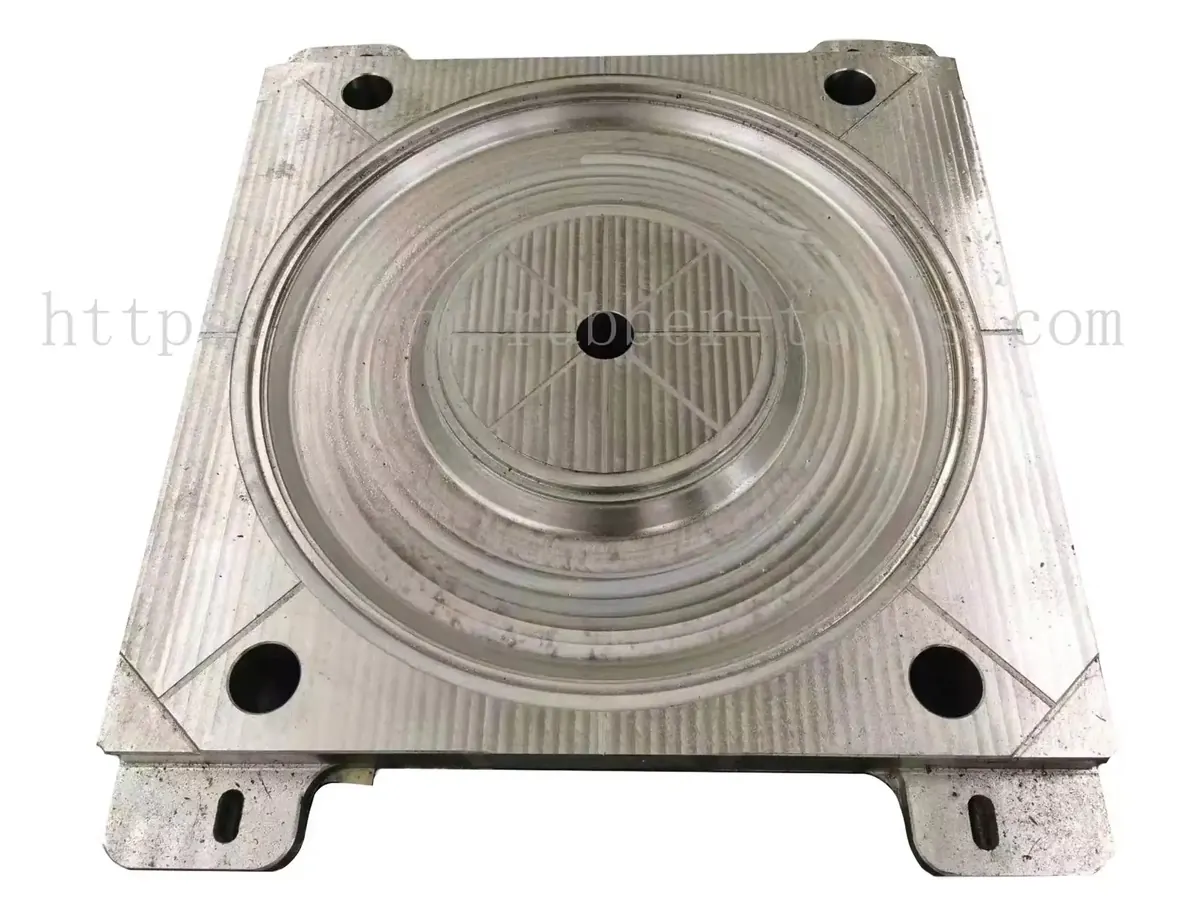
Complementing our material science capability, our five mould engineers specialize in designing and refining tooling for complex rubber-to-metal bonding processes. Utilizing CAD/CAM and finite element analysis (FEA), they ensure optimal cavity geometry, venting, and alignment to prevent defects such as flash, voids, or incomplete bonding. Our in-house tooling development allows rapid prototyping and design iteration, reducing time-to-market for OEM clients. We support both compression and transfer moulding techniques, with tight tolerances maintained to ±0.1 mm across critical dimensions.
As an OEM partner, Suzhou Baoshida offers full design-for-manufacturability (DFM) support, from concept validation through to serial production. Our engineering team collaborates directly with client R&D departments to refine component geometry, select appropriate materials, and validate performance through rigorous testing protocols. This collaborative approach ensures that every bonded part not only meets but exceeds functional requirements in real-world conditions.
The following table outlines key engineering specifications and capabilities:
| Parameter | Specification |
|---|---|
| Bond Strength (Steel Substrate) | ≥ 18 kN/m (per ASTM D429) |
| Operating Temperature Range | -40°C to +150°C (extended range on request) |
| Tolerance Control | ±0.1 mm (critical dimensions) |
| Moulding Processes | Compression, Transfer Moulding |
| Rubber Materials | NBR, EPDM, FKM, NR, CR, Silicone |
| Adhesion Primers | Proprietary, substrate-specific formulations |
| Tooling Development Lead Time | 15–25 days (prototype), 30–45 days (production) |
| Sample Turnaround | 7–14 days after design approval |
Our engineering capability is not only technical but deeply collaborative, ensuring that every rubber-to-metal bonded component is optimized for performance, reliability, and manufacturability. At Suzhou Baoshida, we engineer trust into every joint.
Customization Process
Customization Process for Rubber-Metal Bonded Components
At Suzhou Baoshida Trading Co., Ltd., our rubber-metal bonding customization follows a rigorously defined engineering pathway to ensure optimal performance in demanding industrial applications. This process transforms client specifications into precision-engineered components through four interdependent stages, minimizing iteration and maximizing functional reliability.
Drawing Analysis initiates the workflow with meticulous interpretation of client technical documentation. Our engineering team scrutinizes geometric tolerances per ISO 2768, identifies critical bond zones, and evaluates substrate material properties including surface roughness (Ra 1.6–3.2 μm optimal), metallurgical composition, and pre-treatment requirements. We assess coefficient of thermal expansion mismatches between elastomer and metal substrates to preempt delamination risks under thermal cycling. Any ambiguities in sealing interfaces, load paths, or environmental exposure conditions are resolved collaboratively with the client prior to formulation.
Formulation Development leverages this analysis to engineer bespoke elastomeric compounds. We select base polymers (NR, NBR, EPDM, FKM, or specialty HNBR/Silicone) based on fluid resistance, temperature range (-55°C to +250°C), and dynamic stress requirements. Critical additives—including brass-coated steel cord adhesion promoters, silane coupling agents, and thixotropic modifiers—are dosed to achieve target Shore A hardness (50–90), tensile strength (12–25 MPa), and interfacial adhesion energy. The adhesive system (typically two-coat: primer + rubber cement) is optimized for the specific metal alloy (steel, aluminum, stainless steel) and curing kinetics of the molding process.
Prototyping & Validation employs client-approved tooling to produce functional samples. Each prototype undergoes destructive and non-destructive testing per ASTM D429 Method B (peel strength ≥ 6.0 kN/m minimum) and ISO 1817 fluid immersion. We conduct thermal aging (70°C x 72h), dynamic fatigue (10⁶ cycles at 5Hz), and salt spray testing (ASTM B117) to verify bond integrity. Dimensional conformance is validated via CMM against original CAD data, with critical features held to ±0.15 mm tolerance. Client feedback on prototype performance directly informs final compound adjustments.
Mass Production commences only after formal sign-off, utilizing statistical process control (SPC) for 100% traceability. Molding parameters (temperature profile, pressure, cure time) are locked via DOE studies, with in-line monitoring of bond strength via pull-test samples (1 per 500 units). All batches include full material certification (RoHS/REACH compliant) and adhere to IATF 16949 quality protocols. Our OEM partnership model ensures seamless scale-up from 1,000 to 500,000+ annual units with zero deviation in bond performance.
Critical Process Parameters Across Stages
| Process Stage | Key Parameters | Verification Methods |
|---|---|---|
| Drawing Analysis | Substrate Ra, CTE mismatch, bond geometry | GD&T audit, FEA simulation |
| Formulation | Adhesion promoter %, cure kinetics, Tg | Mooney viscosity, DSC, lap-shear testing |
| Prototyping | Peel strength, compression set, fluid swell | ASTM D429, ISO 1817, CMM |
| Mass Production | SPC limits, batch traceability, tool wear | In-line pull tests, material certs |
This systematic approach eliminates ad-hoc adjustments, ensuring rubber-metal bonded components from Baoshida deliver uncompromised service life in automotive, aerospace, and industrial machinery applications. Partner with us to transform complex engineering challenges into bonded solutions with guaranteed performance.
Contact Engineering Team
Contact Suzhou Baoshida for Expert Rubber-to-Metal Bonding Solutions
When precision, durability, and performance are non-negotiable in industrial applications, Suzhou Baoshida Trading Co., Ltd. stands as a trusted partner in advanced rubber-to-metal bonding technology. Our engineered elastomeric solutions are designed to meet the rigorous demands of automotive, aerospace, rail, and heavy machinery industries, where vibration damping, sealing integrity, and structural reliability are critical. With years of specialized experience in formulating and manufacturing bonded rubber components, we offer tailored solutions that ensure optimal adhesion, longevity, and mechanical performance under extreme operating conditions.
Our rubber-to-metal bonding process integrates proprietary surface preparation techniques, high-performance adhesives, and precision molding technologies to achieve consistent, high-strength bonds between elastomers and metal substrates. Whether you require static seals, dynamic mounts, or load-bearing components, our engineering team works closely with clients to select the appropriate rubber compound—such as NBR, EPDM, Silicone, FKM, or Neoprene—based on temperature resistance, chemical exposure, and mechanical stress requirements. We support a wide range of metal substrates including steel, stainless steel, aluminum, and cast iron, ensuring compatibility across diverse industrial environments.
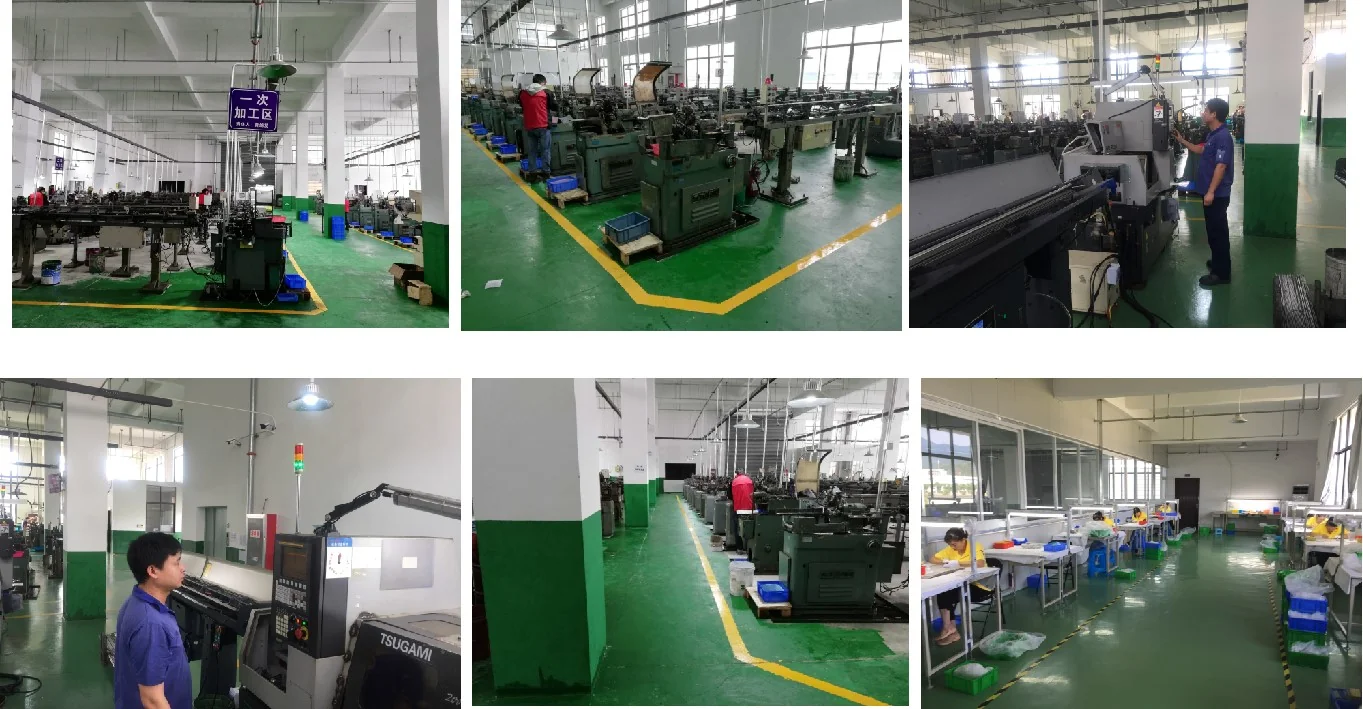
All bonded components are manufactured under strict quality control protocols, with in-house testing capabilities for adhesion strength, aging resistance, compression set, and environmental durability. Our production facilities are equipped for both low-volume prototyping and high-volume OEM manufacturing, enabling rapid development cycles and scalable supply chain integration.
For technical collaboration or custom project inquiries, we invite you to contact Mr. Boyce, our dedicated OEM Manager and Rubber Formula Engineer. Mr. Boyce leads our technical sales and application engineering team, providing direct access to material science expertise, formulation development, and bonding process optimization. He is available to review your component specifications, recommend suitable material pairings, and support design-for-manufacturability initiatives to reduce cost and improve performance.
Reach out today to discuss your rubber-to-metal bonding challenges and discover how Suzhou Baoshida can deliver engineered solutions that meet your exact operational requirements.
| Property | Typical Value | Test Standard |
|---|---|---|
| Bond Strength (Peel) | ≥ 5.0 kN/m | ASTM D429 (Method B) |
| Temperature Range | -40°C to +250°C (depending on rubber type) | ISO 1817 |
| Hardness Range (Shore A) | 40–90 | ASTM D2240 |
| Compression Set (70h @ 100°C) | ≤ 25% | ASTM D395 |
| Adhesion Class | Class 3 (No rubber residue on metal) | DIN 53505 |
To initiate a technical consultation or request a quotation, please contact Mr. Boyce directly at [email protected]. We respond to all inquiries within 24 business hours and offer sample development upon receipt of technical drawings or physical specimens. Partner with Suzhou Baoshida for precision-engineered rubber-metal bonded components built to perform.
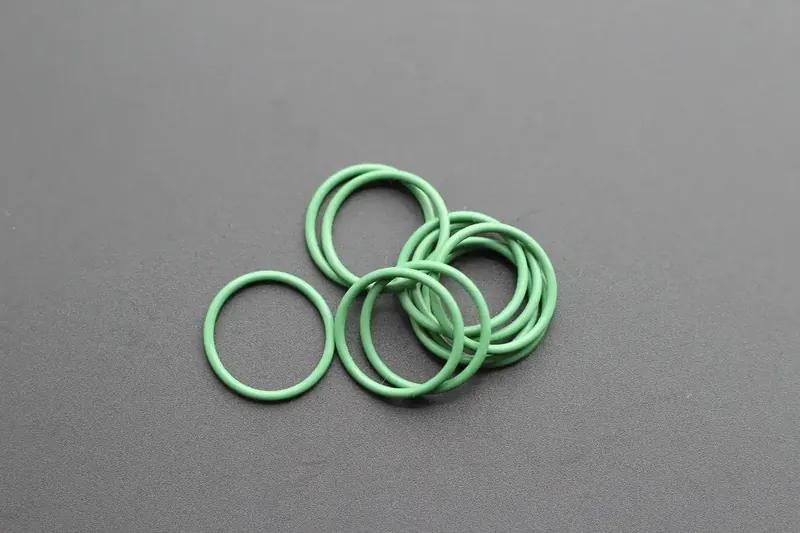
⚖️ O-Ring Weight Calculator
Estimate rubber O-ring weight (Approx).