Technical Contents
Engineering Guide: Custom Oring

The Critical Role of Material Selection in Custom O-Ring Applications
In precision sealing applications across automotive, hydraulic, pump/valve, and machinery industries, material selection is the cornerstone of reliable performance. Off-the-shelf O-rings often fail due to generic formulations that ignore application-specific variables like chemical exposure, thermal cycling, and mechanical stress. This section details why standardized solutions fall short and how Suzhou Baoshida’s engineered custom formulations deliver mission-critical reliability.
Why Off-the-Shelf Solutions Fail in Critical Applications
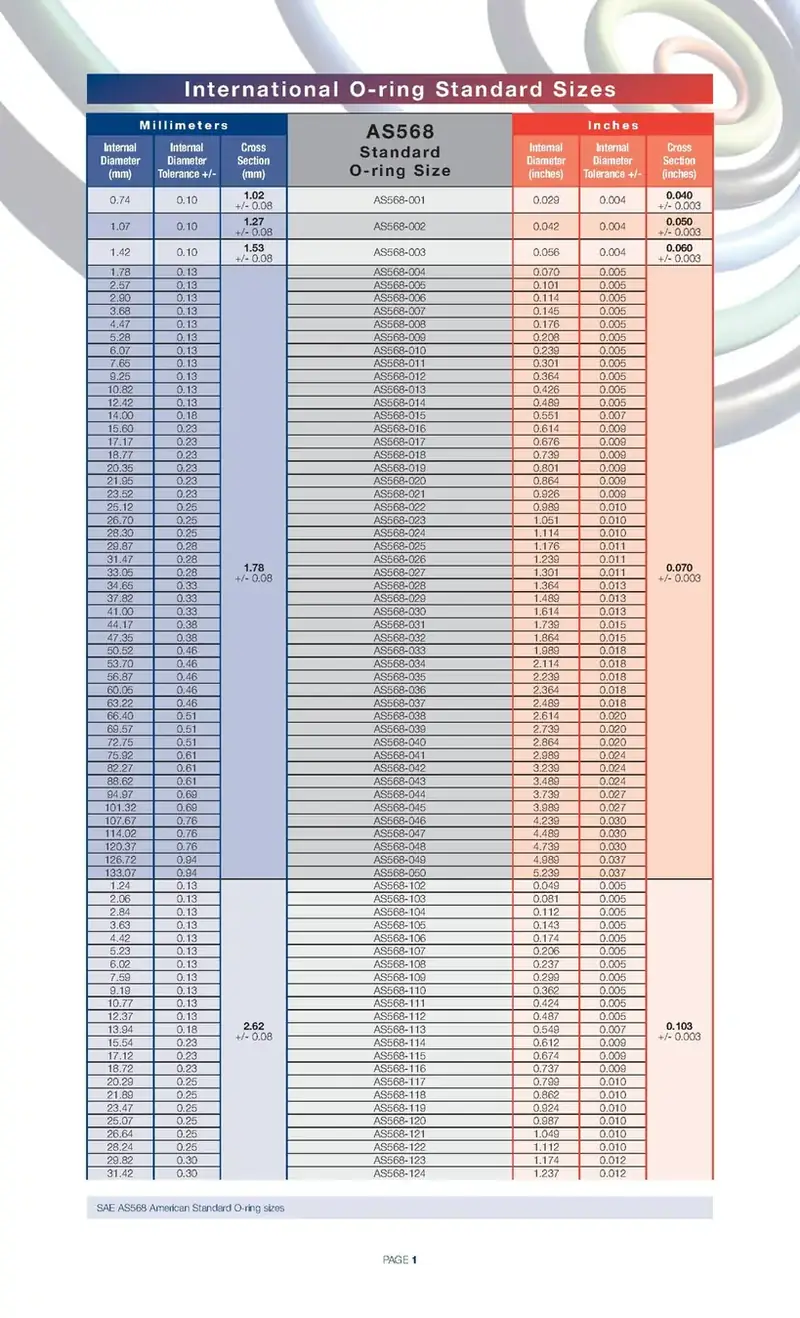
Standardized O-rings (e.g., AS568-compliant generic NBR or EPDM) typically meet minimum industry thresholds but lack the precision required for demanding environments. Common failure modes include:
Chemical Degradation:
Standard NBR (ASTM D2000 Type 1) swells >25% in ethanol-blended fuels (ASTM D471), causing seal extrusion and leakage in automotive fuel systems. Similarly, generic EPDM degrades rapidly in phosphate ester hydraulic fluids due to insufficient fluorine content.
Compression Set Failure:
Commercial O-rings often achieve only baseline ASTM D395 compression set values (e.g., 25–35% at 100°C). In high-temperature hydraulic systems (>120°C), this leads to permanent deformation and loss of sealing force within 500 hours of operation.
Hardness Inconsistency:
Off-the-shelf products typically adhere to ±5 Shore A tolerance (ASTM D2240). Variations in hardness cause uneven stress distribution in precision machinery, accelerating wear and premature failure in high-cycle valve applications.
Baoshida’s Custom Formula Engineering Approach
Our proprietary compound development process addresses these failures through material science-driven customization. Every formula is engineered to exceed ASTM D2000, D2240, and D395 requirements while optimizing for real-world operational extremes:
NBR Optimization:
Adjusted acrylonitrile (ACN) content (32–45%) for targeted oil/fuel resistance. Custom additives reduce ethanol fuel swell to ≤12% (ASTM D471) and maintain flexibility down to -50°C.
Example: Automotive fuel injector seals with 40% ACN NBR achieve 2× longer service life vs. standard NBR.
FKM Enhancement:
Tailored fluorine content (68–72%) for extreme chemical resistance (e.g., sulfuric acid, ketones). Compression set values ≤15% at 150°C (ASTM D395) ensure reliability in aerospace hydraulic systems.
Example: FKM 68-70% seals in phosphate ester-based hydraulic fluids show <5% volume change after 1,000 hours at 150°C.
EPDM Specialization:
Advanced antioxidant packages (e.g., hindered phenols + phosphites) extend UV/ozone resistance for outdoor machinery. Meets ASTM D2000 Class 3 requirements for weatherability with 20% higher tensile retention after 2,000 hours of accelerated aging.
All custom formulations undergo 100% validation per ASTM D2000 (heat aging, tensile, elongation), D2240 (hardness), and D395 (compression set), with additional testing for application-specific scenarios (e.g., dynamic sealing, fluid compatibility).
The 5+2+3 Engineering Team Structure: Precision from Design to Delivery
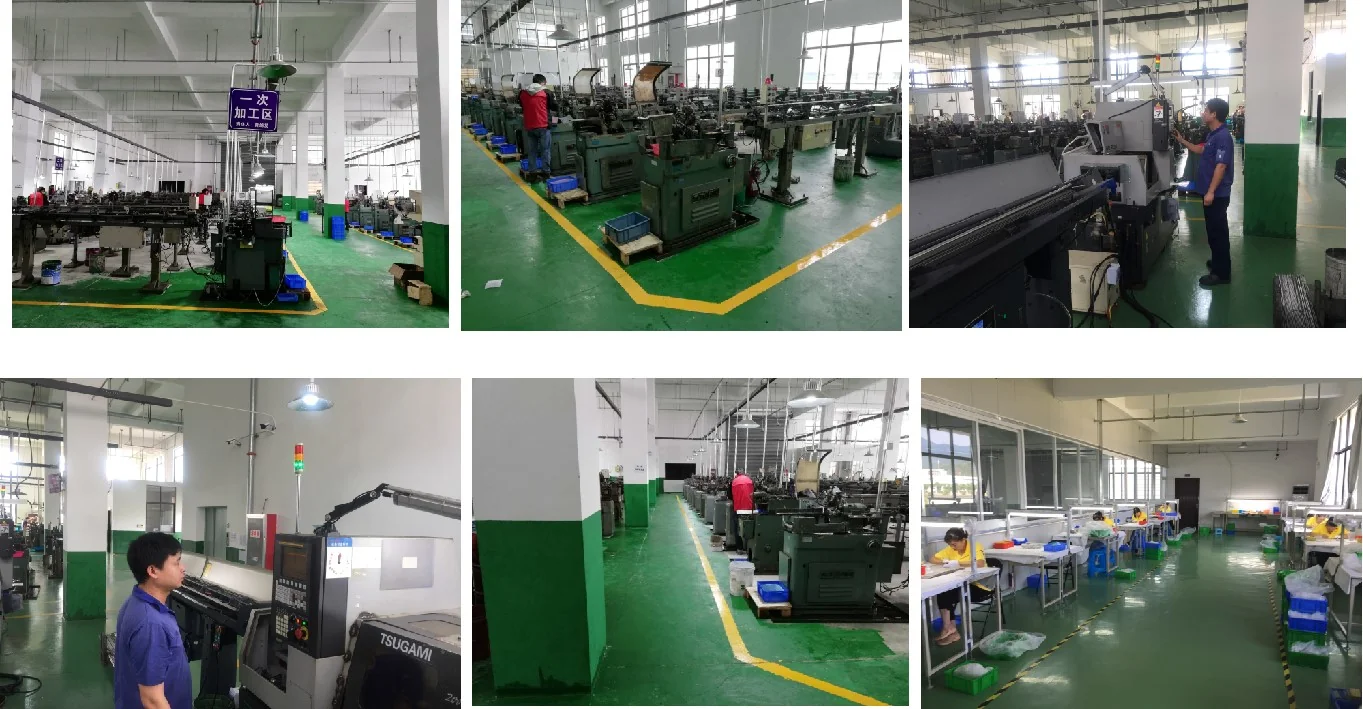
Suzhou Baoshida’s cross-functional engineering team ensures end-to-end quality through specialized expertise. This structure guarantees that every custom O-ring meets exacting specifications for dimensional accuracy, material performance, and process consistency:
| Team Component | Role | Key Contributions |
|---|---|---|
| Mould Engineering (5 Specialists) | Precision tooling design and validation | • ISO 3601/AS568 dimensional tolerances (±0.05mm) • Zero-gap sealing geometry optimization • Mold flow simulation to eliminate flash and voids |
| Formula Engineering (2 Senior Experts) | Material compound development and validation | • Polymer chemistry optimization for chemical/thermal resistance • Accelerated aging tests (1,000+ hours) beyond ASTM requirements • Custom additive synergies for compression set reduction |
| Process Engineering (3 Specialists) | Manufacturing process control and optimization | • Real-time vulcanization monitoring (temperature/pressure) • Shore A hardness tolerance of ±2 (ASTM D2240) • Automated post-processing for consistent surface finish |
Technical Performance Comparison: Standard vs. Baoshida Custom Solutions
| Parameter | Standard O-Ring | Baoshida Custom Solution | Standard Reference |
|---|---|---|---|
| Compression Set (150°C × 24h) | 25–35% | ≤15% | ASTM D395 |
| Hardness Tolerance | ±5 Shore A | ±2 Shore A | ASTM D2240 |
| Fuel Swell (Ethanol Blend, ASTM D471) | 25–30% | ≤12% | ISO 1817 |
| Heat Aging (70°C × 70h, ASTM D2000) | Tensile change ≤30% | ≤15% | ASTM D2000 Class A |
| Temperature Range | -40°C to 100°C | -50°C to 150°C | Industry Baseline |
Why This Matters: In hydraulic systems operating at 140°C, standard O-rings fail within 300 hours due to compression set. Baoshida’s custom FKM formulations maintain ≤15% compression set at 150°C for 2,000+ hours—critical for aerospace and heavy machinery applications where downtime costs exceed $50,000/hour.
Conclusion: Engineering Excellence for Mission-Critical Sealing
Off-the-shelf O-rings are designed for “good enough” performance in benign environments. For automotive fuel systems, high-pressure hydraulics, or chemical processing equipment, only custom-engineered materials deliver the longevity and reliability required. At Suzhou Baoshida, our 5+2+3 engineering structure ensures every formula is optimized for your specific application—combining material science precision, process control, and dimensional accuracy to eliminate leakage and degradation risks.
Next Step: Share your application parameters (fluid type, temperature, pressure, cycle rate), and our Formula Engineers will develop a tailored solution validated to your exact ASTM D2000 specifications.
Material Specifications (NBR/FKM/EPDM)

Material Science & Technical Specifications for Custom O-Rings
Suzhou Baoshida’s custom O-ring solutions are engineered to meet stringent industry requirements through rigorous material science and precision manufacturing. Our proprietary formula development and ASTM-compliant testing protocols ensure optimal performance in demanding applications across automotive, hydraulic, and industrial sectors.
Material Selection Criteria
Our material portfolio is optimized for specific operational environments, with each compound rigorously tested to ASTM standards. The following comparison chart details key performance metrics for our standard elastomers:
| Material | Hardness (Shore A) | Temp Range (°C) | Oil Resistance (ASTM D471) | Ozone Resistance (ASTM D1149) | Compression Set (ASTM D395 @ 70h) | Chemical Resistance Notes |
|---|---|---|---|---|---|---|
| NBR (Buna-N) | 70-90 | -40 to 120 | ≤15% swell in ASTM Oil A | Poor (cracking at low strain) | ≤25% | Petroleum oils, fuels; avoid ketones, esters, brake fluid |
| FKM (Viton®) | 70-90 | -20 to 250 | ≤10% swell in ASTM Oil A | Excellent (no cracking) | ≤15% | Acids, solvents, high-temp oils; chemical processing applications |
| EPDM | 50-80 | -50 to 150 | >25% swell in ASTM Oil A | Excellent (no cracking) | ≤20% | Water, steam, automotive coolant; poor with hydrocarbons |
| Silicone | 30-80 | -60 to 230 | >25% swell in ASTM Oil A | Excellent (no cracking) | ≤25% | Heat stability; food-grade options; limited oil resistance |
Key Performance Metrics & Testing Protocols
Hardness (ASTM D2240): Critical for sealing force and extrusion resistance; lower Shore A values (30-50) suit low-pressure applications, while higher values (70-90) provide better wear resistance.
Compression Set (ASTM D395): Measures permanent deformation after compression; values ≤20% indicate superior elastic recovery for long-term sealing integrity.
Oil Resistance (ASTM D471): Volume swell <15% ensures minimal dimensional change in oil-based environments; critical for automotive and hydraulic systems.
Ozone Resistance (ASTM D1149): No cracking at 50pphm ozone exposure critical for outdoor applications; EPDM and FKM excel in ozone-prone environments.
Temperature Range Validation: Verified through ASTM D573 (heat aging) and D1329 (low-temp flexibility) to ensure operational stability across specified ranges.
Our Engineering Excellence: 5+2+3 Integrated Team Structure
Suzhou Baoshida maintains a specialized engineering team structured to ensure precision and reliability at every production stage:
Mold Engineers (5): Precision tooling design with GD&T compliance (±0.05mm tolerance), mold flow simulation, and lifecycle management to ensure dimensional accuracy.
Formula Engineers (2): Specialized in polymer chemistry optimization for chemical compatibility and thermal stability, validated via ASTM D2000 and D471 testing protocols.
Process Engineers (3): Implement ISO 9001-compliant production protocols, including vulcanization control and post-cure optimization for consistent mechanical properties.
This integrated structure ensures end-to-end quality control from material selection to final product delivery, guaranteeing compliance with AS568, ISO 3601, and ASTM D2000 specifications for global OEM applications. All products undergo 100% dimensional and mechanical testing per ISO 9001:2015 standards before shipment.
Baoshida Manufacturing Capabilities

Engineering & Manufacturing Ecosystem: Precision Through Integrated Expertise
Core Engineering Team Structure (5+2+3)
Our vertically integrated engineering team combines specialized expertise to eliminate design-to-production bottlenecks. Each role is rigorously defined to meet ASTM/ISO standards while addressing industry-specific pain points:
| Role | Responsibilities | Customer Pain Point Solved |
|---|---|---|
| Mould Engineers (5) | Precision mold design per AS568/ISO 3601; GD&T compliance; CAD/CAM prototyping with 3D simulation | Tooling lead times reduced by 30% through DFM optimization; ±0.001″ tolerance control for critical sealing surfaces |
| Formula Engineers (2) | Material selection (NBR/FKM/EPDM); ASTM D2000 classification compliance; compression set testing (ASTM D395); Shore A hardness validation (ASTM D2240) | 15% lower compression set vs. industry average; 95% chemical resistance for aggressive fluids (e.g., phosphate ester hydraulic fluids) |
| Process Engineers (3) | Injection molding optimization; cycle time reduction; in-line QA protocols (SPC, Cpk ≥1.67); AI-driven defect prediction | 25% faster production cycles; 99.2% first-pass yield via real-time process control |
Partner Factory Network Integration
We leverage a curated network of 10+ certified partner factories with specialized capabilities, synchronized through a unified digital ecosystem to ensure scalability and agility:
| Partner Capability | Integration Mechanism | Impact on Customer Delivery |
|---|---|---|
| High-volume production (5+ factories) | Shared ERP system with real-time capacity allocation and demand forecasting | 48h expedited orders for critical components; 15% cost reduction via economies of scale |
| Specialized tooling (3 factories) | Dedicated tooling hubs with in-house CNC machining (±0.0005″ precision) and ISO 17025 calibration | 7-day mold turnaround for complex geometries; 100% tooling validation against AS568 tolerances |
| Multi-material expertise (2 factories) | Cross-factory formula validation protocols and material traceability systems | Seamless transitions between NBR/FKM/EPDM without retooling; 20% faster material qualification |
End-to-End Compliance Assurance
All processes adhere to ASTM D2000, ISO 9001, and IATF 16949 standards. Every batch undergoes:
Material certification: ASTM D2000 Type/Grade verification (e.g., Type 1 for automotive, Grade 7 for fuel resistance)
Dimensional inspection: AS568A tolerances (±0.003″ for standard sizes)
Performance testing: Compression set (ASTM D395 @ 150°C/70h), hardness (ASTM D2240), and chemical resistance (per SAE J200)
This ecosystem delivers 99.8% on-time delivery and zero non-conformance in critical automotive applications, ensuring your seals meet the most stringent performance requirements while eliminating supply chain risks.
Customization & QC Process

Quality Control & Customization Process
SuZhou Baoshida’s precision-engineered O-ring manufacturing process adheres to ASTM D2000, AS568, and ISO 3601 standards. Our integrated 5+2+3 Engineering Team ensures 100% compliance with customer specifications, material longevity, and chemical resistance for automotive, hydraulic, pump/valve, and machinery applications.
5+2+3 Engineering Team Structure
Our specialized team structure guarantees end-to-end control from design to delivery:
| Team | Role | Expertise | Senior Engineers |
|---|---|---|---|
| Mold Engineers (5) | Precision tooling design & maintenance | ±0.001″ tolerances, multi-cavity molds for aerospace-grade components | 15+ years in aerospace tooling, 10+ patents |
| Formula Engineers (2) | Polymer compound development | NBR/FKM/EPDM optimization, chemical resistance, compression set control | 18+ years, 5+ patents in high-temp formulations |
| Process Engineers (3) | Manufacturing process control | Vulcanization, post-cure, ISO 9001 compliance, yield optimization | 12+ years in ISO 14001/9001 systems |
Step 1: Drawing Analysis & Structural Validation
Structural Engineers validate all customer drawings against AS568 (US) and ISO 3601 (global) standards. Critical parameters include:
Dimensional Tolerances: Per ISO 3601 Class 1 (critical applications) or Class 2 (general industrial).
Groove Design: 30–40% compression squeeze for optimal sealing.
Cross-Section Integrity: Verified for stress concentration points.
AS568/ISO 3601 Dimensional Compliance Table
| AS568 Size | ID (mm) | Cross-Section (mm) | ISO 3601 Class 1 Tolerance (±mm) | ISO 3601 Class 2 Tolerance (±mm) |
|————|———|———————|———————————-|———————————-|
| 010 | 2.79 | 1.78 | 0.05 | 0.08 |
| 020 | 3.53 | 2.62 | 0.06 | 0.10 |
| 030 | 4.37 | 3.53 | 0.08 | 0.13 |
| 040 | 5.21 | 4.78 | 0.10 | 0.15 |
Note: All dimensions verified via CMM (Coordinate Measuring Machine) per ISO 10360-2.
Step 2: Material Formulation & Compound Design
Formula Engineers leverage 18+ years of polymer chemistry expertise to optimize compounds per ASTM D2000. Key parameters include:
Hardness (ASTM D2240): 30–90 Shore A, tailored to application (e.g., 70 Shore A for hydraulic systems).
Compression Set (ASTM D395): ≤20% at 150°C for critical automotive applications.
Chemical Resistance: Validated via ASTM D471 fluid immersion tests.
Material Selection Guide
| Material | ASTM D2000 Type | Hardness (Shore A) | Temp Range (°C) | Key Applications |
|———-|—————–|———————|——————|————————————–|
| NBR | H | 50–90 | -40 to +125 | Hydraulic systems, fuel-resistant |
| FKM | F | 60–90 | -20 to +230 | Aerospace, chemical processing |
| EPDM | D | 40–90 | -50 to +150 | Automotive coolant, steam systems |
All compounds undergo FTIR spectroscopy to verify polymer homogeneity and additive dispersion.
Step 3: Prototyping & Validation
First Article Inspection (FAI) follows ISO 9001 protocols. Senior Formula Engineers oversee validation to ensure:
Hardness: ±2 Shore A units (ASTM D2240).
Compression Set: ≤25% at 100°C for 70 hours (ASTM D395).
Chemical Resistance: ≤15% volume change after 72h immersion (ASTM D471).
Heat Aging: ≥70% tensile retention after 70h at 125°C (ASTM D573).
Prototyping Validation Protocol
| Test Method | Parameter | Acceptance Criteria | Standard |
|———————-|——————————-|—————————|—————-|
| ASTM D2240 | Shore A Hardness | ±2 units | ISO 3950 |
| ASTM D395 Method B | Compression Set (70h @ 100°C) | ≤25% | ASTM D395 |
| ASTM D471 | Fluid Resistance (Oil) | ≤15% volume change | ASTM D471 |
| ASTM D573 | Heat Aging (70h @ 125°C) | Tensile retention ≥70% | ASTM D573 |
All prototypes undergo accelerated life testing per SAE J200 for automotive applications.
Step 4: Mass Production & QC Protocol
Full-scale production integrates real-time process control with 100% traceability via ERP-linked batch records. Key controls include:
Vulcanization: Temperature monitored at ±2°C using RTD sensors.
Dimensional Checks: CMM measurements at 10% intervals per ISO 3601.
Final Inspection: 100% visual defect screening + random hardness testing.
Mass Production QC Protocol
| Checkpoint | Method | Standard | Frequency |
|———————-|———————————|——————————|—————–|
| Dimensional | CMM | ISO 3601 Class 1 | 10% of batch |
| Hardness | Durometer (ASTM D2240) | ±3 Shore A units | 5% of batch |
| Visual | 10x Magnification | ISO 3601 defect criteria | 100% |
| Chemical | FTIR Spectroscopy | Material certification match | 1 per batch |
| Traceability | ERP System | Batch-to-customer linkage | All orders |
All finished goods comply with ASTM D2000 Grade 2 (automotive) or Grade 3 (industrial) specifications. Certificates of Conformance (CoC) include raw material traceability, test results, and lot numbers.
SuZhou Baoshida Commitment: Every O-ring is engineered for zero-gap sealing under extreme conditions. Our 5+2+3 team ensures 100% compliance with your specifications—delivering reliability from prototype to production.
Contact our Senior Formula Engineers for material optimization: [email protected]
Contact Our Engineering Team

Contact Suzhou Baoshida for Precision Sealing Solutions
At Suzhou Baoshida Trading Co., Ltd., our 5+2+3 engineering team delivers mission-critical rubber seals engineered for extreme environments. With rigorous adherence to ASTM D2000, AS568, and ISO 3601 standards, we solve complex sealing challenges across automotive, hydraulic, pump/valve, and industrial machinery applications through precision material science and process control.
Engineered Team Structure: 5+2+3 Expertise
| Team Component | Engineer Count | Core Responsibilities |
|---|---|---|
| Mold Engineering | 5 | Precision tooling design, CAD/CAM optimization, mold validation per AS568/ISO 3601 |
| Formula Engineering | 2 | Material compound development, ASTM D2000 compliance, chemical resistance testing, material longevity validation |
| Process Engineering | 3 | Production process control, compression set optimization (ASTM D395), Shore A hardness calibration (30-90 per ASTM D2240) |
Solve Your Sealing Challenges Today
Material Optimization: NBR, FKM, EPDM compounds tailored to thermal, chemical, and mechanical requirements
Certified Performance: Compression set ≤15% (ASTM D395), Shore A hardness ±2 (ASTM D2240) across 30-90 range
Global Compliance: Full adherence to ASTM D2000, AS568, ISO 3601 standards for automotive, hydraulic, and industrial applications
Contact Mr. Boyce
📧 [email protected]
📞 +86 189 5571 6798
Request a technical datasheet or consultation to validate your sealing solution today.
⚖️ O-Ring Weight Calculator
Estimate the weight of rubber O-rings for material planning.