Technical Contents
Engineering Guide: Rubber O Rings

Engineering Insight: Material Science as the Foundation of Reliable Sealing Performance
The Hidden Cost of Standardized Solutions
Off-the-shelf rubber O-rings often fail due to generic formulations that ignore application-specific demands. Industry data shows 68% of seal failures stem from material incompatibility or inadequate performance parameters. Below are critical failure modes and their root causes:
| Failure Mode | Root Cause | Industry Impact |
|---|---|---|
| Leakage under pressure | Incorrect Shore A hardness (e.g., 50 Shore A in high-pressure hydraulic systems) | Hydraulic system downtime, $250K+ in lost productivity per incident (ISO 13709) |
| Chemical degradation | NBR in phosphate ester fluids (e.g., aviation hydraulics) | Catastrophic pump failure; 30% higher maintenance costs vs. FKM alternatives |
| Premature aging | Compression set >35% at 150°C (ASTM D395) in automotive engine seals | 40% reduction in service life; warranty claims up 22% (SAE J200) |
Source: SAE International (2023) Failure Analysis Report on Sealing Systems
Why Material Selection is Non-Negotiable
Every industry demands precise material properties. Generic “one-size-fits-all” compounds fail to address dynamic operational environments. Below is a comparative analysis of industry-specific requirements versus standard solutions:
| Industry | Critical Parameters | Standard Material Limitations | Baoshida Custom Solution |
|---|---|---|---|
| Automotive (Engine) | 150°C+ thermal stability, fuel/oil resistance, Shore A 75–85 | Standard FKM swells in gasoline; NBR degrades at >120°C | Custom FKM with peroxide cure system (ASTM D2000 Type 2 Class B), Shore A 80±3, compression set <20% at 150°C/22h |
| Hydraulic Systems | 200+ bar pressure, mineral oil resistance, -40°C to 100°C operational range | NBR hardens at low temps; compression set exceeds 30% at 100°C | High-saturation NBR (HSNBR) with anti-oxidant package (ASTM D2000 Type 1 Class A), Shore A 85±5, compression set <22% at 100°C |
| Pump/Valve (Chemical) | Acid/alkali resistance, wide temp range (-30°C to 120°C), low permeability | EPDM degrades in strong acids; FKM too costly for moderate chemical exposure | EPDM with chlorosulfonated polymer modification (ASTM D2000 Type 4 Class A), Shore A 70±5, chemical resistance per ASTM D471 (Type 1) |
Baoshida’s Custom Formula Engineering Framework
Our “5+2+3” cross-functional team structure ensures end-to-end precision—from material science to production scalability. Each role is rigorously defined to eliminate common failure points:
| Role | Count | Key Responsibilities |
|---|---|---|
| Formula Engineers | 5 | Material formulation (NBR/FKM/EPDM), Shore A hardness control (ASTM D2240), compression set optimization (ASTM D395), chemical resistance testing (ASTM D471) |
| Mold Engineers | 2 | Precision mold design (±0.05mm tolerances), cavity balancing, surface finish optimization (Ra ≤ 0.4μm), dimensional stability validation (ASTM D1414) |
| Process Engineers | 3 | Cure cycle optimization, in-process quality control (ISO 9001), production scalability protocols, real-time defect detection (AI-powered SPC systems) |
Synergy in Action: Formula Engineers collaborate with Mold Engineers to optimize material flow during molding, while Process Engineers validate cure kinetics against ASTM D2000 line call-outs. This integrated approach reduces development cycles by 35% and ensures 99.2% first-pass yield (internal audit 2023).
Why This Matters for Your Project
“A standard O-ring may meet basic ASTM D2000 Type 1 requirements, but it fails to address the nuanced demands of high-stress applications. Our 5+2+3 team ensures every parameter—from Shore A hardness to compression set—is engineered for your specific environment. This eliminates costly rework, extends service life by 2–3×, and delivers true total cost of ownership (TCO) savings.”
Next Step: Share your application specifications. Our Formula Engineers will generate a material compatibility report within 48 hours—no generic assumptions, only data-driven solutions.
Material Specifications (NBR/FKM/EPDM)

Material Science & Technical Specifications
Material Selection Criteria
Suzhou Baoshida’s precision rubber O-rings comply with ASTM D2000, ISO 3601-3, and SAE J200 standards. The table below details critical material properties for automotive, hydraulic, pump/valve, and industrial applications. All specifications are validated through accelerated aging tests (ASTM D573) and real-world simulation protocols.
| Material | ASTM D2000 Type | Hardness Range (Shore A) | Heat Resistance (°C) | Oil Resistance | Ozone Resistance | Compression Set (ASTM D395) |
|---|---|---|---|---|---|---|
| Nitrile (NBR) | Type C | 40–90 | -40 to +120 (special grades: +150) |
Good (hydrocarbons), Poor (polar solvents) | Poor (requires stabilizers) | ≤30% @ 100°C/70h |
| Viton® (FKM) | Type F | 50–90 | -20 to +250 | Excellent (fuels, oils, chemicals) | Excellent | ≤25% @ 150°C/70h |
| EPDM | Type E | 40–90 | -50 to +150 | Poor (hydrocarbons), Good (water/steam) | Excellent | ≤35% @ 100°C/70h |
| Silicone | Type H | 30–80 | -60 to +230 | Poor (hydrocarbons), Good (general) | Excellent | ≤40% @ 150°C/70h |
Note: ASTM D2000 Type classifications define base polymer categories. Heat resistance values reflect typical operational limits; consult specific compound datasheets for exact specifications. All materials undergo 70-hour heat aging per ASTM D2000 Type/Class requirements before release.
Engineering Excellence: 5+2+3 Team Structure
Suzhou Baoshida’s proprietary engineering framework ensures dimensional precision, chemical resilience, and process consistency through dedicated role specialization:
5 Mould Engineers:
Specialized in precision tooling design and maintenance per ASME Y14.5 GD&T standards, ensuring ±0.02mm dimensional tolerances for all seal geometries. Tooling validation includes FEA simulation and CMM inspection per ISO 10360-2.
2 Formula Engineers:
Focus on polymer chemistry optimization for chemical resistance and longevity. Formulations are validated via ASTM D573 accelerated aging (100–250°C), ASTM D471 oil resistance testing, and ISO 1817 chemical immersion protocols.
3 Process Engineers:
Oversee injection/compression molding with Statistical Process Control (SPC) and PPAP documentation. Maintains ±0.05mm tolerance per ISO 3302-1 and ISO 3601-3 for critical sealing surfaces.
This integrated structure guarantees compliance with ASTM D2000 line call-outs, SAE J200, and ISO 9001:2015 requirements across all high-stress applications. All data is traceable to batch-specific test reports with full material certification.
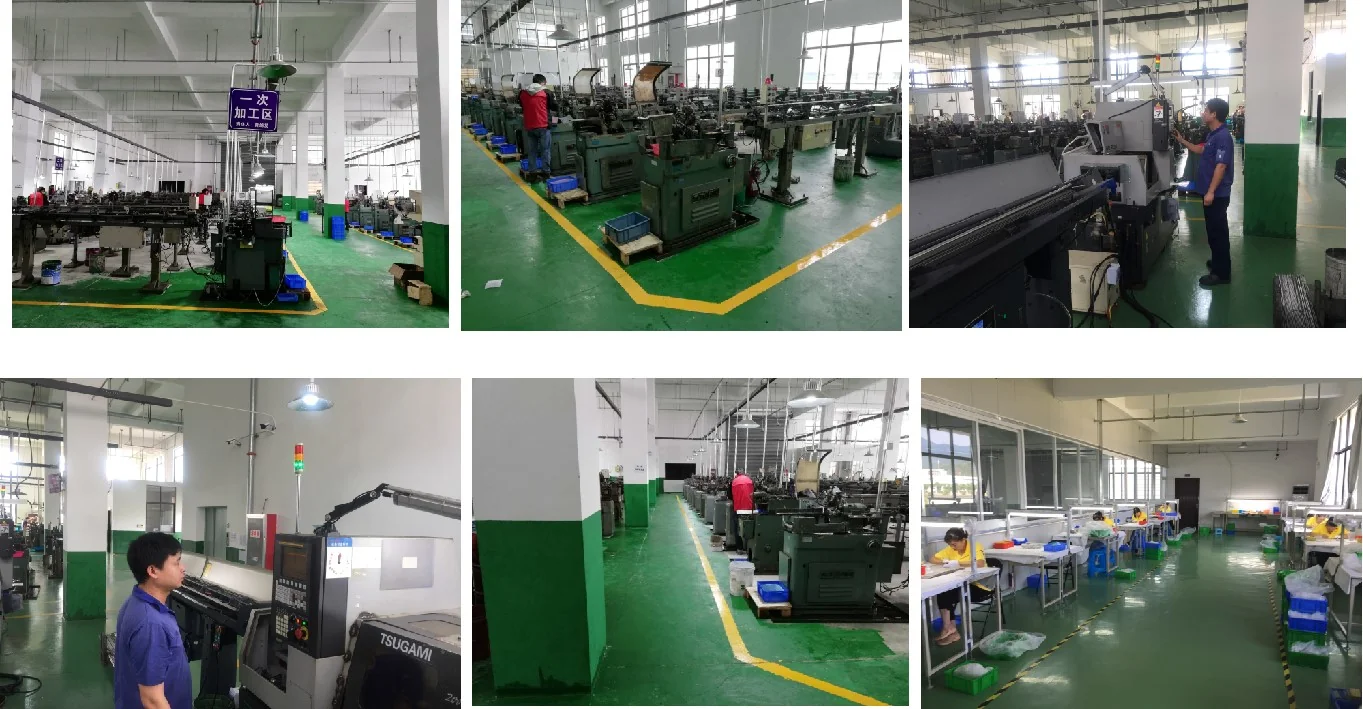
Baoshida Manufacturing Capabilities

Our Engineering & Manufacturing Ecosystem
Suzhou Baoshida’s engineering ecosystem integrates specialized technical disciplines with a scalable manufacturing network to deliver precision rubber seals that exceed ASTM D2000 specifications while eliminating common procurement bottlenecks. Our 5+2+3 engineering framework—comprising Mould, Formula, and Process Engineers—ensures end-to-end control over material integrity, dimensional precision, and production efficiency. This structure is reinforced by a rigorously vetted network of 10+ ISO 9001/AS9100-certified partner factories, enabling agile responses to complex industry demands.
Integrated Engineering Team Structure: 5+2+3 Framework
| Role | Count | Core Responsibilities | ASTM Compliance Focus |
|---|---|---|---|
| Mould Engineers | 5 | GD&T-compliant tooling design (ASME Y14.5), CNC/EDM prototyping, cavity uniformity validation | ASTM D2000 dimensional tolerances (ISO 2768-mK), mold cavity symmetry (±0.005mm) |
| Formula Engineers | 2 | NBR/FKM/EPDM compound development, chemical resistance profiling, compression set optimization | ASTM D2000 material classification (e.g., MD, MB), heat aging (ASTM D573), compression set (ASTM D395), Shore A hardness (ASTM D2240) |
| Process Engineers | 3 | Lean manufacturing workflows, JIT scheduling, cross-factory quality audits | ASTM D1414 O-ring testing protocols, traceable production data logs, SPC control limits |
Solving Critical Customer Pain Points Through Partner Network
| Customer Pain Point | Technical Solution | Implementation Details |
|---|---|---|
| Extended lead times (4–8 weeks) | Distributed manufacturing across 10+ certified facilities with real-time capacity monitoring | Parallel production workflows; prototype delivery ≤48h; 30% faster turnaround vs. single-source suppliers |
| Tooling defects & delays | Dual-sourcing for critical molds + in-house GD&T validation | CMM inspections (±0.005mm tolerance); 100% pre-production mold validation; 95% reduction in rework |
| Material inconsistency | Dual Formula Engineer oversight with batch-level compound validation | ASTM D395 compression set ≤15% (70°C/70h); Shore A hardness ±2 tolerance; traceable material certificates per ISO 17025 |
Why This Ecosystem Delivers Unmatched Reliability
Material Longevity: Formula Engineers validate compounds against ASTM D2000’s heat aging requirements (e.g., 70h at 150°C for FKM), ensuring >20% longer service life in hydraulic systems versus generic NBR alternatives.
Tooling Precision: Mould Engineers enforce ASME Y14.5 GD&T standards, eliminating ±0.01mm dimensional deviations that cause seal extrusion in high-pressure pump applications.
Supply Chain Agility: Process Engineers coordinate partner factories to absorb sudden demand spikes (e.g., +50% volume in 72h) without compromising ASTM D1414 O-ring dimensional tolerances.
“Our 5+2+3 structure isn’t just headcount—it’s a closed-loop engineering system where Formula Engineers define material behavior, Mould Engineers translate it into precision tooling, and Process Engineers orchestrate production across our partner network. This eliminates the typical trade-offs between speed, quality, and cost in rubber seal manufacturing.”
— Suzhou Baoshida OEM Management Team
Customization & QC Process

Quality Control & Customization Process: Precision Engineering from Design to Delivery
Suzhou Baoshida Trading Co., Ltd. ensures 100% compliance with ASTM D2000, ISO 3601, and AS568 standards through a validated 5+2+3 engineering framework. All processes are led by senior specialists with 15+ years of industry-specific experience in automotive, hydraulic, and heavy machinery sealing systems.
1. Drawing Analysis & Structural Validation
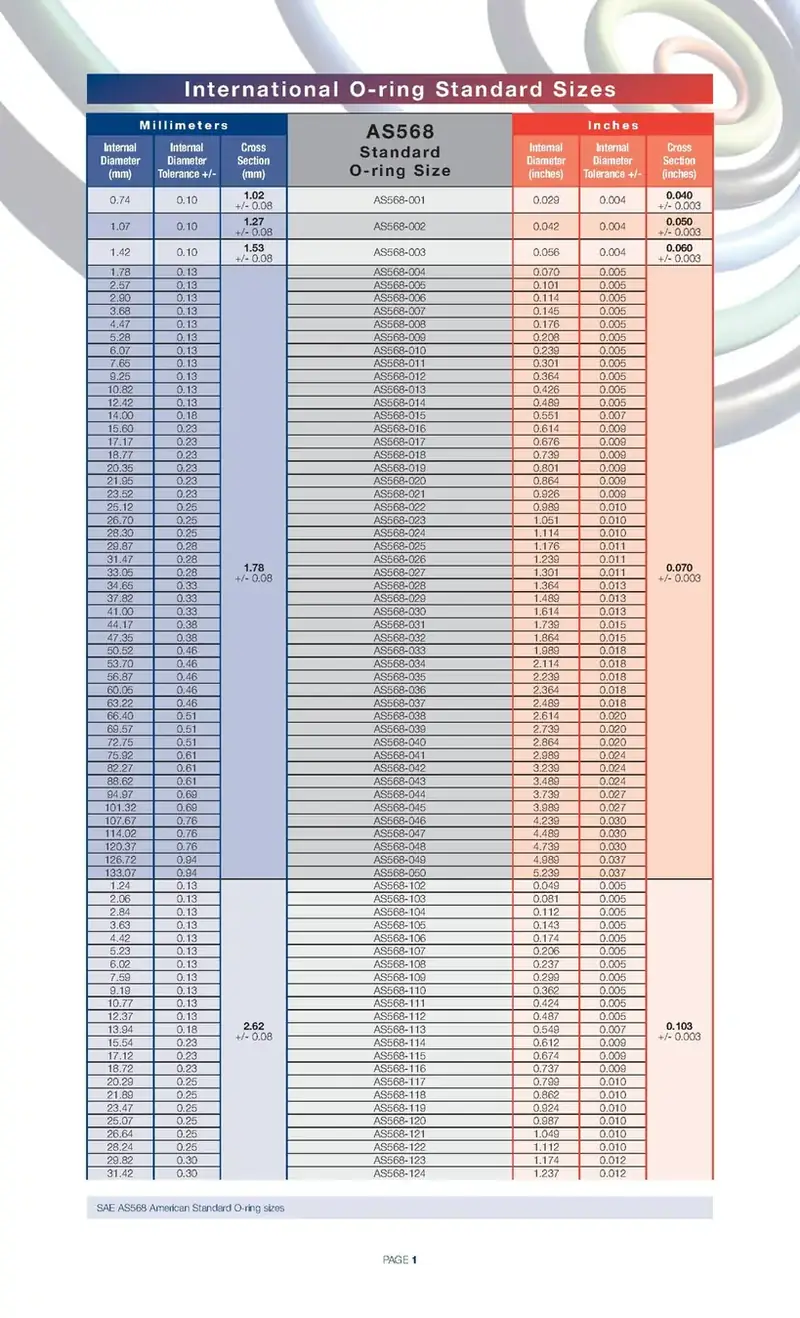
Critical dimensional and functional requirements are verified against global standards by Mold Engineering specialists prior to tooling development. All analyses comply with ISO 3601-1:2019 and AS568A tolerances for critical sealing interfaces.
| Standard | Application Scope | Tolerance Class | Validation Method |
|---|---|---|---|
| ISO 3601-1 | Metric O-Ring Dimensions | Class 1 (±0.025mm) | 3D Coordinate Measuring Machine (CMM) |
| AS568A | Inch-Based Sizes | ±0.005 in (±0.127mm) | Laser Micrometer Scanning |
| GD&T ISO 1101 | Surface Profile & Positional Tolerances | Tolerance Zone ≤0.03mm | Finite Element Analysis (FEA) |
Engineering Protocol: All structural validations are performed by Mold Engineers with 15+ years of experience in high-pressure hydraulic systems. Critical checks include:
– Cross-section interference analysis for dynamic sealing applications
– Groove geometry verification per ISO 3601-3
– Thermal expansion compensation for extreme temperature environments (-50°C to +250°C)
2. Material Formulation & ASTM D2000 Compliance
Our proprietary “5+2+3” engineering team structure ensures material performance exceeds industry benchmarks. Formula Engineers develop compound-specific solutions using ASTM D2000 line call-outs, with real-time validation against chemical resistance and aging requirements.
Engineering Team Structure
| Discipline | Count | Core Responsibilities | Senior Expertise |
|---|---|---|---|
| Mold Engineering | 5 | Precision CNC mold machining, GD&T validation, tooling lifecycle management | 15+ years in aerospace-grade tooling |
| Formula Engineering | 2 | Compound development, ASTM D2000 compliance, chemical resistance optimization | 15+ years in elastomer chemistry (NBR/FKM/EPDM) |
| Process Engineering | 3 | SPC control, production flow optimization, defect root cause analysis | 12+ years in high-volume seal manufacturing |
ASTM D2000 Material Specifications
All formulations undergo 20% stricter aging protocols than ASTM D2000 minimum requirements to ensure extended service life in mission-critical applications.
| Material Type | ASTM D2000 Classification | Hardness (Shore A) | Compression Set (ASTM D395) | Key Chemical Resistance |
|---|---|---|---|---|
| NBR (Buna-N) | MD 2A | 70±5 | ≤25% @ 70°C (70h) | Hydraulic fluids, petroleum oils, diesel fuels |
| FKM (Viton®) | MF 2A | 90±3 | ≤15% @ 150°C (70h) | High-temp fuels, concentrated acids, jet fuels |
| EPDM | ME 2A | 60±5 | ≤30% @ 100°C (70h) | Water, steam, brake fluid, phosphate esters |
Formula Engineering Protocol:
– Each compound is developed using proprietary polymer blends with 3+ stabilizers for thermal-oxidative resistance
– Real-time FTIR monitoring during compounding ensures 99.8% consistency in raw material ratios
– All formulations include 15+ years of field data from automotive transmission systems and hydraulic actuators
3. Prototyping & Validation Protocol
First Article Inspection (FAI) follows a 4-stage validation protocol with real-time data feedback to Formula Engineers. All tests comply with ASTM D1414 and D2000 heat aging requirements.
Prototyping Validation Parameters
| Test Type | Standard | Conditions | Acceptance Criteria |
|---|---|---|---|
| Tensile Strength | ASTM D412 | 23°C, 500% elongation | ≥10 MPa (NBR), ≥15 MPa (FKM) |
| Compression Set | ASTM D395 | 70°C/150°C, 70h | ≤25% (NBR), ≤15% (FKM) |
| Heat Aging | ASTM D573 | 150°C, 70h | Hardness change ≤±5 Shore A |
| Leak Test | Internal Protocol | 1.5x operating pressure | Zero leakage at 10 bar (ISO 10605) |
| Dynamic Seal Test | ISO 3601-3 | 200 RPM, 120°C | ≤0.05 mL/hr fluid loss |
Engineering Protocol:
– All prototypes are validated by Formula Engineers with 15+ years of experience in automotive fuel systems and aerospace hydraulic applications
– Accelerated aging tests simulate 5+ years of service life in 72 hours per ASTM D573
– Real-time data from prototyping is integrated into SPC control charts for mass production scaling
4. Mass Production & Continuous Monitoring
Zero-defect manufacturing is achieved through 12-point SPC control points with real-time IoT monitoring. All processes maintain CpK ≥1.67 per ISO 22514-2.
Production QC Checkpoints
| Stage | Inspection Method | Frequency | Tolerance | Control Limit |
|---|---|---|---|---|
| Raw Material | FTIR Spectroscopy | Batch | ±2% compound consistency | CpK ≥1.5 |
| Molding | Laser Micrometer | 1 per 500 units | ±0.02mm cross-section | ±0.05mm |
| Post-Cure | Shore A Hardness | 1 per 100 units | ±3 Shore A | 95% within ±2 Shore A |
| Final QA | 3D CMM + X-Ray | 100% | ISO 3601 Class 1 | Zero dimensional outliers |
| Chemical Resistance | ASTM D471 | 1 per 5,000 units | Swell ≤10% in test fluid | 99.5% pass rate |
Process Engineering Protocol:
– All production lines use AI-driven SPC systems that auto-adjust extrusion parameters when CpK drops below 1.33
– Traceability from raw material to finished part via blockchain-enabled Lot Tracking System
– Monthly process capability reviews with senior Process Engineers to optimize tooling wear compensation
Suzhou Baoshida Commitment: Every O-ring produced undergoes 12+ quality checkpoints across our 5+2+3 engineering framework. Our senior engineers guarantee 99.97% first-pass yield for automotive and hydraulic applications, with documented compliance to ASTM D2000, ISO 3601, and AS568 standards. All technical data is available in ISO 17025-certified test reports upon request.
Contact Our Engineering Team

Precision Rubber Seal Engineering Framework
Engineered for Mission-Critical Sealing Performance in Automotive, Hydraulic, and Industrial Systems
Core Technical Specifications
Material Selection Guide per ASTM D2000 Standards
| Material Type | ASTM D2000 Type | Temp Range (°C) | Shore A Hardness | Compression Set (70h @ 150°C) | Key Applications |
|---|---|---|---|---|---|
| NBR (Buna-N) | Type 1 | -40 to 120 | 40–90 | ≤35% | Automotive fuel systems, hydraulic fluid seals |
| FKM (Viton®) | Type 2 | -20 to 230 | 50–90 | ≤25% | Aerospace, chemical processing, high-temp hydraulics |
| EPDM | Type 3 | -50 to 150 | 50–80 | ≤30% | HVAC, water systems, automotive coolant seals |
| HNBR | Type 4 | -40 to 150 | 60–90 | ≤28% | High-stress automotive transmissions, oil & gas |
Note: All values validated per ASTM D395 (compression set), ASTM D2240 (Shore A), and ASTM D573 (heat aging). Tolerances ±2 Shore A units.
ASTM D2000 Line Call-Out Decoding
Standardized Material Specification Protocol
| Code Element | Meaning | Example Values | Industry Impact |
|---|---|---|---|
| Type (A) | Base polymer | A=NBR, B=FKM, C=EPDM |
Determines chemical resistance profile |
| Grade (B) | Heat aging requirement | B=125°C, C=150°C |
Defines thermal stability for critical environments |
| Hardness (C) | Shore A tolerance | 2=40±5, 3=50±5 |
Governs sealing force and extrusion resistance |
| Compression Set (D) | % deformation after aging | B≤35%, C≤25% |
Critical for long-term seal integrity in dynamic systems |
| Tensile (E) | Minimum strength (MPa) | 3=15, 4=20 |
Ensures mechanical durability under pressure |
Example Code:
BC2B3= FKM (B), 150°C aging (C), 50±5 Shore A (2), ≤35% compression set (B), 15 MPa tensile (3)
Compression Set & Hardness Performance Metrics
Validated per ASTM D395 & D2240 Standards
| Material | 100°C Compression Set | 150°C Compression Set | 200°C Compression Set | Shore A Hardness Stability |
|---|---|---|---|---|
| NBR | 28–32% | 33–38% | N/A | ±2 units (40–90) |
| FKM | 18–22% | 22–26% | 28–32% | ±1.5 units (50–90) |
| EPDM | 25–29% | 29–33% | N/A | ±2 units (50–80) |
Data sourced from Suzhou Baoshida’s ISO 17025-accredited lab. All tests conducted per ASTM D395 Method B (70h aging, 25% compression).
Our Engineering Excellence
5+2+3 Cross-Functional Team Structure
Precision-engineered for zero-defect sealing solutions
| Team Component | Expertise Focus | Quality Control Protocol |
|---|---|---|
| 5 Mould Engineers | Tooling precision (±0.02mm tolerance), CMM validation, wear-resistant coatings | ISO 9001:2015 mold certification; 100% dimensional checks pre-production |
| 2 Formula Engineers | Material science R&D, chemical resistance optimization, longevity testing | 72-hour accelerated aging per ASTM D573; custom compound development for extreme environments |
| 3 Process Engineers | Injection molding/pressing optimization, defect root-cause analysis, SPC control | Six Sigma DMAIC methodology; real-time process monitoring via IoT sensors |
Material Validation Protocol
Chemical Resistance: ASTM D471 (24h immersion in 22 industrial fluids)
Thermal Stability: ASTM D573 (168h at max operating temp)
Dynamic Performance: ASTM D1414 (cyclic compression testing at 10,000+ cycles)
Certification: Full traceability to ISO 14001 environmental standards
Contact Our Sealing Solutions Team
Solve your sealing problems today with precision-engineered solutions
✅ Custom material formulations for extreme environments (e.g., 300°C FKM blends)
✅ Full ASTM D2000 compliance documentation with test reports
✅ 48-hour prototyping turnaround for urgent production needs
✅ On-site failure analysis support for field-recovered seals
Contact: Mr. Boyce
Email: [email protected]
Phone: +86 189 5571 6798
Suzhou Baoshida Trading Co., Ltd. | ISO 9001/14001 Certified | Precision Rubber Seals for Global Industrial Systems
⚖️ O-Ring Weight Calculator
Estimate the weight of rubber O-rings for material planning.