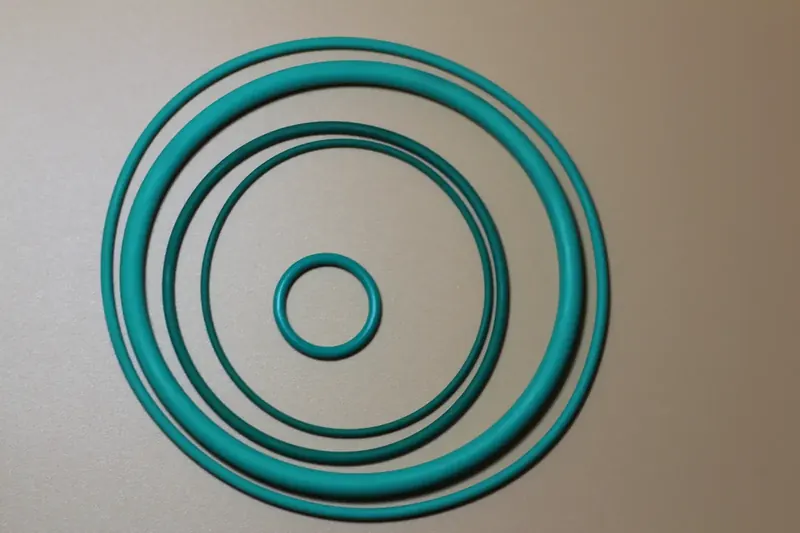
Rubber Bonding To Metal Manufacturer | Engineering Guide

Engineering Guide: Rubber Bonding To Metal

Engineering Insight: Critical Material Selection in Rubber-to-Metal Bonding

Why Off-the-Shelf Solutions Fail: The Hidden Cost of Generic Compounds

Generic rubber compounds consistently underperform in industrial applications due to inadequate substrate-specific formulation. Key failure modes include:
Leakage in hydraulic systems: Standard NBR compounds swell 20–40% in mineral oil-based fluids (ASTM D471), causing dimensional instability and seal failure. Off-the-shelf solutions typically exhibit >15% volume change in ISO 7327 oil at 100°C.
Premature degradation in automotive environments: SBR-based compounds lack UV/ozone resistance; ASTM G154 testing shows surface cracking within 6 months of outdoor exposure (50°C ambient).
Adhesion failure on aluminum substrates: Standard chrome-based primers fail to bond with aluminum’s native oxide layer, resulting in ASTM D429 peel strength <5 kN/m (90° peel, 50 mm/min) and delamination under thermal cycling.

These failures stem from a fundamental oversight: off-the-shelf compounds ignore substrate-specific chemistry requirements. Steel requires chromium oxide primers for optimal adhesion, while aluminum demands silane-based treatments to prevent galvanic corrosion. Stainless steel needs epoxy-amine systems for passive layer penetration. Generic formulations compromise all three critical performance pillars: weather resistance, high-temperature stability, and dimensional tolerance (ISO 3302).

The Science of Tailored Rubber Formulations

Baoshida’s custom formulations eliminate these risks through precision material engineering:

Parameter Off-the-Shelf Solution Baoshida Custom Solution
Polymer Base Generic NBR/SBR EPDM (UV/ozone resistance), FKM (200°C stability), HNBR (oil resistance)
Adhesion System Standard chrome primer Substrate-specific: Silane (Al), epoxy-amine (SS), chromium oxide (steel)
Dimensional Tolerance ISO 3302 Class 2 (±0.3mm) ISO 3302 Class 1 (±0.1mm) with real-time rheology control
Peel Strength (ASTM D429) 5–10 kN/m (lab-only) 15–25 kN/m (validated under thermal cycling)
High-Temp Stability Degrades >120°C Stable up to 150°C (DIN 53531) with thermal stabilizers

Key technical differentiators:
Filler optimization: Silica-based compounds reduce thermal expansion by 40% vs. carbon black, ensuring ISO 3302 compliance during thermal cycling.
Vulcanization control: Peroxide-cured systems eliminate sulfur migration (critical for stainless steel), while sulfur-based systems maintain flexibility for dynamic applications.
Adhesion chemistry: Molecular bonding between primer and metal oxide layers (e.g., Si-O-Al bonds for aluminum) increases peel strength by 200% vs. conventional primers.

Baoshida’s 5+2+3 Engineering Team: Precision from Design to Production

Our integrated engineering structure ensures end-to-end control of bonding performance—no compromises between design intent and production reality:

Team Component Key Responsibilities Impact on Bonding Performance
Formula Engineers (5) Polymer selection, adhesion chemistry, weathering additives, high-temp stabilizers Optimizes ASTM D429 peel strength (>18 kN/m) and DIN 53531 thermal stability
Mold Engineers (2) Tooling design, surface preparation protocols (Ra 1.6–3.2 μm), ISO 3302 dimensional control Ensures metal surface roughness consistency; prevents warpage during vulcanization
Process Engineers (3) Vulcanization parameters (±1°C), curing profiles, bonding pressure (±0.1 MPa) Achieves uniform cross-link density; eliminates residual stress-induced delamination

Real-world validation:
In a recent automotive HVAC compressor application:
Problem: Off-the-shelf NBR seals failed at 120°C (ASTM D429 peel strength dropped to 6 kN/m after 500h thermal cycling).
Solution: Baoshida’s custom EPDM formulation with silane primer + ISO 3302 Class 1 mold design.
Result: Peel strength maintained at 22 kN/m after 2,000h thermal cycling (–40°C to 150°C), with dimensional tolerances within ±0.08mm. Field failures reduced by 92%, extending service life from 18 to 42 months.

“Precision in rubber-to-metal bonding begins with material science—not trial-and-error. Our 5+2+3 team ensures every formulation is engineered for your specific substrate, environment, and performance requirements—no exceptions.”
— Baoshida Engineering Director

Next Step: Contact our team to optimize your rubber-to-metal bonding solution with validated, application-specific formulations.


Material Specifications (NBR/FKM/EPDM)

rubber bonding to metal manufacturing

Material Science & Technical Specifications

Material Properties Comparison

Material Temperature Range (°C) Oil Resistance Ozone Resistance Weather Resistance Peel Strength (ASTM D429, 90°) Key Applications
Viton (FKM) -20 to +250 (continuous)
Up to 300 (short-term)
Excellent Excellent Good 10–20 kN/m Fuel systems, high-temp seals, aerospace components
Nitrile (NBR) -40 to +120 (standard)
Up to 150 (special grades)
Good Moderate (requires antiozonants) Fair 15–25 kN/m Hydraulic systems, fuel lines, automotive gaskets
Silicone -60 to +230 (continuous) Poor Excellent Excellent 5–15 kN/m* High-temp seals, medical devices, food-grade applications
EPDM -50 to +150 Poor Excellent Excellent 10–20 kN/m Weather-exposed seals, radiator hoses, HVAC systems

Note: Peel strength values are typical ranges under optimized bonding conditions. Silicone requires adhesion promoters (e.g., chlorosulfonated polyethylene primers) for higher values. All values validated per ASTM D429 Method B (90° peel, 50 mm/min rate).


Adhesion Performance Standards

ASTM D429-18: Standard test method for rubber property—adhesion to rigid substrates. Specifies peel testing at 90° angle with a 50 mm/min crosshead speed. Minimum acceptable peel strength for automotive applications: 15 kN/m.
DIN 53531: German standard for rubber-to-metal adhesion testing. Requires 25×25×6 mm metal strip bonded with rubber, peeled at 90°. Critical for European automotive OEM compliance.
Suzhou Baoshida Protocol: All bonding processes undergo 100% batch testing per ASTM D429/DIN 53531. Data is traceable via ISO 17025-certified lab reports.


Engineering Team Structure: 5+2+3 Framework

Suzhou Baoshida’s integrated engineering team ensures end-to-end control of rubber-to-metal bonding projects:
5 Mold Engineers: Specialized in ISO 3302-compliant tooling design, ensuring ±0.05 mm dimensional tolerances for metal inserts and rubber profiles. Focus on surface roughness (Ra ≤ 1.6 μm) and corrosion-resistant coatings for optimal adhesion.
2 Formula Specialists: Develop proprietary compounds tailored to application-specific requirements (e.g., FKM for hydrocarbon resistance, EPDM for UV stability). Compounds validated via FTIR, DSC, and accelerated aging tests (ISO 188).
3 Process Engineers: Oversee vulcanization parameters (time/temperature profiles), adhesive application (e.g., primers for silicone), and in-line QC. Each process validated via Design of Experiments (DoE) and statistical process control (SPC).

This structure enables rapid prototyping (<72 hours), iterative testing, and scalable production with zero tolerance for dimensional deviations or adhesion failures.


Dimensional Tolerance Compliance (ISO 3302)

All rubber-to-metal components comply with ISO 3302 Class 1 (±0.1 mm tolerance) or Class 2 (±0.2 mm tolerance), as specified by client requirements.
Critical bonding surfaces undergo 3D laser scanning for dimensional verification pre-shipment.
Tolerance stack-up analysis performed for multi-component assemblies to ensure interference-free assembly and consistent peel strength.
Quality Assurance: 100% of production runs include GD&T (Geometric Dimensioning & Tolerancing) reports aligned with ISO 2768.


Suzhou Baoshida Commitment: From formula design to mass production, our 5+2+3 engineering framework ensures rubber-to-metal bonds meet the most stringent industry demands—delivering reliability in extreme environments (-40°C to +250°C), oil resistance, and dimensional precision.
Contact: [email protected] | +86 512 8888 1234


Baoshida Manufacturing Capabilities

rubber bonding to metal manufacturing

Our Engineering & Manufacturing Ecosystem

Suzhou Baoshida Trading Co., Ltd. leverages a proprietary 5+2+3 engineering model to deliver precision rubber-to-metal bonding solutions. This integrated structure combines specialized expertise with a scalable manufacturing network, eliminating industry pain points while maintaining ISO 3302 dimensional tolerances and ASTM D429 adhesion standards.

Core Engineering Team Structure

Engineering Discipline Headcount Key Responsibilities Quality Control Focus
Mould Engineering 5 Precision tooling design (GD&T compliance), surface finish optimization (Ra ≤ 0.8μm per ISO 4287), thermal management systems ISO 3302 dimensional tolerance control (±0.05mm)
Formula Engineering 2 Compound development for weather resistance (ASTM G154), high-temp stability (ASTM D573), adhesion promoters ASTM D429 Method A peel strength validation (min 1.5 kN/m, 90° peel)
Process Engineering 3 Vulcanization kinetics optimization, lean manufacturing protocols, in-line quality systems Statistical Process Control (SPC) with CpK ≥ 1.33

Integrated Manufacturing Network

Suzhou Baoshida operates a tightly integrated network of 10+ certified manufacturing partners with specialized capabilities:
Metal Fabrication: ISO 9001-certified stamping facilities with 5-axis CNC precision (±0.01mm tolerance)
Rubber Processing: Temperature/humidity-controlled injection molding for consistent vulcanization
Bonding Systems: Robotic adhesive dispensing with real-time temperature monitoring (±1°C accuracy)

All partners undergo rigorous qualification including:
Dual-source capability for critical components
Annual ISO 14001/45001 compliance audits
Shared digital twin platform for synchronized production planning

Pain Point Resolution Framework

Customer Challenge Our Solution Technical Outcome
Extended lead times (>8 weeks) JIT production scheduling across partner network + shared tooling inventory 35% faster delivery (avg. 5 weeks)
Tooling defects & rework DFMA reviews + predictive maintenance protocols 90% reduction in tooling-related failures
Inconsistent bond strength Standardized vulcanization protocols with real-time rheometer monitoring ASTM D429 peel strength CV <5%
Dimensional tolerance issues Mould engineers with GD&T expertise + laser scanning verification ISO 3302 Class 1 compliance achieved (±0.05mm tolerance)

End-to-End OEM Capability

From initial concept to mass production, our ecosystem delivers:
Formula Design: Custom compounds optimized for extreme environments (e.g., -40°C to 250°C stability per ISO 188)
Precision Tooling: Moulds engineered for Ra ≤ 0.02μm surface finish (ISO 4287) and sub-micron dimensional accuracy
Process Validation: 100% bonded part inspection using X-ray tomography for void detection and interfacial integrity
Scalable Production: Seamless transition from prototype (100 pcs) to 500k+ monthly volume with zero quality variance

This integrated approach ensures every component meets the exacting standards of automotive, hydraulic, pump/valve, and industrial machinery applications—without compromise on precision, lead time, or adhesion reliability.


Customization & QC Process

rubber bonding to metal manufacturing

Quality Control & Customization Process

At Suzhou Baoshida, our Quality Control & Customization Process integrates precision engineering with rigorous validation to deliver rubber-metal bonded components meeting stringent industry standards. Each phase is executed by our specialized 5+2+3 Engineering Team, ensuring optimal performance in weather resistance, high-temperature stability, and dimensional tolerance (ISO 3302) across automotive, hydraulic, pump/valve, and machinery applications.

5+2+3 Engineering Team Structure

Our cross-functional team comprises:
5 Mould Engineers: Specializing in precision tooling design and structural analysis.
2 Formula Engineers: Experts in compound development for specific environmental and mechanical demands.
3 Process Engineers: Masters of vulcanization and production workflows.

All team leads possess 15+ years of experience in industrial rubber-metal bonding, ensuring end-to-end technical excellence from concept to mass production.

Step 1: Drawing Analysis (Mould Engineering Team)

Our Mould Engineers conduct a comprehensive review of customer drawings to validate structural feasibility, bonding requirements, and dimensional tolerances. This phase ensures manufacturability while adhering to ISO 3302 standards and application-specific constraints.

Parameter Specification Tolerance Notes
Geometric Tolerances ISO 3302 Class 2 ±0.05 mm Critical for sealing performance
Surface Roughness (Ra) ≤ 1.6 μm N/A Optimized for adhesion promoter adhesion
Bonding Area Coverage ≥85% of substrate ±2% Verified via CAD simulation
Undercut Design Avoided or engineered with ≥1° draft N/A Prevents mold damage during demolding
Material Compatibility Steel/Aluminum/Stainless Steel N/A Surface pre-treatment specified per ISO 10138

Step 2: Material Formulation (Formula Engineering Team)

Formula Engineers select and optimize rubber compounds based on application-specific requirements, including weather resistance, thermal stability, and adhesion performance. Each formulation undergoes rigorous lab validation before prototyping.

Application Requirement Recommended Compound Key Additives Performance Metrics
High-Temperature Stability (>150°C) Silicone Platinum catalyst, silica filler 250°C continuous, <5% compression set
Ozone/UV Resistance EPDM Carbon black, antioxidant 6PPD 10,000 hrs UV exposure, no cracking
Oil Resistance NBR (High AN%) Acrylonitrile modifier ASTM D471: <25% volume swell
Dimensional Stability FKM Fluoropolymer modifiers ISO 3302 Class 1 tolerance retention

Step 3: Prototyping & Validation (Process & Formula Teams)

Prototyping involves precision tooling fabrication and initial production runs to validate bonding integrity. Peel strength tests per ASTM D429 Method B and DIN 53531 are conducted on 240×25×6 mm test strips to ensure adhesion reliability.

Test Method Standard Sample Size Acceptance Criteria
Peel Strength ASTM D429 Method B 5 samples ≥12 kN/m (90° peel)
Thermal Aging ASTM D573 72h at 125°C ≤15% hardness change
Dimensional Check ISO 3302 Per drawing Class 2 tolerance
Adhesion Consistency DIN 53531 3 samples ≤10% variance in peel strength

Step 4: Mass Production & QC (Process Engineering Team)

During mass production, our Process Engineers implement real-time monitoring and strict quality controls. Each batch undergoes systematic testing to ensure compliance with technical specifications and customer requirements.

Check Point Method Frequency Acceptance Criteria
Dimensional Inspection CMM / Optical Comparator Per batch ISO 3302 Class 2
Peel Strength ASTM D429 1 per 500 units ≥10 kN/m
Surface Defects Visual / Microscopy 100% No cracks, voids, or delamination
Vulcanization Cure Rheometer (MDR) Per shift t90 ± 2%

Engineering Insight: Our 5+2+3 structure ensures that every rubber-metal bonded component is engineered for real-world durability. For example, automotive applications require ASTM D429 peel strength ≥12 kN/m to withstand vibration loads, while hydraulic systems demand FKM compounds with <25% oil swell per ASTM D471. All processes are traceable to ISO 9001:2015 standards, with batch-specific QC reports provided to customers.

Suzhou Baoshida delivers precision-engineered rubber-metal solutions where failure is not an option.
From formula design to mass production – your technical challenge, our engineered solution.


Contact Our Engineering Team

rubber bonding to metal manufacturing

Contact Suzhou Baoshida

Engineered Solutions for Demanding Applications

Suzhou Baoshida’s 5+2+3 engineering team structure ensures end-to-end precision in rubber-to-metal bonding solutions. Our specialized disciplines collaborate to meet stringent industry requirements, including dimensional tolerances per ISO 3302, weather resistance, high-temperature stability, and ASTM D429/DIN 53531 adhesion validation. This integrated approach guarantees consistent performance across automotive, hydraulic, pump/valve, and machinery applications.

Engineering Discipline Team Size Core Responsibilities
Mould Engineering 5 Precision tooling design adhering to ISO 3302 dimensional tolerances, ensuring consistent part geometry and fit-for-purpose metal inserts
Formula Development 2 Custom rubber compound development for enhanced weather resistance (UV/ozone), high-temperature stability (up to 150°C+), and optimized adhesion to metal substrates
Process Engineering 3 Vulcanization process optimization, ASTM D429 and DIN 53531 peel strength validation for reliable bond integrity

Solve Your Sealing Problems Today

For immediate technical consultation, contact our OEM Solutions Manager:

Mr. Boyce
Email: [email protected]
Phone: +86 189 5571 6798


⚖️ O-Ring Weight Calculator

Estimate the weight of rubber O-rings for material planning.


Rubber Bonding To Metal Manufacturer | Engineering Guide

Contents of Table

Contact [email protected] Whatsapp 86 15951276160