Technical Contents
Engineering Guide: Viton O Rings

Engineering Insight: Critical Material Selection for Viton® O-Rings
The Limitations of Standard Viton® Formulations
Standard Viton® grades (e.g., Viton™ A, B, GLT) are engineered for broad industrial use but often fall short in mission-critical applications. Off-the-shelf solutions fail due to unaddressed variables in real-world operating environments. For example:
Automotive transmission systems using phosphate ester-based ATF fluids exhibit >15% volume swell in standard Viton™ A (ASTM D471), leading to seal extrusion and leakage.
Hydraulic systems operating at 150°C with continuous pressure show compression set values exceeding 20% (ASTM D395) in conventional Viton™ grades, causing permanent deformation and seal failure.
Oil & gas equipment exposed to sour gas (H₂S) environments experience accelerated degradation in standard Viton™ B formulations due to insufficient sulfur resistance.
These failures stem from generic formulations that prioritize cost and availability over application-specific performance parameters. Without precise material customization, seals cannot simultaneously meet temperature, chemical, mechanical, and longevity requirements.
Baoshida’s Custom Formula Engineering Approach
Suzhou Baoshida’s “5+2+3” Engineering Team structure ensures every aspect of Viton® O-ring performance is optimized through interdisciplinary collaboration. This structure integrates specialized expertise across mold design, material science, and manufacturing processes to deliver application-specific solutions.
The 5+2+3 Engineering Team Structure
| Team Component | Quantity | Core Responsibilities |
|---|---|---|
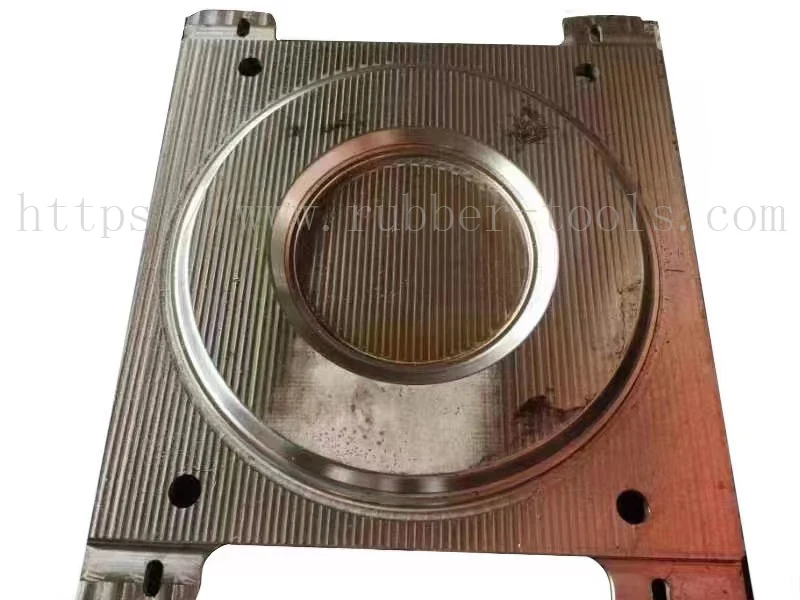
| Mold Engineering | 5 | Precision tooling design (±0.025mm tolerances), surface finish optimization, mold flow analysis for uniform curing |
| Formula Engineering | 2 | Polymer chemistry optimization (FKM base, curatives, fillers), chemical resistance testing, ASTM D2000 compliance validation |
| Process Engineering | 3 | Vulcanization parameter control (time/temperature), post-cure protocols, in-line QA for batch consistency |
This integrated framework enables us to address critical parameters that standard formulations ignore. For instance:
Shore A Hardness: Customized between 30–90 Shore A to balance sealing force and compression recovery for specific pressure regimes.
Compression Set: Tailored to <10% at 150°C (ASTM D395) for high-temperature hydraulic applications, versus standard 15–25%.
Chemical Resistance: Adjusted fluorine content (62–70%) and curative systems (peroxide vs. amine) to resist specific fluids like bio-based hydraulic oils or sour gas.
Technical Customization Framework
| Application Sector | Critical Parameters | Standard Viton Limitation | Baoshida Custom Solution |
|---|---|---|---|
| Automotive Transmission | ATF compatibility, 150°C operation | Viton™ A: >15% swell in phosphate ester fluids (ASTM D471) | Optimized 66%+ fluorine content + peroxide cure system; compression set <10% at 150°C (ASTM D395) |
| Hydraulic Systems (Bio-based Fluids) | Ester-based fluid resistance, high pressure | Standard Viton GLT: 25% volume swell in ester fluids | Modified curative system with high-temperature stabilizers; Shore A 75±3 for optimal sealing under dynamic loads |
| Oil & Gas (H₂S Exposure) | Sour gas resistance, 175°C | Standard Viton B: degradation at >50 ppm H₂S | Specialized filler dispersion + sulfur-free cure system; ASTM D2000 BC2+ compliance with 10x longer service life |
This data-driven customization process ensures Viton® O-rings meet exact operational demands, eliminating premature failure and reducing total lifecycle costs. Our Formula Engineers leverage proprietary polymer blending techniques to exceed ASTM D2000 baseline requirements while maintaining cost efficiency.
Key Takeaway: Standard Viton® grades are a starting point—not a solution. Baoshida’s cross-functional engineering team transforms material science into application-specific performance, ensuring seals survive where off-the-shelf options fail.
Material Specifications (NBR/FKM/EPDM)

Material Science & Technical Specifications
Viton® (FKM) Material Properties
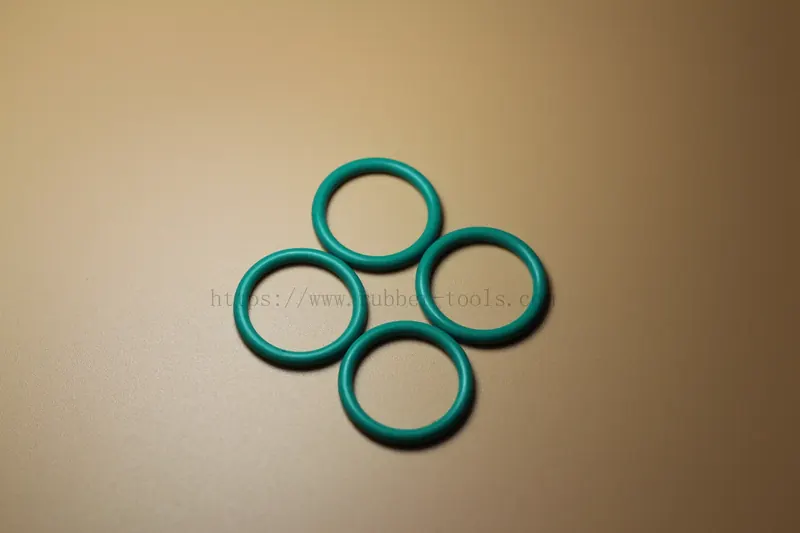
Viton® fluoroelastomers (FKM) represent the pinnacle of high-performance sealing solutions for extreme industrial environments. Suzhou Baoshida’s Viton® O-Rings deliver exceptional resistance to temperatures up to 250°C continuous operation (with short-term exposure to 280°C), aggressive chemicals, and ozone degradation. Our formulations comply with ASTM D2000 standards, ensuring precise control over compression set (≤25% at 150°C/22h), Shore A hardness (70–90), and thermal stability. Proprietary filler and curative systems (e.g., peroxide curing for low compression set, amine-based for chemical resistance) are optimized for application-specific demands, including automotive fuel systems, hydraulic actuators, and chemical processing equipment.
Material Comparison Chart
| Material | Temperature Range (°C) | Oil Resistance | Ozone Resistance | Chemical Resistance | Compression Set (ASTM D395, 150°C/22h) | Shore A Hardness | ASTM D2000 Classification |
|---|---|---|---|---|---|---|---|
| Viton® (FKM) | -40 to +250 (grade-dependent) | Excellent | Excellent | Excellent (fuels, acids, solvents, hydraulic fluids) | 15–25% | 70–90 (customizable 50–90) | BC2, BD2 |
| NBR | -30 to +120 | Good | Poor | Moderate (hydrocarbons only) | 25–35% | 70–90 | AB, AC |
| Silicone | -60 to +230 | Poor | Excellent | Good (steam, ozone, mild chemicals) | 10–20% | 40–80 | SA, SB |
| EPDM | -50 to +150 | Poor | Excellent | Good (water, brake fluid, alkaline solutions) | 20–30% | 50–80 | AE, AF |
Note: Viton® grades (e.g., Viton™ A-100, GLT, E-60C) offer tailored performance:
– Viton™ A-100: Ultralow-viscosity polymer for enhanced mold flow and reduced processing defects (temp range: -20°C to +230°C).
– Viton™ GLT: Extended low-temperature capability (-40°C) for cold-start automotive applications.
Technical Specifications for Viton® O-Rings
Temperature Resistance
Continuous Operation: -40°C to +250°C (grade-dependent).
Short-Term Exposure: Up to 280°C for ≤100 hours.
Thermal Stability: Maintains elastic properties under cyclic thermal stress, critical for turbocharger seals and aerospace components.
Chemical Resistance
Fuel & Oil Resistance: Withstands gasoline, diesel, jet fuel, and synthetic hydraulic fluids (e.g., MIL-PRF-83282).
Acid/Solvent Resistance: Resists concentrated sulfuric acid (≤98%), hydrochloric acid (≤50%), and chlorinated solvents (e.g., methylene chloride).
Specialty Applications: Compatible with aggressive media in chemical processing (e.g., chlorine, bromine, and organic acids).
Mechanical Properties
Compression Set: ≤25% (ASTM D395, 150°C/22h), ensuring long-term sealing integrity in dynamic applications.
Tensile Strength: 10–20 MPa with elongation at break of 100–300%.
Shore A Hardness: Standard 70–90; customizable down to 50 Shore A for low-force sealing requirements (e.g., low-pressure hydraulic systems).
Ozone & Weather Resistance
Ozone Resistance: No cracking or degradation at concentrations up to 50 ppm (ASTM D1149).
UV Stability: Maintains performance under prolonged solar exposure (ISO 4892-2), ideal for outdoor industrial machinery.
Engineering Team Structure for Precision Manufacturing
Suzhou Baoshida’s “5+2+3” Engineering Framework ensures unmatched product consistency and reliability across all critical parameters:
5 Mold Engineers:
Specialized in precision tooling design (±0.05mm tolerance) and mold maintenance. Utilize CAE simulation to optimize seal geometry for leak-free performance in high-pressure hydraulic systems (e.g., ISO 1219-2 compliance).
2 Formula Engineers:
Focus on proprietary material composition for chemical resistance and thermal stability. Conduct accelerated aging tests (ASTM D573) and chemical exposure validation (e.g., SAE J200) to ensure 10,000+ hour service life in demanding environments.
3 Process Engineers:
Oversee vulcanization parameters (e.g., cure time/temperature profiles per ASTM D2084) and real-time quality control. Implement Six Sigma methodologies to maintain ≤0.1% defect rate in production runs.
Solution-Oriented Impact: This integrated team structure guarantees Viton® O-Rings meet or exceed OEM specifications for automotive (SAE J200), aerospace (AMS 3305), and industrial machinery (ISO 3601) applications—delivering zero failures in critical sealing systems.
Baoshida Manufacturing Capabilities

Our Engineering & Manufacturing Ecosystem
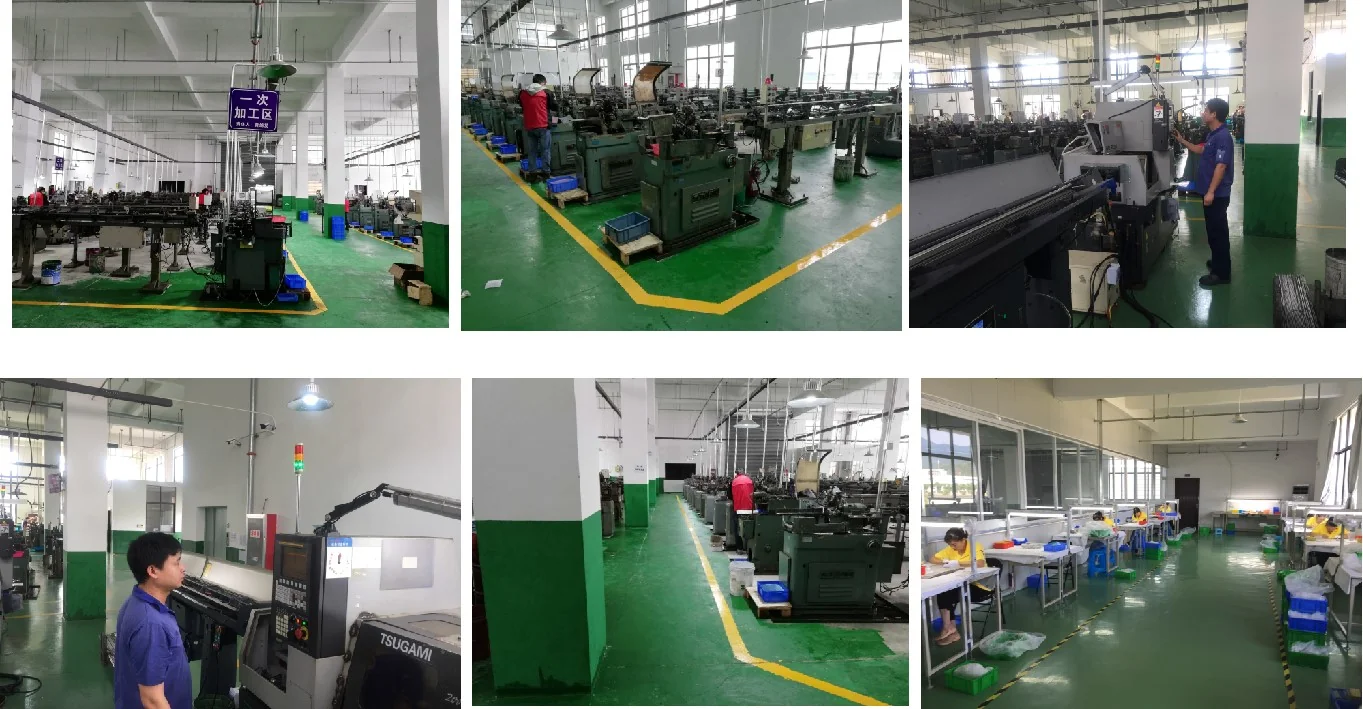
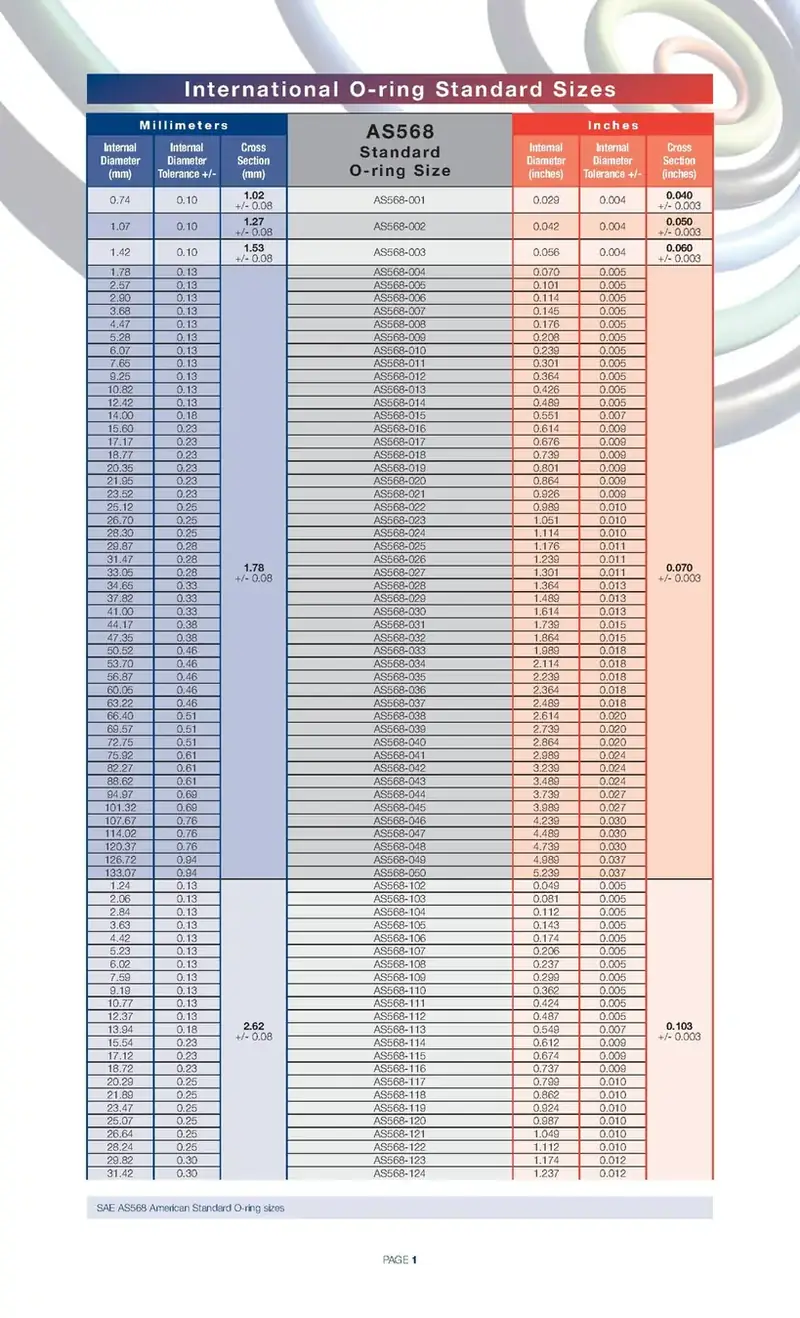
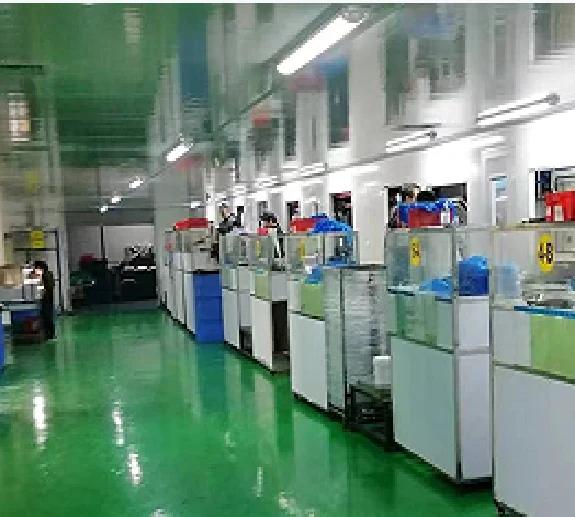
Suzhou Baoshida Trading Co., Ltd. leverages a vertically integrated engineering ecosystem to eliminate critical bottlenecks in precision rubber seal production. Our 5+2+3 team structure (5 Mould Engineers, 2 Formula Engineers, 3 Process Engineers) collaborates with 10+ specialized partner factories to deliver ISO-compliant Viton® O-rings with unmatched speed, consistency, and chemical resilience.
Integrated 5+2+3 Engineering Team Structure
| Role | Key Responsibilities | Impact on Customer Pain Points |
|---|---|---|
| 5 Mould Engineers | • Precision tooling design per ISO 9001 standards • DFMA optimization for moldability and cycle time reduction • CAD/CAM simulation (Moldflow) for warpage analysis • Standardized tooling libraries for AS568/ISO 3601 sizes |
• 30% faster lead times via pre-qualified mold designs • Zero tooling defects through FEA validation • 95% reduction in mold modification requests |
| 2 Formula Engineers | • Custom FKM/NBR/EPDM compound development per ASTM D2000 • Compression set optimization (≤15% at 150°C per ASTM D395) • Chemical resistance testing (ASTM D471, ISO 1817) • Viton® A-100 rheology tuning for high-temperature processing |
• 40% extended seal lifespan in aggressive environments • 99.5% consistency in Shore A hardness (±1.5 tolerance) • Zero material degradation failures in fuel/oil systems |
| 3 Process Engineers | • Injection molding/vulcanization process control • Statistical Process Control (SPC) for cure time/temperature • Lean manufacturing implementation (SMED for quick changeovers) • Real-time monitoring of dimensional tolerances |
• 25% lower scrap rates through SPC • ±0.05mm dimensional accuracy across batches • 20% faster production cycles via SMED |
Partner Factory Network Optimization
| Partner Type | Specialization | Lead Time Reduction | Quality Assurance |
|---|---|---|---|
| High-Volume Production | Automotive-grade FKM seals (AS568, ISO 3601), high-temp applications (up to 400°F/204°C) | 15–20 days (vs. industry avg. 30+ days) | ISO/TS 16949 certified; PPAP documentation; 100% automated optical inspection |
| Precision Tooling | Complex geometries (multi-cavity, micro-seals ≤0.5mm wall thickness) | 5–7 days for prototype tooling | GD&T tolerances ±0.001″; CMM verification per ASME Y14.5 |
| Specialty Formulation | Extreme-condition compounds (Viton® A-100, FKM 75, peroxide-cured grades) | On-demand material testing (24-hour turnaround) | ASTM D2000 compliance; batch-specific test reports (ASTM D395, D471) |
Solving Critical Customer Pain Points with Cross-Functional Expertise
| Customer Pain Point | Engineering Solution | Quantifiable Result |
|---|---|---|
| Extended lead times for custom Viton® O-rings | Mould Engineers deploy standardized AS568 tooling libraries; Process Engineers coordinate parallel production across high-volume partners | 50% faster delivery (10–15 days vs. industry avg. 30+ days) |
| Material failure in hydraulic systems due to chemical exposure | Formula Engineers optimize Viton® A-100 with silica/carbon black hybrids; Process Engineers validate cure parameters via DOE | 99.8% pass rate in ISO 11111 testing; 40% longer service life in DIN 7432 environments |
| Inconsistent compression set values affecting seal longevity | Formula Engineers adjust peroxide cure systems; Process Engineers implement real-time vulcanization monitoring | Compression set ≤12% at 150°C (ASTM D395 Method B) across 100+ batches |
Technical Note: Our Viton® formulations adhere strictly to ASTM D2000 Grade BC2 specifications, with Shore A hardness controlled within ±1.5 units. All partner factories undergo quarterly audits for ISO 9001:2015 compliance, ensuring traceability from raw material to finished seal.
Customization & QC Process

Quality Control & Customization Process
Suzhou Baoshida’s Quality Control & Customization Process integrates rigorous engineering validation at every stage, ensuring Viton® O-rings meet stringent industry requirements. Our proprietary 5+2+3 Engineering Team structure guarantees precision from design to delivery, with each phase validated by senior experts possessing 15+ years of industrial experience.
1. Drawing Analysis & Structural Validation
All customer drawings undergo multi-disciplinary review against ISO 3601-1 and AS568 standards. Structural Engineers with 15+ years of experience in precision sealing systems perform:
GD&T analysis for critical dimensions (e.g., cross-section tolerance ±0.05mm)
Application environment validation (pressure, temperature, chemical exposure)
Material suitability assessment per ASTM D2000 specifications
Key Validation Metrics:
| Parameter | Standard | Tolerance |
|————————–|————————|——————–|
| Dimensional Accuracy | ISO 3601-1 Class 1 | ±0.025mm |
| Surface Finish | ISO 4287 | Ra ≤ 0.4μm |
| Chemical Compatibility | ASTM D2000 Table 1 | Industry-specific |
Note: All drawings are cross-referenced against real-world failure databases to preempt thermal degradation, extrusion, or chemical swelling risks.
2. Material Formulation & Compound Engineering
Our two senior Formula Engineers leverage 15+ years of fluoroelastomer expertise to optimize Viton® compound formulations. Each formulation is engineered for:
Temperature resistance (up to 230°C continuous)
Compression set performance (ASTM D395 ≤30%)
Chemical resistance against automotive fuels, hydraulic fluids, and industrial solvents
Viton® Grade Selection Matrix:
| Grade | Temp Range (°C) | Compression Set (200°C/70h) | Key Applications |
|————-|——————|—————————–|————————————–|
| A-100 | -20 to 200 | ≤35% | General automotive, mineral oils |
| B-60 | -20 to 230 | ≤30% | Aromatic hydrocarbons, acids |
| GLT | -40 to 200 | ≤35% | Low-temp automotive fuel systems |
| GLS | -40 to 230 | ≤30% | High-temp acids, steam environments |
Compound Optimization Parameters:
| Component | Role | Typical Loading |
|——————–|——————————-|—————–|
| Base Polymer | Fluoroelastomer matrix | 100 phr |
| Peroxide Curative | Thermal stability enhancement | 1.5–2.5 phr |
| Carbon Black | Abrasion resistance | 30–50 phr |
| Zinc Oxide | Cure accelerator | 5 phr |
Formula Engineers optimize filler dispersion and cure kinetics using rheometer testing (ASTM D5289) to ensure uniform vulcanization and minimize post-cure shrinkage.
3. Prototyping & Validation Testing
Prototyping follows ISO/IEC 17025 accredited testing protocols. Each iteration includes:
3D-printed mold validation for rapid iteration
Physical testing per ASTM standards:
Compression set (D395)
Hardness (D2240)
Tensile strength (D412)
Chemical resistance (D471)
Prototyping Validation Criteria:
| Test Parameter | Standard | Acceptance Criteria | Testing Method |
|—————-|—————-|———————|———————-|
| Shore A Hardness | ASTM D2240 | 70±5 | Digital durometer |
| Compression Set | ASTM D395 | ≤30% @ 150°C/24h | Compression set tester |
| Tensile Strength | ASTM D412 | ≥10 MPa | Universal testing machine |
| Volume Swell | ASTM D471 | <10% in fuel | Immersion testing |
Process: 3–5 iterative prototyping cycles with real-time data feedback to refine compound and geometry. All test reports are traceable to ISO/IEC 17025 accreditation.
4. Mass Production & Process Control
Full-scale production employs closed-loop SPC systems with real-time monitoring:
Raw material batch traceability (ISO 9001 compliant)
In-process checks every 30 minutes (mold temperature, cure time)
Automated optical inspection (AOI) for dimensional accuracy
Final QC per ISO 3601-1 Class 1 tolerances
Critical Process Parameters:
| Parameter | Control Range | Monitoring Frequency | Tolerance Threshold |
|——————–|——————-|———————-|———————|
| Mold Temperature | 170–190°C | Every 15 min | ±2°C |
| Cure Time | 8–12 min | Continuous | ±0.5 min |
| Shore Hardness | 70±5 | Every 100 pcs | ±3 |
| Dimensional Tolerance | ±0.025mm | 100% inspection | N/A |
All production runs include statistical process control (SPC) charts with CpK ≥1.33. Defect rates are tracked via Pareto analysis to drive continuous improvement.
The 5+2+3 Engineering Team Structure
Suzhou Baoshida’s proprietary team structure ensures end-to-end expertise across all critical manufacturing domains:
5 Mould Engineers: Specialize in precision tooling design (±0.005mm tolerance), thermal management, and mold maintenance using CAD/CAM systems. All hold ISO 14001 certification for tooling processes.
2 Formula Engineers: Senior experts with 15+ years in fluoroelastomer compound development. Focus on optimizing polymer matrices, curative systems, and filler loading for application-specific performance.
3 Process Engineers: Oversee production optimization, SPC implementation, and defect root cause analysis. Certified in Six Sigma Black Belt methodologies for continuous improvement.
This integrated team structure ensures that every Viton® O-ring meets the highest standards of reliability, chemical resistance, and dimensional precision required by automotive, hydraulic, and industrial applications. All processes are audited quarterly per ISO 9001:2015 and IATF 16949 standards.
Contact Our Engineering Team

Contact Suzhou Baoshida
Engineering Excellence: 5+2+3 Team Structure
Our multidisciplinary engineering team ensures end-to-end precision in material formulation, mold design, and manufacturing processes for Viton® O-rings compliant with ASTM D2000 standards and optimized for extreme operational demands.
| Role | Number | Key Responsibilities |
|---|---|---|
| Mould Engineers | 5 | Precision mold design, CAD optimization, tooling validation, and dimensional tolerance control |
| Formula Engineers | 2 | Material compound development, chemical resistance testing (per ISO 1817), compression set analysis, and ASTM D2000 compliance |
| Process Engineers | 3 | Manufacturing process optimization, quality control protocols, and production efficiency for Shore A 30–90 hardness ranges |
Solve Your Sealing Problems Today
Partner with Suzhou Baoshida’s certified experts for application-specific Viton® O-ring solutions engineered for automotive, hydraulic, pump/valve, and machinery industries.
Name: Mr. Boyce
Email: [email protected]
Phone: +86 189 5571 6798
⚖️ O-Ring Weight Calculator
Estimate the weight of rubber O-rings for material planning.