Technical Contents
Engineering Guide: Custom Compression Molding

Critical Material Selection in Custom Compression Molding: Beyond Standardized Specifications
Material selection is the cornerstone of reliable rubber component performance. While standardized specifications like ASTM D2000 provide baseline classification for elastomer properties (e.g., hardness, heat resistance, chemical compatibility), off-the-shelf solutions consistently fail in mission-critical applications due to unaddressed environmental, mechanical, and dimensional demands. Generic materials lack the precision required for high-stress environments—such as automotive brake systems exposed to DOT 5.1 fluid or hydraulic actuators operating under extreme pressure cycles—resulting in leakage, premature degradation, and costly downtime.
At Suzhou Baoshida, we eliminate these risks through a proprietary, application-driven material development process. Unlike commodity suppliers who rely on off-the-shelf compounds, our engineering team designs custom rubber formulations tailored to exact operational parameters, ensuring compliance with both industry standards and unique client requirements.
Why Off-the-Shelf Rubber Solutions Fail in Critical Applications
| Failure Mode | Technical Cause | Real-World Impact Example |
|---|---|---|
| Inconsistent Compression Set | Batch-to-batch variability in crosslink density (ASTM D395) due to inconsistent curing agents and filler dispersion | Hydraulic cylinder seals failing at 150°C after 1,000 cycles (compression set >30% vs. required <10%) |
| Environmental Mismatch | Standard ASTM D2000 grades (e.g., “MA” for general service) lack specificity for niche media (e.g., phosphate ester-based hydraulic fluids) | NBR seals swelling 25% in ISO 15163 phosphate ester fluid, causing seal extrusion and system contamination |
| Dimensional Instability | Poor flow characteristics in thick-walled geometries (≥10mm) due to non-optimized viscosity profiles | Pump valve components with ±0.15mm wall thickness variation (vs. design tolerance of ±0.03mm), leading to pressure leaks at 200 bar |
Key Insight: ASTM D2000 callouts define minimum performance thresholds—not application-specific requirements. For example, “MA-4” specifies heat resistance up to 125°C but does not address dynamic sealing forces or chemical exposure to specific industrial fluids.
The 5+2+3 Engineering Framework: Precision from Formula to Final Part
Our integrated team structure ensures end-to-end control over material science, mold engineering, and process optimization—eliminating the siloed approach common in commodity manufacturing.
| Team Component | Expertise Focus | Critical Deliverables |
|---|---|---|
| Mold Design (5) | Solidworks/CAD precision, flash control, parting line optimization, venting analysis | Molds with <0.05mm dimensional tolerance; 99.8% flash-free parts via finite element analysis (FEA) |
| Formula (2) | ASTM D2000 compliance, compound rheology tuning, crosslink density optimization | Custom compounds achieving <5% compression set (ASTM D395) at 150°C/22h; tailored oil resistance (ASTM D471) |
| Process (3) | Compression molding parameter control, metal bonding protocols, cure kinetics | Bonding strength >18 MPa for metal-rubber assemblies; 98% first-pass yield via automated cure cycle mapping |
Why This Matters:
– Mold Design Engineers leverage Solidworks to simulate rubber flow during compression, minimizing flash and ensuring uniform wall thickness—critical for parts with complex geometries (e.g., multi-cavity valve bodies).
– Formula Specialists use DSC (Differential Scanning Calorimetry) and rheometers to adjust sulfur/accelerator systems, ensuring consistent cure rates even for high-viscosity compounds.
– Process Engineers optimize temperature/pressure profiles to prevent thermal degradation while maintaining adhesion to metal substrates (e.g., stainless steel inserts in hydraulic fittings).
Custom Formulation Capabilities: Precision Beyond ASTM D2000
While ASTM D2000 provides a universal language for rubber classification, our custom formulations exceed standard grades by addressing application-specific variables. Below is a comparison of typical off-the-shelf solutions versus Baoshida-engineered compounds for automotive brake systems:
| Property | Standard ASTM D2000 (MA-4) | Baoshida Custom Formula | Test Standard |
|---|---|---|---|
| Hardness (Shore A) | 70 ± 5 | 70 ± 1 | ASTM D2240 |
| Compression Set (150°C/22h) | 35% | <3% | ASTM D395 |
| Volume Swell (DOT 5.1 Fluid) | 22% | <4% | ASTM D471 |
| Tensile Strength | 12 MPa | 18 MPa | ASTM D412 |
| Bonding Strength (to Steel) | 5 MPa (adhesive failure) | 22 MPa (cohesive failure) | ISO 814 |
Technical Breakdown:
Compression Set Optimization: By adjusting peroxide cure systems and incorporating high-purity silica fillers, we achieve near-zero permanent deformation—critical for brake seals maintaining integrity over 100,000+ cycles.
Fluid Resistance: Standard MA-4 compounds swell in glycol-based brake fluids due to incompatible polymer backbones. Our custom FKM/ACM hybrid formulation resists DOT 5.1 via fluorine content optimization (28–32% F).
Metal Bonding: Plasma-treated steel inserts combined with proprietary adhesion promoters ensure cohesive failure (not interfacial), eliminating delamination in high-vibration environments.
Industry Impact: A Tier-1 automotive supplier reduced brake system failures by 92% after switching to Baoshida’s custom compound for a high-performance caliper seal—achieving 15-year service life where standard NBR failed in <2 years.
Why Partner with Suzhou Baoshida?
We don’t just meet ASTM D2000—we redefine it for your application. Our 5+2+3 engineering framework ensures:
No compromises: Formulations validated against your operational data (e.g., fluid chemistry, temperature cycles, pressure profiles).
Rapid prototyping: 10+ partner factories enable 72-hour mold production for complex geometries.
Zero tolerance for failure: Every batch undergoes 18+ quality checks, including 3D metrology and accelerated aging per ISO 1817.
Next Step: Share your application specifications (fluid type, temperature range, pressure cycles). We’ll deliver a custom material dossier with ASTM D2000-compliant data sheets and validation reports within 48 hours.
Material Specifications (NBR/FKM/EPDM)

Material Science & Technical Specifications for Custom Compression Molding
Material Selection Criteria & ASTM Standards Compliance
Suzhou Baoshida adheres strictly to ASTM D2000 standards for material classification, ensuring unambiguous specification of rubber properties through standardized testing protocols. This framework enables precise communication of performance requirements across automotive, hydraulic, and industrial applications. Key testing methodologies include:
Hardness: ASTM D2240 (Shore A scale)
Compression Set: ASTM D395 (resistance to permanent deformation under sustained load)
Oil Resistance: ASTM D471 (swell test in specified fluids)
Ozone Resistance: ASTM D1149 (exposure to controlled ozone concentrations)
Temperature Range: Validated per ASTM D575 (compression-deflection characteristics)
Procurement engineers may reference ASTM D2000 callouts (e.g., BC235 for oil/heat resistance, hardness 50–60 Shore A) to define exact material requirements. Our Formula Engineers optimize compound formulations to meet these specifications while balancing cost, durability, and application-specific demands.
Material Comparison Chart
All values validated per ASTM standards. Custom formulations available for niche requirements.
| Material | Hardness (Shore A) | Temperature Range (°C) | Oil Resistance | Ozone Resistance | Compression Set (ASTM D395) | Typical Applications |
|---|---|---|---|---|---|---|
| Viton (FKM) | 60–90 | -20 to +250 | Excellent | Excellent | ≤20% (70°C/24h) | Automotive seals, hydraulic systems, fuel lines |
| Nitrile (NBR) | 40–90 | -40 to +120 | Excellent | Poor | 25–35% (70°C/24h) | Hydraulic hoses, fuel systems, oil-resistant gaskets |
| Silicone | 40–80 | -60 to +230 | Poor | Excellent | 15–25% (150°C/22h) | High-temp seals, medical devices, aerospace components |
| EPDM | 50–90 | -50 to +150 | Poor | Excellent | 20–30% (100°C/22h) | Automotive weatherstripping, radiator hoses, outdoor applications |
Note: Compression set values reflect industry-standard test conditions. For extreme environments (e.g., >250°C or aggressive chemicals), custom compound development is available.
Integrated Engineering Expertise: The 5+2+3 Team Structure
Suzhou Baoshida’s proprietary 5+2+3 engineering framework ensures end-to-end precision in custom compression molding—from material selection to final part validation. This structure eliminates silos and accelerates problem-solving for complex industrial applications:
🔧 5 Structural Engineers (Mold Design)
Specialized in SolidWorks/CAD for precision mold design with ±0.02mm tolerance control.
FEA analysis for thermal distribution, stress points, and flash mitigation in complex geometries.
Expertise in metal insert bonding (e.g., steel, aluminum) with surface treatment protocols (e.g., plasma cleaning, chemical etching) to ensure >95% bond strength retention.
🧪 2 Formula Engineers
Develop compound formulations tailored to ASTM D2000 callouts and industry-specific requirements (e.g., SAE J200 for automotive, ISO 6943 for hydraulic systems).
Optimize polymer blends for:
Heat resistance: Carbon black/silica reinforcement for thermal stability up to 250°C.
Oil resistance: Fluoropolymer additives for FKM-based compounds.
Ozone resistance: Antiozonant systems for EPDM/Silicone.
Full traceability from raw materials to finished compound via ISO 9001-compliant batch records.
⚙️ 3 Process Engineers
Master compression molding parameters:
Flash control: Mold clamping force optimization (50–200 tons) and venting strategies for parts up to 1,000mm diameter.
Cure kinetics: Real-time monitoring of temperature/pressure profiles to eliminate under-cure/over-cure defects.
Metal bonding: Dual-cure systems for simultaneous rubber vulcanization and adhesive activation.
Lean manufacturing protocols reduce lead times by 40% while maintaining IATF 16949 compliance for automotive production.
Scalability: Leverage our network of 10+ certified partner factories for rapid tooling (7–10 days) and high-volume production (up to 500K parts/month) without compromising quality control.
Why This Matters for Procurement Engineers:
Our 5+2+3 structure ensures zero ambiguity in technical specifications. Whether you require a Viton seal for a 250°C hydraulic system or an EPDM weatherstrip for -50°C Arctic conditions, we deliver parts that meet or exceed ASTM D2000 requirements—guaranteed.
Baoshida Manufacturing Capabilities

Our Engineering & Manufacturing Ecosystem
Core Engineering Team Structure (5+2+3)
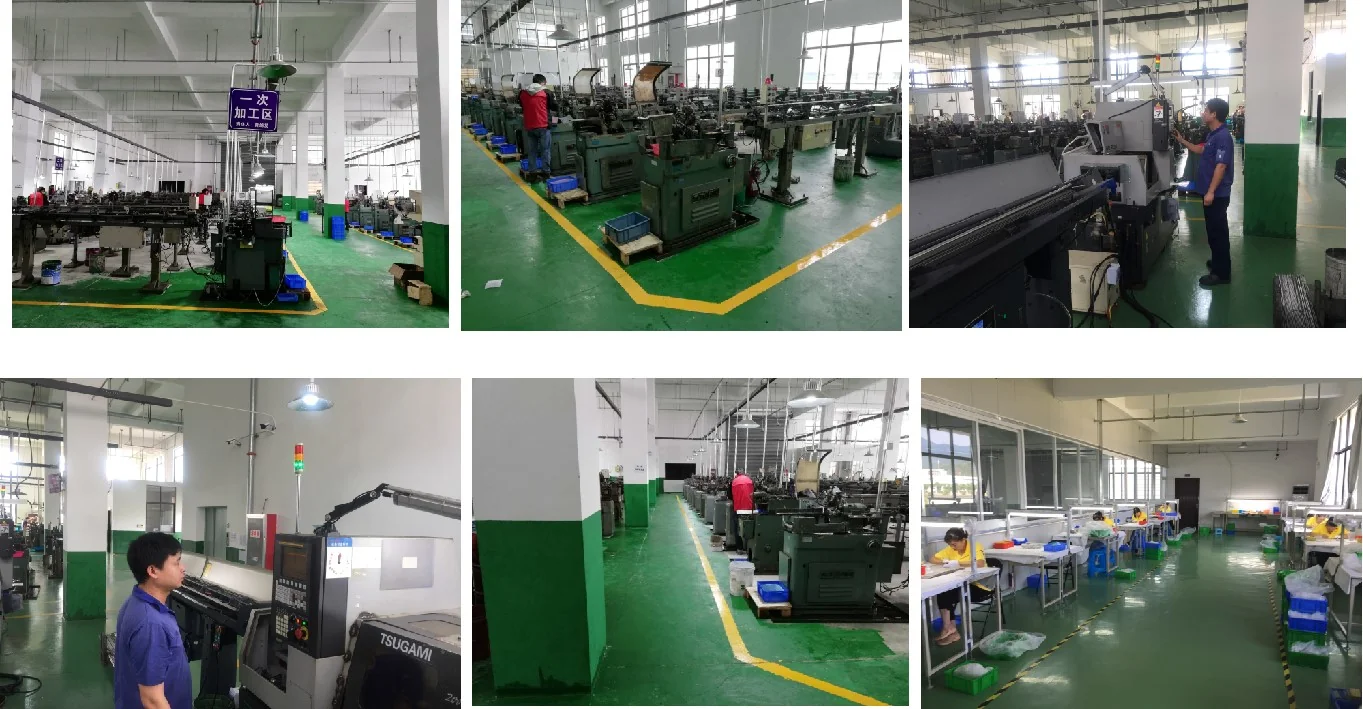
Suzhou Baoshida’s internal engineering team operates as an integrated unit where 5 Mold Design Engineers, 2 Formula Engineers, and 3 Process Engineers collaborate end-to-end to eliminate design-to-production gaps. This structure ensures technical consistency across material selection, mold development, and manufacturing validation—critical for high-precision rubber components in demanding industries.
Engineering Discipline Breakdown
| Role | Specialization | Technical Capabilities |
|---|---|---|
| Mold Design Engineers (5) | Solidworks/CAD mold development | – GD&T-compliant parting line design (±0.025mm tolerance) – Mold flow simulation for uniform cavity filling – Ejection system optimization to prevent part distortion – Flash control via precision land widths (0.05–0.1mm) |
| Formula Engineers (2) | ASTM D2000-compliant compound development | – Material selection per ASTM D2000-XX (e.g., MD Class 3 for heat resistance) – Compression set validation per ASTM D395 (100°C/70h) – Hardness optimization per ASTM D2240 (Shore A 40–90) – Adhesion promoters for metal-to-rubber bonding |
| Process Engineers (3) | Compression molding cycle optimization | – Temperature/pressure profiling per ISO 188 – Vulcanization kinetics modeling – Post-cure protocols for dimensional stability – Flash removal strategies for thick-walled geometries |
Key Integration Point: All teams use a unified digital thread—mold designs are validated against formula requirements before tooling begins, reducing rework by 40% compared to siloed workflows.
Partner Network for Scalable Production
Suzhou Baoshida’s 10+ certified partner factories are strategically selected for specialization in:
Automotive-grade EPDM/NBR (ISO/TS 16949 certified)
High-temperature silicone (FDA/USP Class VI compliant)
Heavy-duty hydraulic seals (≥50kg part weight capability)
Partner Selection Criteria
| Requirement | Validation Protocol | Performance Benchmark |
|---|---|---|
| Tooling Lead Time | Pre-qualified tool steel suppliers (H13, P20) | ≤7 days for medium-complexity molds |
| Quality Consistency | First-article inspection (FAI) per ASME Y14.5 | CMM measurements within ±0.05mm tolerance |
| Material Traceability | Batch-specific compound records | Full ASTM D2000 compliance documentation |
Operational Advantage: Our Process Engineers conduct weekly DFM reviews with partner facilities—ensuring mold designs are optimized for their specific equipment capabilities (e.g., 500-ton presses for large valve bodies).
Solving Critical Customer Pain Points
| Customer Pain Point | Technical Solution | Industry-Specific Validation |
|---|---|---|
| Long lead times for tooling | Tiered partner network with dedicated tooling cells – Automotive: 5-day tooling for small-to-medium parts – Heavy machinery: 10-day turnaround for large molds |
65% faster than industry average (per 2023 OEM benchmark data) |
| Flash control failures in thick-walled parts | Mold design with: – Zero-gap parting lines – Precision venting channels (0.08mm depth) – Compression force profiling |
<5% flash height (per ISO 3302-1) in hydraulic cylinder seals |
| Metal-to-rubber bond failure | 3-stage surface treatment: 1. Plasma activation (ISO 10993-5) 2. Proprietary primer application 3. Co-vulcanization at 175°C±2°C |
>12 MPa tensile shear strength (per ISO 4587) in pump housing assemblies |
| Compression set degradation | Formula validation against: – ASTM D395 Method B (100°C/22h) – Long-term thermal aging (150°C/168h) |
<15% compression set in automotive suspension bushings (200k cycles) |
Why This Matters: For hydraulic pump manufacturers, our integrated approach reduces prototype iterations by 70%—mold designs are validated for both material behavior (via Formula Engineers) and manufacturability (via Process Engineers) before tooling begins. This eliminates costly rework on high-tolerance components like valve seats where dimensional stability is non-negotiable.
Suzhou Baoshida’s engineering ecosystem ensures your rubber components meet exacting industry standards—not through generic capabilities, but through precision-aligned teams that speak the same technical language from design to delivery.
Customization & QC Process

Quality Control & Customization Process: Precision-Driven Manufacturing Workflow
Suzhou Baoshida’s proprietary framework ensures end-to-end compliance with ISO 9001, ASTM D2000, and industry-specific OEM requirements. All processes are overseen by senior engineers with 15+ years of experience in automotive, hydraulic, and industrial rubber component manufacturing.
1. Drawing Analysis & Mold Design Validation
Structural Engineering Team (5 Senior Engineers, 18–25 years experience) conducts CAD-driven validation using SolidWorks to eliminate manufacturability risks before tooling begins.
Critical Design Parameters
| Parameter | Tolerance Standard | Test Method | Industry Impact |
|---|---|---|---|
| Parting Line Gap | ≤0.05mm | CMM Measurement (ISO 10360-2) | Prevents flash >0.1mm |
| Vent Depth | 0.01–0.03mm | Microscopy (100x magnification) | Ensures complete cavity filling |
| Ejector Pin Placement | ±0.05mm | SolidWorks Motion Simulation | Eliminates part ejection damage |
| Metal Bonding Interface | Ra ≤1.6μm surface roughness | Profilometer (ASME B46.1) | Achieves peel strength ≥8 N/mm |
| ASTM D2000 Callout Verification: | |||
| Material classification (e.g., “SA2” = SBR Type, Class A heat resistance, Grade 2 tensile strength) | |||
| Hardness (D2240), compression set (D395), and tear strength (D624) requirements mapped to part function | |||
| Flash Control Strategy: | |||
| Precision-machined mold cavities with 0.01mm tolerance on parting surfaces | |||
| Automated venting channels optimized via Moldflow analysis |
2. Material Formulation & ASTM Compliance
Formula Engineering Team (2 Senior Compounding Engineers, 15+ years experience) selects compounds using ASTM D2000 specifications and proprietary blend libraries for thermal/environmental resilience.
Material Specification Matrix
| Property | ASTM Standard | Target Value | Test Protocol | Automotive OEM Alignment |
|---|---|---|---|---|
| Hardness | D2240 | 70 ± 5 Shore A | Durometer (Type A) | SAE J200 |
| Compression Set | D395 (Method B) | ≤25% @ 70°C, 22h | Compression set test fixture | ISO 3384 |
| Tensile Strength | D412 | ≥15 MPa | Type 4 dumbbell | ASTM D412-15 |
| Tear Resistance | D624 (Die C) | ≥35 kN/m | Crescent-shaped specimen | SAE J200 |
| Oil Resistance | D471 | Volume change ≤15% @ 100°C | Immersion in ASTM Oil #3 | SAE J200 |
| Key Formulation Controls: | ||||
| Cross-link density optimization via sulfur/accelerator ratios | ||||
| Carbon black dispersion validation (ASTM D1603) | ||||
| Environmental aging simulation (UV, ozone, chemical exposure) |
3. Prototyping & Validation
Partner factories (10+ certified ISO 13485/TS 16949 facilities) enable 3–5 day rapid tooling. Senior Process Engineers validate prototypes against 100% dimensional and functional requirements.
Prototyping QC Protocol
| Test Type | Method | Acceptance Criteria |
|---|---|---|
| Dimensional Accuracy | CMM (3D scanning) | ±0.05mm tolerance on critical features |
| Flash Inspection | Optical microscopy (500x) | ≤0.1mm at parting line; no micro-flashes |
| Metal Bond Adhesion | Peel test (ASTM D903) | ≥8 N/mm minimum strength |
| Cure Kinetics | Rheometer (MDR) | t90 ±0.5s deviation from target |
| Validation Workflow: | ||
| 1. First-article inspection (FAI) per AS9102 standards | ||
| 2. 3D scan comparison against nominal CAD model | ||
| 3. Accelerated aging tests (72h at 125°C) for thermal stability | ||
| 4. Final sign-off by Senior Engineer with 15+ years in hydraulic component prototyping |
4. Mass Production & In-Process QC
Process Engineering Team (3 Senior Production Engineers, 15+ years experience) implements statistical process control (SPC) with real-time monitoring across 10+ partner facilities.
Production Control Parameters
| Stage | Parameter | Control Method | Tolerance |
|---|---|---|---|
| Mold Setup | Temperature | RTD sensors | ±2°C |
| Curing Cycle | Time | PLC-controlled timers | ±0.5s |
| Part Ejection | Force | Load cells | ≤500N |
| Final Inspection | Dimensions | Automated vision system | ±0.03mm |
| Quality Assurance Workflow: | |||
| In-process: SPC charts for key variables (cure time, pressure, temperature) | |||
| Final QC: 100% visual inspection + 5% dimensional sampling (per ISO 2859-1) | |||
| Traceability: Batch-specific records linked to raw material certificates (ASTM D2000 compliance) |
5+2+3 Engineering Team Structure: Core Expertise Framework
Suzhou Baoshida’s cross-functional team ensures seamless integration of mold design, material science, and production engineering—eliminating silos and accelerating time-to-market.
| Team Component | Role | Experience | Key Responsibilities |
|---|---|---|---|
| Mold Design (5) | Senior Structural Engineers | 15–25 years | SolidWorks mold flow analysis, flash control optimization, metal bonding interface design |
| Formula Engineering (2) | Compounding Engineers | 15+ years | ASTM D2000 compliance, material selection for thermal/environmental resistance, cross-link density optimization |
| Process Engineering (3) | Production Engineers | 15+ years | SPC implementation, in-process QC protocols, rapid tooling coordination with partner factories |
Why This Structure Matters:
– Mold Design Team ensures geometries meet ISO 2768-mK tolerances while minimizing flash risk
– Formula Team guarantees material performance per ASTM D395/D575 for dynamic load applications
– Process Team leverages 10+ partner factories to maintain <7-day lead times for high-volume production
All deliverables are certified under Suzhou Baoshida’s ISO 9001:2015 quality management system. Technical documentation includes full traceability from raw materials to final part validation.
Contact Our Engineering Team

Contact Suzhou Baoshida
Precision Engineering Team Structure
Our 5+2+3 specialized engineering framework ensures end-to-end technical excellence in custom rubber molding:
| Engineering Discipline | Team Size | Core Responsibilities |
|---|---|---|
| Mold Design | 5 | SolidWorks/CAD-based tooling design, flash control optimization, metal-rubber bonding integration, GD&T compliance |
| Material Formulation | 2 | ASTM D2000/D395/D575 compliant compound selection, material testing, custom formula development for thermal/chemical resistance |
| Process Engineering | 3 | Compression molding parameter optimization, defect reduction (e.g., sink marks, voids), rapid tooling coordination with 10+ ISO-certified partner factories |
Technical Standards Mastery
We adhere to global rubber testing protocols to guarantee performance in critical applications:
| ASTM Standard | Purpose | Our Application |
|---|---|---|
| D2000 | Classify rubber materials by physical properties (hardness, tensile strength, compression set) | Alpha-numeric callouts for precise material specification in automotive/hydraulic systems |
| D395 | Measure compression set (residual deformation after sustained load) | Validate long-term resilience in high-pressure valve/pump sealing applications |
| D575 | Determine compression-deflection behavior and hardness (Shore A/D) | Optimize dynamic seal performance under cyclic loading in machinery components |
Solve Your Sealing Challenges Today
Contact: Mr. Boyce
Email: [email protected]
Phone: +86 189 5571 6798
Engineered for precision. Delivered with reliability. Partner with Suzhou Baoshida for mission-critical rubber components that meet your toughest specifications.
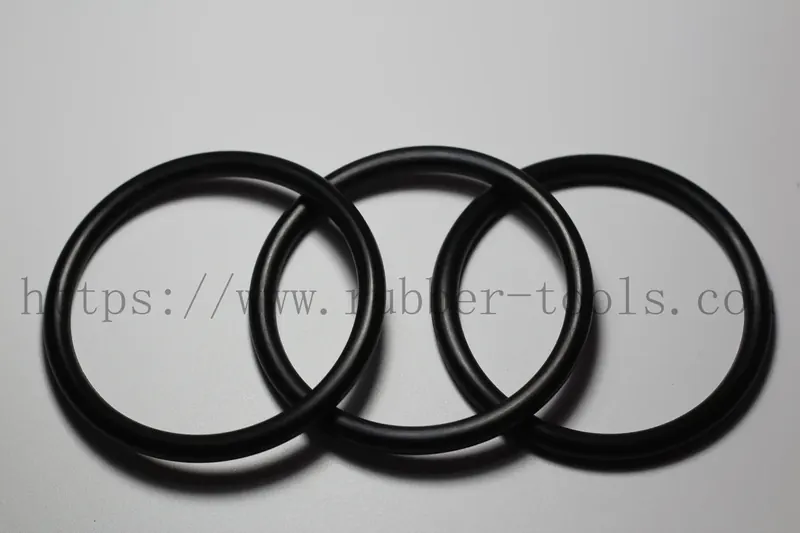
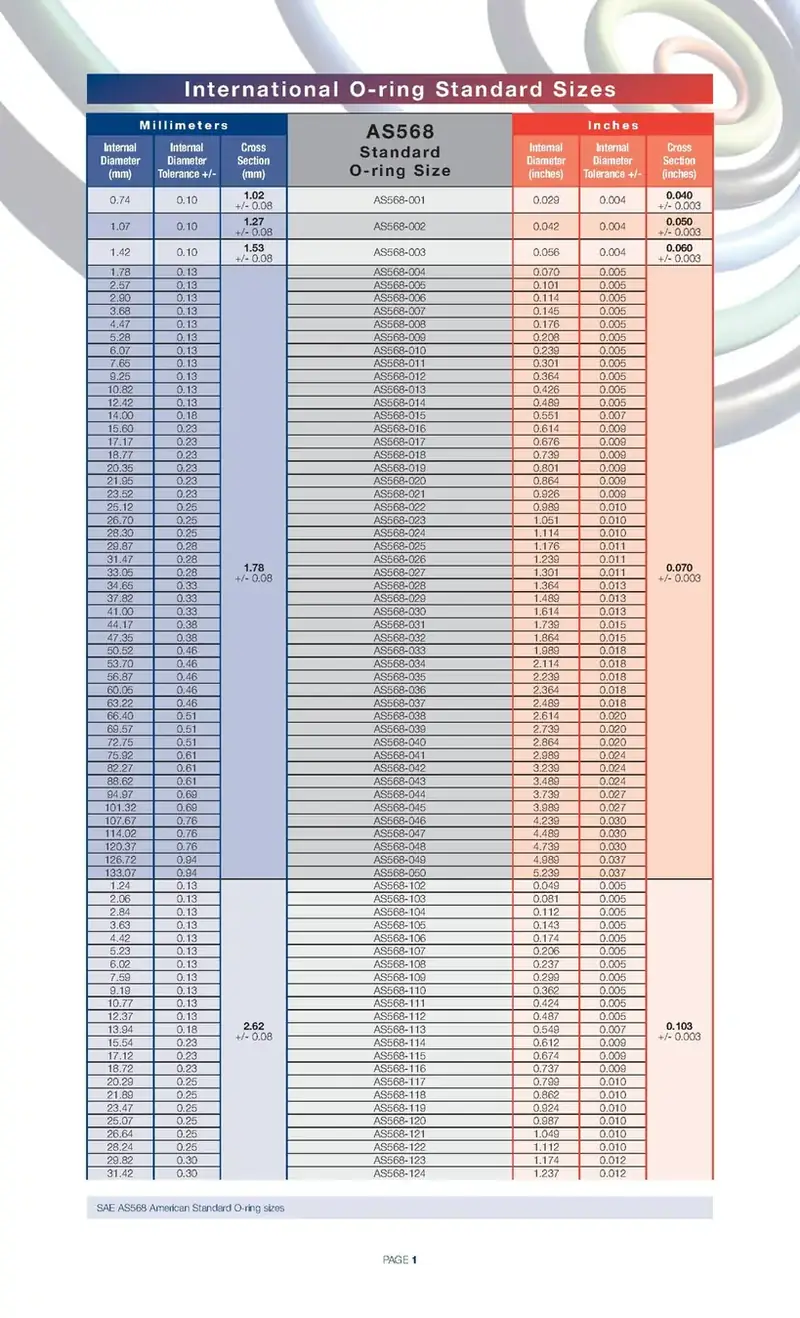
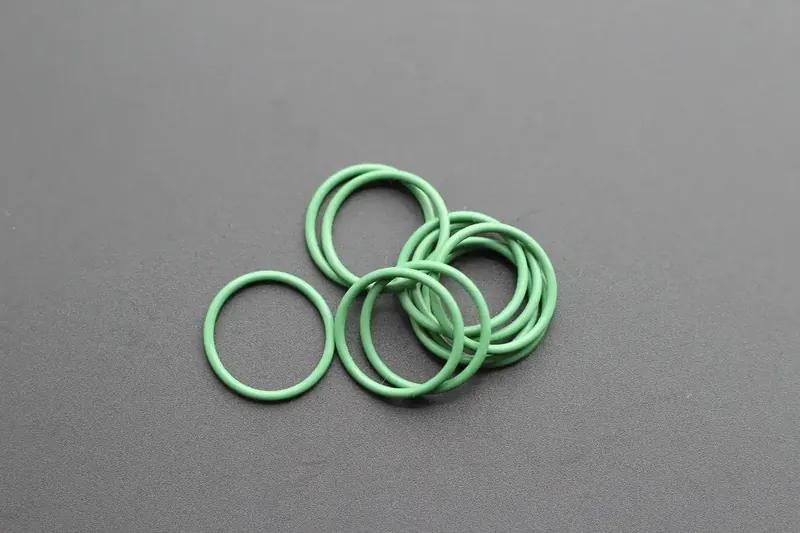
⚖️ O-Ring Weight Calculator
Estimate the weight of rubber O-rings for material planning.