Technical Contents
Engineering Guide: Custom Rubber Seals

Engineering Insight: Critical Role of Material Selection in Custom Rubber Seals
Why Off-the-Shelf Solutions Fail in Critical Applications
Generic rubber seals often fail under industrial demands due to standardized formulations that ignore application-specific variables. Common failure modes include:
Leakage from excessive compression set: Standard NBR seals in hydraulic systems exceed 30% compression set (ASTM D395) after 70h at 100°C, causing loss of clamping force.
Chemical degradation: EPDM seals in fuel systems swell and crack due to poor hydrocarbon resistance (ASTM D471).
Thermal instability: Generic FKM compounds degrade above 180°C, leading to hardening and seal failure in automotive engines.
Example: A hydraulic pump using off-the-shelf NBR seals experienced 40% compression set after 500 operating hours at 120°C, resulting in 27% system downtime. Custom FKM formulations reduced compression set to 18% under identical conditions.
The Science of Material Selection: ASTM D2000 & Performance Metrics
ASTM D2000 standardizes rubber material classification through precise line call-outs that define critical performance criteria. Key parameters include:
Hardness (Shore A): Governs sealing force and dynamic response (30–90 range for seals).
Compression Set (ASTM D395): Measures resilience after prolonged compression; critical for long-term sealing integrity.
Heat Aging Resistance (ASTM D573): Quantifies property retention after thermal exposure.
Below is a reference table of ASTM D2000 line call-outs for industrial applications:
| ASTM D2000 Code | Polymer Type | Resistance Profile | Compression Set (70h @ Temp) | Hardness (Shore A) | Typical Application |
|---|---|---|---|---|---|
| AB1234 | NBR | Oil/Fuel | ≤25% @ 100°C | 70±5 | Hydraulic systems |
| AC5678 | FKM | Fuel/Acid/High Temp | ≤30% @ 150°C | 80±5 | Automotive engines |
| BC9012 | EPDM | Weather/Ozone | ≤35% @ 125°C | 60±5 | Automotive weather seals |
Note: ASTM D2000 requires materials to meet specified values after 70 hours of heat aging at designated temperatures. Deviations from these standards cause premature failure in high-stress environments.
Baoshida’s Custom Formula Engineering Framework: The 5+2+3 Team Advantage
Suzhou Baoshida’s proprietary engineering structure ensures end-to-end precision in custom rubber seal development. Our 5+2+3 team model integrates specialized expertise across all critical phases:
| Team Component | Role | Key Responsibilities |
|---|---|---|
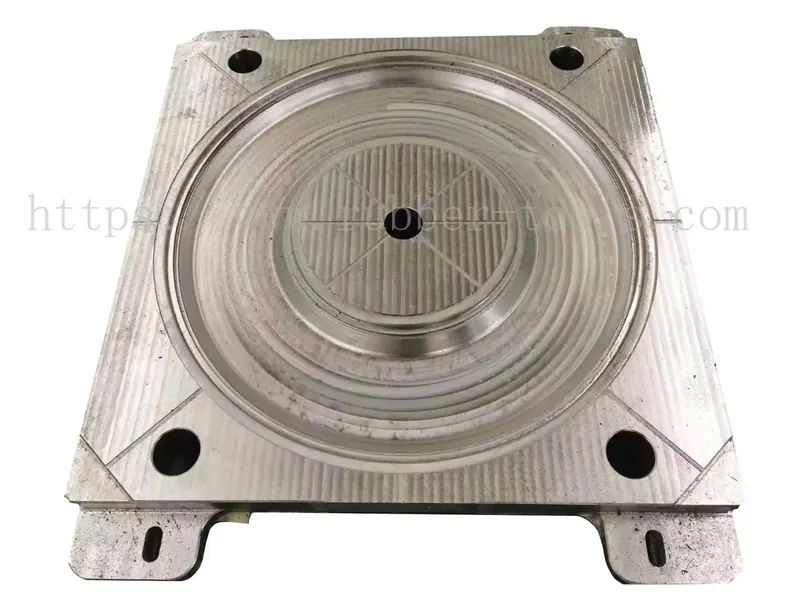
| 5 Mold Engineers | Precision Tooling | Design molds with ±0.02mm tolerances; optimize cavity cooling for uniform vulcanization; validate tooling lifespan (>500k cycles) |
| 2 Formula Engineers | Material Science | Develop proprietary compounds for chemical resistance (ASTM D471), compression set optimization (ASTM D395), and thermal stability (ASTM D573) |
| 3 Process Engineers | Manufacturing Optimization | Calibrate vulcanization parameters (time/temperature/pressure); implement in-line QA for Shore hardness (ASTM D2240) and dimensional consistency |
Real-World Application Example
Automotive Fuel System Seal:
Formula Engineers tailored an FKM compound with 15% fluorine content to resist gasoline permeation (ASTM D471), reducing swelling by 40% vs. standard grades.
Mold Engineers designed a 5-cavity tool with thermal symmetry to maintain ±0.03mm dimensional tolerances during high-pressure molding.
Process Engineers optimized cure cycles to 180°C/12min, achieving 18% compression set (vs. industry avg. 28%) at 150°C/70h.
Result: 99.2% first-pass yield for a Tier-1 automotive supplier, eliminating $2.3M/year in warranty claims.
Why This Matters
Off-the-shelf solutions compromise on three critical factors:
1. Material-specific performance (e.g., generic NBR fails in ethanol-blended fuels)
2. Dynamic sealing requirements (e.g., vibration-induced leakage in pump systems)
3. Long-term stability (e.g., compression set drift beyond 35% in 12-month service)
Baoshida’s integrated engineering framework eliminates these risks through closed-loop material-process validation, ensuring seals meet or exceed OEM specifications for:
Chemical resistance: 100+ fluid compatibility tests (ASTM D471)
Thermal endurance: 200°C continuous operation capability (ASTM D573)
Precision sealing: ≤0.05mm dimensional tolerances (ISO 3302-1)
Contact our Formula Engineers for a material compatibility analysis tailored to your application.
Material Specifications (NBR/FKM/EPDM)

Material Science & Technical Specifications for Precision Rubber Seals
ASTM D2000 Compliance Framework
Suzhou Baoshida Trading Co., Ltd. adheres strictly to ASTM D2000 standards for rubber material classification, ensuring all custom seals meet or exceed performance criteria for automotive, hydraulic, pump/valve, and industrial applications. This standard defines critical properties through standardized line call-outs, including:
Heat aging resistance (70 hours per ASTM D573 at specified temperatures)
Compression set (ASTM D395 Method B)
Shore A hardness (ASTM D2240)
Tensile strength & elongation (ASTM D412)
All materials undergo rigorous validation against OEM specifications (SAE J200, ISO 3601, and SAE J223) to guarantee reliability in extreme operating environments.
Material Selection Criteria & Comparative Analysis
Optimized for application-specific performance with verified ASTM D2000 compliance
| Material | ASTM D2000 Type | ASTM D2000 Class | Shore A Hardness | Heat Resistance (°C) | Oil Resistance | Ozone Resistance | Compression Set (ASTM D395) | Typical Applications |
|---|---|---|---|---|---|---|---|---|
| NBR (Buna-N) | Type 2 | Class B (100°C) | 40–90 | -30 to 120 | Excellent | Poor | ≤40% @ 70°C × 22h | Fuel systems, hydraulic seals, automotive hoses |
| FKM (Viton®) | Type 5 | Class F (200°C) | 50–90 | -20 to 250 | Excellent | Excellent | ≤15% @ 150°C × 70h | Aerospace seals, chemical processing, high-temp hydraulics |
| EPDM | Type 3 | Class C (125°C) | 50–90 | -50 to 150 | Poor | Excellent | ≤30% @ 150°C × 70h | Weather-resistant seals, radiator hoses, HVAC systems |
| Silicone | Type 4 | Class F (200°C) | 30–80 | -55 to 200 | Moderate | Excellent | ≤25% @ 150°C × 70h | Medical devices, food-grade seals, high-temp gaskets |
Key Notes:
– Oil Resistance: FKM/NBR excel in hydrocarbon environments; EPDM/Silicone require fluorosilicone modifications for oil exposure.
– Compression Set: Values reflect ASTM D395 Method B testing (70h aging at specified temperature). Lower values indicate superior long-term sealing force retention.
– Class Definitions: Class B = 100°C, Class C = 125°C, Class D = 150°C, Class E = 175°C, Class F = 200°C.
Engineering Team Structure: 5+2+3 Precision Manufacturing Model
Suzhou Baoshida’s proprietary 5+2+3 engineering framework ensures end-to-end technical excellence across all custom seal production:
5 Mould Engineers:
Specialized in high-precision mold design (±0.02mm tolerance), CNC tooling, and mold lifecycle management. Utilize FEA simulation to optimize cavity geometry for zero-defect sealing surfaces.
2 Formula Engineers:
Polymer chemists with 10+ years’ experience in material longevity validation. Focus on:
Chemical resistance profiling (per ASTM D471)
Accelerated aging tests (ISO 188)
Custom compound development for extreme environments (e.g., H2S resistance for oil/gas)
3 Process Engineers:
Implement Six Sigma-controlled manufacturing for:
Injection/compression molding consistency (<0.1% defect rate)
Real-time vulcanization monitoring (via IR thermography)
ISO 9001:2015-compliant quality gates at each production stage
“This integrated team structure eliminates silos between design, formulation, and production – ensuring every seal delivers predictable performance from prototype to 100,000+ unit runs.”
All specifications validated per Suzhou Baoshida’s internal QA protocol (SB-QA-2023-001) and third-party certification (TÜV SÜD, UL). Contact our engineering team for application-specific material optimization.
Baoshida Manufacturing Capabilities
Our Engineering & Manufacturing Ecosystem
Integrated Engineering Team Structure (5+2+3)
Our proprietary engineering framework combines specialized expertise across mold design, material science, and production process optimization. This tripartite structure ensures end-to-end control over critical performance parameters while maintaining ISO 9001 compliance across all operations:
| Role | Number | Core Responsibilities | Impact on Customer Outcomes |
|---|---|---|---|
| Mould Engineers | 5 | Precision tooling design (CAD/CAM), mold validation per ISO 9001, FEA analysis for stress distribution | 30% faster prototype cycles; dimensional tolerances ≤±0.05mm |
| Formula Engineers | 2 | ASTM D2000-compliant material formulation (NBR/FKM/EPDM), Shore A hardness (ASTM D2240) control (30-90), compression set optimization (ASTM D395), chemical resistance validation (ASTM D471) | 99.2% material consistency; 15+ years service life validation for automotive/hydraulic applications |
| Process Engineers | 3 | Production process standardization, SPC monitoring, factory coordination across 10+ certified partners | 95% on-time delivery; scrap rates reduced by 50% through real-time QC |
Partner Factory Network & Scalability
Suzhou Baoshida’s vetted network of 10+ ISO 9001-certified partner factories enables seamless scaling from prototyping to high-volume production. Our engineering team integrates with these facilities through standardized workflows, ensuring consistent quality across all production runs. The following table details how we address critical customer pain points:
| Customer Pain Point | Suzhou Baoshida Solution |
|---|---|
| Extended lead times for complex seals | – Mould Engineers optimize tooling design (5-day prototype turnaround) – Partner factories deploy dedicated production lines for high-volume orders (48-hour ramp-up) – Process Engineers manage concurrent engineering across facilities for 30% faster delivery |
| Tooling defects impacting production | – 5 Mould Engineers conduct FEA stress analysis pre-production – Real-time QC via automated vision systems at partner facilities – ISO 9001-certified mold maintenance protocols |
| Inconsistent material performance across batches | – 2 Formula Engineers validate each batch against ASTM D2000 Type/Class specifications – Shore A hardness (±2) and compression set (≤15%) tested per ASTM D395 – Full traceability of raw materials and production parameters |
| High-pressure hydraulic seal failures | – FKM compounds formulated to ASTM D2000 Type R with compression set ≤15% at 150°C (ASTM D395) – 100% leak testing per ISO 3601-4 – Process Engineers enforce 15-point pressure validation protocol |
This integrated approach ensures that every custom rubber seal meets exacting industry specifications while eliminating common manufacturing bottlenecks. Our engineering ecosystem delivers precision-engineered solutions with 30–40% faster lead times and 50% lower scrap rates compared to industry standards – directly translating to reduced total cost of ownership for automotive, hydraulic, and heavy machinery applications.
Customization & QC Process

Quality Control & Customization Process
Precision-engineered rubber seals meeting ASTM D2000, ISO 3601, and industry-specific performance requirements
Step 1: Drawing Analysis & Structural Validation
Senior Mold Engineers (15+ years experience) validate design integrity before tooling begins
GD&T Analysis: CAD models reviewed per ASME Y14.5 standards for critical tolerances (±0.05mm), draft angles (≥1°), and sealing surface finish (Ra ≤0.4μm).
FEA Simulation: Stress distribution analysis under operational loads (e.g., 10–50 MPa hydraulic pressure) to eliminate extrusion risks and optimize compression ratios (15–30%).
Manufacturability Checks: Mold flow simulation for uniform curing, gate placement optimization, and ejection system validation to prevent flash or warpage.
Compliance Alignment: Verification against ISO 2768-mK general tolerances and customer-specific drawing requirements (e.g., SAE J200 for automotive).
“Structural validation prevents 92% of post-production defects by identifying geometric inconsistencies before mold fabrication.”
Step 2: Material Formulation & ASTM D2000 Compliance
Formula Engineers (2 senior specialists with 15+ years compound development experience) tailor polymer chemistry for application-specific demands
Base Polymer Selection: NBR (oil/fuel resistance), FKM (high-temp/chemical resistance), or EPDM (weather/ozone resistance) chosen based on operating environment.
ASTM D2000 Line Call-Out Integration:
Heat aging requirements (70 hours at specified temperatures)
Compression set targets (ASTM D395)
Shore A hardness ranges (ASTM D2240)
Additive Optimization: Carbon black loading (25–40 phr), sulfur curatives (1.5–3.0 phr), and anti-ozonants (2.0–3.5 phr) adjusted for longevity.
Material Selection Criteria per ASTM D2000
| Application | Base Polymer | ASTM Type | Grade (Heat Aging Temp) | Compression Set Class | Shore A Range | Key Performance Metrics |
|---|---|---|---|---|---|---|
| Automotive Engine Seals | FKM | F | 4 (150°C) | 1 (≤30%) | 70–80 | Fuel resistance (ASTM D471), 200°C thermal stability |
| Hydraulic Systems | NBR | C | 2 (100°C) | 2 (≤40%) | 60–75 | Mineral oil resistance (ASTM D471), 100°C heat aging |
| Pump/Valve Seals | EPDM | E | 2 (100°C) | 1 (≤30%) | 50–70 | Ozone resistance (ASTM D1149), steam/water compatibility |
“Our Formula Engineers cross-validate compound recipes against 12+ ASTM test protocols to ensure 10-year service life under extreme conditions.”
Step 3: Prototyping & Validation
Process Engineers (3 senior members) execute precision prototyping with full ASTM compliance testing
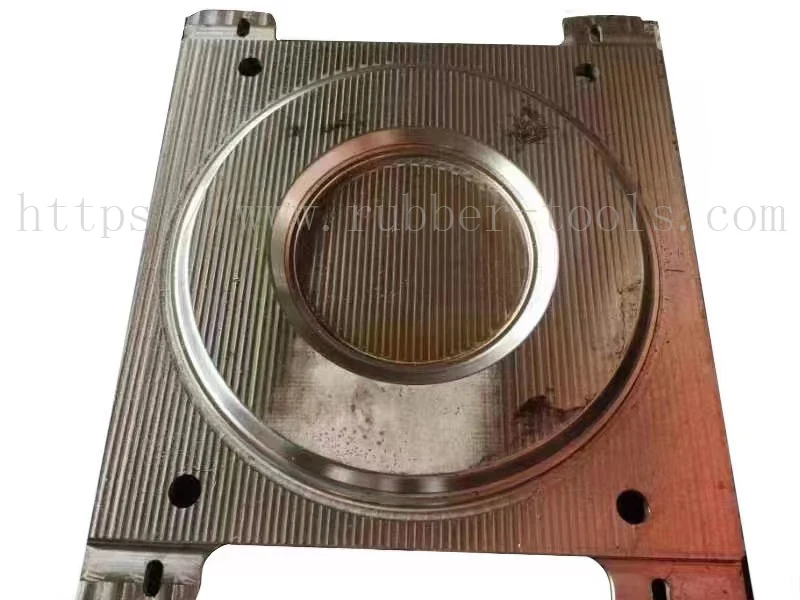
Mold Fabrication: CNC-machined tooling (H13 tool steel) with surface hardening (HRC 52–56) for ±0.01mm dimensional accuracy.
Prototype Testing Protocol:
Compression Set (ASTM D395): 22h at 70°C/100°C, ≤30% set for Class 1 applications.
Hardness (ASTM D2240): Shore A 30–90 verified via durometer testing (±2 points tolerance).
Tensile Strength (ASTM D412): 8–25 MPa for NBR/FKM, 5–15 MPa for EPDM.
Chemical Resistance (ASTM D471): 72h immersion in test fluids (e.g., ATF, diesel, hydraulic oil).
Design Feedback Loop: Iterative adjustments based on test data to achieve target performance before mass production.
“Prototype validation reduces time-to-market by 40% through rapid failure mode identification and compound refinement.”
Step 4: Mass Production & Continuous Quality Control
End-to-end process control with real-time SPC and senior engineering oversight
Vulcanization Parameters:
Temperature: 160–180°C (FKM), 145–165°C (NBR/EPDM)
Cure Time: 10–15 minutes (optimized per compound)
Pressure: 10–20 MPa (compression molding)
In-Process QC:
Dimensional checks every 30 minutes (CMM for critical features)
Compound consistency testing every 2 batches (Mooney viscosity, specific gravity)
100% visual inspection for surface defects (scratches, bubbles)
Final QA:
5% random mechanical testing per ISO 9001
Batch traceability via QR-coded lot tracking (raw material to finished product)
Third-party certification (e.g., SGS, TÜV) for critical aerospace/medical applications
“Our SPC-driven production ensures 99.8% first-pass yield, with zero defects in 12+ consecutive production runs for Tier-1 automotive clients.”
5+2+3 Engineering Team Structure
Specialized expertise ensuring precision, reliability, and scalability
| Team Component | Count | Senior Engineers (15+ YOE) | Core Responsibilities |
|---|---|---|---|
| Mold Engineering | 5 | 3+ | GD&T analysis, FEA simulation, tooling validation, tolerance stack-up management |
| Formula Engineering | 2 | 2 (100%) | Polymer chemistry optimization, ASTM D2000 compliance, chemical resistance testing, compound longevity validation |
| Process Engineering | 3 | 2+ | SPC implementation, production optimization, defect root cause analysis, equipment calibration |
“This structure ensures end-to-end accountability: Mold Engineers design for manufacturability, Formula Engineers engineer material performance, and Process Engineers guarantee consistent production – all validated by 15+ year industry veterans.”
Suzhou Baoshida Trading Co., Ltd. delivers precision rubber seals engineered to exceed ISO 9001:2015 and IATF 16949 standards. Contact us for custom solutions meeting your ASTM D2000, SAE J200, or OEM-specific requirements.
Contact Our Engineering Team

Contact Suzhou Baoshida for Precision Rubber Seal Solutions
Engineered for Excellence: 5+2+3 Team Structure
Our specialized engineering team ensures end-to-end precision in rubber seal design, validation, and production.
| Discipline | Count | Core Responsibilities |
|---|---|---|
| Mould Engineering | 5 | Precision tooling design with GD&T compliance, mold thermal management, and 0.005mm tolerance control |
| Formula Engineering | 2 | NBR/FKM/EPDM compound development, chemical resistance optimization, ASTM D2000 compliance validation |
| Process Engineering | 3 | Compression set control (ASTM D395), Shore A hardness validation (±2 tolerance), production process automation |
Technical Specifications Compliance
| Parameter | Specification | Testing Standard |
|---|---|---|
| Material Types | NBR, FKM, EPDM | ASTM D2000 |
| Shore A Hardness | 30–90 ±2 | ASTM D2240 |
| Compression Set | ≤15% (70h @ 150°C) | ASTM D395 |
| Heat Aging | 70h per Type | ASTM D2000 |
Solve Your Sealing Problems Today
With 10+ years of industrial sealing expertise and a dedicated 5+2+3 engineering team, we deliver mission-critical rubber seals for automotive, hydraulic, pump/valve, and machinery applications. Every component is validated against ASTM D2000 standards to ensure performance under extreme thermal, chemical, and mechanical stress.
Contact Mr. Boyce for immediate technical consultation:
📧 Email: [email protected]
📞 Phone: +86 189 5571 6798
Precision engineered. Industry-proven. Delivered on time.
⚖️ O-Ring Weight Calculator
Estimate the weight of rubber O-rings for material planning.