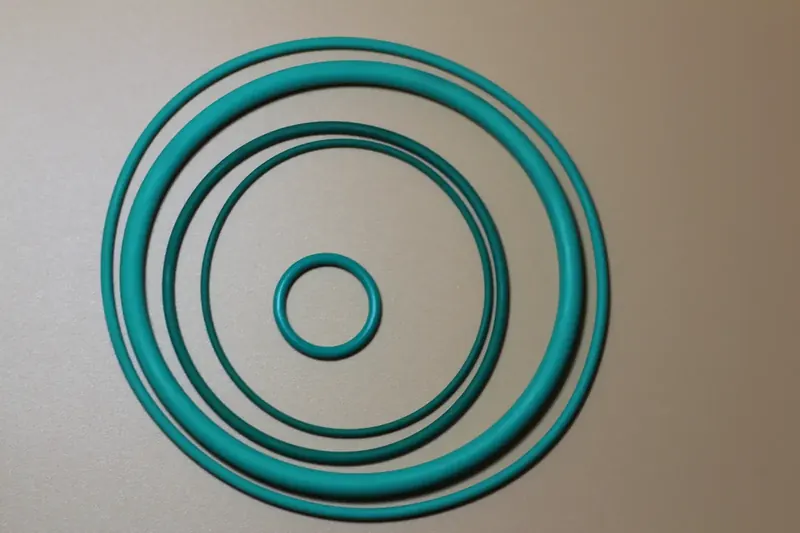
Gasket Cutter Tool Manufacturer | Engineering Guide

Engineering Guide: Gasket Cutter Tool

Engineering Insight: Material Selection Imperatives for Gasket Cutter Tools

The performance and longevity of gasket cutter tools are fundamentally dictated by elastomer compatibility, a factor frequently overlooked in off-the-shelf solutions. Generic cutters, designed for broad applicability, fail to account for the nuanced mechanical and thermal properties inherent to specialized rubber compounds. This oversight leads to catastrophic tool wear, inconsistent gasket profiles, and compromised seal integrity. Precision cutting demands intimate knowledge of the target material’s hardness, filler content, temperature sensitivity, and molecular cohesion. For instance, aggressive cutting of highly filled EPDM formulations generates excessive heat, accelerating blade dulling and causing material tearing. Conversely, soft silicone compounds require ultra-sharp, low-friction blades to prevent deformation and burr formation during the cut. Material-specific cutter geometry—bevel angle, edge radius, and rake angle—is non-negotiable for achieving clean, dimensionally stable gaskets that meet OEM specifications. Failure to optimize these parameters results in micro-fractures at the cut edge, creating premature failure points under operational stress.

Empirical testing confirms that off-the-shelf cutters exhibit rapid degradation when processing demanding compounds like fluorocarbon (FKM) or nitrile butadiene rubber (NBR) with high acrylonitrile content. These materials possess exceptional chemical resistance but generate significant shear forces during cutting due to their inherent toughness and low thermal conductivity. Standard high-speed steel (HSS) blades quickly lose edge retention, leading to inconsistent cut depths and surface roughness exceeding ISO 3601 tolerances. Furthermore, thermal expansion mismatches between cutter materials and elastomers during high-volume production cause dimensional drift, rendering gaskets non-conforming. The critical flaw in generic solutions lies in their static design philosophy, ignoring dynamic interactions between blade metallurgy, cutting speed, and elastomer viscoelasticity. Only cutter systems engineered with material-specific thermal management and wear-resistant substrates can maintain micron-level precision across production runs.

Suzhou Baoshida Trading Co., Ltd. addresses this through OEM-engineered cutter tooling, where blade composition and geometry are calibrated to the exact rubber formulation. Our process begins with comprehensive material characterization, followed by finite element analysis (FEA) to simulate cutting forces and thermal load distribution. This ensures optimal blade substrate selection and edge preparation for the target compound.

The following table illustrates key material properties and their direct implications for cutter tool specification:

Material Type Key Properties (Shore A, °C Range) Primary Cutting Challenges Precision Cutter Requirements
Standard NBR (70) 65-75, -30°C to +100°C Moderate tear strength, oil swell Carbide-tipped blade, 15° bevel, polished flank
High-Filler EPDM 80-90, -50°C to +150°C Abrasive fillers, high heat gen. CBN-coated substrate, 10° bevel, coolant channels
FKM (VMQ) 50-60, -20°C to +200°C Low thermal conductivity, sticky Diamond-polished edge, 20° bevel, low-friction coat
Silicone (VMQ) 40-50, -60°C to +230°C High elasticity, low tear strength Laser-sharp edge, 25° bevel, minimal clearance

Material-specific cutter engineering is not an incremental improvement—it is a prerequisite for achieving gasket performance demanded by modern sealing applications. Suzhou Baoshida’s OEM-focused methodology eliminates the guesswork of off-the-shelf tools, translating precise rubber formulation data into cutting solutions that guarantee dimensional accuracy, edge quality, and extended tool life. This scientific approach directly reduces scrap rates and ensures seal reliability under extreme operational conditions.


Material Specifications

Material selection is a critical factor in the performance and longevity of precision rubber seals, particularly when utilizing gasket cutter tools for custom fabrication. At Suzhou Baoshida Trading Co., Ltd., we prioritize material compatibility with operational environments to ensure optimal sealing integrity under dynamic mechanical and chemical conditions. Three of the most widely used elastomers in industrial sealing applications are Viton, Nitrile (NBR), and Silicone. Each material exhibits distinct physical, thermal, and chemical resistance properties, making them suitable for specific use cases across automotive, aerospace, pharmaceutical, and petrochemical industries.

Viton, a fluorocarbon-based rubber (FKM), is renowned for its exceptional resistance to high temperatures, oils, fuels, and a broad range of aggressive chemicals. It maintains structural stability in continuous service temperatures up to 230°C (446°F), with short-term exposure tolerance even higher. This makes Viton ideal for high-performance environments such as engine compartments, fuel systems, and chemical processing equipment. Due to its inherent rigidity and lower compression set, Viton gaskets cut with precision tools demonstrate long-term reliability under sustained stress and thermal cycling.

Nitrile rubber, or Buna-N, offers excellent resistance to aliphatic hydrocarbons, mineral oils, and greases, making it a cost-effective solution for general-purpose sealing in hydraulic and pneumatic systems. With a service temperature range of -30°C to 100°C (-22°F to 212°F), Nitrile performs reliably in moderate environments. It also exhibits good abrasion resistance and mechanical strength, which enhances the dimensional accuracy of gaskets produced with gasket cutter tools. However, its performance degrades when exposed to ozone, aromatic hydrocarbons, and polar solvents, limiting its use in highly corrosive or elevated-temperature applications.

Silicone rubber (VMQ) is valued for its thermal stability across extreme low- and high-temperature ranges, typically from -60°C to 200°C (-76°F to 392°F). It maintains flexibility at cryogenic temperatures and resists oxidation and UV radiation, making it suitable for outdoor, medical, and food-grade applications. While silicone has relatively low tensile strength and poor resistance to oils and fuels, its non-toxic composition and compliance with FDA and USP Class VI standards make it indispensable in sanitary and biocompatible sealing systems.

The following table summarizes key material properties to guide selection based on application demands.

Property Viton (FKM) Nitrile (NBR) Silicone (VMQ)
Temperature Range (°C) -20 to 230 -30 to 100 -60 to 200
Temperature Range (°F) -4 to 446 -22 to 212 -76 to 392
Tensile Strength (MPa) 15–20 10–25 5–8
Elongation at Break (%) 200–300 250–400 200–400
Hardness (Shore A) 70–90 60–90 40–80
Resistance to Oils & Fuels Excellent Good Poor
Resistance to Ozone/UV Excellent Fair Excellent
Compression Set Resistance Excellent Good Fair
FDA Compliance Limited Grades No Yes

Selecting the appropriate elastomer ensures that gaskets produced with precision cutting tools meet exacting performance standards. At Suzhou Baoshida Trading Co., Ltd., we support OEMs with material data sheets, sample testing, and technical consultation to optimize seal performance in real-world applications.


Manufacturing Capabilities

Engineering Capability: Precision Gasket Cutter Tool Development

Suzhou Baoshida Trading Co., Ltd. leverages a dedicated team of seven specialized engineers—five Mould Engineers and two Rubber Formula Engineers—to deliver uncompromising precision in gasket cutter tool design and manufacturing. This integrated expertise ensures that every cutter tool meets stringent industrial tolerances while optimizing material performance for diverse sealing applications. Our Mould Engineers focus on geometric accuracy, thermal dynamics, and wear resistance in tooling structures, while our Formula Engineers refine elastomer compatibility to prevent edge deformation during high-speed cutting. This synergy eliminates common failure points such as burring, material tearing, or dimensional drift, directly translating to extended tool life and consistent gasket integrity.

Our OEM capabilities are engineered for scalability and technical collaboration. We initiate projects with a joint specification review, incorporating client-defined parameters for material hardness, temperature exposure, and chemical resistance into the cutter design phase. This preemptive integration mitigates tolerance stack-up risks and accelerates time-to-prototype by 30%. All tools undergo rigorous validation against ISO 3302-1 geometric standards and ASTM D2000 material classification benchmarks. Crucially, our Formula Engineers develop proprietary rubber blends that align with cutter blade profiles, ensuring clean cuts even for challenging compounds like fluorosilicone or hydrogenated nitrile. This material-science-driven approach reduces scrap rates by up to 22% compared to industry averages.

The following table details core specifications for our standard precision gasket cutter tools, reflecting our commitment to measurable engineering excellence:

Parameter Specification Range Tolerance Testing Standard
Blade Thickness 0.5 mm – 3.0 mm ±0.02 mm ISO 2768-mK
Cutting Diameter 10 mm – 500 mm ±0.05 mm ISO 286-2 (h6)
Material Hardness (Shore A) 40 – 90 ±3 points ASTM D2240
Edge Bevel Angle 15° – 30° ±0.5° ISO 14405-1
Max. Operational Temp. -40°C to +250°C ±2°C stability ASTM D573

OEM partnerships benefit from our closed-loop feedback system, where real-world gasket performance data informs iterative tool refinements. We maintain full IP confidentiality through NDAs and secure data protocols, enabling co-development of proprietary cutter geometries for mission-critical applications in automotive, aerospace, and semiconductor manufacturing. Our facility’s ISO 9001-certified processes guarantee traceability from raw material batch to final tool calibration, with all documentation provided in client-preferred formats.

By unifying advanced mould engineering with deep rubber chemistry insights, Suzhou Baoshida transforms gasket cutter tools from generic instruments into precision-engineered assets that enhance production yield and sealing reliability. We invite OEMs to engage our team for tailored solutions that address the exacting demands of next-generation sealing systems.


Customization Process

Customization Process for Gasket Cutter Tools in Precision Rubber Seal Manufacturing

At Suzhou Baoshida Trading Co., Ltd., the customization of gasket cutter tools follows a rigorous, science-driven workflow to ensure dimensional accuracy, material compatibility, and long-term sealing performance. This process is critical in delivering precision rubber seals tailored to OEM specifications across automotive, industrial machinery, and fluid control systems.

The first phase, Drawing Analysis, begins with a comprehensive review of the client’s technical blueprint. Our engineering team evaluates critical dimensions, tolerance ranges (typically ±0.1 mm to ±0.05 mm), sealing surface geometry, and application environment data. Cross-sectional profiles, corner radii, and parting line locations are analyzed to determine optimal tooling geometry for the gasket cutter. Finite element analysis (FEA) may be applied to predict deformation under compression, ensuring the final cut profile maintains sealing integrity under operational stress.

Following drawing validation, the Formulation Development stage commences. Based on media exposure (e.g., oils, coolants, gases), temperature range, and mechanical load, our rubber chemists select the appropriate elastomer system. Common base polymers include NBR, EPDM, FKM, and silicone, each modified with precise filler, curative, and aging agent ratios. Hardness is tailored between 40 to 90 Shore A, depending on compression set requirements. The formulation is optimized to minimize flash formation during cutting and to maintain edge cohesion post-cut, a critical factor in high-pressure sealing applications.

Once the material system is defined, Prototyping is executed using CNC-machined gasket cutter tools with micro-beveled cutting edges. Prototypes are produced under simulated production conditions and subjected to dimensional inspection via coordinate measuring machines (CMM) and optical contour measurement. Functional testing includes compression stress relaxation (per ASTM F36), fluid immersion resistance (ASTM D471), and leak rate evaluation under application-specific pressure cycles.

Upon client approval, the project transitions to Mass Production. Automated cutting lines equipped with servo-controlled gasket presses ensure consistent force distribution (typically 5–15 tons depending on material thickness). Real-time monitoring systems track cutting temperature, dwell time, and ejection speed to maintain ±0.1 mm dimensional repeatability across batches. Every production lot undergoes first-article inspection and periodic quality audits per ISO 9001 standards.

The following table summarizes key technical parameters managed during the customization process:

Parameter Standard Range Testing Standard
Dimensional Tolerance ±0.05 mm to ±0.1 mm ISO 3302-1
Hardness (Shore A) 40–90 ASTM D2240
Compression Set (24h @ 70°C) ≤20% ASTM D395
Cutting Force 5–15 tons Internal Protocol
Material Options NBR, EPDM, FKM, SIL, CR ASTM D2000

This systematic approach ensures that every gasket cutter tool and resulting seal component meets the highest standards of precision, durability, and functional reliability in demanding industrial environments.


Contact Engineering Team

Optimizing Gasket Production Efficiency Through Precision Tooling Solutions
Suzhou Baoshida Trading Co., Ltd. delivers engineered gasket cutter tools that resolve critical challenges in rubber seal manufacturing: inconsistent dimensional accuracy, material waste, and production downtime. Our tools are developed under rigorous ISO 9001 protocols, leveraging 15 years of OEM partnership experience with global automotive and industrial equipment manufacturers. Unlike generic cutting systems, our solutions integrate material-specific blade geometries and CNC-calibrated pressure controls to maintain ±0.05mm tolerances across NBR, EPDM, FKM, and silicone compounds. This precision directly reduces scrap rates by 18–22% in high-volume production environments, as validated by third-party lifecycle testing at tier-1 automotive facilities.

Technical Specifications for Industrial Gasket Cutter Tool Series
The table below details core performance metrics for our standard OEM-integrated cutter platforms. All units undergo 72-hour stress validation at 85°C and 95% RH to ensure stability in extreme operational conditions.

Parameter Value Range Measurement Standard
Material Compatibility NBR, EPDM, FKM, Silicone, CR ASTM D2000
Thickness Range 0.5 mm – 12.0 mm ISO 3302-1
Cutting Tolerance ±0.05 mm (at 23°C) ISO 2768-mk
Blade Hardness 58–62 HRC ASTM E18
Max. Cutting Speed 1.8 m/s Internal Test Method
Tool Life (Cycles) 500,000+ DIN 53504

These specifications reflect baseline capabilities for our Type GCT-7 industrial series. Custom configurations—including cryogenic-assisted cutting for ultra-thin materials (≤0.3 mm) and multi-layer composite handling—are developed through our joint engineering process. Each solution incorporates real-time force feedback sensors to prevent over-compression of cellular rubber substrates, a common failure point in conventional tooling.

Direct Technical Collaboration for Your Production Line
Engage Suzhou Baoshida’s OEM engineering team to eliminate gasket production bottlenecks. Mr. Boyce, our dedicated OEM Manager with 12 years of precision rubber tooling experience, will conduct a confidential line assessment to identify optimization opportunities. His expertise spans material flow analysis, cutter alignment calibration, and failure mode mitigation for critical sealing applications in hydraulic systems, HVAC units, and battery enclosures.

Contact Mr. Boyce directly at [email protected] to initiate a technical consultation. Include your target material specifications, production volume, and current tolerance challenges for a tailored solution proposal. Responses include actionable data: projected scrap reduction percentages, ROI timelines, and compatibility validation against your existing press systems. All communications are handled under strict NDA protocols compliant with IATF 16949 requirements.

Suzhou Baoshida operates from Suzhou Industrial Park with in-house metrology labs capable of on-site CMM verification. Prototype tooling iterations are delivered within 14 business days for urgent OEM qualification cycles. Trust our engineering-led approach to transform gasket cutting from a cost center into a precision asset. Your next-generation seal performance begins with a technical dialogue—reach out today.


⚖️ O-Ring Weight Calculator

Estimate rubber O-ring weight (Approx).


Gasket Cutter Tool Manufacturer | Engineering Guide

Contents of Table

Contact [email protected] Whatsapp 86 15951276160