
Technical Contents
Engineering Guide: Aflas O Rings
Engineering Insight: Aflas O-Rings and the Critical Imperative of Material Selection
In demanding industrial sealing applications, the selection of elastomer material is not merely a specification detail; it is the foundational determinant of system integrity, longevity, and operational safety. Off-the-shelf O-ring solutions, often sourced based solely on initial cost or nominal size compatibility, frequently succumb to premature failure in aggressive chemical, thermal, or dynamic environments. This failure mode manifests as hardening, cracking, excessive swelling, or catastrophic extrusion, leading to unplanned downtime, environmental hazards, and significant financial losses far exceeding the original seal cost. The consequences of inadequate material selection are particularly acute in sectors like chemical processing, semiconductor manufacturing, and oil & gas, where exposure to amines, hot acids, steam, or halogenated solvents is routine. Standard elastomers such as Nitrile (NBR) or Ethylene Propylene (EPDM) lack the inherent molecular stability required under these conditions, suffering rapid degradation that compromises the primary sealing function.
Aflas (TFE/P), a tetrafluoroethylene/propylene copolymer, represents a specialized solution engineered to address these critical gaps. Its unique saturated carbon-fluorine backbone provides exceptional resistance to strong bases (amines), hot aqueous acids, steam, and oxidizing chemicals – environments where conventional fluorocarbons like FKM often fail due to amine-induced degradation. Crucially, Aflas maintains superior hydrolytic stability and retains flexibility at elevated temperatures where many alternatives become brittle. However, its performance profile is distinct; Aflas exhibits lower resistance to non-polar solvents (e.g., ketones, esters) compared to FKM and requires precise compounding for optimal compression set resistance. This specificity underscores why generic O-rings are fundamentally unsuited for critical Aflas applications. Selecting an off-the-shelf seal ignores the nuanced interplay between the exact chemical cocktail, temperature profile, pressure dynamics, and required service life. A seal marginally adequate for one amine concentration at 150°C may catastrophically fail at 175°C or with trace contaminants present.
The inherent limitations of standardized solutions necessitate a rigorous, application-specific engineering approach. Material selection must be driven by comprehensive fluid compatibility data, precise operating parameters, and an understanding of potential transient conditions. Below is a comparative overview of key properties relevant to aggressive chemical environments:
| Property | Aflas (TFE/P) | NBR | EPDM | FKM (Standard) |
|---|---|---|---|---|
| Continuous Temp Range (°C) | -15 to +200 | -30 to +120 | -50 to +150 | -20 to +230 |
| Resistance to Amines | Excellent | Poor | Fair | Poor |
| Resistance to Hot Acids | Excellent | Poor | Good | Fair |
| Resistance to Steam | Excellent | Poor | Good | Fair |
| Compression Set (ASTM D395) | Good | Fair | Good | Excellent |
| Ketone Resistance | Poor | Poor | Poor | Excellent |
Suzhou Baoshida Trading Co., Ltd. emphasizes that successful Aflas O-ring implementation transcends simple part replacement. Our engineering team collaborates with OEMs to analyze the complete operational envelope, validate fluid compatibility through accelerated testing per ASTM D471, and optimize compound formulation – including filler systems and cure chemistry – to ensure dynamic sealing integrity under actual service conditions. Customized material formulation, not off-the-shelf availability, is the non-negotiable prerequisite for reliable performance in the harshest industrial sealing challenges. Partnering for engineered solutions mitigates risk and delivers true lifecycle cost savings.
Material Specifications
Aflas O-rings represent a specialized class of perfluoroelastomer (FFKM) seals designed for extreme chemical and thermal environments. At Suzhou Baoshida Trading Co., Ltd., we provide precision-engineered sealing solutions tailored to demanding industrial applications, including chemical processing, semiconductor manufacturing, and oil & gas. Aflas, chemically known as tetrafluoromethylene vinyl ether/propylene copolymer, exhibits exceptional resistance to strong bases, amines, and hot aqueous systems—conditions where traditional elastomers such as Viton, Nitrile, and Silicone may degrade rapidly. While Aflas offers superior performance in aggressive alkaline environments, it is essential to compare its properties against other commonly used elastomers to ensure optimal material selection for specific operational parameters.
Viton (FKM) is a fluorocarbon-based elastomer widely recognized for its broad chemical resistance and high-temperature stability, typically operating between -20°C and +200°C. It performs exceptionally well against hydrocarbons, fuels, and many acids, making it a preferred choice in aerospace and automotive applications. However, its resistance to strong bases and steam is limited, which is where Aflas demonstrates a clear advantage. Nitrile rubber (NBR), a cost-effective solution, offers excellent resistance to oils, fuels, and aliphatic hydrocarbons, with a standard temperature range of -30°C to +100°C, extendable to +125°C in short-term exposure. Despite its robust mechanical properties and abrasion resistance, Nitrile is unsuitable for ozone, weathering, or polar solvents.
Silicone rubber (VMQ) excels in extreme temperature applications, functioning reliably from -60°C to +200°C, and maintains flexibility at cryogenic levels. It is commonly used in medical, food-grade, and electrical insulation applications due to its inertness and biocompatibility. However, silicone has poor resistance to oils, fuels, and low-molecular-weight solvents, and its mechanical strength is generally lower than that of Nitrile or Viton. In contrast, Aflas operates effectively from -15°C to +200°C and provides unmatched resistance to amine-based compounds, caustic solutions, and steam sterilization processes—conditions that rapidly degrade silicone and Viton.
The following table summarizes key physical and chemical properties of these materials for comparative analysis:
| Property | Aflas (FFKM) | Viton (FKM) | Nitrile (NBR) | Silicone (VMQ) |
|---|---|---|---|---|
| Temperature Range (°C) | -15 to +200 | -20 to +200 | -30 to +125 | -60 to +200 |
| Tensile Strength (MPa) | 12–18 | 10–15 | 15–25 | 5–8 |
| Elongation at Break (%) | 150–250 | 150–250 | 200–500 | 200–600 |
| Hardness (Shore A) | 70–90 | 65–90 | 50–90 | 30–80 |
| Resistance to Acids | Excellent | Excellent | Fair | Poor |
| Resistance to Bases | Outstanding | Poor | Poor | Poor |
| Resistance to Oils/Fuels | Very Good | Excellent | Excellent | Poor |
| Resistance to Steam | Excellent | Fair | Poor | Fair |
| Compression Set (200°C, 70h) | Low | Low to Moderate | Moderate | Moderate |
Material selection must consider not only chemical compatibility but also mechanical loading, thermal cycling, and regulatory requirements. At Suzhou Baoshida Trading Co., Ltd., we support OEMs and industrial partners with data-driven material recommendations and precision-manufactured Aflas O-rings compliant with ASTM D2000 and ISO 3601 standards.
Manufacturing Capabilities
Engineering Excellence in Aflas O-Ring Manufacturing
Suzhou Baoshida Trading Co., Ltd. leverages deep technical expertise to deliver mission-critical Aflas O-rings for extreme chemical and thermal environments. Our dedicated engineering team comprises five specialized mold designers and two advanced rubber formula scientists, ensuring end-to-end precision from molecular composition to finished geometry. This integrated capability allows us to solve complex sealing challenges where standard elastomers fail, particularly in semiconductor, chemical processing, and high-temperature fluid systems.
Aflas (TFE/P) demands rigorous formulation control due to its unique balance of acid resistance, steam tolerance, and low compression set. Our formula engineers optimize polymer architecture, cure systems, and filler dispersion to exceed baseline ASTM D2000 specifications. Critical adjustments target peroxide crosslinking efficiency and acid acceptor stability, directly enhancing resistance to amines, strong bases, and superheated steam up to 230°C. Concurrently, mold engineers refine cavity design, runner systems, and venting protocols to eliminate knit lines and ensure ±0.05mm dimensional repeatability—essential for ultra-high-vacuum and semiconductor tool applications.
The table below summarizes key performance enhancements achieved through our proprietary formulations versus standard Aflas compounds:
| Property | Standard Aflas (ASTM D2000) | Baoshida Enhanced Aflas | Test Method |
|---|---|---|---|
| Tensile Strength (MPa) | ≥10.3 | 14.2 ± 0.8 | ASTM D412 |
| Elongation at Break (%) | ≥200 | 285 ± 15 | ASTM D412 |
| Compression Set (70h/200°C) | ≤40 | 22 ± 3 | ASTM D395 |
| Volume Swell in 30% KOH | ≤25% | 8.5 ± 1.2% | ASTM D471 |
| Hardness (Shore A) | 70 ± 5 | 75 ± 2 | ASTM D2240 |
Our OEM development process begins with fluid compatibility modeling and finite element analysis (FEA) of seal stress distribution. Clients receive full material traceability, including lot-specific rheometer curves and DSC thermal profiles. For custom applications, we reformulate within 15 business days—adjusting fluorine content for aggressive hydrofluoric acid exposure or modifying cure kinetics for thin-walled geometries. Mold iterations utilize 3D-printed rapid tooling for validation, reducing time-to-prototype by 40% versus conventional methods.
Every production batch undergoes stringent validation: dynamic mechanical analysis (DMA) for glass transition verification, helium mass spectrometry leak testing, and 100% visual inspection under 10x magnification. This systematic approach ensures Aflas O-rings consistently achieve 50,000+ cycle life in phosphoric acid scrubbers and 10,000-hour stability in 220°C steam manifolds. Suzhou Baoshida transforms theoretical elastomer properties into field-proven sealing reliability through uncompromising engineering discipline and responsive OEM collaboration.
Customization Process
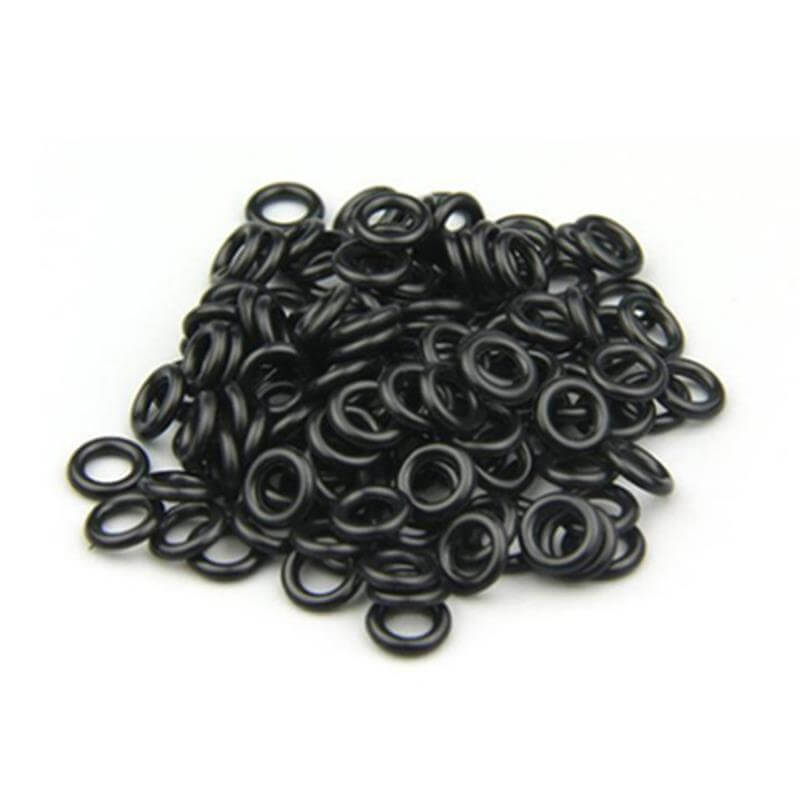
Customization Process for Aflas O-Rings at Suzhou Baoshida Trading Co., Ltd.
At Suzhou Baoshida Trading Co., Ltd., our customization process for Aflas O-rings is engineered to deliver precision, reliability, and compliance with the most demanding industrial environments. As a trusted OEM manager and rubber formula engineer, we ensure every stage—from initial drawing analysis to mass production—is executed with scientific rigor and process control. This structured approach guarantees that the final product meets exact functional and environmental requirements.
The process begins with Drawing Analysis, where our engineering team meticulously reviews customer-provided technical drawings and application data. We assess critical dimensions, tolerance classes (per ISO 3601 or AS568 standards), groove design, and operating conditions such as temperature, pressure, and media exposure. This phase includes a compatibility check of Aflas (a tetrafluoroethylene/propylene copolymer) against aggressive chemicals like strong bases, amines, and high-temperature steam, ensuring material suitability. Any discrepancies or optimization opportunities in the seal design are communicated for validation prior to proceeding.
Next, Formulation Development is conducted in-house using advanced polymer science. Aflas is selected for its exceptional resistance to alkaline environments and thermal stability up to 200°C, but its cross-linking chemistry requires precise peroxide or bisphenol curing systems. Our rubber formulation team tailors the compound by adjusting filler loading (typically low-abrasion carbon black or mineral fillers), plasticizers, and cure modifiers to achieve target hardness (60–90 Shore A), compression set resistance, and dynamic performance. Each formulation is documented and archived for full traceability and repeatability.
Prototyping follows formulation finalization. Using precision CNC-machined molds or pilot compression molding equipment, we produce small-batch samples for physical and chemical validation. These prototypes undergo rigorous testing including tensile strength, elongation at break, volume swell in target fluids, and accelerated aging at elevated temperatures. Dimensional inspection is performed using digital micrometers and optical comparators to ensure conformity. Test reports are shared with the client for approval before scaling.
Upon successful prototype validation, the project advances to Mass Production. We deploy automated rubber molding lines with strict process parameters monitored via statistical process control (SPC). Each batch is subjected to first-article inspection and in-process quality checks, including hardness testing and visual grading per ASTM D395. Final packaging adheres to cleanroom standards when required, with labeling for lot traceability.
The following table summarizes typical Aflas O-ring specifications achievable through our customization process.
| Property | Test Method | Typical Value |
|---|---|---|
| Hardness (Shore A) | ASTM D2240 | 70–90 |
| Tensile Strength | ASTM D412 | ≥10 MPa |
| Elongation at Break | ASTM D412 | ≥150% |
| Compression Set (22 hrs, 200°C) | ASTM D395 | ≤35% |
| Operating Temperature | — | -10°C to +200°C |
| Fluid Resistance | ASTM D471 | Excellent in caustics, amines |
This systematic workflow ensures Suzhou Baoshida delivers Aflas O-rings that consistently perform in critical applications across semiconductor, chemical processing, and oil & gas industries.
Contact Engineering Team
Optimized AFLAS O-Ring Solutions for Demanding Industrial Applications
Suzhou Baoshida Trading Co., Ltd. delivers precision-engineered AFLAS O-rings engineered for extreme chemical and thermal environments where conventional elastomers fail. Our proprietary fluoropolymer formulations achieve unparalleled resistance to strong acids, bases, steam, and high-purity fluids—critical for semiconductor processing, chemical transfer, and oilfield equipment. Unlike standard FKM or EPDM seals, AFLAS maintains integrity in concentrated sulfuric acid, hydrogen peroxide, and amine-based systems at temperatures up to 250°C. This performance stems from rigorous molecular design and closed-loop manufacturing controls that eliminate batch variability. Each O-ring undergoes 100% dimensional verification per ISO 3601 and ASTM D3769, with traceable lot data for full supply chain transparency.
Material Performance Comparison
| Property | AFLAS (Baoshida Grade BD-AF250) | Standard FKM | EPDM | Test Standard |
|---|---|---|---|---|
| Continuous Temp Range | -15°C to +250°C | -20°C to +230°C | -50°C to +150°C | ASTM D2000 |
| 30% HNO₃ Resistance (24h) | No Swell / Zero Degradation | Severe Swell | Complete Failure | ASTM D471 |
| Compression Set (200°C/70h) | ≤25% | ≤35% | ≥80% | ASTM D395 |
| Steam Resistance (150°C) | Stable Properties | Hardening | Rapid Deterioration | ISO 2230 |
As an ISO 9001-certified OEM partner, we integrate material science with precision molding capabilities. Our 500T hydraulic presses achieve ±0.05mm tolerance on cross-sections down to 1.78mm, while in-house R&D optimizes cure kinetics for minimal compression set. Every production lot undergoes fluid immersion testing per customer-specified media and temperature profiles, with full certification reports. For mission-critical applications, we implement zero-defect protocols including automated vision inspection and FTIR batch verification. This ensures sealing reliability in systems where failure risks catastrophic contamination or downtime.
Initiate Your Technical Consultation
Addressing sealing challenges in aggressive media requires more than off-the-shelf components—it demands collaborative engineering. Mr. Boyce, our Technical OEM Manager, holds 14 years of fluoropolymer formulation expertise and direct experience resolving failures in semiconductor wet benches and refinery amine units. He will conduct a fluid compatibility audit, review your operating parameters, and deploy Baoshida’s accelerated aging protocols to validate seal longevity before production. Contact Mr. Boyce directly at [email protected] with your application details, fluid composition, and temperature profile. Include ASTM D2000 line callout requirements or dimensional drawings for immediate material recommendation and DFM analysis. For urgent projects requiring expedited validation, reference priority code AFLAS-TECH24 in your correspondence to activate our 72-hour engineering response protocol. Suzhou Baoshida operates from a 12,000m² facility with dedicated cleanrooms for semiconductor-grade production—ensuring your critical seals meet the highest purity and performance standards. Do not compromise on sealing integrity; engage our technical team to eliminate field failures at the source.
⚖️ O-Ring Weight Calculator
Estimate rubber O-ring weight (Approx).