
Technical Contents
Engineering Guide: Anti Corrosion Powder
Engineering Insight: Material Selection Imperatives for Anti-Corrosion Powder Coatings
Generic anti-corrosion powder coatings frequently underperform in demanding industrial environments due to inadequate material science alignment with specific operational stressors. Off-the-shelf formulations prioritize broad market appeal over engineered resilience, leading to premature coating degradation and substrate compromise. At Suzhou Baoshida Trading Co., Ltd., our OEM process begins with rigorous substrate and environmental analysis, recognizing that corrosion mechanisms vary significantly across applications—whether chemical immersion, salt spray exposure, or cyclic thermal oxidation. Standard powders often utilize basic passivation chemistry or insufficient crosslink density, failing to address localized galvanic activity or permeation of aggressive ions. Field failures manifest as blistering, underfilm corrosion, or catastrophic substrate exposure within months, incurring substantial remediation costs and operational downtime. True corrosion inhibition requires molecular-level customization: selecting epoxy-phenolic hybrids for acid resistance, polyurethane topcoats for UV stability, or incorporating nano-barrier additives like functionalized graphene oxide for chloride exclusion. The polymer backbone, crosslinker chemistry, and pigment package must be co-optimized to resist electrolyte penetration while maintaining adhesion under thermal stress.
Critical performance differentiators between standard and engineered anti-corrosion powders are quantifiable through controlled testing protocols. The following table compares key parameters under ASTM/ISO standards:
| Parameter | Standard Off-the-Shelf Powder | Suzhou Baoshida Precision-Formulated Powder |
|---|---|---|
| Corrosion Resistance Mechanism | Basic passivation layer | Multi-stage inhibition: ion trapping + barrier reinforcement |
| Thermal Stability Range | 120°C continuous | 180°C continuous (specialty formulations to 220°C) |
| Adhesion Promoter System | Silane-based (hydrolytically unstable) | Covalent bonding network with substrate |
| Salt Spray Resistance (ASTM B117) | 500-750 hours to first rust | 2000+ hours to first rust (ISO 9227) |
| Failure Mode in 5% H₂SO₄ | Rapid blistering (>10% area at 72h) | Minimal swelling (<2% area at 168h) |
Material selection failure stems from treating corrosion as a singular challenge rather than a system-specific phenomenon. A powder suitable for mild atmospheric exposure in temperate zones will catastrophically fail in offshore splash zones with combined UV, salt, and mechanical abrasion. Our OEM methodology isolates critical variables: pH extremes dictate resin selection (e.g., vinyl ester for caustic environments), while cyclic temperature demands tailored Tg and coefficient of thermal expansion matching. Crucially, off-the-shelf powders neglect interfacial chemistry—without substrate-specific adhesion promoters, moisture ingress initiates delamination even with robust bulk film properties. Suzhou Baoshida’s formulations integrate surface energy modifiers that chemically bond to steel, aluminum, or composites, eliminating micro-gaps where corrosion propagates. This precision engineering reduces total cost of ownership by extending service life 3-5x versus generic alternatives, validated through accelerated weathering per ISO 11997-2 and real-world OEM deployment data. Material selection is not a procurement decision; it is the foundational engineering control for asset integrity.
Material Specifications
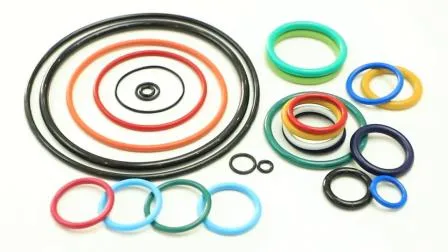
Material Specifications for Anti-Corrosion Powder-Coated Rubber Components
Suzhou Baoshida Trading Co., Ltd. provides high-performance rubber solutions engineered for extreme industrial environments where corrosion resistance is critical. Our anti-corrosion powder-coated rubber components are designed to deliver long-term durability, chemical stability, and mechanical integrity across a wide range of operating conditions. The selection of base elastomer plays a pivotal role in determining performance, particularly when exposed to aggressive chemicals, elevated temperatures, and dynamic mechanical stress. Among the most widely used materials in our product line are Viton (FKM), Nitrile (NBR), and Silicone (VMQ), each offering distinct advantages depending on application requirements.
Viton, a fluorocarbon-based elastomer, is recognized for its exceptional resistance to a broad spectrum of industrial chemicals, including oils, acids, fuels, and chlorinated solvents. It maintains structural integrity at continuous service temperatures up to 200°C, making it ideal for high-temperature sealing applications in petrochemical, aerospace, and semiconductor processing industries. When combined with our proprietary anti-corrosion powder coating, Viton components exhibit enhanced surface protection against pitting, oxidation, and galvanic degradation, even in salt-laden or humid environments.
Nitrile rubber is a cost-effective solution for applications involving exposure to petroleum-based fluids, hydraulic oils, and aliphatic hydrocarbons. With a service temperature range of -30°C to 100°C, NBR offers excellent abrasion resistance and tensile strength. While its chemical resistance is not as broad as Viton, it remains a preferred choice for seals, gaskets, and O-rings in automotive, manufacturing, and fluid handling systems. The integration of anti-corrosion powder coating ensures that metal-reinforced NBR components resist rust and environmental degradation without compromising flexibility or sealing performance.
Silicone rubber excels in applications requiring extreme temperature stability, with continuous use possible from -60°C to 150°C, and short-term exposure up to 200°C. It demonstrates good resistance to ozone, UV radiation, and weathering, making it suitable for outdoor and medical-grade applications. Although silicone has limited resistance to petroleum-based fluids, its inert nature and biocompatibility are advantageous in food processing and pharmaceutical environments. The anti-corrosion powder coating applied to silicone-based assemblies protects supporting metal structures from electrochemical attack while preserving the elastomer’s thermal and elastic properties.
The following table summarizes key material properties to assist in the selection of the appropriate elastomer for specific operational demands.
| Property | Viton (FKM) | Nitrile (NBR) | Silicone (VMQ) |
|---|---|---|---|
| Temperature Range (°C) | -20 to 200 | -30 to 100 | -60 to 150 |
| Tensile Strength (MPa) | 15–20 | 10–20 | 5–8 |
| Elongation at Break (%) | 200–300 | 250–400 | 400–600 |
| Hardness (Shore A) | 70–90 | 50–90 | 30–80 |
| Fluid Resistance (Oil/Fuel) | Excellent | Good | Poor |
| Chemical Resistance | Excellent | Moderate | Moderate |
| Ozone/UV Resistance | Excellent | Good | Excellent |
| Compression Set Resistance | Excellent | Good | Moderate |
| Typical Applications | Aerospace, Chemical Processing | Automotive, Hydraulics | Medical, Food Processing |
Selection of the appropriate elastomer must consider not only chemical and thermal exposure but also mechanical loading, regulatory compliance, and lifecycle costs. At Suzhou Baoshida Trading Co., Ltd., we support OEMs and industrial partners with material testing, custom formulation, and precision coating technologies to ensure optimal performance in corrosive environments.
Manufacturing Capabilities
Engineering Capability: Precision Formulation and OEM Integration for Anti-Corrosion Powder Solutions
Suzhou Baoshida Trading Co., Ltd. leverages a dedicated engineering cohort comprising five specialized mould engineers and two advanced formula engineers to deliver mission-critical anti-corrosion powder coatings for industrial applications. This integrated team structure ensures seamless synergy between material science and manufacturing execution, eliminating traditional silos that compromise performance. Our formula engineers focus exclusively on optimizing polymer chemistry, filler dispersion, and cross-linking mechanisms to achieve superior barrier properties against aggressive environmental factors, including salt spray, chemical exposure, and cyclic humidity. Concurrently, mould engineers refine tooling geometries and process parameters to guarantee consistent powder application, edge coverage, and thermal curing profiles across complex substrates. This dual-engineering approach directly translates to extended service life for coated components in automotive underbodies, marine hardware, and industrial machinery.
The core of our anti-corrosion powder development lies in proprietary resin systems engineered for maximum electrochemical stability. We utilize epoxy-polyester hybrids with tailored zinc phosphate and modified silane additives to inhibit cathodic delamination at microscopic defect sites. Rigorous accelerated testing validates performance under ISO 9227 and ASTM B117 protocols, with formulations exceeding 1,500 hours of salt spray resistance while maintaining flexibility per ISO 178 standards. Critical specifications for our flagship BD-ACR series are summarized below:
| Parameter | Test Standard | BD-ACR Performance | Industrial Benchmark |
|---|---|---|---|
| Salt Spray Resistance | ISO 9227 | ≥ 1,800 hours | 1,000 hours |
| Adhesion Strength | ASTM D3359 | 5B (Cross-hatch) | 3B |
| Glass Transition Temp | ISO 11357 | 68°C ± 2°C | 60°C |
| Film Thickness Range | ISO 2808 | 60–120 μm | 80–100 μm |
| Impact Resistance | ASTM D2794 | 50 cm (direct) | 40 cm |
| Chemical Resistance | ISO 2812-1 | Pass (5% H₂SO₄/NaOH) | Fail after 24h |
OEM collaboration defines our operational framework. We partner with clients from initial concept through量产, utilizing digital twin simulations to predict coating behavior under real-world stress conditions. Our engineers co-develop formulations meeting exact OEM material specifications (e.g., Ford WSS-M2P172-A2, Volkswagen TL 226), including custom color matching within ΔE ≤ 0.5 tolerances and VOC-free compliance. The mould engineering team implements rapid prototyping via 3D-printed tooling inserts, reducing time-to-qualification by 40% versus conventional methods. All processes adhere to IATF 16949 protocols, with full traceability from raw material lot to finished batch.
This engineered precision ensures anti-corrosion powders that actively defend substrates through molecular-level barrier enhancement, not merely passive coverage. Suzhou Baoshida’s vertically integrated engineering capability transforms corrosion challenges into reliability differentiators for global industrial supply chains.
Customization Process
Drawing Analysis
The customization process for anti-corrosion powder coatings begins with a comprehensive drawing analysis. At Suzhou Baoshida Trading Co., Ltd., we meticulously review technical blueprints provided by OEM partners to extract dimensional tolerances, surface finish requirements, and environmental exposure conditions. This step ensures full alignment with the end-use application, whether in marine, chemical processing, or high-humidity industrial environments. Our engineering team evaluates substrate materials, part geometry, and coating thickness specifications to determine compatibility with elastomeric powder systems. Any deviations or design constraints are flagged early to prevent downstream manufacturing inefficiencies.
Formulation Development
Following drawing validation, our Rubber Formula Engineers initiate the formulation phase. This stage involves selecting the appropriate base polymer—typically EPDM, NBR, or FKM—based on the required chemical resistance, temperature range, and mechanical performance. Additives such as anti-oxidants, UV stabilizers, and corrosion-inhibiting pigments are precisely dosed to enhance durability. The anti-corrosion powder is engineered to form a dense, pinhole-free barrier upon curing, preventing electrolyte penetration and galvanic degradation of the underlying metal. Each formulation is documented under strict quality control protocols, ensuring batch-to-batch consistency and compliance with ISO 9001 standards. Rheological and adhesion properties are simulated using accelerated aging models to predict long-term performance.
Prototyping and Validation
Once the formulation is finalized, we proceed to prototyping. Small-batch powder samples are applied via electrostatic spray deposition onto prepared substrates, followed by thermal curing at controlled temperatures. Prototype parts undergo rigorous testing, including salt spray (ASTM B117), adhesion (ASTM D3359), and thermal cycling. Performance data is compiled and compared against the original drawing specifications. Client feedback is integrated at this stage to fine-tune color, texture, or thickness if necessary. Only after successful validation is the process approved for scale-up.
Mass Production
With client sign-off, the anti-corrosion powder coating enters mass production. Our automated powder lines ensure uniform application across high-volume runs, with real-time monitoring of cure profiles and film build. Each batch is traceable through our ERP system, supporting full documentation for audit and certification purposes. Suzhou Baoshida maintains scalable production capacity to support both pilot launches and sustained OEM supply chains.
Typical Anti-Corrosion Powder Coating Specifications
| Property | Test Method | Typical Value |
|---|---|---|
| Film Thickness | ISO 2808 | 150–300 µm |
| Adhesion Strength | ASTM D4541 | ≥ 5.0 MPa |
| Salt Spray Resistance | ASTM B117 | 1,000–2,000 hrs (no blistering) |
| Operating Temperature Range | — | -40°C to +150°C |
| Chemical Resistance | ISO 175 | Resistant to acids, alkalis, salts |
| Curing Conditions | — | 180°C for 15 min |
Contact Engineering Team
Initiate Technical Collaboration for Advanced Anti-Corrosion Powder Solutions
Suzhou Baoshida Trading Co., Ltd. stands as your definitive partner for precision-engineered anti-corrosion powder coatings within demanding industrial rubber applications. Our core competency lies in formulating and supplying high-performance materials that directly address the complex electrochemical and environmental degradation mechanisms threatening component longevity. We do not offer generic solutions; we engineer bespoke anti-corrosion systems validated through rigorous ASTM and ISO protocols, specifically calibrated for integration into rubber-to-metal bonding processes and harsh operational environments. Our formulations are the result of continuous R&D investment, focusing on optimizing barrier properties, cathodic disbondment resistance, and interfacial adhesion critical for automotive, aerospace, and heavy machinery sectors.
Selecting Suzhou Baoshida means engaging with a team possessing deep material science expertise and extensive OEM partnership experience. We understand that corrosion protection is not an isolated coating property but an integral component of the total system performance. Our engineers collaborate directly with your R&D and production teams to analyze substrate composition, environmental exposure profiles, and mechanical stress factors. This enables the development of anti-corrosion powders that synergistically enhance the rubber compound’s integrity, ensuring sustained adhesion and preventing underfilm corrosion initiation even under extreme thermal cycling, chemical immersion, or salt spray conditions. Our stringent in-house QC laboratories conduct accelerated lifetime testing, providing empirical data to support your qualification process and reduce time-to-market.
The technical superiority of our flagship anti-corrosion powder is quantifiable across key performance indicators. Below is a representative specification profile for our standard formulation, subject to customization based on your specific application requirements:
| Technical Parameter | Standard Specification | Test Method | Significance for Rubber Applications |
|---|---|---|---|
| Corrosion Resistance (Salt Spray) | >2000 hours (ASTM B117) | ASTM B117 | Ensures long-term barrier against electrolyte penetration at rubber-metal interfaces |
| Adhesion Strength (to Steel) | ≥15 MPa | ASTM D4541 | Critical for maintaining bond integrity under thermal stress and vibration |
| Glass Transition Temp (Tg) | 65°C – 75°C | ASTM E1356 | Optimized for co-curing with common rubber compounds without premature flow |
| Film Thickness Range | 60 – 120 µm | ISO 2808 | Provides robust coverage while accommodating complex rubber part geometries |
| Flexibility (Mandrel Bend) | Pass (1/8 inch) | ASTM D522 | Maintains integrity during rubber part flexing and compression |
| Chemical Resistance | Excellent (Acids, Bases, Oils) | ASTM D1308/D543 | Prevents degradation from exposure to automotive fluids and industrial chemicals |
Partnering with Suzhou Baoshida translates to mitigated supply chain risk, reduced warranty claims from corrosion-related failures, and enhanced product lifecycle value for your end customers. We operate under certified ISO 9001 quality management systems, guaranteeing batch-to-batch consistency essential for high-volume manufacturing. Our technical service team provides comprehensive support from initial feasibility assessment through full-scale production implementation, including on-site troubleshooting and formulation fine-tuning.
To secure a competitive advantage through scientifically validated corrosion protection, initiate a technical consultation with our OEM Management team. Direct all inquiries regarding formulation specifications, compatibility testing, or volume supply agreements to Mr. Boyce, our dedicated OEM Manager. Provide your specific application details, performance requirements, and target substrate information to receive a tailored technical proposal and preliminary formulation analysis. Contact Mr. Boyce immediately at [email protected] to schedule a confidential discussion on integrating Suzhou Baoshida’s anti-corrosion powder technology into your next-generation industrial rubber components. Advance your material integrity standards with precision-engineered solutions.
⚖️ O-Ring Weight Calculator
Estimate rubber O-ring weight (Approx).