
Technical Contents
Engineering Guide: Anti Draft Door Seal

Engineering Insight: The Critical Role of Material Selection in Anti Draft Door Seals
In precision rubber sealing applications, particularly for anti draft door seals, material selection is not merely a design consideration—it is a determinant of functional longevity, environmental resilience, and system integrity. Off-the-shelf sealing solutions often underperform in demanding industrial and commercial environments due to a fundamental mismatch between standardized material formulations and the specific operational conditions they encounter. These generic seals are typically manufactured using commodity-grade elastomers such as basic EPDM or low-durometer PVC, which may offer short-term cost savings but fail to address long-term performance requirements.
The failure of off-the-shelf anti draft door seals frequently manifests as compression set, ozone cracking, or thermal degradation. These issues arise because standard materials are not engineered to withstand prolonged exposure to ultraviolet radiation, extreme temperature fluctuations, or dynamic mechanical stress. For instance, a seal installed in a cold storage facility must maintain elasticity at sub-zero temperatures while resisting repeated compression cycles. Similarly, seals in transportation applications must endure vibration, weathering, and exposure to oils or cleaning agents. Commodity materials lack the tailored polymer architecture to meet such multifaceted demands.
At Suzhou Baoshida Trading Co., Ltd., our approach to anti draft door seal engineering begins with application-specific material formulation. We utilize high-purity, peroxide-cured EPDM for superior ozone and UV resistance, and silicone compounds for extreme temperature stability ranging from -60°C to +200°C. For environments involving chemical exposure or mechanical abrasion, we deploy hydrogenated nitrile (HNBR) or thermoplastic vulcanizates (TPV), which offer enhanced durability and resilience. Each compound is optimized for compression set resistance, ensuring the seal maintains its restoring force over thousands of cycles.
Moreover, material performance is validated through rigorous testing protocols, including accelerated aging, dynamic compression testing, and environmental chamber exposure. This scientific approach ensures that every seal performs reliably under real-world conditions, minimizing maintenance costs and downtime.
Below is a comparative overview of elastomer performance characteristics relevant to anti draft door seal applications.
| Material | Temperature Range (°C) | Ozone Resistance | Compression Set (70°C, 22h) | Key Applications |
|---|---|---|---|---|
| Standard EPDM | -40 to +120 | Moderate | >30% | General indoor use |
| High-Purity EPDM | -50 to +150 | Excellent | <20% | Outdoor, industrial doors |
| Silicone (VMQ) | -60 to +200 | Excellent | <25% | High-temp, cleanrooms |
| HNBR | -40 to +150 | Good | <18% | Automotive, chemical exposure |
| TPV | -40 to +135 | Excellent | <22% | Dynamic sealing, transport |
Material selection is the cornerstone of effective anti draft door seal performance. By moving beyond off-the-shelf solutions and adopting engineered elastomers, manufacturers ensure long-term reliability, energy efficiency, and compliance with stringent operational standards.
Material Specifications

Material Specifications for Anti-Draft Door Seals
Precision material selection is paramount for anti-draft door seals, where consistent compression recovery, environmental resilience, and dimensional stability directly impact energy efficiency and operational longevity. At Suzhou Baoshida Trading Co., Ltd., our formulations undergo rigorous empirical validation to ensure optimal performance across dynamic thermal cycles and mechanical stress. We prioritize three elastomers—Viton (FKM), Nitrile (NBR), and Silicone (VMQ)—each engineered to address distinct operational profiles while adhering to ISO 3302 and ASTM D2000 standards.
Viton (FKM) excels in extreme environments demanding chemical and thermal resistance. Our proprietary FKM compounds withstand continuous exposure from -20°C to 230°C, with intermittent peaks up to 300°C. These seals maintain integrity against automotive fluids, ozone, and industrial solvents, making them ideal for high-temperature industrial ovens or chemical processing facilities. However, FKM’s higher cost necessitates strategic deployment where its 15–20% compression set (70°C/22h per ASTM D395) justifies the investment over alternatives.
Nitrile (NBR) remains the industry benchmark for cost-effective sealing in standard conditions. Our hydrogenated NBR (HNBR) variants operate reliably from -40°C to 120°C, offering superior resistance to petroleum-based oils and fuels. With a balanced compression set of 25–30% (70°C/22h), these seals deliver optimal recovery for frequent door cycling in commercial buildings and automotive applications. NBR’s abrasion resistance and lower raw material costs provide exceptional value for high-volume OEM programs where extreme thermal or chemical exposure is absent.
Silicone (VMQ) dominates low-temperature and flexible sealing requirements. Our platinum-cured VMQ formulations function from -60°C to 200°C, exhibiting unmatched elasticity retention below -40°C. Critical for arctic climates or refrigeration units, these seals achieve 20–25% compression set (150°C/70h) while resisting UV degradation. However, VMQ’s lower tensile strength and susceptibility to tearing necessitate protective design features in high-wear installations.
The comparative analysis below details critical specifications for informed material selection:
| Material | Temperature Range (°C) | Compression Set (ASTM D395) | Key Advantages | Primary Limitations | Optimal Applications |
|---|---|---|---|---|---|
| Viton (FKM) | -20 to 230 (300 intermittent) | 15–20% @ 70°C/22h | Exceptional chemical/thermal resistance; Low gas permeability | High cost; Poor low-temperature flexibility below -20°C | Chemical plants; High-temp industrial ovens; Aerospace |
| Nitrile (NBR/HNBR) | -40 to 120 | 25–30% @ 70°C/22h | Cost-effective; Excellent oil/fuel resistance; Good abrasion resistance | Limited thermal range; Ozone degradation above 100°C | Commercial buildings; Automotive doors; General HVAC |
| Silicone (VMQ) | -60 to 200 | 20–25% @ 150°C/70h | Superior low-temp flexibility; UV/ozone stability; Wide thermal range | Low tear strength; Swells in hydrocarbons | Cold storage; Arctic infrastructure; Medical/lab environments |
Suzhou Baoshida’s material science team tailors compound formulations to mitigate inherent limitations—such as enhancing NBR’s ozone resistance via saturation or optimizing VMQ’s tear strength through reinforced molecular architecture. All materials undergo 10,000+ cycle durability testing under simulated draft conditions (-30°C to 80°C thermal swings, 50 Pa pressure differentials) to guarantee field performance. Partner with us to align material properties with your specific environmental and lifecycle requirements, ensuring zero-compromise sealing solutions.
Manufacturing Capabilities

Engineering Capability
At Suzhou Baoshida Trading Co., Ltd., our engineering expertise forms the backbone of our precision rubber seal manufacturing, particularly in specialized applications such as anti draft door seals. Our technical team comprises five dedicated mould engineers and two advanced rubber formula engineers, enabling us to deliver fully integrated OEM solutions from concept to production. This multidisciplinary structure ensures that both the physical design and material science aspects of sealing performance are optimized in parallel, reducing development cycles and enhancing product reliability.
Our mould engineers specialize in precision tooling for complex rubber profiles, focusing on dimensional accuracy, repeatability, and long-term durability. Utilizing advanced CAD/CAM software and CNC machining techniques, they develop custom moulds that accommodate tight tolerances and intricate geometries required in modern door sealing systems. Each design undergoes rigorous simulation and validation to prevent defects such as flash, incomplete vulcanization, or material distortion under compression. This precision ensures consistent sealing performance across thousands of operational cycles, even in demanding environments.
Complementing our mould design capabilities are our two in-house rubber formula engineers. These specialists focus on developing proprietary elastomer compounds tailored to specific performance requirements, including temperature resistance, compression set, weathering, and ozone stability. For anti draft door seals, this means formulating rubber blends that maintain flexibility across extreme temperature ranges (-40°C to +120°C), resist UV degradation, and provide optimal sealing force without excessive door closure effort. Our formulation process includes iterative testing in controlled environments to validate long-term material behavior, ensuring compliance with international standards such as ISO 1817 and ASTM D2000.
Our OEM capabilities are built on a foundation of collaborative engineering. We work directly with clients to understand application-specific demands—whether in automotive, architectural, or industrial enclosures—and co-develop sealing solutions that integrate seamlessly into their assembly processes. From prototype development to mass production, our team manages every stage with full traceability and quality control. We support low-volume custom runs as well as high-volume manufacturing, with scalable production lines capable of maintaining consistency across batches.
The synergy between our mould and formula engineering teams allows us to solve complex sealing challenges that go beyond off-the-shelf solutions. By controlling both the geometry and material composition in-house, we ensure that each anti draft door seal delivers superior draft resistance, noise reduction, and energy efficiency.
| Specification | Performance Range |
|---|---|
| Temperature Resistance | -40°C to +120°C (standard); up to +150°C (custom) |
| Hardness (Shore A) | 40–80 ±5 |
| Tensile Strength | ≥8 MPa (per ASTM D412) |
| Elongation at Break | ≥250% |
| Compression Set (22h, 70°C) | ≤20% |
| Ozone Resistance | No cracking (100 pphm, 20% strain, 48h) |
| Accelerated Weathering (QUV) | 1,500 hours with <15% change in physical properties |
This technical depth positions Suzhou Baoshida as a trusted engineering partner in the precision rubber seal industry, capable of delivering high-performance, application-specific anti draft door seals with reliability and consistency.
Customization Process
Customization Process for Anti-Draft Door Seals
At Suzhou Baoshida Trading Co., Ltd., our anti-draft door seal customization follows a rigorously defined engineering workflow to ensure optimal performance in thermal and acoustic barrier applications. This process eliminates field failures by integrating material science with precision manufacturing from the initial client specification through to volume production.
The engagement commences with Drawing Analysis, where our engineering team deconstructs client CAD files or physical samples. Critical parameters such as cross-sectional geometry, tolerance bands (typically ±0.15mm for sealing lips), installation groove dimensions, and deflection requirements are validated against ISO 1307 and SAE J1402 standards. We identify stress concentration points and potential compression set risks, providing actionable feedback within 72 hours to align design intent with manufacturability.
Subsequent Formulation Development leverages our proprietary rubber compounding database. Based on environmental exposure data (e.g., -40°C to 120°C operating range, UV/ozone resistance needs), we select base polymers—typically EPDM for outdoor applications or silicone for extreme temperatures. Key additives are precisely dosed: 5–8 phr carbon black for UV stability, 3–5 phr process oils for low-temperature flexibility, and peroxide curing systems to achieve <25% compression set after 22h at 70°C. All formulations undergo ASTM D2000 validation for critical properties prior to prototyping.
Prototyping Phase utilizes aluminum mold tooling for rapid iteration. Seals are produced on hydraulic presses with ±1.5°C temperature control and monitored cure times. Each prototype batch undergoes dimensional verification via CMM (0.005mm resolution) and functional testing:
Compression force-deflection (CFD) profiling per ASTM D1056
Air leakage testing at 50 Pa differential pressure
Accelerated aging in QUV chambers (1000h exposure)
Client approval requires ≤0.5 l/min/m leakage rate and zero permanent set after 500 compression cycles.
Upon sign-off, Mass Production transitions to hardened steel molds with multi-cavity configurations. In-line process controls include:
Real-time rheometer monitoring of cure characteristics
Automated vision systems for dimensional conformance
Lot traceability via barcode-linked material certificates
Statistical process control (SPC) for durometer (±3 Shore A) and tensile strength
All production seals meet ISO 3302-1 M1 tolerances and ship with full material test reports. This closed-loop methodology ensures zero non-conformities in OEM automotive and architectural deployments.
Critical Material Specifications for Anti-Draft Seals
| Property | Test Standard | Typical Value | Performance Significance |
|---|---|---|---|
| Hardness (Shore A) | ASTM D2240 | 60 ± 5 | Optimal sealing force without excessive friction |
| Tensile Strength | ASTM D412 | ≥10 MPa | Resists tearing during installation |
| Elongation at Break | ASTM D412 | ≥300% | Accommodates door deflection without fracture |
| Compression Set (22h/70°C) | ASTM D395 | ≤25% | Maintains sealing force after prolonged compression |
| Temperature Range | ISO 188 | -40°C to +120°C | Ensures functionality in extreme climates |
Contact Engineering Team

For manufacturers and OEMs seeking high-performance anti draft door seals tailored to exact industrial specifications, Suzhou Baoshida Trading Co., Ltd. offers precision-engineered rubber sealing solutions backed by advanced material science and rigorous quality control. Our anti draft door seals are designed to eliminate air infiltration, reduce energy loss, and enhance acoustic and environmental isolation in demanding applications across transportation, construction, and industrial equipment sectors.
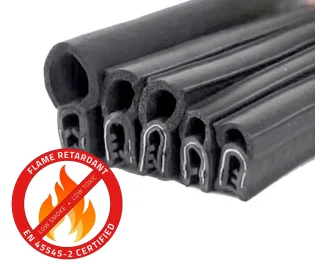
Each seal is formulated using proprietary rubber compounds—such as EPDM, silicone, or neoprene—selected for thermal stability, compression resistance, and long-term durability under cyclic stress. Our engineering team works closely with clients to optimize cross-sectional geometry, durometer hardness, and adhesion properties, ensuring seamless integration with existing door systems. Whether the requirement is for low-temperature flexibility, UV resistance, or fire-retardant performance, our formulations meet international standards including ISO 1817, ASTM D2000, and UL 94.
Suzhou Baoshida specializes in custom extrusion, splicing, and adhesive backing application, enabling rapid prototyping and scalable production runs. Our manufacturing infrastructure supports tight tolerance control (±0.1 mm) and 100% inline dimensional inspection, guaranteeing consistency across batches. All products undergo accelerated aging, compression set, and air leakage testing before shipment.
To initiate a technical consultation or request a sample, contact Mr. Boyce, OEM Account Manager and Rubber Formula Engineer at Suzhou Baoshida Trading Co., Ltd. Mr. Boyce leads material selection, formulation development, and application-specific testing protocols, ensuring each seal performs under real-world operating conditions. With direct access to our R&D lab and production floor, Mr. Boyce facilitates rapid iteration from concept to validation.
Reach out via email at [email protected] to discuss your project requirements, request material data sheets, or schedule a factory audit. We support technical documentation in English, German, and Chinese, and provide full traceability with CoA (Certificate of Analysis) for every production lot.
Below are representative technical specifications for our standard anti draft door seal profile. Custom parameters available upon request.
| Property | Test Method | Value |
|---|---|---|
| Material | ASTM D2000 | EPDM (Custom Formulation) |
| Hardness (Shore A) | ASTM D2240 | 60 ± 5 |
| Tensile Strength | ASTM D412 | ≥ 9.0 MPa |
| Elongation at Break | ASTM D412 | ≥ 300% |
| Compression Set (22 hrs, 70°C) | ASTM D395 | ≤ 20% |
| Temperature Range | ISO 1817 | -50°C to +150°C |
| Air Leakage Rate | Internal Test Method | < 0.1 L/min·m at 100 Pa |
| Flame Resistance | UL 94 | V-0 (Optional) |
| Adhesion Strength (to Steel) | ASTM D429 | ≥ 4.5 kN/m |
Partner with Suzhou Baoshida for technically validated anti draft door seals engineered for reliability, compliance, and lifecycle performance. Contact Mr. Boyce directly at [email protected] to begin the engineering review process.
⚖️ O-Ring Weight Calculator
Estimate rubber O-ring weight (Approx).