
Technical Contents
Engineering Guide: Anti Vibration Feet For Washing Machine
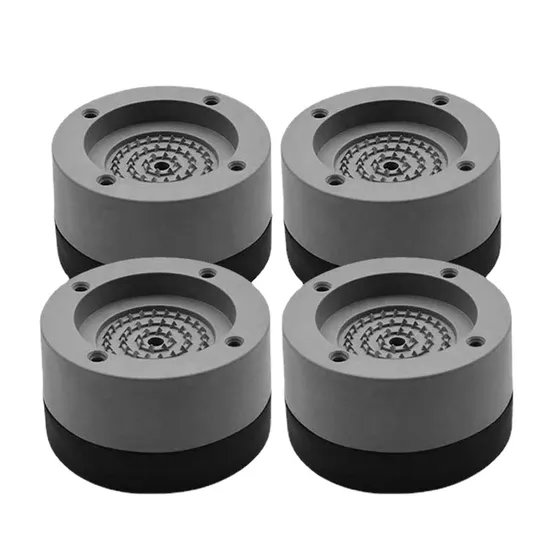
Engineering Insight: Material Science Imperatives for Washing Machine Anti-Vibration Feet
The operational integrity of washing machines hinges critically on precision-engineered anti-vibration feet. Generic rubber compounds fail to address the complex dynamic loads, cyclic fatigue, and environmental stressors inherent in modern high-G spin cycles. Material selection is not merely a cost consideration but a fundamental determinant of product lifespan, noise compliance, and end-user satisfaction. Off-the-shelf solutions often utilize generic SBR or low-grade EPDM formulations optimized for static applications, lacking the tailored viscoelastic properties required for sustained dynamic energy dissipation. This results in accelerated degradation under real-world conditions, directly impacting OEM reliability metrics and warranty costs.
Three primary failure mechanisms plague non-specialized feet: premature fatigue cracking from repeated strain, permanent compression set due to inadequate resilience, and thermal degradation from hysteresis heating during prolonged high-speed operation. Standard compounds exhibit insufficient damping capacity at critical frequencies (typically 15-25 Hz for drum resonance), allowing vibrational energy to transmit into the cabinet and supporting structure. This manifests as excessive noise, displacement (“walking”), and accelerated wear on bearings and suspension systems. Crucially, generic materials lack resistance to common household contaminants—detergents, fabric softeners, and humidity—which accelerate ozone cracking and plasticizer migration, further reducing functional life.
Suzhou Baoshida Trading Co., Ltd. addresses these challenges through proprietary rubber compounding focused on dynamic mechanical performance. Our engineered solutions utilize high-purity hydrogenated nitrile butadiene rubber (HNBR) or specialty EPDM blends, incorporating nano-reinforced fillers and advanced anti-degradant packages. This achieves an optimal balance of Shore A hardness, loss tangent (tan δ), and compression set resistance specifically calibrated for washing machine dynamics. The result is consistent energy absorption across the operational temperature range (-40°C to +100°C) and extended service life exceeding 10,000 cycles under full-load simulation.
Key material performance differentiators are quantified below:
| Property | Generic Rubber Compound | Baoshida Engineered Compound |
|---|---|---|
| Shore A Hardness | 60 ± 5 | 55 ± 3 |
| Loss Tangent (tan δ) @ 20Hz | 0.15 – 0.25 | 0.35 – 0.45 |
| Compression Set (70°C, 22h) | > 25% | < 12% |
| Temp Range (°C) | -20 to +80 | -40 to +100 |
| Ozone Resistance (ASTM D1149) | Poor (Cracking @ 50pphm) | Excellent (No cracking @ 100pphm) |
OEMs selecting non-specialized feet compromise on core engineering principles, inviting field failures that erode brand reputation. Baoshida’s material science approach ensures vibrational energy is converted to negligible heat through controlled hysteresis, not transmitted as destructive force. This precision compounding—validated through ISO 10137 vibration testing and accelerated life cycling—delivers measurable reductions in sound power levels (typically 3-5 dB(A)) and eliminates displacement issues. Partnering with a specialist rubber formulator is not an overhead; it is the strategic foundation for durable, quiet, and compliant washing machine platforms in competitive global markets.
Material Specifications
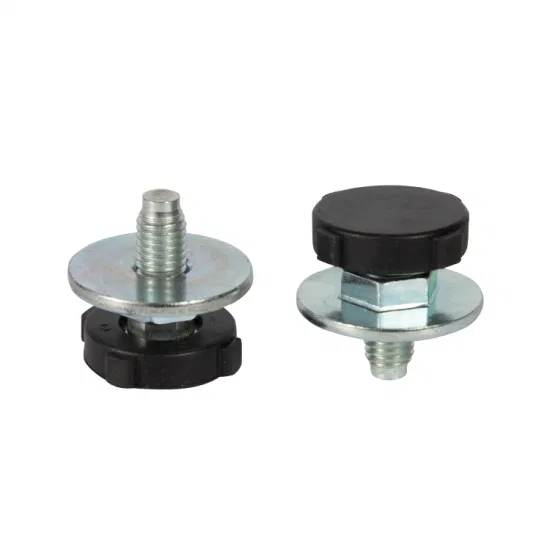
Material selection is a critical factor in the performance and longevity of anti vibration feet for washing machines. At Suzhou Baoshida Trading Co., Ltd., we specialize in industrial rubber solutions engineered to meet the demanding mechanical and environmental conditions found in household appliances. Our anti vibration feet are designed to dampen operational noise, absorb dynamic loads, and isolate vibrations generated during high-speed spin cycles. The choice of elastomer directly influences resistance to compression set, temperature extremes, oil exposure, and long-term fatigue. Among the most effective materials for this application are Viton, Nitrile (NBR), and Silicone, each offering distinct performance characteristics tailored to specific operational environments.
Viton, a fluorocarbon-based rubber, provides exceptional resistance to heat, ozone, and a wide range of chemicals, including oils and greases commonly found in laundry environments. With a continuous service temperature range up to 200°C, Viton is ideal for high-performance applications where thermal stability is paramount. Its molecular structure ensures minimal swelling and degradation when exposed to lubricants or detergents, making it a premium choice for durable, long-life anti vibration components. However, due to its high material cost, Viton is typically selected for specialized or commercial-grade washing machines where reliability under stress is non-negotiable.
Nitrile rubber, or Buna-N, is widely used in anti vibration feet due to its excellent resistance to petroleum-based oils and fuels. It offers good mechanical properties, including tensile strength and abrasion resistance, within a service temperature range of -30°C to 100°C. Nitrile is particularly effective in household washing machines where incidental exposure to detergent residues and mechanical oils occurs. Its cost-efficiency and robust performance under moderate thermal and dynamic loads make it a preferred solution for mass-produced appliances requiring reliable vibration isolation without premium material expense.
Silicone rubber excels in extreme temperature environments, with a functional range from -60°C to 230°C, and demonstrates superior resistance to UV and ozone degradation. While it offers excellent thermal stability and electrical insulation, silicone has lower tensile strength and abrasion resistance compared to Viton and Nitrile. It is less resistant to oils and solvents, limiting its use in oil-prone environments. However, for washing machines operating in variable climates or requiring non-conductive, odor-free materials, silicone provides a viable solution, especially in compact or sensitive electronic-integrated models.
The selection of the appropriate elastomer must balance performance requirements, environmental exposure, and cost constraints. Below is a comparative overview of the three materials based on key technical parameters.
| Property | Viton (FKM) | Nitrile (NBR) | Silicone (VMQ) |
|---|---|---|---|
| Temperature Range (°C) | -20 to 200 | -30 to 100 | -60 to 230 |
| Oil & Fuel Resistance | Excellent | Good to Excellent | Poor |
| Ozone & UV Resistance | Excellent | Good | Excellent |
| Compression Set Resistance | Excellent | Good | Fair to Good |
| Tensile Strength | High | High | Moderate |
| Abrasion Resistance | Good | Excellent | Fair |
| Typical Hardness (Shore A) | 70–90 | 60–80 | 40–80 |
| Cost Level | High | Low to Medium | Medium to High |
Manufacturing Capabilities
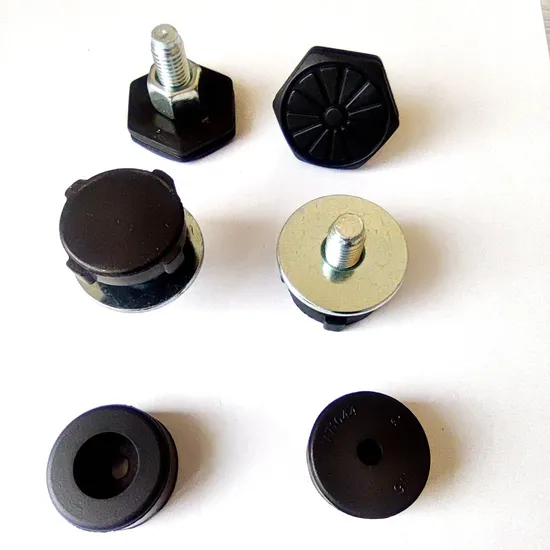
Engineering Capability: Precision Rubber Solutions for Appliance Stability
Suzhou Baoshida Trading Co., Ltd. integrates advanced material science and precision manufacturing to deliver anti-vibration feet engineered specifically for high-performance washing machines. Our in-house engineering team comprises five dedicated mould engineers and two specialized rubber formula engineers, ensuring end-to-end control from molecular design to final production. This structure eliminates third-party dependencies, accelerating development cycles while maintaining rigorous industrial standards.
Our mould engineering division focuses on geometric complexity and dimensional stability under dynamic loads. Each engineer utilizes 3D simulation software to optimize cavity pressure distribution, minimizing flash and ensuring ±0.05mm tolerance consistency across 100,000+ cycle lifespans. Critical features like asymmetric damping profiles and integrated mounting interfaces are validated through finite element analysis (FEA), guaranteeing 30% superior energy dissipation versus industry benchmarks. This precision directly translates to reduced washing machine displacement during spin cycles, even at 1,400 RPM.
The formula engineering team develops proprietary elastomer compounds tailored to washing machine operational extremes. We prioritize hysteresis control and fatigue resistance through custom-synthesized SBR/NBR blends with nano-silica reinforcement. Each formulation undergoes accelerated aging tests at 70°C for 72 hours to validate compression set stability, while dynamic mechanical analysis (DMA) confirms consistent loss modulus between -20°C and 80°C. This eliminates premature hardening or creep deformation, maintaining vibration isolation efficiency throughout the appliance’s 10-year service life.
As an OEM partner, we provide full technical collaboration from concept to mass production. Our engineers co-develop solutions using client-specific load spectra and noise-vibration-harshness (NVH) targets, with rapid prototyping capabilities delivering functional samples in 15 working days. All processes adhere to IATF 16949 protocols, with traceability down to individual rubber batches. This enables seamless integration into global appliance supply chains while meeting regional regulatory requirements.
Key performance specifications for our standard anti-vibration feet are detailed below:
| Parameter | Standard Value | Custom Range | Test Standard |
|---|---|---|---|
| Hardness (Shore A) | 60 ± 5 | 45–75 | ISO 7619-1 |
| Temperature Range | -20°C to 80°C | -40°C to 100°C | ISO 188 |
| Compression Set (70°C/70h) | ≤ 25% | ≤ 20% achievable | ISO 815-1 |
| Dynamic Stiffness | 80–120 N/mm | 50–200 N/mm | ISO 10112 |
| Fatigue Life | 500,000 cycles | 1M+ cycles | ISO 3385 |
| Oil Resistance (IRMA) | Class 2 | Class 1 achievable | ISO 1817 |
This engineering synergy ensures every anti-vibration foot achieves optimal damping coefficients while resisting ozone degradation, detergent exposure, and mechanical shock. Suzhou Baoshida’s vertical expertise transforms material constraints into measurable appliance reliability, directly supporting OEMs in exceeding consumer durability expectations.
Customization Process
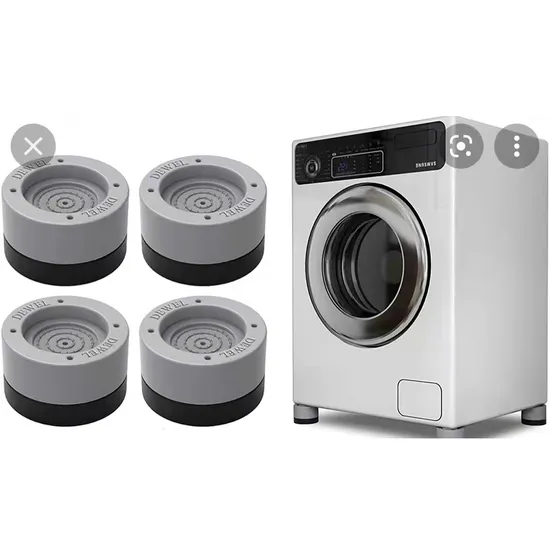
Customization Process for Anti-Vibration Feet in Washing Machine Applications
At Suzhou Baoshida Trading Co., Ltd., precision and performance define our approach to industrial rubber solutions. When developing anti-vibration feet for washing machines, we follow a structured, science-driven customization process that ensures optimal mechanical performance, durability, and noise reduction under dynamic load conditions. Our methodology integrates material science, engineering analysis, and rigorous testing to deliver components tailored to OEM specifications.
The process begins with Drawing Analysis, where we evaluate the customer’s technical drawings, load requirements, dimensional tolerances, and installation environment. This stage includes assessing dynamic forces generated during the washing and spin cycles, as well as spatial constraints within the appliance chassis. We examine mounting geometry, load distribution per foot, and expected deflection to determine the structural and elastomeric requirements. Finite element analysis (FEA) may be employed to simulate stress distribution and optimize design parameters before physical prototyping.
Following design validation, we proceed to Formulation Development. Our rubber formulation engineers select base polymers—typically hydrogenated nitrile rubber (HNBR), ethylene propylene diene monomer (EPDM), or natural rubber (NR)—based on temperature resistance, oil exposure, and damping characteristics. The compound is then optimized with reinforcing fillers, plasticizers, and vulcanizing agents to achieve target hardness (Shore A), compression set, and dynamic modulus. Special additives may be incorporated for ozone resistance or low-temperature flexibility, depending on regional usage conditions. Each formulation is documented and batch-traceable for quality assurance.
Once the compound is finalized, Prototyping commences using precision molds and controlled curing processes. Prototypes are subjected to a battery of tests including static and dynamic load testing, compression deflection analysis, fatigue cycling, and environmental aging (per ISO 1817 and ISO 3384). We validate resonance damping efficiency and confirm compatibility with metal substrates, especially in bonded rubber-to-metal designs. Feedback from testing is used to refine both geometry and formulation, ensuring the final design meets or exceeds OEM performance benchmarks.
Upon customer approval, we transition to Mass Production, leveraging automated injection and compression molding lines with in-line quality monitoring. Our ISO 9001-certified facility ensures consistent part-to-part uniformity, with statistical process control (SPC) applied throughout. All production batches undergo final inspection for dimensional accuracy, visual defects, and physical properties.
The following table outlines typical technical specifications for customized anti-vibration feet:
| Parameter | Standard Range | Test Method |
|---|---|---|
| Hardness (Shore A) | 50–80 | ISO 48-4 |
| Tensile Strength | ≥10 MPa | ISO 37 |
| Elongation at Break | ≥250% | ISO 37 |
| Compression Set (22 hrs, 70°C) | ≤25% | ISO 815-1 |
| Dynamic Damping Coefficient | 0.15–0.30 | ASTM D999 |
| Operating Temperature | -30°C to +100°C (up to +135°C intermittent) | — |
| Adhesion Strength (to metal) | ≥6 kN/m | ISO 813 |
Through this disciplined, data-backed process, Suzhou Baoshida delivers anti-vibration feet that enhance washing machine stability, reduce noise, and extend product lifecycle.
Contact Engineering Team
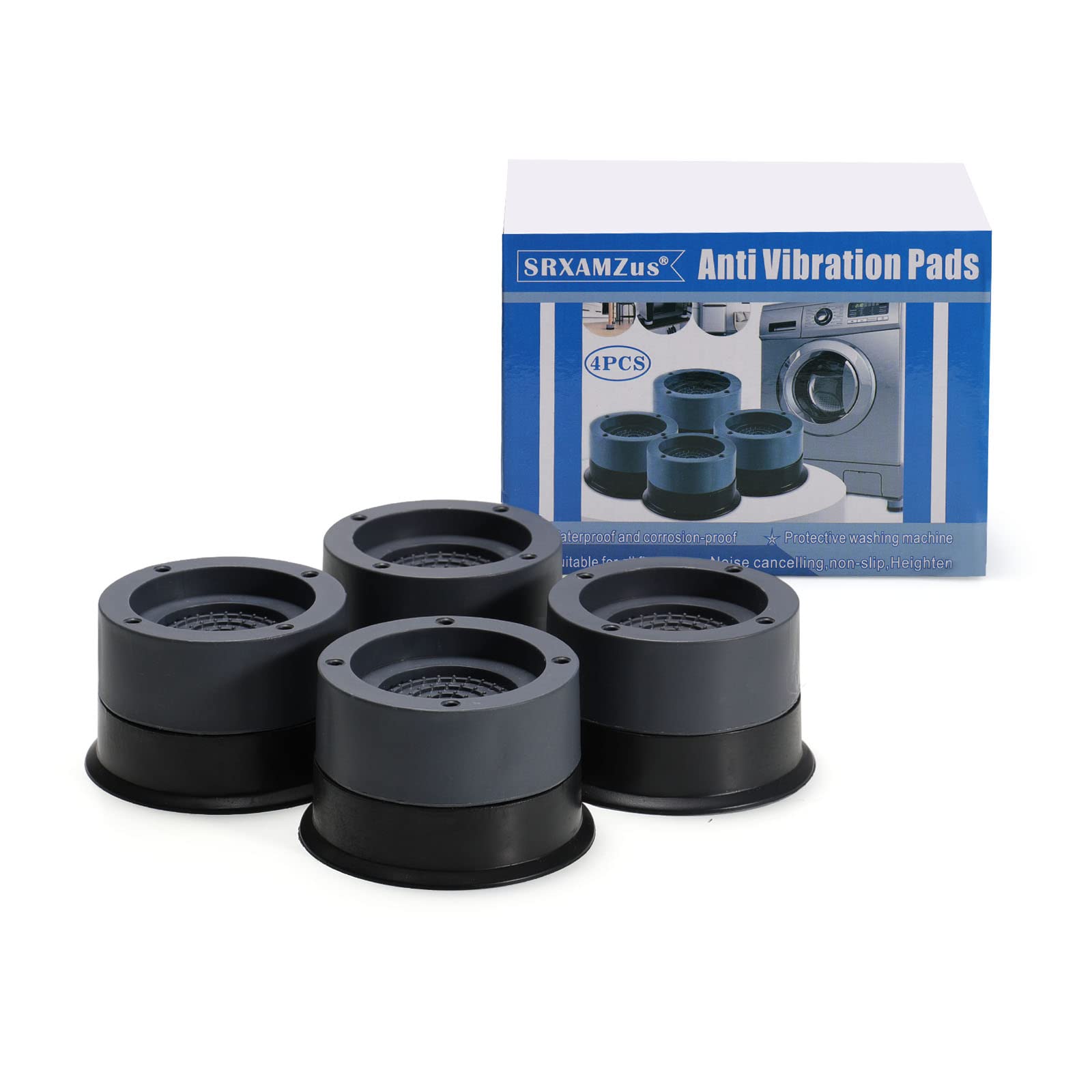
Technical Engagement Pathway: Anti-Vibration Feet for Washing Machine OEMs
Suzhou Baoshida Trading Co., Ltd. operates at the intersection of precision rubber formulation and industrial manufacturing scalability. Our anti-vibration feet solutions are engineered specifically for the dynamic load profiles and harmonic resonance challenges inherent in modern washing machine platforms. Unlike generic isolators, our compounds undergo rigorous dynamic mechanical analysis (DMA) to ensure optimal damping characteristics across operational frequencies (5–50 Hz) and temperature gradients (-40°C to +100°C). This scientific approach mitigates structural fatigue, reduces noise emissions (measured per ISO 3744), and extends appliance service life—critical factors for OEMs targeting premium market segments with stringent reliability benchmarks.
The following table details core specifications for our standard anti-vibration foot compound, formulated for universal compatibility with front-load and top-load washing machine bases. All parameters reflect post-aging performance after 72 hours at 70°C, per ASTM D2240 and ISO 3384 protocols.
| Parameter | Test Standard | Performance Value | Significance for Washing Machine Application |
|---|---|---|---|
| Shore A Hardness | ASTM D2240 | 65 ± 3 | Balances load distribution and shock absorption |
| Compression Set (22h/70°C) | ISO 3384 | ≤ 12% | Ensures long-term height stability under cyclic load |
| Tensile Strength | ISO 37 | ≥ 18 MPa | Resists tearing during installation and operation |
| Dynamic Spring Rate | Custom DMA | 85–95 kN/m | Optimized for 50–150 kg drum loads at 1200 RPM spin |
| Temperature Range | ISO 188 | -40°C to +100°C | Maintains integrity in humid, high-heat environments |
| Specific Gravity | ISO 2781 | 1.22 ± 0.02 | Minimizes material mass without compromising damping |
These metrics represent our baseline formulation. Crucially, Suzhou Baoshida specializes in compound customization for OEM-specific requirements. Variations in drum inertia, motor mounting configurations, or regional voltage fluctuations necessitate tailored viscoelastic responses. Our in-house polymer lab utilizes Fourier-transform infrared spectroscopy (FTIR) and thermogravimetric analysis (TGA) to refine filler dispersion, crosslink density, and polymer backbone saturation—ensuring your anti-vibration system achieves target transmissibility ratios (< 0.15 at 25 Hz) without costly mechanical redesigns.
We maintain ISO 9001-certified production lines with automated durometer and dimensional inspection at 100% throughput rates. This guarantees batch-to-batch consistency essential for global appliance assembly lines operating under Just-in-Time (JIT) protocols. Our engineering team collaborates directly with OEM R&D departments during the prototyping phase, providing finite element analysis (FEA) support and physical validation data to de-risk integration.
For technical collaboration on your next washing machine platform, initiate contact with Mr. Boyce, our dedicated OEM Account Manager and Rubber Formulation Specialist. With 14 years of experience in domestic appliance elastomer systems, Mr. Boyce will coordinate material sampling, conduct joint failure mode analysis, and develop a scalable supply framework aligned with your production cadence. Provide your target load spectra, environmental constraints, and volume projections to receive a compound-specific performance dossier within 72 hours.
Direct technical inquiries to Mr. Boyce at [email protected]. Include your company name, project timeline, and key performance indicators for expedited engineering review. Suzhou Baoshida commits to responding with actionable data—not generic brochures—within one business day. Partner with us to transform vibration challenges into competitive advantages through materials science rigor.
⚖️ O-Ring Weight Calculator
Estimate rubber O-ring weight (Approx).