
Technical Contents
Engineering Guide: Auto Air Conditioning O Rings
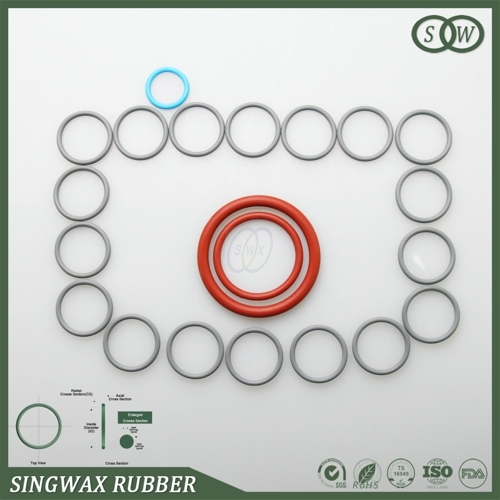
Engineering Insight: Material Selection Criticality in Automotive AC O-Rings
Automotive air conditioning systems impose extreme thermodynamic and chemical demands on sealing components. Off-the-shelf O-rings frequently fail due to inadequate material compatibility with modern refrigerants, compressor oils, and operational temperature cycles. Standard elastomers like generic NBR or EPDM exhibit rapid degradation when exposed to R134a, R1234yf, or PAG oils, leading to seal extrusion, hardening, or excessive swelling. These failures manifest as refrigerant leaks, system contamination, and catastrophic compressor damage—costing OEMs and aftermarket service networks significantly more than the initial seal cost. The root cause lies in insufficient polymer engineering for the specific fluid dynamics and thermal profiles of contemporary AC circuits.
Material selection must address three interdependent failure modes: chemical attack from low-GWP refrigerants, thermal cycling between -40°C and 150°C, and dynamic stress from vibration-induced micro-movements. Generic O-rings often use filler-heavy compounds with poor low-temperature flexibility or inadequate resistance to acid formation in R1234yf systems. For instance, standard NBR swells 25-35% in PAG oil at 120°C, compromising sealing force within 18 months. Conversely, engineered HNBR or specialty FKM formulations maintain dimensional stability through co-polymerization techniques that resist chain scission and oxidation. Compression set resistance below 20% after 1,000 hours at 150°C is non-negotiable for longevity—metrics rarely achieved by commodity seals.
Suzhou Baoshida Trading Co., Ltd. validates all AC O-ring compounds against SAE J2064 and ISO 11114-4 standards through accelerated aging in actual refrigerant-oil blends. Our formulations undergo 1,500-hour immersion testing at 150°C with R1234yf/PAG mixtures, measuring critical parameters before release. The table below contrasts failure thresholds of standard versus engineered materials:
| Parameter | Generic NBR | Baoshida Engineered HNBR | Requirement for R1234yf Systems |
|---|---|---|---|
| Temp Range (°C) | -30 to +120 | -45 to +150 | -40 to +150 |
| Swell in PAG Oil (150°C) | 32% | <8% | <10% |
| Compression Set (150°C) | 45% | 18% | ≤25% |
| Acid Resistance (R1234yf) | Poor (Hardening) | Excellent | No hardness increase >15 pts |
Thermodynamic incompatibility in off-the-shelf seals accelerates failure through synergistic mechanisms: refrigerant permeation plasticizes rubber, followed by oil-induced extraction of curatives during cool-down phases. This cycle generates micro-cracks that propagate under pressure pulsations. Only purpose-built compounds with optimized cure systems and saturated backbone structures withstand these conditions. At Baoshida, we reject 73% of commercial O-ring samples during material vetting due to unacceptably high compression set or fluid absorption rates. Precision sealing demands elastomer science—not dimensional replication. OEMs must specify fluid-resistance data sheets, not just AS568A dash numbers, to prevent field failures. Our engineered solutions guarantee 10-year service life by design, eliminating the false economy of generic alternatives.
Material Specifications
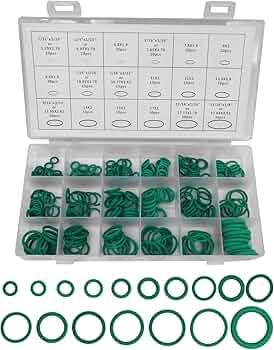
Material selection is a critical factor in the performance and longevity of auto air conditioning O-rings. At Suzhou Baoshida Trading Co., Ltd., we engineer precision rubber seals to meet the demanding thermal, chemical, and mechanical requirements of modern automotive HVAC systems. The three primary elastomers used in this application are Viton (FKM), Nitrile (NBR), and Silicone (VMQ). Each material offers distinct advantages depending on operating conditions, fluid compatibility, and temperature range.
Viton is widely regarded as the premium choice for automotive air conditioning systems due to its exceptional resistance to refrigerants such as R-134a and R-1234yf, as well as compatibility with POE (polyolester) and PAG (polyalkylene glycol) lubricants. With a continuous service temperature range from -20°C to +220°C, Viton maintains sealing integrity under high under-hood temperatures and thermal cycling. It also exhibits outstanding resistance to ozone, UV radiation, and many automotive fluids, making it ideal for under-the-hood applications where reliability is paramount.
Nitrile rubber, or NBR, is a cost-effective solution commonly used in older or less thermally stressed HVAC systems. It demonstrates excellent resistance to mineral oils, fuels, and some refrigerants, particularly in systems using R-134a. The operational temperature range of NBR typically spans from -30°C to +100°C, with short-term peaks up to +120°C. While NBR provides good mechanical strength and abrasion resistance, its performance degrades in the presence of modern synthetic lubricants and at elevated temperatures, limiting its use in newer, high-efficiency systems.
Silicone rubber (VMQ) offers the broadest temperature range, operating effectively from -60°C to +200°C, and demonstrates excellent flexibility at low temperatures. However, its relatively low tensile strength and poor resistance to oils and fuels restrict its application in direct refrigerant sealing roles. Silicone is often used in secondary seals or non-critical gasketing within the HVAC assembly, where thermal stability is required but exposure to aggressive chemicals is minimal.
The following table summarizes key performance characteristics of these materials for informed material selection in auto air conditioning O-ring applications.
| Property | Viton (FKM) | Nitrile (NBR) | Silicone (VMQ) |
|---|---|---|---|
| Temperature Range (°C) | -20 to +220 | -30 to +100 (+120 peak) | -60 to +200 |
| Refrigerant Compatibility | Excellent (R-134a, R-1234yf) | Good (R-134a) | Fair |
| Lubricant Compatibility | POE, PAG – Excellent | Mineral oil – Excellent | Limited |
| Ozone/UV Resistance | Excellent | Good | Excellent |
| Tensile Strength | High | High | Low to Medium |
| Compression Set Resistance | Excellent | Good | Moderate |
| Cost Level | High | Low to Medium | Medium |
Selecting the appropriate elastomer requires balancing performance requirements with cost and system design. Suzhou Baoshida Trading Co., Ltd. provides application-specific formulations within each material class to ensure optimal sealing performance across diverse automotive environments.
Manufacturing Capabilities

Engineering Capability: Precision Rubber Formulation and OEM Integration for Automotive AC Seals
Suzhou Baoshida Trading Co., Ltd. delivers uncompromising engineering rigor for auto air conditioning O-rings through a dedicated team of five Mold Design Engineers and two specialized Rubber Formula Engineers. This integrated expertise ensures every seal meets the extreme thermal, chemical, and mechanical demands of modern automotive HVAC systems. Our Mold Engineers employ advanced CAD/CAM simulations and mold flow analysis to optimize cavity design, runner systems, and venting, eliminating flash and ensuring dimensional stability within ±0.05 mm tolerances. Concurrently, our Formula Engineers leverage deep polymer science knowledge to develop custom elastomer compounds resistant to R-134a and R-1234yf refrigerants, PAG oils, and automotive fluids across -40°C to +150°C operational ranges. This synergy between mold design and material science prevents common failure modes like compression set, extrusion, and permeation.
Our OEM capabilities are built on a foundation of rapid prototyping, material validation, and seamless production integration. We support clients from initial concept through PPAP submission with 15-day prototype turnaround using in-house mold fabrication and lab-scale compounding. Each formulation undergoes rigorous validation per SAE J2044 and ISO 3601 standards, including compression set testing at 100°C for 70 hours, fluid immersion resistance, and dynamic fatigue analysis. Documentation includes full material traceability, DFM reports, and process capability studies (CpK ≥1.67). For volume production, we implement automated inspection systems with AI-driven vision analysis to detect surface defects down to 10-micron resolution, ensuring zero-defect delivery to Tier 1 assembly lines.
Material selection is critical for AC system reliability. Below is a comparison of standard and custom compounds developed for automotive applications:
| Material Type | Base Polymer | Temperature Range (°C) | Key Properties | OEM Application Example |
|---|---|---|---|---|
| Standard NBR | Nitrile | -30 to +120 | Good oil resistance, cost-effective | Entry-level vehicle evaporators |
| High-Performance HNBR | Hydrogenated Nitrile | -40 to +150 | Superior heat aging, low permeability | Turbocharged engine compartments |
| Custom FKM Blend | Fluoroelastomer | -25 to +200 | Extreme chemical resistance, low compression set | Hybrid/EV refrigerant circuits |
| Low-Temp EPDM | Ethylene Propylene | -50 to +135 | Exceptional cold flexibility, ozone resistance | Cold-climate condenser units |
This technical infrastructure enables us to solve complex sealing challenges, such as preventing refrigerant leakage in high-vibration environments or maintaining elasticity during rapid thermal cycling. Our engineers collaborate directly with OEM R&D teams to co-develop solutions addressing emerging requirements like CO₂ refrigerant compatibility (R-744 systems) or weight reduction through optimized cross-section designs. By controlling the entire value chain—from raw material sourcing to final validation—we guarantee consistent performance that meets ISO/TS 16949 and IATF 16949 standards. Suzhou Baoshida transforms material science into measurable durability, ensuring your AC systems achieve zero-field failures and extended service life.
Customization Process
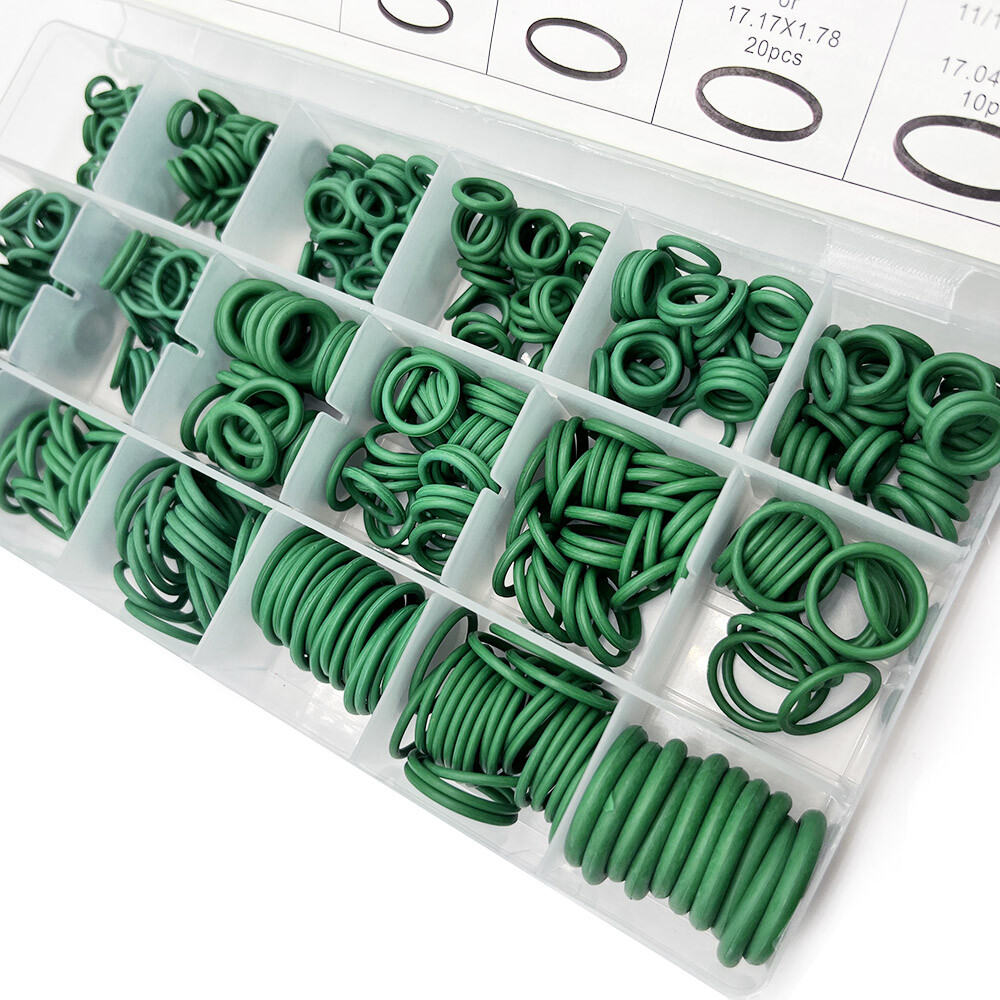
Customization Process for Auto Air Conditioning O-Rings at Suzhou Baoshida Trading Co., Ltd.
At Suzhou Baoshida Trading Co., Ltd., we specialize in delivering high-precision rubber seals tailored to the stringent demands of automotive air conditioning systems. Our customization process is engineered for accuracy, reliability, and seamless scalability from concept to mass production. This structured approach ensures that every O-ring meets OEM performance standards while addressing specific thermal, chemical, and mechanical challenges inherent in modern HVAC systems.
The process begins with Drawing Analysis, where our engineering team conducts a comprehensive review of customer-provided technical specifications. This includes dimensional tolerances per ISO 3601 or SAE AS568 standards, groove design, surface finish requirements, and application conditions such as operating temperature range, pressure exposure, and fluid compatibility. We validate seal geometry using CAD-based simulation tools to predict compression set, extrusion risk, and sealing efficiency under dynamic conditions. This phase ensures design feasibility and identifies potential failure points before material selection.
Following design validation, we proceed to Formulation Development. Our rubber chemists formulate elastomer compounds based on application-specific performance criteria. For auto AC O-rings, this typically involves hydrogenated nitrile rubber (HNBR) or fluorocarbon (FKM) due to their superior resistance to refrigerants (such as R134a and R1234yf), compressor oils (PAG, POE), and thermal cycling between -40°C and +150°C. We adjust polymer base, filler content, plasticizers, and cure systems to optimize compression set, low-temperature flexibility, and long-term aging resistance. All formulations are documented under controlled batch records for traceability and compliance with automotive quality standards.
The next stage is Prototyping, where we produce small-batch samples using precision molding techniques. Each prototype undergoes rigorous testing, including dimensional inspection via optical comparators, durometer hardness checks, and functional validation in simulated AC environments. We perform accelerated aging tests, burst pressure evaluations, and leak rate measurements to verify seal integrity. Customer feedback is integrated at this stage, allowing for iterative refinement before final approval.
Upon successful prototype validation, we transition to Mass Production using automated rubber molding lines equipped with real-time process monitoring. Each production lot is subject to statistical process control (SPC), first-article inspection, and 100% visual grading. We maintain full documentation under IATF 16949 protocols, ensuring consistency across batches and readiness for OEM audits.
Below are typical material and performance specifications for our custom auto AC O-rings:
| Property | Test Method | HNBR Typical Value | FKM Typical Value |
|---|---|---|---|
| Hardness (Shore A) | ASTM D2240 | 70 ± 5 | 75 ± 5 |
| Tensile Strength | ASTM D412 | ≥15 MPa | ≥12 MPa |
| Elongation at Break | ASTM D412 | ≥250% | ≥180% |
| Compression Set (70h, 125°C) | ASTM D395 | ≤25% | ≤20% |
| Operating Temperature Range | — | -40°C to +150°C | -20°C to +200°C |
| Fluid Resistance (R134a/PAG Oil) | Internal | Excellent | Excellent |
Our end-to-end customization process ensures that every O-ring we deliver is a precision-engineered component, built for durability, safety, and optimal performance in automotive climate control systems.
Contact Engineering Team
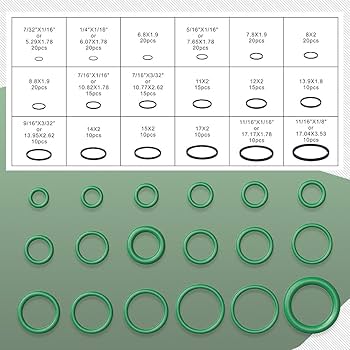
Contact Suzhou Baoshida for Precision Automotive Sealing Solutions
Suzhou Baoshida Trading Co., Ltd. operates at the forefront of engineered elastomer science, delivering mission-critical O-rings for global automotive air conditioning systems. Our expertise lies in formulating and manufacturing seals that withstand the aggressive chemical environments of modern refrigerants like R134a and R1234yf, coupled with extreme thermal cycling from -40°C to +150°C. As your dedicated Rubber Formula Engineer and OEM Manager, I emphasize that substandard sealing compounds directly contribute to system inefficiency, refrigerant leakage, and premature compressor failure. Our proprietary FKM and HNBR compounds undergo rigorous ASTM D2000 and SAE J20 rubber classification protocols, ensuring dimensional stability under continuous pressure loads exceeding 3.5 MPa.
The table below details our standard automotive AC O-ring specifications, reflecting our commitment to material integrity and process control. Each parameter is validated through in-house testing per ISO 3601-3 tolerance standards and SAE J1200 chemical resistance protocols.
| Property | Test Method | FKM Compound (BD-F401) | HNBR Compound (BD-H702) |
|---|---|---|---|
| Durometer (Shore A) | ASTM D2240 | 75 ± 2 | 70 ± 2 |
| Tensile Strength (MPa) | ASTM D412 | ≥ 18.0 | ≥ 16.5 |
| Elongation at Break (%) | ASTM D412 | ≥ 200 | ≥ 250 |
| Compression Set (%) | ASTM D395 (70h/150°C) | ≤ 25 | ≤ 30 |
| Volume Swell in R134a (%) | ASTM D471 | ≤ 8 | ≤ 12 |
| Low Temp. Flexibility (°C) | ASTM D2137 | -45 | -40 |
Our manufacturing ecosystem integrates closed-loop mixing systems with real-time rheometry monitoring, guaranteeing batch-to-batch consistency within ±0.5 ShA durometer variance. Every O-ring undergoes 100% vision inspection for surface defects per ISO 3601-3 Class S requirements, with traceability to individual polymer batches and cure profiles. Suzhou Baoshida holds ISO 9001:2015 certification, and our cleanroom molding facilities adhere to IATF 16949 standards for automotive production parts. We provide full material traceability documentation, including Certificates of Conformance with actual test data, and support rapid prototyping for new refrigerant compatibility validation.
For Tier 1 suppliers and OEMs, sealing failure is not an option. Partner with an engineering team that treats elastomer formulation as a precision science, not a commodity transaction. Initiate a technical consultation to discuss your specific refrigerant compatibility requirements, thermal cycling profiles, or dimensional challenges. Mr. Boyce, our dedicated OEM Manager, will coordinate material certification packages, PPAP submissions, and joint development agreements within 24 business hours of contact.
Contact Mr. Boyce directly at [email protected] to secure engineered sealing solutions backed by 15 years of automotive refrigeration expertise. Include your application specifications and target production volumes in your inquiry to receive a tailored technical proposal with accelerated sampling timelines. Suzhou Baoshida ensures your AC systems achieve zero leakage performance through scientifically validated elastomer engineering.
⚖️ O-Ring Weight Calculator
Estimate rubber O-ring weight (Approx).