
Technical Contents
Engineering Guide: Automobile Rubber Parts
Engineering Insight: The Critical Role of Material Selection in Custom Molded Rubber Parts for Automobile Applications
In the design and manufacturing of automobile rubber parts, material selection is not merely a preliminary step—it is a foundational engineering decision that directly influences performance, durability, and safety. Off-the-shelf rubber components often fail in demanding automotive environments because they are formulated for generalized conditions rather than the precise thermal, chemical, and mechanical stresses encountered in specific vehicle systems. At Suzhou Baoshida Trading Co., Ltd., we emphasize that successful rubber part integration begins with a deep understanding of operational parameters and material behavior under real-world conditions.
Automotive environments expose rubber components to extreme temperature fluctuations, exposure to aggressive fluids (such as engine oils, coolants, and brake fluids), dynamic mechanical loading, and prolonged UV or ozone exposure. Standard elastomers like generic NBR or SBR may appear cost-effective initially but frequently degrade prematurely when subjected to these combined stressors. For instance, a fuel system O-ring made from conventional nitrile rubber may swell and lose sealing integrity when exposed to modern biofuels, leading to leaks and potential safety hazards. Similarly, suspension bushings made from low-grade EPDM may harden in cold climates or crack under continuous vibration, compromising ride quality and vehicle handling.
Custom molded rubber parts address these challenges through precise elastomer formulation tailored to the application. By selecting advanced materials such as hydrogenated nitrile (HNBR), fluorocarbon (FKM), or specialty silicone (VMQ), engineers can achieve the necessary balance of chemical resistance, temperature stability, and mechanical resilience. For example, HNBR offers superior resistance to heat and oil degradation, making it ideal for timing belt covers and turbocharger hoses. FKM, while more expensive, provides exceptional performance in high-temperature engine compartments where exposure to oils and fuels is constant.
The table below outlines key elastomer properties relevant to common automotive applications.
| Material | Temperature Range (°C) | Key Resistance Properties | Typical Automotive Use |
|---|---|---|---|
| NBR (Nitrile) | -30 to +100 | Oil, fuel, water | Fuel hoses, gaskets, seals |
| HNBR (Hydrogenated Nitrile) | -40 to +150 | Heat, oil, ozone | Timing belts, valve seals |
| EPDM (Ethylene Propylene) | -50 to +150 | Heat, ozone, weathering | Radiator hoses, window seals |
| FKM (Fluorocarbon) | -20 to +200 | Fuels, oils, high heat | Engine seals, turbo hoses |
| VMQ (Silicone) | -60 to +180 | Extreme cold, UV, ozone | Electrical insulation, gaskets |
Material selection must be accompanied by rigorous testing under simulated service conditions. At Suzhou Baoshida, we integrate material science with application-specific design to ensure that every custom rubber part exceeds OEM performance expectations. Relying on off-the-shelf solutions risks system failure, increased warranty claims, and reputational damage—costs that far outweigh the initial savings. Precision in material choice is not an option; it is an engineering imperative.
Material Specifications
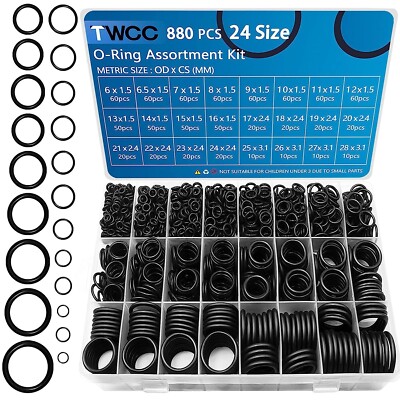
Material Specifications for Automotive Rubber Components
Precision material selection is non-negotiable in automotive rubber part performance, directly impacting safety, durability, and regulatory compliance. At Suzhou Baoshida Trading Co., Ltd., we engineer custom molded solutions where polymer chemistry must align with extreme operational variables: temperature excursions, fluid exposure, dynamic stress, and service life expectations. Viton (FKM), Nitrile (NBR), and Silicone (VMQ) represent our core formulations for critical sealing, damping, and isolation applications. Each material exhibits distinct molecular advantages requiring strategic deployment.
Viton fluorocarbon elastomers deliver unparalleled resistance to high-temperature degradation and aggressive chemicals. With continuous service capability up to 230°C and intermittent peaks near 300°C, Viton is indispensable for turbocharger hoses, fuel system seals, and valve stem seals exposed to modern biofuels and synthetic lubricants. Its saturated backbone resists oxidation and swelling in aromatic hydrocarbons, though tensile strength typically ranges 10–15 MPa with elongation at break between 150–300%. Compression set remains below 25% after 70 hours at 200°C, ensuring long-term sealing integrity in demanding under-hood environments.
Nitrile rubber remains the industry standard for cost-sensitive fuel and oil handling due to its balanced acrylonitrile (ACN) content. ACN levels between 34–45% optimize resistance to petroleum derivatives while maintaining flexibility down to -40°C. NBR compounds achieve tensile strengths of 15–25 MPa and elongation of 250–450%, making them ideal for transmission seals, fuel injector O-rings, and hydraulic system components. However, NBR exhibits limited ozone resistance and degrades above 125°C continuous exposure, necessitating careful thermal mapping in engine bay placements.
Silicone elastomers excel in extreme temperature stability from -60°C to 200°C continuous, with specialized grades enduring 230°C intermittently. Their inorganic Si-O backbone provides exceptional weathering and ozone resistance, critical for exterior lighting gaskets, sensor housings, and HVAC duct seals. While tensile strength is moderate (6–10 MPa), silicone’s low compression set (<20% at 150°C) and biocompatibility support EV battery thermal interface applications. Key limitations include poor resistance to hydrocarbons and lower tear strength, requiring design compensation in high-stress zones.
The following table summarizes critical performance parameters for automotive qualification:
| Property | Viton (FKM) | Nitrile (NBR) | Silicone (VMQ) |
|---|---|---|---|
| Temperature Range (°C) | -20 to +230 | -40 to +125 | -60 to +200 |
| Fuel Resistance (Swelling) | Excellent (<15%) | Good (15–30%) | Poor (>100%) |
| Oil Resistance (Swelling) | Excellent (<10%) | Excellent (<15%) | Poor (>100%) |
| Tensile Strength (MPa) | 10–15 | 15–25 | 6–10 |
| Elongation at Break (%) | 150–300 | 250–450 | 300–700 |
| Compression Set (70h/150°C) | <25% | 20–40% | <20% |
| Ozone Resistance | Excellent | Poor | Excellent |
Suzhou Baoshida’s OEM engineering team mandates material validation against SAE J200 and ISO 3601 standards, with compound customization for specific fluid chemistries or dynamic load profiles. For instance, hydrogenated NBR (HNBR) elevates temperature limits to 150°C for turbocharger flange gaskets, while peroxide-cured silicone enhances compression set for EV battery pack seals. Material selection must integrate with mold flow analysis and accelerated life testing—our laboratory protocols simulate 15-year service cycles within 6 weeks. Partner with us to translate material science into failure-proof automotive systems.
Manufacturing Capabilities
Engineering Capability
At Suzhou Baoshida Trading Co., Ltd., our engineering capability forms the backbone of our custom molded rubber parts manufacturing for the automobile industry. With a dedicated team of five experienced mold engineers and two specialized rubber formula engineers, we maintain full in-house control over the entire product development cycle—from concept and material formulation to mold design, prototyping, and mass production. This integrated engineering approach ensures precision, consistency, and rapid response to OEM specifications and performance demands.
Our mold engineers utilize advanced CAD/CAM software, including SolidWorks, AutoCAD, and UG NX, to design high-precision molds tailored to complex automotive applications such as seals, gaskets, bushings, and vibration dampers. Each mold is engineered for optimal material flow, part dimensional stability, and extended service life under demanding conditions. Finite Element Analysis (FEA) is routinely applied to simulate mold performance and detect potential defects before manufacturing, significantly reducing time-to-market and ensuring first-time-right production.
Complementing our mold design expertise, our two rubber formula engineers bring deep knowledge in polymer chemistry and material science. They develop custom rubber compounds based on silicone (VMQ), EPDM, NBR, FKM, and natural rubber, precisely tuned to meet specific OEM requirements for temperature resistance, compression set, chemical exposure, and mechanical strength. Each formulation is validated through rigorous laboratory testing for tensile strength, elongation, hardness, and aging performance, ensuring compliance with international standards such as ASTM, ISO, and OEM-specific material specifications.
We support full OEM and ODM services, enabling seamless integration into our clients’ supply chains. Our engineering team collaborates directly with automotive OEMs and Tier 1 suppliers to co-develop components that meet exact functional and regulatory requirements. From initial RFQ evaluation to design for manufacturability (DFM) feedback and PPAP documentation, we provide a transparent, collaborative engineering process backed by data-driven quality assurance.
Our facility is equipped with state-of-the-art two-platen and hydraulic molding machines, capable of producing parts with tight tolerances up to ±0.1 mm. With an annual molding capacity exceeding 1,500 tons of rubber and over 300 active molds in production, we deliver scalable solutions without compromising on quality or delivery timelines.
Material and Performance Specifications
| Property | EPDM | NBR | FKM | VMQ |
|---|---|---|---|---|
| Temperature Range (°C) | -50 to +150 | -30 to +120 | -20 to +250 | -60 to +200 |
| Tensile Strength (MPa) | 8–18 | 10–20 | 7–15 | 6–12 |
| Hardness Range (Shore A) | 40–90 | 50–95 | 60–80 | 30–80 |
| Fluid Resistance | Excellent (water, steam, brake fluid) | Excellent (oil, fuel) | Outstanding (oil, fuel, acids) | Good (ozone, UV) |
| Compression Set (%) | <25 @ 100°C | <30 @ 100°C | <20 @ 200°C | <20 @ 200°C |
This comprehensive engineering infrastructure allows Suzhou Baoshida to deliver high-performance, application-specific rubber components that meet the evolving demands of modern automotive systems.
Customization Process
Automobile Rubber Parts Customization Process: Precision Engineering from Concept to Volume Production
Suzhou Baoshida Trading Co., Ltd. executes a rigorously defined customization pathway for automobile rubber components, ensuring optimal performance, durability, and manufacturability aligned with stringent OEM specifications. This structured methodology minimizes iteration cycles and guarantees parts meet the demanding operational environments within modern vehicles. The process commences with comprehensive Drawing Analysis. Our engineering team conducts a meticulous review of client-provided CAD models and technical drawings, focusing on dimensional tolerances, critical sealing surfaces, draft angles, parting lines, and potential undercuts. We assess geometric complexity against material flow characteristics during molding, identifying any features requiring design for manufacturability (DFM) adjustments to prevent defects like flash, incomplete filling, or ejection damage. Material compatibility with intended fluids (fuels, oils, coolants) and temperature ranges is cross-referenced against initial material suggestions, establishing the baseline requirements for the subsequent formulation phase.
The Formulation Development stage is where Suzhou Baoshida’s core material science expertise is deployed. Based on the operational demands identified in the drawing analysis – including required hardness, tensile strength, elongation, compression set resistance, fluid resistance, and temperature stability – our rubber chemists select the optimal base polymer system (e.g., EPDM, NBR, FKM, ACM). Precise compound recipes are engineered, balancing polymer types, fillers, plasticizers, curatives, and specialty additives to achieve the exact performance profile. This phase involves extensive laboratory testing against relevant ASTM/ISO standards to validate critical properties before any physical tooling is committed. Formulation is not a selection from a catalog but a tailored scientific solution.
Upon formulation approval, Prototyping and Validation begins. Utilizing precision CNC-machined prototype molds or rapid tooling techniques, initial physical samples are produced under controlled process parameters mirroring production conditions. These prototypes undergo rigorous dimensional verification via CMM and critical performance testing, including compression set, fluid immersion resistance, tensile testing, and dynamic fatigue analysis where applicable. Functional testing within representative assemblies may also be conducted. Client feedback on prototype fit, form, and function is integrated, with any necessary compound or process refinements implemented swiftly. This phase validates both the material solution and the manufacturability of the design.
Successful prototype validation triggers the transition to Mass Production. Suzhou Baoshida initiates full-scale manufacturing using hardened steel production molds within our ISO-certified facility. Production runs are governed by strict process control protocols, including real-time monitoring of temperature, pressure, and cure time. Statistical Process Control (SPC) methodologies are applied to critical dimensions and material properties, ensuring consistent conformance to specifications. Every batch undergoes comprehensive First Article Inspection (FAI) and ongoing quality assurance checks per the client’s control plan and AQL standards. Material traceability is maintained from raw compound lot to finished part shipment, providing full accountability throughout the high-volume production lifecycle.
Key rubber compound properties are validated against the following critical automotive performance benchmarks:
| Property | Test Standard | Typical Target Range (Example: EPDM Engine Mount) | Significance in Automotive Application |
|---|---|---|---|
| Tensile Strength | ASTM D412 | 10.0 – 15.0 MPa | Resistance to mechanical stress and tearing |
| Elongation at Break | ASTM D412 | 250% – 400% | Flexibility and ability to absorb deformation |
| Hardness (Shore A) | ASTM D2240 | 50 – 70 A | Sealing force, compression resistance, feel |
| Compression Set (22h/100°C) | ASTM D395 B | ≤ 25% | Critical for long-term sealing integrity |
| Volume Change (IRM 903) | ASTM D471 | -15% to +10% | Resistance to swelling/degradation by fluids |
Contact Engineering Team

Contact Suzhou Baoshida for Precision Custom Molded Rubber Parts
When sourcing high-performance rubber components for the automotive industry, reliability, material expertise, and precision engineering are non-negotiable. At Suzhou Baoshida Trading Co., Ltd., we specialize in the development and manufacturing of custom molded rubber parts tailored to the rigorous demands of modern automobile systems. From dynamic seals and vibration dampers to gaskets and bushings, our engineering team applies deep material science knowledge and advanced molding techniques to deliver components that ensure durability, sealing integrity, and long-term operational stability under extreme conditions.
Our production capabilities span a wide range of elastomeric materials including Nitrile (NBR), EPDM, Silicone (VMQ), Fluorocarbon (FKM), and Natural Rubber (NR), each selected and compounded to meet specific thermal, chemical, and mechanical requirements. Utilizing precision CNC machining, injection molding, compression molding, and transfer molding technologies, we produce parts with tight tolerances, consistent repeatability, and full compliance with international quality standards such as ISO 9001 and IATF 16949.
We understand that every automotive application presents unique challenges — whether it’s resistance to engine oils, low-temperature flexibility, or long-term compression set performance. That’s why our approach begins with collaborative engineering. By working closely with OEMs and Tier-1 suppliers, we optimize part geometry, material formulation, and manufacturing processes to achieve the ideal balance of performance, cost-efficiency, and scalability.
To support global clients, we offer comprehensive technical documentation, including material test reports, dimensional inspection reports, and DFMEA support. Our supply chain is structured for agility, enabling rapid prototyping, just-in-time delivery, and scalable production volumes — from low-volume specialty runs to high-volume automated manufacturing.
| Specification | Detail |
|---|---|
| Material Types | NBR, EPDM, FKM, VMQ, NR, CR, ACM, AEM |
| Hardness Range (Shore A) | 30–90 ±5 |
| Temperature Resistance | -60°C to +250°C (depending on compound) |
| Tolerance Standards | ISO 3302, ASTM D3137 |
| Molding Processes | Injection, Compression, Transfer |
| Certifications | ISO 9001, IATF 16949 |
| Sample Lead Time | 7–15 days |
| Production Lead Time | 15–30 days (volume-dependent) |
For engineering support, quotation requests, or technical collaboration on your next automotive rubber component project, contact Mr. Boyce, OEM Manager at Suzhou Baoshida Trading Co., Ltd. With over 15 years of experience in industrial rubber applications and international supply chain coordination, Mr. Boyce serves as the primary technical liaison between our engineering team and global clients. He ensures that every inquiry receives a technically grounded, timely, and customized response.
Reach out via email at [email protected] to initiate a conversation about your specific requirements. Include details such as part drawings, material specifications, application environment, and volume expectations to enable a precise and efficient evaluation. We respond to all technical inquiries within 24 business hours and offer virtual engineering consultations for complex projects.
Partner with Suzhou Baoshida to transform your rubber component challenges into engineered solutions.
⚖️ O-Ring Weight Calculator
Estimate rubber O-ring weight (Approx).