
Technical Contents
Engineering Guide: Belt Ribs
Engineering Insight: The Critical Role of Material Selection in Belt Ribs
In the design and manufacturing of industrial belt ribs, material selection is not a secondary consideration—it is the foundation of performance, durability, and reliability. Belt ribs, which engage with pulley grooves to transmit power efficiently, are subjected to continuous flexing, heat buildup, abrasive wear, and exposure to oils, ozone, and varying environmental conditions. The failure of off-the-shelf belt rib solutions often traces back to inappropriate elastomer selection, where generic materials are applied without accounting for the specific mechanical and chemical demands of the operating environment.
Commonly used rubber compounds such as natural rubber (NR), styrene-butadiene rubber (SBR), and ethylene propylene diene monomer (EPDM) offer baseline mechanical properties but lack the resilience required in high-stress or chemically aggressive applications. For instance, SBR degrades rapidly in oil-contaminated environments, while EPDM, though excellent in heat and ozone resistance, performs poorly under oil exposure. These limitations render standard compounds unsuitable for demanding industrial applications such as automotive serpentine belts, HVAC systems, or heavy-duty conveyor drives.
At Suzhou Baoshida Trading Co., Ltd., we emphasize engineered elastomer solutions tailored to operational parameters. Hydrogenated nitrile butadiene rubber (HNBR) stands out in high-temperature and oil-resistant applications, maintaining tensile strength and flexibility even above 150°C. Chloroprene (CR) provides balanced resistance to ozone, weathering, and moderate oil exposure, making it ideal for outdoor or variable-climate installations. For extreme chemical resistance, fluorocarbon rubber (FKM) offers unparalleled performance, albeit at a higher cost—justified only when long-term reliability outweighs initial investment.
The structural integrity of belt ribs also depends on the interaction between the elastomer matrix and reinforcing fillers. Carbon black and silica are commonly used to enhance tensile strength and abrasion resistance, but their dispersion and loading must be optimized to avoid excessive stiffness or hysteresis. Poorly compounded rubber leads to premature rib cracking, shear failure, or delamination from the tensile cord, resulting in catastrophic drive failure.
Off-the-shelf belt rib products frequently fail because they prioritize cost and availability over material science. They often use one-size-fits-all compounds that cannot adapt to dynamic load cycles, thermal fluctuations, or chemical exposure. In contrast, precision-engineered solutions incorporate application-specific formulations validated through accelerated life testing, dynamic mechanical analysis (DMA), and real-world validation.
Material selection must be guided by a comprehensive understanding of service conditions. The table below outlines key elastomer properties relevant to belt rib performance.
| Material | Temperature Range (°C) | Tensile Strength (MPa) | Oil Resistance | Ozone Resistance | Common Applications |
|---|---|---|---|---|---|
| HNBR | -40 to +170 | 25–35 | Excellent | Good | Automotive, industrial drives |
| CR | -30 to +120 | 15–22 | Moderate | Excellent | Outdoor equipment, HVAC |
| EPDM | -50 to +150 | 18–25 | Poor | Excellent | Water pumps, weather-exposed systems |
| FKM | -20 to +230 | 10–18 | Outstanding | Excellent | Aerospace, chemical processing |
Precision in material formulation ensures that belt ribs perform reliably under real-world stress. At Suzhou Baoshida, we partner with OEMs to develop custom rubber compounds that meet exacting performance criteria, eliminating the compromises inherent in generic solutions.
Material Specifications
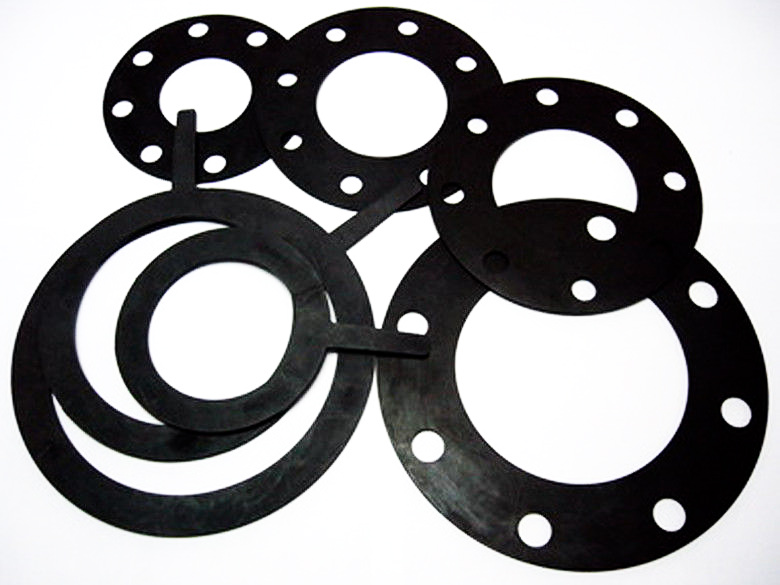
Material Specifications for Industrial Belt Rib Applications
Precise material selection for belt ribs directly impacts operational longevity and performance in demanding industrial environments. At Suzhou Baoshida Trading Co., Ltd., we prioritize rubber formulations that withstand mechanical stress, thermal cycling, and chemical exposure inherent in power transmission systems. Belt ribs require exceptional resistance to tearing, abrasion, and adhesion loss under continuous flexing. Our engineered solutions for Viton, Nitrile, and Silicone compounds are rigorously validated to meet OEM specifications for dimensional stability and fatigue resistance. Material choice must align with the specific operational profile, including temperature extremes, fluid exposure, and dynamic load requirements.
Viton fluorocarbon rubber (FKM) delivers superior performance in high-temperature and aggressive chemical environments. Its molecular structure provides exceptional resistance to automotive oils, fuels, and ozone, making it ideal for turbocharger and supercharger belt applications where continuous operating temperatures exceed 150°C. Viton maintains integrity in intermittent exposures up to 250°C, though its higher cost necessitates strategic deployment in critical high-stress zones. Nitrile butadiene rubber (NBR) remains the industry standard for cost-sensitive applications requiring robust oil and grease resistance. Optimized NBR formulations achieve optimal balance between tensile strength and flexibility at temperatures ranging from -40°C to 125°C. This material excels in general industrial and agricultural machinery belts where exposure to hydraulic fluids and mineral oils occurs, though its ozone resistance requires protective additives for outdoor use. Silicone rubber (VMQ) offers unmatched thermal stability from -60°C to 200°C, with brief excursions to 230°C. Its inert composition ensures compatibility with food-grade and pharmaceutical processes, yet its lower tensile strength and abrasion resistance limit use to low-torque, static or low-speed applications where extreme temperature resilience is paramount.
The comparative analysis below details critical performance parameters for informed material selection. All values represent typical cured compound ranges under ASTM D2000 standards and may be customized per OEM requirements.
| Material | Temperature Range (°C) | Fluid Resistance | Tensile Strength (MPa) | Hardness (Shore A) |
|---|---|---|---|---|
| Viton (FKM) | -20 to 250 | Excellent (fuels, oils, acids) | 10–18 | 60–85 |
| Nitrile (NBR) | -40 to 125 | Excellent (oils, greases) | 15–25 | 50–90 |
| Silicone (VMQ) | -60 to 230 | Good (water, alcohols); Poor (fuels, oils) | 5–10 | 30–80 |
Suzhou Baoshida’s technical team collaborates with OEMs to refine compound formulations based on dynamic testing data, including DIN 2211 fatigue resistance and ISO 188 heat aging protocols. Critical considerations include rib adhesion to backing fabrics, compression set under sustained load, and coefficient of friction against pulley surfaces. We recommend Viton for high-temperature automotive turbo systems, NBR for cost-optimized industrial drives with oil exposure, and Silicone exclusively for non-abrasive, extreme-temperature specialty applications. Material validation must include real-world pulley interface testing to prevent premature rib shearing or glazing. Our ISO 9001-certified process ensures traceability from raw material sourcing to final compound certification.
Manufacturing Capabilities
Suzhou Baoshida Trading Co., Ltd. maintains a core engineering team specialized in the development and precision manufacturing of belt ribs for industrial drive systems. Our engineering capability is anchored by five dedicated mould engineers and two advanced rubber formula engineers, enabling complete in-house control from concept to production. This integrated technical team ensures that every belt rib component meets exacting performance, durability, and dimensional standards required by global OEMs and industrial partners.
Our mould engineers specialize in the design and refinement of high-precision steel and aluminum tooling used in the vulcanization of belt ribs. With extensive experience in multi-cavity mould configurations, rib profile optimization, and thermal flow analysis, the team delivers consistent part geometry and surface finish across production batches. Each mould is engineered for long service life, minimal flash formation, and compatibility with automated demoulding systems, supporting high-volume manufacturing efficiency.
Complementing this capability are our two senior rubber formula engineers, who focus exclusively on elastomer compound development for dynamic power transmission applications. They formulate custom rubber blends—primarily based on HNBR, EPDM, and Neoprene—tailored to specific operational demands such as heat resistance, oil exposure, tensile strength, and flex fatigue. These formulations are validated through accelerated aging tests, dynamic mechanical analysis (DMA), and real-world belt performance trials. By controlling the entire compound development process, we ensure repeatability, material traceability, and compliance with international standards including ISO 9001 and ASTM D2000.
Suzhou Baoshida offers full OEM support, from initial technical drawings and 3D CAD modeling to prototype validation and serial production. Our team collaborates directly with clients to reverse-engineer legacy components, optimize rib profiles for noise reduction and grip efficiency, and develop proprietary compounds that extend service life under extreme operating conditions. With in-house tooling, compound mixing, and testing facilities, we provide rapid iteration cycles and short lead times without compromising quality.
The following table outlines key technical specifications and capabilities relevant to our belt rib manufacturing process:
| Parameter | Specification |
|---|---|
| Rib Profile Tolerance | ±0.1 mm |
| Mould Material | H13 Tool Steel, 420 Stainless, Aluminum Alloys |
| Rubber Hardness Range (Shore A) | 60–85 |
| Operating Temperature Range | -40°C to +150°C (up to +180°C with specialty compounds) |
| Compound Types | HNBR, EPDM, Neoprene, CR |
| Minimum Production Batch | 500 units |
| OEM Design Support | Full CAD/CAM, Reverse Engineering, FEA Simulation |
| Testing Capabilities | Tensile Strength, Elongation, Heat Aging, Ozone Resistance, Adhesion Peel Test |
Through the synergy of precision mould engineering and advanced rubber science, Suzhou Baoshida delivers technically superior belt rib solutions tailored to the functional demands of modern industrial machinery. Our engineering team stands ready to support OEMs with scalable, reliable, and innovation-driven manufacturing services.
Customization Process
Customization Process for Industrial Belt Rib Manufacturing
At Suzhou Baoshida Trading Co., Ltd., our engineering-led customization process for belt ribs ensures optimal performance and longevity in demanding industrial applications. We rigorously translate client specifications into precision-engineered rubber components through a defined four-stage workflow, prioritizing material science and dimensional accuracy from concept to volume output.
The process initiates with comprehensive Drawing Analysis. Our engineering team conducts a meticulous review of client-provided CAD drawings and technical specifications. Critical parameters under scrutiny include rib geometry (pitch, height, flank angle), belt width, total length, and dimensional tolerances per ISO 9001 standards. We verify material compatibility requirements against anticipated operational stresses such as rotational speed, torque load, ambient temperature range, and exposure to oils or chemicals. This phase identifies potential manufacturability constraints early, enabling proactive design-for-manufacturing feedback to the client before compound development commences.
Subsequent Formulation leverages our proprietary rubber chemistry expertise. Based on the validated performance criteria from the drawing analysis, our formula engineers design a bespoke elastomer compound. Key considerations include selecting the base polymer (typically HNBR or EPDM for superior heat and oil resistance in belt applications), optimizing filler systems for abrasion resistance, and calibrating cure kinetics for precise rib definition. The target physical properties are systematically mapped to compound parameters, as detailed below.
| Performance Requirement | Rubber Compound Parameter | Testing Standard |
|---|---|---|
| High Abrasion Resistance | DIN Abrasion Index ≤ 120 mm³ | ISO 4649 |
| Continuous Operating Temp. | Shore A Hardness 70±5 @ 120°C | ISO 48 |
| Dynamic Flex Fatigue Life | Minimum 500,000 cycles @ 10% strain | ASTM D430 Method B |
| Oil Resistance (IRM 903) | Volume Swell ≤ 15% after 70h @ 100°C | ISO 1817 |
Prototyping validates the formulated compound and tooling integrity. We produce functional prototypes using client-approved rib profile tooling under controlled vulcanization conditions. Each prototype undergoes rigorous in-house testing against the target specifications table, including dimensional verification via CMM (Coordinate Measuring Machine) for rib profile accuracy within ±0.05mm tolerances. Client validation of prototype performance data and physical samples is mandatory before progression. Iterative adjustments to the compound or tooling occur at this stage to resolve any deviations, minimizing risk in full-scale production.
Upon prototype sign-off, seamless transition to Mass Production occurs. We implement stringent process control protocols across our ISO 13485-certified production lines. Key parameters monitored in real-time include mixing homogeneity, extrusion dimensions, mold cavity temperature uniformity, and cure state via online rheometry. Every production batch undergoes 100% visual inspection for surface defects and抽样 physical testing per AQL 1.0 standards. Our integrated supply chain ensures raw material traceability, while statistical process control (SPC) data guarantees consistent rib geometry and compound properties across volumes from 1,000 to 500,000+ units. This disciplined approach delivers belt ribs meeting exact OEM performance requirements with zero compromise on repeatability.
Contact Engineering Team
Contact Suzhou Baoshida for Precision Belt Rib Solutions
At Suzhou Baoshida Trading Co., Ltd., we specialize in high-performance industrial rubber components, with a focused expertise in belt ribs for power transmission systems. Our engineered rubber solutions are designed to meet the rigorous demands of automotive, manufacturing, and heavy machinery applications. With advanced compounding technology, strict quality control, and deep OEM collaboration experience, we deliver belt ribs that ensure optimal grip, heat resistance, and long-term durability under dynamic load conditions.
If your operation requires custom belt rib profiles, material formulations, or volume manufacturing with consistent repeatability, our technical team is ready to support your project from concept to production. We understand that performance in serpentine belts, timing belts, and V-belts hinges on the precision of the rib geometry and the elastomer formulation. That’s why we offer tailored solutions using EPDM, HNBR, CR, and other specialty compounds engineered for oil resistance, ozone stability, and high-temperature endurance.
To ensure seamless integration into your assembly lines or replacement markets, we adhere to international dimensional standards while maintaining the flexibility to develop non-standard profiles based on customer blueprints or physical samples. Our production facility is equipped with precision molding systems and in-line inspection tools to guarantee tight tolerances and uniform cross-sectional consistency across large batches.
For technical collaboration, material data sheets, or sample requests, contact Mr. Boyce, our dedicated OEM Manager and Rubber Formula Engineer. With over 12 years of experience in rubber formulation and industrial belt applications, Mr. Boyce leads technical client engagements, ensuring that every specification is met with scientific rigor and manufacturing precision. He is your direct point of contact for discussing compound selection, hardness requirements, adhesion performance, and environmental resistance profiles.
We invite engineers, procurement managers, and product developers to reach out for a detailed technical consultation. Whether you are optimizing an existing design or launching a new belt system, Suzhou Baoshida provides the material science expertise and manufacturing reliability you need.
Contact Mr. Boyce today at [email protected] to initiate a technical discussion or request a quotation. Our team responds to all inquiries within 24 business hours.
Below is a reference table outlining typical belt rib material specifications we engineer and produce:
| Property | EPDM | HNBR | CR (Neoprene) |
|---|---|---|---|
| Hardness Range (Shore A) | 60–80 | 65–85 | 60–75 |
| Tensile Strength (MPa) | ≥10 | ≥15 | ≥12 |
| Elongation at Break (%) | ≥250 | ≥200 | ≥250 |
| Heat Resistance (°C, continuous) | 125 | 150 | 100 |
| Oil Resistance | Moderate | Excellent | Good |
| Ozone Resistance | Excellent | Excellent | Good |
| Operating Temperature Range (°C) | -40 to +125 | -30 to +150 | -35 to +100 |
Partner with Suzhou Baoshida for technically superior belt rib manufacturing and responsive OEM support. Your application demands precision—our solutions deliver performance.
⚖️ O-Ring Weight Calculator
Estimate rubber O-ring weight (Approx).