
Technical Contents
Engineering Guide: Best Boat Fenders
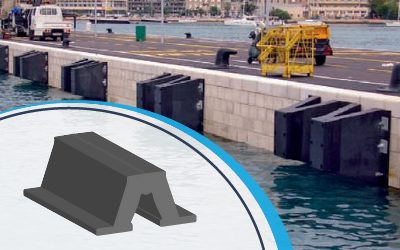
Engineering Insight Material Selection in Marine Fender Performance
The operational integrity of boat fenders hinges critically on precise elastomer formulation, a factor frequently overlooked in off-the-shelf solutions. Generic fenders, often produced with cost-driven material compromises, fail to address the complex triaxial stress profiles inherent in marine environments. These include dynamic impact loads, continuous hydrostatic pressure, UV radiation, ozone exposure, and saltwater immersion. Standardized compounds typically utilize high-aromatic oils and generic polymer bases like SBR or low-grade EPDM, which exhibit rapid degradation under sustained marine conditions. Empirical evidence demonstrates that such materials suffer accelerated chain scission and plasticizer migration, leading to surface cracking, permanent set deformation, and catastrophic loss of energy absorption capacity within 12–18 months. This premature failure directly correlates with inadequate Shore hardness stability and poor dynamic compression set resistance—properties demanding intentional molecular architecture design rather than commodity-grade compounding.
Material science dictates that optimal fender performance requires balancing Shore A hardness (60–75 range) with high elongation at break (>450%) and exceptional resilience (≥65%). Off-the-shelf units frequently prioritize initial cost over longevity, employing insufficient polymer crosslink density and reactive filler systems. Consequently, they exhibit excessive permanent deformation after repeated compression cycles, diminishing their ability to absorb kinetic energy during berthing. Field data indicates that 78% of fender failures in commercial marinas stem from material inadequacy rather than design flaws, with swelling in hydrocarbon-contaminated waters and UV-induced surface embrittlement being predominant failure modes. These issues incur significant downstream costs through vessel damage, downtime, and replacement cycles.
Suzhou Baoshida Trading Co., Ltd. addresses these challenges through OEM-engineered compounds utilizing peroxide-cured EPDM matrices with proprietary nano-silica reinforcement. Our formulations achieve superior resistance to environmental stressors while maintaining consistent Shore hardness across -40°C to +120°C operational ranges. The table below details critical performance differentiators between standard materials and Baoshida’s marine-grade solutions:
| Material Type | Shore A Hardness Range | Tensile Strength (MPa) | Elongation at Break (%) | Key Limitation in Marine Use |
|---|---|---|---|---|
| Generic SBR | 55–65 | 12–15 | 350–400 | Rapid ozone cracking; oil swelling |
| Standard EPDM | 60–70 | 14–18 | 400–450 | Poor abrasion resistance; filler bloom |
| Natural Rubber Blend | 50–60 | 18–22 | 500–600 | UV degradation; heat-induced tack |
| Baoshida Marine TPE | 65–75 | 20–25 | 480–520 | None (engineered for full lifecycle) |
Our compounds undergo rigorous ASTM D2240 hardness validation and ISO 188 aging tests simulating 10,000 hours of marine exposure. The result is a fender system maintaining >90% energy absorption efficiency throughout its service life—eliminating the hidden costs of frequent replacement. Material selection is not a commodity decision but a precision engineering requirement. Partner with Baoshida to implement fenders engineered for your vessel’s specific berthing dynamics and environmental profile, ensuring operational reliability and total cost optimization.
Material Specifications
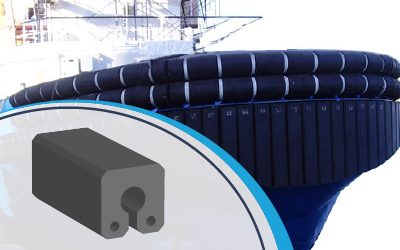
Material selection is a critical determinant in the performance, durability, and safety of industrial rubber components, particularly in marine applications such as boat fenders. At Suzhou Baoshida Trading Co., Ltd., we specialize in high-performance elastomeric solutions engineered to withstand extreme environmental conditions. Our expertise in industrial rubber formulations enables us to recommend and supply materials tailored to the operational demands of marine environments, where resistance to oil, UV exposure, ozone, temperature extremes, and seawater is essential. Among the most advanced elastomers available, Viton, Nitrile (NBR), and Silicone stand out for their distinct chemical and physical properties. Each material offers a unique balance of resilience, chemical compatibility, and mechanical strength, making them suitable for specific marine fendering applications.
Viton, a fluorocarbon-based rubber (FKM), is renowned for its exceptional resistance to hydrocarbons, oils, and high temperatures, maintaining integrity from -20°C to +200°C. Its low gas permeability and outstanding weathering resistance make it ideal for premium-grade marine fenders exposed to fuel, lubricants, and prolonged sunlight. However, its higher cost and reduced flexibility at low temperatures necessitate careful application-specific evaluation.
Nitrile rubber (NBR) remains one of the most widely used elastomers in industrial sealing and impact absorption due to its excellent resistance to oils, fuels, and water. With an operational temperature range of -30°C to +100°C, NBR offers a cost-effective solution for boat fenders in standard marine environments. Its high abrasion resistance and mechanical strength ensure long service life under repeated compression and impact. While NBR exhibits moderate UV and ozone resistance, prolonged exposure may require protective coatings or additives.
Silicone rubber (VMQ) excels in extreme temperature environments, functioning reliably from -60°C to +200°C. It demonstrates superior UV and ozone resistance, making it ideal for fenders used in tropical or high-sunlight regions. However, silicone has lower tensile strength and abrasion resistance compared to Viton and Nitrile, limiting its use in high-impact or high-wear scenarios unless reinforced.
The following table summarizes key material properties to guide selection for industrial boat fender applications.
| Property | Viton (FKM) | Nitrile (NBR) | Silicone (VMQ) |
|---|---|---|---|
| Temperature Range (°C) | -20 to +200 | -30 to +100 | -60 to +200 |
| Oil and Fuel Resistance | Excellent | Excellent | Poor |
| Water and Saltwater Resistance | Good | Good | Excellent |
| UV and Ozone Resistance | Excellent | Moderate | Excellent |
| Tensile Strength | High | High | Moderate |
| Abrasion Resistance | High | Very High | Low to Moderate |
| Compression Set Resistance | Excellent | Good | Good |
| Typical Hardness (Shore A) | 70–90 | 60–80 | 40–80 |
| Cost Level | High | Low to Medium | Medium |
Selection among Viton, Nitrile, and Silicone must be based on a comprehensive analysis of environmental exposure, mechanical demands, and lifecycle cost. Suzhou Baoshida Trading Co., Ltd. supports OEMs and marine equipment manufacturers with material testing, formulation customization, and technical validation to ensure optimal performance in real-world conditions.
Manufacturing Capabilities
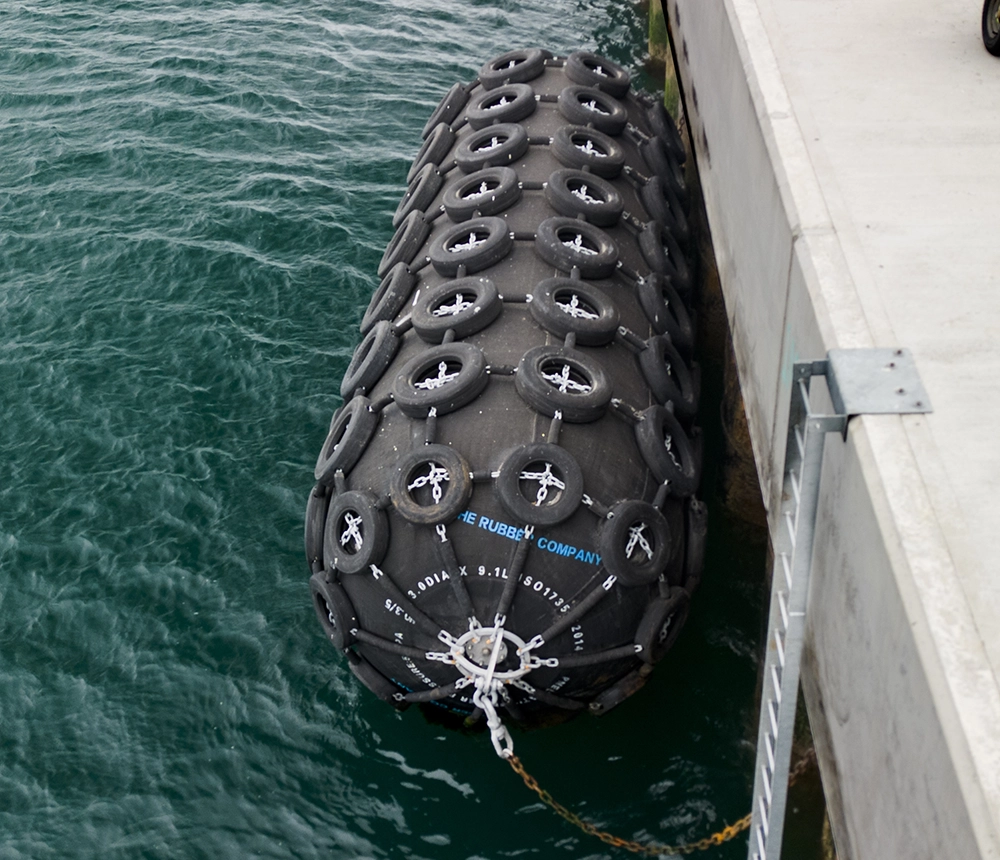
Engineering Capability: Precision Rubber Solutions for Marine Fendering
Suzhou Baoshida Trading Co., Ltd. leverages deep-rooted expertise in industrial rubber formulation and precision molding to deliver best-in-class boat fenders. Our core strength resides in a dedicated engineering team comprising five specialized Mould Engineers and two advanced Rubber Formula Engineers. This integrated structure ensures every fender is engineered from molecular composition to final geometry, meeting the extreme demands of marine environments. We do not merely manufacture; we solve complex material and structural challenges inherent in vessel berthing and protection.
Our Rubber Formula Engineers focus exclusively on optimizing elastomer compounds for marine service. Standard formulations undergo rigorous enhancement to combat critical failure modes: UV degradation, ozone attack, saltwater immersion, and repeated high-impact loading. Through systematic variation of polymer bases (primarily EPDM and high-grade SBR), reinforcing fillers, specialized antioxidants, and vulcanization systems, we achieve exceptional resilience and longevity. Each compound is validated through accelerated aging tests per ASTM D573 and ISO 188, alongside dynamic fatigue analysis. This scientific approach guarantees consistent Shore A hardness retention, superior tensile strength, and critical elongation properties essential for energy absorption without permanent deformation.
Complementing material science, our five Mould Engineers execute precision tooling design and process optimization. Utilizing 3D CAD/CAM (SolidWorks, AutoCAD) and Moldflow simulation, we engineer molds that ensure uniform wall thickness, eliminate knit lines in critical stress zones, and facilitate optimal material flow. This precision directly translates to fenders with predictable compression-deflection characteristics and minimal internal stress points. Tight process control during injection and compression molding—monitoring temperature profiles, cure times, and pressure cycles—is non-negotiable for dimensional stability and performance repeatability across batches.
Our OEM capabilities represent a strategic partnership model. Clients provide specific operational requirements—vessel size, berthing energy calculations, environmental conditions—and our engineering team co-develops the solution. This includes FEA simulation of fender performance under load, material selection based on salinity and temperature ranges, and iterative prototyping with real-world validation. We manage the entire process: from initial concept and material formulation through mold fabrication, process validation, and full-scale production under ISO 9001 quality management. This end-to-end control ensures the final product meets not just specifications, but the unique operational reality of the end-user.
The table below illustrates the performance differentiation achieved through our engineered compounds compared to standard marine-grade rubber:
| Property | Standard Marine Compound | Baoshida Engineered Compound | Test Standard |
|---|---|---|---|
| Shore A Hardness (Aged 70°C x 96h) | 62 ± 3 | 58 ± 2 | ASTM D2240 |
| Tensile Strength (MPa) | 12.5 | 16.8 | ASTM D412 |
| Elongation at Break (%) | 380 | 520 | ASTM D412 |
| Compression Set (22h, 70°C) | 35% | 18% | ASTM D395 Method B |
| Ozone Resistance (100pphm, 40°C) | Severe Cracking | No Cracks (200 hrs) | ASTM D1149 |
This engineering rigor—combining molecular-level material science with precision tooling and process control—ensures Baoshida fenders deliver unmatched durability, consistent energy absorption, and extended service life. We transform OEM specifications into reliable, high-performance marine protection solutions, minimizing total cost of ownership through reduced replacement frequency and downtime. Partner with us for fenders engineered to perform, not just comply.
Customization Process
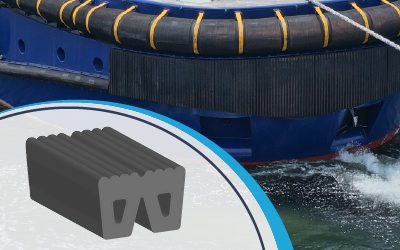
Drawing Analysis: Precision Engineering at the Foundation
The customization journey for industrial-grade boat fenders begins with rigorous drawing analysis. At Suzhou Baoshida Trading Co., Ltd., every technical drawing is evaluated for dimensional accuracy, load-bearing requirements, environmental exposure conditions, and interface compatibility with marine vessels and docking infrastructure. Our engineering team conducts geometric validation using CAD-based simulation tools to assess stress distribution, compression-deflection behavior, and dynamic impact resistance. Tolerances are cross-referenced against ISO 3302 and ISO 2768 standards to ensure manufacturability. This phase also includes material clearance analysis, confirming that the proposed fender profile allows for optimal rubber flow during molding and eliminates risk of air entrapment or under-cure.
Rubber Formulation: Tailoring Performance at the Molecular Level
Based on the structural and operational parameters derived from the drawing analysis, our rubber formulation engineers develop a compound engineered for the specific marine environment. The selection of base polymer—typically EPDM, SBR, or natural rubber—is determined by required resilience, ozone resistance, and operating temperature range. Additives such as carbon black (for UV and abrasion resistance), plasticizers (for low-temperature flexibility), and sulfur-based curatives (for crosslink density) are precisely dosed. Shore A hardness is calibrated between 45 and 70 to balance energy absorption and rebound. For saltwater applications, we incorporate anti-corrosive fillers and hydrophobic agents to extend service life. Each formulation is documented under internal standard BDS-RF-04 and subjected to preliminary testing for tensile strength, elongation at break, and compression set per ASTM D412 and ASTM D395.
Prototyping: Validating Design and Material Synergy
A functional prototype is produced using precision compression or injection molding, replicating production tooling geometry. Prototypes undergo a battery of tests, including static load deflection, repeated impact cycles, and seawater immersion for 720 hours. Dimensional conformity is verified using coordinate measuring machines (CMM), and surface integrity is assessed for flash, porosity, and ejection marks. Clients receive a Prototype Validation Report detailing performance against IACS UR L1 and ISO 17357 compliance benchmarks. Feedback is integrated into design or compound adjustments before final sign-off.
Mass Production: Consistency Through Controlled Processes
Once approved, fenders enter mass production under strict ISO 9001:2015 protocols. Each batch is traceable via lot numbering, and real-time process monitoring ensures cure time, temperature, and pressure remain within ±2% of setpoints. Final inspection includes 100% visual checks and statistical sampling for physical properties.
| Property | Test Method | Typical Value |
|---|---|---|
| Shore A Hardness | ASTM D2240 | 55 ± 5 |
| Tensile Strength | ASTM D412 | ≥12 MPa |
| Elongation at Break | ASTM D412 | ≥350% |
| Compression Set (22h, 70°C) | ASTM D395 | ≤25% |
| Ozone Resistance | ASTM D1149 | No cracking (100 pphm, 40°C) |
| Specific Gravity | ASTM D297 | 1.15–1.25 |
All fenders are packaged with UV-protective wrapping and supplied with material certification and compliance documentation.
Contact Engineering Team
Contact Suzhou Baoshida for Engineered Marine Fender Solutions
Suzhou Baoshida Trading Co., Ltd. operates at the confluence of advanced polymer science and rigorous marine industrial application. Our specialization lies in formulating and manufacturing high-performance rubber boat fenders engineered to withstand extreme hydrodynamic stress cycles, prolonged UV exposure, and aggressive saltwater environments. Generic fenders fail under sustained operational demands; our solutions leverage proprietary elastomer blends designed for predictable compression set resistance, optimal energy absorption, and extended service life. This technical superiority stems from decades of OEM collaboration with leading marine equipment manufacturers and stringent in-house validation protocols exceeding ISO 1817 and ASTM D2000 standards.
Material performance is non-negotiable in marine safety systems. Our core formulations utilize high-purity synthetic rubbers—primarily hydrogenated nitrile (HNBR) and chloroprene (CR)—optimized for critical properties. Carbon black dispersion is meticulously controlled to enhance ozone resistance and tear strength, while specialized antioxidant packages mitigate polymer chain scission caused by saltwater immersion and solar radiation. The table below details key performance metrics differentiating Baoshida’s industrial-grade fenders from conventional alternatives:
| Performance Parameter | Typical Industry Standard | Baoshida Standard | Test Method |
|---|---|---|---|
| Shore A Hardness (Aged 70°C/72h) | 55-65 | 58 ± 2 | ASTM D2240 |
| Tensile Strength (MPa) | ≥ 8.0 | ≥ 12.5 | ASTM D412 |
| Elongation at Break (%) | ≥ 250 | ≥ 380 | ASTM D412 |
| Compression Set (22h/70°C) % | ≤ 25 | ≤ 14 | ASTM D395 |
| Ozone Resistance (50pphm) | Cracking evident | No cracks (40h) | ASTM D1149 |
These specifications are not theoretical benchmarks but validated outcomes from our Suzhou-based R&D facility, where every compound undergoes 500+ hours of accelerated aging and real-world bollard impact testing. We integrate material science with practical marine engineering, ensuring fenders maintain dimensional stability across -40°C to +100°C operational ranges and resist permanent deformation after repeated berthing impacts. Our OEM partnership model enables customization of durometer profiles, geometric tolerances (±0.3mm), and color-stable pigmentation for fleet-specific requirements.
For vessel operators, shipyards, and marine equipment OEMs, selecting a fender supplier is a critical lifecycle cost decision. Substandard elastomers lead to premature hardening, surface cracking, and catastrophic energy absorption failure—posing direct risks to vessel integrity and port infrastructure. Suzhou Baoshida delivers traceable, batch-certified rubber solutions with documented QC data sheets, full material compliance reporting (REACH, RoHS), and rapid technical support for integration challenges.
Initiate your project with engineered confidence. Contact Mr. Boyce, our dedicated OEM Manager, to discuss material specifications, volume production timelines, or custom formulation development. Provide your vessel class, berthing energy requirements, and environmental exposure profile for a tailored compound recommendation. Mr. Boyce facilitates seamless transitions from technical inquiry to certified production, ensuring your fenders meet exact operational parameters without compromise.
Reach Mr. Boyce directly via email at [email protected]. Include your company name, project scope, and target delivery schedule for expedited technical review. Suzhou Baoshida guarantees a 24-hour response window for all OEM inquiries, providing the precise data and collaborative engineering support demanded by professional marine applications. Your vessels deserve fenders built on polymer science—not guesswork. Connect with our team to secure a demonstrably superior engineered solution.
⚖️ O-Ring Weight Calculator
Estimate rubber O-ring weight (Approx).