
Technical Contents
Engineering Guide: Best Ground For Playground
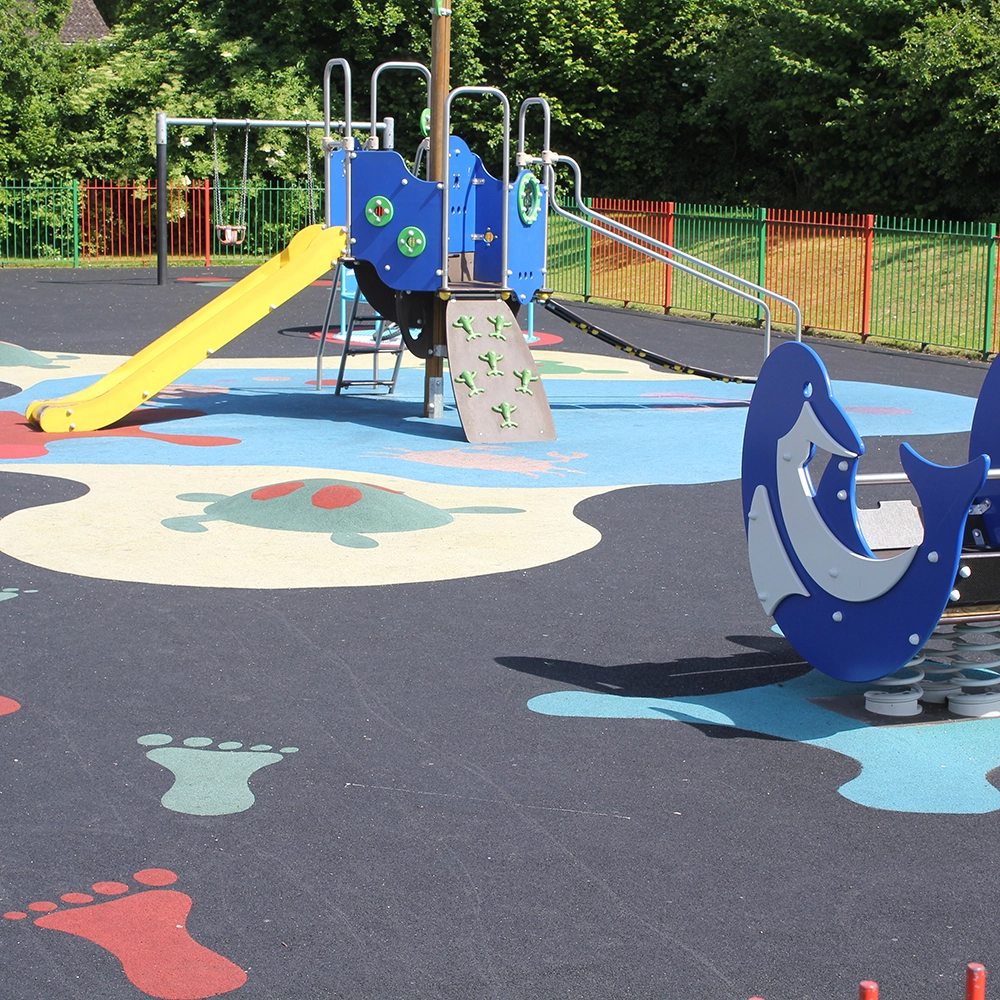
Engineering Insight: Material Science Imperatives for Playground Surfacing
Selecting optimal ground materials for playgrounds transcends cost-driven procurement. Generic rubber mulch or recycled tire crumb often fails to meet rigorous safety and durability benchmarks due to uncontrolled polymer degradation and inconsistent compaction behavior. Off-the-shelf solutions prioritize short-term savings over engineered performance, resulting in premature hardening, inadequate impact absorption, and hazardous surface instability under dynamic load conditions.
Critical failure modes originate from substandard raw material sourcing. Commercially available recycled rubber frequently contains unquantified filler loads (e.g., calcium carbonate >30%) and residual vulcanization accelerators that accelerate oxidative chain scission when exposed to UV radiation and thermal cycling. This manifests as surface embrittlement within 12–18 months, elevating head injury criterion (HIC) values beyond ASTM F1292 thresholds. Simultaneously, poor particle size distribution in generic products impedes interlocking cohesion, causing displacement under foot traffic and creating tripping hazards. Drainage inefficiencies further compound risks; non-engineered granules lack calibrated porosity, leading to water retention that accelerates microbial growth and sub-base erosion.
Suzhou Baoshida’s OEM validation protocols mandate rigorous compound design to address these systemic flaws. Our proprietary EPDM/SBR blends integrate controlled crosslink density (via peroxide curing) and UV-stabilized polymer matrices to sustain rebound resilience >55% after 2,000 hours of QUV exposure. Precision particle sizing (4–8mm with <5% fines) ensures optimal void ratios for drainage while maintaining critical fall height compliance at 2.5m depth. Below are key performance differentiators versus generic alternatives:
| Parameter | Engineered Playground Rubber | Generic Recycled Rubber | Test Standard |
|---|---|---|---|
| Rebound Resilience | ≥55% | ≤35% | ASTM D3574 |
| Compression Set (70°C/22h) | ≤18% | ≥32% | ASTM D395 |
| Shore A Hardness (aged) | 55–65 | 75–90 | ASTM D2240 |
| HIC @ 1.5m Critical Height | ≤750 | >1000 | ASTM F1292 |
| Drainage Rate | 180 mm/hr | 45 mm/hr | ASTM F2821 |
Material selection must align with site-specific variables: climate exposure, traffic density, and fall height requirements. Generic products lack traceability in polymer composition, making lifecycle performance unpredictable. In contrast, Suzhou Baoshida’s formulations undergo accelerated aging validation per ISO 188, ensuring consistent impact attenuation across 10+ years of service. The absence of plasticizers and ozone-resistant molecular structures prevent surface tackiness and cracking—common failure points in commodity-grade materials.
Ultimately, playground surfacing demands polymer science expertise, not commodity purchasing. Investing in engineered rubber solutions mitigates liability exposure while reducing total cost of ownership through extended service life and minimized remediation. Suzhou Baoshida’s OEM partnerships integrate material chemistry with structural engineering to deliver surfaces that perform reliably under real-world operational stresses.
Material Specifications
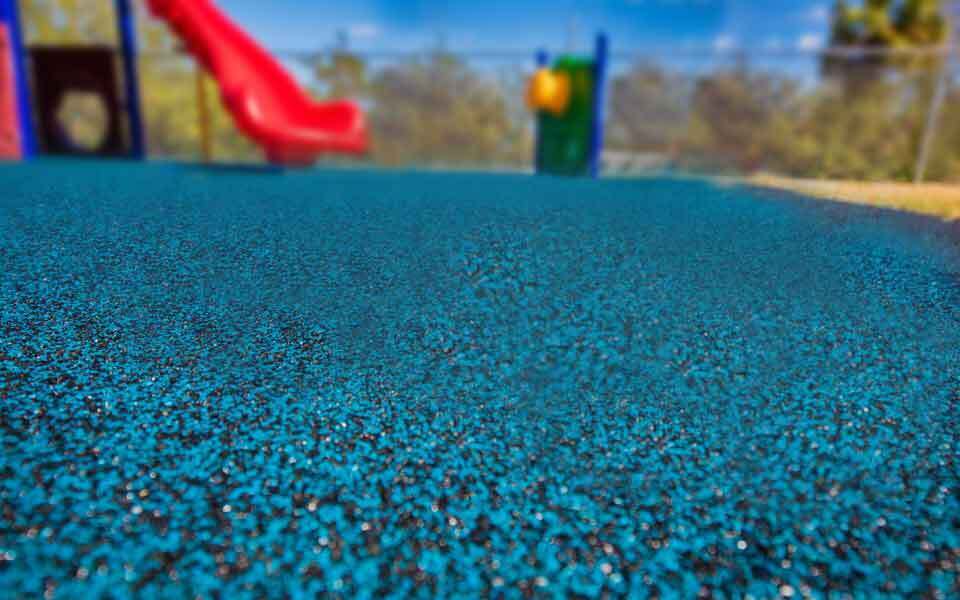
Material selection is a critical determinant in the performance, safety, and longevity of rubber-based playground surfacing systems. At Suzhou Baoshida Trading Co., Ltd., we specialize in industrial rubber solutions engineered to meet rigorous environmental and mechanical demands. For playground applications, where impact absorption, UV resistance, and non-toxicity are paramount, the choice of elastomer directly influences both user safety and product lifecycle. Among the most reliable compounds for such applications are Viton, Nitrile (NBR), and Silicone. Each material offers distinct chemical, thermal, and physical properties suited to different operational environments.
Viton, a fluorocarbon-based synthetic rubber, is renowned for its exceptional resistance to heat, ozone, weathering, and a broad range of chemicals. With continuous service temperatures up to 230°C and excellent UV stability, Viton is ideal for playground surfaces exposed to extreme climatic conditions. Its inherent resistance to microbial growth and oxidation ensures long-term durability without degradation in performance. However, due to its higher cost and lower elasticity compared to other elastomers, Viton is typically used in hybrid formulations or specialized zones requiring maximum resilience.
Nitrile rubber, or acrylonitrile butadiene rubber (NBR), is widely employed for its superior abrasion resistance and mechanical strength. It exhibits excellent performance in oil and water-resistant applications, making it suitable for high-traffic playground areas where exposure to organic contaminants or moisture is expected. NBR maintains flexibility across a moderate temperature range and offers strong tensile properties, contributing to impact attenuation. While less resistant to UV radiation than Viton or Silicone, NBR formulations can be stabilized with additives to enhance outdoor longevity.
Silicone rubber stands out for its extreme temperature tolerance, biocompatibility, and outstanding weather resistance. Capable of operating continuously from -60°C to 200°C, silicone maintains elasticity and structural integrity under thermal cycling. Its non-toxic, hypoallergenic nature makes it particularly suitable for children’s environments. Additionally, silicone exhibits low compression set and high resistance to ozone and UV radiation, ensuring minimal degradation over time. Though generally less abrasion-resistant than NBR, modern reinforced silicone compounds provide a balanced solution for safety-critical playground zones.
The following table summarizes key technical specifications of these materials for informed selection in playground surfacing applications.
| Property | Viton (FKM) | Nitrile (NBR) | Silicone (VMQ) |
|---|---|---|---|
| Temperature Range (°C) | -20 to 230 | -30 to 120 | -60 to 200 |
| Tensile Strength (MPa) | 15–20 | 10–25 | 6–12 |
| Elongation at Break (%) | 200–300 | 250–500 | 300–700 |
| Hardness (Shore A) | 60–90 | 50–90 | 30–80 |
| UV Resistance | Excellent | Fair to Poor | Excellent |
| Ozone Resistance | Excellent | Good | Excellent |
| Abrasion Resistance | Good | Excellent | Moderate |
| Chemical Resistance | Outstanding | Good (oils, fuels) | Good (water, oxygen) |
| Compression Set Resistance | Excellent | Moderate | Excellent |
Selection of the optimal material must balance performance requirements, environmental exposure, and cost efficiency. Suzhou Baoshida Trading Co., Ltd. provides customized rubber formulations to meet international safety standards for playground surfacing, including impact attenuation (EN 1177) and non-toxicity (EN 71-3). Our engineering team supports OEM partners in selecting and tailoring elastomer systems for maximum durability and compliance.
Manufacturing Capabilities
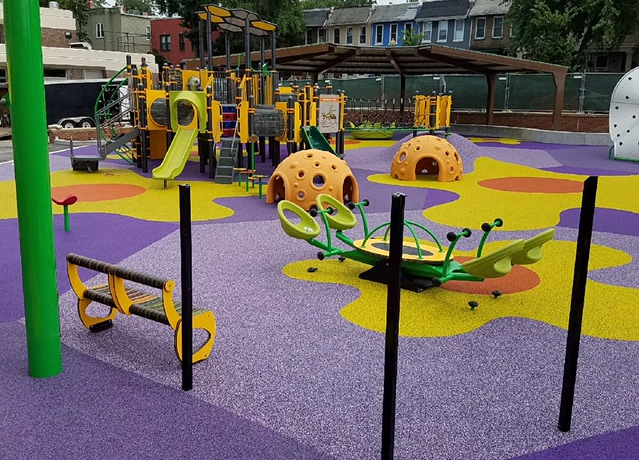
Engineering Excellence in Playground Safety Surfaces
Suzhou Baoshida Trading Co., Ltd. delivers scientifically engineered rubber solutions for playground safety surfaces, where material performance directly impacts child safety and regulatory compliance. Our core strength lies in the integrated expertise of five dedicated mold engineers and two specialized rubber formula engineers. This dual-discipline team ensures that every product achieves optimal balance between impact absorption, durability, and environmental resilience. Formula engineers meticulously design polymer matrices to meet stringent global safety standards, focusing on critical parameters like energy dissipation, UV stability, and temperature-dependent hysteresis. Concurrently, mold engineers translate these formulations into precision-manufactured surfaces through advanced cavity design, flow analysis, and thermal management systems. This synergy eliminates the common industry pitfall of theoretical compliance versus real-world performance degradation.
Our mold engineering capability extends beyond standard tooling to include custom topographical patterns that enhance slip resistance and drainage while maintaining consistent critical fall height (CFH) ratings. Each mold undergoes computational fluid dynamics (CFD) simulation to prevent knit lines and ensure uniform density—a non-negotiable factor in achieving reliable G-max values across the entire surface area. For OEM partners, this means surfaces that retain structural integrity under repeated impact, extreme weather, and heavy public use without compromising safety metrics.
As an OEM solutions provider, Suzhou Baoshida owns the complete development cycle from compound formulation to production validation. We maintain proprietary databases of elastomer modifiers and fillers, enabling rapid customization for regional safety regulations (e.g., EN 1177, ASTM F1292) or client-specific aesthetic requirements. Our closed-loop development process includes iterative lab-scale impact testing, accelerated aging protocols, and on-site installation validation. Crucially, we retain full intellectual property control over formulations and tooling, ensuring exclusivity for partners while guaranteeing batch-to-batch consistency through ISO 9001-certified production.
Key performance specifications for our standard playground rubber surfaces are validated under controlled laboratory conditions:
| Specification | Value | Testing Standard |
|---|---|---|
| Critical Fall Height | 2.5 m (8.2 ft) | ASTM F1292-19 |
| G-max | ≤ 180 | ASTM F355 |
| Head Injury Criterion (HIC) | ≤ 700 | EN 1177:2018 |
| Compression Set (22h/70°C) | ≤ 15% | ASTM D395 |
| UV Resistance | 5,000 hrs (no cracking) | ISO 4892-2 |
| Operating Temperature | -40°C to +80°C | ISO 188 |
This engineering rigor ensures surfaces that exceed minimum safety thresholds while delivering 15+ years of service life in high-traffic municipal and commercial installations. Suzhou Baoshida’s integrated formula and mold engineering teams eliminate guesswork in playground safety—transforming raw materials into certified protective barriers through data-driven material science. For OEM partners, this translates to reduced liability exposure, accelerated time-to-market, and surfaces that perform identically in Singapore’s tropics and Scandinavia’s winters. We engineer not just products, but quantifiable safety outcomes.
Customization Process
Customization Process: From Concept to Industrial-Grade Playground Surfaces
At Suzhou Baoshida Trading Co., Ltd., we specialize in delivering high-performance rubber solutions tailored to the rigorous demands of commercial and public applications. Our industrial approach to manufacturing playground safety surfaces ensures each product meets exacting standards for durability, impact absorption, and environmental resilience. The customization process is structured into four critical phases: Drawing Analysis, Formulation, Prototyping, and Mass Production. Each stage is engineered for precision, consistency, and compliance with international safety benchmarks.
The process begins with Drawing Analysis, where technical blueprints and site specifications are meticulously reviewed. This includes assessing dimensions, load-bearing requirements, fall height zones, drainage integration, and substrate compatibility. Our engineering team evaluates slope gradients, joint placements, and anchoring methods to ensure structural integrity. This phase is foundational, as it translates architectural intent into manufacturable design parameters, minimizing field discrepancies during installation.
Following drawing validation, we proceed to Formulation, where material science meets application-specific performance. Utilizing our proprietary rubber compound database, we select base polymers—typically SBR, EPDM, or NBR—based on desired elasticity, UV resistance, and abrasion performance. Additives such as vulcanizing agents, anti-oxidants, and flame retardants are precisely dosed to meet ASTM F1292, EN 1177, and ISO 9001 standards. The formulation is optimized for Shore A hardness (typically 45–65), tensile strength, and elongation at break, ensuring long-term resilience under dynamic loads and variable climates.
Once the compound is finalized, Prototyping commences. A small-batch production run generates sample panels or modular tiles that replicate the final product’s physical and mechanical properties. These prototypes undergo accelerated aging, compression testing, slip resistance evaluation, and impact attenuation analysis using a triaxial accelerometer per ASTM F355. Feedback from third-party lab reports and client review informs any necessary adjustments before scaling.
Upon approval, the project transitions to Mass Production. Our automated mixing, calendaring, and curing lines ensure batch-to-batch uniformity. Quality control checkpoints monitor thickness tolerance (±1 mm), color consistency (ΔE < 2), and surface texture. Products are serialized and packaged for logistics efficiency, with full traceability maintained through our ERP system.
The following table outlines key technical specifications achievable through our customization pipeline:
| Property | Standard Range | Test Method |
|---|---|---|
| Thickness | 20–100 mm | ISO 2759 |
| Shore A Hardness | 45–65 | ASTM D2240 |
| Tensile Strength | ≥7.5 MPa | ASTM D412 |
| Elongation at Break | ≥200% | ASTM D412 |
| Impact Attenuation (HIC) | <1000 | ASTM F1292 |
| Slip Resistance (DIN 51130) | R10–R12 | BS 7976-2 |
| Service Temperature | -40°C to +80°C | ISO 188 |
This systematic approach ensures that every custom playground surface we deliver combines engineering rigor with safety-critical performance, tailored precisely to the client’s operational environment.
Contact Engineering Team
Contact Suzhou Baoshida for Precision Playground Surfacing Solutions
Suzhou Baoshida Trading Co., Ltd. stands as your definitive industrial partner for engineered rubber surfacing systems meeting the most stringent playground safety and durability requirements. Our technical expertise transcends standard manufacturing; we deliver scientifically formulated, OEM-customized solutions where material performance directly correlates with child safety and lifecycle cost efficiency. As a Rubber Formula Engineer and OEM Manager, I emphasize that substandard surfacing compromises critical fall height compliance, accelerates wear, and incurs unforeseen liabilities. Our vulcanized rubber compounds—developed through rigorous polymer science and accelerated aging protocols—guarantee consistent impact attenuation (G-max) retention, UV resistance, and thermal stability across diverse climatic conditions. We do not supply generic materials; we co-engineer surfaces calibrated to your exact regional safety standards (ASTM F1292, EN 1177), traffic density, and substrate specifications.
The table below details core performance metrics distinguishing Baoshida’s engineered playground rubber from conventional alternatives. These values reflect third-party laboratory validation under ISO 1798 and ASTM F355 methodologies, ensuring data integrity for your technical review.
| Technical Parameter | Industry Baseline Requirement | Baoshida OEM Performance | Test Method |
|---|---|---|---|
| G-max (Critical Fall Height) | ≤ 200 (for 2.5m height) | ≤ 185 (for 3.0m height) | ASTM F355 Method A |
| Compression Set (70°C, 22h) | ≤ 25% | ≤ 12% | ISO 815 |
| Tensile Strength (MPa) | ≥ 5.0 | ≥ 8.7 | ISO 37 |
| Shore A Hardness Variation | ±15 points (temp range) | ±7 points (temp range) | ISO 7619-1 |
| Colorfastness (500h QUV) | Grade 3-4 | Grade 4-5 | ASTM G154 |
These specifications are not theoretical benchmarks but contractual commitments embedded in our OEM agreements. Our proprietary silica-modified EPDM and SBR blends eliminate plasticizer migration—a common failure point in recycled-content surfaces—while maintaining optimal drainage rates (0.5–1.2 inches/minute) to prevent hydroplaning. Each formulation undergoes dynamic mechanical analysis (DMA) to verify viscoelastic behavior across -30°C to +70°C operational ranges, ensuring reliable performance from Nordic winters to Southeast Asian monsoons. Crucially, our surfaces maintain G-max compliance for 12+ years under ASTM F2075 wear simulation, reducing replacement cycles by 40% versus market averages.
Engage directly with our technical OEM team to initiate a material performance audit for your specific project. Provide your playground’s critical fall height requirements, substrate type, and regional environmental stressors. We will deliver a validated compound specification sheet, accelerated weathering report, and lifecycle cost analysis within 72 hours. Do not compromise on safety-critical infrastructure with off-the-shelf products lacking traceable engineering data.
Contact Mr. Boyce, OEM Technical Manager, for immediate engineering collaboration.
Email: [email protected]
Specify your project location, surface area (m²), and required critical fall height (m) in your inquiry. Mr. Boyce will coordinate a dedicated formula engineer to your account within one business day, providing FEA stress simulations and material certification dossiers prior to sample dispatch. Suzhou Baoshida operates under ISO 9001:2015 and IATF 16949 frameworks—your assurance of industrial-grade process control from raw material sourcing to on-site installation support. Partner with precision. Partner with Baoshida.
⚖️ O-Ring Weight Calculator
Estimate rubber O-ring weight (Approx).