
Technical Contents
Engineering Guide: Best Polyurethane Bushings
Engineering Insight: Material Selection Imperatives for Polyurethane Bushings
The operational integrity of industrial machinery hinges critically on bushing performance, yet off-the-shelf polyurethane bushings frequently precipitate premature system failure. Generic solutions ignore the nuanced interplay between material chemistry, dynamic load profiles, and environmental stressors, resulting in catastrophic downtime and escalated lifecycle costs. Standard polyurethane formulations prioritize cost reduction over engineering resilience, sacrificing essential properties like hydrolysis resistance, thermal stability, and dynamic fatigue endurance. When subjected to real-world conditions—such as continuous vibration, elevated temperatures, or exposure to oils and moisture—these bushings exhibit rapid compression set, surface cracking, or catastrophic delamination. The consequence is not merely component replacement but collateral damage to shafts, housings, and adjacent assemblies, multiplying repair expenses exponentially.
Material selection must transcend basic hardness ratings. Polyurethane’s performance is dictated by its polymer backbone chemistry: polyester-based variants offer superior mechanical strength but succumb to hydrolysis in humid environments, while polyether types resist moisture yet exhibit lower load-bearing capacity. Critical applications demand engineered formulations where isocyanate selection, chain extender ratios, and additive integration are calibrated to specific operational parameters. For instance, bushings in mining equipment require extreme abrasion resistance and thermal conductivity additives to dissipate frictional heat, whereas hydraulic system bushings necessitate oil-swelling resistance and low-temperature flexibility. Off-the-shelf products lack this molecular-level customization, leading to accelerated wear under cyclic stress.
Suzhou Baoshida Trading Co., Ltd. addresses this gap through OEM-centric material science. Our engineered polyurethane bushings undergo rigorous dynamic compression set testing per ASTM D395 and hydrolysis aging per ISO 188, ensuring performance consistency under sustained loads. Below is a comparative analysis of standard versus engineered polyurethane bushing specifications:
| Property | Standard Off-the-Shelf PU | Baoshida Engineered PU | Test Standard |
|---|---|---|---|
| Hardness Range (Shore A) | 70A–85A | 60A–95A (customizable) | ASTM D2240 |
| Continuous Temp. Limit | 80°C | 120°C | ASTM D573 |
| Hydrolysis Resistance | Poor (polyester) | Excellent (polyether) | ISO 188 |
| Dynamic Compression Set | ≥25% after 24h | ≤8% after 24h | ASTM D395 Method B |
| Oil Resistance (IRMOG) | Swells >15% | Swells <5% | ASTM D471 |
| Abrasion Loss (mm³) | 120 | 45 | ASTM D4060 |
The data underscores why generic bushings fail: they operate at the lower bounds of performance thresholds, leaving no margin for real-world variability. Engineered solutions, conversely, integrate stabilizers for UV/ozone resistance, reinforce polymer chains for shear strength, and optimize crosslink density to minimize permanent deformation. At Suzhou Baoshida, we collaborate with OEMs during the design phase to model stress distributions, simulate environmental exposure, and validate prototypes under application-specific duty cycles. This preemptive engineering eliminates the guesswork of off-the-shelf procurement, transforming bushings from failure points into reliability assets. Material selection is not a commodity decision—it is the cornerstone of industrial system longevity. Contact our engineering team to develop a formulation calibrated precisely to your operational envelope.
Material Specifications
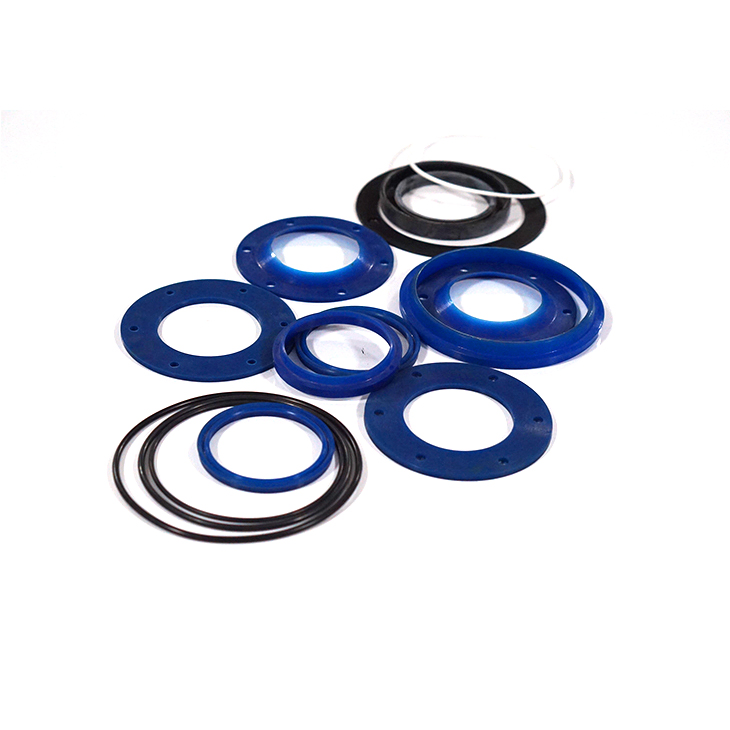
When selecting polyurethane bushings for industrial applications, material compatibility, mechanical performance, and environmental resistance are critical factors. At Suzhou Baoshida Trading Co., Ltd., we provide advanced rubber solutions tailored to demanding operational conditions. While polyurethane is the primary matrix for high-performance bushings due to its exceptional abrasion resistance, load-bearing capacity, and elasticity, the integration of elastomeric seals or coatings—such as Viton, Nitrile (NBR), and Silicone—enhances performance in specific environments. These materials are often used in hybrid configurations or as backup seals in dynamic systems where chemical exposure, temperature extremes, or fluid resistance are concerns.
Viton, a fluorocarbon-based elastomer (FKM), offers superior resistance to high temperatures, oils, fuels, and aggressive chemicals. It maintains integrity in continuous service up to 200°C and intermittent exposure up to 250°C, making it ideal for automotive, aerospace, and petrochemical applications. When combined with polyurethane bushings, Viton seals prevent contamination ingress and fluid leakage in harsh operating zones. However, Viton is less flexible at low temperatures and has higher compression set compared to other elastomers, limiting its use in cryogenic environments.
Nitrile rubber (NBR) is widely used for its excellent resistance to petroleum-based oils, hydraulic fluids, and greases. It provides good mechanical strength and abrasion resistance, with operational stability between -30°C and 120°C. NBR is cost-effective and suitable for general-purpose industrial machinery, including pumps, compressors, and hydraulic systems. While not as chemically resistant as Viton, NBR offers better low-temperature flexibility and dynamic sealing performance when paired with polyurethane bushings in moderate environments.
Silicone rubber (VMQ) excels in extreme temperature applications, functioning reliably from -60°C to 200°C. It demonstrates outstanding UV and ozone resistance, making it suitable for outdoor and high-altitude applications. However, silicone has lower tensile strength and abrasion resistance compared to NBR and Viton, and it swells significantly in hydrocarbon oils. Its use is typically limited to static or low-dynamic sealing roles in electrical enclosures, medical devices, or climate-exposed equipment.
The selection of elastomer depends on the operational profile, including temperature range, chemical exposure, mechanical stress, and cost constraints. Suzhou Baoshida Trading Co., Ltd. ensures precise material pairing to optimize service life and system reliability.
| Property | Viton (FKM) | Nitrile (NBR) | Silicone (VMQ) |
|---|---|---|---|
| Temperature Range (°C) | -20 to 200 (up to 250 intermittent) | -30 to 120 | -60 to 200 |
| Tensile Strength (MPa) | 15–20 | 10–25 | 5–10 |
| Elongation at Break (%) | 200–300 | 250–500 | 200–600 |
| Hardness (Shore A) | 60–90 | 50–90 | 30–80 |
| Resistance to Oils/Fuels | Excellent | Good to Excellent | Poor |
| Resistance to Ozone/UV | Excellent | Fair | Excellent |
| Compression Set (24h, 150°C) | Low | Moderate | Low to Moderate |
| Abrasion Resistance | Moderate | Good | Poor |
| Typical Applications | Aerospace, chemical processing, automotive | Hydraulics, machinery, seals | Electrical, medical, outdoor seals |
Manufacturing Capabilities

Engineering Capability: Precision Polyurethane Bushing Development
Suzhou Baoshida Trading Co., Ltd. leverages integrated material science and mold engineering to deliver polyurethane bushings meeting the most stringent industrial demands. Our core strength lies in the seamless collaboration between five dedicated mold engineers and two specialized rubber formula engineers. This dual-discipline approach ensures that every bushing solution addresses both material performance and manufacturability from initial concept through production validation. Our formula engineers optimize polyurethane polymer chain architecture for specific dynamic load environments, balancing resilience, hysteresis, and chemical resistance. Simultaneously, our mold engineering team applies computational fluid dynamics (CFD) and finite element analysis (FEA) to eliminate knit lines, sink marks, and dimensional variance during curing. This synergy eliminates the traditional disconnect between material specification and part geometry, a critical factor in bushing applications requiring micron-level concentricity and consistent durometer distribution.
Our OEM capabilities are built on proprietary methodologies for rapid material prototyping and mold iteration. Clients receive full traceability from raw material lot numbers to final part certification, with accelerated development cycles enabled by in-house urethane synthesis and 3D-printed mold trials. We specialize in overcoming common polyurethane failure modes—such as hydrolysis in wet environments or compression set under sustained loads—through tailored isocyanate/prepolymer formulations and post-cure stabilization protocols. Every formulation undergoes rigorous ASTM D2240 durometer mapping across the part cross-section and ISO 3384 compression set testing at 70°C for 22 hours to guarantee performance consistency.
The table below summarizes key performance parameters achievable through our engineered solutions:
| Property | Standard PU Bushing | Baoshida Custom PU Bushing | Test Standard |
|---|---|---|---|
| Durometer Range (Shore A) | 70A–95A | 55A–98A (±2A tolerance) | ASTM D2240 |
| Tensile Strength (MPa) | 30–45 | 48–62 | ISO 37 |
| Elongation at Break (%) | 350–500 | 400–650 | ISO 37 |
| Compression Set (70°C/22h) | ≤25% | ≤12% | ISO 3384 |
| Operating Temp Range | -30°C to +80°C | -50°C to +110°C | ISO 188 |
| Oil Resistance (IRMOG) | 40–60% swell | <15% swell | ASTM D471 |
This technical rigor extends to our OEM process, where we co-develop solutions with clients through structured phase-gate reviews. Our engineers conduct on-site application analysis to map load spectra, environmental exposure, and failure history—translating field data into validated material specifications. For high-volume production, we implement Statistical Process Control (SPC) with real-time durometer and dimensional monitoring, ensuring batch-to-batch repeatability within 0.05mm tolerance. Suzhou Baoshida’s engineering framework transforms polyurethane bushings from commodity components into engineered system elements, directly enhancing equipment longevity and operational efficiency in automotive suspensions, industrial machinery, and renewable energy systems. Clients gain not just parts, but documented performance assurance through material certificates, FEA reports, and accelerated life testing data aligned to OEM validation protocols.
Customization Process
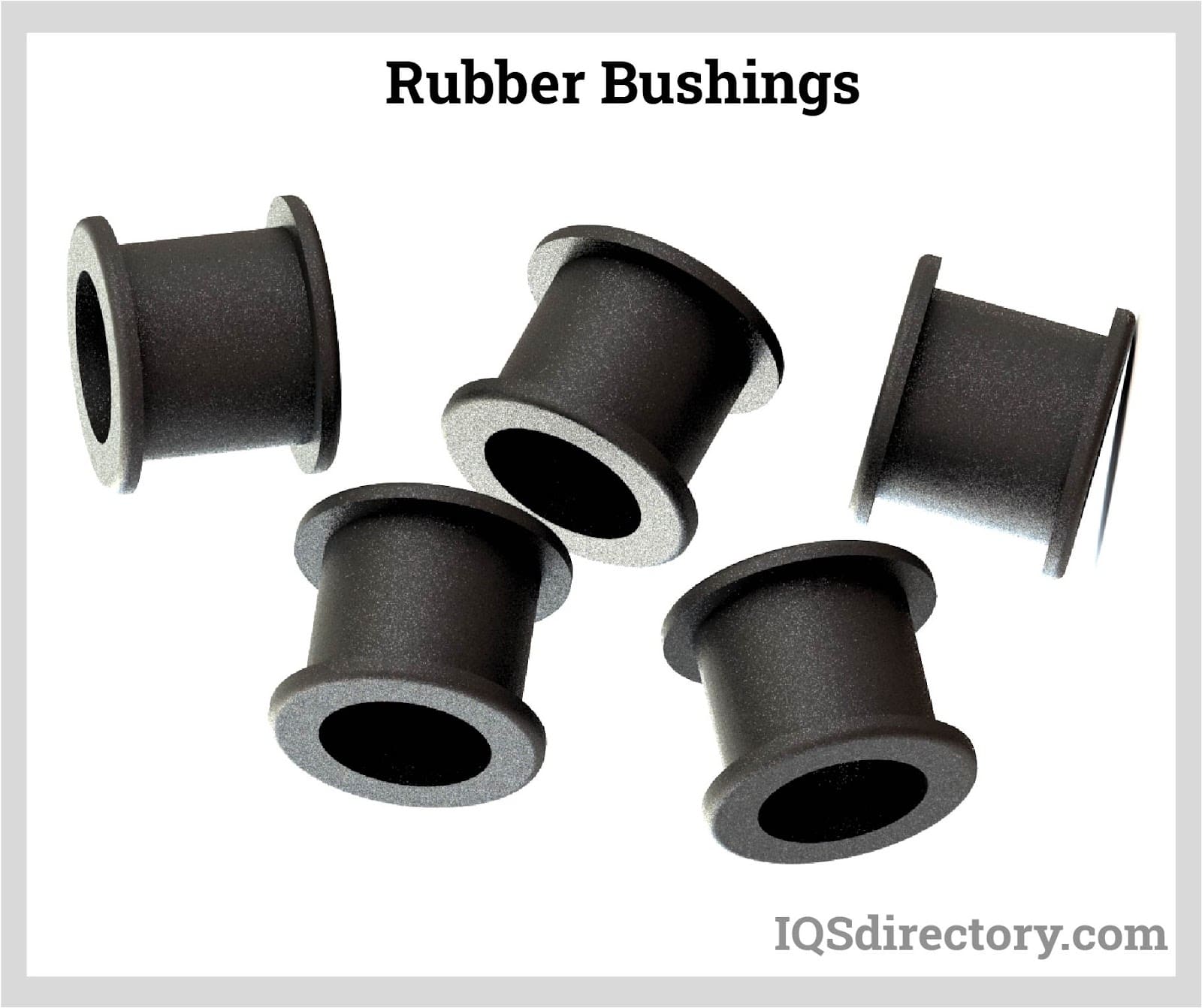
Drawing Analysis: Precision in Design Interpretation
The customization process for high-performance polyurethane bushings begins with a rigorous drawing analysis. At Suzhou Baoshida Trading Co., Ltd., we treat engineering drawings as the foundational blueprint for product realization. Our technical team conducts a comprehensive review of dimensional tolerances, geometric specifications, load-bearing requirements, and environmental exposure conditions. This phase ensures complete alignment between customer expectations and manufacturability. We assess critical features such as inner and outer diameters, wall thickness, axial length, and any non-standard geometries. Utilizing CAD-compatible software, we perform interference checks and validate fitment within the intended assembly. Any discrepancies or optimization opportunities are communicated promptly to the client, ensuring design integrity while maintaining production feasibility.
Formulation: Tailoring Material Properties
Once the design parameters are confirmed, the formulation stage begins. Polyurethane is not a monolithic material; its performance is dictated by the precise balance of isocyanate and polyol components, chain extenders, and additives. At Baoshida, we leverage our in-house material science expertise to engineer formulations that match specific operational demands. Hardness (Shore A/D), tensile strength, elongation at break, compression set, and resistance to oils, ozone, and UV radiation are all calibrated based on application data. For instance, bushings used in heavy-duty industrial machinery may require Shore D 80-90 formulations for high load resistance, while those in vibration-damping applications benefit from Shore A 70-85 compounds with superior elasticity. Our formulation database, built over years of OEM collaboration, allows rapid selection and refinement of base chemistries to meet exact performance criteria.
Prototyping: Validating Performance
Following formulation, we produce functional prototypes using precision casting and curing techniques. These samples are subjected to a battery of physical and mechanical tests, including dynamic compression, shear strength, and accelerated aging. Prototypes are also evaluated for dimensional accuracy using coordinate measuring machines (CMM) to ensure compliance with drawing specifications. This stage allows for iterative refinement—adjusting durometer, geometry, or bonding interfaces as needed. We provide detailed test reports and material certifications, enabling customers to conduct field trials with confidence. Feedback from prototype testing is integrated into the final design, minimizing risk during scale-up.
Mass Production: Consistency at Scale
Upon approval, the project transitions to mass production. Our automated casting lines, controlled environmental chambers, and statistical process control (SPC) systems ensure batch-to-batch consistency. Every bushing is inspected for visual defects, cured properties, and dimensional conformity. We maintain full traceability through lot numbering and material batch records, essential for industrial compliance.
Typical Polyurethane Bushing Specifications
| Property | Value Range | Test Standard |
|---|---|---|
| Hardness (Shore A/D) | 70A – 95D | ASTM D2240 |
| Tensile Strength | 20 – 60 MPa | ASTM D412 |
| Elongation at Break | 300% – 500% | ASTM D412 |
| Compression Set (22h, 70°C) | ≤ 15% | ASTM D395 |
| Tear Strength | 40 – 120 kN/m | ASTM D624 |
| Operating Temperature | -40°C to +100°C (short-term up to 120°C) | Internal |
| Abrasion Resistance | 50–120 mm³ loss (DIN 53516) | DIN 53516 |
This structured approach ensures that every custom polyurethane bushing meets the highest standards of performance, durability, and reliability in industrial applications.
Contact Engineering Team
Precision Engineering Partnerships Begin Here
Suzhou Baoshida Trading Co., Ltd. operates at the intersection of advanced polymer science and industrial reliability. Our polyurethane bushings are not commodities but engineered solutions calibrated for extreme operational demands. When standard elastomers fail under cyclic stress, thermal degradation, or chemical exposure, our formulations deliver measurable lifecycle extensions. This performance stems from rigorous material science protocols: dynamic mechanical analysis (DMA) validation, accelerated aging simulations, and finite element analysis (FEA) for load distribution optimization. We do not manufacture generic bushings; we solve specific application failures through molecular-level customization.
To achieve this precision, collaboration with your engineering team is non-negotiable. Generic datasheets cannot address the unique interplay of load profiles, environmental contaminants, or vibration spectra in your machinery. Our OEM engagement process begins with a technical deep dive into your failure modes, operational parameters, and longevity targets. Only then do we deploy our proprietary polyurethane chemistries—ranging from hydrolytically stable polyester variants for marine hydraulics to ultra-low-compression-set polyethers for aerospace actuators. The table below illustrates critical performance benchmarks achievable through our formulation expertise:
| Property | Standard PU Bushing | Suzhou Baoshida Custom PU Bushing | Test Standard |
|---|---|---|---|
| Shore A Hardness Range | 70–90 | 55–98 (±2 Shore) | ASTM D2240 |
| Tensile Strength (MPa) | 30–40 | 45–65 | ASTM D412 |
| Elongation at Break (%) | 300–450 | 400–600 | ASTM D412 |
| Compression Set (70°C/22h) | 15–25% | 8–12% | ASTM D395 Method B |
| Dynamic Load Capacity | 15–20 MPa | 25–35 MPa | ISO 4892-3 |
| Hydrolysis Resistance | Moderate | Excellent (1000h salt spray) | ISO 9227 |
These specifications represent baseline capabilities. True differentiation occurs when we tailor molecular crosslink density, plasticizer systems, and nano-reinforcement additives to your exact stress conditions. For instance, a recent wind turbine pitch control application required bushings resisting 50,000+ torsional cycles at -40°C while submerged in biodegradable hydraulic fluid. Our solution incorporated cryogenic-toughened polyurethane with hydrophobic surface modifiers, extending service life by 300% versus incumbent rubber components.
Initiating this level of engineering partnership requires direct dialogue with our technical leadership. Contact Mr. Boyce, our dedicated OEM Manager and Rubber Formulation Specialist, to commence a failure-mode analysis for your critical bushing applications. Mr. Boyce holds 14 years of experience in polyurethane compounding for heavy industrial systems and will coordinate material testing, prototype validation, and DFMEA reviews without obligation. His technical authority ensures your requirements bypass sales intermediaries and reach the formulation chemists who develop your solution.
Reach Mr. Boyce exclusively at [email protected]. Include your application’s operational parameters, failure history, and performance targets in your initial communication. We respond to technical inquiries within 4 business hours with a preliminary material recommendation or testing protocol. Do not settle for off-the-shelf elastomers when molecular engineering can eliminate your bushing-related downtime. Suzhou Baoshida delivers not just components, but documented performance assurance through material science rigor. Your machinery’s longevity begins with a single technical consultation.
⚖️ O-Ring Weight Calculator
Estimate rubber O-ring weight (Approx).