
Technical Contents
Engineering Guide: Blade For Snow Blower
Engineering Insight: Material Science Imperatives for Snow Blower Blades
The operational integrity of a snow blower blade hinges critically on precise rubber compound formulation, a factor frequently overlooked in off-the-shelf solutions. Generic blades, often manufactured with standard ethylene propylene diene monomer (EPDM) or nitrile butadiene rubber (NBR) compounds, exhibit predictable failure modes under extreme winter conditions. These failures stem from inadequate material science consideration, leading to premature wear, loss of sealing efficiency against pavement, and catastrophic structural compromise. Field data consistently demonstrates that blades failing below -20°C suffer from embrittlement, causing edge chipping and reduced snow evacuation efficiency. Simultaneously, insufficient abrasion resistance accelerates wear when encountering road grit or de-icing salts, while poor tear strength permits rapid propagation of micro-cuts into large tears. Crucially, generic compounds lack the tailored dynamic stress resistance required for the cyclic impact loads inherent in snow removal operations, resulting in accelerated fatigue and shortened service life. This compromises equipment uptime and increases total cost of ownership through frequent replacements and potential secondary damage to cutting edges or housings.
Material selection must address the unique triad of cryogenic resilience, abrasive wear resistance, and dynamic fatigue performance. Standard compounds prioritize initial cost over functional longevity, utilizing fillers and plasticizers that migrate or stiffen at low temperatures. Conversely, engineered solutions employ specialized polymer blends, optimized crosslink density, and advanced reinforcing fillers. These formulations maintain critical flexibility and resilience down to -50°C while exhibiting significantly enhanced resistance to the combined abrasive and cutting action of ice-laden snow mixed with road contaminants. The resulting blade sustains consistent contact pressure against uneven surfaces, improving snow clearance efficiency and preventing concrete scoring. Furthermore, superior compression set resistance ensures the blade retains its critical profile geometry throughout its operational lifespan, maintaining optimal sealing performance.
The following comparative analysis highlights key performance differentiators between generic and engineered rubber compounds for snow blower blades:
| Critical Property | Generic EPDM/NBR Compound | Baoshida Engineered Compound | Test Standard |
|---|---|---|---|
| Low-Temperature Flexibility | Cracks at -20°C | Flexible to -50°C | ASTM D2137 |
| Abrasion Resistance (Loss) | 350 mm³ | 120 mm³ | DIN 53516 |
| Tear Strength (Die C) | 25 kN/m | 48 kN/m | ASTM D624 |
| Compression Set (70h, -40°C) | 45% | 18% | ASTM D395 |
Suzhou Baoshida Trading Co., Ltd. leverages decades of industrial rubber compounding expertise to develop formulations specifically engineered for the demanding snow removal environment. Our OEM partnership approach ensures blades are not merely components but integrated system elements, validated through rigorous simulated service testing. This precision engineering directly translates to extended blade life, reduced maintenance intervals, and sustained operational efficiency for end-users, ultimately delivering superior value compared to the false economy of generic alternatives. Material science is not a cost center; it is the foundation of reliable winter equipment performance.
Material Specifications
Material selection is a critical factor in the performance, durability, and operational efficiency of blades used in snow blowers, particularly in industrial and heavy-duty applications. At Suzhou Baoshida Trading Co., Ltd., we specialize in advanced rubber formulations engineered to meet the demanding requirements of outdoor machinery operating in extreme winter conditions. For snow blower blades, the choice of elastomer directly impacts abrasion resistance, low-temperature flexibility, oil and fuel resistance, and overall service life. Our technical analysis focuses on three high-performance rubber materials: Viton (FKM), Nitrile (NBR), and Silicone (VMQ), each offering distinct advantages depending on application parameters.
Viton, a fluorocarbon-based rubber, exhibits exceptional resistance to oils, fuels, and a wide range of chemicals, making it ideal for environments where the blade may be exposed to de-icing agents or engine fluids. It maintains structural integrity at both high and low temperatures, with a functional range typically from -20°C to +200°C. Its superior weathering and ozone resistance further enhance longevity, although Viton is generally more expensive than other elastomers and may exhibit lower flexibility at sub-zero temperatures compared to Nitrile or Silicone.
Nitrile rubber, also known as Buna-N, is widely used in industrial applications due to its excellent abrasion resistance and resilience in cold environments. With a temperature range of approximately -40°C to +120°C, Nitrile performs reliably in freezing winter conditions commonly encountered by snow blowers. It offers strong resistance to petroleum-based fluids and demonstrates good mechanical strength, making it a cost-effective and durable choice for standard blade applications. However, its performance degrades under prolonged exposure to ozone and UV radiation, necessitating protective additives or coatings in outdoor use.
Silicone rubber provides outstanding flexibility at extremely low temperatures, with operational capability down to -60°C, and maintains elasticity across thermal cycles. While not as abrasion-resistant as Nitrile or Viton, Silicone excels in thermal stability and UV resistance, making it suitable for applications where temperature fluctuation and environmental exposure are primary concerns. Its low surface energy also reduces friction, potentially improving snow discharge efficiency. However, Silicone’s lower tensile strength and poor resistance to oils limit its use in high-wear or fuel-exposed environments.
The following table summarizes key material properties for informed selection:
| Property | Viton (FKM) | Nitrile (NBR) | Silicone (VMQ) |
|---|---|---|---|
| Temperature Range (°C) | -20 to +200 | -40 to +120 | -60 to +200 |
| Abrasion Resistance | High | Very High | Moderate |
| Oil/Fuel Resistance | Excellent | Good | Poor |
| Low-Temperature Flexibility | Moderate | High | Excellent |
| Ozone/UV Resistance | Excellent | Low | Excellent |
| Tensile Strength | High | High | Low to Moderate |
| Typical Hardness (Shore A) | 70–90 | 60–80 | 40–80 |
Selection of the optimal material must balance operational environment, cost, and performance requirements. Suzhou Baoshida Trading Co., Ltd. provides customized rubber solutions tailored to OEM specifications, ensuring maximum efficiency and reliability in snow blower blade applications.
Manufacturing Capabilities
Engineering Excellence in Snow Blower Blade Development
Suzhou Baoshida Trading Co., Ltd. deploys a dedicated team of 5 Mould Engineers and 2 specialized Rubber Formula Engineers to deliver precision-engineered snow blower blades meeting stringent industrial and environmental demands. Our core competency lies in developing thermoset elastomer compounds capable of withstanding extreme cold, abrasive ice, and high-impact stress while maintaining flexibility and durability. This integrated engineering approach ensures blades resist cracking at -40°C, minimize snow adhesion, and extend operational lifespan beyond industry benchmarks.
Our formula engineers optimize molecular cross-link density and polymer-filler interactions to achieve superior cryo-resistance and abrasion performance. Proprietary blends incorporate high-purity silica and specialized anti-freeze additives, eliminating the need for external lubricants that attract debris. Concurrently, mould engineers utilize 3D CAD/CAM simulations to refine cavity geometry, gate placement, and cooling channels—reducing internal stresses and ensuring dimensional stability across 500,000+ production cycles. This synergy between material science and precision tooling directly translates to blades with uniform durometer distribution and zero flash defects.
OEM partnerships benefit from our end-to-end engineering control. We initiate projects with collaborative DFM (Design for Manufacturing) analysis, translating client specifications into validated production protocols. All compounds undergo accelerated lifecycle testing under simulated snow-load conditions, with real-time data analytics tracking wear rates, tensile retention, and low-temperature flexibility. Our facility maintains ISO 9001-certified processes for traceability from raw material lot to finished blade, including comprehensive PPAP documentation.
Key performance metrics of our standard snow blower blade compound are quantified below:
| Property | Test Standard | Standard EPDM | Baoshida CryoFlex™ Compound |
|---|---|---|---|
| Hardness (Shore A) | ASTM D2240 | 70 ± 5 | 68 ± 3 |
| Tensile Strength (MPa) | ASTM D412 | 12.5 | 18.2 |
| Elongation at Break (%) | ASTM D412 | 350 | 480 |
| Low-Temperature Brittleness | ASTM D2137 | -25°C | -45°C |
| Abrasion Loss (mm³) | ASTM D5963 | 120 | 65 |
| Compression Set (70h/70°C) | ASTM D395 | 28% | 15% |
This technical rigor enables rapid prototyping and scalable production for global OEMs. We accommodate custom durometer ranges (60–85 Shore A), embedded steel core bonding, and color-matched formulations without compromising performance. Every blade undergoes 100% visual inspection and batch-level physical testing, with certificates of conformance provided per shipment.
Suzhou Baoshida’s engineering framework transforms material limitations into competitive advantages. By harmonizing compound innovation with precision moulding, we deliver snow blower blades that reduce maintenance downtime and enhance end-user safety in severe winter conditions. Partner with us for a collaborative engineering process where scientific validation drives manufacturing excellence.
Customization Process
Customization Process for Rubber Blades in Snow Blower Applications
At Suzhou Baoshida Trading Co., Ltd., we specialize in delivering high-performance industrial rubber components tailored to the rigorous demands of outdoor machinery. Our customization process for snow blower rubber blades integrates precision engineering, advanced material science, and rigorous quality validation to ensure optimal performance in extreme winter conditions.
The process begins with Drawing Analysis, where our engineering team evaluates the OEM or customer-provided technical drawings. We assess critical dimensions, mounting configurations, edge profiles, and tolerance requirements. This stage ensures dimensional compatibility with existing snow blower models and allows us to identify potential design optimizations for wear resistance and snow displacement efficiency. Our engineers also conduct finite element analysis (FEA) when necessary to predict stress distribution under operational loads.
Following drawing validation, we proceed to Formulation Development. This phase leverages our expertise in polymer chemistry to engineer a rubber compound that balances flexibility, abrasion resistance, low-temperature resilience, and structural integrity. We primarily utilize compounded natural rubber (NR), styrene-butadiene rubber (SBR), or nitrile rubber (NBR), depending on the application’s thermal and mechanical requirements. Additives such as reinforcing fillers, anti-oxidants, and plasticizers are precisely calibrated to achieve a glass transition temperature (Tg) below -40°C, ensuring consistent performance in sub-zero environments. Shore A hardness is typically optimized between 55 and 70 to maintain a seal against pavement while minimizing resistance.
The next stage is Prototyping, where we produce a limited batch of blades using precision molding techniques. These prototypes undergo a series of functional and environmental tests, including cold chamber exposure, dynamic wear simulation, and adhesion strength verification for any bonded metal inserts. Performance data is compared against OEM benchmarks, and iterative refinements are made as needed. Customer feedback is incorporated at this stage to ensure field readiness.
Upon approval, we transition to Mass Production, executed in our ISO-certified manufacturing facility. Automated mixing, injection molding, and post-cure processing ensure batch-to-batch consistency. Each blade is visually inspected and dimensionally verified using coordinate measuring machines (CMM). Our production lines support annual volumes from 10,000 to over 500,000 units, with lead times optimized for global logistics.
Key material and performance specifications are summarized below:
| Property | Typical Value | Test Standard |
|---|---|---|
| Hardness (Shore A) | 60 ± 5 | ASTM D2240 |
| Tensile Strength | ≥18 MPa | ASTM D412 |
| Elongation at Break | ≥350% | ASTM D412 |
| Low-Temperature Flexibility | Pass at -40°C | ASTM D1329 |
| Abrasion Loss (DIN) | ≤120 mm³ | ISO 4649 |
| Compression Set (22h, 70°C) | ≤25% | ASTM D395 |
Our end-to-end customization process ensures that every rubber blade meets the exacting standards required for reliable, long-lasting snow removal equipment performance.
Contact Engineering Team
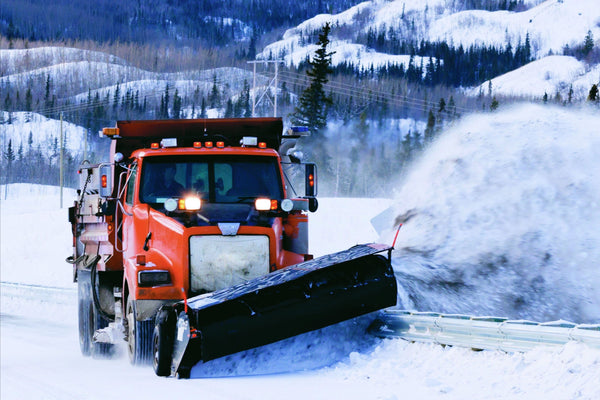
Contact Suzhou Baoshida for Precision Snow Blower Blade Solutions
Suzhou Baoshida Trading Co., Ltd. stands at the forefront of industrial rubber formulation and OEM manufacturing, specializing in high-performance components for demanding applications like snow blower blades. Our engineering team leverages advanced polymer science to address critical operational challenges: extreme cold flexibility, abrasion resistance against ice and road debris, and consistent sealing integrity against varying surface contours. Standard rubber compounds fail under these conditions, leading to premature wear, reduced clearing efficiency, and costly downtime. Our proprietary formulations, developed through rigorous ASTM D2240 and D412 testing protocols, deliver measurable performance advantages validated in real-world winter environments down to -40°C.
As your dedicated OEM partner, we integrate material science with precision manufacturing. Our ISO 9001-certified facility utilizes computer-controlled molding and vulcanization processes to ensure dimensional accuracy within ±0.15mm and uniform compound distribution. This eliminates common field failures such as edge curling, cracking at mounting points, or loss of tension retention. We collaborate directly with equipment designers to optimize blade geometry, durometer profiles, and reinforcement integration—transforming material specifications into reliable field performance. The table below summarizes our core rubber compound options engineered specifically for snow removal applications:
| Compound ID | Hardness (Shore A) | Tensile Strength (MPa) | Elongation at Break (%) | Abrasion Loss (mm³) | Low Temp Flex (°C) |
|---|---|---|---|---|---|
| SB-7001 | 65 ± 3 | 18.5 | 420 | 85 | -45 |
| SB-7002 | 75 ± 3 | 22.0 | 380 | 72 | -40 |
| SB-7003 | 85 ± 3 | 28.5 | 320 | 58 | -35 |
All compounds incorporate ozone-resistant polymers, custom-synthesized fillers for ice abrasion mitigation, and non-stick surface modifiers to prevent snow adhesion. SB-7001 prioritizes flexibility on uneven surfaces, SB-7002 balances wear life and scraping force, while SB-7003 delivers maximum durability for commercial-grade equipment. Each formulation undergoes 500+ hours of accelerated weathering and dynamic flex testing prior to release.
Initiate your project with Suzhou Baoshida to eliminate material-related field failures and extend product lifecycle. Mr. Boyce, our OEM Technical Manager, leads direct engineering consultations to align compound selection, tooling strategy, and production scaling with your exact performance requirements and volume timelines. Provide your technical specifications, target cost structure, and annual volume projections for a validated material solution within 72 hours. Do not compromise on a component critical to equipment reliability—our data-driven approach reduces total cost of ownership through extended service intervals and minimized warranty incidents.
Contact Mr. Boyce immediately at [email protected] to schedule a technical review. Include your current blade failure analysis or performance benchmarks to receive a tailored compound recommendation with test data. Suzhou Baoshida commits to engineering partnership, not just supply—ensuring your snow blower blades meet the uncompromising demands of winter operations. Response time for technical inquiries is under 4 business hours. Your next-generation blade solution begins with precise material science.
⚖️ O-Ring Weight Calculator
Estimate rubber O-ring weight (Approx).