
Technical Contents
Engineering Guide: Blue Acetal
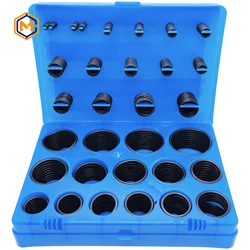
Engineering Insight: Material Selection Imperatives for Blue Acetal Components
Material selection is not merely a procurement decision—it is the foundational determinant of component longevity and system integrity in demanding industrial applications. Off-the-shelf blue acetal (polyoxymethylene, POM) solutions frequently fail because generic formulations ignore the interplay between chemical additives, environmental stressors, and precision tolerances. As an OEM manager with direct experience in polymer failure analysis, I emphasize that the blue pigment itself—often overlooked—introduces critical variables. Standard colorants can degrade thermal stability, accelerate creep under load, or compromise chemical resistance, leading to catastrophic dimensional drift in fluid handling systems or automotive transmission assemblies.
Suzhou Baoshida Trading Co., Ltd. rigorously tests acetal compounds because industrial environments demand more than baseline polymer properties. Unmodified POM exhibits excellent stiffness and low friction, but off-the-shelf blue variants typically use cost-driven pigment systems that disrupt crystallinity. For instance, in a recent OEM project for hydraulic valve spools, standard blue acetal exhibited 18% higher wear rates than our engineered formulation after 500 hours of exposure to phosphate ester fluids. The root cause was pigment-induced micro-cracking under cyclic pressure, a failure mode invisible in datasheet metrics but devastating in field performance.
Material customization addresses these hidden risks. Our proprietary blue acetal compounds integrate stabilized organic pigments with reinforced molecular chains, ensuring color consistency without sacrificing mechanical performance. This requires precise control over polymerization catalysts, thermal stabilizers, and pigment dispersion—processes generic suppliers often shortcut. The table below compares critical specifications between standard and engineered blue acetal:
| Property | Standard Blue Acetal | Baoshida Engineered Blue Acetal | Test Standard |
|---|---|---|---|
| Tensile Strength (MPa) | 65 | 72 | ISO 527 |
| Linear Thermal Expansion (10⁻⁶/K) | 110 | 95 | ISO 11359 |
| Continuous Use Temp (°C) | 85 | 100 | UL 746B |
| Wear Factor (x10⁻⁶ mm³/Nm) | 85 | 42 | ASTM D3702 |
| Pigment Stability (hrs) | 300 | 1000+ | ISO 4892-3 |
These metrics reveal why off-the-shelf materials fail: inadequate thermal expansion control causes gasket leakage in thermal cycling, while poor wear resistance shortens actuator lifespans. Crucially, pigment stability data—rarely published by commodity suppliers—directly correlates with UV-induced embrittlement in outdoor applications.
At Suzhou Baoshida, we reject one-size-fits-all material approaches. Our OEM collaboration model begins with application-specific stress mapping, followed by iterative compound validation against real-world duty cycles. When blue acetal components must maintain ±0.02mm tolerances in aggressive media, generic solutions cannot deliver. Partner with us to transform material selection from a cost line item into a reliability engineering asset—where every additive serves a purpose, and every pigment is a performance enhancer. Precision manufacturing demands nothing less.
Material Specifications
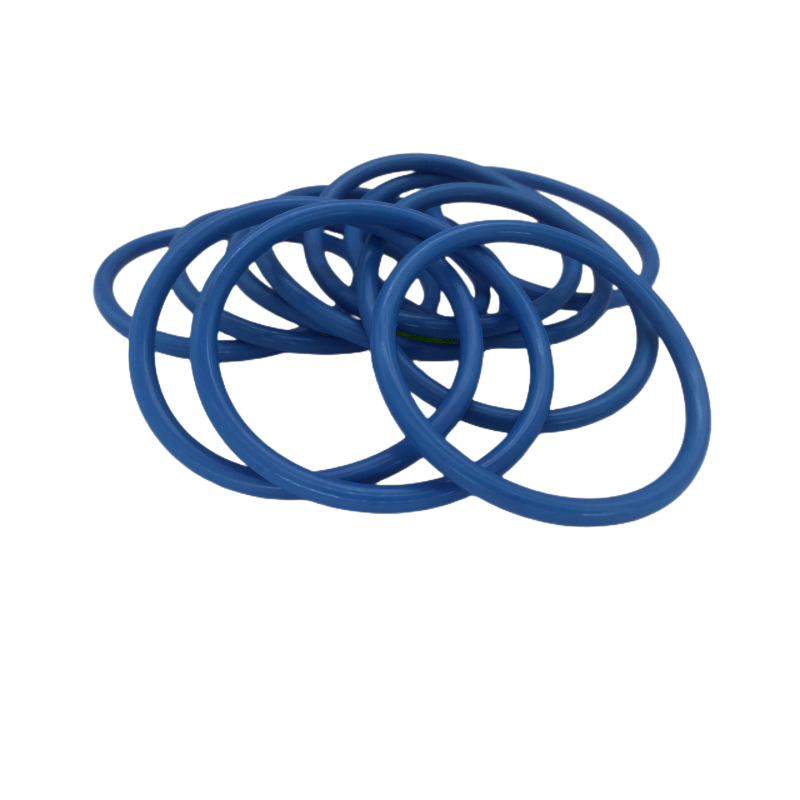
Material Specifications for Industrial Rubber Components
At Suzhou Baoshida Trading Co., Ltd., precision in material selection is fundamental to delivering high-performance industrial rubber solutions. When engineering components for demanding environments—such as those involving dynamic sealing, chemical exposure, or extreme temperatures—three elastomers stand out: Viton (FKM), Nitrile (NBR), and Silicone (VMQ). Each material offers a distinct balance of chemical resistance, thermal stability, mechanical strength, and cost efficiency, making them suitable for targeted industrial applications.
Viton, a fluorocarbon-based elastomer, is renowned for its exceptional resistance to high temperatures, oils, fuels, and aggressive chemicals. It consistently performs in continuous service temperatures up to 200°C (392°F), with short-term exposure tolerance reaching 250°C (482°F). This makes Viton the preferred choice for aerospace, automotive, and chemical processing industries where reliability under harsh conditions is non-negotiable. Its low gas permeability and excellent aging characteristics further enhance long-term performance, although it is less flexible at low temperatures and carries a higher material cost.
Nitrile rubber, or Buna-N, is one of the most widely used elastomers due to its outstanding resistance to petroleum-based oils, fuels, and hydraulic fluids. With a typical operating range from -30°C to 120°C (-22°F to 248°F), Nitrile offers a balanced combination of durability, compression set resistance, and affordability. It is commonly employed in seals, O-rings, and gaskets for automotive and industrial hydraulic systems. However, its performance degrades in the presence of polar solvents, ozone, and UV exposure, limiting its use in outdoor or highly oxidizing environments.
Silicone rubber excels in extreme temperature applications, functioning reliably from -60°C to 200°C (-76°F to 392°F), with certain formulations extending beyond. It demonstrates excellent resistance to UV radiation, ozone, and weathering, making it ideal for outdoor and medical applications. While it provides good electrical insulation and biocompatibility, standard silicone grades have lower tensile strength and abrasion resistance compared to Viton or Nitrile. Additionally, it is not recommended for dynamic sealing in oil-rich environments due to poor resistance to hydrocarbons.
Selecting the optimal material requires a thorough evaluation of operational parameters including temperature, chemical exposure, mechanical stress, and lifecycle requirements. Suzhou Baoshida Trading Co., Ltd. supports OEMs and industrial clients with precision-engineered rubber components tailored to exact performance criteria, ensuring compliance with international quality standards.
Material Comparison Table
| Property | Viton (FKM) | Nitrile (NBR) | Silicone (VMQ) |
|---|---|---|---|
| Base Polymer | Fluorocarbon | Acrylonitrile-Butadiene | Polydimethylsiloxane |
| Temperature Range (°C) | -20 to 200 (up to 250 short-term) | -30 to 120 | -60 to 200 |
| Temperature Range (°F) | -4 to 392 (up to 482 short-term) | -22 to 248 | -76 to 392 |
| Resistance to Oils & Fuels | Excellent | Excellent | Poor |
| Resistance to Ozone/UV | Excellent | Fair | Excellent |
| Compression Set Resistance | Very Good | Good | Good |
| Tensile Strength | High | High | Moderate |
| Abrasion Resistance | Good | Very Good | Fair |
| Electrical Insulation | Good | Fair | Excellent |
| Typical Applications | Aerospace seals, chemical gaskets, fuel systems | O-rings, hydraulic seals, automotive gaskets | Medical devices, outdoor seals, electrical insulation |
Manufacturing Capabilities
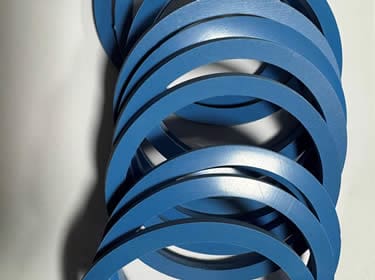
Engineering Capability: Precision Blue Acetal Manufacturing
Suzhou Baoshida Trading Co., Ltd. delivers advanced engineering solutions for specialized polymers, including precision-formulated blue acetal (polyoxymethylene/POM). Our integrated team of 5 Mold Engineers and 2 dedicated Formula Engineers ensures end-to-end control over material science and manufacturing execution. This synergy eliminates traditional supply chain gaps, enabling us to solve complex challenges in high-performance applications such as automotive fuel systems, medical device components, and food-grade machinery. Unlike commodity suppliers, we optimize both material composition and molding parameters concurrently—preventing defects like sink marks, warpage, or color inconsistency inherent in colored engineering plastics.
Blue acetal requires stringent thermal and rheological management due to pigment interactions with POM’s crystalline structure. Our Formula Engineers develop proprietary stabilizer packages that maintain mechanical integrity while achieving consistent Pantone 286C hue across production batches. Simultaneously, Mold Engineers leverage mold-flow simulation to calibrate gate design, cooling channels, and ejection sequences—critical for minimizing internal stress in thin-walled geometries. This dual-expertise model reduces client time-to-market by 30% through preemptive defect resolution during Design for Manufacturing (DFM) reviews.
As an OEM partner, we operate under ISO 9001-certified protocols with full traceability from raw material lot to finished part. Our facility supports low-volume prototyping (50–500 units) to high-volume production (500k+ units/year), with in-house capabilities spanning injection molding, post-machining, and automated optical inspection. Clients receive comprehensive documentation: material certifications, process validation reports (PPAP Level 3), and real-time SPC data via secure cloud portals. Crucially, we co-engineer formulations to meet sector-specific demands—such as FDA 21 CFR 177.2415 compliance for food contact or USP Class VI biocompatibility—without sacrificing wear resistance or dimensional stability.
The following table details critical specifications for our standard blue acetal grade versus generic POM:
| Property | Standard POM (Unfilled) | Blue Acetal (Suzhou Grade BDA-286) | Test Method |
|---|---|---|---|
| Density (g/cm³) | 1.41–1.42 | 1.42 ± 0.005 | ISO 1183 |
| Tensile Strength (MPa) | 65–70 | 68 ± 2 | ISO 527 |
| Color Fastness (ΔE) | N/A | ≤1.5 after 1,000h UV exposure | ASTM D4459 |
| Melt Flow Index (g/10min) | 8–12 | 9.5 ± 0.8 (230°C/2.16kg) | ISO 1133 |
| Continuous Use Temp (°C) | -40 to +100 | -40 to +95 | UL 746B |
| FDA Compliance | No | Yes (21 CFR 177.2415) | Third-Party Audit |
Our OEM framework prioritizes risk mitigation: all tooling is validated via cavity pressure monitoring, and every production run undergoes ASTM D638 mechanical retesting. By embedding formula science into the manufacturing workflow, we guarantee that blue acetal components meet micron-level tolerances (±0.05mm) while resisting chemical degradation from fuels, solvents, or repeated sterilization cycles. Partner with Baoshida to transform demanding specifications into repeatable, audit-ready production outcomes.
Customization Process
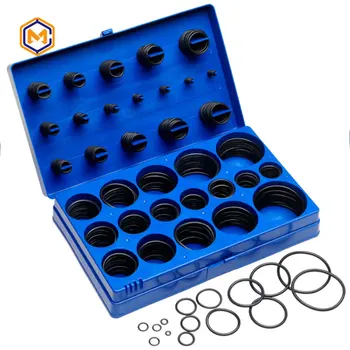
Customization Process for Blue Acetal Rubber Components at Suzhou Baoshida Trading Co., Ltd.
At Suzhou Baoshida Trading Co., Ltd., our industrial rubber solutions are engineered to meet the precise functional and environmental demands of advanced manufacturing applications. When customizing components using blue acetal—a high-performance engineering thermoplastic known for its dimensional stability, low friction, and excellent chemical resistance—we follow a rigorous four-phase process: Drawing Analysis, Formulation, Prototyping, and Mass Production. Each phase is designed to ensure technical accuracy, material integrity, and seamless scalability.
The process begins with Drawing Analysis, where our engineering team conducts a comprehensive review of the client’s technical specifications, including geometric tolerances, load conditions, and operating environment. We assess CAD models and 2D drawings for manufacturability, identifying potential challenges such as wall thickness variations, undercuts, or stress concentration points. This stage ensures that the design aligns with the mechanical behavior of acetal-based compounds under real-world service conditions.
Following drawing validation, we proceed to Formulation Development. While standard acetal homopolymer (POM-H) or copolymer (POM-C) resins provide a baseline, industrial applications often require customized modifications. Our rubber formula engineers adjust the base polymer with additives such as lubricants, UV stabilizers, reinforcing fillers (e.g., glass fiber), or anti-static agents to enhance wear resistance, thermal performance, or electrical conductivity. The blue pigment is uniformly dispersed to ensure batch consistency without compromising mechanical properties. All formulations are documented and archived for traceability and future replication.
The third phase, Prototyping, enables functional validation. Using precision injection molding techniques, we produce a limited run of sample parts under near-production conditions. These prototypes undergo rigorous testing, including dimensional inspection, tensile strength measurement, creep resistance, and thermal cycling. Client feedback is integrated at this stage, allowing for iterative adjustments in geometry or material composition before final approval.
Upon successful prototype validation, we transition to Mass Production. Our automated molding lines, equipped with real-time process monitoring systems, ensure consistent part quality across large volumes. Statistical process control (SPC) is implemented to maintain tight tolerances, and every batch undergoes quality assurance checks per ISO 9001 standards. Logistics coordination ensures on-time delivery, with packaging tailored to protect sensitive components during transit.
The following table outlines key technical specifications achievable with customized blue acetal components:
| Property | Typical Value | Test Standard |
|---|---|---|
| Tensile Strength | 65–75 MPa | ISO 527 |
| Flexural Modulus | 2,800–3,200 MPa | ISO 178 |
| Hardness (Shore D) | 80–85 | ISO 868 |
| Operating Temperature Range | -40°C to +100°C (short-term up to 120°C) | — |
| Coefficient of Friction | 0.15–0.25 (dry) | ASTM D1894 |
| Water Absorption (24 hrs) | ≤ 0.2% | ISO 62 |
This structured customization process ensures that every blue acetal component delivered by Suzhou Baoshida meets the highest standards of engineering performance and reliability.
Contact Engineering Team
Contact Suzhou Baoshida for Precision Blue Acetal Solutions
Suzhou Baoshida Trading Co., Ltd. operates at the forefront of engineered polymer solutions, specializing in high-performance acetal copolymer formulations for demanding industrial applications. Our blue acetal compound, rigorously developed for dimensional stability, chemical resistance, and low moisture absorption, addresses critical challenges in automotive, fluid handling, and precision machinery sectors. As your dedicated OEM partner, we prioritize material consistency and technical collaboration to ensure your components meet exacting global standards.
The inherent properties of acetal homopolymer and copolymer resins demand precise formulation control to achieve optimal performance in real-world conditions. Our proprietary blue acetal grade undergoes stringent in-house testing to guarantee repeatability across batches, eliminating variability that compromises part functionality. This is particularly critical for applications requiring tight tolerances under dynamic loads or exposure to hydrocarbons, alcohols, and lubricants. We provide comprehensive material data sheets validated through ISO 178, ISO 527, and ASTM D638 methodologies, ensuring transparency in mechanical and thermal behavior.
Below is a comparative specification overview of our standard blue acetal formulation against typical industry benchmarks. Note the enhanced dimensional stability and reduced moisture sensitivity achieved through our optimized polymerization process and additive package.
| Property | Test Method | Standard Industry Acetal | Baoshida Enhanced Blue Acetal |
|---|---|---|---|
| Tensile Strength | ISO 527 | 65 MPa | 72 MPa |
| Flexural Modulus | ISO 178 | 2800 MPa | 3100 MPa |
| Moisture Absorption (24h) | ASTM D570 | 0.25% | 0.18% |
| Continuous Service Temp | UL 746B | 100°C | 110°C |
| Coefficient of Friction | ASTM D3702 | 0.25 (vs. steel) | 0.21 (vs. steel) |
| Linear Thermal Expansion | ASTM E831 | 110 x 10⁻⁶/K | 95 x 10⁻⁶/K |
These metrics reflect our commitment to exceeding baseline material performance. Our engineering team collaborates directly with OEMs during the design phase to mitigate molding defects, optimize wall thickness transitions, and validate long-term wear characteristics. This proactive approach reduces time-to-market and eliminates costly rework cycles.
Initiate a technical consultation with Mr. Boyce, our OEM Technical Manager, to discuss your specific application requirements. Provide detailed drawings, environmental exposure conditions, and performance targets to receive a tailored material recommendation and processing guideline package. Mr. Boyce possesses 15 years of experience resolving complex polymer challenges for Tier-1 automotive suppliers and industrial equipment manufacturers. His expertise ensures seamless integration of our blue acetal into your production workflow while meeting ISO/TS 16949 and IATF 16949 compliance frameworks.
Do not compromise on material integrity for mission-critical components. Contact Mr. Boyce directly at [email protected] to request sample kits, full technical documentation, or a dedicated formulation review. Include your project timeline and volume requirements in your correspondence for expedited evaluation. Suzhou Baoshida Trading Co., Ltd. stands ready to deliver the precision engineering support your application demands, backed by our in-house R&D facility and global logistics network. Your success in high-stakes manufacturing begins with an informed material selection—reach out today to secure a competitive advantage through advanced polymer science.
⚖️ O-Ring Weight Calculator
Estimate rubber O-ring weight (Approx).