
Technical Contents
Engineering Guide: Boiler Hand Hole Gaskets
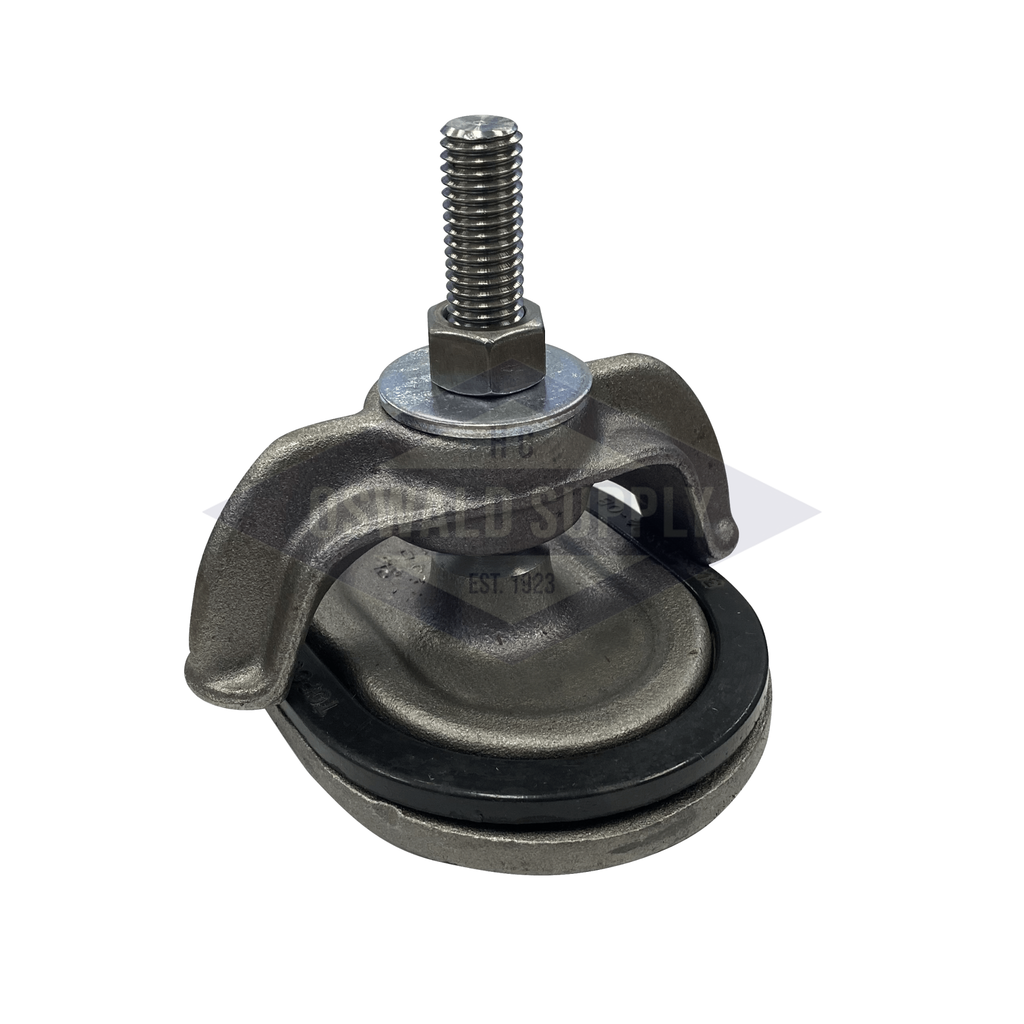
Engineering Insight: The Critical Role of Material Selection in Boiler Hand Hole Gaskets
Boiler hand hole gaskets serve a vital function in maintaining the integrity and safety of industrial boiler systems. Positioned at access points for inspection and maintenance, these gaskets are subjected to extreme thermal cycling, high internal pressures, and exposure to steam, condensate, and chemical residues. Despite their relatively small size, the performance of hand hole gaskets directly influences system efficiency, operational safety, and maintenance frequency. A failure in gasket sealing can lead to steam leaks, energy loss, equipment corrosion, and unplanned downtime—costly outcomes in continuous-process industries.
The misconception that hand hole gaskets are generic, interchangeable components leads many operators to rely on off-the-shelf rubber solutions. However, such standard gaskets often fail prematurely due to inadequate material compatibility with the operating environment. For example, conventional nitrile rubber (NBR) may degrade rapidly under sustained temperatures exceeding 120°C, while natural rubber lacks resistance to oxidative byproducts in steam systems. These failures stem not from manufacturing defects, but from incorrect material selection.
At Suzhou Baoshida Trading Co., Ltd., we emphasize engineered material solutions tailored to the specific thermal, chemical, and mechanical demands of boiler applications. Our precision rubber seals are formulated using high-performance elastomers such as EPDM, silicone rubber (VMQ), and fluorocarbon (FKM), each selected based on operational parameters. EPDM offers superior resistance to hot water and steam up to 150°C, making it ideal for medium-pressure boilers. Silicone rubber provides flexibility and stability at elevated temperatures (up to 200°C), suitable for high-temperature inspection ports. For aggressive chemical environments or superheated steam, FKM delivers exceptional resilience, though at a higher cost.
Beyond temperature, compression set resistance and elastic recovery are critical. A gasket must maintain sealing force over repeated thermal cycles without permanent deformation. Low-quality materials harden or crack, losing resilience after only a few heat-cool cycles. Our formulations are tested for long-term compression set performance, ensuring reliable resealing even after multiple maintenance interventions.
The following table outlines key material properties relevant to boiler hand hole gasket applications:
| Material | Temperature Range (°C) | Steam Resistance | Compression Set Resistance | Typical Use Case |
|---|---|---|---|---|
| EPDM | -50 to +150 | Excellent | Very Good | Medium-pressure steam boilers |
| Silicone (VMQ) | -60 to +200 | Good | Good | High-temperature access points |
| Nitrile (NBR) | -30 to +120 | Fair | Moderate | Low-temperature auxiliary systems |
| FKM | -20 to +200 | Excellent | Excellent | High-pressure, chemically aggressive systems |
In conclusion, selecting the correct elastomer is not a matter of cost optimization but of system reliability. Off-the-shelf gaskets often fail because they are not engineered for the sustained rigors of boiler environments. At Baoshida, we provide application-specific formulations backed by material science and field validation, ensuring long-term sealing performance and operational safety.
Material Specifications
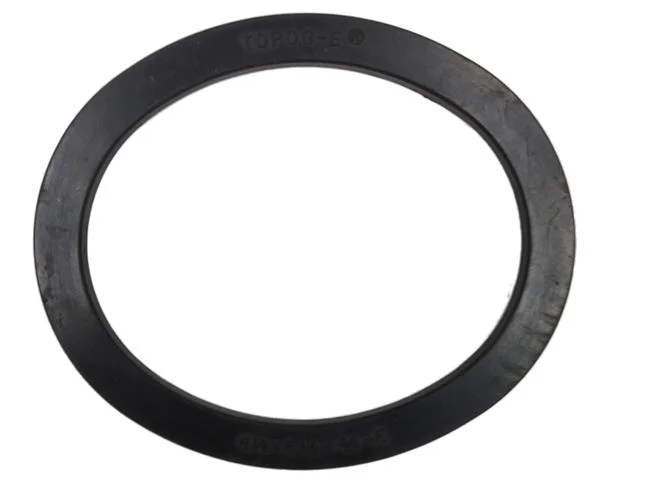
Material Specifications for Boiler Hand Hole Gaskets
Boiler hand hole gaskets demand exceptional resilience against high-pressure saturated steam, thermal cycling, and potential chemical exposure. Material selection directly impacts seal integrity, operational safety, and maintenance intervals. At Suzhou Baoshida Trading Co., Ltd., we rigorously formulate and test rubber compounds to meet ASTM D2000 and ISO 3601 standards for critical boiler applications. Below we detail the three primary elastomers used in our precision seals, emphasizing performance parameters validated through OEM qualification protocols.
Viton (FKM) fluorocarbon rubber is specified for high-temperature steam environments exceeding 200°C and aggressive chemical exposure. Its molecular structure provides superior resistance to oxidation, acids, and hydrocarbons, with a continuous service temperature range of -20°C to 250°C. Viton maintains sealing force under prolonged thermal stress due to low compression set (≤25% at 200°C/70h per ASTM D395). This material is essential for industrial boilers using chemical water treatment or operating above 15 bar pressure, where nitrile or silicone would rapidly degrade.
Nitrile (NBR) butadiene-acrylonitrile rubber offers optimal cost-performance balance for medium-temperature boilers (up to 120°C) with hydrocarbon-based contaminants. Its acrylonitrile content (typically 34-41%) directly correlates with resistance to oils, fuels, and aliphatic hydrocarbons. While limited by steam compatibility above 135°C, NBR excels in applications involving lubricant ingress or lower-pressure steam systems. Compression set remains acceptable (≤30% at 100°C/70h), but swelling in aromatic solvents necessitates careful fluid compatibility assessment.
Silicone (VMQ) rubber is selected for extreme low-temperature flexibility (-60°C) and high-temperature stability up to 230°C in dry heat. Its inorganic backbone provides excellent resistance to ozone and weathering but limited tensile strength compared to FKM or NBR. Silicone exhibits minimal compression set (≤20% at 200°C/22h) and is ideal for boilers with frequent thermal cycling or cryogenic pre-heating stages. Critical limitations include poor resistance to concentrated acids and susceptibility to tearing under high bolt load, requiring precise durometer selection.
The following table summarizes key comparative specifications for boiler hand hole gasket materials:
| Material | Temperature Range (°C) | Key Chemical Resistances | Compression Set (ASTM D395) | Typical Durometer (Shore A) |
|---|---|---|---|---|
| Viton (FKM) | -20 to 250 | Acids, oils, steam, solvents | ≤25% @ 200°C/70h | 70-90 |
| Nitrile (NBR) | -30 to 120 | Aliphatic hydrocarbons, water, hydraulic fluids | ≤30% @ 100°C/70h | 60-90 |
| Silicone (VMQ) | -60 to 230 | Ozone, weathering, dry heat | ≤20% @ 200°C/22h | 50-80 |
Suzhou Baoshida subjects all compounds to accelerated aging tests per ASTM D573 and fluid immersion per ISO 1817 to ensure real-world reliability. Material selection must align with specific boiler operating parameters: Viton for high-pressure chemical-laden steam, NBR for cost-sensitive oil-exposed systems under 120°C, and Silicone for extreme thermal cycling where chemical exposure is minimal. Consult our engineering team for application-specific formulation adjustments to meet OEM torque retention and leakage rate requirements.
Manufacturing Capabilities
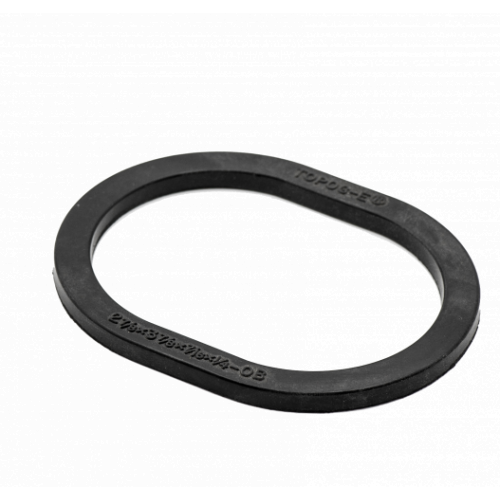
Engineering Excellence in Boiler Hand Hole Gasket Development
At Suzhou Baoshida Trading Co., Ltd., our engineering capability forms the backbone of our reputation in the precision rubber seals industry. Specializing in boiler hand hole gaskets, we combine deep material science expertise with advanced mold design to deliver sealing solutions that meet the rigorous demands of high-pressure, high-temperature industrial environments. Our in-house engineering team consists of five dedicated mold engineers and two certified rubber formulation specialists, enabling full vertical control from concept to production.
Our mold engineers utilize state-of-the-art CAD/CAM software, including SolidWorks and AutoCAD, to design precision molds with tight tolerances down to ±0.05 mm. This ensures dimensional accuracy critical for consistent gasket performance across batch runs. Finite Element Analysis (FEA) is routinely applied to simulate compression behavior and sealing force distribution, allowing optimization before tooling fabrication. This proactive approach reduces development cycles and enhances product reliability.
Equally critical is our rubber formulation capability. Our two formula engineers possess over 15 years of combined experience in elastomer chemistry, specializing in heat-resistant and compression-set-resistant compounds. We develop custom formulations based on NBR, EPDM, and silicone, tailored to specific boiler operating conditions—whether resistance to steam, oil, or extreme thermal cycling. Each compound is tested in-house for tensile strength, elongation, hardness (Shore A), compression set (per ASTM D395), and thermal aging to ensure compliance with industrial standards.
Our OEM manufacturing capability allows us to support clients from prototype to mass production. We accept technical drawings, physical samples, or performance specifications to reverse-engineer or co-develop gasket solutions. With ISO 9001-certified processes and a 10,000-piece monthly production capacity for standard configurations, we offer scalable solutions without compromising quality. All gaskets undergo 100% visual inspection and batch sampling for physical property verification.
We maintain a comprehensive material database and mold library, enabling rapid iteration and reactivation of legacy designs for long-term OEM partnerships. Tooling is manufactured using hardened steel (HRC 50–55) with surface finishing to Ra 0.8 µm, ensuring durability and consistent part release over extended production runs.
Typical Technical Specifications for Standard Boiler Hand Hole Gaskets
| Parameter | Value / Range | Test Standard |
|---|---|---|
| Material Options | NBR, EPDM, Silicone | ASTM D2000 |
| Hardness (Shore A) | 60 ± 5 to 80 ± 5 | ASTM D2240 |
| Tensile Strength | ≥10 MPa (NBR/EPDM), ≥5 MPa (Silicone) | ASTM D412 |
| Elongation at Break | ≥200% | ASTM D412 |
| Compression Set (70 hrs, 100°C) | ≤25% | ASTM D395 Method B |
| Operating Temperature Range | -30°C to +150°C (NBR), -40°C to +180°C (EPDM), -60°C to +250°C (Silicone) | — |
| Dimensional Tolerance | ±0.05 mm (critical sealing zones) | ISO 3302 |
Through integrated engineering disciplines and rigorous process control, Suzhou Baoshida delivers technically superior boiler hand hole gaskets that ensure long-term sealing integrity in demanding industrial applications.
Customization Process
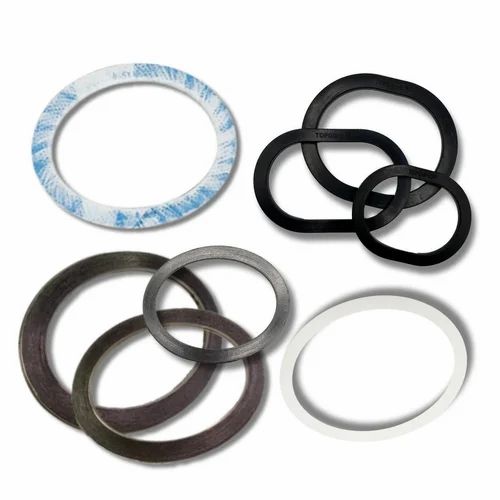
Boiler Hand Hole Gasket Customization Protocol
Our customization protocol initiates with rigorous Drawing Analysis. Suzhou Baoshida Trading Co., Ltd. engineers dissect OEM-provided technical schematics, verifying critical dimensions against ASME Section VIII Div. 1 standards. We assess flange surface finish requirements, bolt load distribution, operational temperature gradients, and pressure differentials. This phase identifies potential sealing interface risks, such as insufficient compression zones or thermal expansion mismatches, ensuring the gasket design accommodates dynamic boiler cycling without extrusion or creep relaxation. Tolerances are cross-referenced against ISO 3601 to guarantee interchangeability within global supply chains.
Material Formulation follows dimensional validation. Based on fluid media (saturated steam, condensate, thermal oil), temperature profiles (typically 150–300°C), and pressure ranges (up to 10 MPa), our rubber compounding laboratory selects base polymers and curatives. EPDM formulations dominate steam applications due to superior hydrolytic stability, while specialty FFKM compounds are deployed for superheated steam above 250°C. Critical additives include peroxide curing systems for low compression set, nano-silica reinforcement for tensile resilience, and proprietary anti-degradation packages to resist thermal oxidation. Each compound undergoes Durometer (Shore A) optimization between 60–80 to balance sealing force and recovery.
Prototyping executes validated designs using precision CNC-machined molds. We produce 3–5 test units per iteration, subjecting them to accelerated life testing: 100+ thermal cycles from ambient to 300°C under 1.5x operational pressure, followed by helium leak detection at 0.1 mbar·L/s sensitivity. Dimensional conformity is verified via CMM with ±0.05 mm tolerance. Client feedback on compression behavior during simulated installation refines chamfer angles and surface texture. Only gaskets passing ISO 2230 hydrostatic burst tests (3x design pressure) advance to mass production.
Mass Production leverages our IATF 16949-certified facility. Each batch undergoes real-time rheometry monitoring during mixing to ensure Mooney viscosity consistency (±3 MU). Vulcanization occurs in temperature-calibrated hydraulic presses with embedded pressure sensors. Final inspection includes 100% visual checks for porosity, dimensional spot-checks per ANSI B16.21, and batch-retained samples for ASTM D2000 aging tests. Traceability is maintained via laser-etched batch codes linked to raw material certificates and process parameters.
Critical Material Specifications for Boiler Hand Hole Gaskets
| Material Type | Temperature Range (°C) | Max. Pressure (MPa) | Hardness (Shore A) | Key Application Limitation |
|---|---|---|---|---|
| High-Purity EPDM | -50 to +180 | 6.9 | 70±5 | Unsuitable for >180°C superheated steam |
| Peroxide-Cured NBR | -30 to +150 | 5.5 | 75±5 | Limited steam resistance beyond 120°C |
| FFKM Specialty | -20 to +327 | 10.3 | 80±5 | Cost-prohibitive for standard applications |
Contact Engineering Team
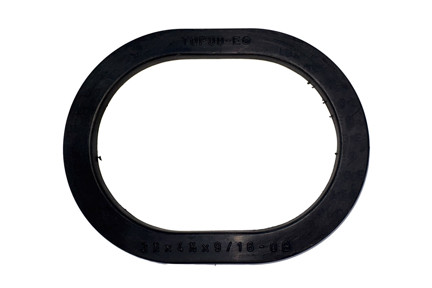
For industrial boiler systems, the integrity of every seal is critical to operational safety, efficiency, and compliance. At Suzhou Baoshida Trading Co., Ltd., we specialize in precision-engineered rubber seals, with a focused expertise in boiler hand hole gaskets designed to meet the rigorous demands of high-pressure, high-temperature environments. Our gaskets are manufactured to exacting standards, ensuring consistent performance across diverse industrial applications, including power generation, marine engineering, and process manufacturing.
Boiler hand hole gaskets serve a vital function by sealing access points used for inspection, cleaning, and maintenance of internal boiler components. These gaskets must resist thermal cycling, steam exposure, mechanical compression, and chemical degradation. Using substandard seals can lead to leaks, unplanned downtime, and costly repairs. Our products are formulated from advanced elastomeric compounds such as nitrile rubber (NBR), ethylene propylene diene monomer (EPDM), and fluorocarbon (FKM), selected based on the operating conditions and media compatibility requirements of your system.
We understand that OEMs and industrial suppliers require more than just a product—they require a partner who delivers technical precision, material traceability, and responsive support. Suzhou Baoshida provides full technical documentation, batch traceability, and custom formulation services to align with your engineering specifications. Whether you are replacing legacy gaskets or designing a new boiler system, our engineering team ensures dimensional accuracy, compression set resistance, and long service life.
To support global procurement needs, we maintain strict quality control under ISO 9001 standards and offer scalable production capacity with reliable lead times. Our logistics network ensures timely delivery to manufacturing hubs across Asia, Europe, and North America.
For immediate technical consultation or to request samples of our boiler hand hole gaskets, contact Mr. Boyce, OEM Manager and Rubber Formula Engineer at Suzhou Baoshida Trading Co., Ltd. Mr. Boyce leads our technical sales and product development initiatives, providing direct engineering support to clients integrating our seals into critical systems. He is available to review your application requirements, recommend optimal materials, and assist in qualifying gaskets for your production line.
Reach out via email at [email protected] to initiate a technical discussion, request material data sheets, or submit custom drawings for quotation. We respond to all inquiries within 24 hours during business days.
Below are typical specifications for our standard boiler hand hole gasket offerings. Custom dimensions and compounds are available upon request.
| Parameter | NBR (Nitrile) | EPDM | FKM (Viton®) |
|---|---|---|---|
| Temperature Range | -30°C to +125°C | -50°C to +150°C | -20°C to +200°C |
| Pressure Resistance | Up to 15 bar | Up to 16 bar | Up to 20 bar |
| Steam Resistance | Good | Excellent | Excellent |
| Compression Set (22 hrs, 100°C) | ≤25% | ≤20% | ≤15% |
| Hardness (Shore A) | 65–75 | 70–80 | 75–85 |
| Standard Compliance | ASTM D2000, ISO 3601 | ASTM D2000, ISO 3601 | ASTM D2000, ISO 3601 |
Partner with Suzhou Baoshida for technically validated rubber seals that enhance the safety and reliability of your boiler systems. Contact Mr. Boyce today at [email protected] to advance your next project with precision-engineered solutions.
⚖️ O-Ring Weight Calculator
Estimate rubber O-ring weight (Approx).