
Technical Contents
Engineering Guide: Bolt-Down Vibration-Damping Mounts
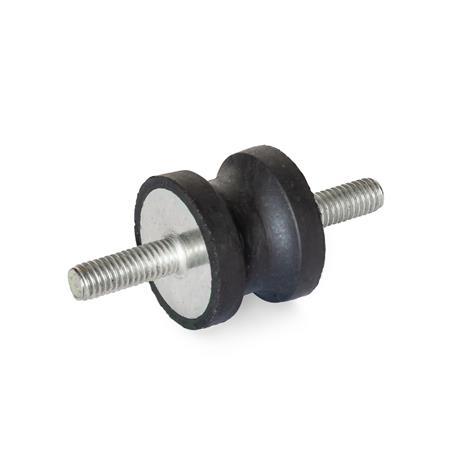
Engineering Insight: The Critical Role of Material Selection in Bolt-Down Vibration-Damping Mounts
In industrial environments where precision, durability, and operational stability are paramount, bolt-down vibration-damping mounts serve as critical interface components between machinery and foundation. These mounts are engineered to absorb dynamic loads, isolate structure-borne noise, and mitigate fatigue damage caused by continuous mechanical oscillation. While off-the-shelf solutions are often marketed as universally applicable, they frequently underperform or fail prematurely due to inadequate material selection for specific operational conditions.
The core function of a vibration-damping mount relies on the viscoelastic behavior of elastomeric materials, which must balance stiffness, damping capacity, and long-term resilience. Standard rubber compounds such as natural rubber or generic SBR (styrene-butadiene) may suffice in mild environments. However, exposure to elevated temperatures, oils, ozone, UV radiation, or aggressive chemicals demands purpose-formulated elastomers. For example, nitrile rubber (NBR) offers superior resistance to hydrocarbon oils and fuels, making it ideal for compressor or engine mounts. Conversely, silicone rubber maintains elasticity across extreme temperature ranges (-60°C to +200°C) but lacks the tensile strength required for high-load applications.
A common failure mode in generic mounts is premature cracking or hardening due to environmental degradation. This occurs when material glass transition temperature (Tg) is exceeded, causing the polymer matrix to lose its damping characteristics. Additionally, creep and stress relaxation under sustained preload can lead to loss of clamping force, reducing isolation efficiency over time. These issues are amplified in applications involving high-frequency vibrations or cyclic thermal loading—conditions rarely accounted for in mass-produced designs.
At Suzhou Baoshida Trading Co., Ltd., we emphasize application-specific engineering. Our approach begins with a comprehensive assessment of operational parameters: dynamic load profile, frequency spectrum, ambient temperature, chemical exposure, and required service life. Based on this data, we select or compound elastomers with tailored properties, ensuring optimal performance and longevity. This includes custom formulations of EPDM for outdoor UV resistance, hydrogenated nitrile (HNBR) for enhanced thermal and mechanical stability, or polyurethane for high abrasion resistance and load-bearing capacity.
The following table outlines key elastomer properties relevant to bolt-down mount applications:
| Material | Hardness (Shore A) | Temp Range (°C) | Damping Capacity | Oil/Chemical Resistance | Typical Use Case |
|---|---|---|---|---|---|
| Natural Rubber | 40–80 | -40 to +80 | High | Low | General-purpose machinery |
| NBR | 50–90 | -30 to +120 | Moderate | High | Oil-exposed environments |
| EPDM | 50–80 | -50 to +150 | Moderate | Excellent (ozone, water) | Outdoor or HVAC systems |
| Silicone | 40–80 | -60 to +200 | Low to Moderate | Low | High-temperature electronics |
| Polyurethane | 70–95 | -30 to +90 | High | Moderate | Heavy-duty industrial equipment |
Material selection is not a compromise—it is the foundation of reliable vibration control. Off-the-shelf mounts, designed for broad compatibility, inevitably sacrifice performance in specialized conditions. By prioritizing engineered elastomer solutions, industrial operators ensure sustained isolation efficiency, reduced maintenance cycles, and extended equipment life.
Material Specifications
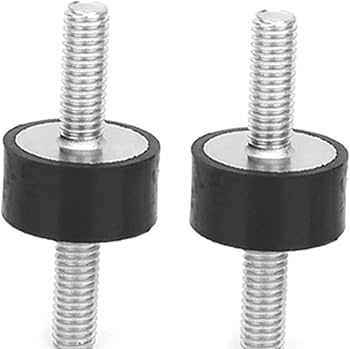
Material Specifications for Bolt-Down Vibration-Damping Mounts
Selecting the optimal elastomer for bolt-down vibration-damping mounts is critical for ensuring long-term performance under operational stress, chemical exposure, and thermal cycling. At Suzhou Baoshida Trading Co., Ltd., we engineer solutions where material properties directly dictate mount reliability, service life, and damping efficiency. Viton (FKM), Nitrile (NBR), and Silicone (VMQ) represent our core formulations, each offering distinct advantages for specific industrial environments. Understanding their chemical compatibility, mechanical behavior, and thermal limits is essential for OEM integration.
Viton excels in extreme conditions requiring resistance to aggressive chemicals, high temperatures, and ozone degradation. Its fluorine content provides exceptional stability against fuels, oils, acids, and hydraulic fluids, making it ideal for aerospace, automotive powertrain, and chemical processing applications. Viton maintains structural integrity from -20°C to +230°C, though its higher cost and lower resilience compared to NBR necessitate careful cost-benefit analysis. Compression set resistance remains superior above 150°C, preventing permanent deformation under sustained load.
Nitrile rubber delivers the best balance of oil resistance, mechanical strength, and cost-effectiveness for general industrial use. With acrylonitrile content typically at 34%, it withstands petroleum-based fluids, greases, and water up to 120°C. Its tensile strength (15–25 MPa) and abrasion resistance ensure durability in machinery mounts subjected to dynamic shear forces. While ozone resistance is moderate, requiring protective coatings in outdoor settings, NBR’s consistent damping characteristics and ease of manufacturing support high-volume OEM production.
Silicone offers unparalleled flexibility across extreme temperatures (-60°C to +200°C) and excellent electrical insulation properties. It resists oxidation, UV exposure, and microbial growth, suiting it for outdoor electronics enclosures, medical equipment, and food-grade applications. However, its lower tensile strength (4–8 MPa) and poor resistance to petroleum derivatives limit use in high-load or oil-rich environments. Silicone’s low compression set at elevated temperatures ensures reliable sealing but requires precise formulation to optimize damping hysteresis.
The following table details key comparative specifications per ASTM/ISO standards:
| Property | Viton (FKM) | Nitrile (NBR) | Silicone (VMQ) |
|---|---|---|---|
| Hardness Range (Shore A) | 60–90 | 50–90 | 30–80 |
| Temperature Range (°C) | -20 to +230 | -40 to +120 | -60 to +200 |
| Fuel/Oil Resistance | Excellent | Very Good | Poor |
| Compression Set (70°C/22h) | ≤20% | ≤25% | ≤15% |
| Tensile Strength (MPa) | 8–15 | 15–25 | 4–8 |
| Ozone Resistance | Excellent | Fair | Excellent |
Engineers must evaluate these parameters against application-specific demands, including fluid exposure, thermal profiles, and dynamic load requirements. Suzhou Baoshida provides custom compound tuning within these material families to meet exact OEM damping coefficients and lifecycle expectations, ensuring mounts perform reliably under real-world industrial stressors. Precise material selection directly translates to reduced maintenance costs and extended equipment uptime.
Manufacturing Capabilities
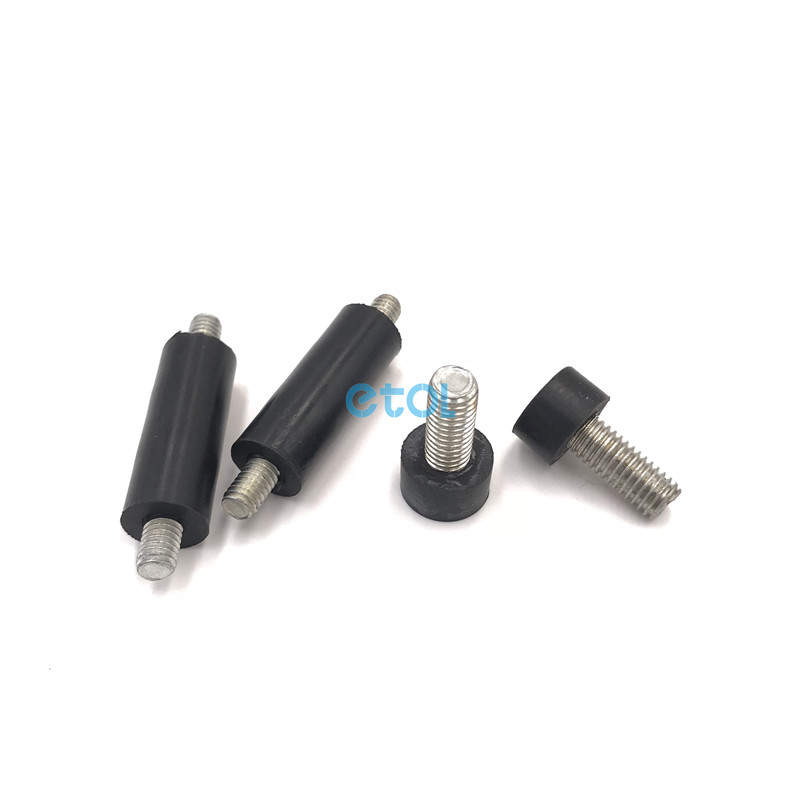
Suzhou Baoshida Trading Co., Ltd. maintains a robust engineering infrastructure dedicated to the development and production of high-performance bolt-down vibration-damping mounts for industrial applications. At the core of our technical capability are five specialized mould engineers and two advanced rubber formula engineers, forming a cross-functional team that ensures precision, durability, and performance compliance across all product lines. This integrated engineering team enables us to deliver customized OEM solutions tailored to the exact mechanical and environmental demands of our clients’ equipment.
Our mould engineers possess extensive experience in precision tooling design, utilizing CAD/CAM software and CNC machining techniques to develop steel and aluminum moulds with tight tolerances. Each mould is engineered for optimal material flow, cycle efficiency, and long-term wear resistance—critical factors in maintaining consistency during high-volume production runs. Finite element analysis (FEA) is routinely applied during the design phase to simulate stress distribution and deformation under operational loads, ensuring structural integrity and mounting stability in real-world conditions.
Complementing this expertise are our two dedicated rubber formula engineers, who specialize in elastomer compounding for dynamic load absorption and environmental resilience. We formulate proprietary rubber blends using natural rubber (NR), nitrile (NBR), ethylene propylene diene monomer (EPDM), and other specialty polymers, adjusted for hardness, damping coefficient, temperature range, and resistance to oil, ozone, and UV exposure. These formulations are validated through accelerated aging tests, dynamic mechanical analysis (DMA), and compression set evaluations to guarantee long-term performance under continuous vibrational stress.
Our OEM capabilities extend from initial concept and 3D modeling through prototyping, material selection, and full-scale manufacturing. Clients benefit from a collaborative development process that includes design for manufacturability (DFM) reviews, rapid sample iteration, and full traceability of materials and processes. This end-to-end control ensures that every bolt-down mount meets exact dimensional, load-bearing, and damping requirements specified by the original equipment manufacturer.
The following table outlines typical performance specifications for our standard bolt-down vibration-damping mounts, with customization options available upon request:
| Parameter | Standard Range | Material Options | Test Standard |
|---|---|---|---|
| Shore A Hardness | 40–80 | NR, NBR, EPDM, Neoprene | ASTM D2240 |
| Static Load Capacity | 500–5000 N per mount | Steel-reinforced elastomer | ISO 1827 |
| Natural Frequency | 8–18 Hz | Tuned per application | ISO 10326-1 |
| Operating Temperature | -40°C to +120°C (up to +150°C peak) | High-temp EPDM, silicone blends | ASTM D1329 |
| Damping Ratio (ζ) | 0.03–0.08 | Optimized compound | ASTM E756 |
| Mounting Interface | M8–M20 bolt patterns | Zinc-plated or stainless steel | ISO 4014, ISO 4032 |
Through the synergy of advanced rubber science and precision tooling, Suzhou Baoshida delivers bolt-down mounts that provide reliable vibration isolation in industrial machinery, HVAC systems, power generation units, and transportation equipment. Our engineering team remains committed to innovation, quality, and responsive OEM collaboration.
Customization Process
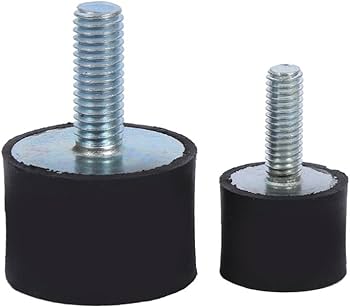
Customization Process for Bolt-Down Vibration-Damping Mounts
At Suzhou Baoshida Trading Co., Ltd., our OEM-driven customization process for industrial bolt-down vibration-damping mounts ensures optimal performance and longevity for demanding machinery applications. This structured workflow transforms client specifications into precision-engineered rubber components, leveraging deep material science expertise and rigorous quality control. The process systematically progresses through four critical phases.
Drawing Analysis Phase
Initial engagement requires comprehensive review of client-provided technical drawings and operational parameters. Our engineering team meticulously analyzes load profiles, dynamic forces, environmental exposure (temperature, fluids, ozone), mounting geometry, and target isolation frequencies. Critical stress points, deflection limits, and interface compatibility with OEM equipment are evaluated using finite element analysis (FEA) where necessary. This phase identifies key performance indicators and establishes non-negotiable design constraints, forming the foundation for subsequent material and process decisions. Ambiguities are resolved collaboratively with the client to prevent downstream deviations.
Formulation Phase
Based on the drawing analysis, our rubber formulation chemists develop a tailored compound meeting exact performance criteria. Selection focuses on base polymers (e.g., NBR for oil resistance, EPDM for weathering, silicone for extreme temperatures), filler systems, plasticizers, and vulcanizing agents. Critical properties targeted include specific Shore A hardness, dynamic modulus, damping coefficient (tan δ), compression set resistance, and thermal stability. Multiple candidate formulations undergo accelerated laboratory testing per ASTM D2000 and ISO 37 standards. Data on resilience, fatigue life, and fluid immersion effects determine the final compound, balancing performance, cost, and processability for the intended service life.
Prototyping Phase
Approved formulations proceed to precision prototyping using client-specified tooling or Baoshida-managed rapid tooling. Prototypes are manufactured under controlled production-equivalent conditions. Rigorous validation testing follows, including dynamic stiffness measurement on vibration shaker tables, static load-deflection analysis, and environmental chamber exposure. Performance data is benchmarked against the initial analysis phase requirements. Client feedback on prototype fit, function, and performance within their actual assembly is incorporated. Iterative refinements occur here; typically 1-2 prototype cycles suffice to achieve specification compliance before tooling sign-off.
Mass Production Phase
Upon prototype validation and client approval, seamless transition to high-volume manufacturing commences. Production utilizes ISO 9001-certified processes with stringent in-line controls: automated mixing with precise weight batching, controlled curing cycles monitored by thermocouples, and 100% visual inspection. Statistical process control (SPC) tracks critical dimensions and physical properties. Each production batch undergoes full certification testing against the agreed specification sheet. Dedicated lot traceability ensures complete material and process history for every component shipped, supporting OEM quality audits and long-term reliability monitoring.
Key performance specifications achievable through this process are summarized below:
| Parameter | Standard Range | Customization Capability | Testing Standard |
|---|---|---|---|
| Hardness (Shore A) | 40 – 90 | ±3 points tolerance | ASTM D2240 |
| Operating Temp Range | -40°C to +120°C | Up to +200°C (silicone) | ISO 188 |
| Dynamic Stiffness | Client-defined | Optimized per frequency target | ISO 10112-1 |
| Compression Set (22h) | ≤ 20% (70°C) | ≤ 15% achievable | ASTM D395 Method B |
| Fluid Resistance | Standard industrial oils | Custom to hydraulic fluids | ISO 1817 |
This disciplined, science-led approach guarantees bolt-down mounts that deliver consistent vibration isolation, minimize equipment wear, and meet the exacting demands of global industrial OEMs. Suzhou Baoshida ensures every stage, from initial drawing scrutiny to final shipment, adheres to the highest standards of rubber engineering precision.
Contact Engineering Team
For industrial manufacturers seeking high-performance bolt-down vibration-damping mounts, Suzhou Baoshida Trading Co., Ltd. delivers engineered rubber solutions that meet rigorous operational demands. Our expertise lies in the development and supply of precision elastomeric components designed to isolate mechanical vibration, reduce noise transmission, and protect sensitive equipment across heavy machinery, automation systems, and industrial infrastructure. With a focus on durability, load stability, and environmental resistance, our mounts are formulated using advanced rubber-to-metal bonding techniques and tested under real-world industrial conditions.
Each bolt-down mount is tailored to client specifications, incorporating optimized durometer ratings, load-bearing geometry, and mounting configurations that ensure seamless integration into existing systems. We utilize a range of elastomers—including natural rubber, neoprene, and EPDM—selected based on application requirements such as temperature exposure, chemical resistance, and dynamic loading. The steel base plates are treated for corrosion resistance and precision-welded to ensure long-term structural integrity under continuous stress.
Our engineering team collaborates directly with OEMs and maintenance departments to analyze vibration profiles and recommend the most effective damping solution. Whether you are retrofitting legacy equipment or designing next-generation machinery, Suzhou Baoshida provides technical support from concept to commissioning.
The following table outlines standard specifications for our most commonly requested bolt-down vibration-damping mounts:
| Parameter | Specification |
|---|---|
| Load Capacity Range | 500–5000 N per mount |
| Natural Frequency | 8–15 Hz |
| Damping Ratio | 0.03–0.07 (depending on compound) |
| Durometer (Shore A) | 40–70 |
| Operating Temperature | -30°C to +80°C (up to +120°C for EPDM) |
| Mounting Pattern | M8 to M16 threaded inserts or through-holes |
| Base Plate Material | ST37 steel, zinc-coated |
| Rubber Compound Options | Natural rubber, Neoprene, EPDM |
| Deflection Under Load | 2–6 mm (at rated load) |
| Resonance Attenuation | >80% typical reduction in transmitted vibration |
All products comply with ISO 9001 quality management standards and are manufactured under strict process controls to ensure batch-to-batch consistency. We support low-volume prototyping and high-volume production runs with lead times optimized for global logistics.
To discuss your specific vibration control challenge or request a technical datasheet, contact Mr. Boyce, OEM Account Manager at Suzhou Baoshida Trading Co., Ltd. Direct correspondence ensures rapid response, technical alignment, and customized quoting based on your application parameters. Reach Mr. Boyce at [email protected] for immediate assistance. Include details such as load requirements, environmental conditions, mounting interface dimensions, and target performance criteria to accelerate the evaluation process. Partner with a trusted supplier in industrial rubber technology—choose Suzhou Baoshida for engineered vibration isolation that performs.
⚖️ O-Ring Weight Calculator
Estimate rubber O-ring weight (Approx).