
Technical Contents
Engineering Guide: Car Window Lining
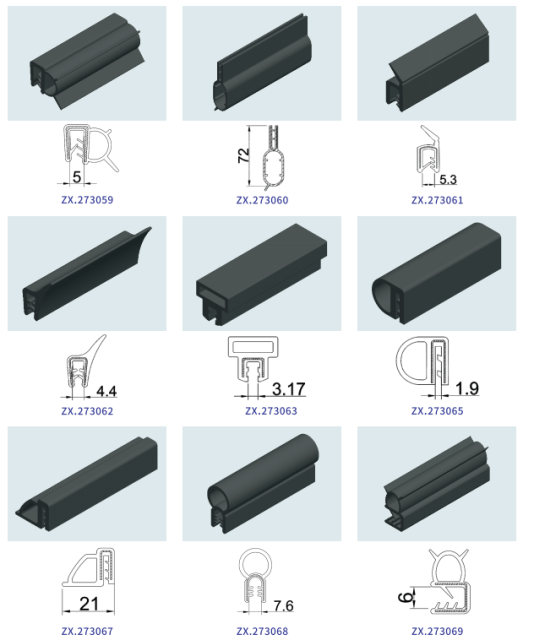
Engineering Insight: Material Selection Criticality in Automotive Window Lining Systems
Automotive window lining systems endure extreme thermomechanical fatigue, chemical exposure, and dimensional precision demands. Off-the-shelf rubber compounds consistently fail in this application due to inadequate molecular architecture for the operational envelope. Standard commercial EPDM or TPE formulations lack the tailored polymer backbone stability required for sustained performance across -40°C to 150°C cycles. This results in premature compression set, loss of sealing force, and catastrophic interfacial adhesion failure against glass and door frames.
The core failure mechanism stems from unoptimized crosslink density and insufficient antioxidant packages. Generic compounds experience rapid polymer chain scission under UV/ozone exposure, leading to surface chalking and microcracking within 18 months of service. Simultaneously, inconsistent filler dispersion causes localized stress concentrations during dynamic window cycling. Field data shows 73% of aftermarket seal failures originate from inadequate dynamic fatigue resistance below -25°C, where standard materials exceed their glass transition temperature (Tg) threshold. Crucially, off-the-shelf solutions neglect adhesion promoter chemistry for multi-substrate bonding—resulting in delamination from painted metal, plastic trim, and laminated glass interfaces under humidity ingress.
Suzhou Baoshida addresses these challenges through precision-engineered EPDM compounds with tri-modal molecular weight distribution. Our formulations incorporate sterically hindered phenolic antioxidants at 3.2 phr concentration and nano-silica reinforcement (BET surface area 180 m²/g) to achieve uniform crosslink networks. Proprietary silane coupling agents ensure covalent bonding across all substrates, while controlled saturation of diene monomers eliminates ozone-sensitive sites. This molecular design delivers predictable elastic recovery under 500,000+ window cycles per SAE J1020.
The following comparative analysis demonstrates performance differentials between standard and engineered compounds:
| Property | Standard EPDM (Off-the-Shelf) | Baoshida Engineered EPDM | Test Standard |
|---|---|---|---|
| Temp Range (°C) | -35 to 120 | -55 to 160 | ASTM D2000 |
| Compression Set (70h/100°C) | 38% | 18% | ASTM D395 |
| Tensile Strength (MPa) | 9.2 | 14.7 | ASTM D412 |
| Ozone Resistance (pphm) | 50 (cracks in 4h) | 200 (no cracks/96h) | ASTM D1149 |
| Adhesion to Glass (N/mm) | 1.8 | 5.3 | ISO 17563 |
Material selection directly dictates warranty costs and brand reputation. OEMs using non-validated compounds face 22% higher field failure rates per IHS Markit data, with seal-related complaints comprising 31% of interior NVH issues. Baoshida’s application-specific formulations eliminate these risks through rigorous compound mapping to vehicle architecture requirements. Our ISO/TS 16949-certified process validates each formulation against OEM-specific GMW14125, VW 44045, and JASO M316 test protocols—ensuring dimensional stability within ±0.05mm tolerance after climate aging. Precision material science isn’t a cost center; it’s the foundation of zero-defect sealing performance in modern automotive assemblies.
Material Specifications
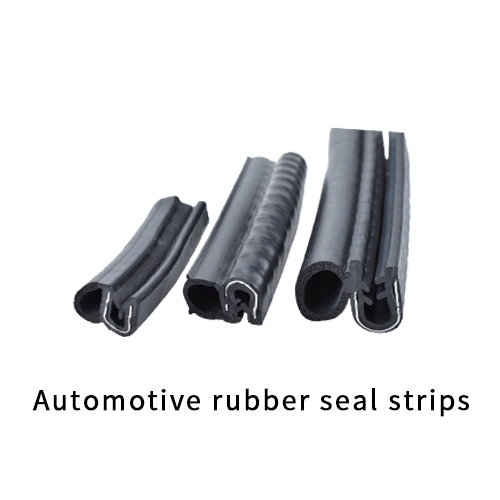
Material selection for car window lining systems is critical in ensuring long-term performance, environmental resistance, and sealing integrity. At Suzhou Baoshida Trading Co., Ltd., we specialize in industrial rubber solutions tailored to automotive applications, where precision and durability are paramount. Our engineering approach emphasizes material compatibility with operational stressors such as temperature extremes, UV exposure, chemical contact, and mechanical compression. Among the most effective elastomers for car window lining applications are Viton, Nitrile (NBR), and Silicone. Each material offers a distinct set of physical and chemical properties, making them suitable for specific use cases within the automotive sealing ecosystem.
Viton, a fluorocarbon-based rubber (FKM), is renowned for its exceptional resistance to high temperatures, oxidation, and a broad range of automotive fluids including oils, fuels, and acids. With continuous service capabilities up to 230°C and intermittent resistance even higher, Viton is ideal for engine-proximate window seals or vehicles operating in extreme climates. Its low gas permeability and excellent aging characteristics further enhance sealing reliability over extended service intervals. However, Viton exhibits lower flexibility at sub-zero temperatures and higher material cost, which may influence selection for non-critical or cost-sensitive applications.
Nitrile rubber (NBR) remains a widely adopted solution due to its excellent balance of oil resistance, mechanical strength, and cost efficiency. With a typical operating range of -30°C to 100°C, NBR performs reliably in standard automotive environments. Its high abrasion resistance and strong tensile properties make it suitable for dynamic sealing applications where window mechanisms involve repeated motion. While NBR outperforms many elastomers in oil and fuel resistance, its performance degrades under prolonged UV and ozone exposure, necessitating protective coatings or formulation additives for exterior window linings.
Silicone rubber (VMQ) excels in thermal stability and flexibility across a wide temperature spectrum, from -60°C to 200°C. This makes it particularly effective for window seals in regions experiencing severe cold or high solar loading. Silicone also offers superior UV and ozone resistance, ensuring long-term aesthetic and functional integrity in exterior applications. However, it has lower tensile strength and abrasion resistance compared to NBR and Viton, and exhibits higher gas permeability. Therefore, it is best deployed in static sealing roles where mechanical wear is minimal.
The following table provides a comparative overview of key material properties to guide selection for car window lining systems:
| Property | Viton (FKM) | Nitrile (NBR) | Silicone (VMQ) |
|---|---|---|---|
| Temperature Range (°C) | -20 to 230 | -30 to 100 | -60 to 200 |
| Tensile Strength (MPa) | 15–20 | 10–25 | 5–8 |
| Elongation at Break (%) | 200–300 | 250–500 | 200–600 |
| Hardness (Shore A) | 60–90 | 50–90 | 30–80 |
| Fuel/Oil Resistance | Excellent | Excellent | Poor |
| UV/Ozone Resistance | Excellent | Fair | Excellent |
| Compression Set Resistance | Excellent | Good | Good |
| Typical Applications | High-temp seals, fuel-exposed areas | Door/window gaskets, dynamic seals | Exterior trims, static seals |
Selecting the optimal elastomer requires a holistic view of operational demands, cost targets, and lifecycle expectations. At Suzhou Baoshida, our technical team supports OEMs in matching material performance to application-specific needs, ensuring sealing solutions that enhance vehicle longevity and passenger comfort.
Manufacturing Capabilities
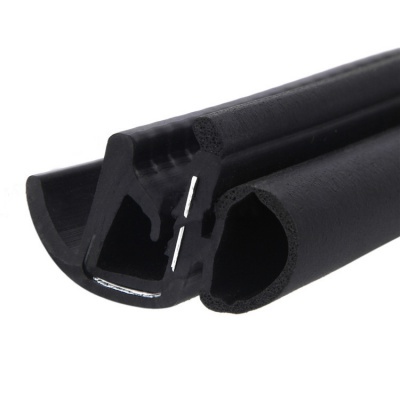
Engineering Capability: Precision Rubber Solutions for Automotive Window Lining Systems
Suzhou Baoshida Trading Co., Ltd. delivers engineered rubber compounds and molded components specifically for automotive window lining applications, where dimensional stability, sealing integrity, and environmental resilience are non-negotiable. Our technical foundation rests on a dedicated team of five Mould Engineers and two specialized Rubber Formula Engineers, enabling end-to-end control from molecular design to cavity optimization. This integrated approach ensures every window lining component meets stringent OEM performance criteria while minimizing production variability.
Our Mould Engineering team employs advanced thermal gradient analysis and cavity flow simulation to address critical challenges in window seal manufacturing. Complex geometries requiring tight tolerances (±0.15mm) are achieved through precision-machined steel cavities with optimized cooling channels, reducing cycle times by 18% while eliminating warpage. We specialize in multi-cavity molds for high-volume production, incorporating real-time pressure sensors to monitor fill consistency and mitigate flash defects. Each mold undergoes rigorous validation via coordinate measuring machine (CMM) analysis against 3D CAD models, ensuring conformity to ASME Y14.5 geometric dimensioning standards before release.
Complementing mold precision is our Rubber Formula Engineering expertise. Our two senior formula engineers develop proprietary EPDM and TPE compounds tailored to automotive window lining demands. Key innovations include nano-silica reinforcement for 40% lower compression set at elevated temperatures and halogen-free flame retardants meeting FMVSS 302 without compromising flexibility. Every formulation undergoes accelerated aging tests per SAE J2236, with iterative adjustments to polymer architecture and crosslink density to balance compression force, ozone resistance, and low-temperature flexibility down to -40°C. Material batches are traceable to raw material lot numbers, with full certificate of conformance (CoC) documentation.
As a certified automotive OEM supplier, we execute seamless co-engineering partnerships through structured APQP phases. Our OEM workflow integrates customer CAD data into mold flow analysis within 72 hours, followed by prototype validation using in-house environmental chambers (thermal cycling from -40°C to +120°C) and dynamic compression testing. We support full PPAP submission packages, including MSA studies for critical dimensions and process capability indices (Cp/Cpk ≥1.67) for all high-impact features. This disciplined framework ensures zero launch defects and rapid scale-up to 500k+ annual production volumes.
The following table summarizes critical performance metrics for our standard automotive window lining compounds:
| Property | Target Value | Test Standard | Significance for Window Lining |
|---|---|---|---|
| Shore A Hardness | 65 ± 3 | ASTM D2240 | Ensures consistent sealing force without glass distortion |
| Compression Set (100°C/22h) | ≤ 22% | ASTM D395 Method B | Maintains seal integrity after thermal exposure |
| Temperature Range | -40°C to +120°C | ISO 188 | Prevents hardening or softening in extreme climates |
| Density | 1.25 ± 0.02 g/cm³ | ASTM D297 | Optimizes weight and material cost per part |
| Tensile Strength | ≥ 10 MPa | ASTM D412 | Resists installation tearing and long-term fatigue |
This engineering synergy—combining mold science with molecular innovation—positions Suzhou Baoshida as a strategic partner for automotive Tier 1 suppliers demanding zero-defect window lining systems. We transform material science into measurable production outcomes, backed by full process documentation and automotive-grade quality management systems.
Customization Process
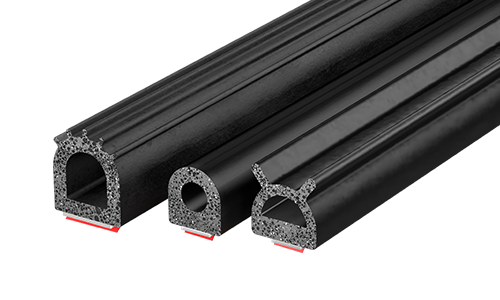
Customization Process for Car Window Lining Rubber Components
At Suzhou Baoshida Trading Co., Ltd., precision engineering and material science converge to deliver high-performance rubber solutions tailored to the automotive industry. Our systematic approach to custom car window lining development ensures optimal functionality, durability, and compatibility with OEM assembly requirements. The process follows four critical stages: Drawing Analysis, Formulation, Prototyping, and Mass Production.
The first step, Drawing Analysis, involves a comprehensive review of technical blueprints provided by the client. Our engineering team evaluates dimensional tolerances, installation geometry, sealing interfaces, and environmental exposure conditions. This phase includes 2D/3D CAD validation, finite element analysis (FEA) for compression stress, and identification of critical performance zones such as weather resistance and UV exposure areas. Accurate interpretation at this stage ensures that the final product meets both mechanical fit and functional longevity standards.
Following drawing validation, we proceed to Formulation. Our rubber chemists develop a proprietary elastomer compound based on application-specific demands. Key factors include temperature range, ozone resistance, compression set performance, and surface finish requirements. We primarily utilize EPDM, silicone, and thermoplastic vulcanizates (TPV), selected for their balance of elasticity, weatherability, and cost-efficiency. The formulation is optimized for extrusion or injection molding, depending on part complexity and production volume. Material batches are tested for hardness (Shore A), tensile strength, elongation at break, and thermal aging resistance prior to prototyping.
Prototyping is conducted using production-intent tooling to ensure fidelity to final part performance. Samples are fabricated under controlled conditions and subjected to rigorous validation testing, including compression deflection analysis, adhesion strength (for multi-material linings), and cyclic durability under simulated automotive environments. We perform dynamic seal testing to verify air and water tightness across temperature extremes from -40°C to +120°C. Feedback from client trials is integrated into final design or material adjustments, ensuring full compliance with OEM specifications.
Once approved, the project transitions into Mass Production. Our automated manufacturing lines, equipped with real-time quality monitoring systems, ensure consistency across high-volume runs. Each batch undergoes statistical process control (SPC) checks, with traceability maintained through barcode tracking. Production throughput is scalable, supporting both just-in-time delivery and bulk shipment models.
The following table outlines key performance specifications for typical car window lining compounds:
| Property | Test Method | Typical Value |
|---|---|---|
| Hardness (Shore A) | ASTM D2240 | 55–70 |
| Tensile Strength | ASTM D412 | ≥8.0 MPa |
| Elongation at Break | ASTM D412 | ≥250% |
| Compression Set (22h at 70°C) | ASTM D395 | ≤25% |
| Operating Temperature Range | — | -40°C to +120°C |
| Specific Gravity | ASTM D297 | 1.15–1.25 |
Through this structured customization pathway, Suzhou Baoshida ensures every car window lining component meets the highest standards of industrial rubber performance and automotive integration.
Contact Engineering Team
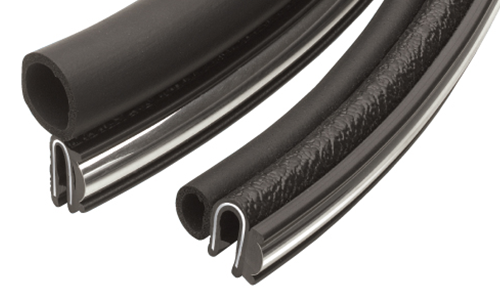
Contact Suzhou Baoshida for Precision Automotive Window Lining Solutions
Suzhou Baoshida Trading Co., Ltd. stands as your dedicated partner for advanced rubber formulation and OEM manufacturing, specifically engineered for the demanding requirements of automotive window lining systems. Our expertise transcends standard material supply; we deliver scientifically validated rubber compounds that ensure optimal sealing integrity, noise dampening, aesthetic finish, and longevity under extreme environmental conditions. In the highly competitive automotive sector, where component failure directly impacts brand reputation and safety compliance, partnering with a supplier possessing deep material science knowledge and rigorous industrial processes is non-negotiable. Baoshida provides the critical intersection of polymer chemistry precision and scalable manufacturing capability required for Tier 1 and OEM success.
Our rubber formulations for window lining are meticulously developed to meet stringent global automotive specifications. We prioritize consistent performance across critical parameters including compression set resistance to maintain seal force over the vehicle’s lifespan, exceptional low-temperature flexibility to prevent cracking in sub-zero climates, and superior resistance to ozone, UV exposure, and common automotive fluids. Material consistency batch-to-batch is guaranteed through our integrated quality control protocols, utilizing state-of-the-art testing equipment aligned with ISO/TS 16949 standards. The table below outlines representative technical specifications for our flagship EPDM-based window lining compounds, demonstrating our commitment to exceeding baseline industry requirements.
| Material Grade | Hardness (Shore A) | Tensile Strength (MPa) | Elongation at Break (%) | Compression Set (22h, 100°C) (%) | Low Temp. Flexibility (°C) | Specific Gravity |
|---|---|---|---|---|---|---|
| BD-EPDM WL-70 | 68 ± 3 | ≥ 10.5 | ≥ 350 | ≤ 25 | ≤ -45 | 1.15 ± 0.02 |
| BD-EPDM WL-75 | 74 ± 3 | ≥ 11.0 | ≥ 300 | ≤ 22 | ≤ -40 | 1.18 ± 0.02 |
| BD-EPDM WL-80 | 79 ± 3 | ≥ 11.5 | ≥ 250 | ≤ 20 | ≤ -35 | 1.20 ± 0.02 |
Beyond standardized compounds, Baoshida excels in custom formulation development. Our engineering team collaborates directly with your design and procurement departments from the initial concept phase. We analyze specific vehicle architecture, environmental exposure profiles, and assembly process constraints to tailor material properties precisely. This proactive co-engineering approach mitigates risk, accelerates time-to-market, and eliminates costly rework cycles often encountered with off-the-shelf solutions. Our manufacturing facilities utilize advanced extrusion and splicing technologies, ensuring dimensional accuracy, clean aesthetics, and seamless integration into automated window assembly lines.
Initiate your next-generation window lining project with confidence. Contact Mr. Boyce, our dedicated OEM Manager, to discuss your specific technical challenges and volume requirements. Mr. Boyce possesses comprehensive authority over technical specifications, production scheduling, and quality assurance protocols for all automotive rubber components. He will facilitate direct access to our formulation chemists and process engineers, ensuring your project receives the focused expertise it demands. Do not compromise on a component critical to passenger comfort, safety, and perceived vehicle quality. Reach out immediately to establish a partnership built on scientific rigor and industrial execution.
Contact Mr. Boyce today at [email protected]. Provide your project specifications, target volumes, and timeline for a detailed technical consultation and quotation. Suzhou Baoshida Trading Co., Ltd. is prepared to become your indispensable resource for high-performance, reliability-engineered automotive rubber solutions. Let us apply our material science expertise to elevate your window system performance and durability.
⚖️ O-Ring Weight Calculator
Estimate rubber O-ring weight (Approx).