
Technical Contents
Engineering Guide: Ceramic Gasket Material
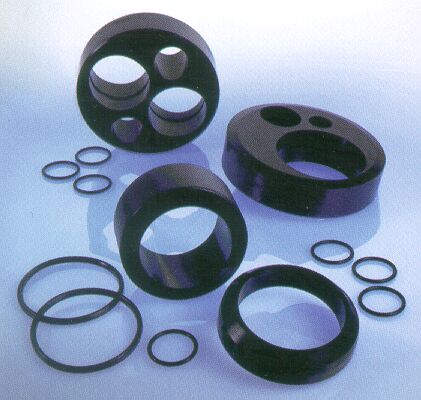
Engineering Insight: The Critical Role of Material Selection in Ceramic Gasket Applications
In high-performance industrial environments, the integrity of a sealing system often determines the operational reliability and safety of the entire assembly. Ceramic gasket materials, while not as commonly deployed as elastomeric or metallic variants, serve in extreme conditions where thermal stability, chemical resistance, and electrical insulation are non-negotiable. However, the use of off-the-shelf ceramic gasket solutions frequently leads to premature failure, unplanned downtime, and costly system recalibrations. This outcome stems from a fundamental misunderstanding: that ceramic materials are inherently uniform in performance. In reality, ceramic compositions vary significantly in microstructure, porosity, thermal expansion, and mechanical resilience—each factor directly influencing gasket functionality.
Material selection for ceramic gaskets must be approached with the same rigor as any precision-engineered component. Standardized, mass-produced ceramic gaskets are typically formulated for general-purpose applications and lack the tailored properties required for specialized industrial processes. For instance, alumina-based ceramics may offer excellent dielectric strength but exhibit brittle fracture under thermal cycling, while silicon nitride variants provide superior toughness yet are prone to chemical degradation in acidic environments. Selecting a material without analyzing the full operational profile—including temperature gradients, pressure fluctuations, and exposure to reactive media—results in mismatched performance and accelerated wear.
At Suzhou Baoshida Trading Co., Ltd., we emphasize application-specific engineering for ceramic gasket materials. Our approach integrates material science with real-world operational data to ensure compatibility across multiple stress vectors. This includes evaluating thermal shock resistance, coefficient of thermal expansion (CTE) matching with mating surfaces, and long-term creep behavior under compressive load. Furthermore, surface finish and dimensional tolerances are critical; even micron-level deviations can compromise sealing integrity in high-vacuum or high-pressure systems.
The following table outlines key ceramic materials used in gasket applications and their comparative performance characteristics:
| Material | Max Continuous Temp (°C) | Thermal Conductivity (W/m·K) | CTE (10⁻⁶/K) | Dielectric Strength (kV/mm) | Chemical Resistance | Fracture Toughness (MPa√m) |
|---|---|---|---|---|---|---|
| Alumina (96%) | 1600 | 25 | 7.5 | 15 | High (alkalis, acids) | 3.5 |
| Zirconia (Y-TZP) | 1200 | 2.2 | 10.5 | 12 | Moderate | 8.0 |
| Silicon Nitride | 1400 | 30 | 3.2 | 14 | Low (acids) | 7.5 |
| Silicon Carbide | 1650 | 120 | 4.5 | 10 | Very High | 4.0 |
As demonstrated, no single ceramic material excels across all parameters. The optimal choice depends on the dominant stress factor in the application. For example, in semiconductor processing equipment requiring high vacuum and electrical isolation, alumina is preferred. In contrast, silicon carbide may be selected for aggressive chemical environments despite its lower dielectric performance.
Ultimately, relying on off-the-shelf ceramic gaskets ignores the nuanced demands of precision sealing. At Baoshida, we advocate for engineered material selection—backed by testing and validation—to ensure reliability, longevity, and system efficiency in critical industrial applications.
Material Specifications
Material Specifications for Ceramic-Reinforced Precision Gasket Applications
Ceramic-reinforced rubber compounds represent a critical advancement in high-performance sealing solutions, particularly for extreme thermal and chemical environments. At Suzhou Baoshida Trading Co., Ltd., our engineered formulations integrate fine ceramic particulates (typically alumina or zirconia-based) into elastomeric matrices to enhance thermal conductivity, reduce compression set, and improve abrasion resistance. This section details the core specifications of three primary base polymers—Viton (FKM), Nitrile (NBR), and Silicone (VMQ)—when optimized with ceramic fillers for precision gasket manufacturing. Each material undergoes rigorous ASTM D2000 and ISO 3733 testing to ensure compliance with OEM sealing requirements under sustained stress.
Viton-based ceramic composites deliver exceptional resistance to aggressive chemicals, including fuels, oils, and acids, while maintaining integrity from -20°C to +230°C continuous service. The ceramic reinforcement significantly reduces permeation rates and elevates thermal stability beyond standard FKM grades, making it ideal for aerospace and semiconductor processing applications where outgassing must be minimized. Nitrile rubber formulations, enhanced with ceramic additives, provide a cost-effective solution for hydraulic and automotive systems operating between -30°C and +120°C. These compounds exhibit superior resistance to petroleum-based fluids and demonstrate improved compression set retention—critical for dynamic sealing applications—though they are less suitable for strong oxidizing agents or prolonged high-temperature exposure. Silicone variants, when combined with ceramic fillers, achieve unmatched flexibility across -60°C to +200°C ranges and meet stringent FDA 21 CFR 177.2600 standards for food and pharmaceutical contact. The ceramic integration mitigates silicone’s inherent compression set weaknesses while preserving electrical insulation properties, enabling reliable performance in medical device and renewable energy sealing scenarios.
The following table compares key technical parameters for ceramic-enhanced grades under standardized test conditions:
| Property | Viton (FKM) | Nitrile (NBR) | Silicone (VMQ) | Test Standard |
|---|---|---|---|---|
| Continuous Temp Range (°C) | -20 to +230 | -30 to +120 | -60 to +200 | ASTM D2000 |
| Tensile Strength (MPa) | 15–18 | 12–16 | 6–9 | ISO 37 |
| Elongation at Break (%) | 150–200 | 250–350 | 200–350 | ISO 37 |
| Compression Set (70h, 150°C) | ≤25% | ≤35% | ≤20% | ASTM D395 |
| Fluid Resistance (IRM 901) | Excellent | Good | Poor | ASTM D471 |
| Ceramic Filler Content (wt%) | 15–25% | 10–20% | 20–35% | Internal QA |
Notes: Fluid resistance rated against ASTM IRM 901 oil. Compression set values reflect ceramic-enhanced formulations versus unfilled equivalents. Filler percentages are optimized per application to balance mechanical properties and thermal performance. All materials comply with RoHS and REACH directives.
Suzhou Baoshida’s ceramic-reinforced compounds undergo 100% lot traceability and batch-specific validation to guarantee dimensional stability and sealing force consistency. Engineers must select materials based on holistic evaluation of thermal profiles, media exposure, and mechanical stress—not isolated properties—to ensure gasket longevity in mission-critical assemblies. Our technical team provides application-specific formulation support to optimize performance within OEM design constraints.
Manufacturing Capabilities
Advanced Engineering Capability in Ceramic Gasket Material Development
At Suzhou Baoshida Trading Co., Ltd., our Engineering Capability division is built around a core team of five dedicated Mould Engineers and two specialized Rubber Formula Engineers, enabling us to deliver precision-engineered ceramic gasket materials tailored for high-performance industrial applications. Our integrated approach combines material science with advanced tooling design, ensuring optimal functionality, durability, and consistency across production runs.
Our Rubber Formula Engineers possess deep expertise in elastomer chemistry, with a focus on developing custom rubber compounds that interface seamlessly with ceramic substrates. This is critical in ceramic gasket applications where thermal stability, chemical resistance, and mechanical resilience are paramount. By formulating proprietary rubber blends—such as high-temperature silicone, FKM (fluorocarbon), and specialized ceramic-filled composites—we achieve unmatched adhesion between rubber and ceramic components, minimizing delamination under extreme thermal cycling and mechanical stress.
The formulation process is data-driven and application-specific. Each compound is engineered to meet defined performance thresholds, including compression set, thermal conductivity, dielectric strength, and resistance to aggressive media such as acids, oils, and steam. Our in-house testing laboratory validates formulations under simulated operational conditions, ensuring long-term reliability in real-world environments.
Complementing our material expertise, our team of five Mould Engineers specializes in precision tooling for complex ceramic-rubber composite gaskets. Utilizing advanced CAD/CAM software and CNC machining, we design and manufacture molds with micron-level tolerances, ensuring consistent part geometry and repeatable bonding interfaces. Our mold design process incorporates finite element analysis (FEA) to predict flow behavior during overmolding, reducing defects and optimizing cycle times.
We support full OEM (Original Equipment Manufacturer) services, from concept validation to mass production. Our clients benefit from a collaborative development cycle that includes design for manufacturability (DFM) reviews, rapid prototyping, and iterative testing. This end-to-end control ensures that every ceramic gasket meets exact dimensional, mechanical, and environmental specifications.
Our engineering team routinely works with clients in semiconductor processing, aerospace, energy, and high-vacuum systems—industries where failure is not an option. The integration of material formulation and precision tooling allows us to produce gaskets with tight tolerances, excellent sealing performance, and long service life under extreme conditions.
Below is a representative specification profile of a typical ceramic-reinforced silicone gasket material developed in-house:
| Property | Test Method | Typical Value |
|---|---|---|
| Hardness (Shore A) | ASTM D2240 | 70 ± 5 |
| Tensile Strength | ASTM D412 | 8.5 MPa |
| Elongation at Break | ASTM D412 | 220% |
| Compression Set (22h at 200°C) | ASTM D395 | ≤25% |
| Thermal Resistance | ASTM D573 | Up to 300°C continuous |
| Dielectric Strength | ASTM D149 | 18 kV/mm |
| Adhesion to Ceramic | Internal Test | >1.2 kN/m (no delamination) |
Suzhou Baoshida Trading Co., Ltd. stands at the forefront of precision rubber-ceramic composite engineering, delivering innovative sealing solutions through scientific rigor and advanced manufacturing capability.
Customization Process
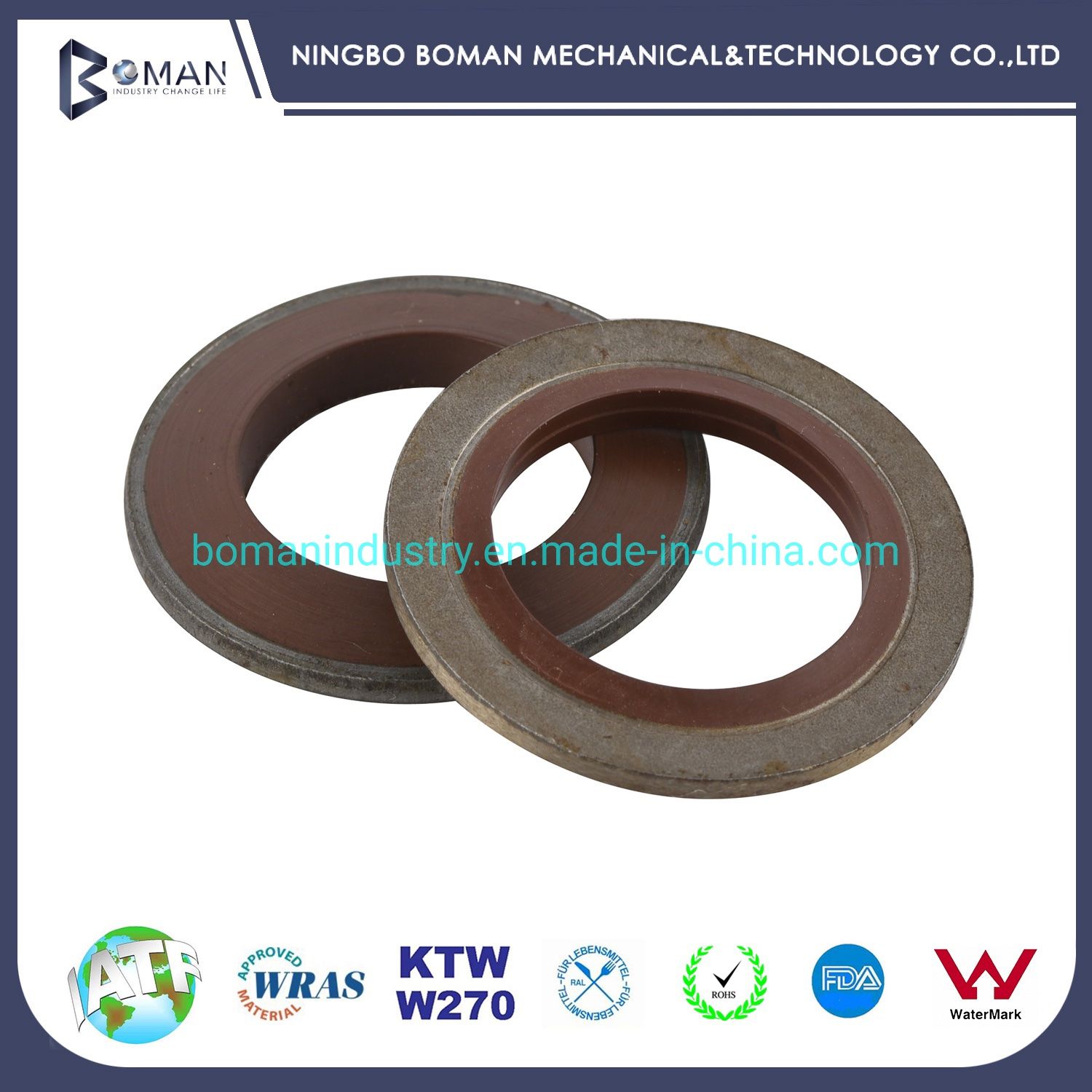
Customization Protocol for Ceramic Gasket Material Manufacturing
Our customization protocol initiates with rigorous Drawing Analysis. Engineering teams dissect client-provided CAD models and technical drawings, focusing on critical dimensions, surface finish requirements, tolerance stacks (±0.05mm typical for precision seals), and interface geometry. This phase identifies potential stress concentration points, compression ratios, and validates feasibility against material behavior under operational loads. We assess compatibility with mating surfaces, fluid exposure, and thermal cycling parameters, establishing the foundational specifications for material formulation. Non-conformities or optimization opportunities are flagged for immediate client consultation, ensuring alignment before resource commitment.
Material Formulation constitutes the core scientific phase. Leveraging our proprietary ceramic-filled elastomer database, we select base polymers (typically high-purity silicone or FFKM for extreme environments) and engineer ceramic particulate blends (alumina, zirconia, or boron nitride). The ceramic loading percentage, particle size distribution, and surface treatment are precisely calibrated to achieve target thermal conductivity (1.5-5.0 W/m·K), dielectric strength, and coefficient of thermal expansion matching. Concurrently, cure kinetics optimization ensures processing compatibility with the client’s molding equipment while maintaining critical properties like compression set resistance. This phase involves iterative lab-scale compounding and physical property verification.
Prototyping executes low-volume production under near-mass-production conditions. Using validated tooling, we manufacture functional samples subjected to accelerated life testing per ASTM D2000 and client-specific protocols. Key validations include thermal cycling from -60°C to +350°C, fluid immersion resistance (fuels, coolants, acids), compression stress relaxation, and leak rate measurement under simulated operational pressure. Dimensional stability is verified via CMM against the original drawing. Client feedback on prototype performance triggers minor formulation or process refinements, documented in a comprehensive validation report.
Transition to Mass Production integrates stringent process controls. Automated mixing systems ensure batch-to-batch consistency in ceramic dispersion. Continuous in-line monitoring tracks vulcanization temperature profiles, cure times, and dimensional outputs via SPC charts. Each production lot undergoes 100% visual inspection and抽样 physical testing against the agreed Quality Control Plan. Traceability is maintained from raw material certificates through final inspection reports, meeting IATF 16949 standards. This structured approach guarantees seamless transition from prototype validation to reliable high-volume output.
Critical Ceramic Gasket Material Specifications
| Property | Test Standard | Typical Range (Ceramic-Filled Silicone) | Baoshida Standard |
|---|---|---|---|
| Continuous Use Temperature | ASTM D573 | -60°C to +300°C | +320°C validated |
| Compression Set (22h, 200°C) | ASTM D395 | ≤ 25% | ≤ 18% |
| Tensile Strength | ASTM D412 | 6.0 – 9.0 MPa | Min. 7.5 MPa |
| Volume Resistivity | ASTM D257 | > 1.0 x 10¹⁵ Ω·cm | > 5.0 x 10¹⁵ Ω·cm |
| Hardness (Shore A) | ASTM D2240 | 50 – 80 | ±3 points tolerance |
This phased methodology, grounded in material science and industrial process rigor, ensures ceramic gasket solutions meet the exacting demands of aerospace, semiconductor, and advanced energy applications, minimizing client risk and accelerating time-to-market.
Contact Engineering Team
Contact Suzhou Baoshida for Advanced Ceramic Gasket Material Solutions
At Suzhou Baoshida Trading Co., Ltd., we specialize in high-performance precision rubber seals engineered for extreme environments. Our ceramic gasket materials are developed to meet the rigorous demands of aerospace, semiconductor manufacturing, energy systems, and high-temperature industrial applications. When standard elastomeric seals fail under thermal stress, chemical exposure, or mechanical load, our advanced composite solutions deliver reliable, long-term sealing integrity.
We invite engineers, procurement managers, and R&D specialists to contact Mr. Boyce, OEM Manager and Rubber Formula Engineer, to discuss customized ceramic gasket material formulations tailored to your operational requirements. With over a decade of experience in rubber-ceramic composite development, Mr. Boyce leads a technical team focused on material innovation, process optimization, and compliance with international quality standards including ISO 9001 and RoHS.
Our ceramic-reinforced gasket materials combine the flexibility of high-grade silicone and fluoroelastomers with the thermal stability and wear resistance of engineered ceramics such as alumina (Al₂O₃) and silicon carbide (SiC). These composites exhibit minimal outgassing, exceptional dielectric strength, and resistance to thermal shock—critical properties for vacuum systems, high-voltage enclosures, and cleanroom environments.
Collaborating directly with our engineering team ensures access to material data sheets, compression set testing reports, and thermal cycling validation under real-world conditions. Whether you require thin-film ceramic-laminate gaskets for microelectronics or robust molded seals for turbine housings, we provide end-to-end support from prototype to volume production.
Below are representative performance specifications for our standard ceramic gasket composite formulations:
| Property | Silicone-Ceramic Composite | FKM-Ceramic Composite | Test Standard |
|---|---|---|---|
| Continuous Use Temperature | -60°C to +280°C | -20°C to +300°C | ASTM D1229, ISO 34-1 |
| Thermal Conductivity | 1.8 W/m·K | 2.1 W/m·K | ASTM C518 |
| Dielectric Strength | 18 kV/mm | 20 kV/mm | IEC 60243-1 |
| Hardness (Shore A) | 70 ± 5 | 75 ± 5 | ASTM D2240 |
| Compression Set (22h at 250°C) | ≤25% | ≤20% | ASTM D395 |
| Tensile Strength | 8.5 MPa | 10.2 MPa | ASTM D412 |
| Volume Resistivity | >1×10¹⁵ Ω·cm | >1×10¹⁶ Ω·cm | IEC 62631-3-1 |
All materials are manufactured in controlled environments with full traceability and batch certification. Custom formulations can be developed to achieve specific coefficients of thermal expansion (CTE), reduced permeability, or enhanced EMI shielding.
To initiate a technical discussion, request samples, or submit a material inquiry, please contact Mr. Boyce directly at [email protected]. Include details on your operating environment, sealing geometry, and performance priorities to receive a targeted solution proposal within 48 hours. Suzhou Baoshida supports global OEMs with fast prototyping, technical audits, and just-in-time logistics across Asia, Europe, and North America. Partner with us to elevate your sealing performance with engineered ceramic composite technology.
⚖️ O-Ring Weight Calculator
Estimate rubber O-ring weight (Approx).