
Technical Contents
Engineering Guide: Channel Diffuser
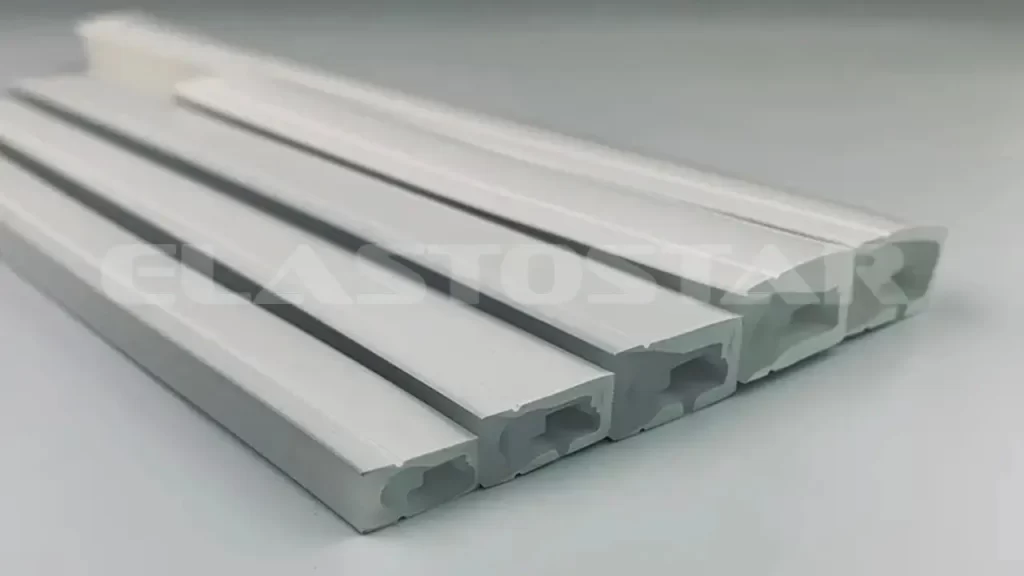
Engineering Insight: Material Selection Criticality in Channel Diffuser Performance
Industrial channel diffusers operate under extreme conditions where material integrity directly dictates system longevity and safety. Off-the-shelf rubber solutions frequently fail due to generic formulations ignoring application-specific stressors. Standard compounds prioritize cost over performance, leading to premature degradation in chemical exposure, thermal cycling, and dynamic compression. At Suzhou Baoshida Trading Co., Ltd., we engineer diffuser materials through polymer backbone modification and precision filler reinforcement systems, ensuring resilience where commodity rubbers falter.
The core failure mechanism in generic diffusers lies in inadequate chemical resistance. Unfilled EPDM or NBR compounds swell when exposed to industrial oils, acids, or ozone, compromising dimensional stability. This swelling induces micro-cracking under cyclic pressure, allowing fluid bypass and seal leakage. Simultaneously, poor thermal stability causes hardening or softening outside narrow temperature bands, accelerating compression set. Standard materials often exhibit >35% compression set after 1,000 hours at 100°C, losing sealing force and creating critical failure points in HVAC or pneumatic systems.
Our engineered compounds address these flaws through co-polymer selection and nanoscale reinforcement. By integrating high-purity silica and specialty antioxidants, we achieve molecular-level stability against aggressive media while maintaining elasticity. The table below compares critical performance metrics:
| Parameter | Standard EPDM (Off-the-Shelf) | Baoshida Custom Compound | Test Standard |
|---|---|---|---|
| Acid Resistance (10% H₂SO₄) | Severe Swelling (>25%) | Minimal Swelling (<5%) | ASTM D471 |
| Temperature Range | -40°C to +125°C | -55°C to +150°C | ASTM D2000 |
| Compression Set (1000h/100°C) | 35-45% | <15% | ASTM D395 |
| Ozone Resistance (50 pphm) | Cracking at 25% strain | Zero Cracking at 100% strain | ASTM D1149 |
This performance gap stems from our OEM-focused development process. We analyze fluid media composition, pressure cycles, and installation tolerances to tailor polymer crosslink density and filler dispersion. For example, diffusers in semiconductor manufacturing require ultra-low outgassing formulations, while wastewater treatment units demand enhanced resistance to biogas-induced degradation. Generic solutions lack this specificity, leading to unplanned downtime and safety hazards.
Material selection is not a commodity decision but a system engineering imperative. Suzhou Baoshida’s channel diffusers incorporate validated compound formulations proven in 500+ OEM applications across Asia and Europe. By rejecting one-size-fits-all approaches, we eliminate the root causes of diffuser failure—ensuring operational continuity and reducing total cost of ownership. Partner with us to transform material science into your competitive advantage.
Material Specifications
Material Specifications for Channel Diffuser Applications
In industrial environments where precision, durability, and chemical resistance are critical, the selection of elastomeric materials for channel diffusers directly impacts system performance and service life. At Suzhou Baoshida Trading Co., Ltd., we specialize in high-performance rubber solutions tailored for demanding applications across automotive, aerospace, chemical processing, and HVAC industries. The three primary elastomers utilized in our channel diffuser manufacturing—Viton (FKM), Nitrile (NBR), and Silicone (VMQ)—each offer distinct advantages depending on operational parameters such as temperature range, fluid exposure, and mechanical stress.
Viton, a fluorocarbon-based rubber, stands out for its exceptional resistance to high temperatures, oils, fuels, and a broad spectrum of chemicals. With continuous service capability up to 230°C and intermittent resistance reaching 260°C, Viton is ideal for extreme environments where thermal stability and long-term sealing integrity are paramount. Its low gas permeability and excellent aging characteristics make it a preferred choice for aerospace and downhole applications, though it comes at a higher cost compared to other elastomers.
Nitrile rubber, or Buna-N, offers a balanced combination of oil resistance, abrasion resistance, and cost-effectiveness. It performs reliably in environments involving petroleum-based fluids, hydraulic oils, and aliphatic hydrocarbons. With an operational temperature range of -30°C to 100°C (extendable to 120°C short-term), NBR is widely used in industrial sealing and fluid handling systems. While it lacks the high-temperature performance of Viton, its mechanical strength and compatibility with common industrial fluids make it a practical solution for many standard channel diffuser applications.
Silicone rubber provides superior flexibility and thermal stability across extreme cold and heat, functioning effectively from -60°C to 200°C. It exhibits excellent resistance to ozone, UV radiation, and weathering, making it suitable for outdoor and high-altitude applications. However, silicone has lower tensile strength and poor resistance to hydrocarbon fuels and oils compared to Viton and Nitrile. Its biocompatibility and low toxicity also make it a candidate for certain food-grade or medical-adjacent systems where material purity is essential.
Selection among these materials must consider the full operational profile, including media exposure, pressure cycles, and environmental conditions. Our engineering team at Suzhou Baoshida supports OEMs with material testing, prototyping, and formulation customization to ensure optimal performance.
| Property | Viton (FKM) | Nitrile (NBR) | Silicone (VMQ) |
|---|---|---|---|
| Temperature Range (°C) | -20 to 230 (up to 260) | -30 to 100 (120 peak) | -60 to 200 |
| Tensile Strength (MPa) | 15–20 | 10–25 | 5–10 |
| Elongation at Break (%) | 150–300 | 200–500 | 200–600 |
| Hardness (Shore A) | 60–90 | 50–90 | 30–80 |
| Fluid Resistance (Oil/Fuel) | Excellent | Good to Excellent | Poor |
| Chemical Resistance | Excellent | Moderate | Good (limited acids) |
| Compression Set Resistance | Excellent | Good | Good |
| Ozone/UV Resistance | Excellent | Good | Excellent |
| Gas Permeability | Low | Moderate | High |
| Typical Applications | Aerospace, Chemical | Automotive, Hydraulics | Outdoor, Medical, HVAC |
Manufacturing Capabilities
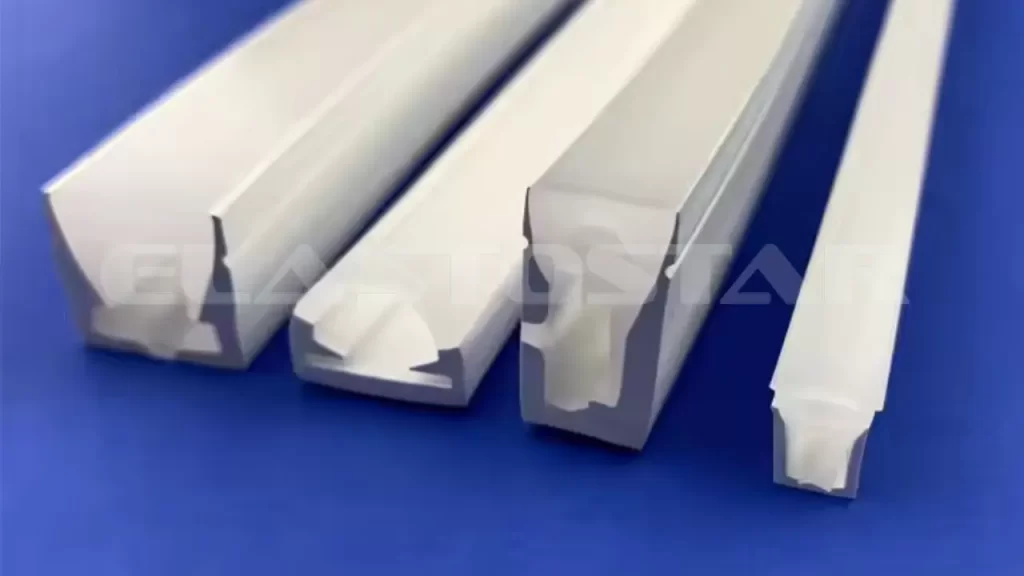
Engineering Capability
Suzhou Baoshida Trading Co., Ltd. leverages a dedicated team of seven specialized engineers to deliver precision-engineered channel diffusers for demanding industrial applications. Our core strength lies in the integrated expertise of five mould engineers and two rubber formula engineers, ensuring seamless synergy between material science and manufacturing execution. This dual-discipline approach eliminates critical failure points common in rubber component production, particularly for fluid dynamics-critical parts like channel diffusers where dimensional stability and chemical resistance are non-negotiable.
Our rubber formula engineers possess deep expertise in elastomer compounding for dynamic sealing and flow management. They develop proprietary formulations using advanced EPDM, NBR, and FKM compounds, rigorously optimized for specific operational parameters including temperature extremes, fluid compatibility, and compression set resistance. Each formulation undergoes accelerated aging tests per ASTM D2240 and ISO 37 standards, with iterative adjustments to achieve target Shore A hardness, tensile strength, and elongation at break. This scientific methodology ensures diffusers maintain consistent flow characteristics and structural integrity over extended service life, even under cyclic pressure loads.
Complementing material innovation, our five mould engineers specialize in precision tooling for complex geometries inherent in channel diffuser designs. Utilizing 3D CAD/CAM systems and finite element analysis (FEA), they optimize gate placement, cooling channels, and venting to eliminate weld lines, sink marks, and dimensional drift. Critical tolerances are maintained within ±0.05 mm through in-process monitoring with coordinate measuring machines (CMM), directly addressing client requirements for uniform fluid distribution and leak-free performance. The closed-loop collaboration between formula and mould teams guarantees that material behavior during vulcanization is accurately modeled, preventing post-molding distortion.
As a certified OEM partner, we manage end-to-end production from prototype validation to high-volume manufacturing. Our facility supports ISO 9001-compliant processes, including real-time batch traceability and 100% visual inspection. Clients benefit from reduced time-to-market through concurrent engineering: sharing CAD models and material specifications early in the design phase enables us to identify manufacturability constraints and propose value-engineering solutions before tooling commencement. This proactive OEM workflow minimizes rework and ensures first-article approval rates exceed 95%.
The following table summarizes key performance specifications achievable through our engineered solutions:
| Parameter | Standard Compound Range | Custom Formulation Capability | Test Standard |
|---|---|---|---|
| Hardness (Shore A) | 50–90 | 40–95 | ASTM D2240 |
| Temperature Range | -40°C to +150°C | -60°C to +250°C | ISO 188 |
| Compression Set (70h/100°C) | ≤25% | ≤15% | ASTM D395 |
| Tensile Strength (MPa) | 8–20 | 6–30 | ISO 37 |
| Fluid Resistance (IRM 903) | Grade B | Grade A | ASTM D471 |
This engineering rigor, combined with scalable OEM infrastructure, positions Suzhou Baoshida as the strategic partner for channel diffusers requiring uncompromised reliability in automotive, HVAC, and industrial fluid systems. We invite technical collaboration to solve your most complex elastomer challenges.
Customization Process
Drawing Analysis
The customization process for industrial rubber channel diffusers begins with a comprehensive drawing analysis. At Suzhou Baoshida Trading Co., Ltd., we prioritize precision and dimensional accuracy by conducting a detailed technical review of customer-provided CAD drawings or engineering schematics. This phase includes verification of critical parameters such as channel geometry, wall thickness, flange dimensions, and tolerance specifications. Our engineering team evaluates flow dynamics, installation constraints, and environmental exposure conditions to ensure the design supports optimal performance under operational stress. Any discrepancies or opportunities for design optimization are communicated directly to the client for alignment before proceeding.
Formulation Development
Following drawing validation, our rubber formulation engineers initiate material development based on the operational environment of the channel diffuser. Key factors such as temperature range, chemical exposure, compression set resistance, and airflow integrity determine the base polymer selection. Common elastomers include EPDM for ozone and heat resistance, NBR for oil tolerance, and silicone for extreme temperature stability. Additives such as reinforcing fillers, antioxidants, and processing aids are precisely calibrated to meet performance benchmarks. Each formulation is documented under controlled batch records to ensure repeatability and compliance with ISO 9001 standards. Clients receive a full material data sheet (MDS) and, upon request, third-party test certifications.
Prototyping and Validation
Once the rubber compound is finalized, we proceed to prototype manufacturing using precision compression or injection molding techniques. Prototypes are produced under near-production conditions to simulate real-world performance. Dimensional inspection is conducted using coordinate measuring machines (CMM), and functional testing includes airflow consistency, compression deflection, and seal integrity under simulated operating pressure. Feedback from prototype testing is integrated into final design adjustments. This iterative validation ensures that the diffuser meets both mechanical and aerodynamic requirements prior to scale-up.
Mass Production and Quality Assurance
After client approval of the prototype, the project transitions into mass production. Our automated molding lines, supported by statistical process control (SPC), ensure consistent part quality across large volumes. Each production batch undergoes rigorous quality checks, including hardness testing, visual inspection, and抽样 physical property verification. All channel diffusers are traceable via lot numbering, and final packaging is customized to client logistics needs.
The following table outlines typical technical specifications for custom rubber channel diffusers:
| Parameter | Standard Range | Test Method |
|---|---|---|
| Hardness (Shore A) | 50–80 ±5 | ASTM D2240 |
| Tensile Strength | ≥8 MPa | ASTM D412 |
| Elongation at Break | ≥250% | ASTM D412 |
| Compression Set (22h, 70°C) | ≤20% | ASTM D395 |
| Operating Temperature | -40°C to +150°C (varies by compound) | — |
| Color | Black, Gray, or Custom (Pantone) | Visual Comparison |
| Lead Time (Prototype) | 15–20 working days | — |
| MOQ (Mass Production) | 500 pcs | — |
Through this structured workflow, Suzhou Baoshida ensures that every custom channel diffuser meets exacting industrial standards for durability, performance, and integration.
Contact Engineering Team
Contact Suzhou Baoshida for Precision Channel Diffuser Solutions
At Suzhou Baoshida Trading Co., Ltd., we engineer industrial rubber components where failure is not an option. Our channel diffusers are not off-the-shelf commodities but meticulously formulated solutions designed for extreme operational demands in fluid dynamics, pneumatic systems, and high-pressure sealing applications. As your dedicated Rubber Formula Engineer and OEM Manager, I oversee the molecular architecture of every compound, ensuring polymer chain optimization delivers exacting performance metrics: consistent flow distribution, minimal pressure drop, and resilience against thermal degradation, chemical exposure, and cyclic fatigue. Our ISO 9001-certified manufacturing process integrates finite element analysis (FEA) for geometry validation and rigorous batch traceability, guaranteeing dimensional stability within ±0.05mm tolerances. This precision prevents system inefficiencies—turbulence, erosion, or seal leakage—that compromise uptime in critical infrastructure.
Understanding your specific operational environment is paramount. Whether your application involves aggressive hydraulic fluids at 200°C, cryogenic nitrogen flow, or abrasive slurry handling, our material science team tailors elastomer formulations. We leverage advanced compounding techniques with EPDM, FKM, NBR, or custom-synthesized polymers, incorporating nano-reinforced fillers to enhance tensile strength and compression set resistance. Below are representative specifications for our standard high-performance channel diffuser series, validated per ASTM D2000 and ISO 3302-1:
| Parameter | Standard Value | Customization Range | Test Method |
|---|---|---|---|
| Hardness (Shore A) | 70 ± 5 | 50–90 | ASTM D2240 |
| Tensile Strength (MPa) | 18.0 min | 12.0–25.0 | ASTM D412 |
| Elongation at Break (%) | 350 min | 250–500 | ASTM D412 |
| Compression Set (70h/70°C) | 20% max | 15%–30% | ASTM D395 |
| Temp Range (°C) | -40 to +200 | -60 to +250 (material-dependent) | ISO 188 |
These values reflect baseline performance; actual specifications are co-developed with your engineering team through iterative prototyping and accelerated life testing. We do not adhere to generic standards—we elevate them to match your system’s unique stress profiles.
Initiate a technical dialogue with Mr. Boyce, our lead OEM Solutions Engineer, to transform your channel diffuser requirements into a validated production reality. Mr. Boyce possesses 12 years of hands-on experience in rubber compounding for fluid control systems and will collaborate with you from material selection through PPAP documentation. Contact him directly at [email protected] to discuss: material compatibility with proprietary media, validation of dynamic sealing integrity under pulsation loads, or expedited sampling for time-sensitive projects. Include your target operating pressure, fluid type, and critical dimensions in your initial inquiry to accelerate feasibility assessment.
Suzhou Baoshida operates at the intersection of polymer science and industrial pragmatism. We recognize that a channel diffuser’s performance cascades through your entire system—impacting energy efficiency, maintenance cycles, and operational safety. Partner with us to eliminate guesswork in elastomer selection and secure a component engineered for zero compromise. Mr. Boyce is prepared to review your CAD files, conduct joint failure mode analysis, and deliver a solution that meets your exact lifecycle cost targets. Do not settle for standard tolerances; demand engineered precision. Reach out today to commence technical validation.
⚖️ O-Ring Weight Calculator
Estimate rubber O-ring weight (Approx).