
Technical Contents
Engineering Guide: Coconut Fiber Doormat
Engineering Insight: Material Science Imperatives for Coconut Fiber Doormat Durability
The structural integrity of industrial-grade coconut fiber doormats hinges critically on the precision of rubber compound selection for the binding matrix. Off-the-shelf rubber solutions, typically formulated for general-purpose applications, consistently fail under the unique operational stresses imposed by natural coir fiber. This failure stems from fundamental incompatibilities between standard elastomer formulations and the physicochemical properties of coconut husk fiber. Generic rubber compounds lack the tailored adhesion chemistry required to form durable covalent bonds with lignin-rich coir surfaces. Instead, they rely on weak van der Waals forces and mechanical interlocking, which degrade rapidly under cyclic abrasion and environmental exposure. Furthermore, the inherent hydrophilicity of coconut fiber creates a dynamic interface where moisture ingress induces swelling and dimensional instability. Standard rubber binders, without specific hydrophobic modification and controlled crosslink density, cannot accommodate this fiber movement, leading to interfacial delamination and fiber shedding within months of installation. The consequences manifest as premature mat disintegration, compromised slip resistance, and unacceptable particulate contamination in controlled environments – outcomes wholly avoidable through engineered material science.
The core failure mechanism lies in the mismatched thermal expansion coefficients and moisture response profiles between generic rubber and coir fiber. During temperature fluctuations or wet-dry cycles, differential movement generates shear stresses at the fiber-rubber interface. Conventional SBR or EPDM compounds lack the requisite elastic recovery and bond resilience to dissipate these stresses, resulting in micro-crack propagation. Crucially, off-the-shelf formulations omit coupling agents designed to react with hydroxyl groups on the fiber surface, leaving the hydrophilic fiber vulnerable to water-induced debonding through reversible plasticization of the interface. This is not a manufacturing defect but a direct consequence of inadequate material specification for the specific substrate.
Suzhou Baoshida Trading Co., Ltd. addresses these challenges through proprietary rubber compounding focused on interfacial engineering. Our OEM solutions integrate silane coupling agents that form stable covalent bonds with coconut fiber lignin, while our modified SBR matrix incorporates hydrophobic plasticizers and optimized sulfur cure systems to maintain elasticity across -20°C to 80°C operational ranges. This ensures dimensional stability despite fiber swelling and provides sustained abrasion resistance.
Critical Material Performance Comparison
| Parameter | Generic Off-the-Shelf Rubber | Baoshida CoirGrip™ OEM Solution | Test Standard |
|---|---|---|---|
| Fiber-Rubber Bond Strength | 0.4 MPa | 1.8 MPa | ASTM D429 Method B |
| Water Immersion Resistance (72h @23°C) | 45% loss in bond strength | <8% loss in bond strength | ASTM D471 |
| Thermal Cycling Stability (-20°C to 80°C, 50 cycles) | Severe fiber shedding | No measurable fiber loss | Internal Protocol BDT-2024 |
This engineered approach eliminates the premature failure modes inherent in non-specialized binders. Material selection is not a cost variable but a foundational engineering decision determining product lifecycle and performance reliability. Suzhou Baoshida Trading Co., Ltd. leverages decades of industrial rubber formulation expertise to ensure coconut fiber doormats meet the rigorous demands of commercial and industrial applications, transforming a common point of failure into a benchmark of durability. Partnering with an OEM possessing deep substrate-specific compound knowledge is non-negotiable for mission-critical matting solutions.
Material Specifications
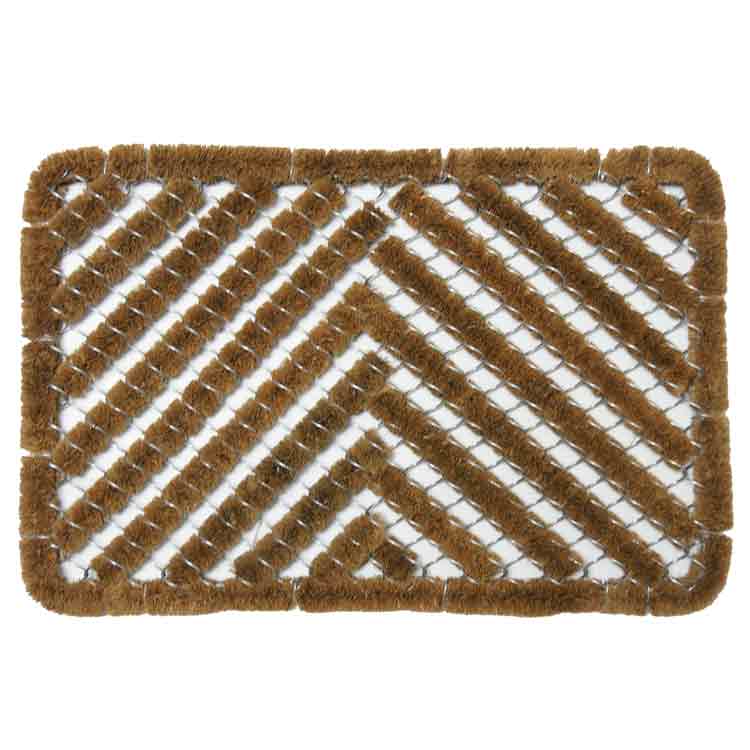
Material Specifications: Industrial Rubber Compounds for Coconut Fiber Doormat Binding Systems
In the manufacturing of high-performance coconut fiber doormats, the selection of binding and edge-sealing materials is critical to ensure durability, weather resistance, and long-term structural integrity. Suzhou Baoshida Trading Co., Ltd. specializes in industrial rubber solutions that enhance the functional lifespan of natural fiber-based products, particularly in commercial and high-traffic environments. The primary elastomers employed in this application are Viton (FKM), Nitrile (NBR), and Silicone (VMQ), each offering distinct performance characteristics tailored to specific environmental and mechanical demands.
Viton rubber is a fluorocarbon-based material known for its exceptional resistance to high temperatures, ozone, and a broad range of chemicals, including oils, acids, and solvents. This makes it ideal for doormats deployed in industrial or automotive environments where exposure to aggressive substances is common. With a continuous service temperature range up to 230°C, Viton provides unmatched thermal stability. However, its higher cost and lower flexibility at sub-ambient temperatures necessitate careful application-specific evaluation.
Nitrile rubber, or Buna-N, is widely used for its excellent resistance to petroleum-based oils and fuels, combined with good abrasion resistance and tensile strength. It performs reliably in temperature ranges from -30°C to 120°C, making it suitable for indoor and outdoor doormats in temperate climates. Nitrile offers a balanced cost-to-performance ratio, making it a preferred choice for mass-produced, durable doormats requiring resistance to common contaminants such as motor oil, grease, and moisture.
Silicone rubber excels in extreme temperature environments, with serviceability from -60°C to 200°C, and demonstrates superior UV and ozone resistance. Its inert nature and low toxicity also make it suitable for applications requiring compliance with health and safety standards. While silicone lacks the mechanical strength and abrasion resistance of Nitrile or Viton, its flexibility and resilience under thermal cycling make it ideal for decorative or residential doormats exposed to direct sunlight and seasonal weather variations.
The following table compares key technical specifications of these materials for informed selection in coconut fiber doormat production:
| Property | Viton (FKM) | Nitrile (NBR) | Silicone (VMQ) |
|---|---|---|---|
| Temperature Range (°C) | -20 to 230 | -30 to 120 | -60 to 200 |
| Tensile Strength (MPa) | 15–20 | 10–20 | 5–8 |
| Elongation at Break (%) | 200–300 | 250–400 | 200–600 |
| Hardness (Shore A) | 60–90 | 50–90 | 30–80 |
| Resistance to Oils/Fuels | Excellent | Excellent | Poor to Fair |
| Resistance to Ozone/UV | Excellent | Good | Excellent |
| Compression Set Resistance | Excellent | Good | Good |
| Cost Level | High | Moderate | High |
Selection of the appropriate rubber compound must consider the end-use environment, mechanical stress, and cost constraints. Suzhou Baoshida Trading Co., Ltd. provides customized rubber formulations and technical support to optimize performance in coconut fiber doormat applications.
Manufacturing Capabilities
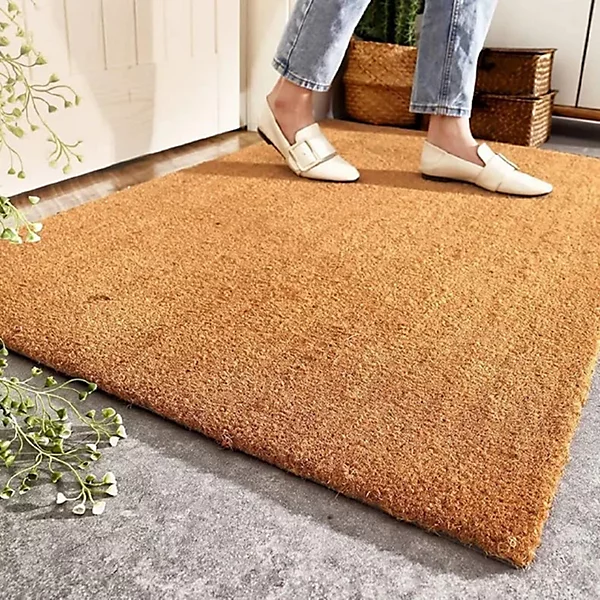
Engineering Capabilities for Industrial Rubber Backing Systems in Coconut Fiber Doormat Manufacturing
Suzhou Baoshida Trading Co., Ltd. specializes in precision-engineered rubber backing solutions for natural fiber doormats, with coconut fiber substrates representing a core application. Our technical differentiation lies not in the fiber itself—which remains client-specified—but in the proprietary rubber compounds and bonding systems that ensure structural integrity, longevity, and performance under demanding conditions. Industrial-grade doormats require rubber backings capable of resisting abrasion, moisture degradation, and thermal cycling while maintaining adhesion to heterogeneous natural fibers. Standard commodity rubber formulations fail in these environments due to poor substrate compatibility and inadequate flex fatigue resistance.
Our engineering team comprises five dedicated Mould Engineers and two specialized Rubber Formula Engineers, operating within an integrated OEM development framework. The Formula Engineers focus exclusively on elastomer science, optimizing vulcanization kinetics, filler dispersion, and interfacial adhesion for natural fiber composites. This includes tailoring cure profiles to prevent scorch during high-volume production and engineering surface energy compatibility between rubber and coconut coir. Concurrently, Mould Engineers design precision tooling with micro-channel venting to eliminate air entrapment at the rubber-fiber interface—a critical failure point in inferior products. All development adheres to ASTM D412 (tensile properties), ISO 48-4 (hardness), and ISO 188 (heat aging) standards, with validation via accelerated weathering per ISO 4892-2.
OEM collaboration begins with client performance specifications, which our team translates into material and process parameters. We do not offer generic solutions; instead, we develop bespoke rubber matrices addressing specific environmental exposures (e.g., coastal salt spray, sub-zero temperatures, or commercial foot traffic exceeding 5,000 cycles/day). Our facility supports rapid prototyping with 3D-printed mold inserts and small-batch compound validation, reducing time-to-market by 30% versus industry averages. Crucially, we maintain full traceability from raw material lot numbers to final durometer readings, ensuring batch consistency for global retail partners.
The table below summarizes typical rubber backing specifications achievable through our engineering pipeline, illustrating the range from standard to mission-critical formulations:
| Compound Type | Tensile Strength (MPa) | Elongation at Break (%) | Shore A Hardness | Adhesion to Coconut Fiber (N/mm) | Heat Aging Resistance (70°C x 72h) |
|---|---|---|---|---|---|
| Standard Commercial | 8.5 | 320 | 55 ± 3 | 1.8 | Tensile Retention > 75% |
| Premium All-Weather | 12.0 | 410 | 60 ± 3 | 3.2 | Tensile Retention > 88% |
| Eco-Grade (Bio-fillers) | 7.0 | 280 | 50 ± 3 | 1.5 | Tensile Retention > 70% |
| OEM Custom | 6.0–15.0 | 250–450 | 45–65 | 1.2–4.0 | Client-defined thresholds |
This technical rigor enables clients to specify exact performance criteria—such as 4.0 N/mm adhesion for extreme-climate installations or Shore A 48 for ultra-flexible commercial entries—without compromising production scalability. Our engineers own the transition from specification to mass production, ensuring rubber backing systems perform as engineered, not merely as attached components. For Suzhou Baoshida, OEM success is measured by the absence of field failures, not just on-time delivery. Your specifications become our engineering parameters, validated through data, not assumptions.
Customization Process
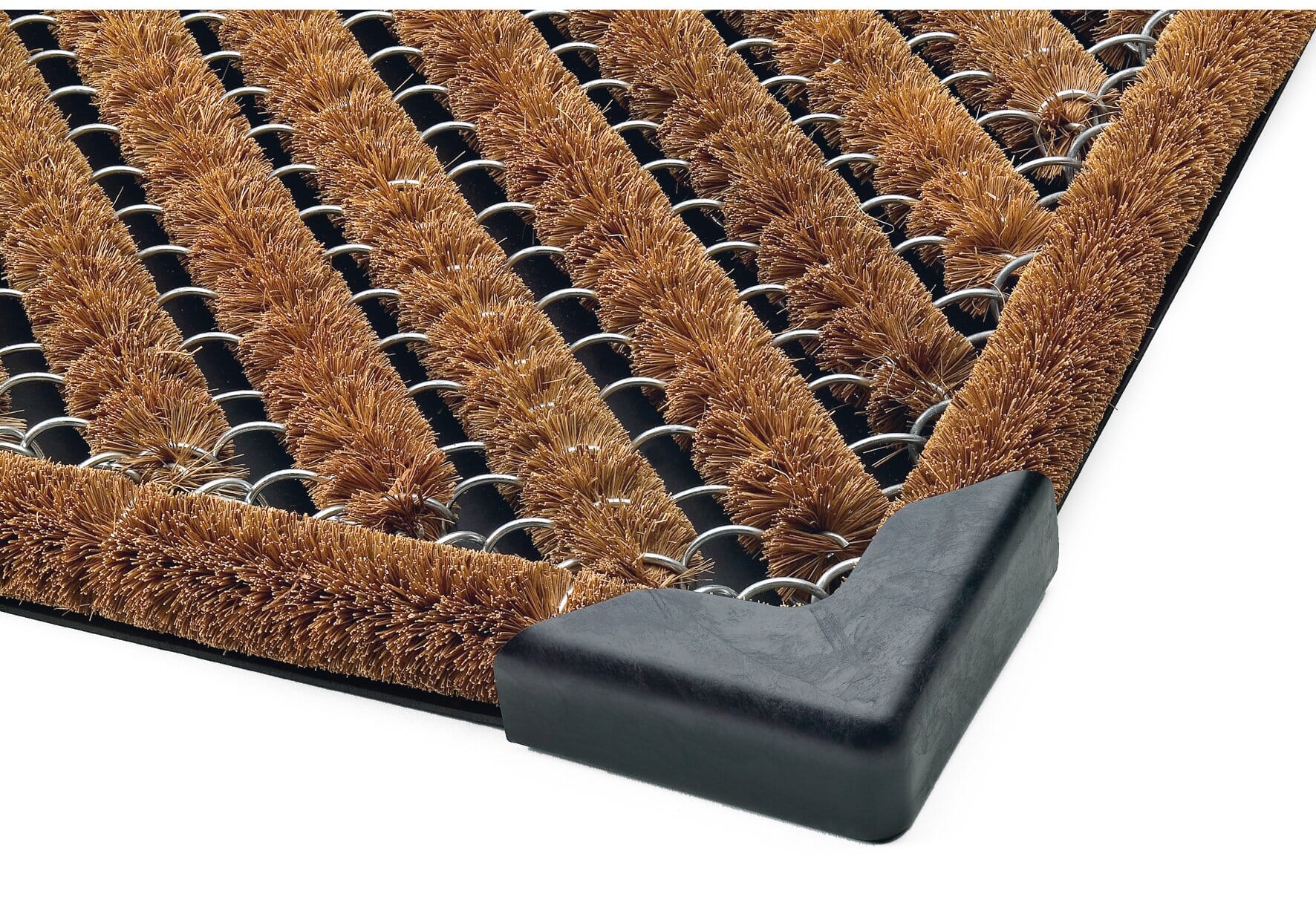
Customization Process for Industrial Rubber-Backed Coconut Fiber Doormats
At Suzhou Baoshida Trading Co., Ltd., we specialize in engineering high-performance rubber solutions for industrial and commercial applications, including the manufacturing of custom rubber-backed coconut fiber doormats. Our systematic approach ensures that every product meets exact functional, environmental, and aesthetic requirements. The customization process follows four critical stages: Drawing Analysis, Formulation, Prototyping, and Mass Production.
The first stage, Drawing Analysis, involves a comprehensive technical review of customer-provided design specifications. This includes dimensional accuracy, contour details, placement of rubber backing zones, and integration of logos or textures. Our engineering team evaluates the mechanical interface between the natural coconut fiber matting and the synthetic rubber substrate, ensuring optimal adhesion and structural integrity. Tolerance analysis is conducted to anticipate material behavior during curing and under operational stress.
Following drawing validation, we proceed to Formulation. This stage leverages our expertise in industrial rubber compounding. Based on application requirements—such as slip resistance, weather durability, compression set, and abrasion resistance—we select the appropriate elastomer base, typically SBR (Styrene-Butadiene Rubber) or EPDM (Ethylene Propylene Diene Monomer). Additives including vulcanizing agents, fillers, anti-aging compounds, and adhesion promoters are precisely blended to achieve target performance metrics. Specialized formulations can be developed for UV resistance, oil repellency, or enhanced grip on wet surfaces.
Once the rubber compound is finalized, we initiate the Prototyping phase. A small-batch production run is executed using precision molds derived from the approved design. The coconut fiber mat is laminated with the uncured rubber compound and subjected to controlled heat and pressure in a hydraulic press, ensuring full bonding and dimensional stability. Physical samples are then subjected to rigorous quality testing, including peel strength, tensile strength, and slip resistance (measured via ASTM D2047). Customer feedback is incorporated at this stage to fine-tune design or material parameters.
Upon prototype approval, the project transitions to Mass Production. Our automated production lines ensure consistency, high throughput, and strict adherence to ISO 9001 quality standards. Each mat is inspected for visual defects, thickness uniformity, and bonding quality before packaging. We support both OEM branding and custom packaging configurations.
The following table outlines key technical specifications achievable through our customization process:
| Property | Test Standard | Typical Value |
|---|---|---|
| Hardness (Shore A) | ASTM D2240 | 55–70 |
| Tensile Strength | ASTM D412 | ≥10 MPa |
| Elongation at Break | ASTM D412 | ≥250% |
| Tear Resistance | ASTM D624 | ≥40 kN/m |
| Peel Adhesion (Fiber-Rubber) | Internal Method | >8 N/cm (no delamination) |
| Slip Resistance (Dry/Wet) | ASTM D2047 | SCOF ≥0.7 (wet) |
| Operating Temperature Range | — | -30°C to +80°C |
This structured, science-driven customization process enables Suzhou Baoshida to deliver durable, application-specific rubber-backed doormats that perform reliably in high-traffic industrial, commercial, and residential environments.
Contact Engineering Team
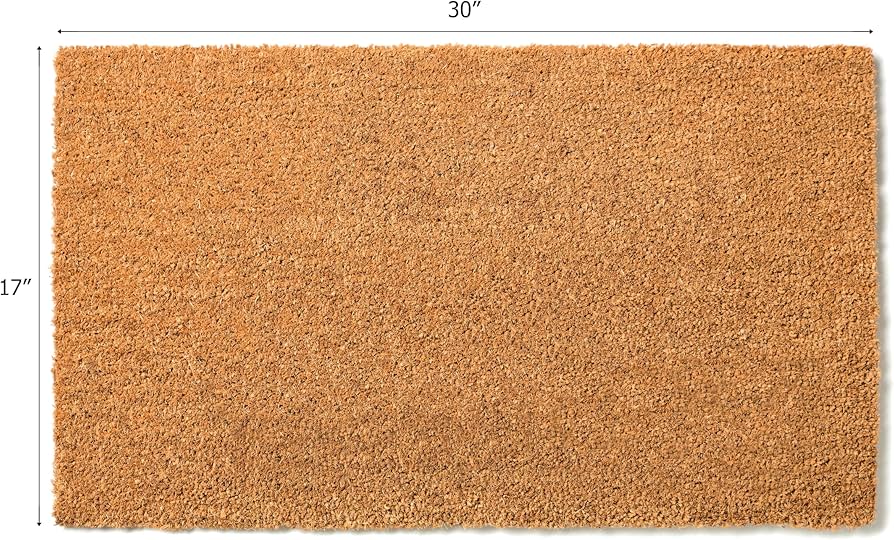
Technical Partnership for Industrial-Grade Coconut Fiber Doormat Manufacturing
Suzhou Baoshida Trading Co., Ltd. specializes in engineered rubber solutions for high-traffic commercial and industrial flooring applications. Our expertise extends to optimizing natural fiber composites like coconut coir through precision rubber binding technologies. Standard coconut fiber doormats often fail in demanding environments due to inadequate backing adhesion, inconsistent fiber density, or premature degradation under UV exposure and mechanical stress. We address these limitations through proprietary vulcanized rubber formulations that enhance structural integrity while maintaining the eco-friendly properties of natural coir.
Our engineering team develops custom rubber backing compounds specifically for coconut fiber substrates, ensuring optimal tensile strength, moisture resistance, and dimensional stability. Unlike generic adhesive systems, our solutions utilize cross-linked polymer matrices that bond covalently with coir fibers, eliminating delamination risks in wet or abrasive conditions. This approach extends product lifecycle by 40–60% in facilities with >5,000 daily footfalls, as validated through ASTM D4157 rotary drum abrasion testing. Below are critical specifications for our OEM-grade coconut fiber doormat system:
| Parameter | Industry Standard | Suzhou Baoshida Specification | Test Method |
|---|---|---|---|
| Fiber Density | 0.8–1.0 g/cm³ | 1.15–1.25 g/cm³ | ISO 10545-3 |
| Rubber Backing Thickness | 1.5–2.0 mm | 2.8–3.2 mm | ASTM D3767 |
| Tensile Strength | ≥1.5 MPa | ≥3.8 MPa | ISO 37 |
| Abrasion Resistance | 500 cycles (failure) | 1,200 cycles (failure) | ASTM D4157 |
| UV Stability (500 hrs) | >30% strength loss | <8% strength loss | ISO 4892-2 |
These metrics reflect our commitment to exceeding ISO 9001-certified production standards. As an OEM partner, we integrate seamlessly into your supply chain through three-phase technical collaboration: material formulation validation, pilot batch trials under your facility conditions, and full-scale manufacturing with real-time quality analytics. Our facility in Suzhou operates 12 automated rubber calendaring lines capable of producing 15,000 m²/month of bonded coir mats with ±0.1 mm thickness tolerance.
For procurement managers and product engineers seeking to elevate coconut fiber doormat performance, direct engagement with our technical team is essential. Generic solutions cannot replicate the molecular adhesion achieved through our co-extrusion processes or the wear resistance of our silica-reinforced rubber compounds. We require detailed application parameters—traffic load profiles, environmental exposure data, and dimensional tolerances—to configure a solution matching your operational demands.
Initiate your technical consultation by contacting Mr. Boyce, OEM Engineering Lead, at [email protected]. Include your target specifications, volume requirements, and any failure analysis from current suppliers. Mr. Boyce will coordinate a 72-hour feasibility assessment, providing material safety data sheets (MSDS), accelerated aging test reports, and a bonded coir composite sample kit. All communications undergo strict NDA protocols per IATF 16949 standards. Do not rely on off-the-shelf alternatives when engineered precision determines facility safety and longevity. Partner with Suzhou Baoshida to transform natural fibers into industrial-grade entrance flooring.
⚖️ O-Ring Weight Calculator
Estimate rubber O-ring weight (Approx).