
Technical Contents
Engineering Guide: Copper Exhaust Gasket
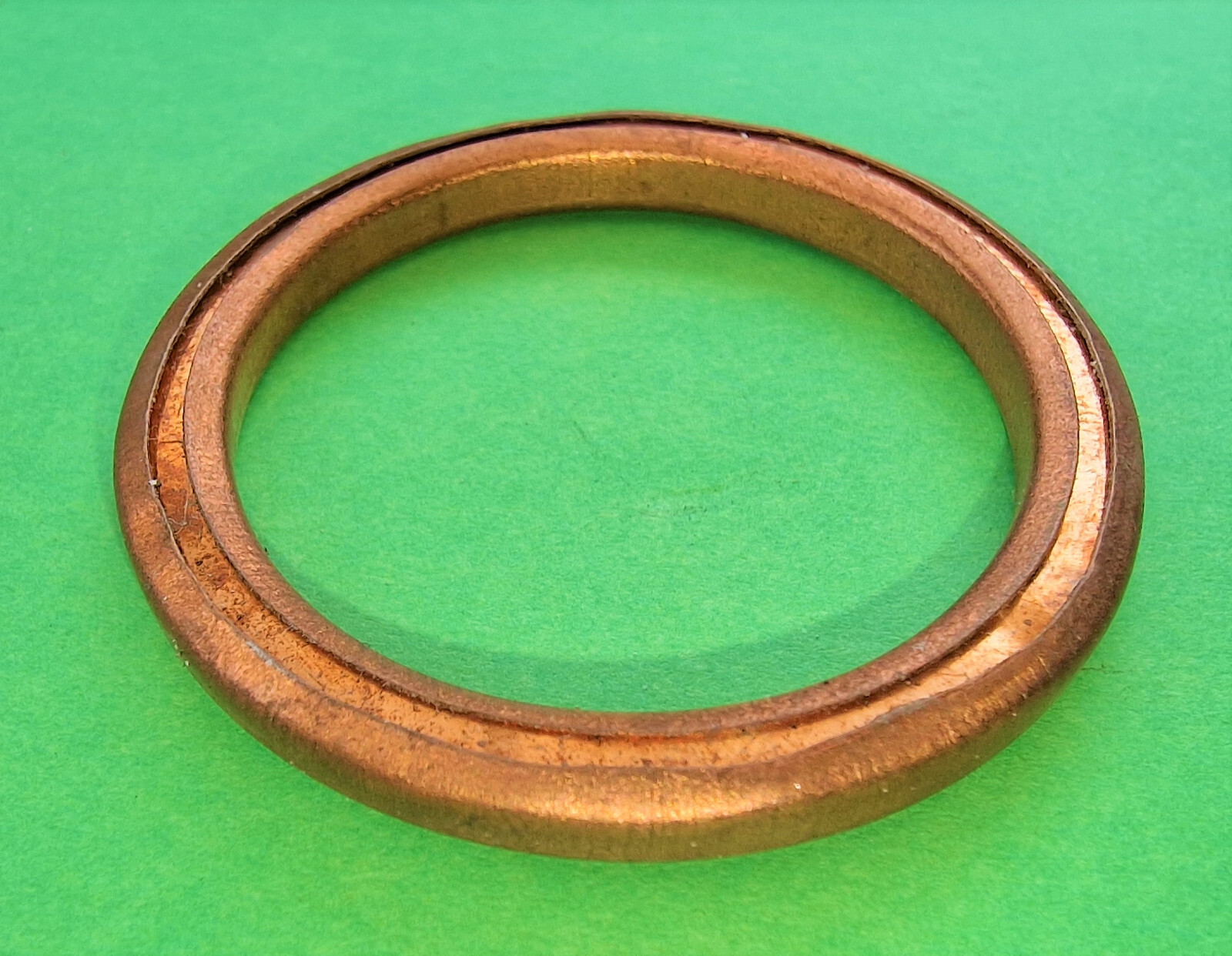
Engineering Insight: Material Selection in Copper Exhaust Gaskets
In high-temperature, high-pressure environments typical of internal combustion and exhaust systems, the copper exhaust gasket serves as a critical sealing interface. Despite its seemingly simple form, the performance and longevity of this component are deeply influenced by material science and precision engineering. Off-the-shelf gasket solutions often fail under real-world operating conditions due to inadequate material selection, dimensional inaccuracies, and poor thermal response characteristics. Understanding the engineering principles behind material choices is essential for ensuring system integrity, emissions compliance, and long-term reliability.
Copper is favored in exhaust gasket applications due to its excellent thermal conductivity, malleability, and resistance to oxidation at elevated temperatures. However, not all copper alloys perform equally. Pure electrolytic tough pitch (ETP) copper offers high conductivity but lacks the mechanical strength required for sustained clamp load retention. In contrast, oxygen-free high-conductivity (OFHC) copper provides superior ductility and reduced porosity, making it ideal for applications where thermal cycling and vibration are prevalent. The choice between these grades directly impacts the gasket’s ability to maintain a hermetic seal over time.
Material failure in generic gaskets often stems from thermal fatigue and creep relaxation. During operation, exhaust manifolds can reach temperatures exceeding 750°C. Standard copper gaskets without proper tempering or alloying undergo plastic deformation, leading to loss of sealing force. Additionally, mismatched coefficients of thermal expansion (CTE) between the gasket, flange, and mating components induce stress concentrations that accelerate micro-cracking and leakage paths. Precision-engineered gaskets mitigate these risks through controlled annealing processes and, in some cases, composite layering with stainless steel cores or graphite fillers to enhance resilience.
Another overlooked factor is surface finish compatibility. Copper gaskets require a specific surface roughness (Ra) on mating flanges to achieve optimal conformability without cold flow. Off-the-shelf gaskets are often manufactured to broad tolerances, failing to account for variations in engine block or manifold finishes. This results in uneven load distribution and premature blowout. Custom-formulated gaskets, tailored to the OEM’s flange geometry and operational profile, ensure uniform stress distribution and long-term sealing integrity.
At Suzhou Baoshida Trading Co., Ltd., we emphasize application-specific material engineering over generic solutions. Our copper exhaust gaskets are developed in alignment with OEM performance requirements, ensuring compatibility with thermal dynamics, mechanical loads, and environmental exposure.
| Property | OFHC Copper | ETP Copper | Composite Copper-Steel |
|---|---|---|---|
| Thermal Conductivity (W/m·K) | 398 | 395 | 280 (effective) |
| Tensile Strength (MPa) | 220 | 200 | 350 |
| Elongation at Break (%) | 45 | 40 | 25 |
| Max Continuous Use Temp (°C) | 800 | 750 | 850 |
| CTE (20–300°C, µm/m·K) | 16.7 | 16.5 | 14.2 |
| Typical Application | High-performance engines | Standard exhaust manifolds | Turbocharged systems |
Material selection is not a commodity decision—it is a precision engineering imperative. The cost of gasket failure extends beyond replacement; it includes downtime, emissions non-compliance, and potential engine damage. Partnering with a supplier that integrates material science with application data ensures reliability in the most demanding environments.
Material Specifications
Material Specifications for Copper Exhaust Gasket Sealing Elements
Copper exhaust gaskets utilize precision-machined copper substrates as the primary structural component, providing exceptional thermal conductivity and creep resistance under high clamping loads. The critical sealing function, however, is delivered by elastomeric compounds bonded to the copper core. These compounds must withstand extreme thermal cycling, aggressive chemical exposure, and maintain sealing force over extended service life. Suzhou Baoshida Trading Co., Ltd. rigorously qualifies three primary elastomer families for this application: Fluoroelastomer (Viton®), Hydrogenated Nitrile Butadiene Rubber (HNBR), and Silicone (VMQ). Material selection directly impacts gasket reliability in exhaust manifold environments where temperatures exceed 300°C and exposure to combustion byproducts, unburned hydrocarbons, and acidic condensates is inevitable.
Viton® (FKM) represents the premium solution for high-performance and turbocharged applications. Its molecular structure provides outstanding resistance to oxidation, aromatic fuels, and lubricants up to 250°C continuous service, with short-term excursions to 300°C. Viton® exhibits minimal swelling in diesel particulate filter (DPF) regeneration cycles and maintains sealing integrity against hot exhaust gases containing sulfur compounds. Compression set values per ASTM D395 Method B are typically ≤20% after 70 hours at 200°C, ensuring long-term recovery. This material is essential for OEMs targeting Euro 7 and Tier 4 final emission standards where thermal stability is non-negotiable.
Hydrogenated Nitrile (HNBR) offers an optimized balance for cost-sensitive medium-temperature applications. With continuous service capability to 150°C and peak resistance to 180°C, HNBR provides superior oil and coolant resistance compared to standard NBR. Its saturated backbone enhances ozone and heat aging performance, critical for under-hood durability. Compression set remains below 25% after 70 hours at 150°C (ASTM D395), making it suitable for passenger car exhaust systems below 250°C manifold temperatures. HNBR is frequently specified for light-duty diesel and gasoline engines where Viton®’s cost premium is unjustified.
Silicone (VMQ) is generally restricted to low-stress flange applications due to inherent limitations. While exhibiting excellent low-temperature flexibility (-60°C) and resistance to water/steam, VMQ suffers from poor abrasion resistance and susceptibility to compression set above 180°C. Its vulnerability to hydrocarbon swelling and limited tensile strength make it unsuitable for direct exposure to hot exhaust gases in copper gasket assemblies. Silicone may be considered only for auxiliary coolant or sensor port seals within the exhaust system where temperatures remain below 150°C.
Suzhou Baoshida’s OEM engineering team mandates material validation per SAE J2099 and ASTM D2000 classification systems. The following table details critical performance parameters for qualified compounds:
| Material | Continuous Temp Range (°C) | Key Fluid Resistance | Compression Set (ASTM D395) | Primary Application Scope |
|---|---|---|---|---|
| Viton® (FKM) | -20 to +250 (300 peak) | Excellent: Fuels, oils, acids, DPF regen gases | ≤20% @ 200°C/70h | Turbocharged engines, heavy-duty diesel, high-temp manifolds |
| HNBR | -30 to +150 (+180 peak) | Excellent: Oils, coolants; Good: Fuels | ≤25% @ 150°C/70h | Passenger car exhausts, medium-duty applications |
| Silicone (VMQ) | -60 to +180 | Excellent: Water, steam; Poor: Hydrocarbons | ≤30% @ 180°C/70h | Non-exhaust gas ports, sensor seals only |
Note: All compounds are formulated for direct adhesion to OFHC copper substrates per ASTM B152. Compression set testing includes 25% deflection under simulated exhaust clamp load conditions. Suzhou Baoshida provides material traceability to ISO 9001:2015-certified production batches for full OEM compliance.
Material selection must align with specific engine operating profiles. Suzhou Baoshida’s technical team collaborates with OEM design engineers to conduct thermal mapping and chemical exposure analysis, ensuring the elastomer formulation precisely matches the copper gasket’s operational envelope. This precision engineering approach prevents premature seal failure and costly warranty claims in demanding exhaust environments.
Manufacturing Capabilities
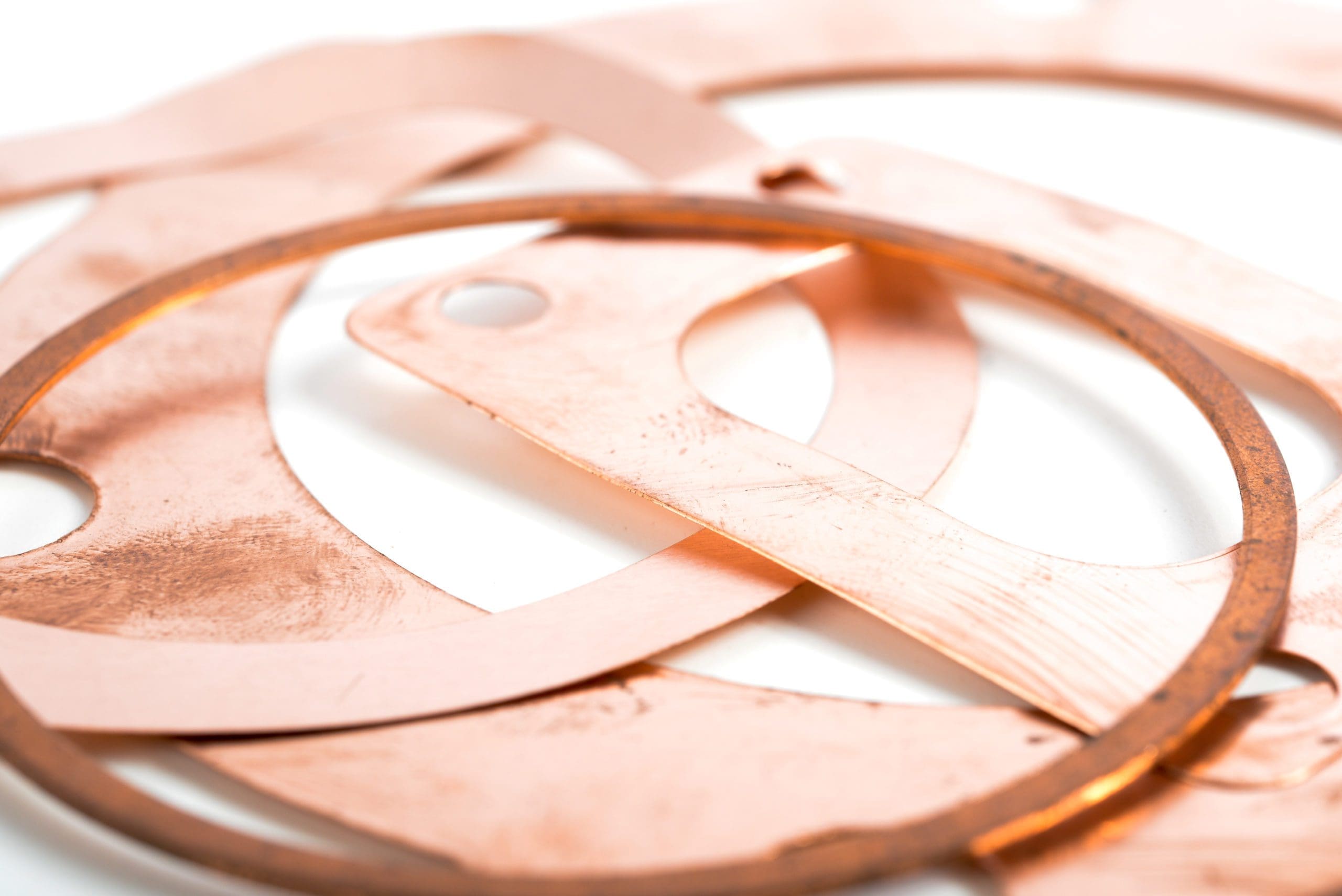
Engineering Capability
At Suzhou Baoshida Trading Co., Ltd., our engineering capability in the domain of precision rubber seals is anchored in deep technical expertise and a rigorous, science-driven approach to material formulation and mold design. We maintain a dedicated team of five certified mold engineers and two specialized rubber formula engineers, enabling us to deliver high-performance copper exhaust gaskets tailored to the exacting demands of modern automotive and industrial OEMs. Our integrated engineering workflow ensures seamless transition from concept to production, with full control over material behavior, dimensional accuracy, and long-term sealing reliability.
Our formula engineers employ advanced polymer chemistry principles to develop elastomer compounds optimized for extreme thermal cycling, high-pressure environments, and prolonged exposure to corrosive exhaust byproducts. Each formulation is engineered to maintain resilience and compression set resistance across a temperature range of -40°C to +250°C, with select grades capable of withstanding intermittent peaks up to 300°C. The synergy between our material science and mold engineering teams allows for precise tuning of durometer (60–80 Shore A), elongation at break (>200%), and thermal conductivity to meet OEM-specific performance benchmarks.
The copper-clad construction of our exhaust gaskets combines the ductility of OFHC (Oxygen-Free High-Conductivity) copper with the elastic recovery of our proprietary EPDM and FKM-based elastomers. This hybrid design delivers superior conformability to flange irregularities while maintaining structural integrity under vibration and thermal expansion. Our mold engineers utilize 3D CAD (SolidWorks, AutoCAD) and mold flow simulation software (Moldex3D) to optimize gate placement, venting, and cooling channels, minimizing flash and ensuring consistent part geometry across high-volume production runs.
We support full OEM customization, including client-specific material formulations, gasket geometry modifications, and integration of multi-layer metal-rubber architectures. Our engineering team collaborates directly with client R&D departments to validate designs through finite element analysis (FEA) and physical prototyping, with rapid turnaround for sample submissions and design iterations. All developments are documented under strict IP confidentiality agreements, ensuring protection of proprietary specifications.
Our manufacturing processes are aligned with IATF 16949 quality standards, with in-house capabilities for rubber compounding, precision compression molding, copper stamping, and automated assembly. This vertical integration enables tight process control and accelerated time-to-market for new gasket solutions.
Typical Copper Exhaust Gasket Material Specifications
| Property | Test Method | Typical Value |
|---|---|---|
| Hardness (Shore A) | ASTM D2240 | 65–75 |
| Tensile Strength | ASTM D412 | ≥12 MPa |
| Elongation at Break | ASTM D412 | >200% |
| Compression Set (22h, 150°C) | ASTM D395 | ≤25% |
| Operating Temperature Range | — | -40°C to +250°C |
| Copper Layer Thickness | Custom | 0.1–0.5 mm |
| Thermal Conductivity | ASTM E1461 | 35–45 W/m·K |
This technical foundation positions Suzhou Baoshida as a trusted engineering partner for OEMs requiring mission-critical sealing performance in exhaust systems.
Customization Process
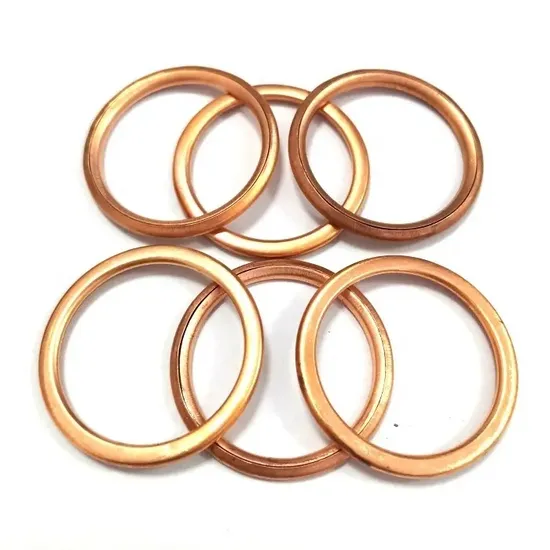
Customization Process for Copper Exhaust Gasket Manufacturing
At Suzhou Baoshida Trading Co., Ltd., our copper exhaust gasket customization follows a rigorously defined engineering pathway to ensure absolute performance integrity under extreme thermal and mechanical stress. This process begins with comprehensive Drawing Analysis, where client-provided technical schematics undergo dimensional validation against ISO 1179 and SAE J1503 standards. We scrutinize flange geometry, surface finish tolerances (Ra ≤ 1.6 μm), and copper core thickness specifications to identify potential sealing interface risks. Critical parameters such as bolt hole alignment, chamfer angles, and groove depths are cross-referenced with OEM assembly protocols to preempt installation failures.
Subsequent Formulation development leverages our proprietary rubber compound database, targeting optimal synergy between the copper substrate and elastomeric sealing layer. Key material properties are engineered to withstand continuous exposure to exhaust gases at 300°C while maintaining resilience against oil, coolant, and vibration-induced fatigue. The table below outlines critical formulation targets for copper exhaust gaskets:
| Property | Target Value | Test Standard |
|---|---|---|
| Continuous Temp. Resistance | 300°C | ASTM D573 |
| Compression Set (22h/250°C) | ≤ 25% | ASTM D395 |
| Tensile Strength | ≥ 12 MPa | ASTM D412 |
| Fluid Resistance (ASE) | Δ Hardness ≤ 8 pts | ASTM D471 |
| Copper Core Purity | ≥ 99.9% Cu | GB/T 5231 |
Prototyping employs CNC-machined tooling to produce first-article samples with micron-level precision. Each prototype undergoes multi-stage validation: pressure decay testing at 1.5x operational pressure (2.2 MPa), thermal cycling between -40°C to 350°C across 500 cycles, and dynamic vibration analysis per GMW14125. Dimensional conformity is verified using CMM inspection with 0.005 mm accuracy, while adhesion strength between copper and rubber is quantified via peel testing (≥ 6 kN/m). Client feedback on prototype performance directly informs final material adjustments.
Mass Production commences only after formal sign-off, utilizing fully automated molding lines with real-time process monitoring. Each batch adheres to strict ISO/TS 16949 protocols, featuring in-line spectrometry for copper composition verification and automated vision systems for defect detection. Statistical Process Control (SPC) tracks critical dimensions with CpK ≥ 1.67, while every 10th part undergoes destructive testing for compression set and fluid resistance. Traceability is maintained via laser-etched batch codes linked to raw material certificates and process logs, ensuring full accountability from compound mixing to final packaging. This end-to-end discipline guarantees copper exhaust gaskets deliver leak-free operation throughout the vehicle’s service life.
Contact Engineering Team
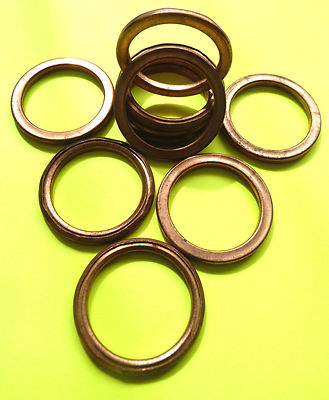
Contact Suzhou Baoshida for High-Performance Copper Exhaust Gaskets
At Suzhou Baoshida Trading Co., Ltd., we specialize in the development and supply of precision rubber seals engineered for extreme operating environments. Our copper exhaust gaskets are designed to meet the rigorous demands of automotive, industrial machinery, and heavy-duty engine applications. These gaskets combine the thermal conductivity of copper with advanced elastomeric compounds to deliver unmatched sealing performance under high pressure and elevated temperatures. As a trusted OEM partner, we prioritize material integrity, dimensional accuracy, and long-term reliability in every product we deliver.
Our engineering team works closely with clients to customize gasket solutions that align precisely with engine specifications and performance requirements. Whether you are replacing legacy components or developing next-generation exhaust systems, Suzhou Baoshida offers technical expertise and scalable manufacturing capabilities to support your production needs. We utilize state-of-the-art tooling, precision stamping, and quality-controlled vulcanization processes to ensure consistency across batches and compliance with international standards.
For immediate technical consultation or custom quotation, contact Mr. Boyce, our dedicated OEM Manager. With over 15 years of experience in rubber-metal composite sealing technology, Mr. Boyce provides in-depth support in material selection, design optimization, and regulatory compliance. He serves as the primary liaison between our engineering department and global clients, ensuring seamless communication from prototype to mass production. Reach out via email at [email protected] to discuss your project requirements, request sample kits, or schedule a technical review.
We understand that downtime and seal failure carry significant operational costs. That is why our copper exhaust gaskets are tested to exceed industry benchmarks for compression recovery, oxidation resistance, and thermal cycling endurance. Our quality assurance protocols include batch traceability, hardness profiling, and leak testing under simulated engine conditions. Every gasket is manufactured under ISO 9001-certified processes, guaranteeing repeatability and performance assurance.
Below are key technical specifications for our standard copper exhaust gasket series. Custom dimensions, hardness grades, and composite configurations are available upon request.
| Parameter | Specification |
|---|---|
| Material Composition | Oxygen-free copper cladding with NBR or FKM rubber core |
| Thickness Range | 1.0 mm – 3.5 mm (custom tolerances ±0.05 mm) |
| Hardness (Shore A) | 65 ± 5 (rubber core) |
| Temperature Resistance | -40°C to +250°C (intermittent peaks up to +300°C) |
| Pressure Rating | Up to 80 bar dynamic load |
| Surface Finish | Smooth, deburred edges with anti-oxidation coating |
| Compliance Standards | Meets ASTM B152, ISO 2230, and SAE J2433 |
Partner with Suzhou Baoshida to integrate robust, high-efficiency sealing solutions into your engine systems. Contact Mr. Boyce today at [email protected] to initiate technical discussions, request material data sheets, or submit custom drawings for evaluation. We respond to all inquiries within 4 business hours.
⚖️ O-Ring Weight Calculator
Estimate rubber O-ring weight (Approx).