
Technical Contents
Engineering Guide: Corrugated Gasket
Engineering Insight: Material Selection in Corrugated Gaskets
In precision sealing applications, corrugated gaskets serve as critical components where dynamic compression, thermal cycling, and chemical exposure converge. These gaskets are engineered to maintain reliable sealing force under fluctuating loads, making them indispensable in industries such as automotive powertrains, industrial pumps, and semiconductor processing equipment. However, a common pitfall in procurement is the reliance on off-the-shelf corrugated gaskets, which often fail prematurely due to inadequate material compatibility with operational conditions. The root cause lies in the oversimplification of material properties and an underestimation of environmental stressors.
Material selection is not a secondary consideration—it is the foundation of gasket performance. Standard elastomers like NBR or EPDM may suffice in benign environments, but when exposed to aggressive media such as biodiesel, hot oils, or halogenated solvents, their molecular structure degrades rapidly. This leads to swelling, loss of compression set resistance, and ultimately seal failure. Moreover, temperature extremes exacerbate these effects. For instance, silicone (VMQ) offers excellent low-temperature flexibility but lacks the tensile strength required in high-compression corrugated profiles, leading to creep and stress relaxation.
Another frequently overlooked factor is the interaction between the elastomer and the mating surface. Corrugated gaskets rely on controlled deformation to achieve sealing. If the durometer or resilience of the material does not align with the flange geometry and bolt load, the gasket may under-compress, allowing leakage, or over-compress, causing permanent deformation. Off-the-shelf variants typically offer a narrow range of hardness (usually 60–70 Shore A), which cannot accommodate the nuanced requirements of precision assemblies.
At Suzhou Baoshida Trading Co., Ltd., we emphasize application-specific formulation. By tailoring base polymers, filler systems, and cure chemistry, we produce corrugated gaskets with enhanced fatigue resistance, improved chemical inertness, and stable performance across -40°C to +200°C. For example, fluorocarbon (FKM) compounds with optimized fluorine content demonstrate superior resistance to aromatic fuels and oxidative aging, while perfluoroelastomers (FFKM) are deployed in ultra-high-purity environments where even trace outgassing is unacceptable.
The following table illustrates key material properties relevant to corrugated gasket performance:
| Material | Temperature Range (°C) | Hardness (Shore A) | Compression Set (22 hrs, 150°C) | Key Chemical Resistance |
|---|---|---|---|---|
| NBR | -30 to +100 | 60–75 | ≤25% | Aliphatic oils, water |
| EPDM | -50 to +150 | 50–80 | ≤20% | Steam, ketones, alkalis |
| FKM | -20 to +200 | 65–80 | ≤15% | Fuels, acids, aromatics |
| VMQ | -60 to +180 | 40–70 | ≤20% | Ozone, UV, silicone oils |
| FFKM | -15 to +300 | 70–90 | ≤10% | Strong acids, solvents |
In conclusion, the assumption that corrugated gaskets are interchangeable commodities leads to systemic reliability issues. True performance stems from engineered material selection—matched precisely to mechanical, thermal, and chemical demands. Custom formulation is not a premium option; it is a necessity for mission-critical sealing.
Material Specifications
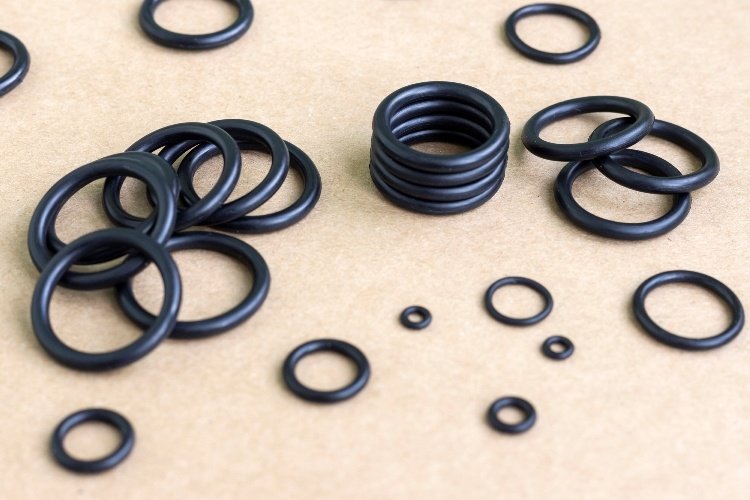
Material Specifications for Corrugated Gasket Performance
Corrugated gaskets demand precise elastomer selection to balance sealing integrity, environmental resistance, and mechanical stability under dynamic compression. At Suzhou Baoshida Trading Co., Ltd., our OEM formulations prioritize polymer chemistry tailored to corrugation geometry, ensuring uniform stress distribution and fatigue resistance. Below we detail critical specifications for Viton, Nitrile, and Silicone—three industry-standard materials for high-integrity sealing applications.
Viton (FKM) remains the premium choice for extreme chemical and thermal exposure. Its fluorocarbon backbone provides exceptional resistance to fuels, acids, and chlorinated solvents, with continuous service temperatures ranging from -20°C to 230°C. Compression set values per ASTM D395 remain below 25% after 70 hours at 200°C, critical for maintaining seal force in aerospace and chemical processing corrugated joints. However, its high fluorine content increases cost and reduces flexibility below -15°C, necessitating careful application assessment.
Nitrile (NBR) offers optimal cost-performance for oil and fuel environments. With acrylonitrile content modulated between 34%–50%, our formulations achieve tensile strengths of 15–20 MPa and hardness ranges of 60–90 Shore A. NBR excels in hydraulic systems and automotive fuel lines, resisting aliphatic hydrocarbons up to 125°C. Limitations include poor ozone resistance and thermal degradation above 150°C, requiring protective additives for outdoor corrugated gasket use. Compression set typically reaches 30–40% at 100°C after 70 hours, demanding precise groove design to compensate for relaxation.
Silicone (VMQ) delivers unmatched flexibility across extreme temperatures (-60°C to 200°C) and superior electrical insulation. Its siloxane polymer structure ensures consistent sealing in medical and food-grade corrugated gaskets per FDA 21 CFR 177.2600, with minimal extractables. While resistant to water and oxidation, silicone exhibits low tensile strength (5–8 MPa) and poor resistance to concentrated acids or steam above 150°C. Tear strength must be enhanced via fumed silica reinforcement to prevent damage during corrugated gasket installation.
The following table summarizes key comparative specifications for corrugated gasket applications:
| Material | Temperature Range (°C) | Key Chemical Resistances | Critical Limitations | Typical Corrugated Gasket Applications |
|---|---|---|---|---|
| Viton (FKM) | -20 to 230 | Fuels, acids, chlorinated solvents, steam | High cost; poor low-temp flexibility below -15°C | Chemical reactors, jet engine seals, semiconductor processing |
| Nitrile (NBR) | -30 to 125 | Aliphatic hydrocarbons, oils, water-based fluids | Ozone degradation; limited steam resistance | Automotive fuel systems, hydraulic manifolds, industrial pumps |
| Silicone (VMQ) | -60 to 200 | Water, ozone, UV, food-grade fluids | Low tensile strength; poor acid/steam resistance | Medical devices, food processing, electrical enclosures |
Suzhou Baoshida’s OEM engineering team validates all material selections against actual corrugation profiles and end-use conditions. We adjust polymer saturation, filler ratios, and cure systems to optimize elongation at break (critical for corrugated flexure) and minimize permanent set. Partner with us to translate these material properties into gasket designs that eliminate leakage paths while maximizing service life.
Manufacturing Capabilities
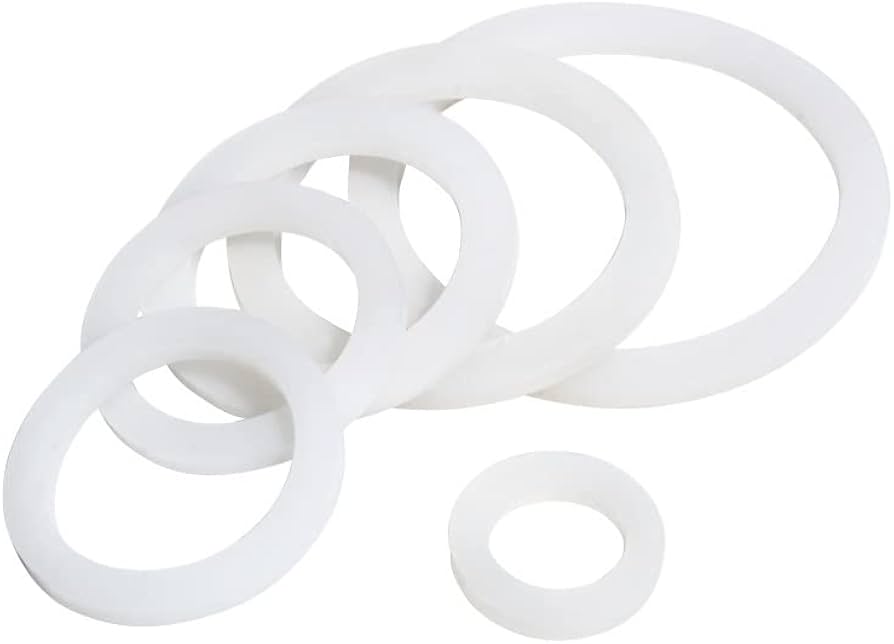
Engineering Excellence in Corrugated Gasket Manufacturing
At Suzhou Baoshida Trading Co., Ltd., our engineering capability forms the backbone of our leadership in precision rubber seals, particularly in the design and production of high-performance corrugated gaskets. With a dedicated team of five specialized mould engineers and two advanced rubber formula engineers, we integrate material science with precision tooling to deliver engineered sealing solutions tailored to the most demanding industrial environments.
Our mould engineering team brings over 60 combined years of experience in designing and optimizing injection, compression, and transfer moulds specifically for corrugated gasket profiles. These complex geometries require exact dimensional control, uniform wall thickness, and consistent flex characteristics—parameters our engineers master through 3D CAD/CAM modeling, finite element analysis (FEA), and rapid prototyping. Each mould is engineered to ensure optimal material flow, minimal flash, and long service life, directly contributing to product consistency and reduced total cost of ownership for our clients.
Complementing our tooling expertise is our in-house rubber formulation capability. Our two formula engineers specialize in elastomer chemistry, enabling us to develop custom compounds based on NBR, EPDM, FKM, silicone, and other specialty polymers. These formulations are fine-tuned for specific performance requirements such as temperature resistance (-40°C to +250°C), compression set, chemical exposure, and dynamic sealing behavior. By controlling the formulation process internally, we eliminate reliance on third-party compounders, ensuring batch-to-batch repeatability and full traceability.
This integrated engineering approach allows us to offer comprehensive OEM services, from concept and material selection to final validation and mass production. We work directly with client specifications, reverse-engineer legacy parts, and support design for manufacturability (DFM) reviews to optimize performance and cost-efficiency. Our quality management system is ISO 9001-certified, and all critical dimensions and material properties are verified through in-house testing, including tensile strength, hardness, volume swell, and thermal aging.
Whether for automotive, aerospace, energy, or industrial machinery applications, our engineering team ensures that every corrugated gasket meets exact functional and regulatory demands.
| Parameter | Specification |
|---|---|
| Material Types | NBR, EPDM, FKM, Silicone, ACM, AEM, HNBR |
| Hardness Range (Shore A) | 40–90 ±5 |
| Temperature Resistance | -40°C to +250°C (depending on compound) |
| Tolerance (Standard) | ±0.1 mm (critical dimensions) |
| Mould Design Software | SolidWorks, AutoCAD, Moldflow |
| Production Process | Injection, Compression, Transfer Molding |
| OEM Support | Full design, prototyping, and validation services |
| Testing Capabilities | Tensile, Compression Set, Volume Swell, Aging, Hardness |
Customization Process
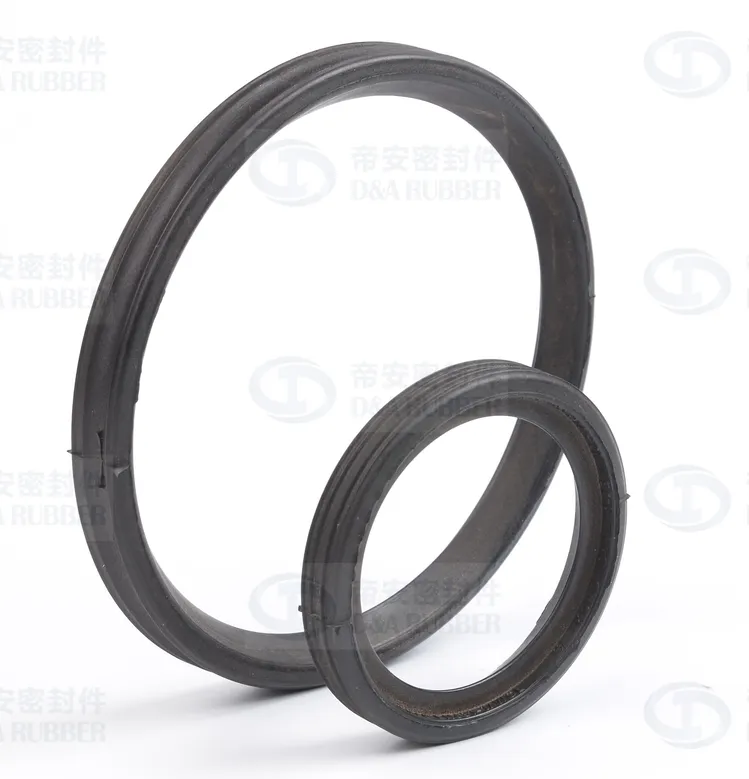
Corrugated Gasket Customization: Precision Engineering Workflow
At Suzhou Baoshida Trading Co., Ltd., our corrugated gasket customization process ensures optimal sealing performance under extreme industrial conditions. This systematic approach transforms client specifications into mission-critical components through four rigorously controlled phases.
Drawing Analysis
Initial assessment begins with comprehensive GD&T (Geometric Dimensioning and Tolerancing) validation of client-provided CAD models or technical drawings. Our engineering team verifies critical parameters including corrugation pitch, amplitude tolerance (±0.05mm), flange contact width, and compression-deflection curves. Finite Element Analysis (FEA) simulates stress distribution under operational loads, identifying potential failure points. Material compatibility with target media (e.g., hydraulic fluids, acids) is cross-referenced against ASTM D2000 standards. Non-conformities trigger immediate collaborative redesign with the client to prevent downstream tooling errors.
Formulation Development
Based on operational requirements, our rubber chemists engineer bespoke elastomer compounds. Key considerations include temperature range, chemical exposure, and compression set resistance. For instance, aerospace applications demanding -55°C to 230°C stability utilize perfluoroelastomer (FFKM) with controlled crosslink density, while automotive coolant systems employ hydrogenated nitrile butadiene rubber (HNBR) with optimized zinc oxide dispersion. Each formula undergoes accelerated aging tests per ISO 188 and fluid immersion per ASTM D471 to validate 10,000+ hour service life. Critical properties are quantified below:
| Material | Hardness (Shore A) | Temp Range (°C) | Fluid Resistance (ASTM D471) | Compression Set (ASTM D395, 70h/150°C) |
|---|---|---|---|---|
| NBR | 60-90 | -30 to +120 | Oil/Fuel (Grade B) | ≤25% |
| EPDM | 50-80 | -50 to +150 | Water/Glycol (Grade A) | ≤18% |
| FKM | 65-85 | -20 to +250 | Acid/Solvent (Grade AA) | ≤15% |
Prototyping & Validation
Precision CNC-machined molds produce 5–10 prototype gaskets for first-article testing. Dimensional accuracy is verified via CMM (Coordinate Measuring Machine) with ISO 2768-mK tolerances. Functional validation includes:
Helium leak testing at 10⁻⁶ mbar·L/s per SEMI F57
Dynamic compression fatigue cycling (10,000 cycles at 2Hz)
Thermal shock resistance (-40°C to +180°C in 15-minute cycles)
Client approval requires ≤0.5% dimensional deviation and zero leakage at 150% operating pressure.
Mass Production & Traceability
Approved designs transition to automated production lines with real-time SPC (Statistical Process Control). Each batch undergoes:
In-line Shore A hardness monitoring (±2 points tolerance)
100% visual inspection via machine vision systems
Lot-specific material traceability (polymer batch, cure date, operator ID)
Final shipments include PPAP Level 3 documentation with material certs, FMEA reports, and dimensional reports per AS9100. Our closed-loop system ensures <50 PPM defect rates while maintaining ISO 13485 and IATF 16949 compliance.
This end-to-end methodology guarantees corrugated gaskets that exceed OEM sealing demands in oil/gas, semiconductor, and powertrain applications through uncompromising material science and process control.
Contact Engineering Team
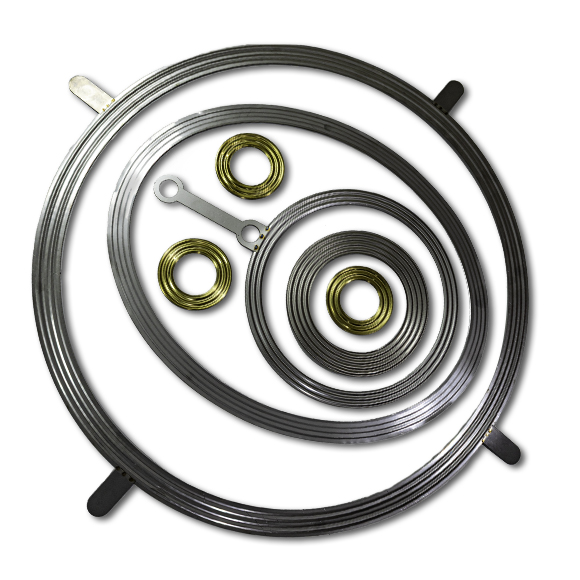
Contact Suzhou Baoshida for High-Performance Corrugated Gaskets
At Suzhou Baoshida Trading Co., Ltd., we specialize in precision-engineered rubber seals designed for demanding industrial environments. Our corrugated gaskets are engineered to deliver optimal sealing performance under fluctuating temperatures, pressures, and mechanical loads. Whether you are in the automotive, aerospace, petrochemical, or power generation sector, our products are built to meet rigorous OEM and international standards. As a trusted partner in advanced elastomer solutions, we combine material science expertise with strict quality control to deliver gaskets that ensure system integrity and longevity.
Our corrugated gaskets feature a unique wave-like profile that enhances compressibility and recovery, making them ideal for applications requiring dynamic sealing under thermal cycling or vibration. Constructed from high-grade elastomers such as NBR, EPDM, FKM (Viton™), and silicone, each gasket is tailored to resist specific media including oils, acids, steam, and ozone. We offer custom tooling and precision molding capabilities to meet exact dimensional and performance requirements, ensuring seamless integration into your assembly process.
To support your engineering and procurement teams, we provide comprehensive technical documentation, material certifications (including RoHS and REACH compliance), and batch traceability. Our in-house testing laboratory validates key parameters such as compression set, tensile strength, and sealing efficiency under simulated operational conditions.
For immediate assistance with product selection, custom design, or volume procurement, contact Mr. Boyce, our dedicated OEM Manager. With extensive experience in rubber formulation and industrial sealing solutions, Mr. Boyce serves as a technical liaison between your engineering team and our manufacturing unit. He ensures that every inquiry is met with precise material recommendations, rapid prototyping options, and scalable production planning.
Reach out via email at [email protected] to request samples, review material compatibility charts, or initiate a technical consultation. We respond to all inquiries within 12 business hours and support global logistics with DDP and JIT delivery models.
Below are representative specifications for our standard corrugated gasket series. Custom dimensions and materials are available upon request.
| Parameter | Value | Test Standard |
|---|---|---|
| Material Options | NBR, EPDM, FKM, Silicone | ASTM D2000 |
| Hardness Range | 50–90 Shore A | ASTM D2240 |
| Temperature Range | -40°C to +230°C (depending on material) | ISO 1817 |
| Maximum Pressure Rating | 15 MPa (intermittent) | DIN 28090 |
| Compression Set (22h, 100°C) | ≤25% | ASTM D395 |
| Media Resistance | Oil, steam, water, acids, solvents | ISO 1817 |
| Surface Finish | Ra ≤ 3.2 μm | ISO 4287 |
| Tolerance (Thickness) | ±0.1 mm | ISO 3302 |
Partner with Suzhou Baoshida Trading Co., Ltd. to enhance your sealing system reliability. Contact Mr. Boyce today at [email protected] for a technical evaluation and customized solution proposal.
⚖️ O-Ring Weight Calculator
Estimate rubber O-ring weight (Approx).