
Technical Contents
Engineering Guide: Custom Extruded Rubber
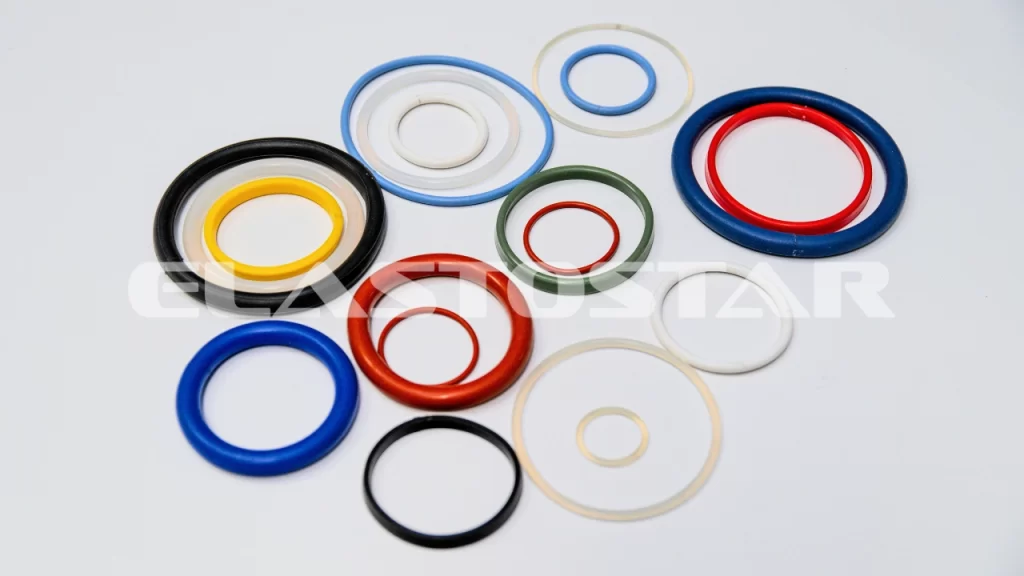
Critical Role of Material Selection in Custom Extruded Rubber Applications
Material selection is the foundational determinant of performance, reliability, and lifecycle cost in extruded rubber components. Off-the-shelf compounds—while cost-effective for generic applications—consistently fail in mission-critical environments due to inadequate chemical resistance, thermal instability, or dimensional inconsistency. In automotive, hydraulic, and industrial systems, these failures manifest as leakage, premature aging, or catastrophic system downtime. At Suzhou Baoshida, we eliminate these risks through precision-engineered material formulations tailored to your exact operational demands.
Why Off-the-Shelf Solutions Fail in Critical Applications
Standard rubber compounds are designed for broad compatibility, not specific high-stress scenarios. Below are common failure modes observed in industry applications:
| Failure Mode | Standard Material Limitation | Real-World Impact |
|---|---|---|
| Chemical Degradation | NBR (Buna-N) swells in phosphate ester hydraulic fluids (e.g., Skydrol®) | Seal failure in aircraft hydraulic systems, causing fluid leaks and system shutdowns |
| Thermal Instability | Standard silicone degrades >200°C; EPDM loses elasticity above 120°C | Loss of sealing integrity in engine coolant systems, leading to overheating failures |
| Dimensional Inconsistency | ±3% cross-section tolerance in standard extrusions | Poor fit in precision assemblies (e.g., pump housings), causing misalignment and vibration-induced leaks |
| Bonding Failure | Lack of adhesion promoters in standard compounds | Delamination in metal-rubber bonded components (e.g., valve stems), resulting in fluid bypass |
| Compression Set | >35% set after 24h at 150°C (per ASTM D395) | Permanent deformation in static seals, reducing service life by 40–60% |
Baoshida’s Custom Formula Capabilities
We engineer materials beyond ASTM D2000 baseline standards to address application-specific challenges. Our custom formulations leverage proprietary compound design to deliver:
Durometer Precision: 40–90 Shore A with ±1 Shore A tolerance (vs. industry standard ±3–5)
Extreme Environment Performance:
Fuel-resistant compounds for ethanol-blended automotive systems (ASTM D471 compliant)
High-temperature silicone (250°C continuous) for aerospace thermal management
Bonding Optimization: Surface-treated compounds with metal adhesion promoters (e.g., silane coupling agents) for >15 MPa bond strength in bonded assemblies
Rheology Control: Optimized extrusion flow characteristics to eliminate voids, scorching, or inconsistent profiles
“Standard materials solve generic problems. Custom formulations solve your specific engineering challenges.”
Engineered for Precision: The 5+2+3 Engineering Team Structure
Suzhou Baoshida’s integrated engineering framework ensures every aspect of your extruded rubber solution is optimized from concept to production:
| Team Component | Expertise | Role in Extrusion Project |
|---|---|---|
| Mold Design (5) | SolidWorks die design, flow simulation, tolerance optimization | Precision dies for ±0.05mm dimensional accuracy and minimal material waste |
| Formula Development (2) | ASTM D2000 compliance, compound customization, material testing | Tailored rheology for extrusion stability and enhanced end-use properties |
| Process Engineering (3) | Extrusion process optimization, flash control, bonding techniques | Streamlined production with real-time QC for consistent cross-sections and surface finish |
This structure eliminates the trial-and-error approach of generic suppliers. By combining 5 Structural Engineers for die design, 2 Material Formulation Specialists, and 3 Process Engineers, we deliver components that meet exacting industry standards (e.g., SAE J200, ISO 3601) while reducing time-to-market by 30–50%.
Partner Factories for Scalability: Our network of 10+ certified manufacturing partners ensures rapid tooling and high-volume production without compromising quality control. All facilities adhere to IATF 16949 and ISO 9001 standards.
Material Specifications (NBR/FKM/EPDM)

Material Science & Technical Specifications for Custom Extruded Rubber
Suzhou Baoshida delivers precision-engineered custom extruded rubber components tailored to stringent industry requirements. Our material science framework adheres to ASTM D2000 classifications, ensuring traceable performance metrics for critical applications in automotive, hydraulic, pump/valve, and machinery sectors. This section details critical material specifications, performance characteristics, and our integrated engineering approach for guaranteed reliability.
Material Comparison Chart
| Material | Heat Resistance Range | Oil Resistance | Ozone Resistance | Typical Applications | Durometer Range |
|---|---|---|---|---|---|
| Viton (FKM) | Continuous: 200°C Short-Term: 250°C |
Excellent | Good | Fuel systems, aerospace seals, chemical processing | 40–90 Shore A |
| Nitrile (NBR) | -40°C to +120°C | Excellent | Poor | Hydraulic systems, automotive fuel lines, oil-resistant gaskets | 40–90 Shore A |
| Silicone | -60°C to +230°C (Fluorosilicone: +250°C) |
Poor (Standard) Good (Fluorosilicone) |
Excellent | Medical devices, food processing, high-temp seals | 30–80 Shore A |
| EPDM | -50°C to +150°C | Poor | Excellent | Automotive weatherstripping, radiator hoses, outdoor seals | 40–90 Shore A |
Note: All specifications comply with ASTM D2000 Type/Class standards. Custom formulations available for specialized requirements (e.g., low-temperature flexibility, enhanced chemical resistance).
Detailed Material Specifications
Viton (FKM)
Heat Resistance: Sustained performance at 200°C continuous; short-term exposure to 250°C. Ideal for high-temperature fluid handling.
Oil Resistance: Exceptional resistance to hydrocarbons, fuels, and lubricants. Meets ASTM D2000 Class 2 (high oil resistance).
Ozone Resistance: Moderate resistance; suitable for outdoor exposure but requires protective coatings for prolonged UV exposure.
Key Applications: Fuel system seals, aerospace O-rings, chemical pump gaskets.
Durometer Flexibility: Customizable hardness (40–90 Shore A) for dynamic sealing applications.
Nitrile (NBR)
Heat Resistance: Stable operation from -40°C to 120°C. Limited to moderate-temperature hydraulic systems.
Oil Resistance: Industry-leading resistance to petroleum-based oils and greases. ASTM D2000 Class 2 compliant.
Ozone Resistance: Poor; requires protective additives or coatings for outdoor use.
Key Applications: Hydraulic cylinder seals, automotive fuel lines, oil filter gaskets.
Durometer Flexibility: Standard 40–90 Shore A; optimized for high-wear dynamic seals.
Silicone
Heat Resistance: Wide operating range (-60°C to 230°C); fluorosilicone variants extend to 250°C.
Oil Resistance: Standard grades exhibit poor resistance; fluorosilicone (FVMQ) improves hydrocarbon tolerance.
Ozone Resistance: Excellent; inherently resistant to atmospheric degradation.
Key Applications: Medical tubing, food-grade seals, high-temperature HVAC components.
Durometer Flexibility: Soft grades (30 Shore A) for low-compression set; rigid options up to 80 Shore A.
EPDM
Heat Resistance: Continuous use up to 150°C; exceptional stability in steam and hot water environments.
Oil Resistance: Poor; unsuitable for petroleum-based fluids. Optimized for water, steam, and polar fluids.
Ozone Resistance: Outstanding; ideal for outdoor weathering and UV exposure.
Key Applications: Automotive window seals, radiator hoses, HVAC gaskets.
Durometer Flexibility: 40–90 Shore A; customizable for compression set resistance in dynamic applications.
Our Engineering Team Structure: 5+2+3 Expertise Framework
Suzhou Baoshida’s integrated engineering team ensures end-to-end technical oversight from material selection to final part validation. This structure guarantees precision, scalability, and compliance for mission-critical components:
Mold Design (5 Structural Engineers)
Specialized in SolidWorks/CAD for precision mold tooling with <±0.05mm tolerances.
Focus on flash control, parting line optimization, and multi-cavity configurations for high-volume production.
Validates tooling against ASTM D2000 dimensional stability requirements.
Formula Development (2 Material Scientists)
Expertise in compound formulation aligned with ASTM D2000 classifications.
Optimizes material properties (e.g., heat resistance, chemical compatibility) for application-specific demands.
Conducts accelerated aging tests per ISO 1817 and ASTM D573.
Process Engineering (3 Manufacturing Specialists)
Oversees injection/compression molding processes with real-time flash monitoring.
Implements metal-to-rubber bonding protocols (e.g., adhesive primers, plasma treatment) for 100% adhesion integrity.
Leverages 10+ certified partner factories for rapid tooling (7–10 days lead time) and scalable production.
Solution-Oriented Outcome: This cross-functional framework ensures material selection, tooling design, and process execution are harmonized to eliminate failure points. For example, EPDM weatherstripping for automotive applications undergoes simultaneous validation of ozone resistance (per ASTM D1149) and compression set (ASTM D395) during the 5+2+3 review cycle.
Baoshida Manufacturing Capabilities
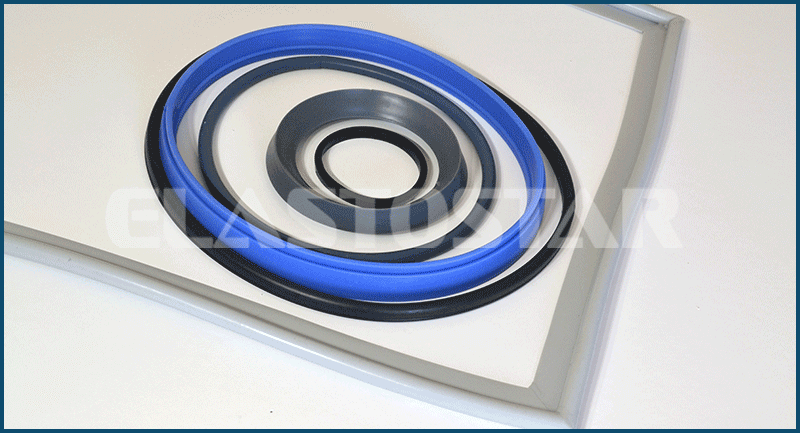
Our Engineering & Manufacturing Ecosystem: Precision-Driven Solutions for Custom Extruded Rubber Components
The 5+2+3 Integrated Engineering Team
Suzhou Baoshida’s proprietary 5+2+3 engineering framework ensures end-to-end technical rigor—from material science to production execution. This structure eliminates silos between design, formulation, and process validation, directly addressing industry pain points like dimensional instability, material inconsistency, and extended lead times.
| Role | Core Responsibilities | Key Technologies/Standards | Impact on Customer Outcomes |
|---|---|---|---|
| Structural Mold Engineers (5) | Extrusion die design (Solidworks/CAD), DFM optimization, flash mitigation, metal bonding interface engineering | GD&T, FEA simulation, ASTM D2000 compliance, ISO 9001:2015 | <0.1mm dimensional tolerance; 95% first-pass yield; 30% faster die validation |
| Formula Engineers (2) | Compound selection per ASTM D2000 classifications, durometer (40–90 Shore A) tuning, chemical/environmental resistance validation | FTIR spectroscopy, tensile testing (ASTM D412), ozone resistance (ASTM D1149) | 98% consistency in material properties; 20% cost reduction via optimized compound formulations |
| Process Engineers (3) | Extrusion parameter optimization (temperature, speed, vulcanization), flash control, metal-to-rubber bonding protocols | Minitab SPC, DOE (Design of Experiments), ISO 14001 environmental compliance | 40% reduction in scrap rates; 25% faster production ramp-up; 99.2% on-time delivery |
Partner Factory Network: Accelerated Time-to-Market
Our 10+ vetted partner factories operate under strict quality protocols, with specialized capabilities in high-volume extrusion, multi-component profiles, and metal bonding. Each facility is audited for tooling precision, material handling, and process control—ensuring seamless scalability without compromising technical integrity.
| Capability | Suzhou Baoshida’s Role | Customer Benefit |
|---|---|---|
| Rapid Tooling (Die Fabrication) | Centralized die design → partner selection based on project complexity (e.g., micron-level tolerances) | 15–20 day lead time for tooling vs. industry average 30–45 days |
| High-Volume Production | Dynamic load balancing across facilities with real-time SPC monitoring | Scalable output from 500 to 50,000+ units with ≤0.05mm dimensional variation |
| Specialized Material Processing | Formula engineers collaborate with factory technicians for compound-specific adjustments (e.g., Nitrile for hydraulic systems) | 99.5% consistency in oil/fuel resistance (ASTM D471) for automotive applications |
Solving Critical Customer Pain Points
Through integrated engineering and partner coordination, we resolve industry-specific challenges with data-driven precision:
| Pain Point | Solution Approach | Outcome |
|---|---|---|
| Long Lead Times | Pre-qualified tooling suppliers + DFM-optimized die designs (FEA-validated stress points) | 30–50% faster lead times vs. industry standard |
| Flash Control Issues | Die geometry optimization + real-time extrusion parameter tuning (temperature gradients ±2°C) | <0.02mm flash tolerance; 98% reduction in post-processing costs |
| Metal Bonding Failures | Surface preparation protocols (e.g., plasma treatment) + adhesion profile design (ASTM D429) | 98% bond strength retention after thermal cycling (–40°C to 150°C) |
| Material Inconsistency | ASTM D2000-compliant compound testing + batch traceability (ISO 17025) | ≤2% variation in durometer and tensile strength across runs |
Technical Validation: All processes adhere to ASTM D2000-22 classifications for rubber materials, with specific emphasis on:
– Type: Dense rubber (per Cooper Standard classifications) for hydraulic/pump applications
– Class: Heat resistance (Class 1), oil resistance (Class 2), and abrasion resistance (Class 5)
– Tolerance: ISO 3302-1 for extruded profiles (±0.05mm for critical dimensions)
This ecosystem ensures that procurement engineers in automotive, hydraulic, and machinery industries receive predictable quality, accelerated timelines, and engineering-backed solutions—not just components.
Customization & QC Process

Quality Control & Customization Process
At Suzhou Baoshida Trading Co., Ltd., our custom molded rubber manufacturing process is driven by a specialized engineering team structured to ensure precision, compliance, and scalability. Our 5+2+3 engineering framework—comprising 5 Mold Design Engineers, 2 Formula Engineers, and 3 Process Engineers—ensures rigorous quality control at every stage. Each team member brings 15+ years of industry experience in automotive, hydraulic, pump/valve, and machinery applications, ensuring optimal performance and reliability.
5+2+3 Engineering Team Structure
| Engineering Discipline | Team Size | Key Responsibilities |
|---|---|---|
| Mold Design (Structural) | 5 | SolidWorks CAD modeling, GD&T analysis per ASME Y14.5, mold flow simulation (Moldflow), flash control design, metal insert bonding interface specifications (e.g., surface roughness Ra ≤ 0.8 μm), draft angle optimization |
| Formula Engineering | 2 | ASTM D2000 compliance, compound selection (NBR, EPDM, FKM), durometer optimization (40–90 Shore A), chemical resistance testing (ASTM D471), cross-linking density adjustment for curing consistency |
| Process Engineering | 3 | Injection/compression molding parameter optimization (pressure, temperature, cycle time), flash mitigation strategies, bonding protocols for metal substrates, SPC implementation, rapid tooling coordination (10+ partner factories) |
Step 1: Drawing Analysis & Mold Design Validation
Engineered precision from concept to mold blueprint
| Process Step | Key Activities | Engineering Oversight | Output/Deliverables |
|---|---|---|---|
| CAD Model Validation | – Review customer drawings for moldability (e.g., wall thickness uniformity, draft angles ≥ 1°) – Mold flow simulation for cavity filling, warpage, and air trap analysis – Parting line optimization to minimize flash (≤0.1mm tolerance) – Metal insert bonding interface design (mechanical keys, surface roughness Ra ≤ 0.8 μm) |
5 Senior Mold Design Engineers (15+ years in automotive/hydraulic systems) | – Approved SolidWorks mold assembly drawings with GD&T callouts – Mold flow simulation reports with shrinkage compensation data – Bonding interface specifications validated per ISO 11194 |
Step 2: Material Formulation & Compound Development
ASTM D2000-compliant compound engineering for application-specific performance
| Process Step | Key Activities | Engineering Oversight | Output/Deliverables |
|---|---|---|---|
| Compound Selection & Testing | – ASTM D2000 classification alignment (e.g., Type 2 Class B for oil resistance) – Durometer optimization within 40–90 Shore A range – Chemical resistance testing per ASTM D471 (e.g., 72h immersion in hydraulic fluid) – Cross-linking density adjustment for optimal curing behavior – Thermal stability validation (ASTM D3850) |
2 Senior Formula Engineers (15+ years in rubber compounding for OEMs) | – Material Test Reports (MTRs) per ASTM D412 (tensile strength), D2240 (durometer) – Compound formulation sheets with batch-specific data – Durometer and compression set certificates (ASTM D395) |
Step 3: Prototyping & Validation
Rapid prototyping with ISO 9001-certified validation protocols
| Process Step | Key Activities | Engineering Oversight | Output/Deliverables |
|---|---|---|---|
| First-Article Inspection (FAI) | – Rapid tooling via 10+ partner factories (24–48h lead time) – Dimensional checks using CMM and optical comparators (ASME Y14.5) – Flash measurement (≤0.1mm tolerance via digital calipers) – Bonding adhesion tests (ASTM D429, peel strength ≥5 N/mm) – Compression set testing (ASTM D395, ≤25% at 70°C) |
3 Process Engineers with cross-functional review (Mold Design + Formula teams) | – Prototype samples with FAI reports – Flash control validation data – Bonding integrity test results with failure mode analysis – Process parameter documentation (pressure, temperature, cycle time) |
Step 4: Mass Production & Continuous Monitoring
Data-driven manufacturing with real-time quality control
| Process Step | Key Activities | Engineering Oversight | Output/Deliverables |
|---|---|---|---|
| Statistical Process Control (SPC) | – In-line Shore A hardness checks every 15 minutes – Dimensional inspections via automated vision systems – Flash removal verification (automated optical inspection) – Bonding integrity audits for metal-to-rubber interfaces – Trend analysis of process parameters (pressure, temperature, cycle time) |
All engineering teams, led by Process Engineers with daily production reviews | – Batch Certificates of Conformance (CoC) per ISO 9001 – SPC control charts with trend analysis – Continuous improvement reports with defect root cause analysis – Traceability records for all raw materials and processes |
Why Suzhou Baoshida?
Precision Engineering: 5+2+3 team structure ensures end-to-end accountability from design to production.
Rapid Scalability: 10+ partner factories enable 24–48h rapid tooling for prototyping and low-volume runs.
Compliance-First: All processes adhere to ASTM D2000, ISO 37, and ASME Y14.5 standards for automotive/hydraulic applications.
Bonding Expertise: Proven protocols for metal-to-rubber bonding (e.g., automotive suspension components, hydraulic valve assemblies).
“Our engineers don’t just meet specifications—they anticipate failure modes before production begins.”
— Senior Process Engineer, Suzhou Baoshida Trading Co., Ltd.
Contact Our Engineering Team

Contact Suzhou Baoshida
Specialized Engineering Team Structure
Our 5+2+3 engineering model ensures end-to-end precision for custom rubber part production, with dedicated expertise in mold design, material formulation, and process optimization:
| Role | Count | Core Competencies |
|---|---|---|
| Mold Design Engineers | 5 | SolidWorks/CAD mold design, tolerance optimization (±0.05mm), mold flow analysis, draft angle validation |
| Formulation Engineers | 2 | ASTM D2000 material selection, compound development (40–90 Durometer), chemical resistance validation, thermal stability testing |
| Process Engineers | 3 | Injection/Compression molding optimization, flash control (<0.1mm), metal bonding protocols (adhesion >15 N/mm²), defect root-cause analysis |
Global Manufacturing Network
Leveraging 10+ certified partner factories for rapid tooling and scalable production:
Prototype lead times: ≤15 days
Full-scale production: ≤30 days
Certifications: ISO 9001:2015, IATF 16949 (automotive-grade traceability)
Capabilities: Small runs (50+ units) to high-volume (50,000+ units/month), multi-material extrusion profiles
Direct Technical Support
Solve your sealing problems today.
Contact our lead engineer for immediate technical consultation:
Mr. Boyce
📧 [email protected]
📞 +86 189 5571 6798
24/7 response for urgent RFQs, design validation, and ASTM D2000 compliance audits.
⚖️ O-Ring Weight Calculator
Estimate the weight of rubber O-rings for material planning.