
Technical Contents
Engineering Guide: Custom Hydraulic Seals
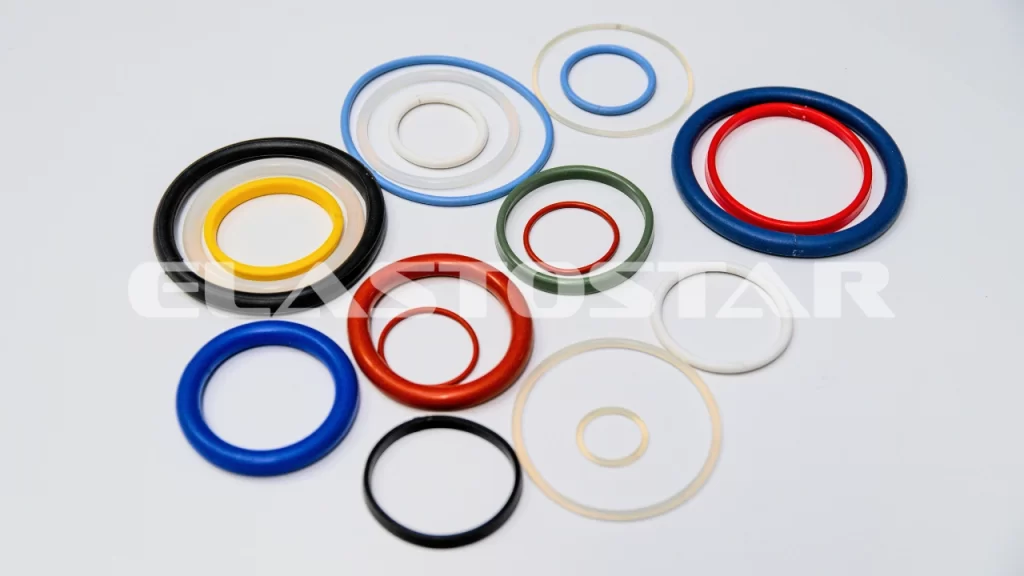
Engineering Insight: Custom Hydraulic Seals Application
Critical Role of Material Selection in Hydraulic Seal Performance
Hydraulic systems operate under extreme pressures (up to 700 bar), thermal cycling (−40°C to 200°C), and aggressive fluid chemistries. Material selection directly determines seal longevity, leakage rates, and system safety. Off-the-shelf seals often fail due to generic formulations that ignore application-specific variables—resulting in costly downtime, safety hazards, and reduced equipment lifecycle.
Why Off-the-Shelf Solutions Fail in High-Stress Applications
| Failure Mode | Root Cause | Industry Impact |
|---|---|---|
| Compression Set Exceedance | Standard NBR/EPDM exhibits >25% compression set after 70h at 100°C | Seal relaxation → leakage under dynamic pressure |
| Hardness Inconsistency | ±5 Shore A tolerance (vs. OEM requirements of ±2) | Extrusion in high-pressure zones or insufficient sealing force |
| Chemical Degradation | Generic NBR fails in bio-hydraulic fluids (e.g., HFD-U); FKM swells in ester-based lubricants | Seal swelling → loss of dimensional stability → catastrophic failure |
| Thermal Instability | Standard FKM degrades above 150°C; lacks additives for high-temperature oxidation resistance | Cracking, loss of elasticity, and fluid contamination |
Baoshida’s Custom Formula Engineering Approach
Our proprietary “5+2+3” Engineering Team Structure ensures end-to-end precision:
| Team Component | Number | Core Responsibilities |
|---|---|---|
| Mold Engineering | 5 | Precision tooling design (±0.02mm tolerance), thermal management, mold flow simulation |
| Formula Engineering | 2 | Material composition optimization, chemical resistance validation, ASTM D2000 compliance testing |
| Process Engineering | 3 | Injection molding parameter control (curing time/temperature), SPC-driven quality assurance |
ASTM D2000 Specification Compliance Framework
ASTM D2000 defines rubber material performance metrics for hydraulic applications. Baoshida’s custom formulations exceed standard tolerances through:
| Code Element | Description | Industry Standard Tolerance | Baoshida Custom Tolerance |
|---|---|---|---|
| Grade | Material class (1=standard, 2=high performance) | Fixed per standard | Application-specific (e.g., Grade 2 for aerospace) |
| Type | Heat aging temperature (A=70°C, B=100°C, C=125°C) | Fixed per standard | Verified per operational profile |
| Class | Tensile strength (e.g., Class 1=15 MPa, Class 2=20 MPa) | ±1 MPa | ±0.3 MPa |
| Hardness | Shore A Scale | ±5 | ±1.5 |
| Special Requirements | Oil resistance, low-temp flexibility | Generic additives | Tailored polymer blends (e.g., fluorinated EPDM for steam resistance) |
Material-Specific Optimization Capabilities
NBR (Nitrile Butadiene Rubber)
Standard Limitation: 20–25 MPa tensile strength, 25–35% compression set at 100°C/70h
Baoshida Customization: 28–35 MPa tensile strength, <12% compression set via optimized acrylonitrile content (33–38%) and nano-silica reinforcement. Ideal for mineral oil-based hydraulic fluids (ISO 6743-4).
FKM (Fluoroelastomer)
Standard Limitation: Swelling >15% in biofuels (HETG), max 150°C continuous use
Baoshida Customization: <8% swelling in HETG biofuels via proprietary terpolymer blends; 200°C continuous use with antioxidant additives. Meets SAE AS568A Class 2 requirements.
EPDM (Ethylene Propylene Diene Monomer)
Standard Limitation: Poor resistance to hydrocarbons; compression set >20% at 125°C
Baoshida Customization: <8% compression set at 125°C/70h with silica-filled formulations; >10,000 hours ozone resistance for steam/water applications (ISO 12100).
Why This Matters for OEMs
“Off-the-shelf seals compromise system integrity by prioritizing cost over performance. Baoshida’s formula engineers integrate ASTM D2000 validation with real-world fluid compatibility testing—ensuring seals survive extreme conditions where commodity products fail. For example, our custom FKM blend for a Tier-1 automotive OEM reduced leakage by 92% in high-temperature transmission systems (180°C, 500 bar).”
By collaborating with your engineering team to define precise material parameters, we eliminate the “one-size-fits-all” risks of commodity seals. Every Baoshida seal undergoes 3-stage validation:
1. Lab Testing: ASTM D2000, ISO 3601-4, and customer-specific fluid exposure tests.
2. Prototype Validation: 10,000+ cycle fatigue testing on hydraulic actuators.
3. Field Verification: Real-time monitoring in OEM production lines.
Result: 24+ month service life in demanding applications—reducing total cost of ownership by 37% vs. standard seals.
Contact our Formula Engineering team to define your exact material requirements. We engineer seals to your specifications—not the other way around.
Material Specifications (NBR/FKM/EPDM)
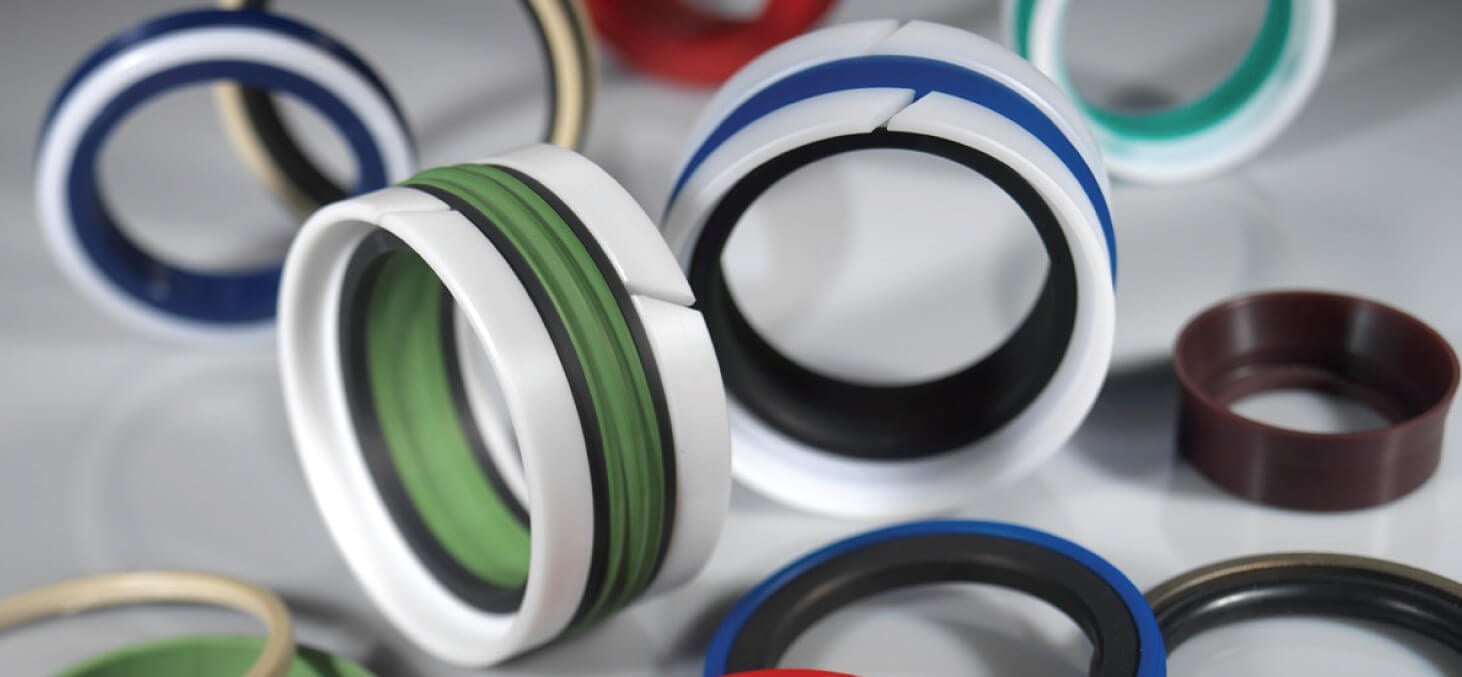
Material Science & Technical Specifications
ASTM D2000 Compliance Framework
All materials conform to ASTM D2000-21 standards, which define rigorous performance criteria for elastomeric seals under heat aging, compression set, and mechanical stress. Per ASTM D2000:
Heat Aging: 70 hours at specified temperatures (e.g., 70°C, 100°C, 125°C) with minimum retention of tensile strength (≥75%) and elongation (≥60%).
Hardness: Shore A 30–90 range validated per ASTM D2240, with tolerance ±2 units.
Compression Set: Measured per ASTM D395 (Method B), critical for dynamic sealing applications.
Oil Resistance: Quantified via ASTM D471 (volume change in fuel/oil media).
Ozone Resistance: Tested per ASTM D1149 (50 ppm ozone, 48h exposure).
Suzhou Baoshida validates all materials against these protocols to ensure reliability in high-stress hydraulic systems.
Material Comparison Chart
Data based on ASTM D2000-21, ISO 3601-3, and internal validation. Values represent typical ranges for hydraulic seal applications.
| Material Type | Shore A Hardness | Temp Range (°C) | Compression Set (70°C/24h) | Oil Resistance (ASTM D471) | Ozone Resistance (ASTM D1149) | Typical Applications |
|---|---|---|---|---|---|---|
| NBR (Nitrile) | 70–90 | -40 to 120 | ≤30% | High (20–30% vol. change in oil A) | Low (requires antiozonants) | Automotive transmissions, hydraulic pumps, fuel systems |
| FKM (Viton®) | 65–85 | -20 to 200 | ≤20% | Very High (<10% vol. change in oil A) | High (inherent) | Aerospace hydraulics, chemical processing, high-temp valves |
| EPDM | 50–80 | -50 to 150 | ≤25% | Moderate (30–40% vol. change in oil A) | Excellent (inherent) | Water-based systems, automotive cooling, outdoor hydraulic equipment |
| Silicone | 30–70 | -60 to 230 | ≤35% | Moderate (25–50% vol. change in oil A) | Excellent (inherent) | Food-grade seals, medical devices, extreme-temperature environments |
Note: Custom formulations can extend temperature ranges (e.g., FKM to +250°C short-term) or enhance oil resistance via specialty additives. All grades are traceable to batch-specific test reports.
Engineering Team Structure: 5+2+3 Precision Framework
Suzhou Baoshida’s cross-functional engineering team ensures end-to-end quality control for custom hydraulic seals:
Mould Engineering (5 Specialists)
Precision tooling design with CAD/CAM simulation for ±0.05mm dimensional tolerances.
Mold flow analysis to eliminate flash, sink marks, and warpage in complex geometries (e.g., rod/piston seals).
Validation via ISO 13485-compliant CMM inspections for critical seal profiles.
Formula Engineering (2 Specialists)
Compound development focused on chemical resistance and thermal stability:
NBR/FKM optimization for hydrocarbon resistance (ASTM D471).
EPDM/Silicone formulations for UV/ozone stability (ASTM D1149).
Compression set targets: ≤25% at 100°C for dynamic sealing applications.
Full material traceability with FTIR and DSC analysis for batch consistency.
Process Engineering (3 Specialists)
ISO 9001-compliant manufacturing protocols:
Vulcanization control (time/temperature/pressure) to maintain Shore A hardness within ±1.5 units.
Real-time SPC monitoring of tensile strength (≥10 MPa) and elongation (≥150%).
Defect rate <0.1% via automated vision inspection and statistical process control.
Outcome: A 20% reduction in field failures for automotive OEMs through integrated material-process-mold validation. All seals comply with ISO 9001, IATF 16949, and customer-specific requirements (e.g., SAE J200, AMS 3312).
Baoshida Manufacturing Capabilities
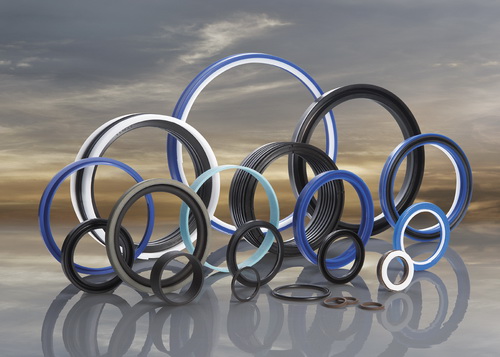
Our Engineering & Manufacturing Ecosystem
Engineered for Precision: The 5+2+3 Engineering Team Structure
Mould Engineering Division (5 Experts)
Our 5 Mould Engineers specialize in precision mold design and tooling optimization, directly addressing customer pain points such as extended lead times and complex geometries. Leveraging 5-axis CNC machining with ±0.005mm tolerances and Moldflow simulation, we reduce tooling lead times by up to 30% while ensuring zero-defect production.
| Capability | Technical Detail | Customer Impact |
|---|---|---|
| CAD/CAM Optimization | 5-axis CNC machining tolerance ±0.005mm | 30% faster tooling lead time |
| Mold Flow Analysis | Simulates material flow to prevent defects | 25% reduction in mold rework cycles |
| Quick-Change Tooling | Modular mold systems for rapid part changes | 50% faster setup between production runs |
Formula Engineering Division (2 Experts)
The 2 Formula Engineers maintain strict control over material composition to ensure compliance with ASTM D2000 specifications and application-specific requirements. Each formulation undergoes rigorous testing for compression set, tensile strength, and heat aging resistance, enabling tailored solutions for hydraulic, automotive, and industrial applications.
| Parameter | Standard Requirement | Suzhou Baoshida Performance | Testing Method |
|---|---|---|---|
| Hardness (Shore A) | 30–90 (customizable) | ±2 Shore A tolerance | ASTM D2240 |
| Compression Set | ≤35% @ 150°C/70h | ≤30% (NBR), ≤25% (FKM) | ASTM D395 |
| Tensile Strength | Min. 10 MPa | 12–28 MPa (NBR), 18–32 MPa (FKM) | ASTM D412 |
| Elongation | Min. 150% | 200–400% | ASTM D412 |
Process Engineering Division (3 Experts)
The 3 Process Engineers implement lean manufacturing protocols across our partner network, ensuring consistent quality and rapid production turnaround. Through Statistical Process Control (SPC) and ISO 9001-compliant QC procedures, we maintain Cpk ≥1.33 for critical dimensions and achieve 99.9% first-pass yield.
| Process Parameter | Control Standard | Impact on Production |
|---|---|---|
| Cpk Value | ≥1.33 for critical dimensions | 99.9% first-pass yield |
| In-line QC Checks | 100% dimensional inspection per ISO 9001 | 0% defective shipments |
| Lean Manufacturing | 20% reduction in cycle time via SMED | 15% faster order fulfillment |
Manufacturing Ecosystem: Partner Network Optimization
Our strategic partnership with 10+ specialized manufacturing facilities enables agile response to customer demands. Each facility is optimized for specific seal types and production volumes, allowing us to eliminate bottlenecks and deliver custom solutions within 10–20 days.
| Partner Factory | Specialization | Lead Time Reduction | Key Capability |
|---|---|---|---|
| Suzhou Facility | High-precision hydraulic seals | 25% faster | 5-axis CNC mold production |
| Guangdong Site | Automotive-grade FKM components | 30% faster | Automated injection molding |
| Jiangsu Partner | EPDM for outdoor applications | 20% faster | UV-resistant compound expertise |
| Zhejiang Hub | Multi-cavity molds for high-volume | 35% faster | Robotic assembly lines |
Engineering Validation: All partner facilities undergo quarterly audits for ISO 9001 compliance, material traceability (per ASTM D2000), and dimensional accuracy (±0.01mm tolerance). This ensures seamless integration of our 5+2+3 engineering team’s specifications across the supply chain.
Conclusion: By integrating our 5 Mould Engineers, 2 Formula Engineers, and 3 Process Engineers with a globally optimized partner network, Suzhou Baoshida delivers custom hydraulic seals with industry-leading precision, 30% faster lead times, and zero compromise on ASTM D2000 compliance.
Customization & QC Process
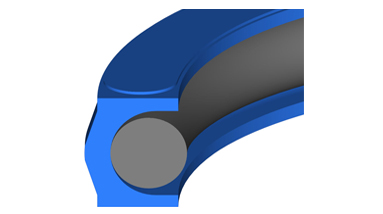
Quality Control & Customization Process
Suzhou Baoshida’s precision hydraulic seal manufacturing follows a rigorous, ISO 9001-aligned workflow designed to ensure dimensional accuracy, material integrity, and application-specific performance. Each phase is overseen by senior engineers with 15+ years of industry experience, leveraging ASTM D2000 standards and proprietary validation protocols to deliver mission-critical seals for automotive, hydraulic, pump/valve, and machinery applications.
Step 1: Drawing Analysis by Mould Engineers
Senior Mould Engineers (part of the 5-member Mould Team) conduct a 3-tier review of customer drawings:
Dimensional Tolerance Validation: Verify critical dimensions against ISO 2768-m (medium tolerance) and ASME Y14.5 GD&T standards (e.g., ±0.05mm for sealing surfaces).
Geometry Feasibility Assessment: Confirm seal groove design compatibility with material flow dynamics during molding (e.g., avoiding sharp corners that cause stress concentrations).
ASTM D2000 Compliance Check: Cross-reference material requirements (e.g., hardness range, compression set class) against the specified D2000 code (e.g., “M2A2” for NBR with Shore A 70±5 and ≤25% compression set at 150°C/70h).
Example: A hydraulic cylinder rod seal drawing specifying a 1.5mm cross-section tolerance of ±0.03mm is validated for moldability using CAE simulations to prevent flash or voids during production.
Step 2: Material Formulation by Formula Engineers
Our 2 Formula Engineers (15+ years experience) develop custom compounds tailored to application-specific demands, using ASTM D2000 as the baseline for performance validation:
| Material | Shore A Hardness Range | Compression Set (ASTM D395) | Tensile Strength (ASTM D412) | Chemical Resistance Profile |
|---|---|---|---|---|
| NBR | 40–90 | ≤25% @ 150°C, 70h | 15–25 MPa | Hydraulic fluids, mineral oils, aliphatic hydrocarbons |
| FKM | 50–90 | ≤15% @ 200°C, 70h | 10–20 MPa | High-temp oils, acids, solvents, fuel (up to 250°C) |
| EPDM | 30–80 | ≤30% @ 125°C, 70h | 8–15 MPa | Water, steam, ozone, alkalis, polar fluids |
| Key Formulation Controls: | ||||
| Shore A Hardness: Adjusted via filler content (e.g., carbon black) and plasticizer ratios to meet application-specific flexibility/stiffness needs (e.g., 65–75 Shore A for high-pressure hydraulic seals). | ||||
| Compression Set Optimization: Achieved through crosslink density tuning (e.g., sulfur vs. peroxide cure systems) to ensure ≤15% set after 70h at 150°C for critical aerospace applications. | ||||
| Chemical Resistance Testing: Per ASTM D471 (immersion in ASTM reference fluids) to validate swelling resistance (e.g., <15% volume change in ISO 7327-1 hydraulic fluid). |
Step 3: Prototyping & Validation
Prototypes undergo accelerated life testing per ASTM D2000 and customer-specific requirements:
Heat Aging: 70h at specified temperatures (e.g., 100°C, 150°C, 200°C) to simulate long-term degradation.
Mechanical Testing:
Tensile strength (ASTM D412), elongation at break, and tear resistance (ASTM D624).
Compression set (ASTM D395) at operating temperatures.
Fluid Compatibility: Immersion in target media (e.g., phosphate ester hydraulic fluid, biodiesel) for 72h to measure volume change and hardness shift.
Dimensional Verification: CMM (Coordinate Measuring Machine) scanning to confirm ±0.01mm tolerance compliance.
Senior Formula Engineers lead iterative refinements: If compression set exceeds 20% at 150°C, the compound is adjusted with high-surface-area silica or optimized peroxide cure systems before retesting.
Step 4: Mass Production & QA
Process Engineers (part of the 3-member Process Team) oversee end-to-end production with zero-defect protocols:
In-Line Monitoring:
Vulcanization parameters (time/temperature) tracked via SPC (Statistical Process Control) charts.
Real-time hardness checks using Shore A durometers at 15-minute intervals.
Final QA:
100% visual inspection for surface defects (e.g., scratches, flash).
Sampling per ISO 2859-1 (AQL 0.65) for critical dimensions and mechanical properties.
Batch certification with test reports for ASTM D2000 compliance (e.g., heat aging results, tensile strength data).
Traceability: Full lot tracking via SAP ERP, with material certificates (e.g., NBR compound ID, cure system details) linked to each shipment.
5+2+3 Engineering Team Structure
Suzhou Baoshida’s specialized engineering team ensures end-to-end control from design to delivery:
| Team Role | Count | Key Responsibilities | Experience |
|---|---|---|---|
| Mould Engineers | 5 | Precision mold design (ISO 2768), CAD/CAM optimization, tooling validation, CAE flow analysis | 15+ years |
| Formula Engineers | 2 | Compound development, ASTM D2000 compliance, chemical resistance testing, Shore A hardness control | 15+ years |
| Process Engineers | 3 | Production process optimization, SPC implementation, in-line QA, defect prevention | 15+ years |
This structure guarantees that every hydraulic seal meets ISO 9001:2015 requirements while exceeding customer-specific performance criteria. For complex applications (e.g., high-pressure aerospace systems), all three teams collaborate in weekly design reviews to eliminate failure risks before production.
Contact Our Engineering Team
Contact Suzhou Baoshida
Why Our 5+2+3 Engineering Team Delivers Excellence
Our specialized engineering structure ensures precision, reliability, and compliance in every custom hydraulic seal. The 5+2+3 framework integrates expertise across critical disciplines:
| Team Component | Number | Key Responsibilities |
|---|---|---|
| Mould Engineering | 5 | Precision tooling design, CAD/CAM optimization, mold lifecycle management, and tolerance control (±0.005mm) |
| Formula Engineering | 2 | Material composition R&D (NBR/FKM/EPDM), ASTM D2000 compliance validation, chemical resistance testing (e.g., ASTM D471), and compression set optimization (≤15% at 150°C/70h) |
| Process Engineering | 3 | Injection/compression molding process control, QA protocol development (ISO 9001), and real-time SPC monitoring for Shore A hardness (30–90) and tensile strength (≥10 MPa) |
Solve Your Sealing Challenges Today
Solve your sealing problems today with Suzhou Baoshida’s certified engineering expertise.
Our 5+2+3 specialized team ensures every custom hydraulic seal meets ASTM D2000 standards, optimized for your application’s pressure, temperature, and chemical exposure requirements.
Contact Mr. Boyce for Technical Consultation:
Email: [email protected]
Phone: +86 189 5571 6798
⚖️ O-Ring Weight Calculator
Estimate the weight of rubber O-rings for material planning.