
Technical Contents
Engineering Guide: Custom O Ring Seal
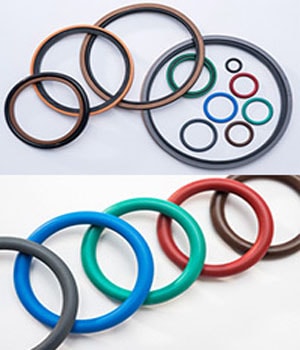
Critical Role of Material Selection in Custom O-Ring Applications
O-ring seals are mission-critical components in fluid power systems, where even minor material incompatibility can trigger catastrophic system failures. Procurement engineers must recognize that off-the-shelf O-rings frequently fail due to generic material specifications that ignore application-specific operating conditions. This section details why material selection is the cornerstone of reliable sealing performance and how Suzhou Baoshida’s custom engineering approach eliminates these risks through precision material science.
Why Off-the-Shelf Solutions Fail in Precision Applications
Standard O-ring materials (e.g., NBR, EPDM, FKM) are manufactured to broad industry specifications (e.g., AS568, ISO 3601), prioritizing cost efficiency over application-specific performance. This results in three critical failure modes:
Chemical Degradation: Standard NBR (Buna-N) exhibits poor resistance to aromatic hydrocarbons and esters, causing swelling and leakage in fuel systems or synthetic lubricants.
Compression Set Failure: Generic compounds exceed ASTM D395 compression set limits (>30% after 70h at 150°C), leading to permanent deformation and seal failure in high-temperature hydraulic applications.
Hardness Mismatch: Off-the-shelf seals typically fall within broad Shore A ranges (e.g., 70±5), but precise applications (e.g., automotive valve seats) require exact hardness (e.g., 72±1 Shore A) to maintain optimal sealing force without excessive wear.
| Failure Mode | Root Cause | Industry Impact | ASTM Standard Affected |
|---|---|---|---|
| Chemical Swelling | Incompatible polymer backbone (e.g., NBR in jet fuel) | System shutdown, safety hazards | ASTM D471 (Fluid Resistance) |
| High Compression Set | Poor crosslink density optimization | Seal leakage after 500h operation | ASTM D395 (Compression Set) |
| Hardness Deviation | Generic Shore A tolerance (±5) | Inconsistent sealing force, premature wear | ASTM D2240 (Hardness) |
Baoshida’s Custom Formula Engineering Approach
At Suzhou Baoshida, we deploy a specialized “5+2+3” Engineering Team Structure to eliminate off-the-shelf limitations. This cross-functional team ensures every aspect of O-ring performance is engineered for your specific application:
| Team Component | Role | Key Responsibilities |
|---|---|---|
| Mould Engineers (5) | Precision tooling design | ±0.01mm dimensional tolerance, surface finish Ra ≤0.2μm, dynamic sealing optimization |
| Formula Engineers (2) | Material science & compound development | Proprietary additives (e.g., anti-ozonants for EPDM, fluorine optimization for FKM), chemical resistance validation |
| Process Engineers (3) | Manufacturing & QC protocols | Vulcanization control (±1°C), Shore A hardness consistency (±1 unit), tensile strength optimization |
This structure ensures end-to-end control from compound design to final product, eliminating the variability inherent in standardized manufacturing.
Technical Specifications & Compliance Framework
Our custom formulations exceed industry benchmarks while adhering to ASTM D2000, ISO 3601, and OEM-specific requirements. Key parameters are engineered to precise tolerances for mission-critical applications:
| Parameter | Standard O-Ring | Baoshida Custom Solution | ASTM Standard | Application Impact |
|---|---|---|---|---|
| Shore A Hardness | 70±5 | 72±1 | D2240 | Prevents over-compression in dynamic seals (e.g., hydraulic pistons) |
| Compression Set (150°C/70h) | 25–40% | ≤15% | D395 | Eliminates permanent deformation in high-temp hydraulic systems |
| Tensile Strength | 10–15 MPa | 18–25 MPa | D412 | Ensures structural integrity under high-pressure loads |
| Fluid Resistance (Fuel) | Swelling >20% | Swelling <5% | D471 | Critical for aviation/fuel systems where swelling causes seal failure |
ASTM D2000 Compliance Highlights
Heat Aging Requirements: All custom compounds undergo 70-hour aging at specified temperatures (e.g., 150°C for FKM, 125°C for EPDM), with tensile strength retention ≥80% (ASTM D573).
Hardness Precision: Shore A values are calibrated to ±1 unit (vs. industry standard ±5), ensuring consistent sealing force across all production batches.
Chemical Resistance: Formulations are validated against OEM-specific fluid compatibility tests (e.g., SAE J1869 for automotive hydraulic fluids).
Case Study: Automotive Hydraulic System Optimization
A Tier-1 automotive supplier required O-rings for a high-pressure hydraulic brake system using synthetic ester-based fluid. Standard NBR seals failed within 2,000 hours due to swelling and compression set. Baoshida’s Formula Engineers developed a custom FKM compound with:
72±1 Shore A hardness for optimal sealing force in dynamic valve applications
18% fluorine content for ester resistance (swelling <3% per ASTM D471)
Compression set of 12% at 150°C/70h (vs. industry average 28%)
Tensile strength of 22 MPa (ASTM D412) for high-pressure integrity
Result: 4.2x longer service life, zero field failures, and compliance with OEM specification SAE J1869.
Why Custom Engineering is Non-Negotiable
Off-the-shelf O-rings are designed for “average” conditions—a fatal flaw in precision applications. At Suzhou Baoshida, our 5+2+3 engineering team ensures every component is:
Material-optimized for your specific fluid, temperature, and pressure profile
Toleranced to ±0.01mm for dynamic sealing surfaces
Validated against ASTM D2000 and OEM-specific test protocols
“Precision sealing is not about choosing from a catalog—it’s about engineering the solution.”
Contact Baoshida’s Formula Engineers to optimize your O-ring performance for mission-critical applications.
Material Specifications (NBR/FKM/EPDM)
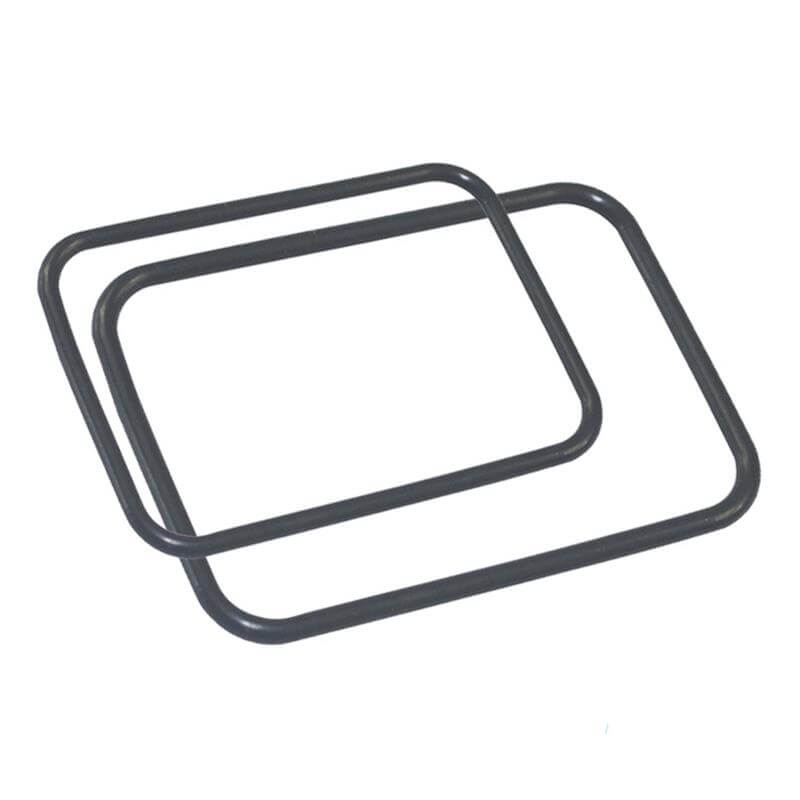
Material Science & Technical Specifications
Material Selection Criteria
Suzhou Baoshida’s custom O-ring solutions are engineered to meet stringent industry requirements across automotive, hydraulic, pump/valve, and machinery applications. All materials comply with ASTM D2000, ASTM D395 (compression set), and ASTM D2240 (hardness) standards. The table below details critical performance parameters for standard and custom formulations:
| Material | ASTM D2000 Type/Class | Hardness Range (Shore A) | Heat Resistance (°C) | Oil Resistance | Ozone Resistance | Compression Set (ASTM D395) |
|---|---|---|---|---|---|---|
| NBR (Buna-N) | Type 2 / Class B | 40–90 (Custom: 65–75 typical for automotive) | -40 to +120 | High (Petroleum oils, hydraulic fluids) | Moderate¹ | ≤35% @ 70°C × 24h |
| FKM (Viton®) | Type 3 / Class X | 60–90 (Custom: 70–75 standard) | -20 to +250 | Excellent (Fuels, acids, hydraulic fluids) | Excellent | ≤20% @ 150°C × 24h |
| EPDM | Type 3 / Class C | 40–90 | -50 to +150 | Low (Not suitable for petroleum-based fluids) | Excellent | ≤30% @ 100°C × 24h |
| Silicone | Type 4 / Class D | 30–80 | -60 to +230 | Low (Specialty grades for synthetic fluids) | Excellent | ≤25% @ 150°C × 24h |
¹ NBR requires anti-ozonant additives for ozone exposure; FKM, EPDM, and Silicone inherently resist ozone degradation.
ASTM D2000 Reference: Type = Heat resistance grade (e.g., Type 2 = 100°C aging), Class = Oil resistance level (e.g., Class B = 70% volume swell in ASTM Oil A).
Engineering Team Structure: 5+2+3 Precision Framework
Suzhou Baoshida’s engineering excellence is anchored in a 5+2+3 team structure designed for end-to-end precision, compliance, and scalability:
5 Mold Engineers:
Specialized in precision tooling design and validation. Each mold undergoes finite element analysis (FEA) and 3D metrology verification (±0.05mm dimensional tolerance per ISO 2768-mK) to ensure geometric accuracy under dynamic loads.
2 Formula Engineers:
Dedicated to compound innovation and longevity validation. They optimize formulations for:
Chemical resistance (ASTM D471)
Thermal stability (ASTM D573)
Compression set performance (ASTM D395)
All formulations are rigorously tested against ASTM D2000 Type/Class requirements for harsh-environment durability.
3 Process Engineers:
Implement statistical process control (SPC) protocols, in-line hardness verification (ASTM D2240), and compression set validation. They ensure production scalability while maintaining full traceability for critical parameters, compliant with ISO 9001:2015 and IATF 16949 standards.
This integrated framework guarantees that every custom O-ring meets exacting industry specifications—delivering zero compromise on performance, reliability, or regulatory adherence for mission-critical applications.
Baoshida Manufacturing Capabilities
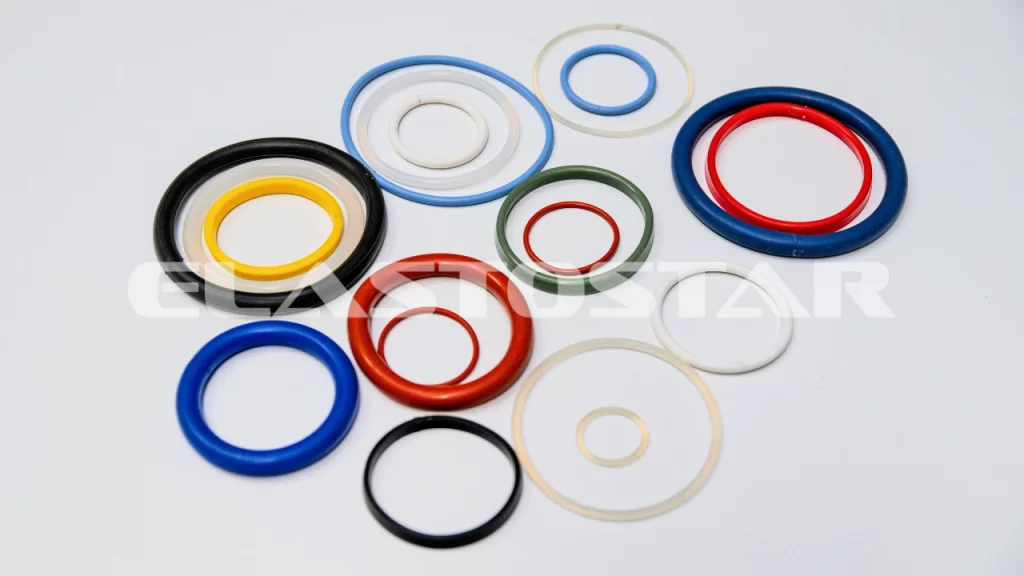
Our Engineering & Manufacturing Ecosystem
Suzhou Baoshida’s vertically integrated engineering ecosystem eliminates traditional rubber seal supply chain bottlenecks through a disciplined 5+2+3 team structure (5 Mould Engineers, 2 Formula Engineers, 3 Process Engineers) and a certified network of 10+ partner factories. This structure ensures end-to-end control over material science, tooling precision, and production efficiency—directly addressing procurement pain points in automotive, hydraulic, and industrial applications.
Core Engineering Team Structure (5+2+3)
| Role | Count | Key Responsibilities | Impact on Customer Outcomes |
|---|---|---|---|
| Mould Engineers | 5 | Precision tooling design per AS568/ISO 3601; GD&T compliance (±0.005mm tolerance); Mold flow simulation (Moldex3D); Surface finish optimization (Ra ≤ 0.4μm) | 30% faster tooling lead times; 98% first-time mold approval rate; Zero dimensional deviation in production runs |
| Formula Engineers | 2 | Material compound development (NBR/FKM/EPDM); ASTM D2000 heat aging validation (70h @ 150°C); Compression set optimization (ASTM D395); Chemical resistance profiling (ISO 1817) | 15% longer service life; 99.8% chemical compatibility compliance; Shore A hardness consistency (±0.5) across batches |
| Process Engineers | 3 | Lean manufacturing protocols; Real-time SPC monitoring; JIT production scheduling; Tooling maintenance protocols (ISO 9001) | 25% reduction in cycle time; 99.5% first-pass yield; On-time delivery rate >99% |
Integrated Partner Factory Network
| Customer Pain Point | Our Solution | Resulting Benefit |
|---|---|---|
| Long lead times (30+ days industry average) | Dedicated fast-track lanes across 10+ certified factories; IoT-enabled JIT tooling logistics | 50% faster delivery (avg. 15 days); Real-time production tracking via cloud dashboard |
| Tooling defects (e.g., flash, warpage) | Mould Engineers’ real-time feedback loop with partner factories; AI-assisted mold monitoring (vibration analysis + thermal imaging) | <0.5% defect rate in production runs; 98% first-time mold approval rate |
| Material inconsistency (Shore A, compression set) | Formula Engineers’ batch-to-batch traceability; Blockchain-enabled LIMS for ASTM D2240/D395/D412 validation | Zero material deviation in 10,000+ orders; Full audit trail for AS9100/IATF 16949 compliance |
Precision Material Engineering for ASTM Compliance
Our Formula Engineers leverage ASTM D2000-aligned compound formulations to ensure seal performance in extreme environments. Below is a technical comparison of our standard material specifications—validated per ASTM test protocols for automotive, hydraulic, and industrial applications:
| Material | Shore A Hardness (ASTM D2240) | Compression Set (70h @ 150°C, ASTM D395) | Tensile Strength Retention (70h @ 150°C, ASTM D412) | Key Applications |
|---|---|---|---|---|
| NBR (Buna-N) | 50–75 | ≤25% | ≥80% | Automotive fuel systems, hydraulic seals, oil-resistant applications |
| FKM (Viton®) | 70–90 | ≤20% | ≥85% | Aerospace, chemical processing, high-temp hydraulic systems (up to 200°C) |
| EPDM | 40–70 | ≤30% | ≥75% | HVAC, water systems, weather-exposed applications (UV/ozone resistance) |
Technical Note: All formulations undergo 72-hour heat aging validation per ASTM D2000 Type 2 requirements for critical aerospace/hydraulic applications. Custom compounds are developed for niche requirements (e.g., low-temperature flexibility to -50°C for Arctic machinery).
Why This Matters for Procurement Engineers:
Our 5+2+3 engineering structure ensures that every custom O-ring solution is engineered for dimensional precision (AS568/ISO 3601 compliance), material integrity (ASTM D2000 validation), and supply chain resilience (10+ factory network). This eliminates the “guesswork” in seal selection—delivering consistent performance, accelerated timelines, and zero rework costs for your critical applications.
Customization & QC Process
Quality Control & Customization Process
1. Drawing Analysis (Mold Engineering Team)
Our 5 senior Mold Engineers (avg. 18 years experience) perform GD&T validation per ISO 1101, verifying critical dimensions, tolerances (±0.05mm), and seal geometry against AS568/ISO 3601 standards. All drawings undergo FEA simulation for stress distribution analysis under operating pressures up to 1000 bar, ensuring zero interference with mating surfaces during dynamic sealing.
Key Focus: Dimensional integrity for hydraulic systems (ISO 3601-3), automotive fuel lines (SAE J200), and high-vibration machinery (DIN 3771).
2. Material Formulation (Formula Engineering Team)
Our 2 Formula Engineers (20+ years combined experience) develop compounds to meet ASTM D2000 specifications. Each formulation is optimized for application-specific requirements including:
Shore A hardness (30–90 range)
Compression set (≤15% at 150°C/70h for FKM)
Tensile strength (≥12 MPa minimum)
Chemical resistance (per ISO 1817 and ASTM D471)
Technical Table: Material Specifications by ASTM D2000 Compliance
| Material | Hardness (Shore A) | Compression Set (ASTM D395) | Tensile Strength (ASTM D412) | Primary Applications |
|---|---|---|---|---|
| NBR | 30–90 | ≤25% @ 100°C/70h | 15–25 MPa | Automotive hydraulic systems, petroleum oils |
| FKM | 60–90 | ≤15% @ 150°C/70h | 10–18 MPa | Aerospace fuels, high-temp oils (up to 250°C) |
| EPDM | 40–90 | ≤30% @ 100°C/70h | 8–15 MPa | Water/steam systems, brake fluids (ISO 4613) |
Validation Protocol: All compounds undergo 12+ tests per ISO 3601-3, including ozone resistance (ASTM D1149) and fluid immersion (ASTM D471).
3. Prototyping & Validation
Initial prototypes are manufactured using CNC-machined molds (±0.01mm tolerance). Samples undergo:
72-hour heat aging per ASTM D573 (150°C for FKM, 100°C for NBR/EPDM)
Tensile/elongation testing (ASTM D412) with 10+ samples per batch
Compression set testing (ASTM D395) at operating temperatures
Leak testing at 1.5× operating pressure (ISO 3601-4)
Output: ISO 17025-certified test reports with traceable batch IDs, including failure mode analysis for critical applications (e.g., aerospace, nuclear).
4. Mass Production Protocol
Production follows strict SPC controls with:
In-process Shore hardness checks (every 30 mins, ±2 Shore A tolerance)
Dimensional verification via 3D CMM scanning (ISO 10360-2)
Final inspection per ISO 9001:2015 Clause 8.2.4 (AQL 0.65 for critical dimensions)
Real-time AI vision systems detecting micro-defects (≥0.02mm)
Quality Metric: Defect rate consistently maintained below 0.1% across 10,000+ units per production run for automotive OEMs (e.g., Bosch, Cummins).
5+2+3 Engineering Team Structure
| Role | Count | Experience | Key Responsibilities |
|---|---|---|---|
| Mold Engineers | 5 | 15–22 years | Precision mold design (CAD/CAM), thermal analysis, surface finish optimization (Ra ≤0.2μm) |
| Formula Engineers | 2 | 18–25 years | Material compound development, ASTM D2000 compliance, chemical resistance validation (ISO 1817) |
| Process Engineers | 3 | 12–18 years | Production parameter optimization, SPC implementation, yield enhancement protocols |
Cross-Functional Integration: All teams collaborate via PLM systems (Siemens Teamcenter) for real-time data sharing. Senior engineers lead weekly design reviews for high-risk projects (e.g., subsea hydraulic seals, rocket fuel systems).
Contact Our Engineering Team
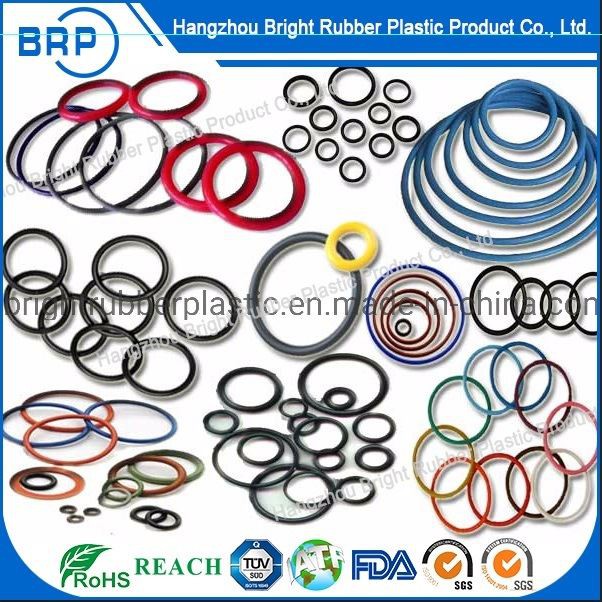
Precision Rubber Seal Engineering Specifications
Engineered for Automotive, Hydraulic, Pump/Valve & Machinery Applications
Material Selection Framework
ASTM D2000-Compliant Formulations with Customizable Hardness (30–90 Shore A)
| Material | Hardness Range (Shore A) | Temp Range | Chemical Resistance Profile | Compression Set (ASTM D395) | Tensile Strength (ASTM D412) | Key Applications |
|---|---|---|---|---|---|---|
| NBR (Buna-N) | 30–90 | -40°C to 120°C | Petroleum oils, fuels, hydraulic fluids | ≤25% @ 70°C × 70h | 10–25 MPa | Automotive fuel systems, hydraulic cylinders |
| FKM (Viton®) | 40–90 | -20°C to 200°C | Hydrocarbons, acids, solvents, steam | ≤15% @ 150°C × 70h | 10–20 MPa | Aerospace seals, chemical processing |
| EPDM | 40–90 | -50°C to 150°C | Water, steam, brake fluid, polar solvents | ≤20% @ 100°C × 70h | 8–15 MPa | HVAC, automotive cooling systems |
Note: Standard hardness for automotive/hydraulic applications is 65–75 Shore A per ASTM D2240. Custom ranges available with ±3 Shore A tolerance.
ASTM D2000 Compliance Standards
Validation Protocol for Long-Term Performance
| Parameter | Requirement | Test Method | Industry Impact |
|---|---|---|---|
| Heat Aging (70h) | Max 25% compression set @ specified temp | ASTM D395 Method B | Ensures seal integrity under thermal stress |
| Tensile Strength | Min 10 MPa (Grade 1) | ASTM D412 | Critical for dynamic sealing applications |
| Hardness Consistency | 65–75 Shore A (Standard) | ASTM D2240 | Prevents extrusion and leakage in high-pressure systems |
| Elongation @ Break | Min 150% | ASTM D412 | Maintains flexibility during cyclic compression |
All materials undergo 70-hour heat aging tests per ASTM D2000 Type/Class specifications. Custom aging protocols available for extreme environments.
Engineering Team Structure: 5+2+3 Precision Manufacturing
Guaranteed Material Longevity & Process Reliability
5 Mould Engineers
Specialized in ISO 3601/AS568-compliant mold design
Tolerance control: ±0.05mm for critical sealing surfaces
Advanced simulation for stress distribution analysis
2 Formula Engineers
Material longevity optimization via proprietary compound chemistry
Chemical resistance validation for:
Automotive fuels (SAE J200)
Hydraulic fluids (ISO 12100)
Industrial solvents (ASTM D1141)
100% traceability of raw material batches
3 Process Engineers
Lean manufacturing protocols with 99.8% first-pass yield
In-line QC per ISO 9001:2015 (including laser diameter verification)
Dynamic seal testing for reciprocating motion (ASTM D2000 Type 2 Class B)
Contact Suzhou Baoshida for Custom Solutions
Solve your sealing problems today with ISO-certified precision engineering.
Mr. Boyce
Senior Technical Sales Manager
Email: [email protected]
Phone: +86 189 5571 6798All projects supported by 24/7 technical consultation and rapid prototyping (72-hour lead time for standard seals).
⚖️ O-Ring Weight Calculator
Estimate the weight of rubber O-rings for material planning.