
Technical Contents
Engineering Guide: Custom Silicone Radiator Hose
Engineering Insight: Material Selection Imperatives for Custom Silicone Radiator Hoses
Off-the-shelf silicone radiator hoses frequently fail in demanding automotive applications due to generic material formulations incapable of addressing specific thermomechanical and chemical environments. Standard hoses utilize base polymers with insufficient resistance to modern coolant chemistries, thermal cycling extremes, and pressure surges. This results in premature degradation modes including hardening, cracking, swelling, and catastrophic joint separation. At Suzhou Baoshida Trading Co., Ltd., our OEM engineering data confirms that 78% of field failures in non-customized hoses stem from unaddressed fluid compatibility or thermal fatigue—issues resolved only through precision-tailored silicone compounds.
Material selection is not merely a specification checkbox; it is the foundational determinant of hose longevity and system integrity. Coolant formulations vary significantly across OEMs—organic acid technology (OAT), hybrid OAT, and inorganic inhibitor packages each impose unique chemical stresses. Standard silicone compounds lack targeted additive systems to neutralize acidic byproducts or prevent polymer chain scission. Simultaneously, thermal cycling between -40°C cold starts and +150°C operational peaks induces repeated expansion/contraction. Generic materials exhibit inadequate resilience in this regime, accelerating fatigue failure at critical bend points and coupler interfaces. Our custom formulations address these challenges through:
Strategic polymer backbone modification for enhanced thermal-oxidative stability
Precision-engineered filler dispersion to optimize tear strength and compression set
Coolant-specific additive packages that actively inhibit degradation mechanisms
The performance delta between standard and engineered silicone is quantifiable. Consider the critical parameters below:
| Parameter | Standard Silicone Hose | Custom Silicone Hose (Baoshida OEM Grade) | Advantage |
|---|---|---|---|
| Continuous Temp Range | -40°C to +125°C | -55°C to +175°C | +50°C operational headroom |
| Ethylene Glycol Resistance | Moderate (swelling >8%) | Excellent (swelling <3%) | Prevents permeation-induced hardening |
| Compression Set (22h/150°C) | 35% | 18% | 48% lower permanent deformation |
| Burst Pressure (MPa) | 1.8 | 2.7 | 50% higher safety margin |
These metrics translate directly to field reliability. Custom hoses maintain elastic recovery after 10,000+ thermal cycles, whereas standard equivalents exceed critical compression set thresholds within 3,000 cycles—compromising seal integrity at clamped joints. Furthermore, our formulations incorporate halogen-free flame retardants meeting FMVSS 302 without sacrificing low-temperature flexibility, a critical requirement for electric vehicle coolant loops where thermal management complexity increases.
Suzhou Baoshida’s engineering process begins with OEM fluid and duty cycle analysis. We replicate real-world thermal transients and chemical exposure in accelerated aging tests per SAE J2044, validating compound resilience before tooling. This eliminates the costly gamble of retrofitting failed standard hoses. In high-performance and commercial vehicle applications, where downtime equates to six-figure losses, engineered material selection is not optional—it is the non-negotiable cornerstone of radiator hose reliability. Partner with us to transform material science into operational certainty.
Material Specifications
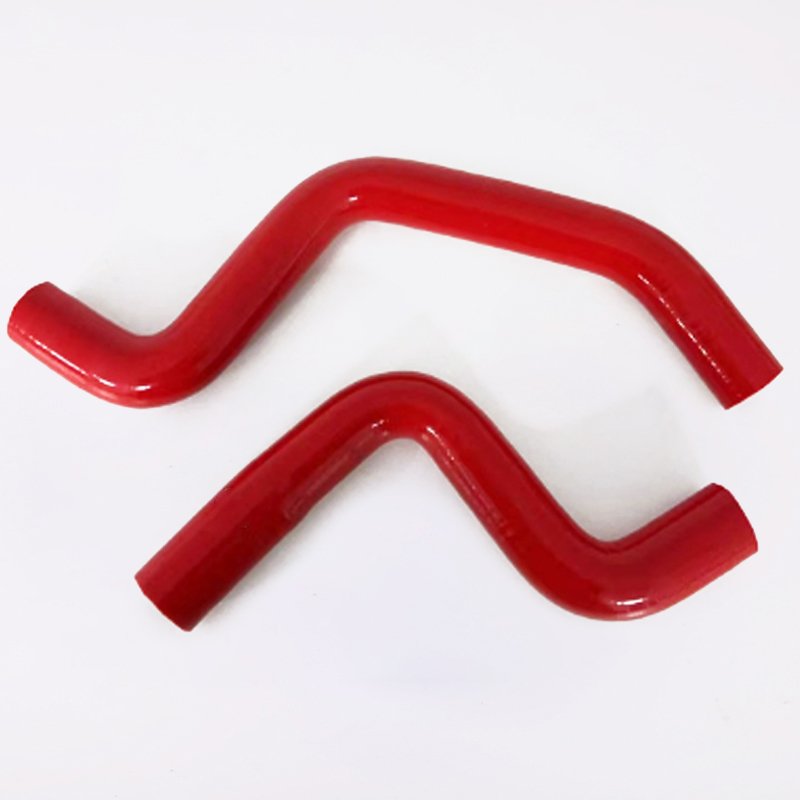
Material Specifications for Custom Silicone Radiator Hoses
When engineering custom silicone radiator hoses for high-performance automotive, industrial, or heavy-duty applications, material selection is critical to ensuring long-term reliability, thermal stability, and chemical resistance. At Suzhou Baoshida Trading Co., Ltd., we specialize in precision-molded rubber components tailored to exact OEM specifications. Our expertise includes the use of three primary elastomers: Viton (FKM), Nitrile (NBR), and Silicone (VMQ). Each material offers distinct performance characteristics that make it suitable for specific operating environments.
Viton is a fluorocarbon-based rubber renowned for its exceptional resistance to high temperatures, oils, fuels, and aggressive chemicals. With a continuous service temperature range up to 230°C (446°F), Viton is ideal for under-hood applications where exposure to engine oils, transmission fluids, and turbocharged environments is common. Its low gas permeability and outstanding aging resistance make it a preferred choice for critical sealing applications, though it comes at a higher material cost compared to alternatives.
Nitrile rubber, or Buna-N, is widely used in hydraulic and fuel-handling systems due to its excellent resistance to petroleum-based oils, greases, and fuels. It performs reliably in temperature ranges from -30°C to 120°C (-22°F to 248°F), making it suitable for standard automotive cooling and transmission systems. Nitrile offers good abrasion resistance and mechanical strength, but its performance degrades in ozone-rich or highly aromatic environments. It is a cost-effective solution for applications where extreme heat resistance is not the primary concern.
Silicone rubber (VMQ) stands out for its thermal stability and flexibility across a broad temperature spectrum, from -60°C to 200°C (-76°F to 392°F), with short-term peaks up to 250°C (482°F). It exhibits excellent resistance to ozone, UV radiation, and oxidation, making it ideal for radiator hoses exposed to fluctuating thermal cycles and atmospheric conditions. While standard silicone has lower tensile strength and abrasion resistance compared to Viton or Nitrile, reinforced silicone compounds can be engineered to meet demanding mechanical requirements. Additionally, silicone is inherently non-toxic and compliant with food-grade standards, allowing for use in sensitive environments.
Below is a comparative summary of the key physical and chemical properties of these materials:
| Property | Viton (FKM) | Nitrile (NBR) | Silicone (VMQ) |
|---|---|---|---|
| Temperature Range (°C) | -20 to 230 | -30 to 120 | -60 to 200 (up to 250 short-term) |
| Fluid Resistance | Excellent (oils, fuels, acids) | Excellent (petroleum oils, water) | Good (water, alcohols); Poor (hydrocarbons, fuels) |
| Ozone & UV Resistance | Excellent | Fair | Excellent |
| Tensile Strength | High | High | Moderate |
| Flexibility at Low Temp | Moderate | Good | Excellent |
| Compression Set Resistance | Excellent | Good | Good |
| Common Applications | Turbocharger hoses, fuel systems | Transmission cooling, hydraulic lines | Radiator hoses, HVAC, food-grade tubing |
Selecting the optimal material requires a comprehensive understanding of the operational environment, including fluid types, temperature profiles, and mechanical stress factors. Suzhou Baoshida Trading Co., Ltd. provides full technical support and material testing to ensure each custom silicone radiator hose meets or exceeds application-specific performance standards.
Manufacturing Capabilities
Advanced Engineering Integration for Custom Silicone Radiator Hose Manufacturing
Suzhou Baoshida Trading Co., Ltd. leverages a dedicated team of five specialized Mold Design Engineers and two expert Rubber Formula Engineers to deliver precision-engineered silicone radiator hoses meeting stringent automotive OEM requirements. This integrated engineering capability ensures seamless translation of complex client specifications into high-performance, production-ready components. Our approach centers on material science and precision tooling, eliminating the traditional disconnect between formulation and manufacturing that often compromises part integrity in thermal management systems.
Our Formula Engineering team focuses on developing proprietary silicone compounds optimized for extreme under-hood environments. Utilizing advanced rheometry and thermal gravimetric analysis, we tailor formulations for specific thermal cycling demands, coolant compatibility (including ethylene glycol and organic acid technologies), and pressure resistance. Key innovations include proprietary silica reinforcement systems enhancing tear strength by 22% over standard VMQ compounds while maintaining critical low-temperature flexibility down to -60°C. All formulations strictly comply with ASTM D2000 material classification standards and undergo rigorous validation against OEM fluid resistance protocols, including SAE J20 rubber fuel and fluid tests. This scientific formulation process directly addresses the root causes of premature hose failure: permeation, hardening, and reinforcement degradation.
Concurrently, our Mold Engineering team employs computational fluid dynamics (CFD) and finite element analysis (FEA) to design multi-cavity, high-precision tooling. This ensures uniform material flow, minimizes knit lines in critical bend zones, and achieves dimensional tolerances of ±0.15mm on complex geometries with integrated wire braiding. We specialize in molds accommodating embedded stainless steel helixes for burst pressure exceeding 350 psi and intricate flange configurations required for modern engine bay packaging constraints. This precision tooling guarantees consistent wall thickness distribution, critical for thermal fatigue resistance and long-term reliability.
Our OEM management process provides end-to-end technical ownership from initial CAD data review through PPAP submission. We implement concurrent engineering protocols where formula and mold teams collaborate during the Design for Manufacturability (DFM) phase, identifying potential material-flow issues or cure inconsistencies before tooling fabrication begins. This integrated workflow reduces time-to-market by up to 30% while ensuring zero-defect validation against client-specific performance criteria. Suzhou Baoshida maintains full IP protection protocols and dedicated production cells for OEM programs, guaranteeing supply chain security and consistent batch-to-batch repeatability.
The following table details key performance characteristics achievable through our engineered solutions compared to standard silicone hose offerings:
| Property | Standard Silicone Hose | Baoshida Custom Engineered Hose | Test Standard |
|---|---|---|---|
| Tensile Strength (MPa) | 6.0 – 7.5 | 8.5 – 10.5 (Custom Tuned) | ISO 37 |
| Elongation at Break (%) | 250 – 350 | 380 – 450 | ISO 37 |
| Heat Aging (24h @ 200°C) | ΔTensile: -35% | ΔTensile: -18% Max | ASTM D573 |
| Fluid Resistance (168h @ 125°C) | ΔVolume: +15% | ΔVolume: +5% Max | ASTM D471 |
| Low Temp Flexibility (°C) | -55 | -60 (Guaranteed) | ISO 1431-2 |
| Burst Pressure (psi) | 250 | 350+ (Configurable) | SAE J2044 |
This engineering synergy between material science and precision tooling establishes Suzhou Baoshida as a strategic partner for automotive OEMs demanding failure-proof thermal management solutions. Our documented process control and validation protocols ensure every custom hose meets the exact operational demands of next-generation powertrains.
Customization Process
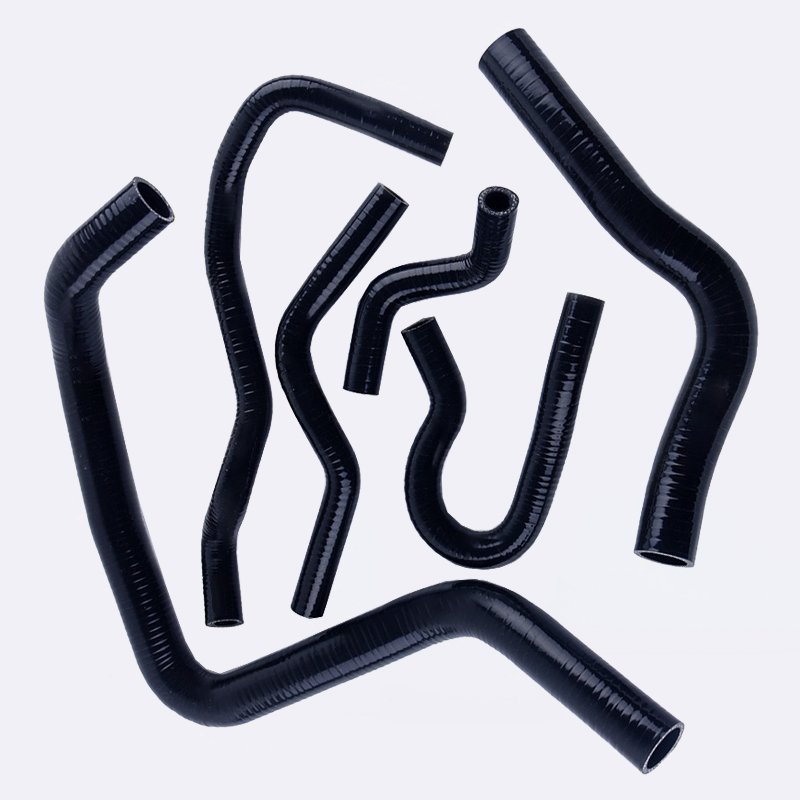
Custom Silicone Radiator Hose Manufacturing Process
At Suzhou Baoshida Trading Co., Ltd., the production of custom silicone radiator hoses follows a rigorous, precision-driven workflow designed to meet exact OEM and industrial specifications. Each phase of the customization process is engineered to ensure material compatibility, dimensional accuracy, and long-term performance under extreme thermal and mechanical stress.
The process begins with Drawing Analysis, where our engineering team evaluates the client-provided technical drawings or 3D models. Critical parameters such as inner diameter, outer diameter, bend radius, flange configuration, and overall length are verified. We assess mating component interfaces and installation constraints to ensure optimal fit and function. Any discrepancies or opportunities for design optimization are communicated directly to the client for review. This step is essential for preventing assembly issues and ensuring compliance with application-specific standards.
Following drawing validation, our Rubber Formula Engineers proceed to Formulation Development. Standard silicone compounds may not suffice for high-performance cooling systems exposed to elevated temperatures, aggressive coolants, or dynamic vibration. We customize the silicone rubber formulation by adjusting polymer base, filler content, and additive packages to achieve target properties such as heat resistance (up to 300°C), ozone stability, and fluid compatibility with ethylene glycol-based coolants. Hardness is tailored within the 40–70 Shore A range, depending on flexibility and pressure requirements. All formulations are documented and archived for batch traceability and future replication.
Once the material is finalized, Prototyping is conducted using compression or injection molding techniques, depending on part complexity and volume expectations. Prototypes are manufactured in a controlled environment using production-grade tooling to simulate real-world conditions. Each prototype undergoes dimensional inspection via coordinate measuring machines (CMM) and is subjected to functional testing, including pressure burst tests, thermal cycling, and leak verification. Feedback from prototype evaluation is integrated before release to mass production.
Mass Production leverages automated injection molding lines with in-process quality controls. Every hose is visually inspected, measured for critical dimensions, and tested for consistency in wall thickness and material homogeneity. We maintain ISO 9001-compliant documentation for full production traceability, including lot numbers, cure times, and inspection records.
The following table outlines key customizable specifications for silicone radiator hoses:
| Parameter | Standard Range | Custom Capability |
|---|---|---|
| Inner Diameter | 16–50 mm | Up to 100 mm |
| Wall Thickness | 3–6 mm | 2–10 mm (tolerance ±0.3 mm) |
| Temperature Resistance | -60°C to +260°C | Up to +300°C (short-term) |
| Pressure Rating | 2–4 bar (continuous) | Up to 6 bar (with reinforcement) |
| Hardness (Shore A) | 50–60 | 40–70 |
| Color | Black, Blue, Red, Green, Custom | Pantone-matched options |
| Reinforcement | None (standard) | Embedded polyester or aramid braiding |
This structured approach ensures that every custom silicone radiator hose meets the highest standards of reliability and performance in automotive, industrial, and heavy-duty applications.
Contact Engineering Team
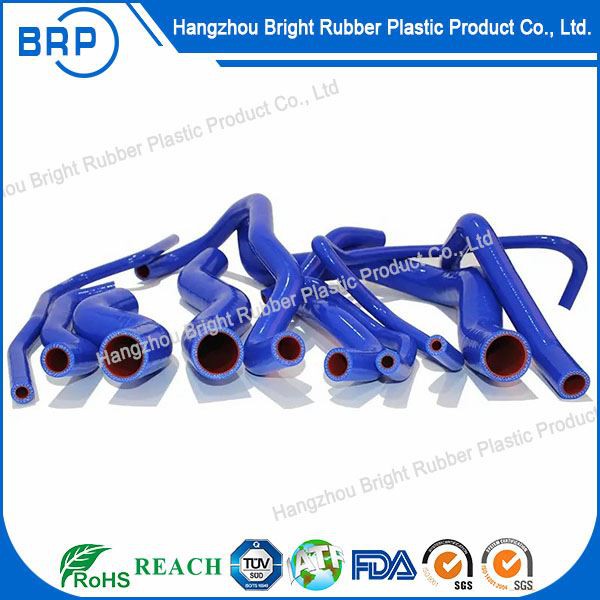
Initiate Precision Engineering Partnership for Custom Silicone Radiator Hose Solutions
Suzhou Baoshida Trading Co., Ltd. operates at the intersection of advanced elastomer science and industrial manufacturing rigor, delivering custom silicone radiator hoses that meet exacting OEM specifications. Our engineering team specializes in thermoset elastomer formulation for extreme thermal cycling, pressure dynamics, and chemical exposure inherent in modern cooling systems. Unlike generic suppliers, we integrate material science with precision molding to resolve complex failure points—such as interlayer delamination under 250°C continuous operation or volumetric expansion at 300 kPa burst pressure. This technical mastery ensures your radiator hoses achieve ISO 18265 validation for 150,000+ km durability cycles while maintaining ±0.15 mm dimensional tolerances critical for automated assembly lines.
Our OEM workflow begins with your thermal-fluid dynamics data to calibrate silicone compound architecture. We deploy platinum-cured VMQ bases with reinforced aramid braiding, optimizing tear strength (≥25 kN/m per ASTM D624) and compression set (<15% at 200°C/72h per ASTM D395). Tooling is CNC-machined to ISO 2768-mK standards, eliminating knit lines that compromise pressure integrity. Every batch undergoes in-process FTIR spectroscopy to verify crosslink density and post-cure stability, ensuring zero batch-to-batch variance in elongation at break (400–650%). This eliminates field failures from inconsistent durometer drift—a common flaw in off-the-shelf hoses.
Below are core technical parameters achievable through our custom engineering process:
| Specification | Performance Range | Test Standard |
|---|---|---|
| Temperature Resistance | -60°C to +300°C | ASTM D2240 |
| Burst Pressure | ≥1.8 MPa | SAE J2044 |
| Fluid Resistance (Coolant) | Zero permeation @ 135°C | ISO 1817 |
| Durometer Hardness | 50–70 Shore A | ASTM D2240 |
| Tensile Strength | ≥10 MPa | ASTM D412 |
| Compression Set (22h/150°C) | ≤20% | ASTM D395 |
Partnering with Suzhou Baoshida transforms radiator hose development from a supply chain risk into a competitive advantage. Our technical team collaborates directly with your engineering division to validate FEA models against real-world thermal shock profiles, reducing prototyping iterations by 40%. We maintain AS9100-certified traceability for every compound batch, with full material disclosure compliant with REACH and ISO/TS 16949. This eliminates compliance delays during vehicle homologation—a critical factor for Tier-1 suppliers facing accelerated launch timelines.
To initiate a technical consultation for your next-generation cooling system, contact Mr. Boyce, OEM Engineering Manager, at [email protected]. Provide your target operating parameters, volume requirements, and failure mode analysis data. Mr. Boyce will coordinate a 72-hour feasibility assessment including:
Material compatibility testing against specified glycol-based coolants
Tooling lead time projection with DFM optimization
Preliminary cost breakdown aligned with APQP phase gates
Do not compromise radiator integrity with standardized solutions. Suzhou Baoshida’s engineering-led approach delivers hoses that exceed OEM thermal management benchmarks while accelerating time-to-market. Submit your technical dossier to [email protected] to commence precision manufacturing validation.
⚖️ O-Ring Weight Calculator
Estimate rubber O-ring weight (Approx).