
Technical Contents
Engineering Guide: Custom Urethane Bushings
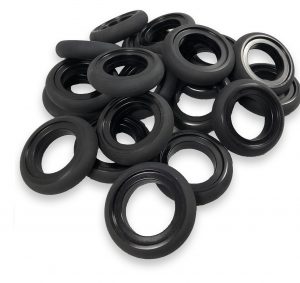
Engineering Insight: Material Selection Imperatives for Custom Urethane Bushings
Catastrophic bushing failure in conveyor systems, hydraulic machinery, or precision instrumentation often traces back to inadequate material selection, not design flaws. Off-the-shelf urethane bushings represent a significant risk in demanding industrial applications where environmental and mechanical variables deviate from nominal conditions. Standard catalog parts utilize generic polyurethane formulations optimized for broad market appeal, sacrificing the precise chemical and physical properties required for specific operational stresses. This compromises critical performance metrics like dynamic load capacity, fatigue resistance, and environmental stability, leading to premature wear, dimensional instability, or catastrophic shear failure under real-world conditions.
The core limitation of off-the-shelf solutions lies in their inability to address the synergistic effects of application-specific variables. A bushing operating in a mining conveyor exposed to abrasive silica dust, intermittent water immersion, and high cyclic loads demands fundamentally different material characteristics than one in a clean-room robotic arm requiring ultra-low hysteresis and micron-level positional stability. Generic urethanes often fail to simultaneously optimize for key parameters: excessive hardness reduces damping capability while insufficient hardness accelerates wear; poor hydrolysis resistance leads to rapid degradation in wet environments; inadequate thermal stability causes softening and extrusion under frictional heat. These failures manifest as increased vibration transmission, loss of alignment, unexpected downtime, and escalating maintenance costs, ultimately negating any initial cost savings from standardized components.
Material science is the decisive factor in bushing longevity and function. Custom formulation allows precise tuning of the polyurethane chemistry—selecting between polyester or polyether polyols based on required hydrolysis resistance, adjusting isocyanate types for thermal stability, and incorporating specialized additives for UV resistance, flame retardancy, or reduced friction. This targeted approach ensures the elastomer’s stress-strain behavior, compression set, rebound resilience, and tear strength align exactly with the dynamic loads, temperature extremes, chemical exposures, and service life expectations of the application. Suzhou Baoshida Trading Co., Ltd. leverages advanced polymer testing and OEM collaboration to define these parameters rigorously during the specification phase, moving beyond simplistic hardness (Shore A) selection to a holistic material profile.
The following table illustrates critical performance gaps between standard off-the-shelf urethane bushings and custom-engineered solutions under demanding conditions:
| Performance Parameter | Standard Off-the-Shelf Urethane | Custom-Engineered Urethane (Baoshida) | Critical Impact of Gap |
|---|---|---|---|
| Hardness Range (Shore A) | Fixed (e.g., 70A ±5) | Precisely Tunable (55A to 95A) | Mismatched damping/wear resistance |
| Operating Temperature | -20°C to +80°C | -40°C to +120°C (formulation dependent) | Thermal softening or embrittlement |
| Hydrolysis Resistance | Moderate (Polyester-based) | High (Polyether-based options) | Rapid degradation in wet/humid environments |
| Dynamic Load Capacity | General Purpose | Optimized for specific cyclic loads | Premature fatigue failure |
| Compression Set (ASTM D395) | 15-25% @ 70°C/22h | <10% @ 100°C/22h (custom formulation) | Loss of preload, misalignment |
| Abrasion Resistance (DIN 53516) | Standard | Enhanced via specialized additives | Accelerated wear in dirty environments |
Custom urethane bushings are not a premium option—they are an engineering necessity where reliability, safety, and total cost of ownership are paramount. Suzhou Baoshida Trading Co., Ltd. provides the material science expertise and OEM partnership required to transform application challenges into robust, failure-resistant components through precise polymer formulation and rigorous validation testing. The initial investment in material specification yields exponential returns in operational uptime and system integrity.
Material Specifications
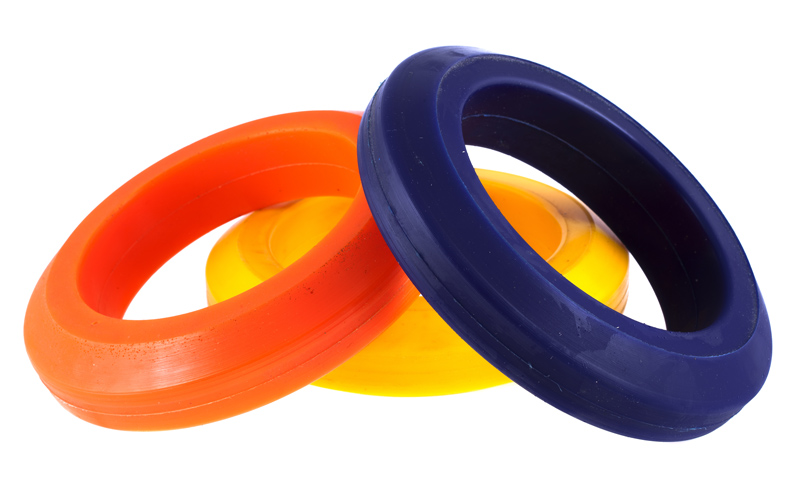
Material Specifications for Custom Urethane Bushings
When engineering custom urethane bushings for industrial applications, material selection is critical to ensuring performance under operational stress, environmental exposure, and prolonged service life. While urethane is the base polymer, compatibility with sealing, damping, and load-bearing requirements often necessitates evaluating alternative elastomers such as Viton, Nitrile, and Silicone. Each material offers distinct advantages depending on temperature range, chemical resistance, mechanical strength, and compression set characteristics. Understanding these properties enables precise alignment with OEM design parameters and application demands.
Viton (FKM) is a fluorocarbon-based elastomer renowned for its exceptional resistance to high temperatures and aggressive chemical environments. It performs reliably in continuous service up to 200°C (392°F), with short-term exposure tolerance reaching 250°C (482°F). Viton exhibits excellent resistance to oils, fuels, acids, and chlorinated hydrocarbons, making it ideal for aerospace, automotive, and chemical processing applications where exposure to harsh fluids is expected. Its low gas permeability and stable mechanical properties at elevated temperatures further enhance its suitability for dynamic sealing and high-reliability bushing systems. However, Viton has higher material and processing costs compared to other elastomers and exhibits limited flexibility at sub-zero temperatures.
Nitrile (NBR) rubber is one of the most widely used elastomers in industrial sealing due to its outstanding resistance to petroleum-based oils and fuels. With a service temperature range of -30°C to 120°C (-22°F to 248°F), Nitrile provides a balanced combination of durability, compression set resistance, and cost-efficiency. It demonstrates good tensile strength and abrasion resistance, making it well-suited for hydraulic systems, automotive suspensions, and machinery components exposed to lubricants and hydraulic fluids. While Nitrile performs poorly in ozone and UV environments without stabilization, and has limited resistance to polar solvents and glycols, its versatility and economy make it a preferred choice for general-purpose custom bushings.
Silicone (VMQ) excels in extreme temperature applications, with a functional range from -60°C to 230°C (-76°F to 446°F). It maintains elasticity and physical integrity across wide thermal cycles, making it ideal for aerospace, medical, and outdoor electronics applications. Silicone also offers excellent resistance to ozone and UV radiation, along with low toxicity and good electrical insulation properties. However, it has relatively low tensile and tear strength compared to Viton and Nitrile, limiting its use in high-stress mechanical environments. Additionally, silicone is susceptible to compression set under prolonged load and has poor resistance to petroleum-based fluids.
The following table summarizes key performance characteristics of these materials for informed selection in custom urethane bushing design.
| Property | Viton (FKM) | Nitrile (NBR) | Silicone (VMQ) |
|---|---|---|---|
| Temperature Range (°C) | -20 to 200 (up to 250 short-term) | -30 to 120 | -60 to 230 |
| Temperature Range (°F) | -4 to 392 (up to 482 short-term) | -22 to 248 | -76 to 446 |
| Resistance to Oils & Fuels | Excellent | Excellent | Poor |
| Resistance to Chemicals | Excellent | Good (limited) | Fair |
| Ozone/UV Resistance | Excellent | Poor (unless stabilized) | Excellent |
| Tensile Strength | High | High | Moderate to Low |
| Compression Set Resistance | Very Good | Good | Fair |
| Electrical Insulation | Good | Fair | Excellent |
| Cost Level | High | Low to Medium | Medium to High |
Manufacturing Capabilities
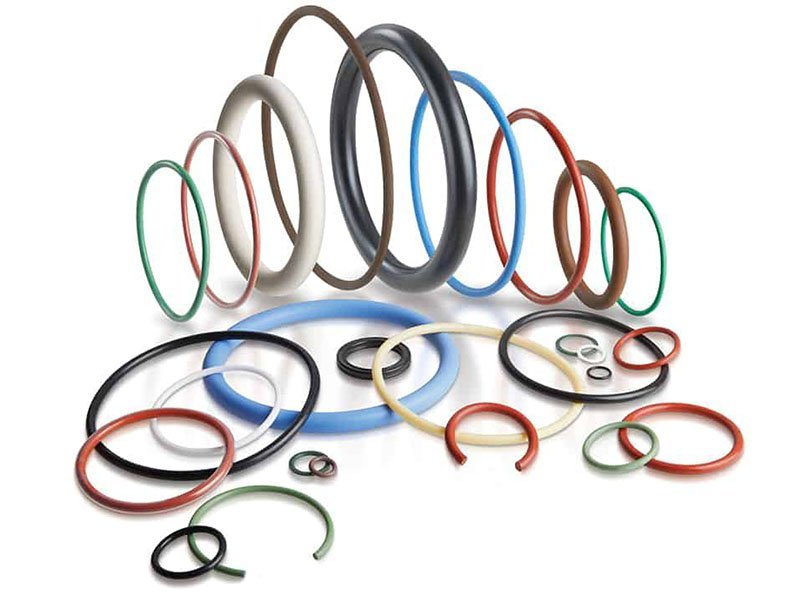
Engineering Capability: Precision Development for Custom Urethane Bushings
Suzhou Baoshida Trading Co., Ltd. leverages integrated material science and precision tooling expertise to deliver mission-critical urethane bushings for demanding industrial applications. Our core strength resides in a dedicated team of five certified Mold Engineers and two specialized Rubber Formula Engineers, operating under strict ISO 9001 protocols. This dual-discipline structure ensures seamless translation of client specifications into functionally optimized components, eliminating the gaps common in outsourced manufacturing partnerships.
Material Science Integration
Our Rubber Formula Engineers possess advanced proficiency in polyurethane chemistry, focusing on custom elastomer formulations for extreme operational environments. They systematically adjust isocyanate prepolymers, chain extenders, and additives to achieve precise durometer (Shore A 50–95), thermal stability (-40°C to 120°C continuous), and dynamic mechanical properties. Each formulation undergoes rigorous empirical validation for compression set resistance (<15% per ASTM D395), tear strength (>30 kN/m), and fluid compatibility with oils, fuels, and industrial chemicals. This scientific approach prevents field failures caused by material misselection, particularly in automotive suspension, rail vibration damping, and heavy machinery applications where standard compounds fall short.
Precision Mold Engineering
Complementing material development, our Mold Engineering team designs and validates production tooling with micron-level accuracy. Utilizing 3D CAD/CAM (SolidWorks, Moldflow) and CNC-machined P20/H13 steel molds, we achieve tight tolerances of ±0.05 mm on critical dimensions like inner/outer diameters and wall thickness. Finite Element Analysis (FEA) predicts flow dynamics and vulcanization behavior, minimizing flash, voids, and post-cure distortion. This capability is essential for bushings requiring exact interference fits or load-deflection linearity, such as those in aerospace control systems or precision medical equipment.
End-to-End OEM Execution
As a certified OEM partner, Baoshida manages the complete product lifecycle—from concept validation through serial production—under controlled change management. We implement APQP/PPAP documentation, real-time SPC monitoring, and 100% dimensional inspection via coordinate measuring machines (CMM). Clients benefit from dedicated production cells, ITAR-compliant data security, and flexible lot sizing (prototypes to 500k+ units annually). Our traceability system logs every batch’s material lot, cure parameters, and inspection data, ensuring full compliance with AS9100, IATF 16949, and REACH standards.
The following table summarizes our custom engineering capabilities versus standard production benchmarks:
| Parameter | Standard Production | Baoshida Custom Engineering |
|---|---|---|
| Hardness Range (Shore A) | 60–80 | 50–95 (±2 tolerance) |
| Operating Temperature | -20°C to 80°C | -40°C to 120°C |
| Compression Set (70h/100°C) | ≤25% | ≤12% (custom formulations) |
| Tensile Strength | 25–35 MPa | 30–50 MPa |
| Lead Time (Prototype) | 6–8 weeks | 3–4 weeks |
| Tolerance Control | ±0.15 mm | ±0.05 mm (critical features) |
This engineering synergy—material innovation paired with precision tooling—enables Baoshida to solve complex tribological challenges where off-the-shelf bushings fail. We transform client performance requirements into validated, production-ready solutions with zero compromise on repeatability or durability.
Customization Process
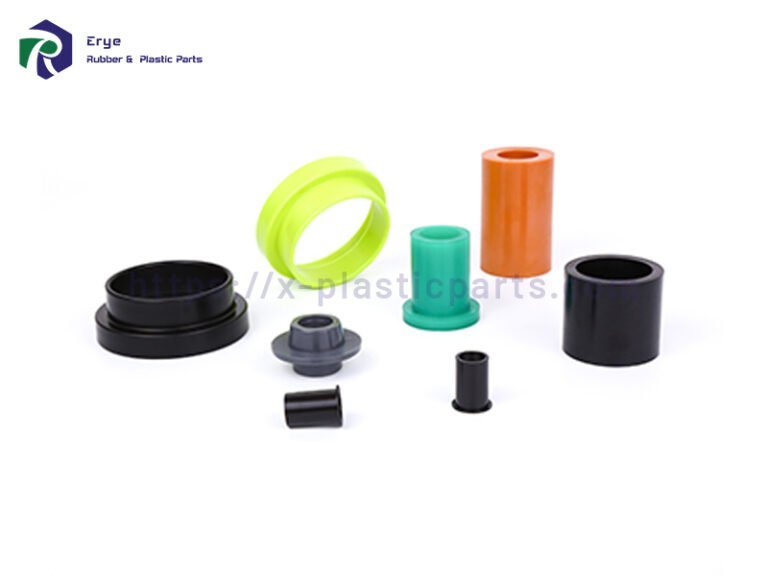
Custom Urethane Bushings: The Precision Manufacturing Process
At Suzhou Baoshida Trading Co., Ltd., the production of custom urethane bushings follows a rigorous engineering workflow designed to ensure dimensional accuracy, material performance, and long-term reliability under dynamic load conditions. Our process begins with Drawing Analysis, where engineering teams evaluate customer-provided technical drawings or 3D models. This phase includes verification of critical dimensions, tolerance specifications, mounting interfaces, and environmental exposure data. Geometric features such as inner and outer diameters, wall thickness, and axial length are cross-referenced against industry standards and manufacturability constraints. Any discrepancies or design risks—such as undercuts, thin sections, or sealing surface deviations—are flagged for collaborative resolution with the client.
Once the design is validated, we proceed to Formulation Development. Urethane bushings require elastomeric compounds tailored to specific mechanical and environmental demands. Our rubber formula engineers select from a range of polyurethane systems—including polyester and polyether-based chemistries—based on criteria such as dynamic load resistance, ozone exposure, temperature range, and fluid compatibility. Hardness is precisely tuned between 70 and 95 Shore A, depending on application requirements for damping, deflection, and wear resistance. Additives for UV stability, hydrolysis resistance, or low-temperature flexibility are incorporated as needed. Each formulation is documented and archived for full traceability and batch consistency.
Prototyping follows formulation finalization, enabling functional validation prior to mass production. We utilize precision compression or injection molding techniques to produce small-batch samples, typically 5–20 units, depending on complexity. These prototypes undergo dimensional inspection via coordinate measuring machines (CMM) and are subjected to preliminary performance tests, including compression set, dynamic fatigue, and hardness verification. Prototype turnaround time averages 7–10 working days, with feedback loops allowing for rapid design or material iteration.
Upon customer approval, the project transitions to Mass Production. We deploy automated molding cells with in-line quality monitoring to ensure part-to-part uniformity. Production batches are subject to AQL 1.0 inspection standards, with first-article reports and periodic hardness and tensile testing conducted throughout the run. Our facility supports annual volumes from 10,000 to over 1 million units, with packaging and labeling customized per OEM requirements.
The following table outlines key technical parameters commonly specified in custom urethane bushing projects:
| Parameter | Typical Range | Notes |
|---|---|---|
| Hardness (Shore A) | 70–95 | Adjusted for load and deflection needs |
| Temperature Range | -40°C to +90°C | Extended range with specialty grades |
| Tensile Strength | 30–60 MPa | Dependent on urethane chemistry |
| Elongation at Break | 300–500% | Higher in flexible formulations |
| Compression Set (22h/70°C) | <15% | Critical for long-term sealing |
| Mold Tolerances | ±0.1 mm (standard) | Tighter tolerances achievable |
| Lead Time (Prototype) | 7–10 working days | After drawing approval |
| Lead Time (Production) | 15–25 days | Varies with order volume |
This structured approach ensures that every custom urethane bushing meets exact functional and quality benchmarks, supporting performance in automotive, industrial machinery, and rail transit applications.
Contact Engineering Team
Contact Suzhou Baoshida for Precision Urethane Bushing Solutions
Suzhou Baoshida Trading Co., Ltd. stands at the forefront of custom urethane bushing manufacturing, delivering engineered elastomeric components that meet the exacting demands of industrial OEMs. Our expertise spans material formulation, precision molding, and rigorous validation testing, ensuring every bushing optimizes performance in critical applications such as automotive suspension systems, industrial machinery vibration isolation, and aerospace control linkages. Unlike generic suppliers, we leverage proprietary polyurethane chemistry and ISO 9001-certified processes to solve complex challenges—whether addressing dynamic load fluctuations, extreme temperature exposure, or chemical resistance requirements. Partnering with us means gaining a dedicated engineering team committed to translating your functional specifications into flawless physical components, reducing field failures and extending product lifecycle.
The table below outlines our core technical capabilities for custom urethane bushings, reflecting our commitment to dimensional accuracy and material integrity. These parameters are not theoretical limits but routinely achieved production standards, validated through in-house metrology and client-specific test protocols.
| Parameter | Standard Range | Precision Capability | Testing Standard |
|---|---|---|---|
| Durometer (Shore A) | 50A to 95A | ±3 points | ASTM D2240 |
| Tolerance (Dimensions) | ±0.1 mm to ±0.5 mm | ±0.05 mm | ISO 2768-m |
| Operating Temperature | -40°C to +120°C | Custom to +150°C | ASTM D573 |
| Compression Set | ≤15% (70°C, 22h) | ≤10% | ASTM D395 |
| Tear Strength | ≥80 kN/m | ≥100 kN/m | ASTM D624 |
When standard catalog offerings fail to resolve vibration-induced wear, premature fatigue, or environmental degradation in your assemblies, our engineering-led approach becomes indispensable. We initiate every project with a deep-dive analysis of your operational environment—studying load profiles, mating surfaces, and failure modes—to formulate urethane compounds with tailored hysteresis, resilience, and damping characteristics. Our mold design team utilizes 3D simulation to eliminate knit lines and internal stresses, while our 72-hour rapid prototyping service accelerates validation cycles. Crucially, we provide full material traceability and certification packages compliant with ISO 1817, SAE J200, and RoHS, ensuring seamless integration into your supply chain documentation.
To initiate a technical consultation or request a formal quotation for your custom urethane bushing requirement, contact Mr. Boyce directly. As Suzhou Baoshida’s dedicated OEM Manager and Rubber Formula Engineer, he possesses the authority to align our R&D, production, and quality teams with your project’s critical path. Provide your dimensional drawings, material specifications, and performance targets to receive a comprehensive feasibility assessment within 48 business hours. All communications are treated with strict confidentiality under our ISO 27001 information security framework.
Reach Mr. Boyce via email at [email protected] to discuss how our precision-engineered urethane solutions can enhance your product’s reliability and market differentiation. Include your company name, application context, and target annual volume to expedite the technical review process. For urgent requests, reference “Priority: Urethane Bushing Project” in the subject line to activate our expedited engineering response protocol. Partner with Suzhou Baoshida—where material science meets manufacturing excellence.
⚖️ O-Ring Weight Calculator
Estimate rubber O-ring weight (Approx).