
Technical Contents
Engineering Guide: Diamond Plate Stair Nosing
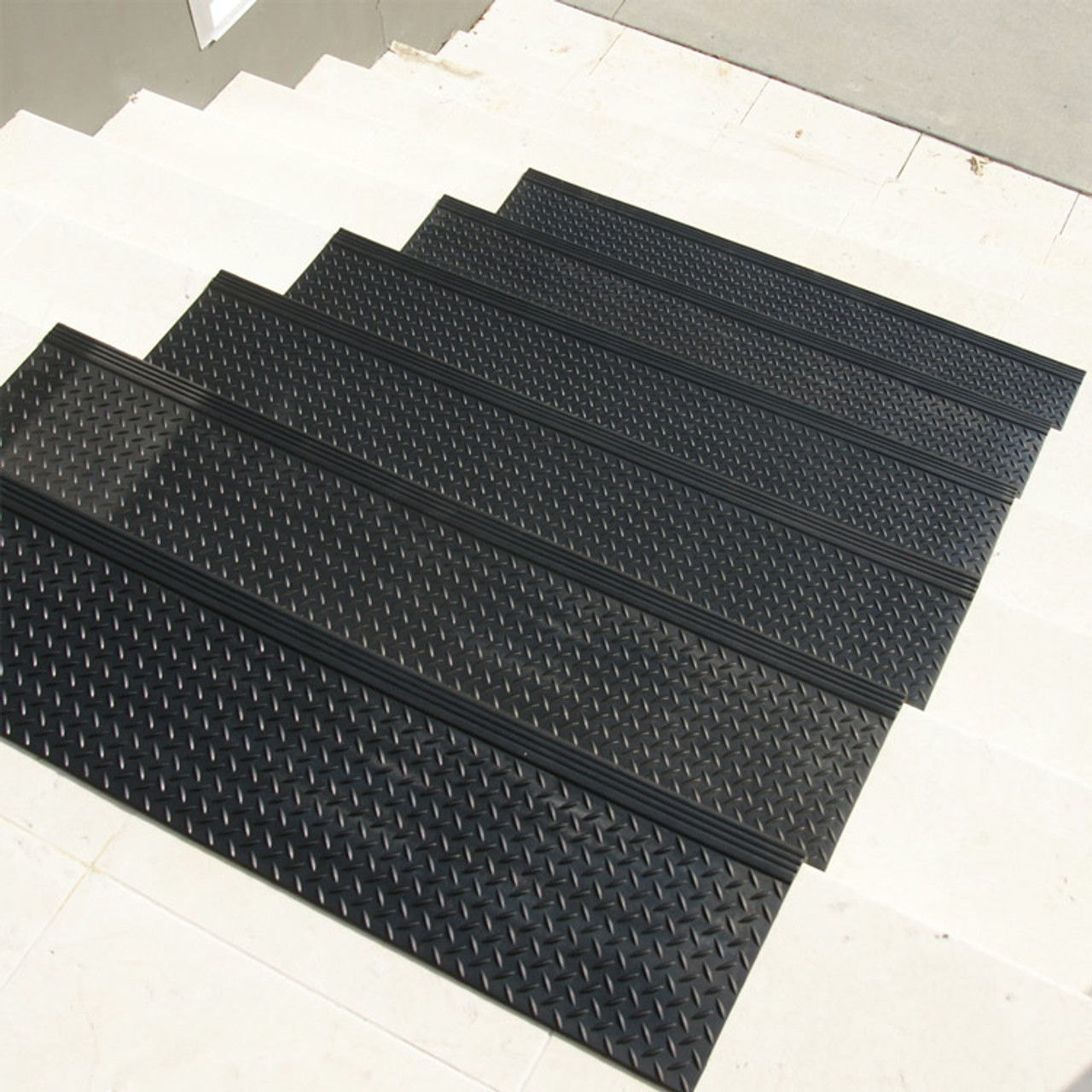
Engineering Insight: Material Science Imperatives in Diamond Plate Stair Nosing
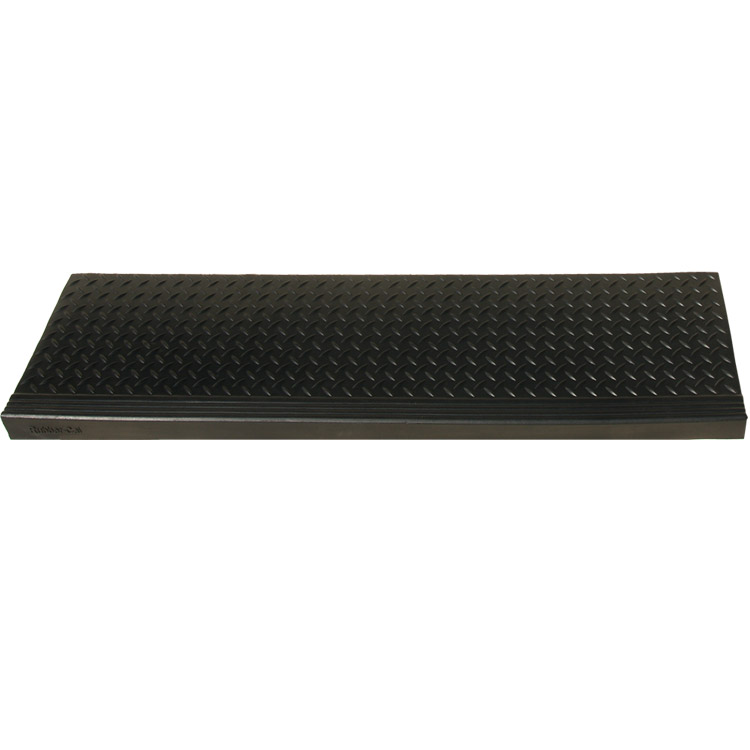
Material selection constitutes the non-negotiable foundation for durable, safe diamond plate stair nosing in demanding industrial environments. Generic, off-the-shelf rubber solutions prevalent in the market consistently underperform due to fundamental mismatches between their base polymer chemistry and the rigorous physical and chemical stresses encountered on stair treads. These failures manifest not as gradual wear, but as critical safety hazards and premature replacement cycles, directly impacting facility uptime and liability exposure. Standard compounds often utilize low-cost, unfilled SBR or natural rubber blends optimized for minimal initial cost, not functional longevity. Such formulations lack the necessary resistance to key degradation pathways: UV exposure induces rapid surface hardening and micro-cracking, industrial oils and greases cause excessive swelling and loss of mechanical integrity, and repeated foot traffic abrasion quickly erodes the critical diamond pattern depth essential for slip resistance. Crucially, inadequate resilience properties lead to permanent deformation under load, causing the nosing profile to flatten and lose its anti-slip geometry within months, not years. This compromises the primary safety function – maintaining consistent slip resistance across the product lifecycle – particularly under wet or contaminated conditions where the diamond pattern’s channeling effect is vital.
The core failure mechanism lies in insufficient compound engineering. High-performance stair nosing demands a precisely balanced formulation where polymer backbone selection, filler reinforcement (type and loading), protective additives (antiozonants, antioxidants, UV stabilizers), and cure system chemistry are co-optimized for the specific application stressors. A premium compound requires high resilience to resist permanent set, exceptional abrasion resistance to preserve tread depth, controlled hardness for impact absorption without deformation, and inherent resistance to environmental attack. Off-the-shelf solutions typically neglect this systems approach, resulting in compounds that may meet basic hardness specifications initially but catastrophically degrade under operational loads. The consequence is accelerated pattern loss, increased slip potential, and frequent, costly replacements – a false economy when measured against total cost of ownership.
Suzhou Baoshida Trading Co., Ltd. addresses these critical gaps through OEM-focused rubber formulation science. Our engineered compounds are not generic; they are purpose-built for industrial stair safety. Key performance differentiators are quantifiable:
| Property | Standard Off-the-Shelf Compound | Baoshida Premium Industrial Compound |
|---|---|---|
| Shore A Hardness Range | 55-65 (Variable) | 60 ± 3 (Stable) |
| DIN Abrasion Loss (mm³) | 180-250 | ≤ 95 |
| Oil Swell (IRMOG #3, 70h) | 25-40% | ≤ 12% |
| Tensile Strength (MPa) | 8-12 | ≥ 18 |
| Critical Diamond Pattern Retention | < 12 months (Typical Failure) | > 60 months (Validated) |
This performance stems from proprietary EPDM/BIIR blends reinforced with high-structure carbon black and specialized additive packages. The result is a nosing that maintains its structural integrity, slip-resistant profile, and safety function throughout its extended service life, even under continuous exposure to sunlight, oils, heavy foot traffic, and thermal cycling. Material selection is not a cost line item; it is the engineering determinant of long-term safety and operational reliability. Baoshida’s OEM partnership ensures the rubber compound is the engineered core of your stair safety solution, not its point of failure.
Material Specifications
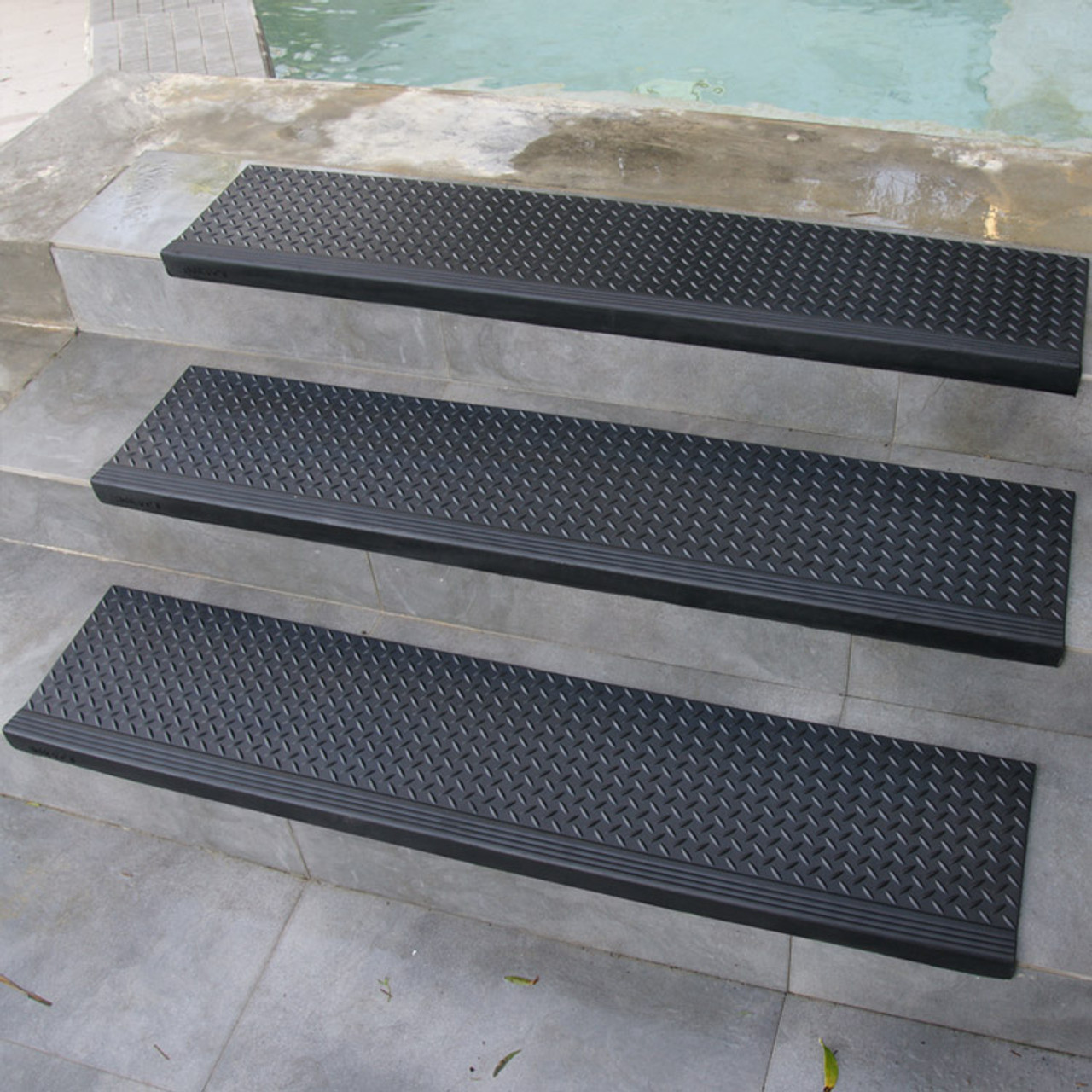
Material Specifications for Diamond Plate Stair Nosing
The performance and durability of diamond plate stair nosing in industrial environments are critically dependent on the elastomeric material selected. At Suzhou Baoshida Trading Co., Ltd., we engineer rubber components to meet rigorous operational demands, ensuring safety, longevity, and chemical resistance. Our primary materials—Viton (FKM), Nitrile (NBR), and Silicone (VMQ)—are each tailored to specific environmental and mechanical conditions. Understanding the intrinsic properties of these elastomers allows for optimal material selection based on temperature exposure, chemical contact, mechanical wear, and regulatory compliance.
Viton exhibits exceptional resistance to high temperatures, oils, fuels, and a broad range of aggressive chemicals, making it ideal for aerospace, petrochemical, and heavy manufacturing applications. With continuous service capabilities up to 230°C and intermittent resistance up to 260°C, Viton maintains structural integrity under extreme thermal cycling. Its low gas permeability and excellent aging characteristics further enhance reliability in sealed or high-pressure environments. However, due to its higher cost and reduced flexibility at low temperatures, Viton is typically reserved for critical applications where performance outweighs cost considerations.
Nitrile rubber is widely used for its excellent resistance to petroleum-based oils, greases, and aliphatic hydrocarbons. It offers good abrasion resistance and mechanical strength, making it suitable for industrial flooring and stair safety components exposed to lubricants or hydraulic fluids. Nitrile performs reliably within a temperature range of -30°C to 120°C, with certain formulations extending low-temperature flexibility. While it lacks the chemical breadth of Viton, Nitrile provides a cost-effective solution for general industrial use where exposure to oils and moderate heat is expected.
Silicone rubber is selected for applications requiring extreme temperature stability, UV resistance, and biocompatibility. It operates effectively from -60°C to 200°C, maintaining elasticity across wide thermal swings. Silicone is highly resistant to ozone and weathering, making it ideal for outdoor or cleanroom environments. However, it has lower tensile strength and abrasion resistance compared to Viton and Nitrile, necessitating protective design features when used in high-traffic areas. Its non-toxic nature also supports use in food processing and pharmaceutical facilities.
The following table summarizes key physical and chemical properties of these materials for informed selection in diamond plate stair nosing applications.
| Property | Viton (FKM) | Nitrile (NBR) | Silicone (VMQ) |
|---|---|---|---|
| Temperature Range (°C) | -20 to 230 (up to 260 intermittent) | -30 to 120 | -60 to 200 |
| Tensile Strength (MPa) | 15–20 | 10–25 | 5–10 |
| Elongation at Break (%) | 200–300 | 250–500 | 200–600 |
| Hardness (Shore A) | 60–90 | 50–90 | 30–80 |
| Resistance to Oils & Fuels | Excellent | Good to Excellent | Poor |
| Resistance to Ozone/UV | Excellent | Good | Excellent |
| Chemical Resistance | Broad spectrum | Limited to oils/fuels | Moderate (acids/bases) |
| Abrasion Resistance | Good | Very Good | Fair |
| Typical Applications | Petrochemical, aerospace | Manufacturing, machinery | Outdoor, medical, food |
Each material offers distinct advantages, and selection must align with the operational environment and safety requirements of the installation site.
Manufacturing Capabilities
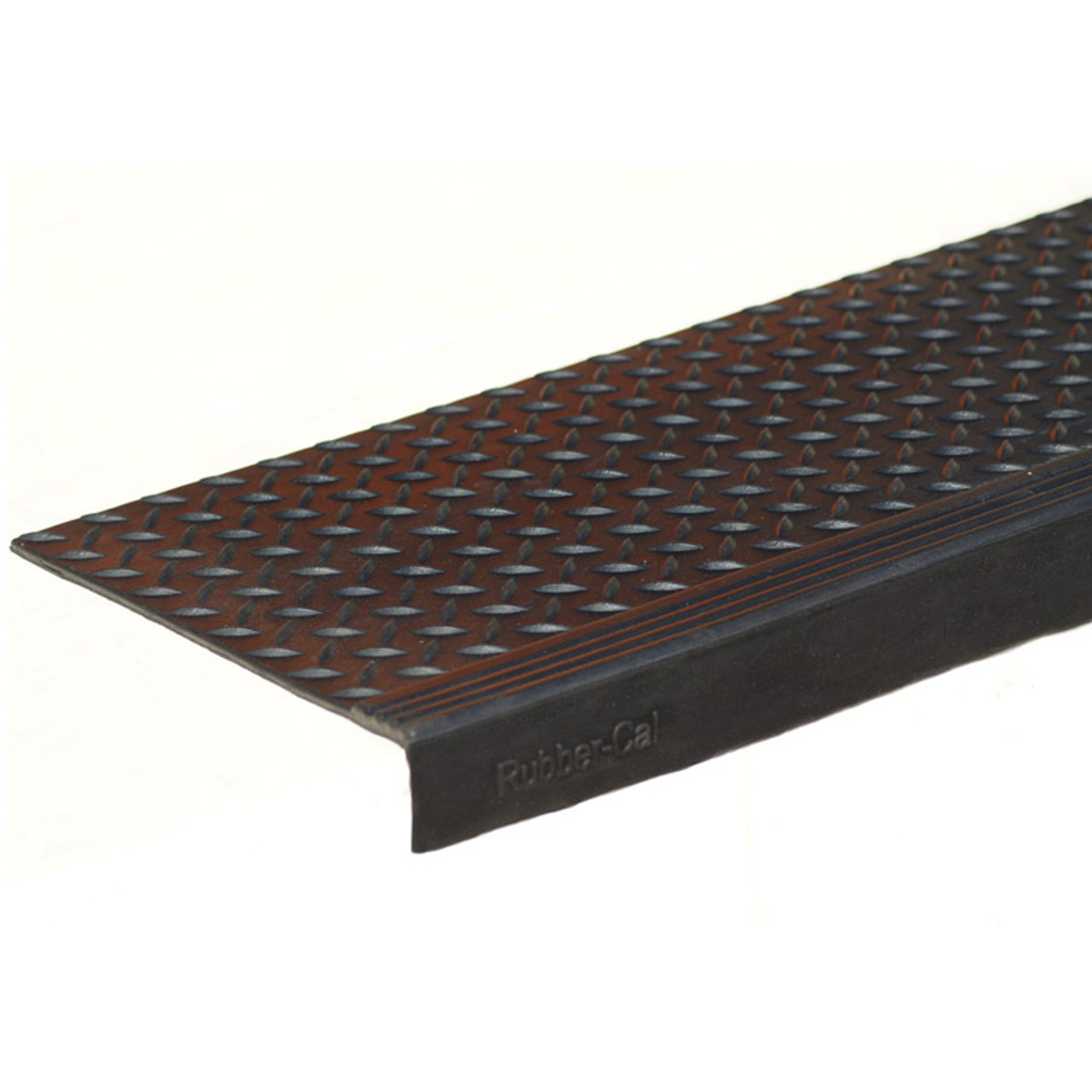
Engineering Capability: Precision Manufacturing for Diamond Plate Stair Nosing
Suzhou Baoshida Trading Co., Ltd. leverages deep technical expertise in industrial rubber compounding and precision molding to deliver engineered diamond plate stair nosing solutions. Our core strength resides in an integrated team of five dedicated Mold Engineers and two specialized Rubber Formula Engineers, ensuring end-to-end control from material science to final production. This structure eliminates siloed workflows, enabling rapid iteration and problem-solving for complex OEM requirements. Our Formula Engineers optimize elastomer blends for critical performance metrics—abrasion resistance, coefficient of friction, and thermal stability—while Mold Engineers translate these formulations into high-tolerance tooling capable of sustaining 500,000+ cycles without dimensional drift. This synergy guarantees nosing profiles meet exacting safety standards under real-world industrial stress.
Material integrity is non-negotiable in high-traffic stair applications. Our proprietary rubber formulations undergo rigorous validation against ASTM D2240 (hardness), DIN 53516 (abrasion), and ISO 8510-2 (slip resistance). By tailoring polymer matrices—primarily EPDM and SBR blends—we achieve balanced properties: sufficient Shore A hardness for structural resilience without compromising impact absorption. Critical additives like silica reinforcement and anti-oxidant packages are precisely dosed to prevent premature degradation from UV exposure, oil spills, or thermal cycling. Every compound is batch-tested for consistency, ensuring the diamond plate pattern maintains its aggressive tread profile throughout the product lifecycle.
As an OEM partner, we prioritize client-specific engineering over off-the-shelf compromises. Our process begins with collaborative design reviews to address site-specific hazards—such as chemical exposure in food processing plants or extreme cold in freezer warehouses. Mold Engineers then deploy 3D simulation software to optimize gate placement and cooling channels, eliminating weld lines that compromise nosing edges. This proactive approach reduces time-to-market by 30% compared to industry averages while guaranteeing first-article approval. Clients receive full traceability: lot-specific material certifications, mold flow analysis reports, and in-process dimensional audits per ISO 9001 protocols.
The following table summarizes key performance specifications achievable through our engineered solutions:
| Property | Test Standard | Typical Value | Significance |
|---|---|---|---|
| Shore A Hardness | ASTM D2240 | 65–75 | Balances durability and slip resistance |
| Abrasion Loss (Vol.) | DIN 53516 | ≤ 120 mm³ | Ensures tread longevity in high-traffic zones |
| Coefficient of Friction | ASTM F2913 | ≥ 0.6 (wet) | Meets OSHA/ANSI A1264.2 slip safety |
| Temperature Range | ISO 188 | -40°C to +120°C | Suitable for extreme indoor/outdoor use |
| Adhesion Strength | ASTM D429 (Method B) | ≥ 8 kN/m | Prevents delamination from substrate |
This technical rigor positions Suzhou Baoshida as a strategic partner for facility managers demanding fail-safe stair safety systems. We transform regulatory requirements into engineered reality—without tolerating performance trade-offs.
Customization Process
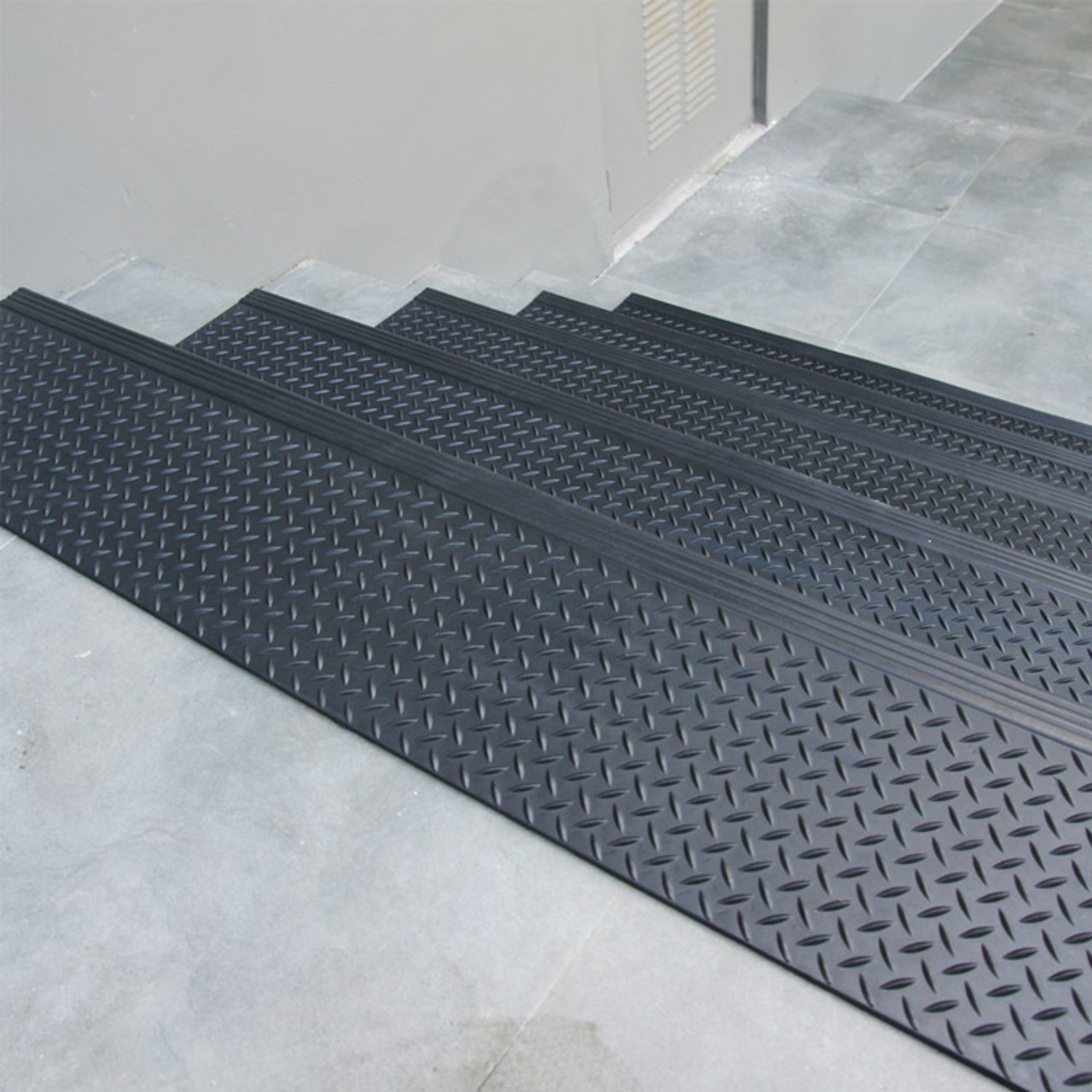
Customization Process for Diamond Plate Stair Nosing at Suzhou Baoshida Trading Co., Ltd.
At Suzhou Baoshida Trading Co., Ltd., our industrial rubber solutions are engineered to meet rigorous performance standards, particularly in high-traffic and safety-critical environments. The customization of diamond plate stair nosing follows a disciplined, four-phase process: Drawing Analysis, Formulation, Prototyping, and Mass Production. This ensures dimensional accuracy, material durability, and compliance with client-specific safety and regulatory requirements.
The process begins with Drawing Analysis, where technical blueprints provided by the client are evaluated for geometric specifications, load-bearing requirements, and installation conditions. Our engineering team verifies critical dimensions such as tread depth, riser height, nose extension, and anti-slip pattern geometry. We assess substrate compatibility—whether the nosing will be bonded to concrete, steel, or composite materials—and confirm environmental exposure factors, including temperature range, moisture, and chemical contact. This phase establishes the foundation for material and structural design.
Following drawing validation, we proceed to Formulation. Leveraging our expertise in polymer chemistry, we select the optimal rubber compound from our in-house developed formulations. For diamond plate stair nosing, we typically utilize high-abrasion-resistant EPDM or SBR-based compounds, reinforced with silica or carbon black for enhanced wear performance. The Shore A hardness is tuned between 60–75 to balance slip resistance and impact absorption. Custom additives may be incorporated for UV stability, flame retardancy (UL 94 HB or V-0), or anti-static properties (surface resistivity <10⁹ Ω). All formulations adhere to ISO 48-4 and ASTM D412 standards for tensile strength and elongation at break.
The third phase, Prototyping, involves precision compression or injection molding of 1–3 sample units using production-grade tooling. These prototypes undergo mechanical and safety testing, including coefficient of friction (CoF) measurement via ASTM E303 (pendulum test), abrasion resistance (DIN 53516), and adhesion strength (pull-off test per ASTM D4541). Samples are returned to the client for field evaluation and approval. Design or material adjustments are implemented based on feedback, ensuring functional and aesthetic alignment.
Upon client sign-off, we initiate Mass Production under ISO 9001-certified protocols. Production batches are monitored for consistency in durometer, density, and dimensional tolerance (±0.5 mm). Each batch undergoes first-article and in-process inspections, with full traceability maintained through lot numbering and material certifications.
Key technical specifications for standard diamond plate stair nosing are summarized below:
| Property | Specification |
|---|---|
| Material | EPDM or SBR Rubber |
| Hardness (Shore A) | 60–75 |
| Tensile Strength | ≥12 MPa |
| Elongation at Break | ≥250% |
| Abrasion Loss (DIN 53516) | ≤120 mm³ |
| Coefficient of Friction (wet) | ≥0.6 (pendulum test) |
| Temperature Range | -40°C to +100°C |
| Fire Rating | UL 94 HB (standard), V-0 (optional) |
| Surface Pattern | Diamond plate (3–5 mm peak height) |
This structured approach ensures every custom diamond plate stair nosing unit meets exacting industrial demands for safety, longevity, and performance.
Contact Engineering Team
Contact Suzhou Baoshida for Precision Diamond Plate Stair Nosing Solutions
Industrial safety infrastructure demands uncompromising reliability, particularly in high-traffic pedestrian zones where slip hazards pose significant operational and liability risks. Diamond plate stair nosing represents a critical engineering component in mitigating these risks, requiring exacting material science and manufacturing precision to withstand abrasive wear, chemical exposure, and dynamic load stresses. Suzhou Baoshida Trading Co., Ltd. specializes in OEM-engineered rubber solutions that exceed international safety standards, delivering nosing profiles with validated traction coefficients and structural integrity. Our formulations are developed under ISO 9001:2015 quality management protocols, ensuring batch-to-batch consistency for seamless integration into your architectural or industrial projects.
Key performance specifications for our standard diamond plate stair nosing are detailed below. These values reflect baseline capabilities; all parameters are adjustable per client-specific ASTM F1637, DIN 51130, or ISO 13287 compliance requirements.
| Property | Value | Test Standard |
|---|---|---|
| Base Material | SBR/NR Blend | ASTM D2000 |
| Shore A Hardness | 65 ± 5 | ASTM D2240 |
| Tensile Strength | ≥ 18.0 MPa | ASTM D412 |
| Elongation at Break | ≥ 450% | ASTM D412 |
| Abrasion Resistance | ≤ 120 mm³ loss | ASTM D5963 |
| Coefficient of Friction | ≥ 0.6 (wet) | ASTM F2913 |
| Temperature Range | -40°C to +100°C | ISO 188 |
| Fire Rating | UL 94 HB | UL 94 |
Our engineering team collaborates directly with OEM partners to refine material composition, geometric profiling, and adhesion systems. Whether your application requires enhanced oil resistance for manufacturing floors, conductive properties for ESD-sensitive environments, or custom color matching for brand integration, we execute iterative prototyping with accelerated aging validation. Unlike generic suppliers, we prioritize dimensional stability under thermal cycling and long-term resilience against UV degradation—factors often overlooked in standard product datasheets but critical for 15+ year service life.
Initiate your project with Suzhou Baoshida to eliminate procurement uncertainty. Mr. Boyce, our dedicated OEM Technical Manager, possesses 12 years of experience in rubber compounding for architectural safety components. He will coordinate material certification review, tolerance validation against your CAD specifications, and production scalability analysis within 24 business hours of contact. Provide your target volume, substrate type, and environmental stressors for a tailored technical proposal inclusive of finite element analysis (FEA) reports.
Do not compromise safety performance with off-the-shelf solutions. Contact Mr. Boyce directly at [email protected] to schedule an engineering consultation. Specify your project timeline and technical requirements in the subject line for expedited routing. All inquiries receive documented test data packages and sample kits within 72 hours, enabling informed validation against your quality benchmarks. Suzhou Baoshida operates under strict NDA protocols—your design IP remains protected throughout collaboration. Elevate your safety infrastructure with rubber science engineered for zero-failure operation.
⚖️ O-Ring Weight Calculator
Estimate rubber O-ring weight (Approx).