
Technical Contents
Engineering Guide: Door Seals For Freezers
Engineering Insight: Material Selection in Freezer Door Seals
In the design and manufacturing of freezer door seals, material selection is not a secondary consideration—it is the cornerstone of performance, durability, and energy efficiency. Off-the-shelf rubber seals often fail in ultra-low temperature environments due to an oversimplification of material behavior under sustained thermal stress. At Suzhou Baoshida Trading Co., Ltd., we emphasize engineered elastomer solutions tailored to the operational demands of commercial and industrial freezing systems.
Standard rubber compounds such as generic EPDM or low-grade silicone exhibit acceptable flexibility at ambient temperatures but undergo significant embrittlement below -30°C. This leads to microcracking, loss of compression set recovery, and ultimately, seal failure. The consequence is not merely air leakage—it is systemic inefficiency. A compromised seal increases compressor cycling, elevates energy consumption by up to 25%, and risks product spoilage due to temperature fluctuation.
The critical performance parameters for freezer door seals include low-temperature flexibility, compression set resistance, ozone and UV resistance, and dimensional stability. These are not uniformly addressed by commodity elastomers. For instance, while standard EPDM offers good weather resistance, its glass transition temperature (Tg) often lies within the operating range of deep-freeze units (-40°C to -60°C), causing it to lose elasticity. Conversely, high-purity silicone formulations maintain flexibility down to -70°C but may lack the mechanical strength required for high-cycle applications.
Our engineered solution leverages modified silicone-fluorocarbon (FVMQ) and peroxide-cured, high-diene EPDM compounds with controlled crosslink density. These materials are formulated to achieve optimal balance between low-temperature resilience and long-term compression recovery. Additionally, we incorporate nano-reinforced fillers to enhance tear strength without sacrificing flexibility.
Another overlooked factor is outgassing and odor emission—critical in food storage and pharmaceutical cold chains. Standard recycled rubber compounds can emit volatile organic compounds (VOCs) that contaminate stored goods. Our formulations are tested to meet ISO 10993 and FDA 21 CFR 177.2600 standards, ensuring material compatibility with sensitive environments.
The table below outlines key material performance characteristics for common elastomers used in freezer door seals.
| Material | Operating Temp Range (°C) | Compression Set @ -40°C (22h) | Tensile Strength (MPa) | Elongation at Break (%) | Key Limitation |
|---|---|---|---|---|---|
| Standard EPDM | -40 to +120 | >45% | 8.5 | 300 | Embrittlement below -30°C |
| High-Diene EPDM | -60 to +130 | <30% | 10.2 | 380 | Higher cost, specialized cure |
| Standard Silicone | -50 to +200 | <35% | 6.0 | 250 | Low tear resistance |
| FVMQ (Fluorosilicone) | -60 to +180 | <25% | 7.8 | 320 | High material cost |
| Baoshida Engineered EPDM | -70 to +135 | <22% | 11.0 | 400 | Proprietary formulation |
Off-the-shelf seals fail because they prioritize cost over physics. At Baoshida, we treat each freezer door seal as a precision component—subject to rigorous thermal, mechanical, and chemical analysis. Material selection is not a catalog choice; it is an engineering decision with direct impact on system integrity.
Material Specifications
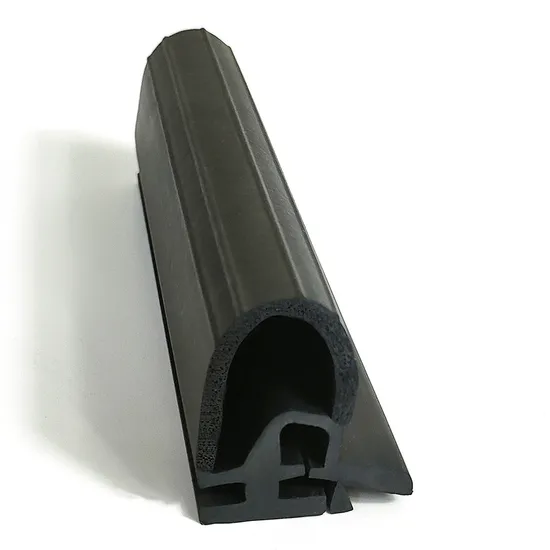
Material Specifications for Freezer Door Seals
Selecting the optimal elastomer for freezer door seals demands rigorous evaluation of thermal stability, compression set resistance, and chemical compatibility. Freezer environments impose extreme conditions including rapid temperature cycling from ambient to -40°C, exposure to food-grade lubricants, and constant compression deformation. At Suzhou Baoshida Trading Co., Ltd., we engineer precision rubber seals using three primary compounds: Viton (FKM), Nitrile (NBR), and Silicone (VMQ). Each material exhibits distinct performance characteristics critical to seal longevity and energy efficiency.
Viton fluorocarbon rubber delivers unparalleled resistance to low temperatures down to -46°C while maintaining structural integrity in aggressive chemical environments. Its molecular stability prevents hardening during thermal shock cycles common in commercial freezer operations. Viton seals excel where exposure to oils, ammonia-based refrigerants, or cleaning agents occurs, though material costs are 30-50% higher than alternatives. Nitrile remains the cost-effective standard for moderate freezer applications with operating ranges from -30°C to +100°C. Standard NBR formulations (70-90 Shore A) provide adequate fuel and oil resistance but suffer accelerated compression set above 85°C and embrittlement below -35°C. High-acrylonitrile variants improve low-temperature flexibility but reduce elasticity. Silicone offers the widest operational window (-60°C to +200°C) with exceptional flexibility retention after prolonged compression. However, its lower tensile strength (4.5-6.5 MPa) and susceptibility to tearing necessitate reinforced profiles in high-traffic commercial units. All materials must comply with FDA 21 CFR 177.2600 and EC 1935/2004 for food-contact safety.
Critical performance metrics are quantified below per ASTM D2000 and ISO 37 standards. Compression set values reflect 22-hour testing at -40°C (Method B, ASTM D395) to simulate real-world freezer conditions.
| Material Property | Viton (FKM) | Nitrile (NBR) | Silicone (VMQ) |
|---|---|---|---|
| Temperature Range (°C) | -46 to +200 | -30 to +100 | -60 to +200 |
| Compression Set (%) | ≤ 15 | ≤ 25 | ≤ 20 |
| Tensile Strength (MPa) | 10.0 – 15.0 | 15.0 – 25.0 | 4.5 – 6.5 |
| Hardness (Shore A) | 70 – 85 | 60 – 90 | 40 – 70 |
| Fluid Resistance | Excellent | Good | Poor |
| Food Safety Compliance | FDA/EC Certified | FDA/EC Certified | FDA/EC Certified |
Material selection directly impacts seal service life and energy leakage. Viton is recommended for ultra-low-temperature freezers (-40°C) with chemical exposure risks, despite higher initial costs. Nitrile suits standard commercial freezers operating above -30°C where budget constraints dominate. Silicone serves specialized applications requiring extreme flexibility but requires structural reinforcement to mitigate tear propagation. As an OEM partner, Suzhou Baoshida Trading Co., Ltd. customizes polymer formulations to balance performance thresholds with cost efficiency, ensuring compliance with ISO 1307 dimensional standards and EN 12546-1 freezer seal specifications. Our technical team collaborates with manufacturers to validate material suitability through accelerated lifecycle testing, preventing premature seal failure and thermal bridging in critical cold-chain infrastructure.
Manufacturing Capabilities
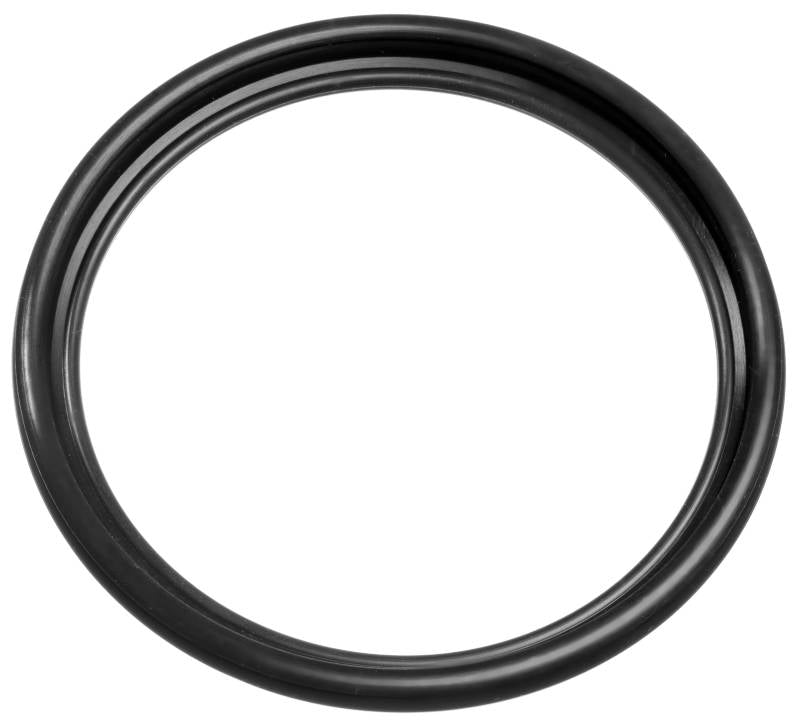
Engineering Capability
At Suzhou Baoshida Trading Co., Ltd., our core strength in manufacturing precision rubber door seals for freezers lies in our vertically integrated engineering expertise. We maintain a dedicated team of five certified mould engineers and two specialized rubber formulation engineers, enabling full control over both the physical tooling and material science behind every seal we produce. This dual technical capability ensures that our solutions are not only dimensionally accurate and mechanically robust but also optimized for long-term performance under extreme cold conditions.
Our mould engineers utilize advanced CAD/CAM software, including SolidWorks and AutoCAD, to design and validate mould structures before fabrication. Finite element analysis (FEA) is routinely applied to simulate material flow, cooling efficiency, and part ejection, minimizing defects and maximizing production stability. All moulds are precision-machined in-house using CNC equipment with tolerances held to ±0.02 mm, ensuring repeatability across high-volume production runs. We specialize in multi-cavity moulds for cost-effective output while maintaining strict consistency in seal geometry.
Equally critical is our rubber formulation capability. Freezer door seals must endure continuous exposure to sub-zero temperatures, frequent mechanical cycling, and contact with moisture and cleaning agents. Our formulation engineers develop proprietary EPDM and silicone-based compounds tailored to meet these challenges. These formulations are engineered to retain flexibility at temperatures as low as -50°C, resist compression set after prolonged closure, and exhibit excellent ozone and UV resistance. Each compound undergoes rigorous testing for tensile strength, elongation at break, thermal aging, and low-temperature flexibility per ASTM and ISO standards.
We support full OEM collaboration, from initial concept to mass production. Our engineers work directly with client design teams to optimize seal profiles for specific freezer models, ensuring proper compression, sealing force, and energy efficiency. Reverse engineering of existing seals is available, allowing rapid prototyping and seamless replacement of legacy components. Prototypes are typically delivered within 15–20 days from design approval, with full production ramp-up in 45 days.
Our integrated approach eliminates the disconnect often seen between material suppliers and mould manufacturers. By controlling both formulation and tooling, we deliver freezer door seals that meet exact performance, durability, and regulatory requirements—critical for maintaining cold chain integrity in commercial and industrial refrigeration systems.
Typical Technical Specifications for Freezer Door Seals
| Property | Test Method | Typical Value |
|---|---|---|
| Hardness (Shore A) | ASTM D2240 | 55–65 |
| Tensile Strength | ASTM D412 | ≥9.0 MPa |
| Elongation at Break | ASTM D412 | ≥250% |
| Compression Set (22 hrs, 70°C) | ASTM D395 | ≤25% |
| Low-Temperature Flexibility | ASTM D1329 | Pass at -50°C |
| Operating Temperature Range | — | -50°C to +100°C |
| Material Type | — | EPDM, Silicone (custom options available) |
Customization Process
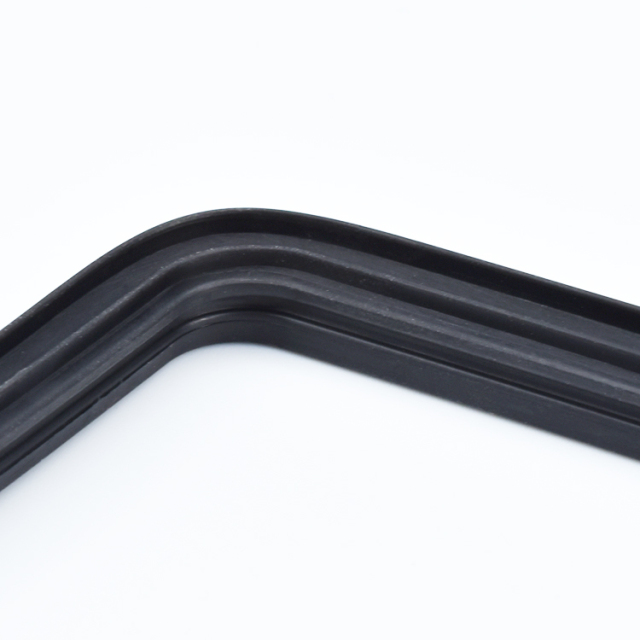
Customization Process for Precision Freezer Door Seals
At Suzhou Baoshida Trading Co., Ltd., our customization process for freezer door seals integrates material science with precision manufacturing to ensure optimal thermal efficiency and longevity in extreme cold environments. This four-phase methodology guarantees seals that meet stringent OEM specifications while addressing operational challenges such as frost accumulation, energy leakage, and mechanical stress.
Drawing Analysis
The process begins with rigorous technical drawing validation. Our engineering team examines dimensional tolerances, cross-sectional geometry, and installation interfaces against international standards (ISO 3302, ASTM D2000). Critical parameters include compression deflection force, gap sealing capacity, and thermal contraction coefficients at -40°C. We identify potential failure points such as inadequate lip contact pressure or insufficient tear resistance, providing actionable feedback to clients within 72 hours. This phase ensures the design aligns with both functional requirements and manufacturability constraints.
Formulation Development
Based on thermal and mechanical analysis, our rubber chemists engineer bespoke polymer compounds. Standard EPDM formulations undergo modification with specialized additives to enhance cryogenic flexibility and ozone resistance. Key adjustments include peroxide curing systems for low-temperature resilience and nano-silica reinforcement to minimize compression set. The table below illustrates critical property enhancements for freezer-specific seals:
| Property | Standard EPDM | Baoshida Custom Formulation | Test Standard |
|---|---|---|---|
| Hardness (Shore A) | 70 ± 5 | 65 ± 3 | ASTM D2240 |
| Low-Temp Flexibility | -35°C | -50°C | ISO 812 |
| Compression Set (70h/70°C) | 35% max | ≤ 18% | ASTM D395 |
| Tensile Strength | 10 MPa min | 14.5 MPa | ASTM D412 |
Prototyping and Validation
Prototypes are manufactured using CNC-machined molds to replicate production conditions. Each seal undergoes accelerated lifecycle testing: 50,000 compression cycles at -30°C, thermal shock validation (-45°C to +70°C), and vacuum integrity checks per EN 13091. We measure air leakage rates using calibrated flow meters (target: ≤ 0.05 m³/h/m) and verify dimensional stability via CMM inspection. Client feedback on prototype performance directly informs final material adjustments, typically reducing validation cycles by 40% compared to industry averages.
Mass Production Implementation
Upon approval, we transition to high-volume production under ISO 9001-certified protocols. Automated extrusion lines with laser-guided curing ovens ensure ±0.15 mm dimensional accuracy. Every batch undergoes real-time rheometry monitoring and post-cure hardness verification. Final quality gates include 100% visual inspection for surface defects and random sampling for compression set retesting. Our closed-loop system guarantees ≤ 50 PPM defect rates, with full traceability from raw material lot to finished seal.
This structured approach transforms complex freezer door seal requirements into reliable, energy-efficient solutions. By anchoring each phase in material science and process control, Suzhou Baoshida delivers seals that extend freezer lifespan while meeting global regulatory demands for food safety and energy conservation.
Contact Engineering Team
For manufacturers and OEMs in the refrigeration industry, selecting the right partner for freezer door seals is not merely a procurement decision—it is a critical factor in ensuring energy efficiency, product longevity, and regulatory compliance. At Suzhou Baoshida Trading Co., Ltd., we specialize in precision-engineered rubber seals designed specifically for commercial and industrial freezer applications. Our expertise in material science, compression molding, and thermal sealing solutions enables us to deliver consistently high-performance products tailored to your exact technical and operational requirements.
Our door seals are manufactured using advanced EPDM and silicone rubber compounds, selected for their superior resistance to extreme cold, ozone, UV exposure, and repeated compression cycles. Each seal is engineered to maintain airtight integrity across temperature ranges from -40°C to +120°C, minimizing cold loss, reducing energy consumption, and preventing condensation and ice buildup. Whether your application involves walk-in freezers, medical cold storage units, or refrigerated transport systems, our seals are built to perform under continuous duty conditions.
We understand that no two freezer designs are identical. That is why we offer full customization services—from durometer selection and cross-sectional geometry to length tolerances and surface finish. Our engineering team works directly with your design specifications to ensure a perfect fit, optimal sealing force, and long-term durability. All components are produced under strict ISO 9001-certified quality control protocols, with batch traceability and comprehensive testing for compression set, tensile strength, and low-temperature flexibility.
The following table outlines the standard technical specifications of our most commonly supplied freezer door seals:
| Property | EPDM Compound | Silicone Compound | Test Method |
|---|---|---|---|
| Hardness (Shore A) | 60 ± 5 | 55 ± 5 | ASTM D2240 |
| Tensile Strength | ≥ 9.0 MPa | ≥ 6.5 MPa | ASTM D412 |
| Elongation at Break | ≥ 300% | ≥ 250% | ASTM D412 |
| Compression Set (22h at -40°C) | ≤ 25% | ≤ 20% | ASTM D395 |
| Temperature Range | -40°C to +100°C | -60°C to +120°C | — |
| Aging Resistance (70h at 100°C) | Grade 2 | Grade 1 | ASTM D573 |
| Ozone Resistance | Excellent | Excellent | ASTM D1149 |
Partnering with Suzhou Baoshida means gaining access to a responsive, technically proficient team committed to solving real-world sealing challenges. We support rapid prototyping, volume production, and JIT delivery models to align with your manufacturing cycles.
For immediate technical consultation or to request a quote, contact Mr. Boyce, our dedicated OEM Manager, directly at [email protected]. Mr. Boyce brings over 15 years of experience in rubber formulation and industrial sealing solutions and will work closely with your engineering and procurement teams to ensure seamless integration of our seals into your product line. Include your application details, performance requirements, and quantity estimates in your inquiry for the fastest response. At Suzhou Baoshida, we don’t just supply components—we deliver engineered sealing performance.
⚖️ O-Ring Weight Calculator
Estimate rubber O-ring weight (Approx).