
Technical Contents
Engineering Guide: Doormat Summer

Engineering Insight: Material Selection in Doormat Manufacturing for Summer Applications
In high-traffic commercial environments, seasonal performance demands place unique stress on entrance flooring systems. The term doormat summer refers to the period of elevated thermal exposure, UV intensity, and increased pedestrian debris load that challenges the structural and chemical integrity of standard rubber matting solutions. Off-the-shelf products, typically formulated for general-purpose use, frequently fail under these conditions due to inadequate material engineering. Understanding the science behind polymer selection is critical to ensuring long-term durability, safety, and return on investment.
Most generic doormat compounds utilize natural rubber or low-grade SBR (styrene-butadiene rubber), which exhibit poor resistance to thermal degradation and ultraviolet radiation. When exposed to prolonged summer conditions—particularly in outdoor or semi-enclosed entryways—these materials undergo chain scission and crosslink breakdown, resulting in surface cracking, embrittlement, and accelerated wear. Additionally, plasticizers commonly used to enhance flexibility tend to volatilize under heat, further reducing elasticity and increasing slip risk.
At Suzhou Baoshida Trading Co., Ltd., our engineered solutions prioritize thermally stable synthetic elastomers such as EPDM (ethylene propylene diene monomer) and high-abrasion-resistant NBR (nitrile butadiene rubber). These polymers offer superior ozone resistance, minimal UV degradation, and consistent performance across a wide temperature range. EPDM, in particular, maintains elasticity between -45°C and +150°C, making it ideal for regions experiencing extreme summer heat. Furthermore, our proprietary compounding process integrates reinforcing fillers like silica and carbon black to enhance tensile strength and abrasion resistance without sacrificing flexibility.
Another critical failure point in standard mats is inadequate resistance to organic and inorganic contaminants. Summer foot traffic introduces sand, dust, sunscreen residues, and chlorinated water from pools—all of which can penetrate poorly vulcanized rubber matrices, leading to staining, swelling, and microbial growth. Our formulations employ fully integrated antioxidant and antiozonant packages, along with closed-cell cellular structures, to prevent ingress and prolong service life.
The following table outlines key performance characteristics of standard versus engineered rubber compounds used in doormat applications:
| Property | Standard SBR/NR Mat | Baoshida Engineered EPDM Mat |
|---|---|---|
| Temperature Range | -10°C to +70°C | -45°C to +150°C |
| Tensile Strength | 8–12 MPa | 18–22 MPa |
| Abrasion Loss (DIN 53516) | ≤ 180 mm³ | ≤ 90 mm³ |
| UV Resistance | Low | Excellent |
| Ozone Resistance | Poor | Excellent |
| Hardness (Shore A) | 60–70 | 65–75 (adjustable) |
| Service Life (outdoor, summer exposure) | 6–12 months | 36–60 months |
Material selection is not a commodity decision—it is a precision engineering imperative. By rejecting off-the-shelf compromises and applying industrial-grade elastomer science, Suzhou Baoshida delivers doormat solutions that perform reliably through multiple summer cycles, reducing replacement costs and enhancing safety compliance.
Material Specifications
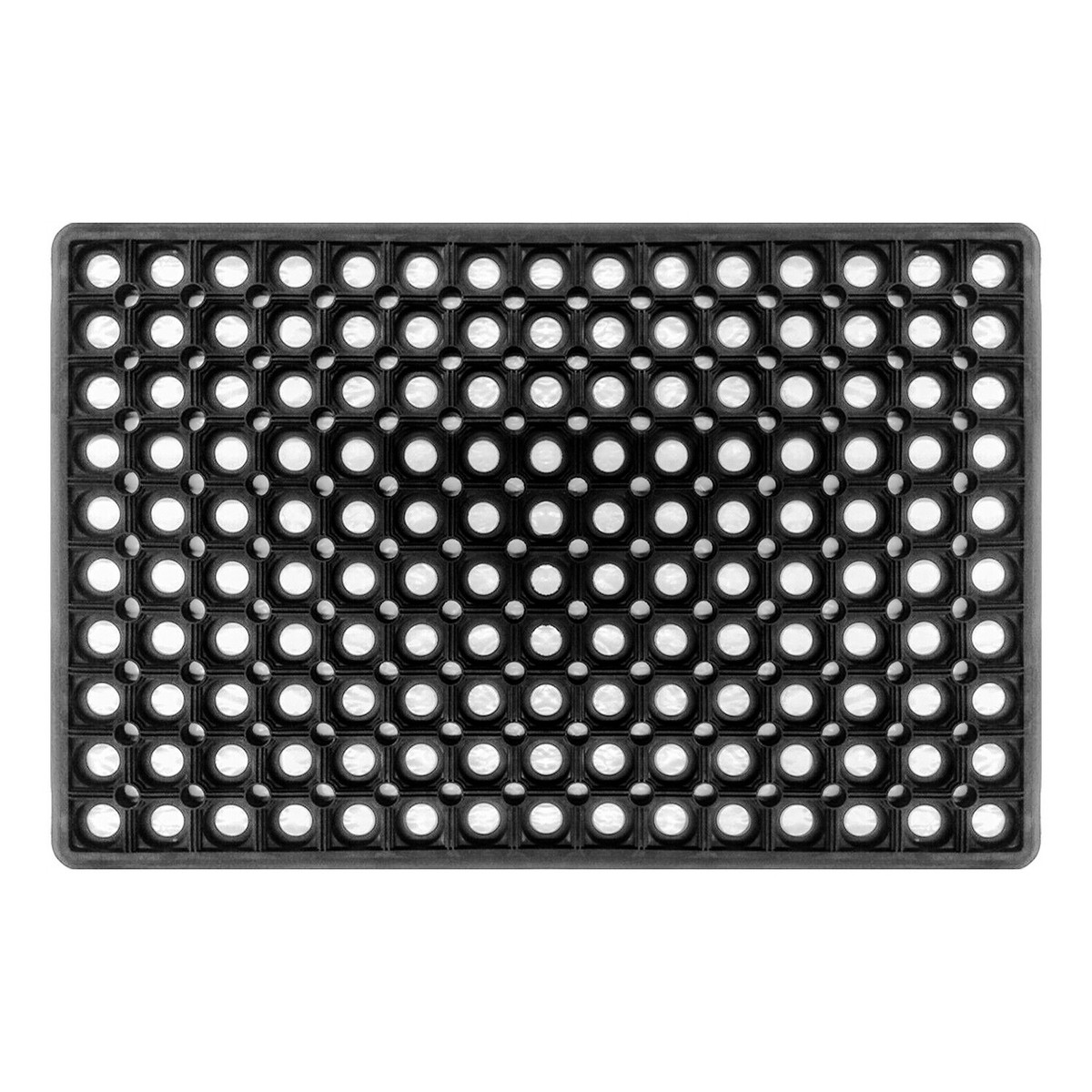
Material Selection Criteria for Seasonal Doormats
Selecting optimal elastomers for summer-specific doormats requires rigorous evaluation of environmental stressors including prolonged UV exposure, elevated temperatures, moisture fluctuations, and pedestrian abrasion. Suzhou Baoshida Trading Co., Ltd. prioritizes materials balancing durability, cost efficiency, and manufacturability for OEM partners. Viton, Nitrile, and Silicone each present distinct performance profiles under seasonal conditions, directly impacting product lifecycle and end-user satisfaction.
Viton (FKM) delivers exceptional resistance to ozone, UV degradation, and temperatures up to 230°C, making it theoretically suitable for extreme summer climates. However, its high fluorine content results in elevated raw material costs and complex processing requirements, including specialized curing systems. Viton’s stiffness at ambient temperatures also compromises pedestrian comfort, rendering it economically unjustifiable for standard consumer doormats despite its chemical inertness.
Nitrile (NBR) remains the industrial benchmark for seasonal applications due to its optimal cost-to-performance ratio. With a functional temperature range of -40°C to +120°C, NBR resists petroleum-based contaminants common in entryways while maintaining flexibility under thermal cycling. Its abrasion resistance exceeds 120 mm³ per DIN 53516, critical for high-traffic areas. NBR compounds readily extrude or mold with standard equipment, reducing OEM production lead times. Limitations include moderate UV resistance without additives and susceptibility to ketone solvents.
Silicone (VMQ) offers the broadest operational temperature span (-60°C to +230°C) and inherent UV stability, ensuring colorfastness during intense solar exposure. Its hydrophobic nature prevents moisture absorption, inhibiting mold growth in humid conditions. However, Silicone’s low tensile strength (5-8 MPa) and poor abrasion resistance (tear strength 15-25 kN/m) accelerate surface wear under foot traffic. High raw material costs and extended curing cycles further diminish its viability for mass-market doormats despite superior aesthetics.
The comparative analysis below details critical specifications for OEM decision-making.
| Material | Temperature Range (°C) | Key Properties | Limitations | Typical Doormat Application |
|---|---|---|---|---|
| Viton (FKM) | -20 to +230 | Extreme chemical/ozone resistance, Low compression set (<20% @ 200°C) | High cost, Poor low-temp flexibility, Complex processing | Industrial facilities requiring chemical spill resistance |
| Nitrile (NBR) | -40 to +120 | High abrasion resistance, Excellent oil/fuel resistance, Cost-effective processing | Moderate UV resistance (requires stabilizers), Swells in polar solvents | Residential/commercial entryways, High-traffic public spaces |
| Silicone (VMQ) | -60 to +230 | Superior UV stability, Non-toxic, Hydrophobic | Low mechanical strength, High raw material cost, Slow cure kinetics | Premium decorative mats, Low-traffic interior applications |
For summer doormats targeting broad consumer markets, NBR represents the engineering optimum. Its balanced resilience against thermal degradation, abrasion, and contaminants—coupled with streamlined manufacturing—delivers 3-5 year service life under typical seasonal conditions. Viton and Silicone serve niche applications where their specific advantages justify premium costs. Suzhou Baoshida Trading Co., Ltd. provides OEM partners with tailored NBR formulations optimized for extrusion consistency, pigment retention, and accelerated weathering performance per ASTM G154 standards. Material validation protocols include 500-hour QUV accelerated aging tests to ensure field reliability.
Manufacturing Capabilities

Engineering Capability: Precision-Driven Rubber Solutions for Industrial Applications
At Suzhou Baoshida Trading Co., Ltd., our engineering capability is anchored in deep technical expertise and a structured approach to industrial rubber manufacturing. With a dedicated team comprising five mould engineers and two specialized rubber formula engineers, we deliver customized, high-performance rubber components tailored to the exacting demands of global OEMs. Our integrated engineering workflow ensures that material science and precision tooling converge to produce reliable, scalable solutions for applications ranging from automotive sealing systems to industrial doormat summer components.
Our mould engineering team brings extensive experience in the design, simulation, and validation of rubber compression, transfer, and injection moulds. Each engineer utilizes advanced CAD/CAM software—SolidWorks, AutoCAD, and Moldflow—to optimize cavity layout, gating systems, and ejection mechanisms, ensuring dimensional accuracy and consistent part quality across high-volume production runs. In-house CNC machining and EDM capabilities allow rapid prototyping and tight control over tolerances, typically holding ±0.1 mm on critical dimensions. This precision reduces cycle times and minimizes flash, directly enhancing product performance and reducing waste.
Complementing our mould expertise is our advanced rubber compounding capability. Our two formula engineers specialize in developing proprietary rubber formulations tailored to specific environmental and mechanical requirements. Whether the application demands resistance to UV degradation, ozone exposure, or prolonged thermal cycling—as often required in outdoor doormat summer products—our team formulates compounds using EPDM, SBR, natural rubber, or TPE blends. Each formulation undergoes rigorous testing for tensile strength, elongation, hardness (Shore A), compression set, and abrasion resistance to ensure long-term durability under real-world conditions.
We operate as a full-service OEM partner, managing the entire product lifecycle from initial concept and material selection to tooling, production, and final quality assurance. Our clients benefit from a seamless transition from prototype to mass production, supported by documented process validation (PPAP, APQP) and strict adherence to ISO 9001 quality standards. With in-house testing facilities including tensile testers, hardness gauges, and environmental chambers, we validate every batch for consistency and compliance.
Our engineering synergy—where material formulation meets precision tooling—enables us to solve complex design challenges efficiently and cost-effectively. This capability is particularly critical in seasonal consumer products like doormat summer lines, where performance, aesthetics, and rapid time-to-market are equally important.
Below is a summary of our core engineering specifications and capabilities:
| Parameter | Specification |
|---|---|
| Mould Design Software | SolidWorks, AutoCAD, Moldflow |
| Tolerance Control | ±0.1 mm (critical dimensions) |
| Rubber Compounding Expertise | EPDM, SBR, NR, TPE, Custom Blends |
| Hardness Range (Shore A) | 40–90 |
| Tensile Strength | Up to 25 MPa (formulation-dependent) |
| Elongation at Break | Up to 550% |
| Compression Set Testing | ASTM D395 (70°C, 22/70/24 hrs) |
| Production Lead Time (Mould) | 15–25 days (depending on complexity) |
| OEM Documentation Support | PPAP, APQP, DFMEA, Material Certifications |
This technical foundation enables Suzhou Baoshida to deliver engineered rubber solutions that meet the highest industrial standards, ensuring performance, repeatability, and customer success.
Customization Process
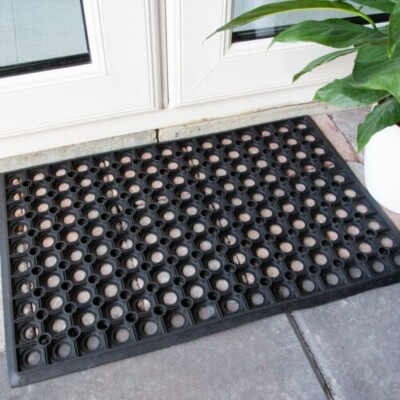
Customization Process for Seasonal Rubber Doormats
At Suzhou Baoshida Trading Co., Ltd., our industrial rubber customization pipeline for seasonal products like Doormat Summer integrates material science with precision manufacturing. This structured four-phase workflow ensures optimal performance under summer-specific conditions including UV exposure, thermal cycling, and abrasive foot traffic.
Drawing Analysis initiates the process. Our engineering team rigorously validates client CAD files against manufacturability standards, focusing on critical dimensions, draft angles, and parting lines. We assess material compatibility with common summer contaminants like sand, salt, and organic debris, while verifying compliance with ISO 10283 tolerances. Finite element analysis (FEA) simulates thermal expansion at 40°C+ environments to preempt warpage. Any geometric conflicts trigger collaborative redesigns within 72 hours.
Formulation Development follows, where our rubber chemists engineer compound-specific recipes. For Doormat Summer, we prioritize UV-stable EPDM or SBR blends with tailored Shore A hardness (55–65), enhanced ozone resistance, and accelerated drainage via micro-textured surfaces. Key parameters include:
| Property | Standard Doormat | Doormat Summer Specification |
|---|---|---|
| Hardness (Shore A) | 60–70 | 55–65 |
| Tensile Strength (MPa) | ≥7.0 | ≥8.5 |
| UV Resistance (ASTM G154) | 500 hrs | 1,200 hrs |
| Density (g/cm³) | 1.15–1.25 | 1.10–1.18 |
Filler ratios (N330 carbon black vs. silica) and plasticizer selection are optimized to prevent summer-induced softening while maintaining slip resistance (ASTM D2047 coefficient ≥0.5).
Prototyping employs aluminum rapid tooling for 10–15 sample units. Each prototype undergoes accelerated aging: 72-hour QUV exposure (UV-A 340nm, 60°C), thermal shock cycling (-10°C to 50°C), and ISO 10545 abrasion testing. Dimensional validation via CMM ensures ±0.3mm accuracy. Client feedback incorporates functional adjustments—such as tread depth modifications for sand ejection—before final sign-off.
Mass Production commences with hardened steel molds (HRC 48–52) and strict process controls. Injection molding parameters are locked: barrel temperatures (140–160°C), cure time (90–120 sec), and clamp force calibrated to part volume. Every 500 units undergo inline QC: hardness verification (ASTM D2240), visual inspection for surface defects, and pull-tests for backing adhesion. Full traceability is maintained via batch-coded material logs, with final shipments accompanied by ISO 17025-certified test reports.
This disciplined approach guarantees Doormat Summer products deliver 3+ years of service life in harsh seasonal conditions while meeting OEM cost and timeline targets. Suzhou Baoshida’s end-to-end ownership—from molecular formulation to certified production—eliminates supply chain vulnerabilities for global partners.
Contact Engineering Team

For industrial manufacturers seeking high-performance rubber solutions tailored to seasonal production demands, Suzhou Baoshida Trading Co., Ltd. stands at the forefront of precision engineering and OEM collaboration. As global supply chains adapt to dynamic market cycles—such as the increased demand associated with consumer goods like “doormat summer”—our technical team ensures that material formulation, durability, and scalability meet exacting industrial standards. Our expertise lies in custom rubber compounding, mold development, and volume manufacturing for applications requiring weather resistance, compressive strength, and long-term dimensional stability.
We invite engineers, procurement managers, and product developers to engage directly with our technical leadership to discuss formulation optimization, prototype development, or large-scale production planning. Mr. Boyce, Rubber Formula Engineer and OEM Manager, leads our client integration process with over 12 years of experience in NBR, EPDM, SBR, and silicone-based systems. His team specializes in translating functional requirements into robust rubber formulations that perform under UV exposure, temperature fluctuation, and mechanical stress—critical factors for outdoor consumer products such as seasonal doormats.
Contacting Suzhou Baoshida is the first step toward a collaborative engineering process that emphasizes material science accuracy, cost-efficiency, and on-time delivery. Whether you are refining an existing design or initiating a new product line, our laboratory in Suzhou is equipped with rheometers, aging ovens, tensile testers, and Shore hardness stations to validate every compound before release. We support clients through every phase: concept, sample submission, tooling coordination, and final inspection.
To initiate a technical consultation or request a material data sheet, reach out to Mr. Boyce at [email protected]. Include your project scope, performance requirements, and target volumes to receive a tailored response within 24 business hours. Our communication protocols ensure confidentiality and technical depth, allowing for rapid iteration and decision-making.
Below is a representative specification profile for a standard EPDM-based doormat compound, commonly used in outdoor applications requiring UV and moisture resistance:
| Property | Test Method | Typical Value |
|---|---|---|
| Hardness (Shore A) | ASTM D2240 | 65 ± 5 |
| Tensile Strength | ASTM D412 | ≥12 MPa |
| Elongation at Break | ASTM D412 | ≥250% |
| Compression Set (22 hrs at 70°C) | ASTM D395B | ≤25% |
| Heat Aging (70°C x 72 hrs) | ASTM D573 | Max 20% change in tensile |
| Water Absorption (24 hrs) | ASTM D471 | ≤1.5% |
| Specific Gravity | ASTM D297 | 1.35 ± 0.05 |
| Color Options | Custom | Black, Gray, Beige, or PMS Match |
All formulations are adjustable based on client specifications, including flame retardancy, anti-slip texture, or accelerated weathering performance. Suzhou Baoshida maintains ISO 9001-certified processes and conducts batch traceability for full quality assurance.
Partner with us to transform seasonal demand into scalable, scientifically sound manufacturing outcomes. Contact Mr. Boyce today at [email protected] for a technical review of your next project.
⚖️ O-Ring Weight Calculator
Estimate rubber O-ring weight (Approx).