
Technical Contents
Engineering Guide: Elastomeric Isolation Pads
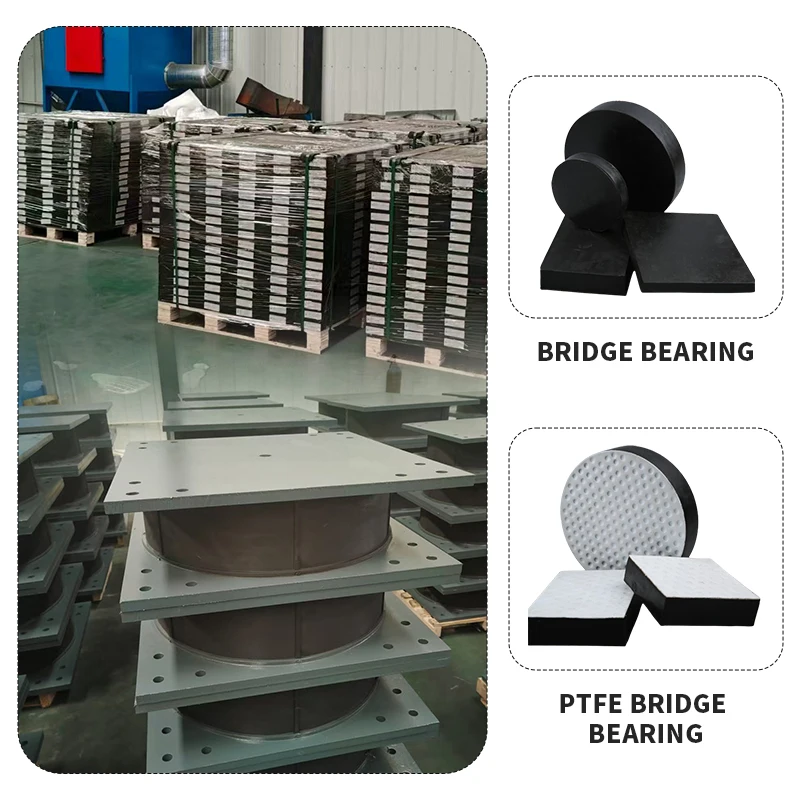
Engineering Insight: The Critical Role of Material Selection in Elastomeric Isolation Pads
In industrial applications, elastomeric isolation pads serve as vital components in mitigating vibration, reducing noise, and protecting sensitive equipment and structural foundations. While these pads may appear to be simple rubber blocks, their performance is deeply rooted in precise material science and application-specific engineering. Off-the-shelf solutions often fail to deliver consistent performance because they are designed for generalized conditions rather than the unique environmental and mechanical demands of a particular installation.
Material selection is the cornerstone of effective vibration isolation. The elastomer’s chemical composition, hardness (Shore A), resilience, damping coefficient, and resistance to temperature, oil, ozone, and compression set directly influence service life and functional reliability. Standard pads, typically made from generic natural rubber or low-grade SBR (styrene-butadiene rubber), lack the tailored properties needed for harsh or specialized environments. For instance, in high-temperature industrial plants, these materials degrade rapidly, leading to premature cracking and loss of load-bearing capacity. Similarly, exposure to oils or chemicals can cause swelling or embrittlement in non-resistant compounds, compromising isolation efficiency.
At Suzhou Baoshida Trading Co., Ltd., we emphasize engineered material solutions that align with operational parameters. Our approach begins with a thorough assessment of load requirements, dynamic forces, frequency spectrum, and ambient conditions. This enables the selection of advanced elastomers such as neoprene (CR), nitrile (NBR), EPDM, or specialized polyurethanes—each offering distinct advantages. Neoprene provides excellent resistance to ozone and moderate oil exposure, making it ideal for outdoor or industrial HVAC applications. Nitrile, with its superior oil and fuel resistance, is preferred in automotive or hydraulic environments. EPDM excels in UV and weather resistance, while high-damping polyurethanes offer enhanced energy absorption in precision machinery installations.
The failure of generic pads often stems from an underestimation of creep, fatigue, and long-term deflection under continuous load. Without proper compound formulation and reinforcement—such as fabric or steel inserts—standard pads exhibit excessive set, leading to uneven load distribution and potential equipment misalignment.
Below is a comparative overview of common elastomer properties relevant to isolation pad performance.
| Material | Shore A Hardness Range | Temp Range (°C) | Oil Resistance | Damping Capacity | Key Applications |
|---|---|---|---|---|---|
| Natural Rubber | 40–80 | -40 to +70 | Poor | High | General industrial, low-frequency |
| SBR | 50–80 | -30 to +70 | Poor | Medium | Light-duty machinery |
| Neoprene (CR) | 40–85 | -40 to +100 | Moderate | Medium-High | HVAC, outdoor equipment |
| Nitrile (NBR) | 50–90 | -30 to +120 | Excellent | Medium | Automotive, hydraulic systems |
| EPDM | 45–85 | -50 to +150 | Poor | Medium | Weather-exposed installations |
| Polyurethane | 60–95 | -40 to +90 | Good | Very High | Precision machinery, high-load |
Custom material formulation ensures that elastomeric isolation pads maintain performance integrity over time, avoiding the costly downtime associated with failure. At Baoshida, we engineer for longevity, precision, and environmental compatibility—proving that in vibration control, the right material isn’t just an option—it’s the foundation.
Material Specifications
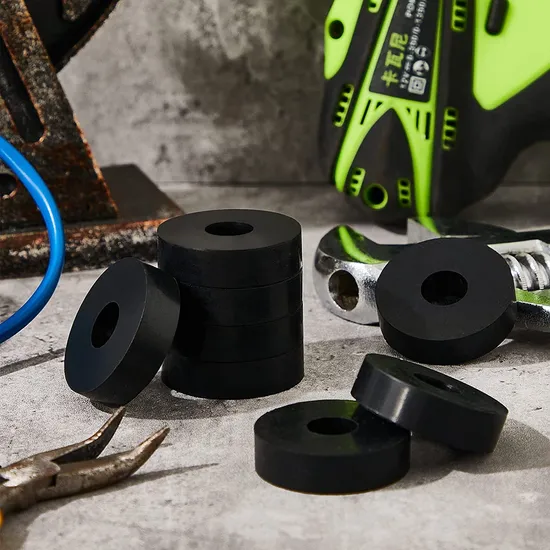
Material Specifications for Elastomeric Isolation Pads
Selection of the optimal elastomer for elastomeric isolation pads is critical for performance longevity under dynamic stress, thermal exposure, and chemical environments. At Suzhou Baoshida Trading Co., Ltd., we rigorously qualify Viton (FKM), Nitrile (NBR), and Silicone (VMQ) formulations to meet stringent OEM vibration damping and environmental resistance requirements. Each material exhibits distinct molecular properties dictating its operational envelope. Viton (fluorocarbon rubber) delivers exceptional resistance to high temperatures, oils, and aggressive chemicals, making it indispensable for aerospace and automotive powertrain applications where exposure to synthetic lubricants and fuels occurs. Nitrile (acrylonitrile-butadiene rubber) provides cost-effective resilience against petroleum-based fluids and moderate heat, ideal for industrial machinery mounts and hydraulic systems. Silicone (polysiloxane) excels in extreme temperature stability and electrical insulation but requires reinforcement for high-load scenarios due to inherent lower tensile strength.
Material performance must align precisely with application-specific stressors. Viton maintains integrity from -20°C to +250°C continuous service, resisting swelling in jet fuels and brake fluids where Nitrile would degrade. Nitrile variants with 34-40% acrylonitrile content balance fuel resistance with low-temperature flexibility down to -40°C, though prolonged exposure above 120°C accelerates aging. Silicone operates reliably from -60°C to +230°C but exhibits poor resistance to concentrated acids and hydrocarbon solvents, necessitating careful fluid compatibility assessment. All compounds undergo ISO 37 tensile testing and ASTM D2240 hardness validation to ensure consistency. Compression set values below 25% after 70 hours at 150°C are mandatory for Viton and Silicone to prevent permanent deformation in sustained-load isolation mounts.
The comparative analysis below details key mechanical and chemical properties per ASTM/ISO standards. Data reflects standard commercial grades; custom formulations for enhanced tear strength or fluid resistance are available.
| Property | Viton (FKM) | Nitrile (NBR) | Silicone (VMQ) |
|---|---|---|---|
| Temperature Range (°C) | -20 to +250 | -40 to +120 | -60 to +230 |
| Tensile Strength (MPa) | 15-20 | 10-25 | 5-10 |
| Elongation at Break (%) | 150-300 | 200-500 | 200-700 |
| Hardness Range (Shore A) | 60-90 | 50-90 | 30-80 |
| Compression Set (ASTM D395) | ≤25% @ 150°C/70h | ≤30% @ 100°C/70h | ≤20% @ 150°C/70h |
| Key Fluid Resistance | Fuels, oils, acids | Petroleum oils, water | Water, ozone, steam |
| Key Limitations | Poor ketone resistance; high cost | Limited high-temp stability; ozone sensitivity | Low tear strength; hydrocarbon swelling |
OEMs must prioritize fluid compatibility and thermal profiles when specifying isolation pads. Viton is optimal for high-value systems demanding chemical inertness despite premium cost. Nitrile offers the best cost-performance ratio for general industrial use below 120°C. Silicone is unmatched for cryogenic or high-temperature electrical applications but requires design adjustments for mechanical loading. Suzhou Baoshida provides full material test reports (MTRs) and application engineering support to validate material selection against your operational parameters. All compounds comply with RoHS and REACH regulations, with FDA-grade options available for specialized sectors.
Manufacturing Capabilities
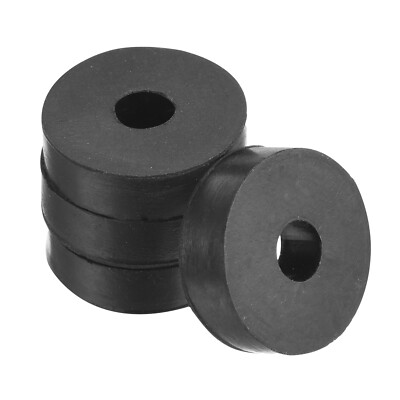
Engineering Capability
At Suzhou Baoshida Trading Co., Ltd., our engineering capability in industrial rubber solutions is anchored in deep technical expertise and a systematic approach to elastomeric product development. Our team comprises five dedicated mould engineers and two specialized rubber formula engineers, enabling us to deliver high-performance elastomeric isolation pads tailored to exacting OEM specifications. This integrated team structure allows seamless coordination between material science and precision tooling, ensuring optimal performance, durability, and manufacturability.
Our formula engineers possess extensive experience in polymer chemistry, with a focused understanding of elastomer behavior under dynamic loading, temperature extremes, and corrosive environments. They are responsible for developing custom rubber compounds that meet specific requirements for hardness, damping characteristics, compression set, and environmental resistance. By fine-tuning formulations based on nitrile (NBR), ethylene propylene diene monomer (EPDM), silicone (VMQ), and other specialty elastomers, we ensure each isolation pad delivers consistent vibration damping, shock absorption, and noise reduction across diverse industrial applications.
Complementing this material expertise, our five mould engineers specialize in precision tool design and process optimization for rubber compression, transfer, and injection moulding. They utilize advanced CAD/CAM software and finite element analysis (FEA) to simulate material flow and curing behavior, minimizing defects and maximizing dimensional accuracy. This enables rapid prototyping and fast transition from concept to full-scale production, critical for OEM partners requiring time-sensitive product launches.
We maintain full in-house control over the development cycle, from compound formulation and tooling design to prototype validation and batch production. This vertical integration ensures traceability, repeatability, and strict adherence to international quality standards such as ISO 9001. Our OEM capabilities include private labeling, custom packaging, and co-engineering support, allowing partners to leverage our technical resources without compromising brand identity or design ownership.
Suzhou Baoshida is equipped to handle low-volume specialty runs as well as high-volume automated production, with scalable capacity and rigorous QC protocols. Our facility supports rubber-to-metal bonding, insert moulding, and secondary operations such as trimming, surface treatment, and performance testing under simulated service conditions.
The following table outlines key technical parameters for our standard elastomeric isolation pads, reflecting the outcome of our integrated engineering approach:
| Parameter | Range/Value | Test Standard |
|---|---|---|
| Hardness (Shore A) | 40–90 | ASTM D2240 |
| Tensile Strength | 8–22 MPa | ASTM D412 |
| Elongation at Break | 150–600% | ASTM D412 |
| Compression Set (22h, 70°C) | ≤25% | ASTM D395 |
| Operating Temperature | -40°C to +150°C (varies by compound) | — |
| Damping Coefficient (Tan δ) | 0.15–0.35 @ 1Hz | ISO 4664 |
| Frequency Range (Effective Isolation) | 10–500 Hz | Custom Test |
This combination of formula mastery, precision engineering, and OEM-focused service positions Suzhou Baoshida as a trusted technical partner in the design and manufacture of high-reliability elastomeric isolation solutions.
Customization Process
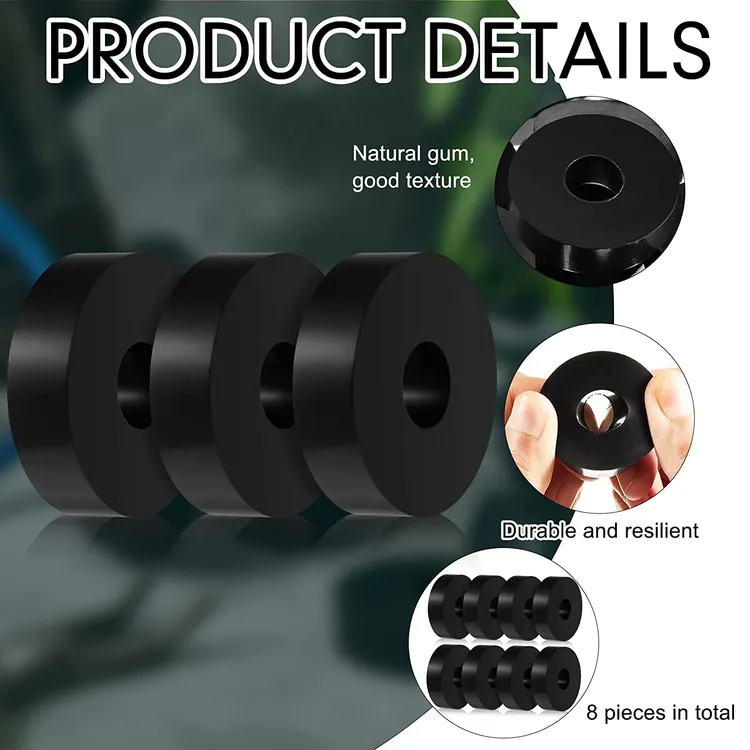
Elastomeric Isolation Pad Customization Process: Precision Engineering from Concept to Volume Supply
Suzhou Baoshida Trading Co., Ltd. implements a rigorously controlled four-phase customization workflow for elastomeric isolation pads, ensuring optimal performance under specific industrial vibration and shock load conditions. Our process begins with comprehensive Drawing Analysis, where engineering teams dissect client-provided CAD models and technical specifications. We validate critical parameters including geometric tolerances per ISO 2768, load distribution profiles, deflection requirements under static and dynamic forces, and environmental exposure data. Finite Element Analysis (FEA) simulations are employed to predict stress concentrations and deformation behavior, identifying potential failure modes before material selection commences. This phase ensures dimensional feasibility and establishes the foundational performance targets for subsequent development stages.
Material Formulation constitutes the core scientific phase, driven by our in-house rubber chemistry expertise. Based on the validated requirements, we select base polymers—typically NBR for oil resistance, EPDM for extreme temperature stability, or specialized hydrogenated nitrile (HNBR) for demanding dynamic applications. Critical compound properties are engineered through precise filler systems (e.g., silica for low-temperature flexibility), plasticizers, and vulcanizing agents. Key performance targets are defined as follows:
| Critical Performance Parameter | Standard Range | Testing Standard | Application Significance |
|---|---|---|---|
| Shore A Hardness | 40 – 90 | ASTM D2240 | Load support vs. isolation efficiency |
| Tensile Strength (MPa) | 10 – 25 | ISO 37 | Structural integrity under cyclic stress |
| Compression Set (% @ 70°C/22h) | ≤ 25 | ISO 815 | Long-term resilience retention |
| Operating Temperature Range | -50°C to +150°C | ASTM D1329 | Environmental suitability |
| Dynamic Stiffness (kN/mm) | Client-defined | ISO 10112-1 | Vibration transmissibility control |
Prototyping follows compound finalization, utilizing precision CNC-machined molds for initial samples. Three iterative prototype batches undergo stringent validation: Batch 1 verifies basic material properties per the table above; Batch 2 assesses performance under simulated operational loads using servo-hydraulic test rigs; Batch 3 confirms durability through accelerated aging (heat, ozone, fluid immersion) and 1 million+ cycle fatigue testing. Dynamic Mechanical Analysis (DMA) quantifies damping characteristics across operational frequencies, ensuring resonance avoidance in the target system.
Mass Production deployment occurs only after formal client sign-off on validated prototypes. We initiate controlled pilot runs under full ISO 9001 statistical process control (SPC), monitoring vulcanization kinetics via moving die rheometry and dimensional consistency via automated optical inspection. Full-scale manufacturing leverages multi-cavity compression molding presses with real-time temperature and pressure feedback loops, maintaining compound homogeneity through closed-mixing systems. Every production lot undergoes first-article inspection and batch-level certification per ASTM D2000 material classification, with traceability maintained from raw material batch codes to finished goods. Suzhou Baoshida’s integrated process guarantees that custom isolation pads consistently meet the exact mechanical, environmental, and lifecycle demands of industrial OEM applications.
Contact Engineering Team
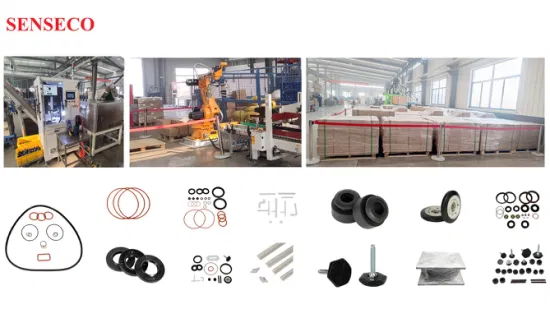
For industrial manufacturers seeking high-performance elastomeric isolation pads, Suzhou Baoshida Trading Co., Ltd. stands as a trusted partner in delivering precision-engineered rubber solutions. With years of expertise in industrial rubber formulation and OEM manufacturing, we specialize in custom elastomeric components designed to meet the rigorous demands of vibration damping, noise reduction, and mechanical isolation across heavy machinery, HVAC systems, transportation, and precision equipment.
Our elastomeric isolation pads are formulated using advanced rubber compounds, including natural rubber (NR), nitrile (NBR), ethylene propylene diene monomer (EPDM), and neoprene (CR), tailored to specific load-bearing requirements, environmental resistance, and dynamic performance metrics. Each pad undergoes stringent quality control, ensuring consistent durometer ratings, compression set resistance, and long-term resilience under continuous operational stress.
We understand that every application presents unique challenges. Whether you require pads for seismic isolation, industrial pump mounting, or sensitive instrumentation platforms, our engineering team collaborates directly with clients to optimize material selection, geometry, and performance characteristics. Our manufacturing capabilities support both low-volume prototyping and high-volume production, with full traceability and compliance documentation available upon request.
To ensure seamless integration into your systems, we provide detailed technical specifications and performance data for all standard and custom compounds. Below is a representative specification table for our most commonly requested elastomeric isolation pad series:
| Property | Test Method | NR-60 | NBR-70 | EPDM-65 | CR-75 |
|---|---|---|---|---|---|
| Hardness (Shore A) | ASTM D2240 | 60 ± 5 | 70 ± 5 | 65 ± 5 | 75 ± 5 |
| Tensile Strength (MPa) | ASTM D412 | ≥18 | ≥15 | ≥16 | ≥14 |
| Elongation at Break (%) | ASTM D412 | ≥400 | ≥300 | ≥350 | ≥280 |
| Compression Set (70°C, 22h) | ASTM D395 | ≤20% | ≤22% | ≤18% | ≤20% |
| Temperature Range (°C) | — | -30 to +80 | -20 to +100 | -40 to +120 | -30 to +110 |
| Specific Gravity | ASTM D297 | 1.15 | 1.20 | 1.18 | 1.25 |
| Oil Resistance (IRHD change) | ASTM D471 | Poor | Excellent | Good | Good |
All materials can be customized in shape, size, and durometer, with options for bonded metal inserts, fabric reinforcement, or anti-slip surface textures. We also support OEM branding and packaging solutions for global distribution partners.
For technical inquiries, material samples, or project consultation, contact Mr. Boyce, Rubber Formula Engineer and OEM Manager, directly at [email protected]. Mr. Boyce leads our application engineering team and specializes in translating industrial requirements into durable, cost-effective rubber solutions. Response time is typically within 12 business hours, with expedited support available for time-critical projects.
Partner with Suzhou Baoshida Trading Co., Ltd. to ensure your vibration isolation systems are built on scientific formulation, industrial precision, and reliable performance. Initiate your next project with confidence—reach out today.
⚖️ O-Ring Weight Calculator
Estimate rubber O-ring weight (Approx).