
Technical Contents
Engineering Guide: Epdm Membranes
Engineering Insight EPDM Membranes Material Selection Criticality
Industrial EPDM membranes demand rigorous material science oversight to withstand decades of environmental stress. Off-the-shelf solutions frequently fail due to generic formulations prioritizing cost over application-specific durability. Standard membranes often exhibit inadequate resistance to ozone degradation, UV radiation, and thermal cycling—key failure modes in roofing, automotive seals, and infrastructure projects. These compromises manifest as surface cracking, loss of elasticity, and premature hardening, leading to catastrophic leaks or system breakdowns. The root cause lies in unoptimized polymer architecture: insufficient diene monomer content for crosslinking density, inconsistent carbon black dispersion, or substandard stabilizer packages. Such deficiencies accelerate aging, particularly in harsh climates where membranes face 1000+ hours of intense UV exposure annually.
Material selection must address the triad of mechanical, chemical, and environmental demands. For instance, roofing membranes require high elongation at break to accommodate structural movement, while automotive gaskets prioritize compression set resistance. Generic EPDM grades typically sacrifice one property to enhance another, creating latent vulnerabilities. ASTM D412 and D1149 testing reveal critical gaps: standard membranes may achieve baseline tensile strength but fail ozone resistance at 50 ppm concentration within 24 hours. Precision engineering adjusts ethylene-propylene-diene monomer ratios, filler types, and cure systems to balance these parameters. Suzhou Baoshida’s OEM-grade EPDM utilizes specialty terpolymers with controlled molecular weight distribution, enabling simultaneous ozone resistance exceeding 1000 hours and tensile retention above 85% after accelerated aging.
The performance disparity between standard and engineered EPDM is quantifiable. Consider these critical specifications under identical testing protocols:
| Property | Standard Off-the-Shelf EPDM | Suzhou Baoshida OEM-Grade EPDM | Test Standard |
|---|---|---|---|
| Ozone Resistance | Fails at 50 ppm/24h | Passes 100 ppm/1000h | ASTM D1149 |
| Tensile Strength (MPa) | 10.5 ± 1.2 | 15.8 ± 0.7 | ASTM D412 |
| Elongation at Break (%) | 250 ± 35 | 480 ± 25 | ASTM D412 |
| Compression Set (70°C/22h) | 35% ± 5% | 12% ± 3% | ASTM D395 |
| Accelerated Aging (150h) | 50% Tensile Retention | 88% Tensile Retention | ASTM D573 |
These metrics underscore why material selection transcends basic compliance. Industrial applications require membranes engineered for the specific stressors of their operational lifecycle. Suzhou Baoshida’s approach integrates application data with polymer chemistry—modifying cure kinetics for optimal crosslink density and incorporating synergistic antioxidant systems. This eliminates the trade-offs inherent in commodity-grade EPDM. Clients gain membranes that maintain integrity under extreme thermal cycling from -45°C to 135°C, resist chemical exposure from acid rain to hydraulic fluids, and deliver 30+ year service life. In industrial rubber solutions, the membrane is only as reliable as its molecular foundation; precision formulation isn’t optional—it’s the engineering imperative separating temporary fixes from permanent solutions.
Material Specifications
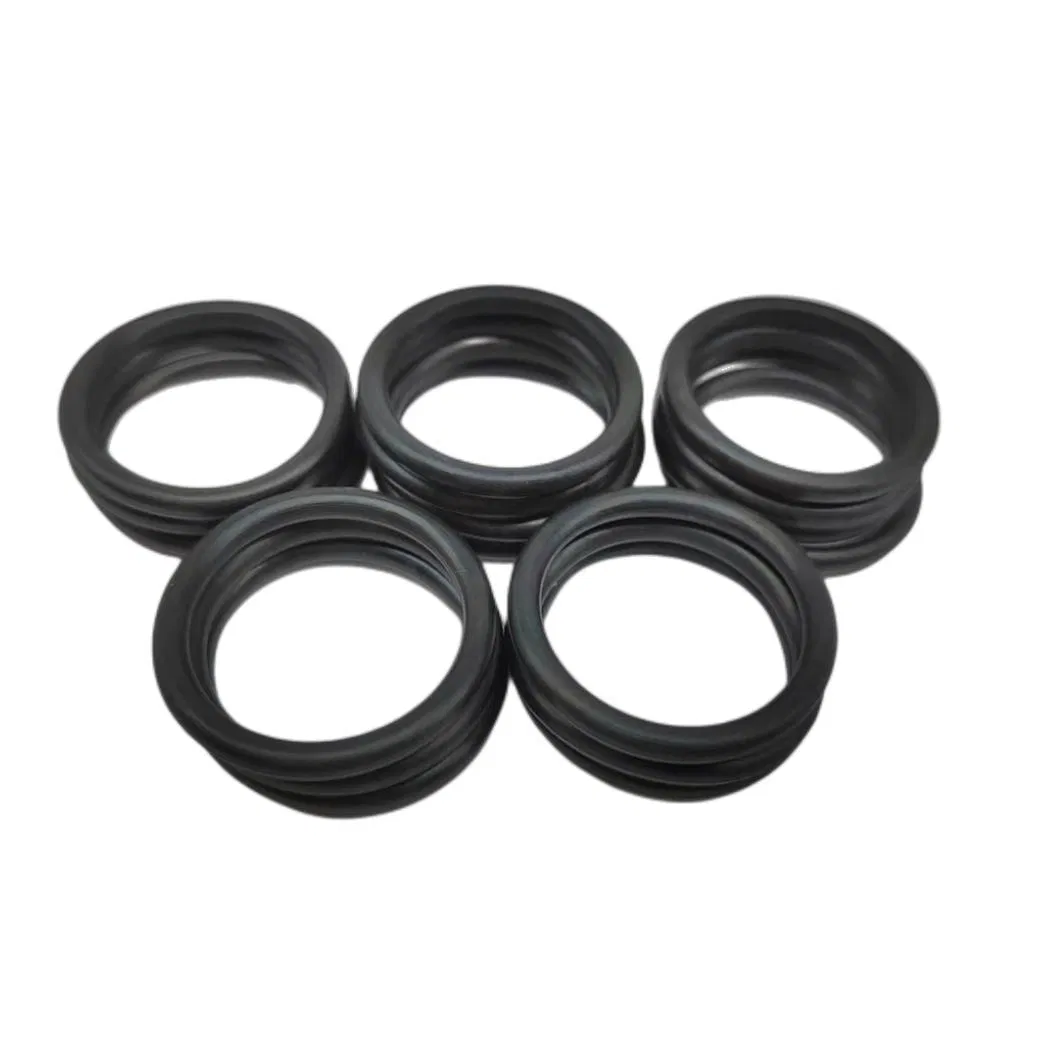
EPDM membranes are widely used in industrial applications requiring durable, weather-resistant, and chemically stable sealing solutions. At Suzhou Baoshida Trading Co., Ltd., we specialize in advanced rubber formulations tailored for performance under extreme environmental and chemical exposure conditions. While EPDM remains a preferred choice for roofing, automotive weatherstripping, and HVAC systems due to its excellent resistance to ozone, UV radiation, and temperature extremes, complementary elastomers such as Viton, Nitrile, and Silicone are often evaluated for specialized service environments. Understanding the technical distinctions among these materials is critical for optimal material selection in industrial design and manufacturing.
Viton, a fluorocarbon-based rubber, offers superior resistance to high temperatures, oils, fuels, and a broad range of aggressive chemicals. It maintains integrity from -20°C to +200°C, with intermittent exposure capability up to 230°C. This makes Viton ideal for aerospace, petrochemical, and automotive fuel system applications where long-term reliability under harsh conditions is non-negotiable. However, its higher cost and lower flexibility at low temperatures may limit use in general-purpose sealing.
Nitrile rubber (NBR) is a cost-effective solution for applications involving oil and fuel exposure. With operational stability between -30°C and +100°C (up to 120°C intermittently), NBR provides excellent abrasion resistance and tensile strength. It is commonly used in hydraulic seals, gaskets, and O-rings in machinery and automotive systems. While Nitrile performs poorly under UV and ozone exposure, its compatibility with aliphatic hydrocarbons and hydraulic fluids makes it indispensable in specific industrial contexts.
Silicone rubber excels in extreme temperature applications, functioning reliably from -60°C to +200°C. It offers outstanding UV and ozone resistance, low compression set, and good electrical insulation properties. However, its relatively low tensile strength and poor resistance to oils and fuels restrict its use to non-contact sealing, medical devices, and electrical insulation. Silicone is also favored in food-grade and pharmaceutical applications due to its inertness and compliance with FDA standards.
The following table provides a comparative overview of key physical and chemical properties for these elastomers:
| Property | EPDM | Viton | Nitrile (NBR) | Silicone |
|---|---|---|---|---|
| Temperature Range (°C) | -50 to +150 | -20 to +200 | -30 to +100 | -60 to +200 |
| Ozone Resistance | Excellent | Excellent | Poor | Excellent |
| UV Resistance | Excellent | Good | Poor | Excellent |
| Fuel/Oil Resistance | Poor | Excellent | Excellent | Poor |
| Water/Steam Resistance | Excellent | Good | Fair | Good |
| Compression Set Resistance | Good | Excellent | Good | Excellent |
| Tensile Strength | High | High | Very High | Moderate |
| Electrical Insulation | Good | Fair | Fair | Excellent |
| Typical Applications | Roofing, Seals, HVAC | Aerospace, Fuel Systems | O-rings, Hoses | Medical, Electrical |
Selecting the appropriate elastomer requires a precise balance of environmental exposure, mechanical demands, and regulatory compliance. At Suzhou Baoshida Trading Co., Ltd., we support OEMs and industrial partners with data-driven material recommendations and custom formulation services to ensure optimal performance and longevity in every application.
Manufacturing Capabilities
Engineering Capability: Precision EPDM Membrane Development at Suzhou Baoshida
Suzhou Baoshida Trading Co., Ltd. leverages a dedicated engineering backbone to deliver technically superior EPDM membranes for demanding industrial applications. Our core strength resides in the integrated expertise of five specialized Mold Engineers and two advanced Rubber Formula Engineers, operating within a rigorously controlled OEM manufacturing framework. This structure ensures seamless translation of complex material science into high-performance, dimensionally stable membrane products meeting exacting global specifications.
Our Formula Engineering team focuses on molecular architecture optimization for EPDM compounds. We systematically manipulate ethylene/propylene/diene monomer ratios, curative systems, and specialty additives to achieve target properties such as ozone resistance exceeding 100 pphm, thermal stability from -50°C to +150°C continuous service, and critical low-temperature flexibility down to -60°C. Precise control over crosslink density and polymer microstructure is paramount, directly influencing compression set performance, tensile strength retention after aging, and long-term weatherability. Every formulation undergoes iterative laboratory validation against ASTM D2000 and ISO 37 standards before scale-up, ensuring predictable behavior in roofing, automotive sealing, and solar panel encapsulation applications.
Complementing this material science rigor, our Mold Engineering division possesses deep proficiency in precision tooling design and process optimization for large-format membrane production. Expertise spans complex multi-cavity mold design, advanced thermal management systems for uniform vulcanization, and sophisticated flow analysis to eliminate knit lines in wide-width extrusions. This capability enables consistent production of membranes with tight dimensional tolerances (±0.1mm thickness control), exceptional surface finish, and seamless integration of co-extruded functional layers such as UV-resistant topcoats or adhesive primers.
Suzhou Baoshida operates as a fully integrated OEM partner, managing the entire value chain from initial compound development through final membrane delivery. Our OEM process incorporates stringent documentation protocols including full material traceability, batch-specific cure kinetics reports, and comprehensive quality control dossiers aligned with IATF 16949 principles. This end-to-end control guarantees reproducibility across production runs and facilitates rapid troubleshooting for our industrial clients.
Critical EPDM membrane specifications achieved through our engineering synergy are demonstrated below:
| Property | Standard EPDM Membrane | Baoshida Custom EPDM Membrane | Test Standard |
|---|---|---|---|
| Tensile Strength (MPa) | ≥ 7.5 | 10.5 – 14.0 | ASTM D412 |
| Elongation at Break (%) | ≥ 300 | 450 – 600 | ASTM D412 |
| Hardness (Shore A) | 50 – 70 | 55 – 65 (Customizable) | ASTM D2240 |
| Ozone Resistance (200 pphm, 40°C, 200 hrs) | Cracks Visible | No Cracks | ASTM D1149 |
| Low Temp Flexibility (°C) | -40 | -55 to -60 | ASTM D2137 |
| Heat Aging (150°C x 72h) | Tensile Retention ≥ 70% | Tensile Retention ≥ 85% | ASTM D573 |
This engineering-centric approach, combining deep formula science with precision manufacturing execution, positions Suzhou Baoshida as a strategic partner for OEMs requiring reliable, high-specification EPDM membranes where failure is not an option. We transform material challenges into engineered solutions.
Customization Process
Customization Process for EPDM Membranes at Suzhou Baoshida Trading Co., Ltd.
At Suzhou Baoshida Trading Co., Ltd., our industrial rubber solutions are engineered to meet exacting performance standards across diverse applications, including roofing, automotive seals, and waterproofing systems. Our EPDM membrane customization process is structured to ensure precision, durability, and compliance with OEM specifications. The workflow follows a rigorous four-phase approach: Drawing Analysis, Formulation, Prototyping, and Mass Production.
The process begins with Drawing Analysis, where technical blueprints and dimensional schematics provided by the client are evaluated by our engineering team. This phase includes assessment of thickness tolerances, geometric complexity, joint requirements, and environmental exposure conditions. We verify compliance with international standards such as ASTM D4637 and ISO 10562, ensuring that the final product will perform under specified thermal, UV, and chemical conditions. Any discrepancies or optimization opportunities are communicated to the client for approval prior to advancement.
Following drawing validation, our Formulation stage leverages proprietary rubber compounding expertise. EPDM (Ethylene Propylene Diene Monomer) is selected for its superior weather resistance, ozone stability, and wide service temperature range. The base polymer is tailored with precise ratios of sulfur, peroxide, fillers (such as carbon black or clay), plasticizers, and anti-aging agents to achieve target physical properties. Our formulation chemists adjust crosslink density and cure kinetics to match the intended application—whether requiring high elasticity, compression set resistance, or flame retardancy.
Once the compound is finalized, we proceed to Prototyping. Using calibrated calendering or extrusion equipment, small-batch samples are produced under controlled conditions that simulate full-scale manufacturing. These prototypes undergo comprehensive testing, including tensile strength, elongation at break, hardness (Shore A), and low-temperature flexibility. Clients receive physical samples along with full test reports for functional validation.
Upon client approval, the project transitions into Mass Production. Our facility operates automated production lines with real-time quality monitoring to maintain batch consistency. Every roll or molded component is inspected for dimensional accuracy, surface defects, and curing uniformity. Packaging and labeling are customized per client logistics requirements, with traceability maintained through batch coding and QC documentation.
The table below outlines typical performance specifications achievable with our custom EPDM membranes:
| Property | Test Method | Typical Value |
|---|---|---|
| Tensile Strength | ASTM D412 | 12–18 MPa |
| Elongation at Break | ASTM D412 | ≥ 300% |
| Hardness (Shore A) | ASTM D2240 | 50–80 |
| Service Temperature Range | — | -50°C to +150°C |
| Ozone Resistance | ASTM D1149 | No cracking after 100 hrs @ 50 pphm, 40°C |
| Water Vapor Transmission | ASTM E96 | ≤ 0.1 perm |
This systematic approach ensures that every custom EPDM membrane delivered by Suzhou Baoshida meets both technical demands and industrial reliability standards.
Contact Engineering Team
Contact Suzhou Baoshida for Precision EPDM Membrane Solutions
Suzhou Baoshida Trading Co., Ltd. stands at the forefront of industrial rubber formulation and manufacturing, specializing in high-performance EPDM membranes engineered for demanding B2B applications. Our technical expertise, rooted in rigorous polymer science and decades of OEM partnership experience, ensures membranes that consistently exceed industry benchmarks for durability, weather resistance, and dimensional stability. We understand that your manufacturing processes and end-product integrity depend on materials that perform flawlessly under extreme conditions – from prolonged UV exposure and temperature cycling to chemical contact and mechanical stress. Our commitment extends beyond supply; we function as a strategic extension of your R&D and production teams, providing tailored compound development and stringent quality control protocols aligned with global standards like ASTM D4637 and ISO 12967.
The technical superiority of our EPDM membranes is quantifiable. Below is a representative comparison of key performance characteristics achieved through our proprietary formulations and precision manufacturing processes. These values reflect standard production grades; custom specifications are developed collaboratively to meet your exact application requirements.
| Critical Performance Parameter | Suzhou Baoshida Standard EPDM Membrane | Typical Industry Baseline | Test Standard |
|---|---|---|---|
| Tensile Strength (MPa) | 10.5+ | 7.5 | ASTM D412 |
| Ultimate Elongation (%) | 450+ | 300 | ASTM D412 |
| Temperature Range (°C) | -50 to +135 | -40 to +120 | ASTM D2240 |
| Ozone Resistance (200 pphm) | No Cracks (300 hrs) | Cracks (100-150 hrs) | ASTM D1149 |
| Thickness Tolerance (mm) | ±0.10 (1.5mm) | ±0.15 | ASTM D3767 |
Achieving such precision necessitates deep material science knowledge and unwavering process control – capabilities inherent to our vertically integrated production ecosystem. We manage every stage, from raw material selection and masterbatch compounding to calendering, vulcanization, and final inspection, ensuring batch-to-batch consistency critical for seamless integration into your roofing systems, geomembranes, or industrial linings. Our quality management system is ISO 9001 certified, providing documented traceability and adherence to your technical dossiers.
Partnering with Suzhou Baoshida means mitigating supply chain risk while elevating product performance. We offer responsive OEM support, including rapid prototyping, dedicated production scheduling, and comprehensive technical documentation for regulatory compliance. Our engineering team proactively identifies formulation optimizations to enhance your product’s lifecycle or reduce total cost of ownership without compromising on critical performance metrics. In an industry where material failure carries significant financial and reputational consequences, reliability is non-negotiable.
Initiate technical discussions with our OEM Management team to specify EPDM membranes that deliver measurable operational advantages. Contact Mr. Boyce directly for detailed technical data sheets, sample requests, or to schedule a virtual engineering review. His expertise in translating complex application requirements into robust rubber solutions ensures your project receives focused attention from inquiry through volume production. Reach Mr. Boyce via email at [email protected] to define your performance parameters and establish a supply partnership built on scientific precision and industrial reliability. Suzhou Baoshida is prepared to meet your most stringent EPDM membrane specifications with engineered excellence.
⚖️ O-Ring Weight Calculator
Estimate rubber O-ring weight (Approx).