
Technical Contents
Engineering Guide: Fireproof Sheeting
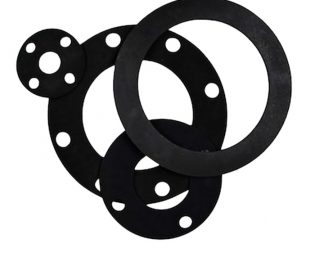
Engineering Insight: Material Selection in fireproof sheeting – Why Off-the-Shelf Solutions Fall Short
In industrial applications where thermal exposure, flame resistance, and mechanical integrity are non-negotiable, the selection of fireproof sheeting cannot be reduced to a commodity purchase. At Suzhou Baoshida Trading Co., Ltd., we emphasize that material composition directly dictates performance under extreme conditions. Off-the-shelf fireproof sheeting often fails because it is engineered for generalized compliance rather than application-specific resilience. Standard products typically utilize base polymers with minimal flame-retardant additives, offering only transient protection that degrades rapidly under sustained thermal load. This compromises safety, reduces service life, and increases long-term operational costs.
True fireproof sheeting must integrate inherently flame-resistant polymers such as silicone rubber (VMQ), ethylene propylene diene monomer (EPDM) with halogen-free flame retardants, or fluorocarbon-based compounds (FKM). These materials exhibit high decomposition temperatures, low smoke emission, and minimal toxic off-gassing—critical factors in confined or occupied industrial environments. For instance, silicone rubber maintains structural integrity up to 300°C and can withstand intermittent exposure to 350°C, making it ideal for high-temperature insulation in electrical enclosures or exhaust systems. In contrast, generic rubber sheets based on SBR or natural rubber begin degrading at 150°C, leading to charring, loss of tensile strength, and eventual failure.
Equally important is the reinforcement architecture within the sheeting. Woven fiberglass or aramid scrim layers significantly enhance dimensional stability and tear resistance during thermal events. Without such reinforcement, even marginally flame-resistant materials can split or shrink when exposed to open flame, creating hazardous gaps in protection. Furthermore, adhesion compatibility with substrates—such as metal housings, cables, or composite panels—must be evaluated. Off-the-shelf variants often lack the primer-ready surface treatments or pressure-sensitive adhesives required for durable bonding in dynamic thermal cycles.
Custom-engineered fireproof sheeting considers variables such as continuous operating temperature, flame spread index (FSI), smoke density, chemical exposure, and mechanical flexing. These parameters are not adequately addressed by mass-market alternatives designed to meet minimum regulatory thresholds rather than real-world performance demands.
The following table outlines key material specifications for industrial-grade fireproof sheeting offered by Suzhou Baoshida Trading Co., Ltd.:
| Material Type | Continuous Use Temp (°C) | Peak Exposure (°C) | Flame Rating (UL94) | Tensile Strength (MPa) | Smoke Density (ASTM E662) |
|---|---|---|---|---|---|
| Silicone Rubber (VMQ) | 200 | 350 | V-0 | 6.5 | <200 (after 4 min) |
| Halogen-Free EPDM | 150 | 250 | V-1 | 8.0 | <300 (after 4 min) |
| Fluorocarbon (FKM) | 230 | 300 | V-0 | 10.0 | <150 (after 4 min) |
| Fiberglass-Reinforced Silicone | 260 | 500 (short term) | V-0 | 12.0 | <180 (after 4 min) |
Material selection is not a compromise between cost and compliance—it is a precision engineering decision that defines system safety and longevity. At Suzhou Baoshida, we collaborate with OEMs to develop fireproof sheeting solutions calibrated to operational stressors, ensuring reliability where standard products fail.
Material Specifications
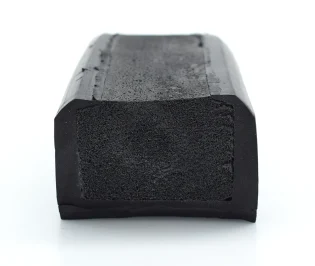
Material Specifications for Industrial Fireproof Sheeting
Suzhou Baoshida Trading Co., Ltd. delivers engineered rubber solutions meeting stringent fire safety standards for critical industrial applications. Our fireproof sheeting leverages advanced elastomer formulations to resist ignition, limit flame spread, and minimize toxic emissions under extreme thermal stress. Material selection hinges on operational parameters including continuous exposure temperature, chemical environment, and regulatory compliance requirements. Viton® (FKM), Nitrile (NBR), and Silicone (VMQ) represent our core fire-resistant platforms, each optimized for distinct performance profiles. Viton excels in aerospace and chemical processing due to its molecular stability at high temperatures and resistance to aggressive fuels. Nitrile provides cost-effective fire protection in hydraulic and oil-handling systems where moderate heat resistance suffices. Silicone offers unparalleled flexibility across extreme temperature cycles, making it ideal for electrical insulation and fire barriers in transportation. All materials undergo rigorous batch testing per ASTM D2000 and ISO 37 standards to certify tensile strength, elongation, and compression set. Crucially, fire performance is validated through UL 94, ASTM E84, and ISO 5658-2 protocols, ensuring compliance with NFPA, CE, and OEM-specific flame retardancy mandates.
The comparative analysis below details critical specifications for informed material selection. Data reflects standard commercial grades; custom formulations are available to address unique thermal or chemical challenges.
| Material Property | Viton (FKM) | Nitrile (NBR) | Silicone (VMQ) |
|---|---|---|---|
| Continuous Temp Range | -20°C to +250°C | -30°C to +120°C | -60°C to +230°C |
| Peak Short-Term Temp | 300°C | 150°C | 300°C |
| Flammability Rating | UL 94 V-0 | UL 94 HB | UL 94 V-0 |
| Oxygen Index (ASTM D2863) | ≥ 40% | 22-25% | ≥ 35% |
| Key Chemical Resistances | Fuels, oils, acids, ozone | Oils, fuels, hydraulic fluids | Water, ozone, radiation |
| Typical Hardness (Shore A) | 60-80 | 50-90 | 30-80 |
| Primary Industrial Use | Jet engine seals, chemical linings | Fuel hoses, gaskets | Electrical insulation, fire curtains |
Material integrity under fire conditions depends on precise compounding. Viton achieves superior fire resistance through fluorine content inhibiting combustion, while silicone relies on silica-reinforced polymers that form insulating char layers. Nitrile requires specialized flame retardant additives (e.g., ATH or red phosphorus) to meet HB ratings, slightly reducing elasticity. For applications exceeding 200°C continuous exposure, Viton or silicone are mandatory; NBR degrades rapidly beyond 120°C. Chemical exposure must also dictate choice—Viton withstands jet A fuel immersion at 150°C, whereas NBR swells significantly. Silicone, though broadly resistant, suffers in concentrated acid environments.
Suzhou Baoshida prioritizes traceability and repeatability in OEM production. Each fireproof sheeting batch includes full material certification with lot-specific flammability test reports. Our engineering team collaborates directly with clients to validate material performance against application-specific fire scenarios, ensuring seamless integration into safety-critical assemblies. Contact our technical department for custom formulation support meeting MIL-STD-2031, EN 45545, or other global fire safety frameworks.
Manufacturing Capabilities
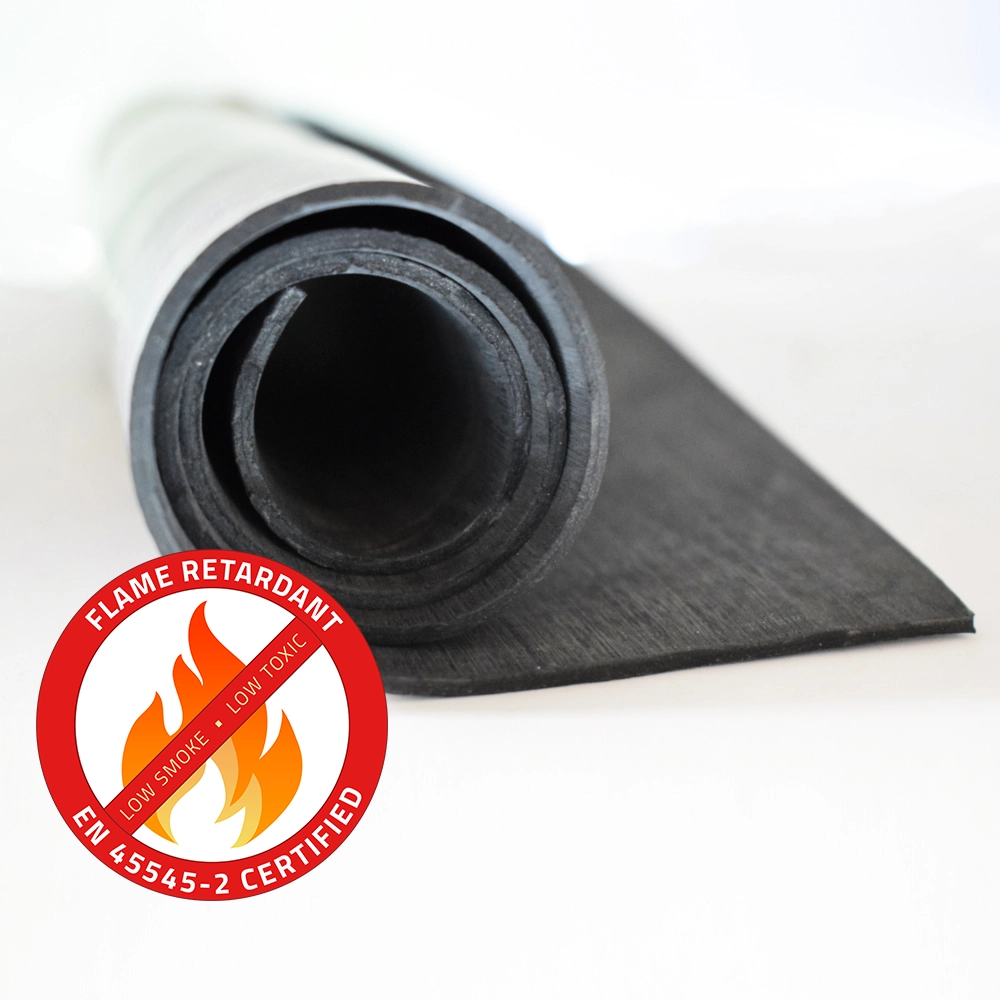
Engineering Capability: Precision-Driven Development for Industrial Fireproof Sheeting
At Suzhou Baoshida Trading Co., Ltd., our engineering capability forms the backbone of innovation in industrial rubber solutions, particularly in the development and production of high-performance fireproof sheeting. With a dedicated team of five certified mould engineers and two specialized rubber formula engineers, we integrate material science with precision manufacturing to deliver custom-engineered products that meet stringent industrial safety standards.
Our formula engineers possess advanced expertise in polymer chemistry and flame-retardant additive systems. They are responsible for designing proprietary rubber compounds that achieve optimal balance between fire resistance, mechanical integrity, and environmental durability. By leveraging thermogravimetric analysis (TGA), differential scanning calorimetry (DSC), and cone calorimetry testing, our team formulates elastomers that maintain structural stability under extreme thermal exposure. These formulations are tailored to meet specific flame ratings such as UL94 V-0, ASTM E84 Class A, and EN 45545-2, depending on client application requirements.
Complementing our formulation expertise, the five-member mould engineering team specializes in precision tooling design and process optimization for complex fireproof sheet profiles. Utilizing 3D CAD software (SolidWorks and AutoCAD) and mold flow simulation tools, they ensure dimensional accuracy, uniform material distribution, and repeatability across production cycles. Our engineers routinely develop multi-cavity molds for high-volume OEM runs, as well as low-volume prototypes for validation testing, enabling rapid time-to-market without compromising quality.
We offer full OEM (Original Equipment Manufacturer) and ODM (Original Design Manufacturer) services, supporting clients from concept to mass production. Our collaborative engineering approach allows for co-development of fireproof sheeting solutions tailored to sectors including rail transit, electrical enclosures, shipbuilding, and industrial machinery. Whether modifying existing formulations for enhanced smoke suppression or designing custom thickness profiles with integrated gasketing features, our team ensures technical alignment with end-use performance demands.
All development workflows adhere to ISO 9001 quality management protocols, with full traceability in material sourcing, formulation records, and mold design documentation. This disciplined engineering framework enables consistent replication of specifications across global supply chains, a critical requirement for multinational OEM partners.
The following table outlines key technical parameters achievable through our engineered fireproof sheeting solutions:
| Property | Test Standard | Typical Performance |
|---|---|---|
| Flame Spread Index | ASTM E84 | ≤25 (Class A) |
| Smoke Development | ASTM E84 | ≤450 |
| Oxygen Index (LOI) | ASTM D2863 | ≥30% |
| Tensile Strength | ASTM D412 | 8–12 MPa |
| Elongation at Break | ASTM D412 | 150–250% |
| Heat Resistance | ISO 188 | Stable up to 300°C (short-term) |
| Toxicity of Emissions | EN 45545-2 | Compliant with R1/R22 |
Through the synergy of advanced rubber formulation and precision mould engineering, Suzhou Baoshida delivers fireproof sheeting solutions that meet the highest benchmarks in safety, reliability, and manufacturability for global industrial OEMs.
Customization Process
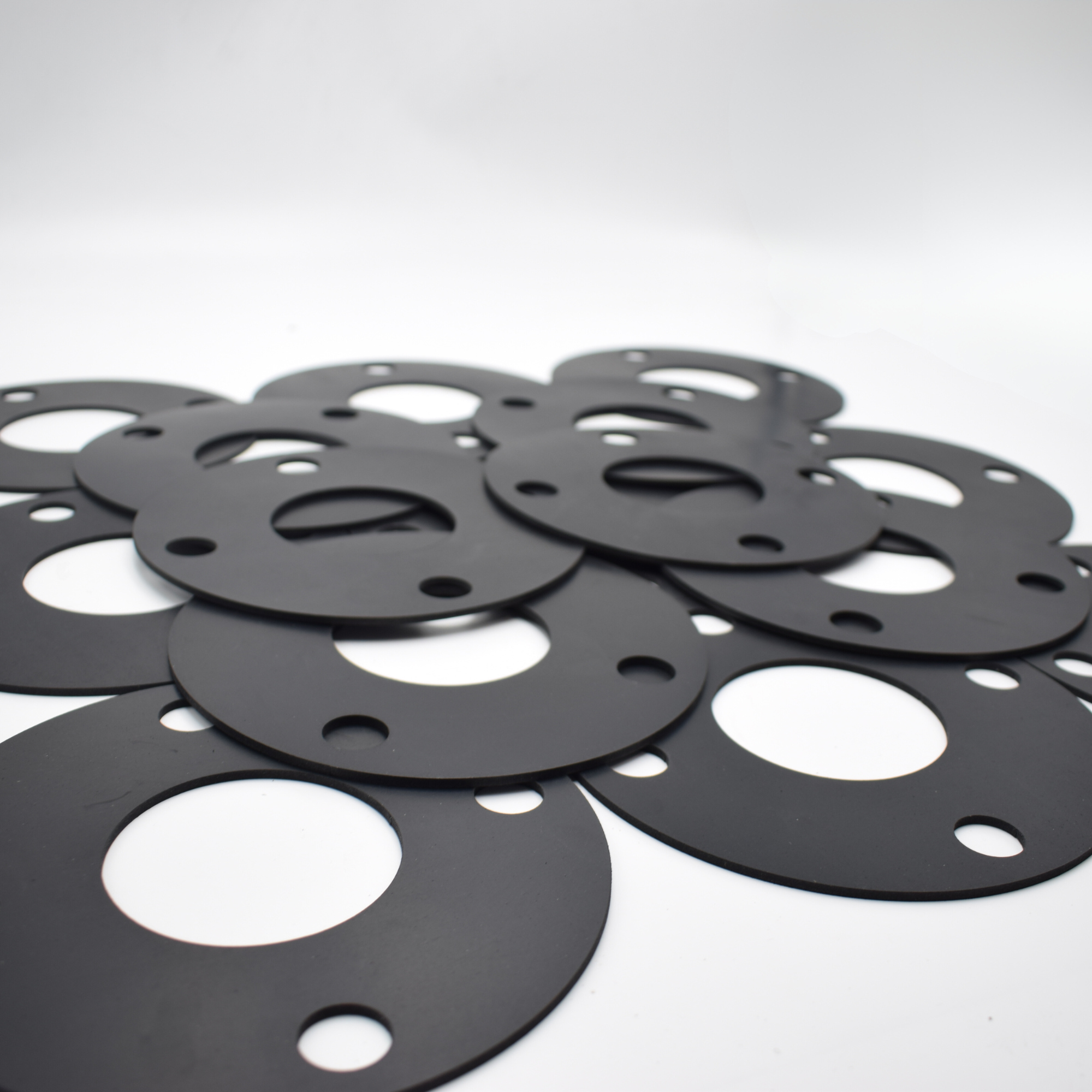
Customization Process for Industrial Fireproof Sheeting
At Suzhou Baoshida Trading Co., Ltd., our fireproof sheeting customization follows a rigorously defined engineering workflow to ensure absolute compliance with industrial safety standards and client specifications. This process begins with Drawing Analysis, where our technical team conducts a granular review of client-provided CAD files or technical schematics. We validate dimensional tolerances, joint configurations, and environmental exposure parameters against ISO 10211 thermal bridging criteria. Critical attention is given to identifying potential stress points, chemical resistance requirements, and integration interfaces with adjacent components. Any ambiguities or non-compliance risks are resolved through direct engineering consultation before proceeding.
The Formulation Phase leverages our 15+ years of polymer chemistry expertise to engineer a bespoke compound. Base polymers (EPDM, silicone, or FKM) are selected based on operational temperature ranges and chemical exposure profiles. Flame retardant systems are precisely calibrated using synergistic combinations of magnesium hydroxide, aluminum trihydrate, and intumescent additives to achieve target UL94 V-0 or ASTM E84 Class A ratings without compromising mechanical integrity. Crosslink density, filler dispersion, and thermal stability are optimized via Mooney viscometry and TGA analysis. Each formulation undergoes predictive simulation for long-term performance under cyclic thermal stress.
Prototyping employs precision compression molding or extrusion techniques to produce validation samples. These undergo accelerated aging tests per ASTM D573, flame propagation trials per ISO 5658-2, and mechanical validation including tensile strength (ASTM D412), elongation, and compression set (ASTM D395). Real-world simulation chambers replicate client-specific conditions—such as oil mist exposure in engine compartments or UV degradation in outdoor installations. Client feedback on prototype performance triggers iterative refinements until all KPIs are met, typically within 10–15 business days.
Mass Production commences only after formal client sign-off on the qualified prototype. Our ISO 9001-certified facility utilizes automated batching systems with ±0.5% ingredient accuracy and in-line rheometers for real-time cure monitoring. Every production lot undergoes 100% visual inspection and statistical sampling for critical dimensions, followed by third-party certification audits. Traceability is maintained via laser-etched batch codes linked to raw material certificates and process parameters. Final packaging includes detailed CoA documentation covering flame test reports, mechanical properties, and compliance certificates.
Key Performance Specifications for Fireproof Sheeting
| Parameter | Test Standard | Typical Value Range | Tolerance |
|---|---|---|---|
| Flame Spread Index | ASTM E84 | 0–5 | Class A |
| Peak Heat Release Rate | ISO 5660-1 | ≤50 kW/m² | ±5% |
| Continuous Use Temp | UL 746B | -50°C to +250°C | ±2°C |
| Tensile Strength | ASTM D412 | 8.0–15.0 MPa | ±0.5 MPa |
| Thickness | ISO 2768 | 0.5 mm – 10.0 mm | ±0.1 mm |
| Smoke Density (4 min) | ASTM E662 | ≤50 | ±3 |
This end-to-end process ensures Suzhou Baoshida delivers fireproof sheeting solutions that meet exact operational demands while adhering to global safety regulations. Our engineering-first approach eliminates guesswork, reducing time-to-market by 30% compared to industry averages. All custom formulations remain proprietary to the client, with full IP protection under OEM agreements.
Contact Engineering Team
Contact Suzhou Baoshida for Premium Fireproof Sheeting Solutions
At Suzhou Baoshida Trading Co., Ltd., we specialize in high-performance industrial rubber solutions designed to meet the rigorous demands of modern manufacturing, automotive, aerospace, and construction sectors. As a trusted OEM manager and rubber formula engineer, we have developed fireproof sheeting materials that combine thermal resistance, mechanical durability, and chemical stability under extreme conditions. Our engineered elastomeric compounds are formulated to comply with international fire safety standards, including UL94, ASTM E84, and ISO 5660, ensuring reliable performance in critical applications.
Our fireproof sheeting is engineered using advanced silicone rubber, EPDM, and chloroprene-based formulations, enhanced with proprietary flame-retardant additives and reinforcing fillers. These materials are designed to resist ignition, limit flame spread, and minimize smoke and toxic gas emissions during exposure to high heat or open flame. Whether you require gasketing for fire-rated enclosures, insulation for high-temperature ducting, or protective barriers in electrical systems, our products deliver consistent performance across a wide operational temperature range.
We understand that industrial clients demand more than off-the-shelf solutions. That is why we offer fully customizable formulations, thicknesses, densities, and mechanical properties tailored to your exact technical specifications. From prototype development to large-scale production, our team ensures precise batch-to-batch consistency, rigorous quality control, and full traceability of raw materials.
To support our global clientele, Suzhou Baoshida maintains a streamlined supply chain with fast turnaround times, competitive pricing, and comprehensive technical documentation, including material safety data sheets (MSDS), certificates of conformance (CoC), and independent test reports.
| Property | Specification |
|---|---|
| Temperature Resistance | -60°C to +300°C (short-term up to 350°C) |
| Flame Rating | UL94 V-0, ASTM E84 Class A |
| Specific Gravity | 1.4 – 1.8 g/cm³ |
| Tensile Strength | ≥ 7.0 MPa |
| Elongation at Break | ≥ 150% |
| Hardness (Shore A) | 50 – 80 ± 5 |
| Smoke Density (ASTM E662) | < 250 Ds at 4 minutes |
| Toxicity Index | < 1.0 (per NFPA 130) |
For technical inquiries, material samples, or custom formulation support, we invite you to contact Mr. Boyce, our dedicated OEM Manager and Rubber Formula Engineer. With over 15 years of experience in elastomer development and industrial supply chain management, Mr. Boyce provides expert guidance on material selection, compliance, and integration into your manufacturing process.
Reach out today via email at [email protected] to discuss your fireproof sheeting requirements. We respond to all inquiries within 24 business hours and offer virtual consultations for international partners. At Suzhou Baoshida, we are committed to delivering engineered rubber solutions that protect people, equipment, and infrastructure—because safety is not a feature, it’s a standard.
⚖️ O-Ring Weight Calculator
Estimate rubber O-ring weight (Approx).