
Technical Contents
Engineering Guide: Flexible Ducting
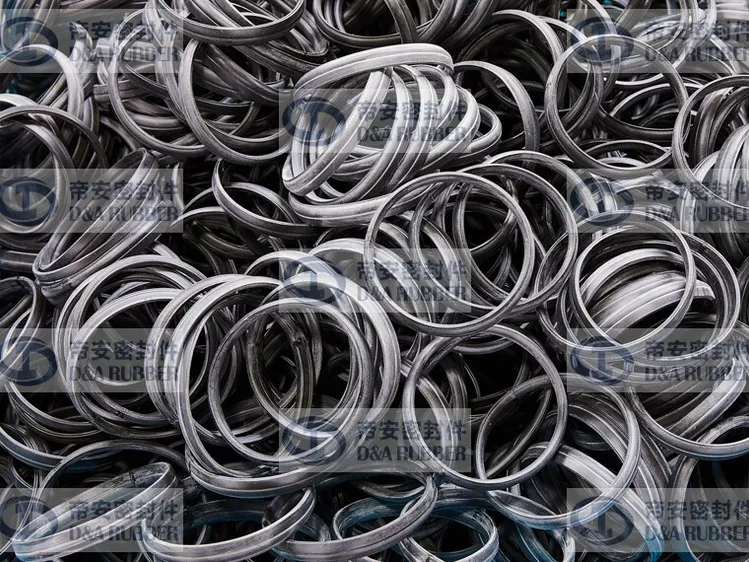
Engineering Insight: Material Selection Imperatives for Industrial Flexible Ducting
The operational integrity of flexible ducting systems in demanding industrial environments hinges critically on precise material selection. Off-the-shelf solutions, often formulated for cost minimization and broad applicability, frequently succumb to premature failure under specific process conditions. This manifests as catastrophic degradation, unplanned downtime, and significant safety hazards, ultimately negating any initial procurement savings. Understanding the complex interplay between elastomer chemistry, environmental stressors, and application requirements is non-negotiable for reliable performance.
Generic flexible ducting typically utilizes standard elastomer grades like basic EPDM or silicone, compounded with high filler loads and recycled content to reduce costs. These formulations lack the tailored resistance necessary for targeted industrial challenges. Exposure to elevated temperatures beyond 150°C rapidly accelerates thermal oxidation in standard compounds, causing hardening, cracking, and loss of flexibility. Similarly, contact with aggressive chemicals common in chemical processing, semiconductor manufacturing, or wastewater treatment – such as concentrated acids, ozone, specific solvents, or amine-based compounds – induces swelling, softening, or embrittlement in non-specialized materials. Mechanical stressors like constant flexing, vacuum conditions, or abrasive particulate matter further compound these weaknesses. The inherent variability in recycled rubber feedstocks used in budget ducting introduces unpredictable performance inconsistencies, making failure modes difficult to anticipate or mitigate proactively. The consequence is not merely component replacement; it is production line stoppages, contamination risks, and potential regulatory non-compliance.
Suzhou Baoshida Trading Co., Ltd. addresses these critical failure points through engineered rubber formulations developed by our dedicated R&D team. We prioritize bespoke compound design based on the client’s specific operating parameters – temperature profile, chemical exposure spectrum, pressure/vacuum requirements, and dynamic movement cycles. Our proprietary blends utilize premium virgin polymers, advanced stabilizer packages, and optimized filler systems to achieve superior performance metrics unattainable with standard catalog items. The table below illustrates the performance gap between generic solutions and Baoshida-engineered compounds under representative industrial conditions.
| Property | Standard EPDM Ducting | Standard Silicone Ducting | Baoshida Custom EPDM | Baoshida Custom Silicone |
|---|---|---|---|---|
| Continuous Max Temp (°C) | 135 | 200 | 180 | 260 |
| Ozone Resistance (pphm) | Poor (50) | Excellent (100) | Excellent (100) | Excellent (100) |
| 50% Sulfuric Acid (70°C) | Severe Swelling | Moderate Swelling | Excellent Resistance | Good Resistance |
| Vacuum Rating (mbar) | 200 | 100 | 50 | 30 |
| Flex Life (Cycles) | 5,000 | 10,000 | 50,000 | 100,000 |
Selecting flexible ducting based solely on nominal size and price is a false economy. The engineering investment in material science expertise and application-specific formulation delivers tangible returns through extended service life, reduced maintenance costs, enhanced process safety, and sustained operational continuity. Suzhou Baoshida Trading Co., Ltd. partners with OEMs and end-users to translate demanding operational requirements into resilient, high-performance flexible ducting solutions, eliminating the systemic risks inherent in off-the-shelf alternatives. Precision material selection is not an optional step; it is the foundational element of a reliable industrial fluid transfer system.
Material Specifications
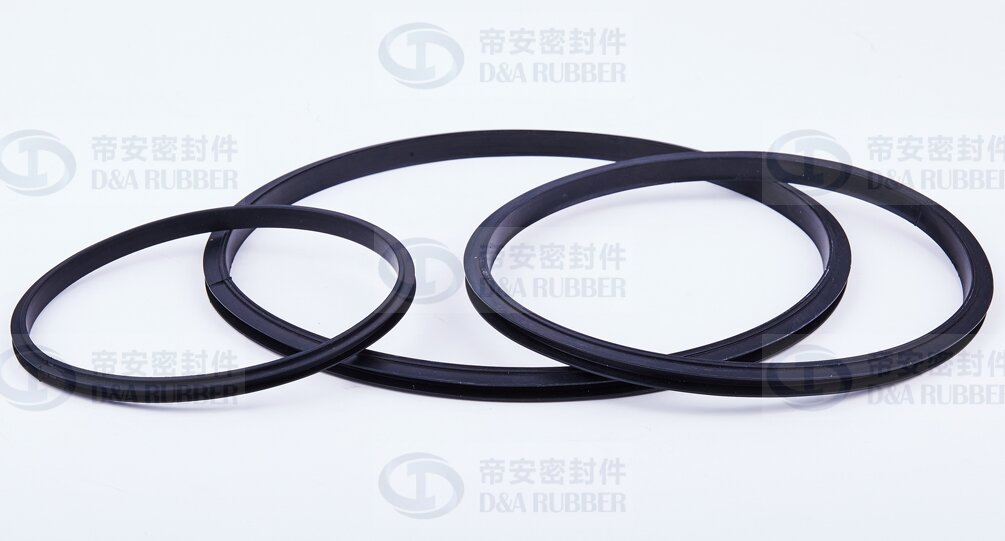
Material Specifications for Flexible Ducting in Industrial Applications
Flexible ducting systems are critical components in industrial environments where thermal stability, chemical resistance, and mechanical durability are required. At Suzhou Baoshida Trading Co., Ltd., we engineer high-performance rubber solutions tailored to meet the rigorous demands of HVAC, exhaust, chemical processing, and industrial ventilation systems. The selection of elastomeric material directly influences the operational lifespan and efficiency of flexible ducting. Among the most widely used materials in this domain are Viton (FKM), Nitrile (NBR), and Silicone (VMQ), each offering distinct performance characteristics based on application parameters.
Viton, a fluorocarbon-based rubber, delivers exceptional resistance to high temperatures, oils, fuels, and aggressive chemicals. It is particularly suited for environments involving exposure to aromatic hydrocarbons, chlorinated solvents, and high-temperature vapors. With continuous service temperatures up to 230°C and short-term peaks exceeding 300°C, Viton is ideal for aerospace, petrochemical, and high-performance automotive applications. However, its higher cost and reduced flexibility at low temperatures must be considered during system design.
Nitrile rubber, or Buna-N, is a cost-effective solution for applications involving oils, greases, and aliphatic hydrocarbons. It exhibits excellent abrasion resistance and tensile strength, making it suitable for industrial hydraulic lines, fuel transfer systems, and general-purpose flexible ducting. Nitrile performs reliably in temperature ranges from -30°C to 100°C, with some formulations extending to 125°C. While it lacks the chemical breadth of Viton, its mechanical robustness and compatibility with petroleum-based fluids make it a preferred choice in many standard industrial settings.
Silicone rubber offers outstanding thermal stability and flexibility across a broad temperature spectrum, typically from -60°C to 200°C, with specialized grades capable of withstanding intermittent exposure up to 260°C. It demonstrates excellent resistance to ozone, UV radiation, and weathering, making it ideal for outdoor installations and cleanroom environments. Silicone is also non-toxic and complies with FDA and USP Class VI standards, enabling use in food processing, pharmaceutical, and medical applications. However, it has lower tensile strength and poor resistance to hydrocarbon fuels, limiting its use in oil-rich environments.
The following table summarizes key physical and chemical properties of these materials to support informed material selection for flexible ducting systems.
| Property | Viton (FKM) | Nitrile (NBR) | Silicone (VMQ) |
|---|---|---|---|
| Temperature Range (°C) | -20 to 230 | -30 to 125 | -60 to 200 |
| Tensile Strength (MPa) | 15–20 | 10–25 | 5–8 |
| Elongation at Break (%) | 200–300 | 250–500 | 200–600 |
| Hardness (Shore A) | 65–90 | 50–90 | 30–80 |
| Resistance to Oils/Fuels | Excellent | Excellent | Poor |
| Resistance to Ozone/UV | Excellent | Good | Excellent |
| Chemical Resistance | Broad (acids, solvents) | Moderate (aliphatics) | Limited |
| Flexibility at Low Temp | Moderate | Good | Excellent |
| FDA/USP Compliance | Limited grades | No | Yes (specific grades) |
Material selection must be aligned with operational conditions, regulatory standards, and lifecycle cost analysis. Suzhou Baoshida Trading Co., Ltd. provides custom formulation and testing services to ensure optimal performance in targeted industrial applications.
Manufacturing Capabilities
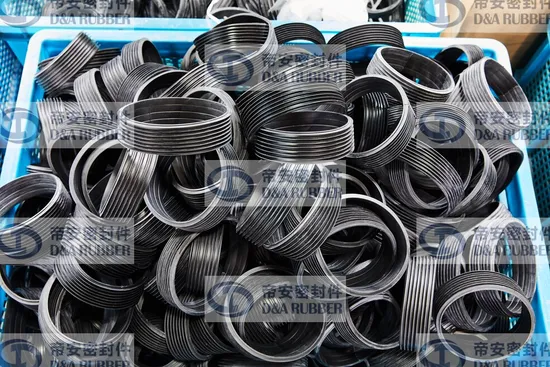
Engineering Capability: Precision Rubber Solutions for Flexible Ducting
Suzhou Baoshida Trading Co., Ltd. leverages deep expertise in industrial rubber compounding and precision tooling to deliver high-performance flexible ducting solutions. Our dedicated engineering team comprises five specialized mould engineers and two advanced formula engineers, ensuring end-to-end control from material science to final production. This integrated approach guarantees ducting systems that meet stringent industrial demands for durability, chemical resistance, and operational safety across diverse applications including HVAC, exhaust management, and pneumatic conveying.
Mould Engineering Precision
Our mould engineering team utilizes advanced CAD/CAM systems and finite element analysis (FEA) to design tooling with micron-level tolerances. Each mould undergoes rigorous simulation for cavity pressure distribution, thermal stability, and wear resistance, minimizing flash and ensuring consistent wall thickness uniformity. We implement real-time cavity pressure monitoring during initial trials to validate flow dynamics and optimize cycle times. This precision reduces material waste by up to 18% while extending tool life beyond 500,000 cycles for high-volume OEM programs. Complex geometries such as helical reinforcements, bellows sections, and integrated flanges are engineered for seamless integration into client assembly lines.
Formula Engineering Excellence
Material performance is foundational to flexible ducting reliability. Our formula engineers develop custom elastomer compounds using NBR, EPDM, silicone, and specialty fluorocarbon polymers. Each formulation is tailored to balance critical properties: abrasion resistance for particulate-laden airstreams, ozone stability for outdoor exposure, and low-temperature flexibility down to -40°C. We systematically adjust polymer blends, filler ratios (e.g., silica vs. carbon black), and additive packages to achieve target compression set (<20% at 70°C), tensile strength (≥15 MPa), and flame resistance (UL 94 V-0 achievable). All compounds undergo accelerated aging tests per ASTM D573 and dynamic flex testing to 100,000 cycles for validation.
OEM Co-Development Process
As a trusted OEM partner, we integrate client specifications directly into our engineering workflow. Our collaborative process begins with joint requirement analysis, followed by rapid prototyping using 3D-printed tooling inserts for form/fit/function validation. We provide full material traceability with mill certificates and batch-specific rheology curves. For volume production, we implement Statistical Process Control (SPC) with Cpk ≥1.67 on critical dimensions and automate hardness testing at 5% production intervals. This ensures seamless scalability from prototype to 500,000+ units annually while maintaining ISO 9001-certified quality systems.
Critical Performance Specifications
| Parameter | Standard Range | Customization Capability | Testing Standard |
|---|---|---|---|
| Durometer (Shore A) | 40–80 | 30–90 achievable | ASTM D2240 |
| Temperature Range | -40°C to +150°C | -60°C to +250°C options | ISO 188 |
| Burst Pressure | 3x working pressure | Up to 10x custom design | ISO 10380 |
| Ozone Resistance | 50 pphm, 20% strain | 200 pphm compliant | ASTM D1149 |
| Flame Resistance | UL 94 HB standard | UL 94 V-0/V-1/V-2 | UL 94 |
Our engineering synergy—combining mould precision with molecular-level material innovation—delivers flexible ducting that exceeds industry benchmarks for longevity and operational safety. Suzhou Baoshida Trading Co., Ltd. stands ready to co-engineer solutions that address your most demanding fluid handling challenges.
Customization Process
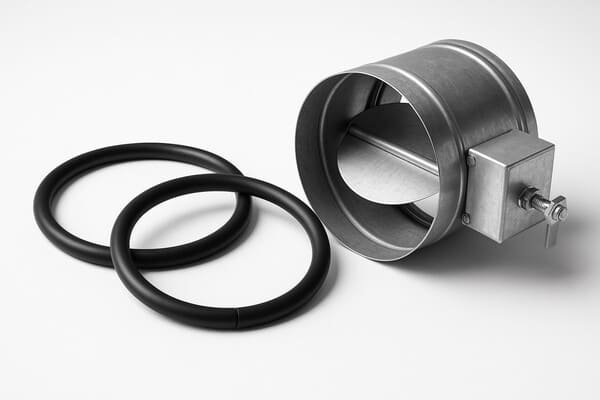
Customization Process for Flexible Ducting – Industrial Rubber Solutions
At Suzhou Baoshida Trading Co., Ltd., our engineering-driven approach to flexible ducting customization ensures optimal performance across diverse industrial applications. We follow a rigorous four-phase process: Drawing Analysis, Formulation, Prototyping, and Mass Production. Each stage integrates material science, precision engineering, and OEM compliance to deliver tailored rubber solutions that meet exact functional and environmental demands.
The process begins with Drawing Analysis, where our technical team evaluates customer-provided engineering drawings, 3D models, or physical samples. We assess critical parameters such as inner and outer diameters, wall thickness, bend radius, flange configurations, and reinforcement requirements. Special attention is given to application-specific factors including operating pressure, temperature range, media compatibility (e.g., air, water, chemicals, particulates), and dynamic movement conditions. This phase ensures dimensional accuracy and functional alignment with the intended use environment.
Following drawing validation, our Rubber Formula Engineers develop a custom elastomer formulation. Based on the operational profile, we select the appropriate base polymer—such as NBR (Nitrile), EPDM, Silicone, or Neoprene—and engineer the compound to achieve desired properties: flexibility, abrasion resistance, ozone stability, flame retardancy (UL94, MSHA), or oil resistance. Additives are precisely calibrated to enhance tensile strength, elongation, and aging performance. All formulations are documented and archived for batch consistency and traceability.
Once the compound is finalized, we proceed to Prototyping. Using CNC-controlled molding and extrusion equipment, we produce a limited run of ducting samples. These prototypes undergo rigorous in-house testing, including burst pressure evaluation, flex life cycling, vacuum collapse resistance, and environmental exposure (e.g., high/low temperature, chemical immersion). Dimensional inspection is performed using coordinate measuring machines (CMM) to verify conformity with the original drawings. Customer feedback is incorporated at this stage, allowing for iterative refinement before tooling sign-off.
Upon approval, the project transitions to Mass Production. We deploy automated production lines equipped with real-time monitoring systems to maintain tight tolerances and consistent quality. Each batch undergoes statistical process control (SPC), with hardness, tensile, and visual inspections conducted per ISO 9001 standards. Final products are packaged per OEM requirements and delivered with full material certifications, including RoHS, REACH, and FDA compliance if applicable.
The following table summarizes typical performance specifications for our customizable flexible ducting solutions:
| Property | NBR | EPDM | Silicone | Neoprene |
|---|---|---|---|---|
| Temperature Range (°C) | -30 to +100 | -50 to +150 | -60 to +230 | -40 to +120 |
| Pressure Rating (bar) | Up to 15 | Up to 12 | Up to 8 | Up to 10 |
| Flex Life (cycles) | >100,000 | >80,000 | >50,000 | >90,000 |
| Media Resistance | Oil, Fuel | Water, Steam, Ozone | High Temp Air | Solvents, Mild Oils |
| Flame Resistance | Moderate | Good | Excellent | Very Good |
Our end-to-end customization process ensures that every flexible ducting solution is engineered for reliability, longevity, and seamless integration into industrial systems.
Contact Engineering Team
Contact Suzhou Baoshida for Precision Flexible Ducting Solutions
Suzhou Baoshida Trading Co., Ltd. stands at the forefront of industrial rubber engineering, specializing in the development and manufacturing of high-performance flexible ducting systems for demanding B2B applications. Our expertise lies in formulating advanced elastomeric compounds that withstand extreme thermal cycles, chemical exposure, and mechanical stress while maintaining consistent airflow integrity. As your dedicated Rubber Formula Engineer and OEM Manager, we prioritize material science rigor and process precision to deliver ducting solutions that exceed ASTM, SAE, and ISO performance benchmarks. Whether your requirements involve HVAC systems in semiconductor fabrication, exhaust management for heavy machinery, or specialized ventilation in chemical processing, our team leverages 15+ years of polymer compounding experience to optimize flex life, pressure retention, and environmental resistance. We understand that ducting failures incur significant operational downtime and safety risks; therefore, every product undergoes stringent in-house validation, including fatigue testing, permeation analysis, and flame spread certification per UL 94 standards.
Our flexible ducting portfolio is engineered for seamless integration into complex industrial ecosystems. The table below summarizes critical performance parameters for our flagship series, illustrating how material selection directly correlates with application longevity and efficiency:
| Specification Parameter | Standard Nitrile (NBR) Series | High-Temp Silicone Series | Chemical-Resistant EPDM Series |
|---|---|---|---|
| Temperature Range | -40°C to +125°C | -60°C to +230°C | -50°C to +150°C |
| Pressure Rating (Max) | 15 PSI | 12 PSI | 18 PSI |
| Bend Radius (Min) | 1.5x ID | 2.0x ID | 1.2x ID |
| Media Compatibility | Oils, fuels, air | Steam, ozone, high-purity gases | Acids, alkalis, water glycol |
| Key Reinforcement | Polyester braid | Stainless steel wire helix | Aramid fiber |
Partnering with Suzhou Baoshida means accessing end-to-end technical collaboration from concept to量产. We do not merely supply components—we co-engineer solutions. Our OEM process begins with a thorough analysis of your operational environment, fluid dynamics requirements, and lifecycle cost targets. Our formula engineers then develop custom rubber blends, adjusting polymer matrix composition, filler dispersion, and vulcanization kinetics to achieve your exact performance profile. This methodology ensures optimal balance between flexibility, abrasion resistance, and dimensional stability, directly impacting your system’s energy efficiency and maintenance intervals. All manufacturing occurs in our ISO 9001-certified facility, featuring real-time process monitoring and batch traceability to guarantee repeatability.
Initiate your project with definitive technical authority. Contact Mr. Boyce, our dedicated OEM Manager, for a confidential consultation on material selection, prototype validation, or volume production scaling. Mr. Boyce possesses direct oversight of our compounding laboratory and production lines, enabling rapid technical feedback and agile problem-solving for complex ducting challenges. Provide your application specifics—including media type, pressure/temperature profiles, and regulatory constraints—and receive a data-driven proposal within 48 hours. Do not compromise on ducting performance; let Suzhou Baoshida’s engineering precision become your operational advantage.
Reach Mr. Boyce directly at [email protected] to schedule a technical review. Include your company name, project timeline, and critical performance requirements for immediate prioritization. We respond to all engineering inquiries within one business day, committed to transforming your ducting specifications into field-proven reality.
⚖️ O-Ring Weight Calculator
Estimate rubber O-ring weight (Approx).