
Technical Contents
Engineering Guide: Foam Pad
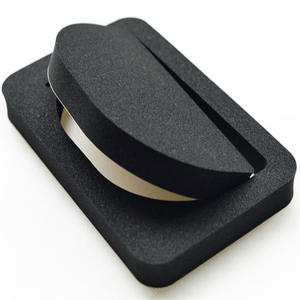
Engineering Insight: Foam Pad Material Selection Under Industrial Stress
Industrial foam pads function as critical engineered components, not passive cushioning elements. Their performance directly impacts system integrity, longevity, and operational safety across demanding applications like automotive sealing, industrial machinery vibration damping, and electronic enclosures. The pervasive reliance on generic, off-the-shelf foam pads represents a significant engineering vulnerability. These standard solutions frequently fail prematurely because they lack the tailored material science required to withstand the specific, often extreme, combinations of stressors inherent in industrial environments. Material selection is not a secondary consideration; it is the foundational determinant of functional success or catastrophic failure.
The core failure mechanism stems from mismatched material properties. Off-the-shelf foams are typically formulated for cost and basic cushioning in benign conditions, neglecting critical industrial parameters. Standard polyurethane or EVA foams exhibit high compression set under sustained load at elevated temperatures, leading to permanent deformation and loss of sealing force. They possess inadequate resistance to pervasive industrial fluids like oils, solvents, and coolants, causing swelling, softening, or disintegration. Furthermore, insufficient ozone and UV resistance accelerates surface cracking and embrittlement in outdoor or harsh indoor settings. Crucially, these foams lack the precise cell structure control and cross-link density needed for consistent resilience and recovery under cyclic loading. The result is predictable: seal leakage, increased vibration transmission, component misalignment, and ultimately, unplanned downtime costing significantly more than the initial pad cost.
Understanding the specific application demands dictates the necessary foam formulation. Key properties requiring rigorous evaluation include long-term compression set at the operational temperature, chemical compatibility with all potential exposures, tensile and tear strength for handling and assembly stresses, thermal stability across the full operating range, and resilience characteristics matching the dynamic load profile. A foam pad optimized for a consumer appliance gasket cannot withstand the combined heat, oil mist, and vibration of an engine compartment. Material science must address the synergistic effects of these stressors, not just individual factors.
The following table highlights critical performance gaps between generic foam pads and engineered industrial solutions:
| Critical Property | Standard Off-the-Shelf Foam Pad | Engineered Industrial Foam Pad (Suzhou Baoshida) |
|---|---|---|
| Compression Set (70°C, 22h) | 45-65% | < 25% |
| Tensile Strength (MPa) | 0.8 – 1.5 | 2.5 – 4.0+ |
| Resistance to Engine Oil | Poor (Swelling > 20%) | Excellent (Swelling < 5%) |
| Service Temperature Range | -20°C to +80°C | -40°C to +150°C+ |
| Ozone Resistance (50pphm) | Fails rapidly (Cracking) | Excellent (No cracking after 100h) |
Suzhou Baoshida Trading Co., Ltd. leverages deep expertise in rubber compounding and foam chemistry to develop solutions where material properties are precisely calibrated to the operational envelope. We move beyond catalog numbers, utilizing accelerated aging tests and application-specific validation to ensure the foam pad maintains its structural and functional integrity throughout its designated service life. Selecting an engineered foam pad is an investment in system reliability, reducing total cost of ownership by preventing failures that disrupt production and compromise safety. The right material formulation is non-negotiable for industrial performance.
Material Specifications
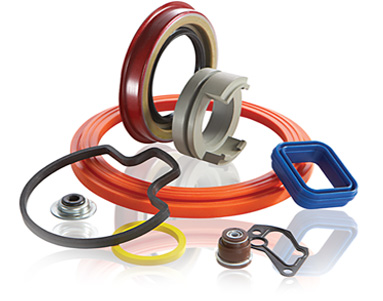
Foam pads are critical components in industrial sealing, gasketing, and vibration damping applications, particularly where environmental resistance, thermal stability, and mechanical performance are paramount. At Suzhou Baoshida Trading Co., Ltd., our foam pads are engineered using high-performance elastomeric materials, including Viton (FKM), Nitrile (NBR), and Silicone (VMQ). Each material offers distinct chemical, thermal, and physical characteristics, allowing for precise selection based on operational demands.
Viton foam pads exhibit exceptional resistance to high temperatures, oils, fuels, and aggressive chemicals, making them ideal for aerospace, automotive, and chemical processing environments. With continuous service temperatures up to 230°C and outstanding ozone and UV resistance, Viton maintains integrity under extreme conditions. However, its higher cost and lower flexibility at low temperatures may limit use in less demanding applications.
Nitrile foam pads provide excellent resistance to petroleum-based oils, greases, and fuels, offering a cost-effective solution for hydraulic systems, machinery seals, and industrial equipment. With a service temperature range of -30°C to 100°C, NBR balances performance and affordability. While it performs poorly in exposure to ozone, weathering, and polar solvents, its mechanical strength and compression set resistance make it a preferred choice in dynamic sealing applications.
Silicone foam pads deliver superior thermal stability across a broad temperature spectrum, from -60°C to 200°C, with short-term exposure capability beyond 250°C. They are widely used in electronics, medical devices, and food processing due to their inert nature, low toxicity, and excellent resistance to oxidation and weathering. Silicone foam also provides good electrical insulation and maintains flexibility at low temperatures. However, it has lower tensile and tear strength compared to Viton and Nitrile, requiring careful design consideration in high-stress environments.
Material selection must account for fluid compatibility, temperature exposure, mechanical loading, and regulatory requirements. Suzhou Baoshida Trading Co., Ltd. ensures all foam pad materials meet international quality standards and can be customized in density, hardness, and thickness to meet OEM specifications.
The following table summarizes key performance characteristics of the three materials for comparative evaluation.
| Property | Viton (FKM) | Nitrile (NBR) | Silicone (VMQ) |
|---|---|---|---|
| Temperature Range (°C) | -20 to 230 | -30 to 100 | -60 to 200 |
| Tensile Strength (MPa) | 10–15 | 12–20 | 5–8 |
| Elongation at Break (%) | 150–250 | 200–400 | 200–350 |
| Compression Set (22h, 150°C) | ≤25% | ≤30% | ≤20% |
| Resistance to Oils/Fuels | Excellent | Excellent | Poor to Fair |
| Resistance to Ozone/UV | Excellent | Poor | Excellent |
| Fluid Compatibility | Acids, fuels, aromatics | Aliphatic hydrocarbons | Water, steam, alcohols |
| Density Range (kg/m³) | 80–150 | 100–200 | 60–120 |
This technical comparison enables engineers and procurement managers to align material properties with application requirements, ensuring long-term reliability and performance.
Manufacturing Capabilities
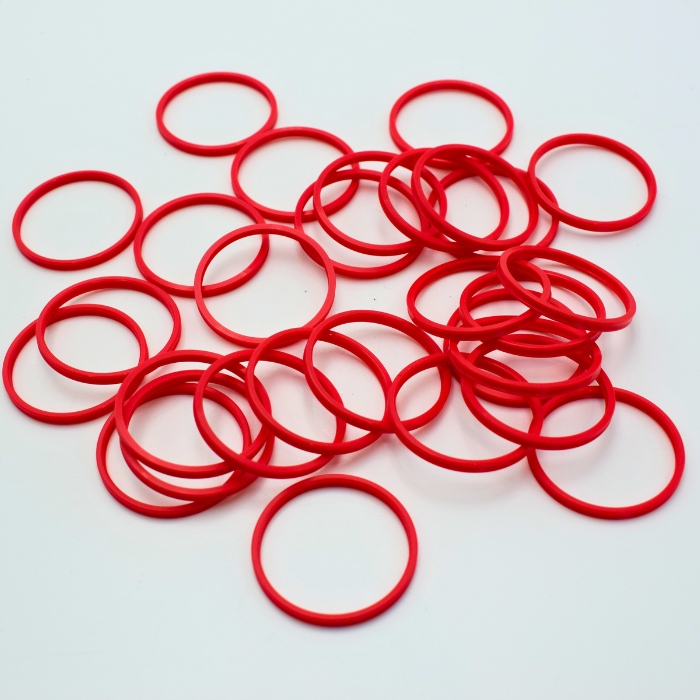
Engineering Capability: Precision Foam Pad Development for Industrial Applications
Suzhou Baoshida Trading Co., Ltd. leverages integrated material science and tooling expertise to deliver engineered foam pad solutions meeting stringent industrial requirements. Our dedicated engineering cohort comprises five specialized mold designers and two advanced rubber formula chemists, operating within a unified R&D framework. This structure eliminates siloed development, ensuring material properties and manufacturing feasibility are co-optimized from initial concept through量产. Our formula engineers possess deep proficiency in elastomer polymerization kinetics, filler dispersion dynamics, and cellular structure control—critical for achieving target compression set, thermal stability, and fluid resistance in closed-cell foam architectures. Concurrently, our mold engineering team utilizes 3D simulation software to model flow behavior, cure kinetics, and dimensional tolerances, preempting defects like voids or density gradients inherent in complex foam geometries.
The OEM development pathway begins with rigorous material specification alignment against client performance criteria. Our formula engineers conduct iterative compound trials, adjusting cross-linking density, blowing agent ratios, and stabilizer packages to achieve precise density gradients and cell morphology. Simultaneously, mold engineers validate cavity pressure distributions and venting strategies to ensure uniform expansion without surface imperfections. This parallel workflow reduces prototyping cycles by 30–40% compared to sequential development models. All formulations undergo empirical validation per ASTM D3574, ISO 1856, and client-specific test protocols, including accelerated aging under fluid exposure and dynamic compression fatigue analysis.
Key foam pad specifications achievable through our engineered process are summarized below:
| Material Type | Density Range (kg/m³) | Hardness Range (Shore A) | Temperature Range (°C) | Key Applications |
|---|---|---|---|---|
| EPDM | 60–150 | 15–50 | -50 to +150 | HVAC seals, automotive gaskets |
| NBR | 80–200 | 20–60 | -40 to +120 | Oil-resistant pads, machinery mounts |
| Silicone | 40–100 | 10–40 | -60 to +230 | Electronics cushioning, medical interfaces |
| Neoprene | 70–180 | 25–55 | -45 to +100 | Marine seals, vibration dampers |
OEM collaboration is fortified by our IP-protected development environment and full-scale production integration. Clients receive detailed material traceability dossiers, including batch-specific rheology curves and cellular structure micrographs. Our facility accommodates low-volume prototyping (50–500 pcs) through high-volume production (50,000+ pcs/month) on automated molding lines with ±0.2 mm dimensional control. Critical to industrial partnerships is our capability to reformulate base polymers for niche demands—such as halogen-free阻燃 compounds meeting UL 94 V-0 or conductive foams with surface resistivity <10⁴ Ω/sq—without compromising cellular integrity.
Quality assurance is embedded at every phase via SPC-monitored process parameters and 100% automated visual inspection for surface defects. This engineering rigor ensures foam pads consistently achieve ≤8% compression set after 22h at 70°C and maintain sealing force retention exceeding 85% over 10,000 compression cycles. Suzhou Baoshida’s dual-engineer methodology transforms complex foam performance requirements into manufacturable, high-reliability components—accelerating time-to-market while mitigating field failure risks for global industrial OEMs.
Customization Process
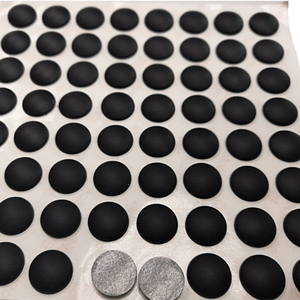
Customization Process for Industrial Foam Pads at Suzhou Baoshida Trading Co., Ltd.
At Suzhou Baoshida Trading Co., Ltd., our approach to custom foam pad manufacturing is built on precision engineering and material science expertise. We serve industrial clients requiring high-performance rubber solutions, with a focus on durability, compression resistance, and environmental adaptability. Our four-phase customization process—Drawing Analysis, Formulation, Prototyping, and Mass Production—ensures every foam pad meets exact functional and dimensional requirements.
The process begins with Drawing Analysis, where our engineering team evaluates technical blueprints provided by the client. This includes reviewing critical dimensions, tolerance levels, surface finish requirements, and intended application conditions such as load-bearing needs, temperature exposure, and dynamic vs. static use. We assess geometrical complexity and identify potential manufacturing challenges early, ensuring design for manufacturability (DFM). Our team collaborates directly with OEMs and design engineers to clarify specifications and recommend optimizations when necessary.
Following drawing validation, we proceed to Formulation Development. Based on the operational environment and performance targets, our rubber chemists select the base polymer—commonly EPDM, NBR, silicone, or neoprene—and engineer a proprietary compound. Key parameters adjusted include hardness (Shore A), cell structure (open or closed cell), density, compression set, and resistance to oils, UV, ozone, or extreme temperatures. Additives are precisely dosed to enhance flame retardancy, anti-static properties, or color stability, depending on industry standards (e.g., UL, RoHS, or ISO 17025 compliance).
Once the formulation is finalized, we initiate Prototyping. Using CNC cutting, die-cutting, or molding techniques, small-batch samples are produced under controlled conditions. Each prototype undergoes rigorous in-house testing, including compression deflection analysis, aging tests, and dimensional verification via coordinate measuring machines (CMM). Clients receive physical samples along with material test reports (MTRs) for evaluation. Feedback is incorporated into final adjustments before release for production.
The final phase, Mass Production, leverages our automated foaming lines and quality management systems to ensure consistency across large volumes. We maintain traceability through batch coding and conduct routine statistical process control (SPC) checks. Production scales from thousands to millions of units, with packaging and labeling customized per client logistics requirements.
Below is a representative specification table for a custom EPDM foam pad used in automotive sealing applications:
| Parameter | Value |
|---|---|
| Material | EPDM Closed-Cell Foam |
| Density | 120 kg/m³ |
| Hardness (Shore A) | 45 ± 5 |
| Compression Set (22h, 70°C) | ≤ 20% |
| Temperature Range | -40°C to +120°C |
| Thickness Tolerance | ±0.3 mm |
| Color | Black |
| Flame Resistance | UL94 HF-1 |
| Production Lead Time | 15–20 days after approval |
This structured, science-driven workflow enables Suzhou Baoshida to deliver reliable, high-specification foam pads tailored to diverse industrial demands.
Contact Engineering Team
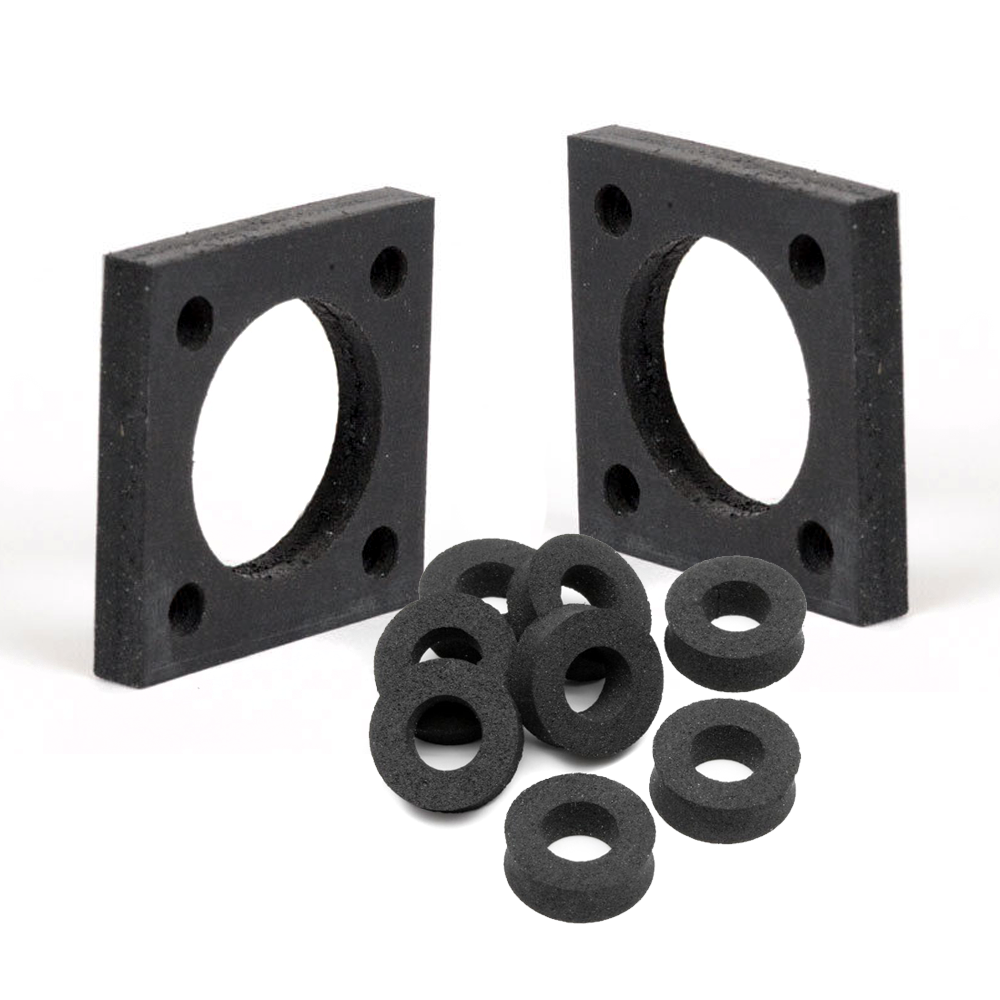
Contact Suzhou Baoshida for Precision Foam Pad Engineering Solutions
Suzhou Baoshida Trading Co., Ltd. stands at the forefront of industrial rubber compounding and OEM manufacturing, delivering engineered foam pad solutions that meet the rigorous demands of global automotive, aerospace, and heavy machinery sectors. Our expertise lies in formulating closed-cell nitrile rubber (NBR), ethylene propylene diene monomer (EPDM), and silicone-based foam pads with exacting control over cellular structure, density, and performance characteristics. Each compound undergoes stringent validation through ASTM D3574, ISO 1856, and OEM-specific protocols to ensure dimensional stability, compression set resistance, and long-term resilience under dynamic loads. As your dedicated rubber formula engineering partner, we translate complex material science into reliable production outcomes, reducing your time-to-market while adhering to ISO 9001 and IATF 16949 quality frameworks.
Our foam pads are engineered for critical sealing, vibration damping, and thermal insulation applications where failure is not an option. The table below outlines core technical specifications achievable through our proprietary compounding and molding processes:
| Property | Test Method | Typical Range (NBR Foam) | Typical Range (EPDM Foam) | Typical Range (Silicone Foam) |
|---|---|---|---|---|
| Density | ASTM D3574 | 0.25–0.45 g/cm³ | 0.20–0.40 g/cm³ | 0.30–0.50 g/cm³ |
| Compression Deflection | ASTM D575 | 15–45 kPa @ 25% strain | 10–35 kPa @ 25% strain | 20–50 kPa @ 25% strain |
| Compression Set (22h/70°C) | ASTM D3574 | ≤ 25% | ≤ 20% | ≤ 15% |
| Tensile Strength | ASTM D412 | 0.8–1.8 MPa | 0.6–1.5 MPa | 1.0–2.2 MPa |
| Temperature Range | ISO 188 | -40°C to +120°C | -50°C to +150°C | -60°C to +230°C |
| Fluid Resistance (IRMOG) | ASTM D471 | Excellent | Exceptional | Good |
These parameters are not theoretical benchmarks but production-ready targets validated across 50,000+ square meters of monthly output. Our engineering team optimizes cell morphology and crosslink density to achieve precise balance between softness for sealing compliance and structural integrity under cyclic stress. Recent advancements include fluorosilicone-blended foams for jet engine nacelle insulation and conductive carbon-loaded NBR variants for EMI shielding in electric vehicle battery housings.
For application-specific validation, Mr. Boyce, our Senior OEM Technical Manager, leads collaborative engineering engagements from initial material selection through PPAP submission. With 15 years of experience in rubber formulation for Tier-1 suppliers, he provides data-driven insights on compound behavior under real-world conditions—accelerated aging tests, dynamic fatigue analysis, and chemical exposure profiling. Contact him directly to discuss your foam pad requirements, request material test reports, or initiate a feasibility study. His technical expertise ensures seamless integration of our solutions into your manufacturing workflow, minimizing rework and maximizing component lifecycle.
Initiate your next-generation foam pad project with Suzhou Baoshida by emailing Mr. Boyce at [email protected]. Include your target specifications, application environment details, and volume requirements to receive a tailored technical dossier within 48 hours. We respond to all engineering inquiries with actionable data—not generic sales proposals—because precision in rubber compounding begins with precise communication. Partner with us to transform material challenges into competitive advantages through science-led manufacturing excellence.
⚖️ O-Ring Weight Calculator
Estimate rubber O-ring weight (Approx).