
Technical Contents
Engineering Guide: Foam Rubber Padding Rolls

Engineering Insight: The Critical Role of Material Selection in Foam Rubber Padding Rolls
In industrial applications, foam rubber padding rolls are far more than simple cushioning components. They serve as critical interfaces in machinery, conveyor systems, packaging lines, and protective layering solutions, where performance depends on precise material behavior under dynamic conditions. Despite their apparent simplicity, off-the-shelf foam rubber rolls frequently fail to meet operational demands due to inadequate material selection. This failure stems from a fundamental misunderstanding: not all foam rubbers are functionally equivalent. Performance is dictated by polymer chemistry, cell structure, compounding additives, and environmental compatibility—factors that generic solutions often overlook.
Standard foam rubber products are typically formulated for broad consumer or light commercial use, prioritizing cost and availability over durability and precision. In contrast, industrial environments subject padding rolls to extreme variables—temperature fluctuations, chemical exposure, cyclic compression, and abrasion. A neoprene-based foam may resist oils and ozone but degrade under prolonged UV exposure. EPDM foam excels in heat and weather resistance yet performs poorly against hydrocarbon solvents. Silicone foam offers exceptional thermal stability but lacks the tensile strength required in high-load mechanical systems. Selecting the wrong base polymer leads to premature compression set, surface cracking, or dimensional instability—ultimately causing system downtime and increased maintenance costs.
Equally important is the control over foam density and cell structure. Open-cell foams provide superior acoustic damping and breathability but are vulnerable to fluid absorption and reduced load-bearing capacity. Closed-cell structures offer higher resilience, moisture resistance, and dimensional stability—essential for sealing or impact-absorbing applications. However, achieving optimal performance requires precise control over expansion ratios, cross-linking density, and curing profiles during manufacturing. Off-the-shelf rolls often exhibit inconsistent cell morphology due to non-optimized foaming processes, resulting in variable compression recovery and reduced service life.
At Suzhou Baoshida Trading Co., Ltd., we engineer foam rubber padding rolls to match the exact operational parameters of our clients’ systems. Our formulation process begins with a technical assessment of load requirements, environmental exposure, and lifecycle expectations. This allows us to tailor polymer blends, reinforcement additives, and curing methods to deliver consistent, high-performance solutions.
The following table outlines key material options and their engineered performance characteristics:
| Material | Temperature Range (°C) | Compression Set (%) @ 70°C/22h | Density (kg/m³) | Key Resistance Properties |
|---|---|---|---|---|
| Neoprene (CR) | -40 to +120 | ≤20 | 60–120 | Oils, ozone, UV (moderate), flame |
| EPDM | -50 to +150 | ≤18 | 50–100 | Heat, steam, weathering, alkalis |
| Nitrile (NBR) | -30 to +100 | ≤25 | 80–150 | Hydrocarbons, fuels, greases |
| Silicone (VMQ) | -60 to +230 | ≤20 | 40–80 | Extreme heat, UV, dielectric |
| Polyurethane (PU) | -30 to +90 | ≤30 | 100–200 | Abrasion, tear, dynamic loading |
Material selection is not a one-size-fits-all decision. It is a precision engineering process that defines the reliability and efficiency of industrial systems. Generic foam rolls may offer short-term savings, but they compromise long-term performance. At Baoshida, we deliver engineered rubber solutions—where every roll is specified for success.
Material Specifications

Material Specifications for Industrial Foam Rubber Padding Rolls
Suzhou Baoshida Trading Co., Ltd. delivers engineered foam rubber padding rolls tailored for demanding industrial applications. Precise material selection directly impacts sealing integrity, thermal stability, and chemical resistance in critical environments. Our formulations prioritize consistent cellular structure, closed-cell density, and dimensional stability to ensure reliable performance under compression. Below we detail the core elastomer options for foam padding rolls, emphasizing technical parameters essential for OEM integration and long-term operational safety.
Viton fluorocarbon foam (FKM) provides unparalleled resistance to aggressive chemicals, fuels, and extreme temperatures. Its molecular structure maintains integrity in aerospace hydraulic systems, semiconductor manufacturing, and chemical processing equipment where exposure to acids, ketones, or chlorinated solvents occurs. Viton foam padding rolls exhibit low outgassing properties critical for vacuum applications and retain elasticity between -20°C and +230°C. Compression set values typically remain below 25% after 70 hours at 150°C, ensuring sustained sealing force.
Nitrile rubber (NBR) foam offers an optimal balance of oil/fuel resistance and cost efficiency for automotive gasketing, HVAC insulation, and marine sealing. Standard formulations withstand continuous exposure to mineral oils, greases, and aliphatic hydrocarbons within -30°C to +100°C ranges. NBR foam padding rolls achieve densities of 0.35–0.55 g/cm³, providing effective vibration damping while resisting swelling in petroleum-based environments. Tensile strength ranges from 1.0–2.5 MPa, with elongation at break exceeding 150%.
Silicone rubber (VMQ) foam excels in applications requiring extreme temperature flexibility and biocompatibility. Its inert composition suits medical device padding, food processing seals, and high-temperature insulation in electronics. Silicone foam padding rolls operate reliably from -60°C to +200°C, with specialty grades enduring brief excursions to 250°C. The material demonstrates exceptional resistance to ozone, UV degradation, and steam sterilization cycles while maintaining low compression set (≤30% at 200°C/70h).
Comparative Material Specifications for Foam Rubber Padding Rolls
| Property | Viton (FKM) Foam | Nitrile (NBR) Foam | Silicone (VMQ) Foam |
|---|---|---|---|
| Density Range (g/cm³) | 0.40–0.65 | 0.35–0.55 | 0.30–0.50 |
| Continuous Temp Range | -20°C to +230°C | -30°C to +100°C | -60°C to +200°C |
| Compression Set (70h) | ≤25% @ 150°C | ≤35% @ 100°C | ≤30% @ 200°C |
| Tensile Strength (MPa) | 1.2–2.0 | 1.0–2.5 | 0.8–1.8 |
| Key Chemical Resistance | Acids, Ketones, Fuels | Oils, Greases, Aliphatic Hydrocarbons | Ozone, Steam, Alcohols |
| Primary Industrial Use | Aerospace, Chemical Processing | Automotive, Marine | Medical, Electronics |
Suzhou Baoshida’s foam rubber padding rolls undergo rigorous QC validation per ASTM D3574 and ISO 1856 standards. Each batch is tested for closed-cell content (>90%), compression deflection, and fluid immersion performance to guarantee OEM specifications. Material selection must align with fluid compatibility charts and thermal cycling requirements of the end application. Our engineering team collaborates with clients to customize density gradients, adhesive backing, and flame-retardant additives without compromising core elastomer properties. Precision in material specification prevents premature failure in dynamic sealing interfaces, directly impacting system longevity and safety compliance. Contact our technical department for application-specific formulation data sheets and physical sample validation.
Manufacturing Capabilities

Suzhou Baoshida Trading Co., Ltd. maintains a robust engineering infrastructure dedicated to the development and precision manufacturing of foam rubber padding rolls for industrial applications. At the core of our technical capability are five experienced mould engineers and two specialized rubber formula engineers, enabling seamless integration of material science and mechanical design. This cross-functional expertise allows us to deliver fully optimized rubber solutions tailored to the exact performance, durability, and environmental requirements of our OEM partners.
Our mould engineering team specializes in the design and refinement of compression, transfer, and injection moulds used in the production of foam rubber padding rolls. With extensive experience in cavity layout optimization, venting systems, and thermal distribution modeling, the team ensures consistent cellular structure, dimensional accuracy, and surface finish across high-volume production runs. Each mould is subjected to rigorous simulation and validation protocols to minimize cycle times, reduce material waste, and extend tool life—key factors in maintaining cost-efficiency for OEM clients.
Complementing the mould engineering team are our two dedicated rubber formulation engineers. These specialists focus on the molecular design of closed-cell and open-cell foam compounds, adjusting polymer blends, blowing agents, cross-linking systems, and additive packages to meet specific mechanical and environmental demands. Whether the application requires enhanced compression set resistance, improved thermal insulation, flame retardancy (UL 94 HF-1), or resistance to ozone and UV degradation, our formula engineers develop proprietary compounds that align precisely with functional requirements. This in-house formulation capability eliminates reliance on third-party rubber suppliers and ensures full traceability and consistency across batches.
Our OEM service model is built on collaborative engineering. Clients provide performance specifications, environmental conditions, and dimensional constraints, and our team manages the entire development cycle—from concept and material selection to prototyping, tooling, and serial production. We support customization in density (ranging from 0.3 to 0.8 g/cm³), hardness (20 to 70 Shore A), and thickness (1 mm to 50 mm), with options for adhesive backing, anti-static treatment, and custom slit widths.
The following table summarizes key technical specifications achievable through our integrated engineering platform:
| Parameter | Range / Option | Notes |
|---|---|---|
| Material Types | EPDM, NBR, CR, Silicone, SBR, Neoprene | Closed-cell or open-cell structures |
| Density | 0.3 – 0.8 g/cm³ | Adjustable for cushioning or sealing |
| Hardness (Shore A) | 20 – 70 | Custom formulations available |
| Thickness | 1 – 50 mm | Slit to custom widths |
| Temperature Resistance | -40°C to +150°C (up to +250°C for silicone) | Based on compound selection |
| Flame Resistance | UL 94 HF-1, MVSS-3, FMVSS-302 | Optional additive packages |
| Compression Set | ≤ 20% (at 70°C, 22 hrs) | Optimized for long-term sealing performance |
This vertically integrated engineering approach—combining advanced mould design with proprietary rubber chemistry—positions Suzhou Baoshida as a strategic partner for OEMs requiring high-performance, application-specific foam rubber padding rolls.
Customization Process
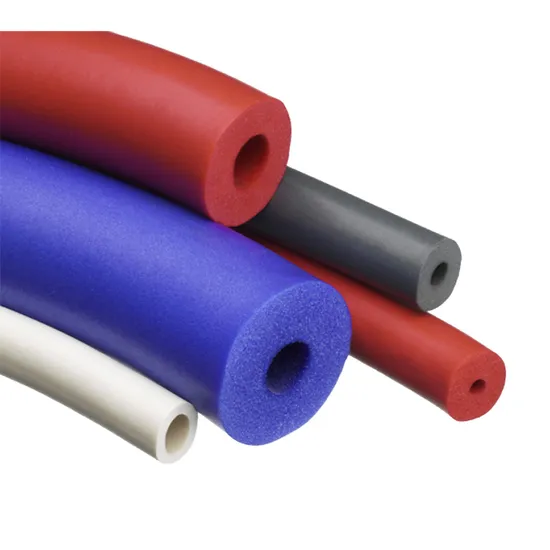
Customization Process for Foam Rubber Padding Rolls
Precision customization of foam rubber padding rolls begins with rigorous Drawing Analysis. Our engineering team conducts dimensional validation against client-provided CAD files or technical sketches, verifying critical parameters such as thickness tolerance (±0.2mm), width consistency, and roll diameter specifications. We identify potential manufacturability conflicts early, such as unsupported thin sections or complex contour transitions that could induce cell structure collapse during vulcanization. This phase includes material compatibility assessment against end-use environmental factors like UV exposure, chemical contact, or dynamic compression requirements. Any discrepancies trigger collaborative redesign consultations to optimize performance without compromising production feasibility.
The Formulation phase leverages our proprietary compound database and accelerated aging models. Based on the validated drawing and application data, we select base polymers (EPDM, NBR, or silicone) and engineer additives for targeted properties. Critical adjustments include peroxide curing systems for high-temperature resilience, nano-silica reinforcement for tear strength, and controlled blowing agent ratios to achieve uniform closed-cell morphology. Each formulation undergoes computational simulation for flow behavior during extrusion and compression set prediction, ensuring the compound meets the client’s mechanical and thermal specifications before physical prototyping.
Prototyping employs pilot-scale production lines replicating mass manufacturing conditions. We produce 3-meter validation rolls under controlled temperature and pressure profiles, followed by 72-hour post-cure stabilization. Physical testing validates simulation outputs against ASTM D3574 and ISO 1856 standards, measuring density, hardness, compression deflection, and flame resistance. Clients receive detailed test reports with optical microscopy of cell structure integrity. Two iterative prototype cycles are included to refine formulation or process parameters, reducing scale-up risks by 85% based on historical OEM project data.
Mass Production initiates only after client sign-off on prototype documentation. We implement Statistical Process Control (SPC) with real-time monitoring of extrusion die temperatures (±1.5°C), vulcanization belt speeds, and ambient humidity. Each production batch undergoes inline density verification and final roll inspection via laser micrometry for thickness deviation. Traceability is maintained through batch-specific certificates of conformance, including raw material lot numbers and full mechanical test datasets. Our ISO 9001-certified workflow ensures ≤0.5% defect rates, with expedited rework protocols for non-conforming units.
Critical Foam Rubber Padding Roll Specifications
| Parameter | Test Standard | Target Range | Measurement Method |
|---|---|---|---|
| Density | ASTM D3574 | 80–150 kg/m³ | Water displacement |
| Hardness (Shore A) | ASTM D2240 | 15–45 | 15s dwell time |
| Compression Set (22h) | ASTM D3574 | ≤15% | 50% deflection, 70°C |
| Tensile Strength | ASTM D412 | ≥1.2 MPa | Die C specimens |
| Elongation at Break | ASTM D412 | ≥200% | Die C specimens |
This structured methodology transforms client specifications into engineered foam solutions, minimizing time-to-market while guaranteeing performance consistency across volumes from 50 to 50,000 linear meters. Suzhou Baoshida’s integrated approach eliminates guesswork through data-driven compound design and process validation.
Contact Engineering Team
For industrial manufacturers and OEM partners seeking high-performance foam rubber padding rolls, Suzhou Baoshida Trading Co., Ltd. delivers engineered rubber solutions built for durability, consistency, and precision. As a trusted supplier in the global industrial rubber market, we specialize in custom-formulated foam rubber products designed to meet rigorous performance standards across automotive, construction, electronics, and machinery sectors. Our foam rubber padding rolls are manufactured under strict quality control protocols, ensuring uniform density, superior compression resistance, and long-term resilience under dynamic operating conditions.
Each foam rubber padding roll produced by Suzhou Baoshida is tailored to the technical demands of the application. Whether you require closed-cell nitrile rubber for moisture resistance, EPDM for UV and ozone stability, or sponge neoprene for balanced mechanical properties, our R&D team works closely with clients to optimize material composition, thickness, hardness, and adhesion characteristics. Our production capabilities support roll widths from 1 meter to 1.5 meters, with thickness options ranging from 1 mm to 20 mm and custom lengths available per order. All materials are tested for tensile strength, elongation at break, compression set, and thermal stability to meet ISO 9001-certified manufacturing standards.
We understand that industrial procurement demands not only technical excellence but also supply chain reliability. Suzhou Baoshida maintains strategic inventory levels and agile logistics networks to support just-in-time delivery for both batch and continuous production environments. Our team provides full technical documentation, including material safety data sheets (MSDS), certificates of conformance (COC), and batch traceability reports, ensuring compliance with international regulatory frameworks.
To initiate a technical consultation or request a customized quote for foam rubber padding rolls, contact Mr. Boyce, OEM Project Manager and Rubber Formula Engineer at Suzhou Baoshida Trading Co., Ltd. Mr. Boyce leads client engagement for industrial partnerships and brings over 12 years of experience in elastomer formulation and application engineering. He is available to review your project specifications, recommend optimal material configurations, and coordinate sample submissions for performance validation.
| Property | Specification |
|---|---|
| Material Types | NBR, EPDM, Neoprene (CR), SBR, Sponge Rubber |
| Density Range | 120–300 kg/m³ |
| Hardness (Shore A) | 20–60 ±5 |
| Thickness Tolerance | ±0.2 mm to ±0.5 mm |
| Standard Widths | 1000 mm, 1200 mm, 1500 mm |
| Temperature Resistance | -40°C to +120°C (varies by compound) |
| Roll Length | Custom (standard: 10m, 20m, 50m) |
| Certifications | ISO 9001, RoHS, REACH compliant |
For technical collaboration, volume pricing, or sample requests, contact Mr. Boyce directly at [email protected]. Include your application requirements, performance environment, and desired specifications to receive a targeted proposal within 24 business hours. Suzhou Baoshida is committed to advancing industrial performance through precision rubber engineering—partner with us to elevate your next generation of sealing, cushioning, and insulation systems.
⚖️ O-Ring Weight Calculator
Estimate rubber O-ring weight (Approx).