
Technical Contents
Engineering Guide: Foam Tapes
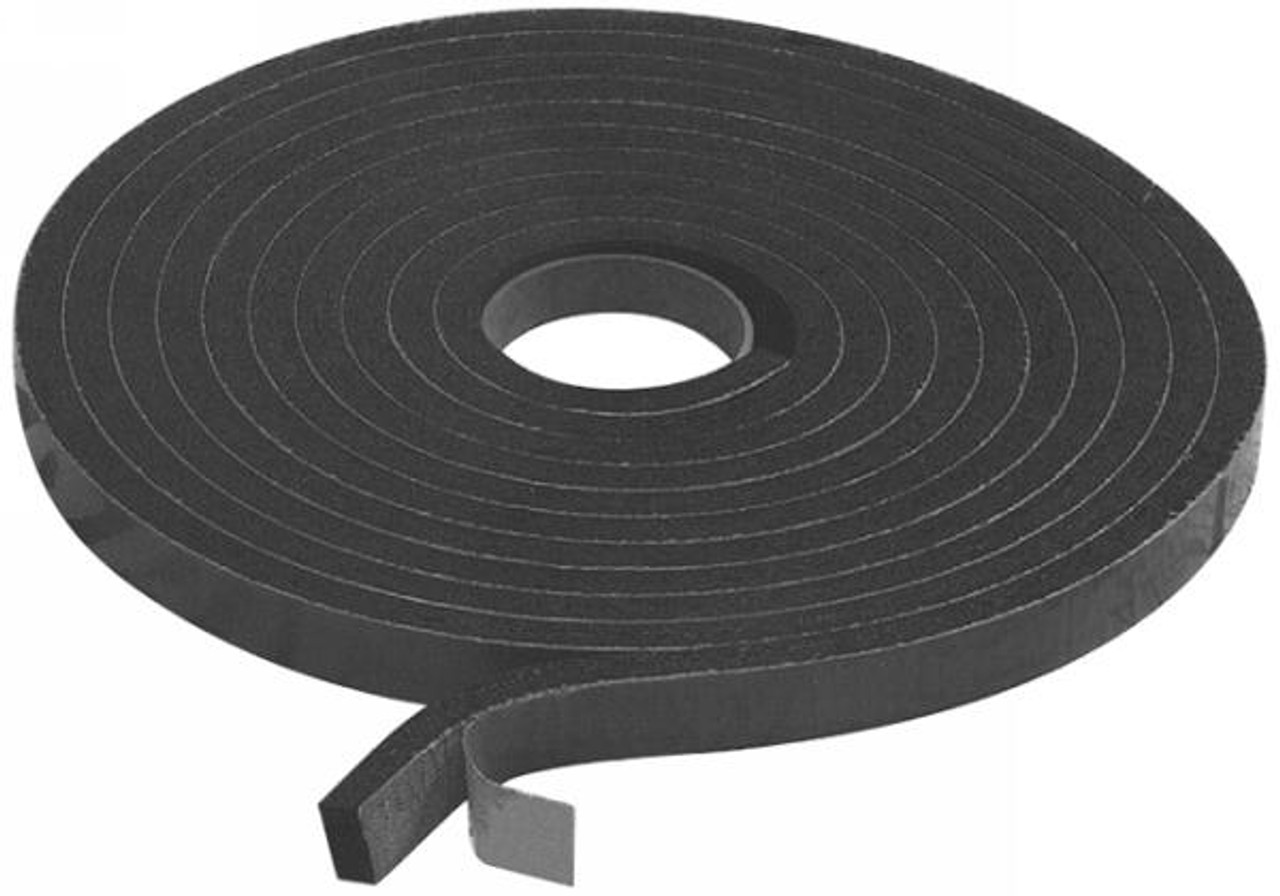
Engineering Insight: Foam Tapes – The Critical Imperative of Material Selection
Industrial foam tapes are frequently perceived as commoditized solutions, leading many OEMs to default to off-the-shelf options. This approach carries significant risk, as generic formulations rarely address the complex interplay of mechanical stress, environmental exposure, and functional requirements inherent in demanding applications. Failure to rigorously select materials based on specific engineering parameters results in premature degradation, seal failure, and costly field repairs. The core issue lies in the oversimplification of foam tape functionality: these are not passive spacers but active engineered components requiring precise chemical and physical properties.
Common failure modes trace directly to inadequate material selection. Standard polyethylene or PVC foams exhibit poor resistance to UV radiation, ozone, and industrial solvents, leading to embrittlement and loss of sealing integrity within months in outdoor or chemical-exposed environments. Similarly, mismatched compression set characteristics cause permanent deformation under continuous load, creating gaps in gasketing or bonding applications. Off-the-shelf adhesives often lack tailored chemistry for substrates like low-surface-energy plastics or anodized metals, resulting in adhesive failure rather than cohesive bond strength. Crucially, thermal expansion coefficients must align with adjacent components; generic foams frequently expand or contract at rates incompatible with metals or composites, inducing stress fractures. These failures manifest not as immediate defects but as latent field issues, damaging brand reputation and incurring warranty liabilities far exceeding initial material savings.
Material science dictates that performance stems from controlled polymer architecture, crosslink density, and additive systems. For instance, acrylonitrile butadiene rubber (NBR) foams provide superior oil resistance but limited temperature range, while silicone foams excel in extreme heat yet require reinforcement for structural resilience. Closed-cell structures prevent fluid ingress but may compromise conformability versus open-cell alternatives. The adhesive layer demands equal scrutiny: acrylic formulations offer broad temperature stability, whereas rubber-based adhesives provide instant tack but degrade under UV. True engineering requires analyzing dynamic compression load, required recovery rate, fluid compatibility matrices, and lifecycle duration – parameters absent in generic product datasheets.
The following table contrasts critical specifications between typical off-the-shelf foam tapes and precision-engineered alternatives for industrial deployment:
| Parameter | Generic Off-the-Shelf Foam Tape | Engineered Industrial Foam Tape |
|---|---|---|
| Density Range (kg/m³) | 60–120 | 80–250 (application-specific) |
| Continuous Temp Range | -20°C to +80°C | -60°C to +250°C |
| Compression Set (50% defl., 22h, 70°C) | 25–40% | <10% |
| Adhesion Strength (to steel, N/mm) | 4–8 | 12–25 |
| Fluid Resistance | Limited to water/alcohols | Full resistance to oils, acids, fuels |
Suzhou Baoshida Trading Co., Ltd. partners with OEMs to transform foam tape selection from a procurement exercise into a validated engineering process. We deploy application-specific formulation protocols, leveraging accelerated aging tests and substrate compatibility mapping to eliminate field failure risks. This precision approach ensures foam tapes function as reliable, long-term components within your assembly – not hidden liabilities. The incremental investment in engineered material selection delivers exponential returns through enhanced product durability and reduced lifecycle costs.
Material Specifications
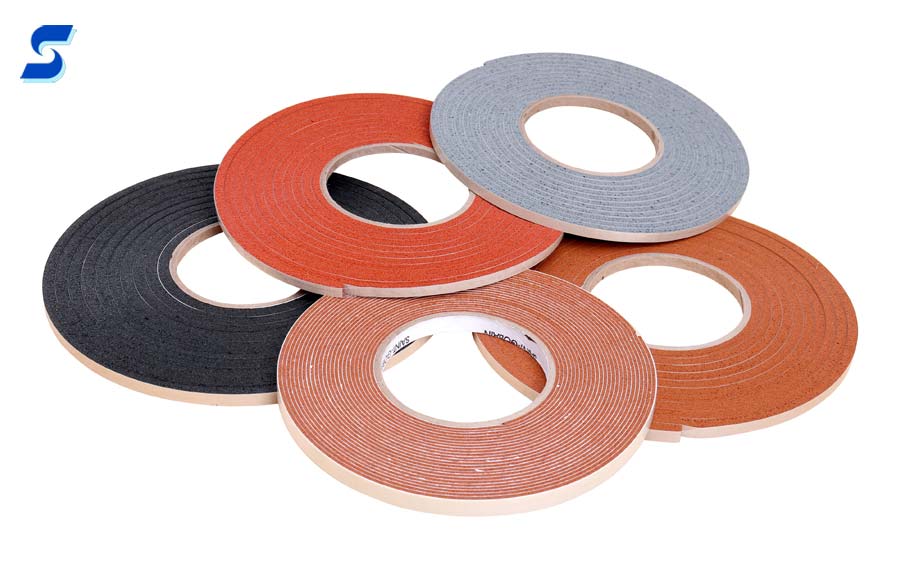
Foam tapes are critical components in industrial sealing, gasketing, and vibration dampening applications where consistent compression, environmental resistance, and long-term durability are required. At Suzhou Baoshida Trading Co., Ltd., our engineered foam tapes are formulated from high-performance elastomers including Viton, Nitrile (NBR), and Silicone, each selected for targeted operational environments. These materials are processed into closed-cell or open-cell foam structures to deliver controlled compressibility, recovery, and sealing integrity under dynamic or static loads.
Viton foam tape offers exceptional resistance to extreme temperatures, aggressive chemicals, and ozone exposure. Derived from fluoroelastomer compounds, Viton-based foams maintain structural stability in aerospace, automotive, and chemical processing environments where exposure to fuels, oils, and acids is routine. Continuous service temperatures can reach up to 230°C, with intermittent peaks higher, making it ideal for high-temperature sealing in engine compartments and industrial ovens.
Nitrile foam tape, formulated from acrylonitrile-butadiene rubber, provides excellent resistance to petroleum-based fluids, aliphatic hydrocarbons, and water. It is widely used in automotive, marine, and HVAC applications due to its balance of cost efficiency and performance. Nitrile foams exhibit good compression set resistance and mechanical strength, particularly in environments involving oil mist, fuel contact, or moderate thermal cycling. Service temperatures typically range from -30°C to +100°C, with specialized grades extending to +125°C.
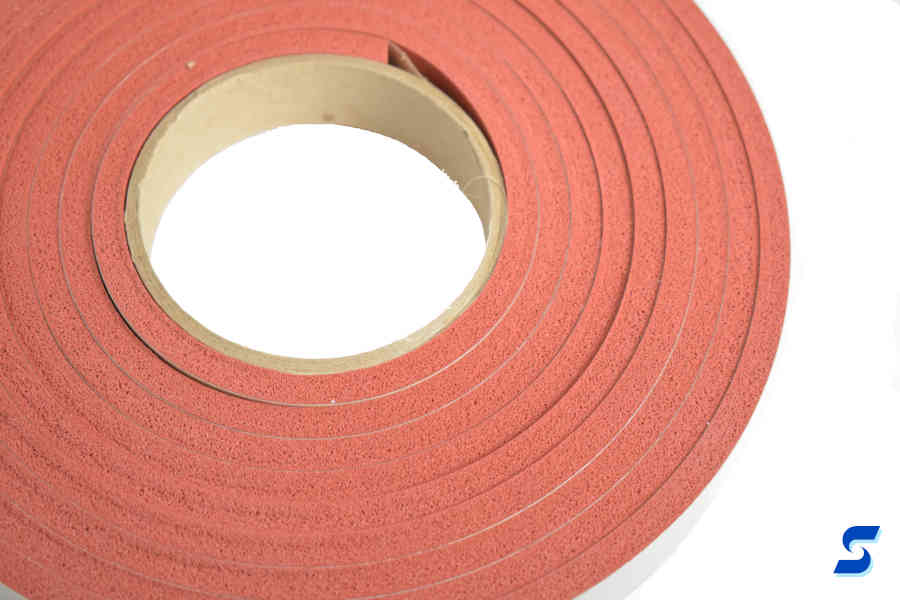
Silicone foam tape delivers superior performance in extreme temperature applications, with continuous use from -60°C to +200°C and resilience in cryogenic or high-heat settings. It demonstrates excellent resistance to UV radiation, ozone, and weathering, making it a preferred choice for outdoor electronics, telecommunications, and medical device sealing. While less resistant to petroleum-based fluids than Viton or Nitrile, silicone foam excels in electrical insulation and low-compression-force applications requiring long-term sealing under minimal closure pressure.
Each material is available in various densities, thicknesses (0.5 mm to 10 mm), and adhesive configurations (single- or double-sided) to meet specific OEM design requirements. Custom slitting, die-cutting, and splicing services ensure compatibility with automated assembly lines and precision-fit installations.
Below is a comparative summary of key physical and chemical properties for Viton, Nitrile, and Silicone foam tapes:
| Property | Viton Foam | Nitrile Foam | Silicone Foam |
|---|---|---|---|
| Base Polymer | Fluoroelastomer (FKM) | Nitrile (NBR) | Polysiloxane |
| Temperature Range (°C) | -20 to +230 | -30 to +100 (+125) | -60 to +200 |
| Fluid Resistance | Excellent (oils, acids, fuels) | Good (oils, water, fuels) | Poor (oils), Good (water, UV) |
| Compression Set Resistance | Excellent | Good | Very Good |
| Flame Resistance | Outstanding | Moderate | Good |
| Density Range (kg/m³) | 300–600 | 250–500 | 200–450 |
| Typical Applications | Aerospace, chemical processing, automotive | HVAC, marine, machinery | Electronics, medical, outdoor enclosures |
Selection of the appropriate foam tape requires alignment with environmental exposure, mechanical demands, and regulatory standards. Suzhou Baoshida Trading Co., Ltd. supports OEMs with material testing data, sample provisioning, and technical consultation to ensure optimal performance in end-use conditions.
Manufacturing Capabilities
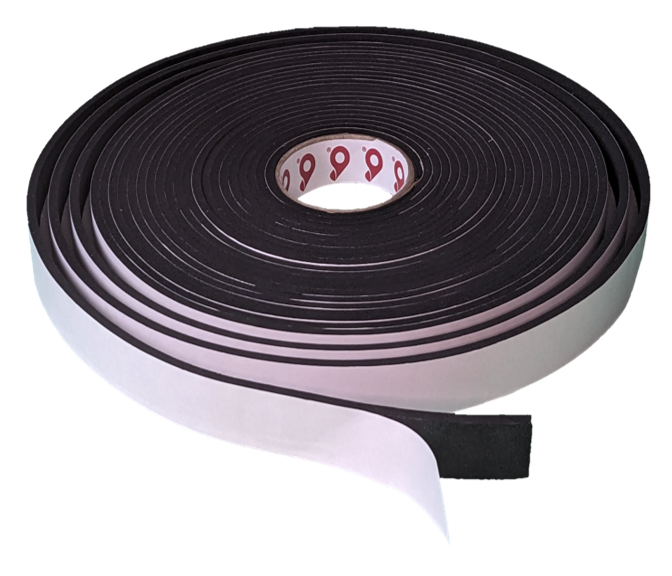
Engineering Excellence in Foam Tape Manufacturing
At Suzhou Baoshida Trading Co., Ltd., our foam tape production is anchored in rigorous material science and precision engineering. We deploy a dedicated team of five Mould Engineers and two Rubber Formula Engineers to solve complex industrial challenges, ensuring every product meets exacting functional and dimensional requirements. This integrated expertise allows us to transcend standard manufacturing, transforming client specifications into high-performance sealing, bonding, and cushioning solutions. Our Formula Engineers specialize in polymer chemistry, optimizing elastomer compounds for critical properties like compression set, thermal stability, and chemical resistance. Concurrently, Mould Engineers refine tooling geometry and processing parameters to achieve micron-level tolerances in cell structure and density—directly impacting adhesion consistency and long-term resilience.
Our OEM capabilities are engineered for seamless integration into client supply chains. We collaborate from the earliest design phase, reverse-engineering performance demands into actionable material formulations and tooling blueprints. This includes validating prototypes against ISO 188, ASTM D395, and client-specific environmental aging protocols. Unlike converters reliant on off-the-shelf materials, we develop proprietary EPDM, silicone, and acrylic foam compounds tailored to operational extremes—such as automotive under-hood seals requiring -40°C to 150°C stability or medical-grade tapes demanding biocompatibility per ISO 10993. Rigorous in-process testing at every stage, from mixing to vulcanization, ensures batch-to-batch repeatability under ISO 9001:2015 frameworks.
Critical foam tape performance hinges on the interplay between compound design and mould execution. The following table illustrates how our dual-engineering approach directly enhances key specifications:
| Performance Parameter | Standard Industry Tolerance | Baoshida Precision Tolerance | Engineering Intervention |
|---|---|---|---|
| Thickness Uniformity | ±0.15 mm | ±0.05 mm | Mould cavity pressure mapping & real-time extrusion calibration |
| Compression Set (70°C, 22h) | ≤35% | ≤22% | Formula-engineered crosslink density with peroxide curing systems |
| Peel Adhesion (N/25mm) | ±15% of target | ±5% of target | Surface energy tuning via silane-modified tackifiers |
| Temperature Range | -30°C to 120°C | -50°C to 180°C | Custom silicone-EPDM hybrid formulation with thermal stabilizers |
This synergy enables us to deliver foam tapes that maintain integrity under dynamic stress—whether in aerospace gasketing subjected to rapid pressure cycles or electronics EMI shielding requiring consistent conductivity. Our engineers proactively identify failure modes during feasibility studies, such as outgassing in vacuum environments or hydrolysis in humid climates, and mitigate them through material selection and process controls.
For OEM partners, we provide full technical documentation, including material traceability dossiers, DFMEA reports, and accelerated life-testing data. This commitment to engineered precision ensures your foam tape components perform reliably in mission-critical applications, reducing field failures and total cost of ownership. At Baoshida, we don’t just manufacture foam tapes; we engineer confidence into every cellular structure.
Customization Process
Customization Process for Foam Tapes in Industrial Applications
At Suzhou Baoshida Trading Co., Ltd., our approach to customizing foam tapes is rooted in precision engineering and deep material science expertise. We specialize in delivering tailored rubber-based foam tape solutions for demanding industrial environments, where performance under stress, environmental exposure, and long-term reliability are critical. Our four-stage customization process ensures optimal alignment between design intent and functional output.
The first phase, Drawing Analysis, begins with a comprehensive review of the client’s technical drawings and application requirements. We assess dimensional tolerances, bonding surfaces, compression set expectations, and environmental conditions such as temperature range, UV exposure, and chemical resistance. This stage involves close collaboration with the client’s engineering team to clarify functional needs and identify potential design optimizations. Our engineers evaluate substrate compatibility, stress distribution, and installation methods to ensure the final product performs reliably in real-world conditions.
Following drawing validation, we proceed to Formulation Development. Based on the application parameters, our rubber formulation team selects the appropriate base polymer—commonly EVA, PE, silicone, or EPDM—tailoring additives for specific performance attributes. These include flame retardants, UV stabilizers, cross-linking agents, and conductive or anti-static modifiers. The formulation is designed not only for mechanical performance but also for processability during lamination, adhesive coating, and die-cutting. Adhesive selection—whether acrylic, rubber-based, or silicone—is matched to the substrate and service environment to ensure durable bonding.
Once the formulation is finalized, we enter the Prototyping Phase. Small-batch samples are produced using pilot-scale equipment that replicates full production conditions. These prototypes undergo rigorous in-house testing, including peel adhesion (180°), compression deflection, aging cycles, and shear strength. Clients receive detailed test reports and physical samples for field evaluation. Feedback is incorporated into iterative refinements until performance targets are consistently met.
Upon approval, we transition to Mass Production. Our manufacturing lines utilize continuous foam extrusion, precise coating systems, and automated slitting and die-cutting equipment to maintain consistency across large volumes. Each production batch is subject to quality control checks per ISO 9001 standards, with traceability maintained from raw material to finished goods. We support just-in-time delivery models and offer kitting or custom packaging to streamline our clients’ assembly processes.
The following table outlines typical performance specifications achievable through our customization process:
| Property | Test Method | Typical Range |
|---|---|---|
| Density | ASTM D3574 | 30–200 kg/m³ |
| Hardness (Shore A) | ASTM D2240 | 15–80 |
| Tensile Strength | ASTM D412 | 0.5–3.0 MPa |
| Elongation at Break | ASTM D412 | 100–600% |
| Compression Set (22h, 70°C) | ASTM D3574 | <30% |
| Operating Temperature | – | -40°C to +150°C |
| Peel Adhesion (180°) | PSTC-101 | 0.5–15 N/25mm |
This structured, science-driven methodology enables Suzhou Baoshida to deliver high-performance foam tape solutions that meet exacting industrial standards.
Contact Engineering Team
Technical Engagement for Precision Foam Tape Solutions
Suzhou Baoshida Trading Co., Ltd. operates at the intersection of advanced polymer science and industrial manufacturing, specializing in engineered foam tape solutions for demanding B2B applications. Our technical team, led by experienced rubber formulation engineers, addresses critical performance variables including compression set resistance, thermal stability, and substrate adhesion under extreme operational conditions. Unlike commodity suppliers, we prioritize material customization at the molecular level to meet exact OEM specifications—whether for automotive sealing, electronics assembly, or aerospace gasketing. This precision-driven approach ensures your final product achieves longevity, regulatory compliance, and functional reliability in real-world environments.
When selecting a foam tape partner, technical responsiveness is non-negotiable. Generic off-the-shelf tapes often fail under dynamic stresses such as cyclic loading, chemical exposure, or temperature excursions beyond -40°C to +150°C. Baoshida’s OEM management protocol begins with rigorous material analysis against your application’s mechanical and environmental parameters. We then iterate formulations using proprietary elastomer blends, optimizing cell structure density, adhesive chemistry, and cross-linking efficiency. This eliminates costly field failures and reduces total cost of ownership through extended service life. Our ISO 9001-certified quality system guarantees batch-to-batch consistency, with full traceability from raw material sourcing to final validation testing.
Below are core technical parameters we engineer into custom foam tapes, reflecting our industrial-grade manufacturing capabilities:
| Property | Standard Range | Testing Standard | OEM Advantage |
|---|---|---|---|
| Density | 0.15–0.65 g/cm³ | ASTM D3574 | Optimized weight vs. compression recovery |
| Compression Deflection | 15–75% @ 25% strain | ASTM D575 | Tailored sealing force for sensitive substrates |
| Temperature Resistance | -40°C to +150°C | ISO 188 | Stability in thermal cycling environments |
| Tensile Strength | 80–350 kPa | ASTM D412 | Durability against mechanical shear |
| Adhesion to Metals/Plastics | 0.8–2.5 N/mm | PSTC-101 | Fail-safe bonding without surface primers |
Initiate a technical consultation with Mr. Boyce, our dedicated OEM Manager and Rubber Formulation Specialist, to resolve your most complex sealing challenges. With 12 years of hands-on experience in elastomer compounding for Tier-1 industrial clients, Mr. Boyce translates application pain points into validated material solutions. He will coordinate cross-functional resources—from R&D to production—to deliver samples within 15 business days, complete with full material test reports (MTRs) and process compatibility analysis. Do not settle for tapes that compromise performance due to inadequate formulation science.
Contact Mr. Boyce directly at [email protected] to submit your technical requirements sheet. Include critical parameters such as operating environment, substrate materials, load profiles, and regulatory constraints (e.g., UL 94, RoHS, REACH). Our engineering team will respond within 4 business hours with a preliminary formulation strategy and feasibility assessment. For urgent projects requiring rapid prototyping, reference your target timeline in the email subject line. Suzhou Baoshida exists to transform your engineering specifications into flawless functional reality—where material science meets manufacturing excellence. Partner with us to eliminate sealing failures at the source.
⚖️ O-Ring Weight Calculator
Estimate rubber O-ring weight (Approx).