
Technical Contents
Engineering Guide: Foamed Pvc Board
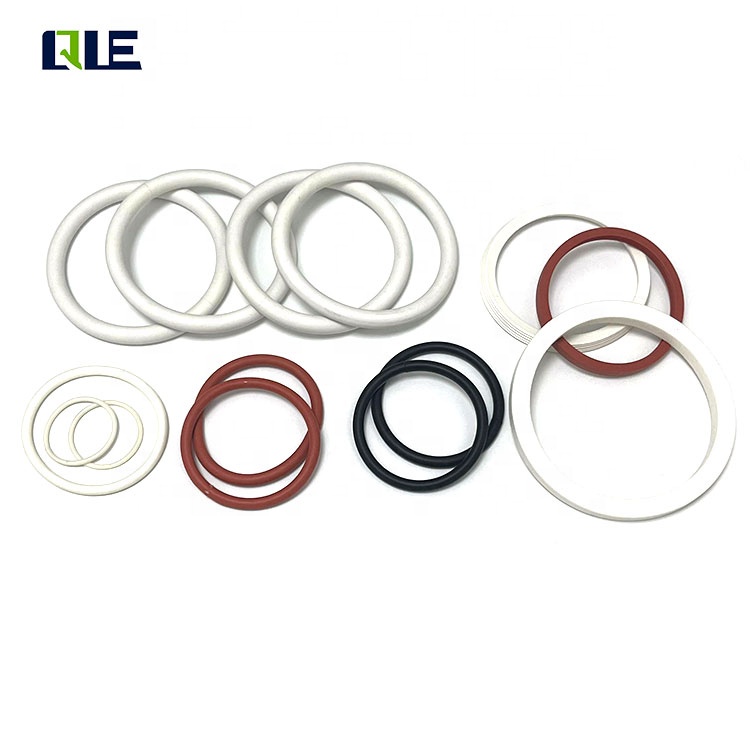
Engineering Insight: Material Selection Criticality in Foamed PVC Board Applications
Foamed PVC board is frequently specified for industrial enclosures, signage substrates, and chemical handling components due to its perceived cost efficiency and ease of fabrication. However, Suzhou Baoshida Trading Co., Ltd. observes consistent field failures when generic, off-the-shelf PVC boards are deployed in demanding environments. These failures stem from fundamental oversights in polymer formulation and process control, directly contradicting the material’s theoretical suitability. Standard commercial grades prioritize initial cost reduction over performance stability, resulting in compromised structural integrity under thermal cycling, chemical exposure, or mechanical stress.
The core issue lies in uncontrolled cellular morphology and additive migration. Economical foamed PVC often exhibits inconsistent cell density distribution, leading to warpage during machining or thermal expansion in operational settings. More critically, low-grade plasticizers and stabilizers volatilize prematurely when exposed to temperatures above 50°C or UV radiation, causing embrittlement and catastrophic delamination. For instance, in outdoor electrical enclosures, standard PVC boards frequently crack within 18 months due to plasticizer loss, exposing internal components to environmental hazards. Similarly, exposure to aliphatic hydrocarbons—common in industrial maintenance—induces swelling and loss of dimensional accuracy in non-engineered grades, rendering precision-machined parts unusable.
Suzhou Baoshida’s engineered foamed PVC solutions address these failure modes through rigorous polymer science. We optimize nucleating agents and cross-linking densities to achieve uniform microcellular structures, ensuring dimensional stability across -20°C to 70°C operational ranges. Our proprietary stabilizer packages resist UV degradation for over 5 years in accelerated weathering tests, while plasticizer systems are selected for compatibility with industrial solvents and oils. This precision engineering is non-negotiable for applications requiring ISO 10140 acoustic performance or UL 94 V-0 flammability ratings.
The performance delta between standard and engineered foamed PVC is quantifiable through critical material properties:
| Property | Standard Commercial PVC | Baoshida Engineered PVC | Test Standard |
|---|---|---|---|
| Density (kg/m³) | 550–650 | 580 ± 15 | ISO 844 |
| Max Continuous Temp (°C) | 55 | 70 | ASTM D648 |
| Tensile Strength (MPa) | 18–22 | 24–28 | ISO 527-2 |
| Flexural Modulus (MPa) | 1,800–2,200 | 2,400–2,700 | ISO 178 |
| Chemical Resistance | Poor (Aliphatics) | Excellent | ASTM D543 |
OEMs selecting off-the-shelf PVC boards inevitably face hidden costs: scrap from machining defects, warranty claims due to premature failure, and reputational damage from system downtime. Suzhou Baoshida’s approach integrates application-specific formulation with OEM process validation, transforming PVC from a liability into a reliable engineering component. Material selection is not a procurement exercise—it is a foundational engineering decision demanding polymer expertise. Partner with us to eliminate field failure risks through scientifically validated material solutions.
Material Specifications
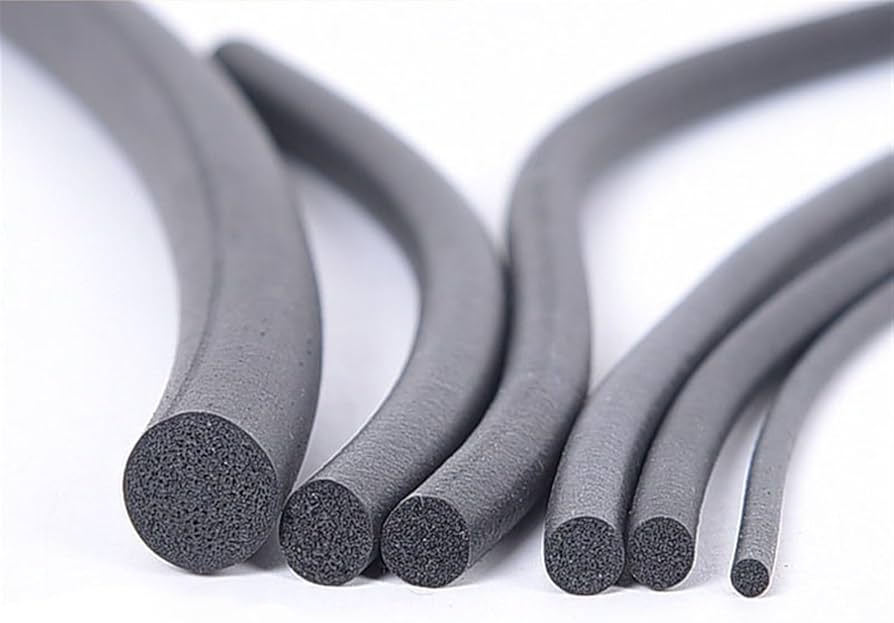
Foamed PVC board is a lightweight, rigid cellular material widely used in industrial, architectural, and signage applications due to its excellent dimensional stability, machinability, and resistance to moisture and chemicals. When integrated with high-performance rubber sealing or bonding components, the overall system performance can be significantly enhanced. At Suzhou Baoshida Trading Co., Ltd., we specialize in industrial rubber solutions that complement engineered substrates such as foamed PVC, ensuring long-term durability and environmental resistance. The selection of rubber material is critical in applications involving thermal cycling, chemical exposure, or mechanical stress. Viton, Nitrile (NBR), and Silicone are three of the most widely specified elastomers in industrial environments, each offering distinct advantages depending on operational demands.
Viton, a fluorocarbon-based rubber, exhibits outstanding resistance to high temperatures, oils, fuels, and a broad range of aggressive chemicals. It maintains performance in continuous service temperatures up to 230°C, making it ideal for demanding environments such as automotive under-hood components, chemical processing seals, and aerospace applications. Its low gas permeability and excellent aging characteristics further enhance reliability in critical sealing roles. However, Viton is generally more expensive than other elastomers and may exhibit reduced flexibility at low temperatures.
Nitrile rubber, or Buna-N, is a cost-effective solution for applications involving petroleum-based oils and fuels. It offers good abrasion resistance and tensile strength, with continuous operating temperatures typically ranging from -30°C to 120°C. Nitrile is widely used in hydraulic systems, gaskets, and O-rings where exposure to lubricants and hydrocarbons is common. While it performs poorly in ozone and UV environments compared to other elastomers, its compatibility with mineral oils and greases makes it a preferred choice in many industrial sealing applications.
Silicone rubber excels in extreme temperature applications, with serviceability from -60°C to 200°C. It offers excellent resistance to UV radiation, ozone, and weathering, making it suitable for outdoor and high-purity environments such as medical devices, food processing, and electrical insulation. Silicone also maintains flexibility over a wide temperature range but has lower mechanical strength and abrasion resistance compared to Viton and Nitrile. It is not recommended for dynamic sealing under high stress or in contact with petroleum-based fluids.
The following table summarizes key physical and chemical properties of these materials for comparative evaluation in industrial applications involving foamed PVC board integration.
| Property | Viton (FKM) | Nitrile (NBR) | Silicone (VMQ) |
|---|---|---|---|
| Continuous Service Temperature (°C) | -20 to 230 | -30 to 120 | -60 to 200 |
| Tensile Strength (MPa) | 15–20 | 10–20 | 5–8 |
| Elongation at Break (%) | 200–300 | 250–500 | 200–600 |
| Hardness (Shore A) | 60–90 | 50–90 | 30–80 |
| Resistance to Oils/Fuels | Excellent | Excellent | Poor |
| Resistance to Ozone/UV | Excellent | Fair | Excellent |
| Compression Set Resistance | Excellent | Good | Good |
| Electrical Insulation | Good | Fair | Excellent |
Material selection must consider environmental exposure, mechanical requirements, and total cost of ownership. Suzhou Baoshida Trading Co., Ltd. provides technical support to match the optimal rubber solution with foamed PVC board systems for reliable, long-term performance.
Manufacturing Capabilities
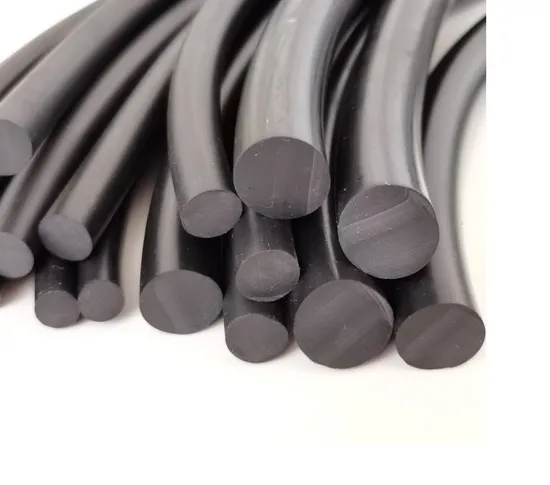
Engineering Capabilities: Precision Development for Foamed PVC Board
At Suzhou Baoshida Trading Co., Ltd., our engineering division integrates deep polymer science expertise with advanced manufacturing execution to deliver bespoke foamed PVC board solutions. While our core specialization lies in industrial rubber formulations, our technical team leverages cross-material polymer knowledge to master complementary systems like rigid PVC foams. This synergy enables precise control over cellular structure, density gradients, and surface integrity—critical factors for applications demanding dimensional stability and mechanical resilience.
Our team comprises five dedicated mold engineers and two specialized formula engineers, all with 10+ years in industrial polymer processing. Unlike generic suppliers, we co-engineer formulations at the molecular level. Our formula engineers optimize plasticizer ratios, nucleating agents, and thermal stabilizers to achieve target density ranges without compromising rigidity or weather resistance. Simultaneously, mold engineers translate these formulations into precision tooling, utilizing finite element analysis (FEA) to eliminate sink marks, warpage, and cell collapse during extrusion. This dual-engineering approach ensures consistent replication of complex geometries—from ribbed structural panels to ultra-smooth signage substrates—across production runs.
As an OEM partner, we prioritize client-specific performance requirements over off-the-shelf compromises. Our process begins with rigorous material characterization using ASTM D1622 and ISO 844 standards, followed by iterative prototyping. Clients provide application constraints (e.g., operating temperature range, load-bearing needs, or regulatory certifications), and we adjust formulations to meet exacting specifications. For instance, marine-grade boards require enhanced UV stabilizers and saltwater resistance, while cleanroom partitions demand ultra-low outgassing profiles. Our closed-loop feedback system integrates real-time extrusion data with lab-tested physical properties, enabling rapid iteration without costly tooling revisions.
Quality assurance is embedded at every phase. All foamed PVC boards undergo in-line density mapping via gamma-ray densitometry and post-production validation for tensile strength, compressive yield, and thermal conductivity. Below are key parameters we control within client-defined tolerances:
| Property | Standard Range | Customizable Range | Testing Standard |
|---|---|---|---|
| Density | 0.45–0.75 g/cm³ | 0.35–0.90 g/cm³ | ASTM D1622 |
| Tensile Strength | 1.8–3.2 MPa | 1.0–4.5 MPa | ASTM D638 |
| Compressive Strength | 1.5–2.8 MPa | 0.8–3.5 MPa | ASTM D1621 |
| Thermal Conductivity | 0.038–0.045 W/m·K | 0.032–0.050 W/m·K | ASTM C518 |
| Cell Diameter | 150–300 µm | 80–400 µm | Microscopy (ISO 4590) |
This granular control stems from our vertically integrated workflow: formula design, mold validation, and production occur under one roof, eliminating third-party communication gaps. We support OEMs from concept validation through full-scale manufacturing, ensuring every foamed PVC board meets the exact mechanical, thermal, and regulatory demands of industrial, architectural, and transportation sectors. With ISO 9001-certified processes and proprietary formulation databases spanning 200+ polymer variants, Suzhou Baoshida delivers engineered reliability—not just materials.
Customization Process
Foamed PVC Board Customization Process: From Design to Delivery
At Suzhou Baoshida Trading Co., Ltd., our approach to customizing foamed PVC boards is engineered for precision, consistency, and performance. As a leader in industrial rubber solutions, we apply rigorous scientific methodology to ensure that each customized product meets exact client specifications and environmental demands. Our four-stage process—Drawing Analysis, Formulation Development, Prototyping, and Mass Production—ensures optimal material behavior, dimensional accuracy, and long-term durability.
The process begins with Drawing Analysis, where our engineering team conducts a comprehensive review of technical blueprints and CAD models. We assess geometric tolerances, structural integrity, load-bearing requirements, and intended application conditions. This includes evaluating thermal exposure, UV resistance, chemical contact, and mechanical stress. Our engineers collaborate directly with OEMs to clarify design intent, identify potential manufacturing constraints, and recommend modifications for improved processability without compromising functionality.
Following design validation, we proceed to Formulation Development, a critical phase where raw material composition is precisely tailored. Foamed PVC boards require a balanced formulation of polyvinyl chloride resin, foaming agents, impact modifiers, thermal stabilizers, and fillers. Our rubber formula engineers adjust the compounding ratios to achieve specific density, cell structure uniformity, and surface finish. Additives are selected to enhance flame retardancy, weather resistance, or static dissipation, depending on end-use requirements. All formulations are documented and batch-traceable, ensuring repeatability across production cycles.
Once the formulation is finalized, we initiate Prototyping to produce small-batch samples for performance validation. Using precision extrusion and controlled foaming techniques, we manufacture prototype boards that mirror final production conditions. These samples undergo rigorous testing, including tensile strength, flexural modulus, thermal expansion, and aging under simulated operational environments. Clients receive detailed test reports and physical samples for approval. Any necessary adjustments are implemented before moving forward.
Upon client sign-off, we transition to Mass Production, leveraging automated extrusion lines and real-time quality monitoring systems. Our facility maintains strict ISO-compliant controls over temperature, pressure, and line speed to ensure consistent cell morphology and dimensional stability. Each batch is inspected for surface defects, thickness variation, and mechanical properties. We support high-volume orders with scalable output while maintaining lead time reliability.
Key technical specifications for standard and customized foamed PVC boards are outlined below:
| Property | Standard Range | Customizable Range | Test Method |
|---|---|---|---|
| Density | 0.5–0.7 g/cm³ | 0.4–1.0 g/cm³ | ASTM D792 |
| Tensile Strength | 20–40 MPa | Up to 50 MPa | ASTM D638 |
| Flexural Modulus | 1.8–2.5 GPa | 1.5–3.0 GPa | ASTM D790 |
| Operating Temperature | -20°C to +60°C | -40°C to +80°C (stabilized) | ASTM D1229 |
| Cell Structure (closed) | >90% | >95% (high-barrier option) | Microscopic Analysis |
| Thickness Tolerance | ±0.2 mm (for 3 mm board) | ±0.1 mm (precision grade) | ISO 2818 |
Our integrated customization pathway ensures that every foamed PVC board delivers engineered performance, tailored to the unique demands of industrial enclosures, transportation components, cleanroom panels, and signage systems.
Contact Engineering Team
Precision Engineering for Foamed PVC Board Manufacturing: Partner with Suzhou Baoshida
Achieving consistent performance in foamed PVC board production demands rigorous material science expertise and advanced manufacturing control. At Suzhou Baoshida Trading Co., Ltd., we specialize in industrial rubber and polymer solutions, with foamed PVC board representing a critical segment where dimensional stability, density uniformity, and thermal resistance directly impact end-product functionality. Our engineering team leverages proprietary compounding techniques and ISO 9001-certified processes to eliminate common defects such as cell collapse, surface imperfections, or inconsistent density gradients. This precision ensures your boards meet exacting specifications for applications ranging from signage substrates to cleanroom partitions and transportation interiors.
Material consistency begins with precise formulation. Below are key technical parameters we rigorously control during production, reflecting our commitment to OEM-grade reliability:
| Specification | Standard Range | Tolerance | Testing Standard |
|---|---|---|---|
| Density | 450–800 kg/m³ | ±15 kg/m³ | ISO 844 |
| Thickness | 1–30 mm | ±0.1 mm | ISO 1928 |
| Tensile Strength | 15–35 MPa | ±2 MPa | ISO 527 |
| Thermal Stability | -20°C to +60°C | No deformation | ASTM D648 |
| Surface Hardness (Shore D) | 75–85 | ±3 | ISO 868 |
These metrics are non-negotiable in industrial applications where failure risks operational downtime or safety compliance breaches. Unlike generic suppliers, we integrate real-time rheological monitoring during extrusion and calendering, ensuring each batch adheres to your thermal expansion coefficients, flame retardancy requirements (UL 94 V-0/V-2), and chemical resistance profiles. Our facility supports custom formulations with UV stabilizers, anti-static additives, or enhanced impact modifiers—engineered to your exact performance thresholds.
As your OEM manufacturing partner, Suzhou Baoshida eliminates supply chain volatility through dedicated production lines and raw material traceability from Tier-1 polymer suppliers. We prioritize technical collaboration over transactional relationships: our engineers work with your R&D team to validate prototypes against ASTM D1784 or EN 13121-3 standards, optimizing cellular structure for weight-to-strength ratios specific to your use case. This reduces scrap rates by up to 22% compared to industry averages while accelerating time-to-market.
To initiate a technical consultation for foamed PVC board production, contact Mr. Boyce, our dedicated OEM Solutions Manager. Specify your required density profile, dimensional tolerances, and environmental exposure conditions to receive a validated production protocol within 72 hours. Mr. Boyce will coordinate material testing, pilot runs, and logistics planning to ensure seamless integration into your manufacturing workflow.
Contact Mr. Boyce directly at [email protected]. Include your target application, annual volume requirements, and critical performance criteria. We respond to all technical inquiries within one business day with actionable engineering data—not generic sales proposals. Partner with Suzhou Baoshida to transform material specifications into defect-free, high-yield production. Your precision demands our expertise; let us validate it.
⚖️ O-Ring Weight Calculator
Estimate rubber O-ring weight (Approx).